


The reveal of Nintendo’s remake of the 1998 classic The Legend of Zelda: Ocarina of Time has stirred up incredible responses. Anytime I come across a video of someone reacting to the trailer, I stop and watch it because it’s nice to see people be openly emotional about something they love (and something I love).

While the trailer has caused a resurgence in Ocarina-based content and opinions, one widely held belief has always stuck to this game: The Water Temple is bad.
To be clear: Everyone is entitled to their opinion. But this one in particular has always bothered me because it ignores a significant part of why Ocarina of Time as a whole is so good: the lore and environmental storytelling. Everything in the world has a reason for existing. So, before we dive into the full-blown defense of the much-maligned dungeon, let’s look at some of the other dungeons in the game and how they reflect Ocarina’s themes.
The Forest Temple
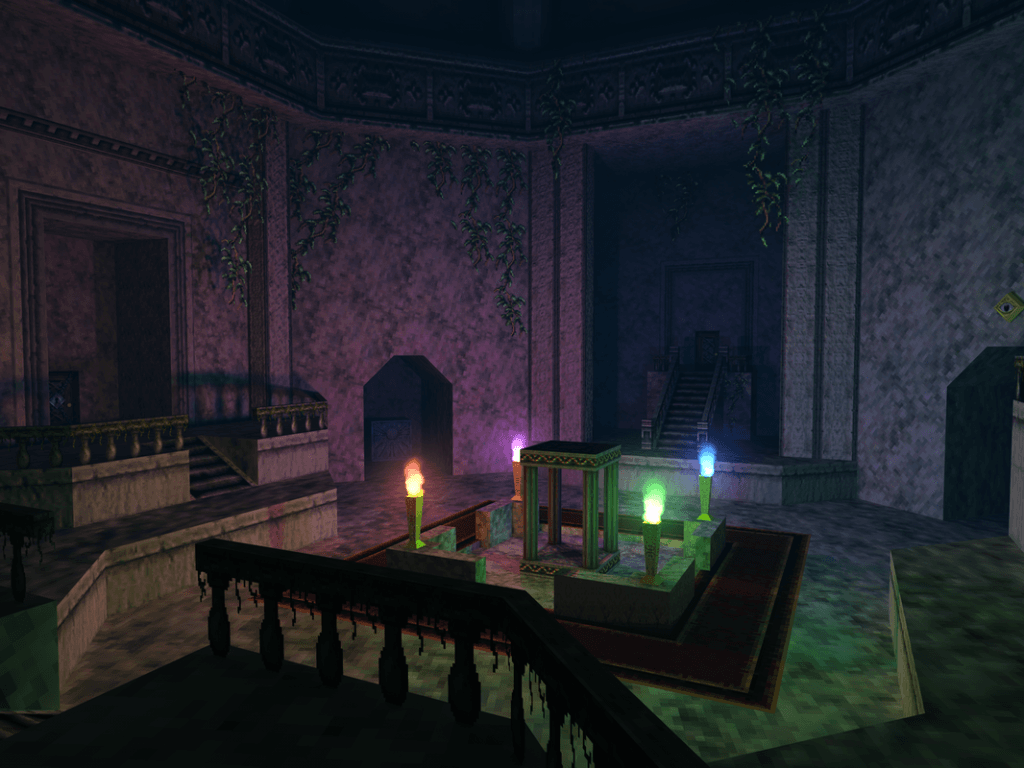
Adult Link’s first dungeon puts him right back where it all started. Nestled deep in the Lost Woods of Kokiri Forest, the mansion-like structure is one of the more mysterious areas of the game. From the twisting and turning hallways to the dark and dingy atmosphere, the creepiness of the Forest Temple is a great way to kick off Link’s world-saving mission in earnest.
It’s covered in vines and clearly empty. Its purpose is largely unknown, but Zelda lore content creators like Zeltik have theorized that the building could have been used during a war. Given the way the entire temple is structured, with its labyrinthine halls and fortified towers, that might very well be its purpose. Whatever the reason may be, the building feels hastily abandoned. The ethereal music and clever uses of decoration make it feel haunted and alive, as if the temple itself is breathing and waiting for its occupants to return.
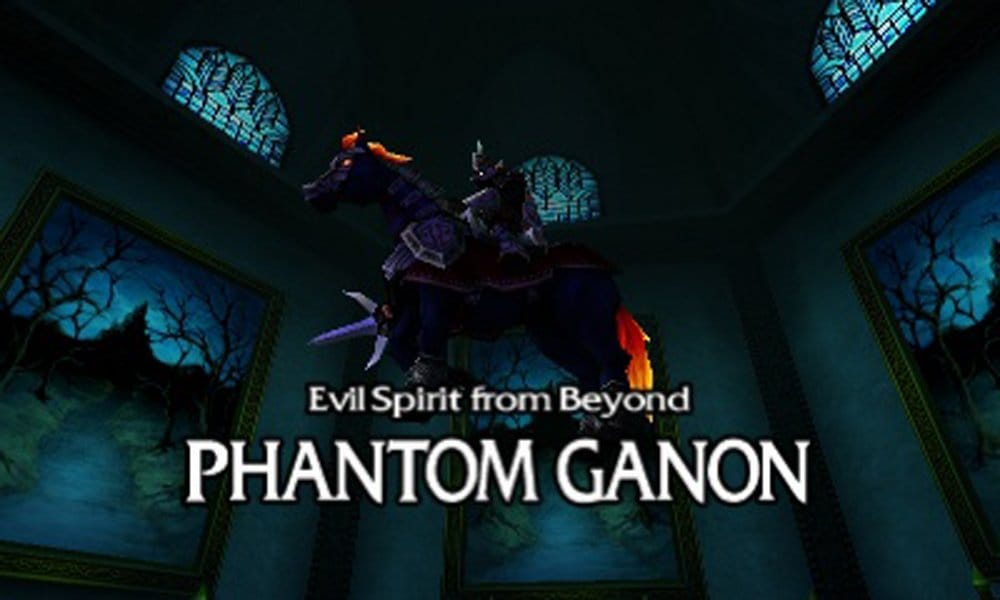
Meanwhile, rolling into the boss battle with Phantom Ganon feels thematically appropriate. Link returns to a monster-infested version of his home, and Ganondorf leaves a ghostly version of himself behind in anticipation of Link’s arrival. Ganondorf’s arrogance is on display here as he obviously thinks this will be enough to stop the Hero of Time. When it’s not, he responds directly:
“What a worthless creation that ghost was! I will banish it to the gap between dimensions!!”
The Forest Temple serves as the initial connective tissue between the Adult and Child Link timelines. It gives an emotional weight to Link’s journey from the beginning, having to free his home twice before he sets out on freeing Hyrule. It’s the first indication that Nintendo thought deeply about how the gameplay and story connect.
The Fire Temple
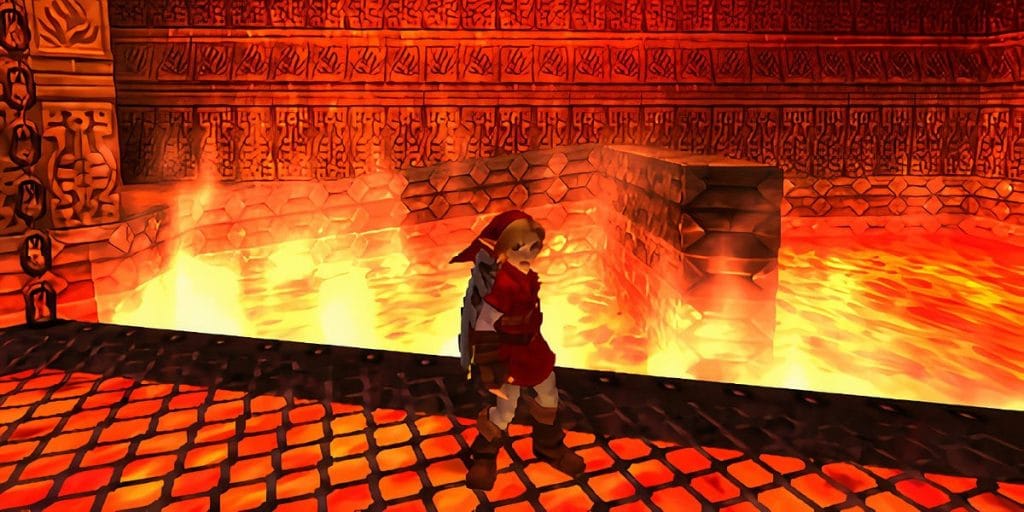
The Fire Temple was always the one I felt was the most technically boring of all the Ocarina dungeons. It’s not bad, but it just doesn’t feel special. What I do like about it, though, is that like the other dungeons, it represents a theme. Fire and rage go together like any two things you can combine in a cliche.
The dungeon comes off as a monument to Ganondorf’s anger. The Gorons won’t submit to him, so he resurrects Volvagia, an ancient evil dragon known for eating them for fun. He captures Gorons and imprisons them in the temple to await their death. Everything about the temple has been twisted in service of Ganondorf’s reign.
Even the main weapon used in the dungeon, the Megaton Hammer, feels like a tool of anger. The sharpness of the hammering animation, coupled with the screen shake and the weight of the blow, sell it perfectly. But in this case, it’s the anger of the Gorons. The hammer was used to defeat Volvagia once prior, and now Link has the chance to free them with the same weapon. In the world’s angriest game of whack-a-mole, Link takes on this Goron-eating dragon surrounded by erupting columns of fire and falling rocks. It’s a great end to an otherwise unremarkable dungeon, but thematically it flat-out works.
Bottom of the Well and the Shadow Temple
These two are absolutely the scariest parts of any Zelda game, and it’s got just as much to do with the story behind them as what’s inside. The Well and the Shadow Temple both hide some of Hyrule’s darkest secrets, things that are quite literally buried, to be hidden from the people. Such secrets remain secret, for if the folks of Kakariko Village knew what was done to gain the peace and quiet they enjoy… Things might be different.
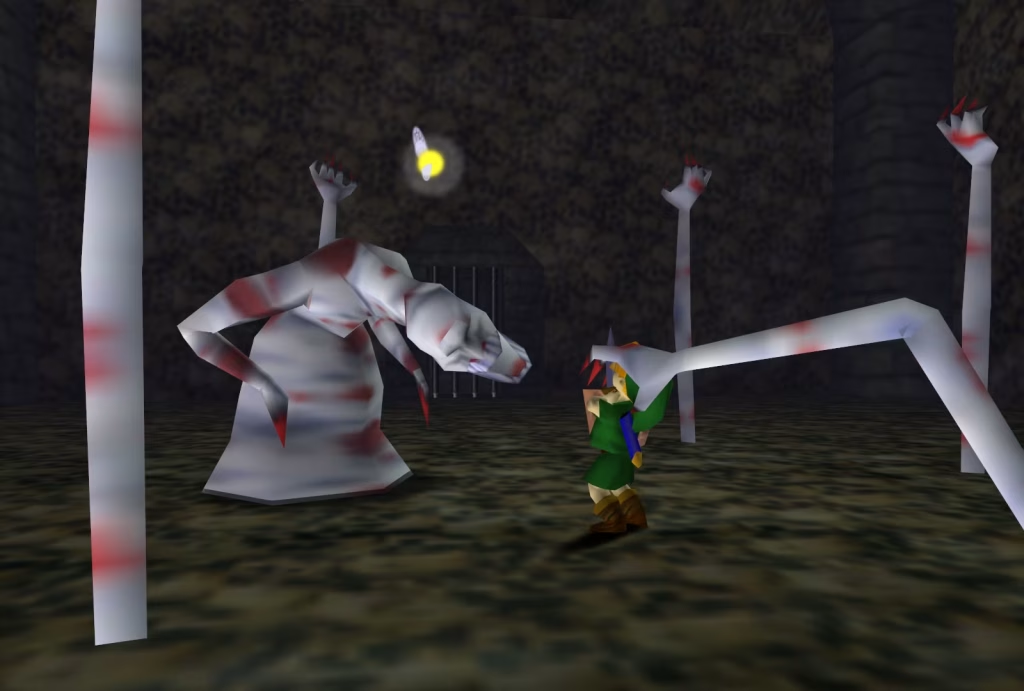
There are pretty clear signs of violence throughout the area, with dried blood caking up the walls and various structures. And then of course there’s the Dead Hand, a creature made up of the plethora of corpses Child Link happens to be walking all over. It’s a living example of the bloody history of Hyrule and the perfect representation of The Well.
The same goes for the Shadow Temple. Hidden in the back of the Kakariko Village graveyard, it is where the enemies of Hyrule were interrogated and held prisoner. The dungeon’s boss, Bongo Bongo, brings it all home. Arms with disembodied hands infer shackles around the wrist. A headless torso, the clear sign of a decapitation. The game does a great job of dropping small hints throughout the player’s exploration of both that give context to what’s seen in both areas.
The Spirit Temple
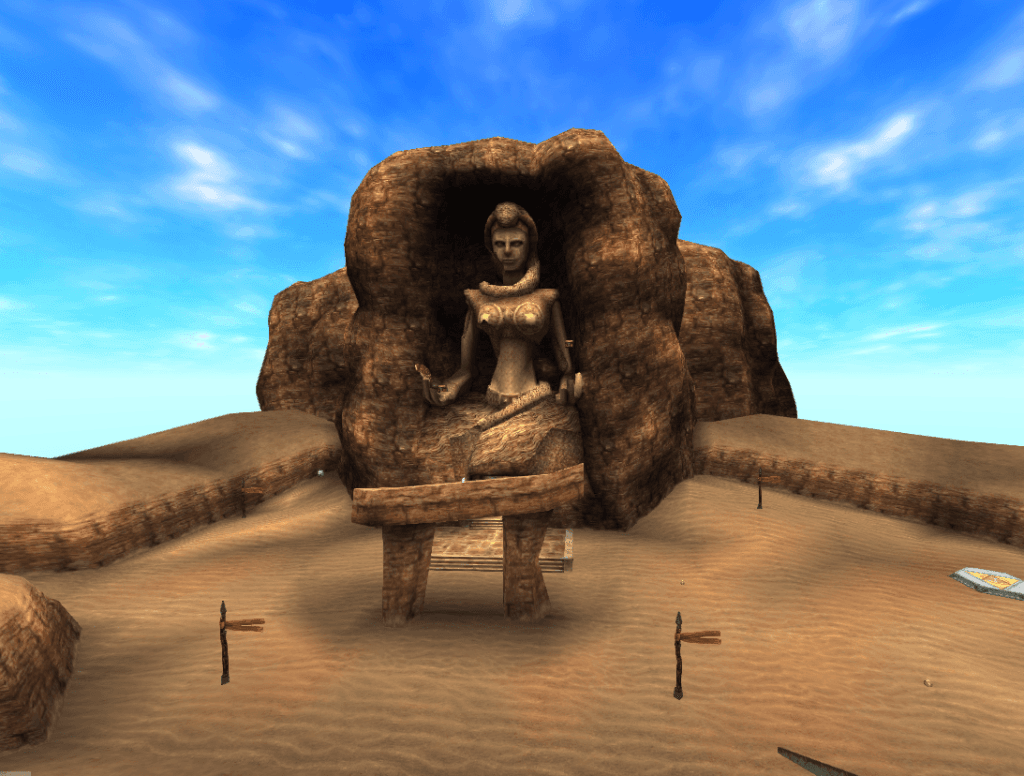
This has always been one of the more interesting dungeons in Ocarina of Time. It’s the one that most closely ties into the game’s overall theme of the cruelty of time. Unlike all the other dungeons, Link must complete this temple as both the child and adult versions of himself. With puzzles that tie into both timelines and a mini-boss that hides a dark secret, it’s the dungeon that affects Link at his core the most.
When he first gets there as a child, he meets Nabooru, Ganondorf’s second-in-command who also happens to be building a rebellion against him. She is unable to access the temple without the Silver Gauntlets and asks Link to assist her. After he does, she is captured by Koume and Kotake, the witches collectively known as Twinrova, at which point she demands that Link leave her behind. When he arrives at the temple as an adult, gauntlets in hand, he traverses the dungeon only to be met with an Iron Knuckle.
Unbeknownst to Link, in the intervening seven years, Nabooru has been brainwashed by the witches and forced to operate in servitude to them. When he defeats the Iron Knuckle, Nabooru is revealed to be under the armor, at which point the spell on her is broken. Link has already had to endure the life he knew as a child being ripped from him and seeing the destruction Ganondorf has brought on Hyrule. The guilt of being seven years too late at every turn would have to eat at him.
The Spirit Temple is the perfect example of that, because he explores it and suffers loss within it as a child, but he can’t do anything until he returns as an adult. At this point, he understands how pulling the Master Sword works and must subject the world to seven years of horrors, just so he can eventually save it. Hell of a balancing act.
The Water Temple
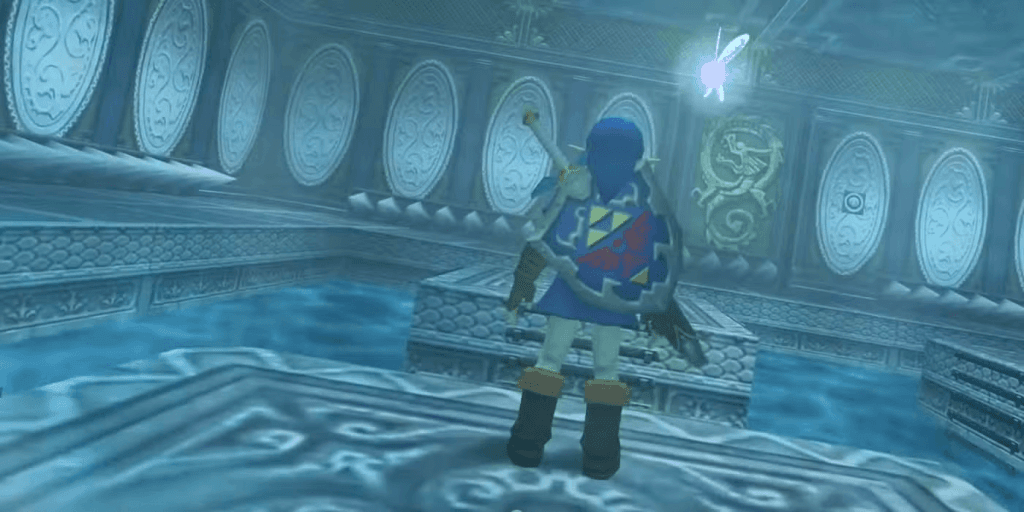
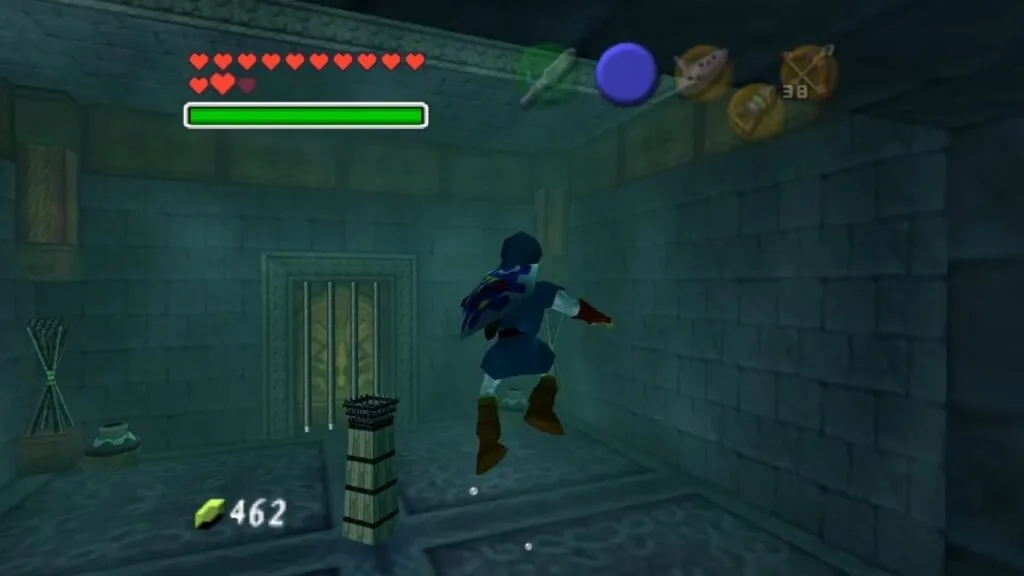
All of that brings me to the subject of this article: Adult Link’s third dungeon, and the one I believe makes the most sense in the context of all the work Nintendo did with their environmental storytelling. The Water Temple is not a bad dungeon. But it is a wholly inconvenient one, as it should be.
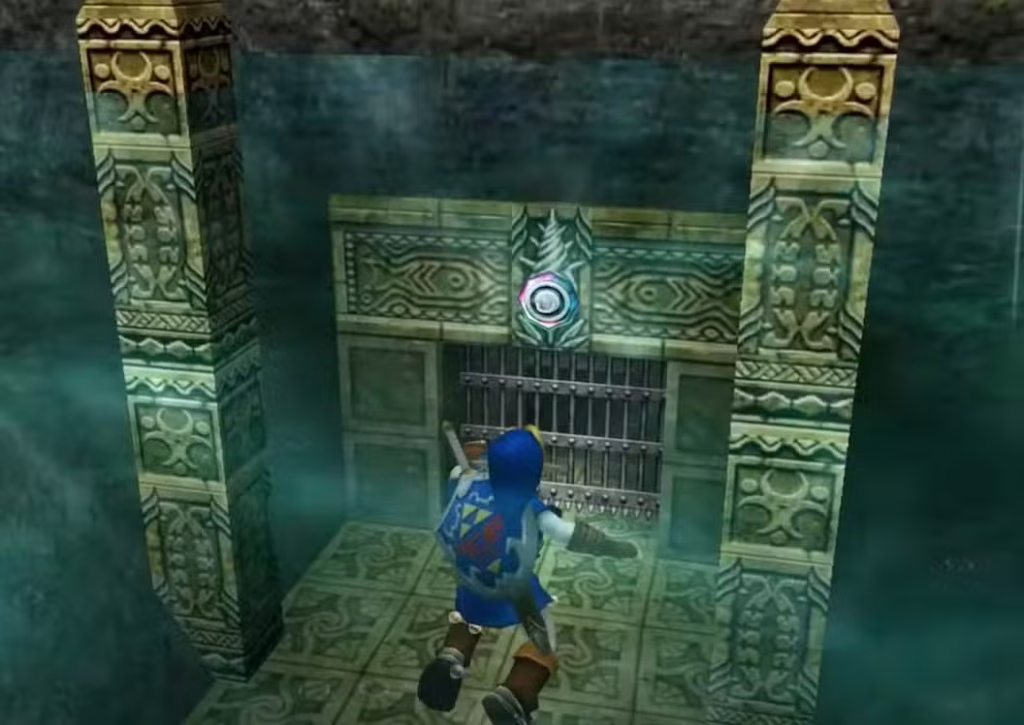
The Water Temple is sacred to the fish-like Zora, as it is a place to worship the water spirits. It sits at the bottom of Lake Hylia, so it’s never truly designed for a human to set foot inside it. Where the Fire Temple really just requires the Goron Tunic to get around because Link can essentially do everything physically necessary to navigate it, the Water Temple is built for creatures who can naturally swim.
Raising and lowering water levels wouldn’t be an issue for them. But for Link? Yeah, taking the iron boots on and off — which requires pausing the game in the original Nintendo 64 version — would be necessary to get through it, especially considering he’s a horrible swimmer. And given that in-world context, it should absolutely be a struggle to navigate. It was never meant for him. If it seems like such a blatant inconvenience for us as gamers, well, that’s because it is for Link.
What’s Inside Always Comes Out
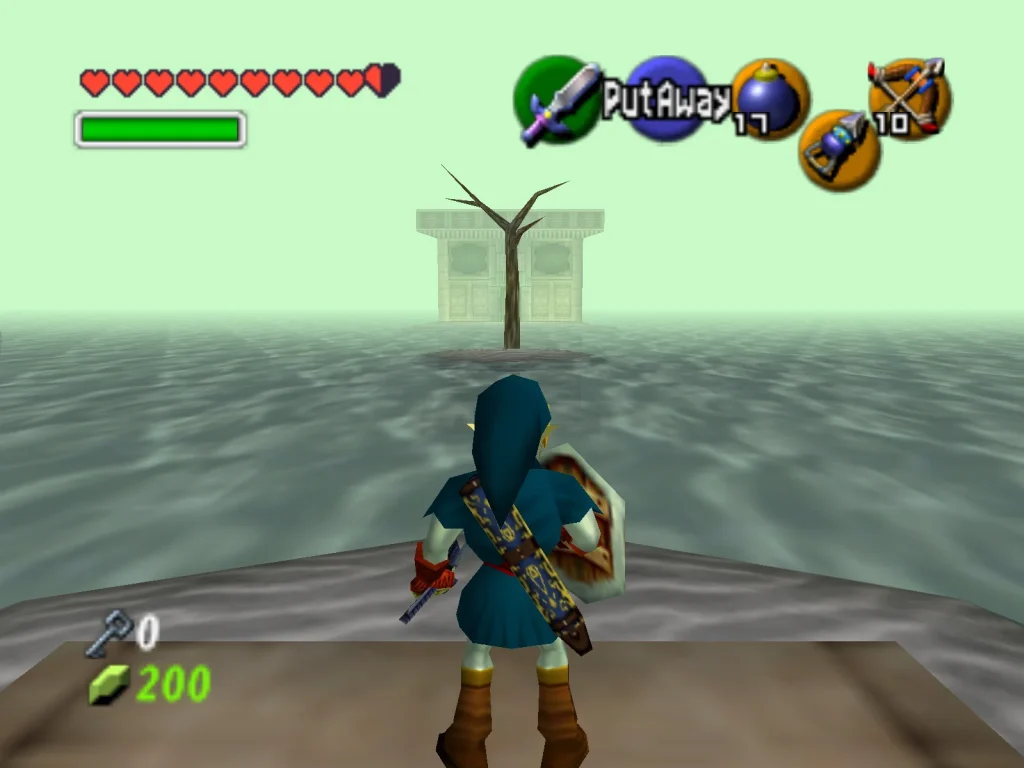
My read on the Water Temple has always been that the puzzles in the dungeon are those meant to test Zora who wish to enter and find themselves. The best indication of this is the room where the Dark Link battle occurs. The whole room plays off the concept of reflections. A Zora wishing to get to the last room of the temple may need to test themselves by facing the darkness within. For Link, being there to purge the darkness inside the temple itself, the temple would want to test his willingness to fight his worst impulses.
The Water Temple is a dungeon that plays on our worst impulses as well, namely impatience and the loss of attention to detail that results from it. Get too caught up in the frustration of having to switch boots and raise water levels, and you may find yourself entering a room you already cleared or being cut off by a giant block you moved earlier that you completely forgot about.
If the Fire Temple represents rage and the Spirit Temple represents the cruel passage of time, then the Water Temple represents patience and serenity. You are meant to slow down and act methodically while navigating it. There aren’t a ton of enemies to deal with, just lots of puzzles to solve and visual cues to identify.
I remember playing Ocarina of Time when I was younger and creating that urgency within myself to complete the Water Temple, and it felt annoying. In subsequent playthroughs, I found myself slowing down, and that’s when the brilliance of the dungeon clicked. Even now, I can navigate it pretty easily off the top of my head.
Immersion Is Key
I get it: From the straightforward gameplay perspective, navigating the Water Temple is a bit annoying. In fact, Nintendo fixed some of its perceived flaws in the 3DS remake, namely allowing the player to assign the iron boots to an item slot and adding color-coded navigation markers on floors and walls. That said, I truly believe ignoring what made the original version of the dungeon special shortchanges the experience as a whole. Without some of the supposed tedium, you miss out on finding that serenity.
Link was made silent so that we could see ourselves in him and experience an adventure not just in the game but in our imaginations. It’s the kind of feeling that I hope isn’t lost in the Ocarina of Time remake. Maybe someone who plays that version of the game for the first time gets to experience that feeling too. The Water Temple is essential to that feeling and makes Hyrule feel lived-in and real. It deserves to be praised for that.
Now, if you really want to go at a dungeon in the game, direct all the smoke to the one that really deserves it: Lord Jabu Jabu’s Belly.

Anthony is a huge Zelda fan, and a bigger Eagles fan (he does not argue about Super Bowl MVP Jalen Hurts). He’s been gaming for over 25 years and has no intention of stopping. Ocarina of Time is his personal GOAT. When he’s not playing games, you can catch him talking about music, sports, and wrestling. You can find him on Bluesky @peagle05.





1 Comment
I generally understand the frustration for the water temple design wise, especially for players who aren’t going through this game multiple times. However, getting snatched up in the Shadow temple is more annoying because not only is that dungeon terrifying, but you start it all over again lol. I’m going to agree with you on Lord Jabu Jabu’s belly because as one redditor reminded me, the boomerang is forgotten afterwards