
Warning: This article contains (a lot of) spoilers for Onimusha: Way of the Sword.
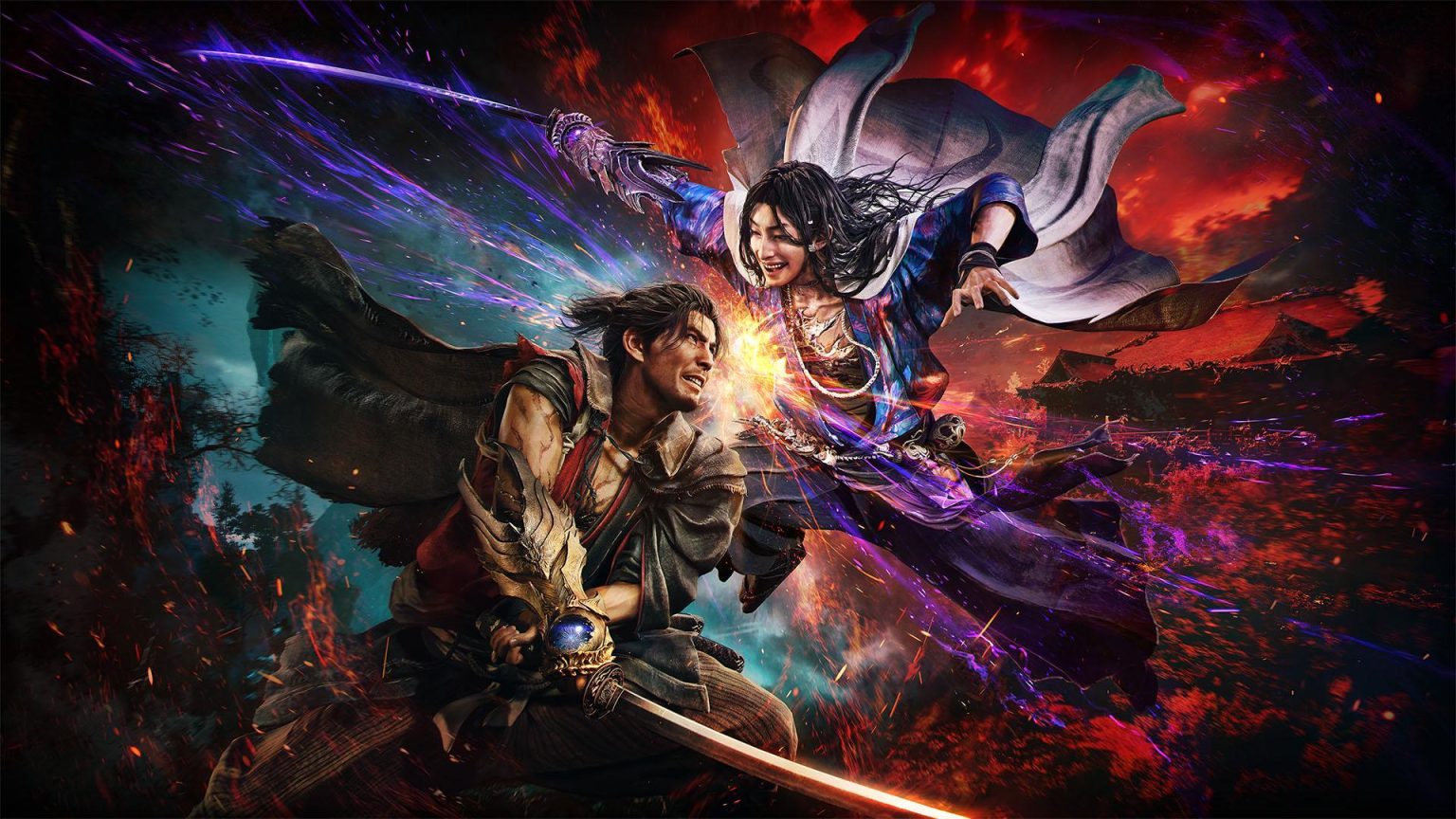
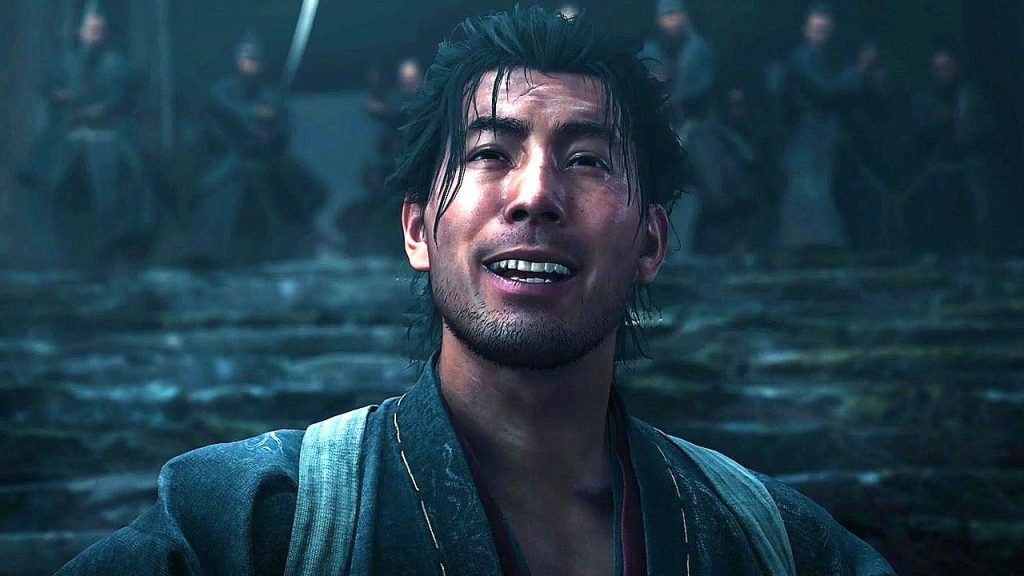
Anyone who has played Onimusha: Way of the Sword will recognize the names Miyamoto Musashi and Sasaki Ganryu, two swordsmen whose unique relationship dynamic was as entertaining as the fights between them. While I looked forward to every battle between the two, their most striking moments came after the conflicts, when the defeated swordsman had to live with what losing revealed about himself.
To understand why those defeats matter so much, we must look to where their story begins before the events of the game.
Where the Rivalry Began
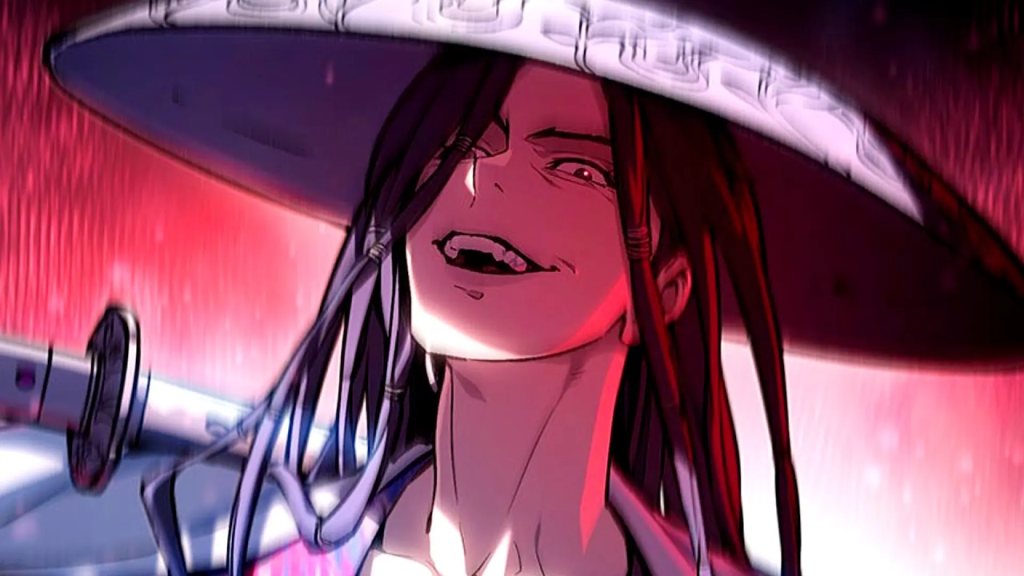
The story of Musashi and Ganryu begins in Capcom’s companion webtoon, “Fated Rivalry,” which follows Ganryu’s perspective of the events that led up to the beginning of the game. The comic opens with Musashi defeating Ganryu (with an oar instead of a katana) and seeming almost indifferent to the result. This hints that their rivalry began even earlier, though the comic leaves the exact origins a mystery.
Whatever happened earlier, Ganryu has already made Musashi the measure of his own worth. While one of them can walk away from their fight, the other carries the humiliation of losing to a man who may barely remember it. So, when Musashi mentions he is going to Kyoto, it is no surprise that Ganryu follows him there, killing several senior members of the Yoshioka school who stood in his way.
It’s the absence of these senior members that leads the school’s leader, Seijuro Yoshioka, to accept Musashi’s challenge, giving Way of the Sword’s opening a connection the player would never know from Musashi’s perspective alone. Ganryu is already changing the course of Musashi’s life, even as Musashi continues to treat him as someone he can leave behind.
Two Swordsmen, Two Paths to Power
I’ve already warned you about spoilers, but here comes a big one.
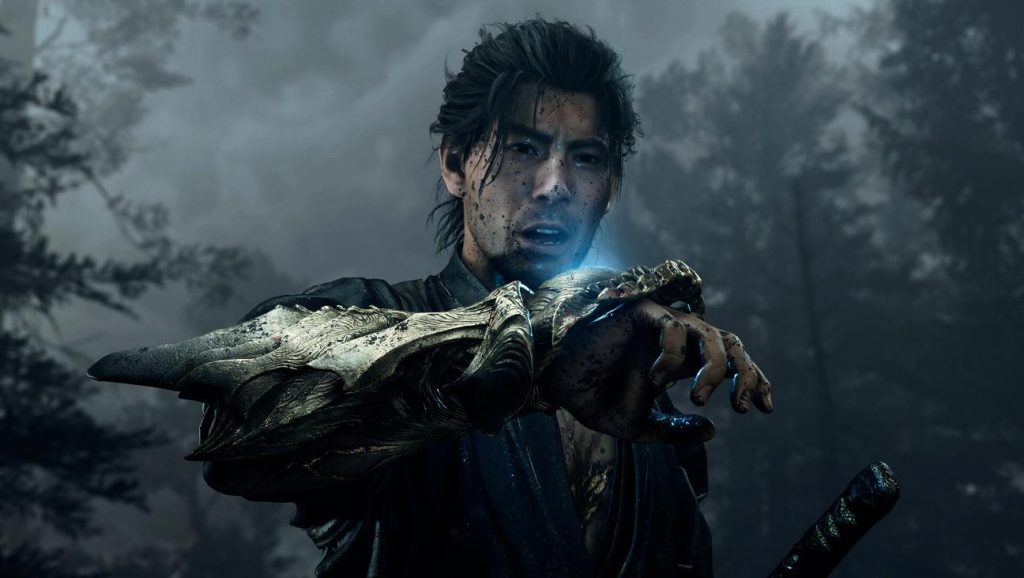
Soon after the events at the Yoshioka school, the Genma (immortal demons who serve as Onimusha’s recurring adversaries) interrupt Musashi and Ganryu’s next meeting and kill them both. The webtoon continues by following Ganryu through events that Way of the Sword largely shows from Musashi’s perspective. Like Musashi, Ganryu receives an Oni Gauntlet, hunts Genma for their souls, and begins to relish the strength they give him. He eventually awakens the woman dormant within the gauntlet, who still appears ordinary at that point.
The comic ends as the two swordsmen are about to fight for the first time since returning to life, in a confrontation also shown in the game. After reading the comic, I understood how much Ganryu had invested in reaching that moment; Musashi, however, notably remained unaware of the path his rival had taken.
The Oni Gauntlets brought both men back to life and granted them power their swordsmanship alone could never provide. For Musashi, that power feels like an intrusion: He wants the gauntlet removed because he believes in the path of the sword and struggles to accept victories that might depend on something beyond his own skill. Meanwhile, Ganryu welcomes what the gauntlet offers, hoping it will help him overcome the man who defeated him with such arrogance.
Their reactions to the gauntlets make them feel like two sides of the same blade. Each fears that his swordsmanship may never be enough, and each must decide what he is willing to sacrifice in pursuit of greater strength.
The Paths That Set Them Apart
Their personalities initially make the resemblance easy to overlook: Ganryu approaches Musashi with an almost theatrical composure, while his rival’s face gives away every flash of irritation.
I found their exchanges funny, because Ganryu seems to have spent far longer imagining these meetings than his rival has. Yet the game’s (and webtoon’s) humor also exposes their imbalance, as Ganryu needs Musashi to take him seriously, and each offhand remark reminds him that his opponent does not feel the same need to settle their rivalry.
And that’s because Musashi has his own reasons for resisting the gauntlet. At first, he follows his mentor Takamura’s guidance and collects Genma souls because doing so may free him from the gauntlet. But his desire to get rid of the gauntlet becomes harder to reconcile with his growing attachment to the people caught up in the Genma’s violence, especially Shizuka, who lives within the very gauntlet he wants removed. Little by little, accepting her help becomes less troubling to him than the thought of abandoning people who now depend on him.
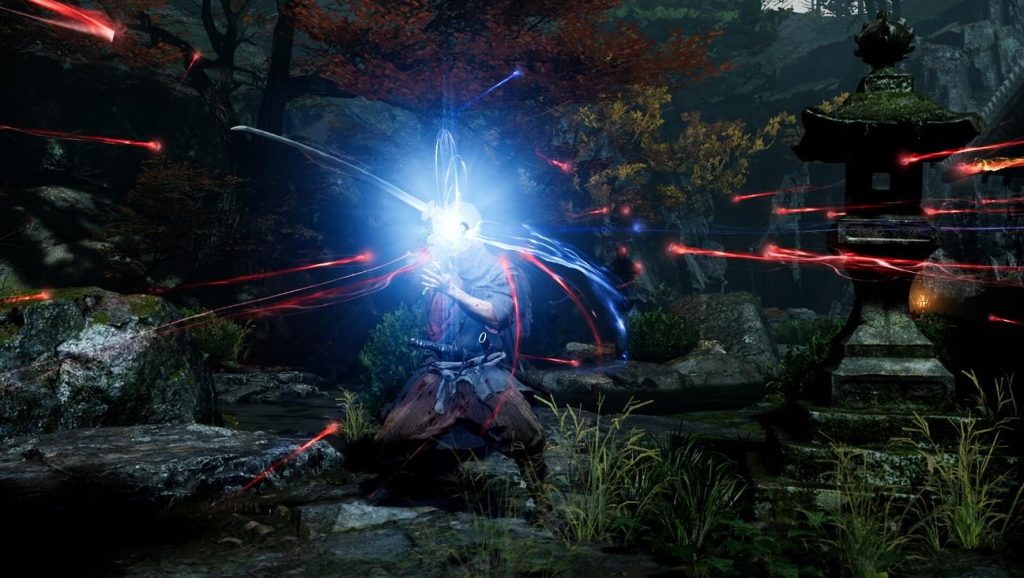
Walking alongside the same path, Ganryu also grows stronger by collecting souls, though the webtoon makes clear how much he enjoys the sensation. Urged on by Minamoto no Yoshitsune, Ganryu eventually begins taking human souls as well, allowing his pursuit to consume people who had no part in their quarrel. But we have to remember his murders started on his way to Kyoto, already showing he was willing to sacrifice others even before the gauntlet gave him greater power for doing so.
The Burden of Defeat
As the game went on, I became more interested in what each reunion revealed about the distance between the men. Musashi was acquiring reasons to care about the people around him, while Ganryu was hurting more of them in pursuit of a victory that might finally satisfy him. Their banter remained entertaining, but I could no longer hear it quite as I had at the start; they still shared the same fear, even as their choices carried them to opposite sides of the blade.
Suddenly, Ganryu returns stronger than ever and finally defeats Musashi in a duel, letting him live in the end… And Musashi now has to endure the same kind of humiliation he once left Ganryu to carry alone. He knew Ganryu gained strength by harvesting human souls, and for a brief moment, Musashi himself considered doing the same to close the gap. And that’s the moment Musashi realized how a defeat might persuade him to give up the very restraint that once seemed to set them apart.
But Musashi was never alone in this journey. He had Takamura’s guidance and a close friendship with Shizuka, and was taught to rely on others and care for the people affected by his fights, refusing this strength that would cost them their lives.
The Final Duel…?
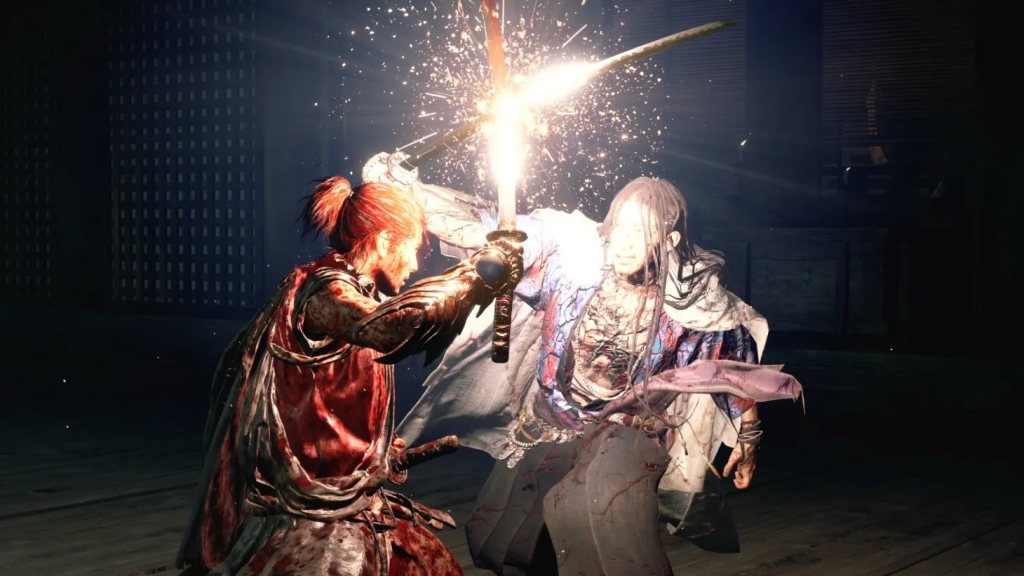
The swordsmen’s rivalry becomes even crueler when Takamura dies and Ganryu absorbs his soul into his Oni Gauntlet, which leads to their final duel. While Ganryu has the power of human souls, Musashi has the strength of the Oni. And within this emotional confrontation, Musashi finally lets his emotions surface: He defeats Ganryu once more and deals what he believes is a fatal blow, granting his rival the honor of dying by his sword.
And that’s the end… Right?
…
…
…
Of course not! I was glad to learn, in the final moments of Onimusha: Way of the Sword, that his rival survived and escaped with the mysterious entity Dokyo.
Their swords seem bound to cross again, though Musashi can no longer meet him with the indifference he showed after defeating him with an oar. Since then, he has lost to Ganryu, felt the pull of the power his rival chose to wield, found a way to live with defeat, and grown strong enough to defeat him without following the same path.
But for how long?
What I truly want to see in future Onimusha games or media is how Ganryu responds to that change. While Musashi has answered the question driving them both, his rival is still searching for an answer at the end of his blade.