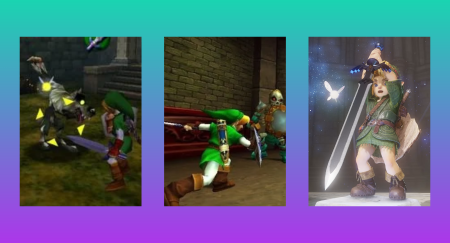
Light story spoilers for The Legend of Zelda: Ocarina of Time.
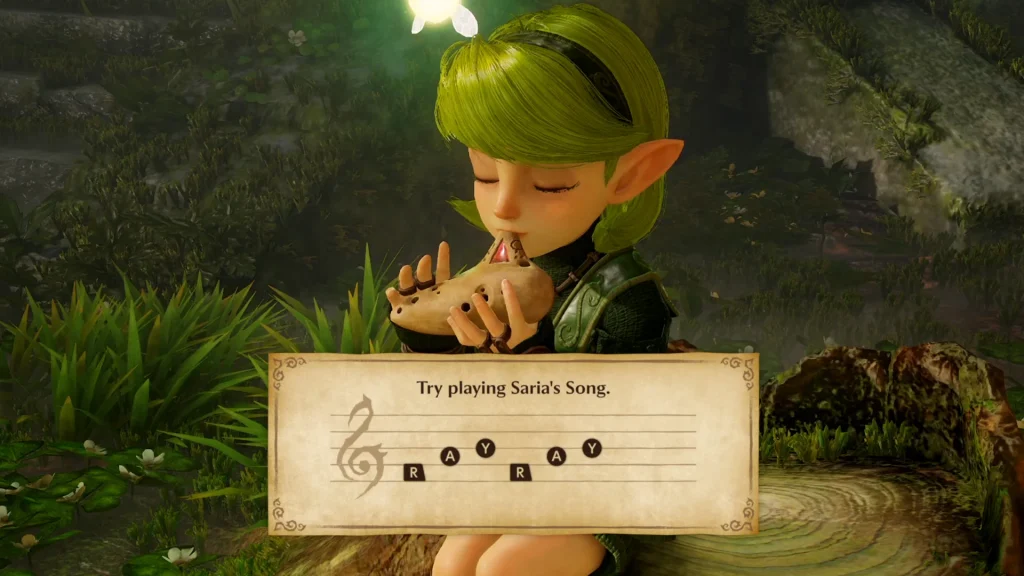
To some extent, The Legend of Zelda: Ocarina of Time is about the power of music. The titular instrument serves as a tool, a key, and a carrier of culture and storytelling. No song from Ocarina’s absolutely iconic soundtrack embodies that power more than “Saria’s Song.”

This quick, delightful melody conveys a sense of whimsy and mystery, which makes perfect sense given the tune plays on loop in Ocarina of Time’s Lost Woods. It expertly sets a mood of curiosity and playfulness, yet also never comes across as too childlike or saccharine. Every time I hear it, I feel like wandering through the forest in search of adventure, yet its final few notes indicate that danger may still be afoot.
The latest Nintendo Switch 2 remake updated “Saria’s Song” with more prominent string instrumentation and a clearer ocarina sound. For the most part, though, it maintains the same playfulness and mild mystery:

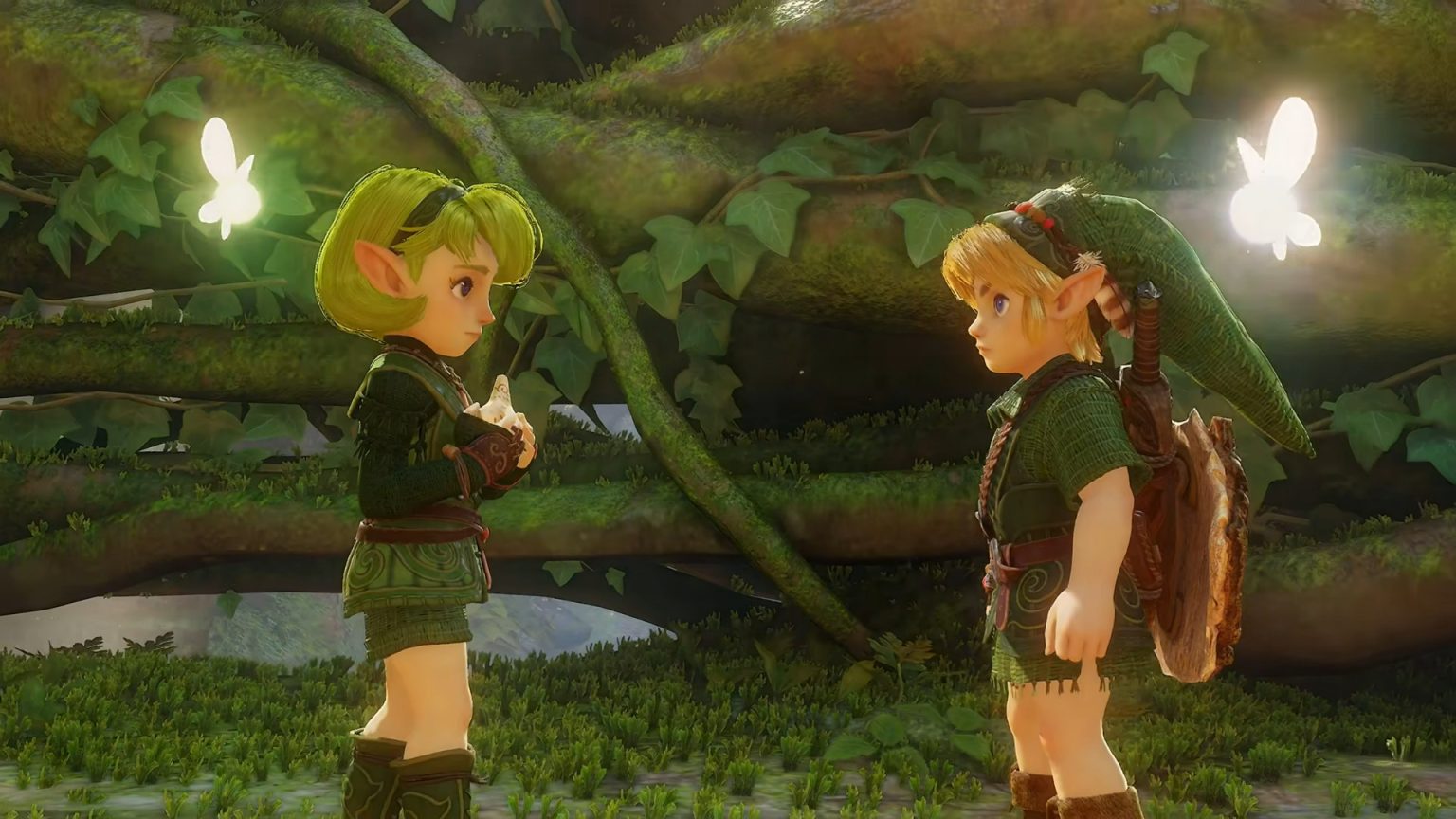
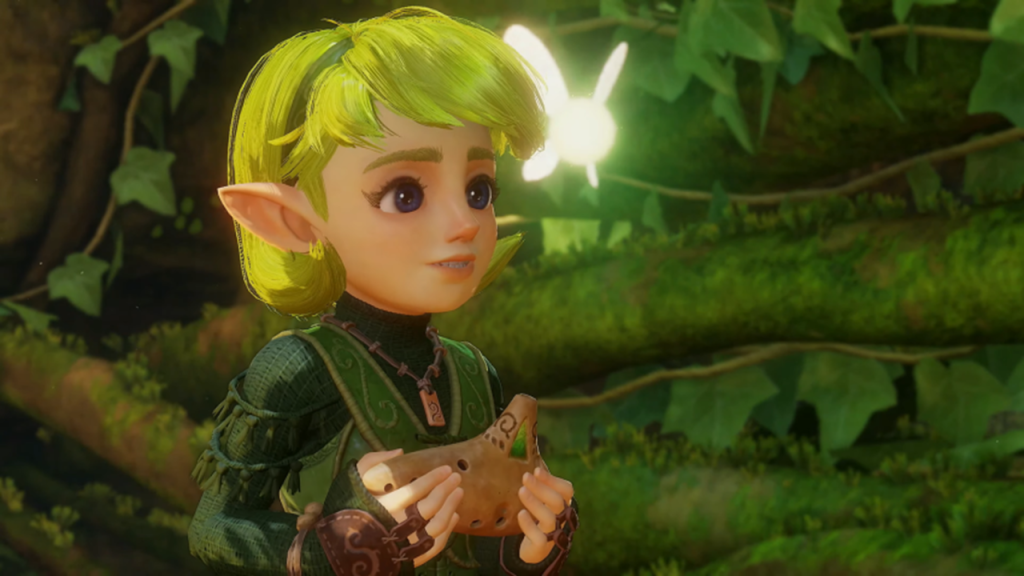
Notably, the person who teaches Link how to play the song on his ocarina is, well, his childhood friend Saria. She also gives Link his first ocarina right before he leaves his home of Kokiri Village and ventures off into the unknown. His departure in this moment is clearly a begrudging one, as Saria is the one friend Link truly had, someone who made him feel like he belonged. Whenever he wants, he can play “Saria’s Song” to communicate with her from far away, and in turn she gives the player a hint as to where to go next in the main story.
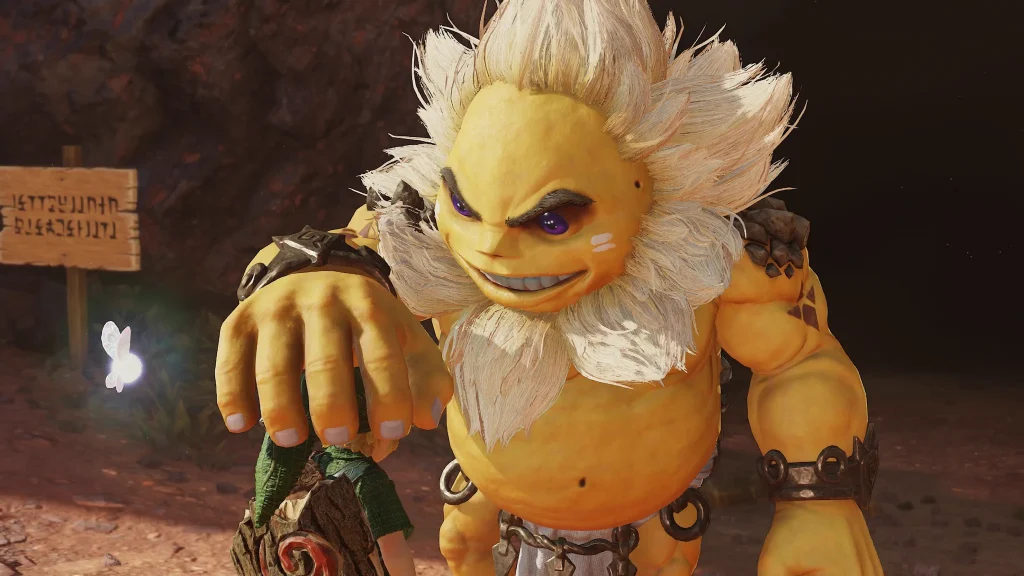
Several of my favorite moments in Ocarina of Time involve “Saria’s Song.” Playing it for the Goron leader Darunia, thus making him break into energetic dancing, is probably my favorite musical sequence from the original. Navigating through the Lost Woods and choosing paths based on how loudly the song is playing is another high point of the experience. Link even has to play the tune as an adult just to prove to his fellow Kokiri — an elf-like race where nobody actually matures to any physical form of adulthood — that he once lived among them, despite being an outsider.
New Remake Means New Feelings
In my playthrough of the Switch 2 remake, however, a completely different moment involving “Saria’s Song” hit me like a ton of bricks. After Link completes the Forest Temple — the first major dungeon the player experiences as Adult Link — he is immediately transported to the Hall of Sages, where he meets with Saria for the first time since he was a child. She tells Link that she is the Forest Sage, and therefore can never return to Kokiri Forest ever again (start at 47:27, end at 48:56):

As Saria explains why she can never return to the place she once knew, you can faintly hear “Saria’s Song” in the background, but this time lacking whimsy and mystery. The song slows down, with an invisible chorus slowly singing each note as Saria delivers this heartbreaking news. As it progresses, the song adds a string section and some light percussion, providing a somber, forlorn aspect that underscores the bittersweet nature of this moment.
Once the song crescendos, Saria gives Link the Forest Medallion, and then offers him some parting words that left me on the brink of tears:
“Link, please never forget: You and I, we will always be friends!”
Links to the Past
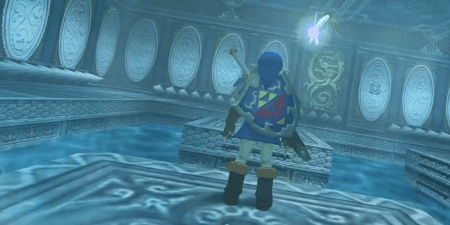
I don’t think it can be ignored that Ocarina of Time has such a stranglehold on a certain generation of gamers (myself included) because it’s fundamentally about coming to terms with growing up, and all the dark and scary things that come with it. You can see it in the dungeon design: The places Child Link explores are silly fairy-tale places (inside the belly of a giant fish, a large tree with a face), where the dungeons Adult Link must venture through have creepier atmospheres and sordid histories (the treacherous prison that is the Fire Temple, the myriad torture chambers of the Shadow Temple).
Just as importantly, you can also see this theme in the kinds of relationships Link fosters both as a child and an adult. Child Link makes friends in Saria, Darunia, Ruto, and others, whereas Adult Link must make peace with saying goodbye to these same pals as they become sages. Childhood is for meeting people and trying new things; adulthood often involves learning the limits of these relationships, and realizing that they all will inevitably end.
Still, the touchstones that help build those connections in the first place? Those can last forever. Link might not ever see Saria again, but as she said: They will always be friends, in some way or another. He can play her song whenever he wants and hear it in the wild every single time he explores the Lost Woods again. That song will forever be his emotional connection to his friend, even when the physical connection no longer exists. The slower, more melancholy version of “Saria’s Song” is still her song, and still something for Link to treasure.
Links Between Worlds
Hearing Saria utter those last words, I couldn’t help but think about Alex and Alan, two of my closest friends who have passed away over the years. While I miss them both terribly each and every day, they will always be my friends. And just as Link always has “Saria’s Song” to remember her by, I have similar touchstones for Alex and Alan, through the games I play, the sports teams I watch, the music I listen to, and through the friendships I still have with others who loved them as well. They’re still with me in so many ways, even if I can never truly speak to them again. Part of growing up for me, unfortunately, has been to make peace with their deaths, and look for ways to maintain those connections from the beyond.
Because of these touchstones, I will never forget: Them and I, we will always be friends.

Sam has been playing video games since his earliest years and has been writing about them since 2016. He joined The Punished Backlog in 2017 and became an Editor in Fall 2021. He’s a big fan of Nintendo games and complaining about The Last of Us Part II. You either agree wholeheartedly with his opinions or despise them. There is no in between.
A lifelong New Yorker, Sam views gaming as far more than a silly little pastime, and hopes through critical analysis and in-depth reviews to better understand the medium's artistic merit.
Bluesky: @sam-martinelli.bsky.social