
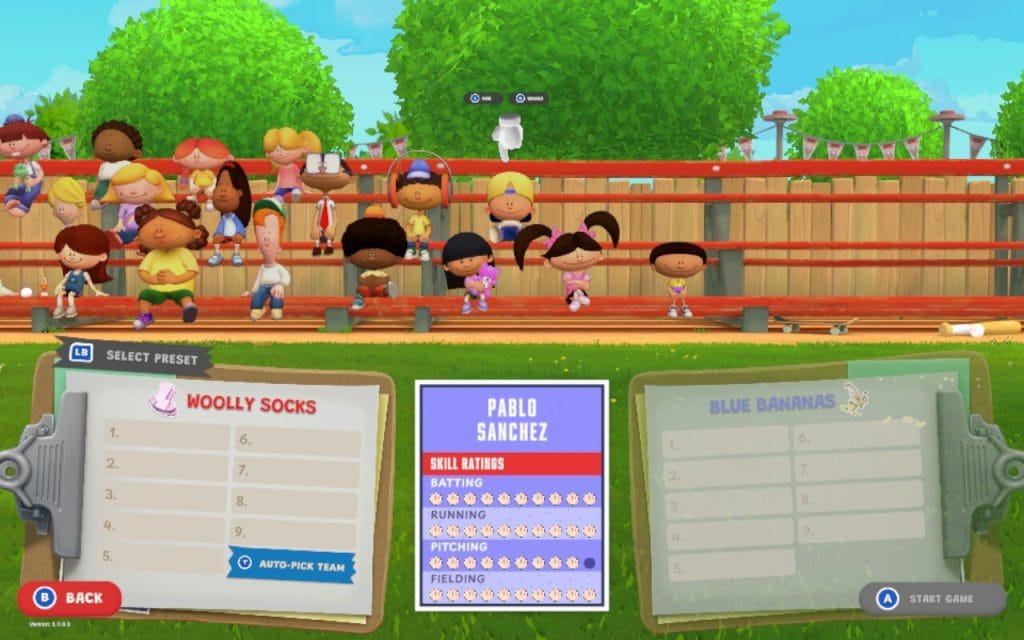
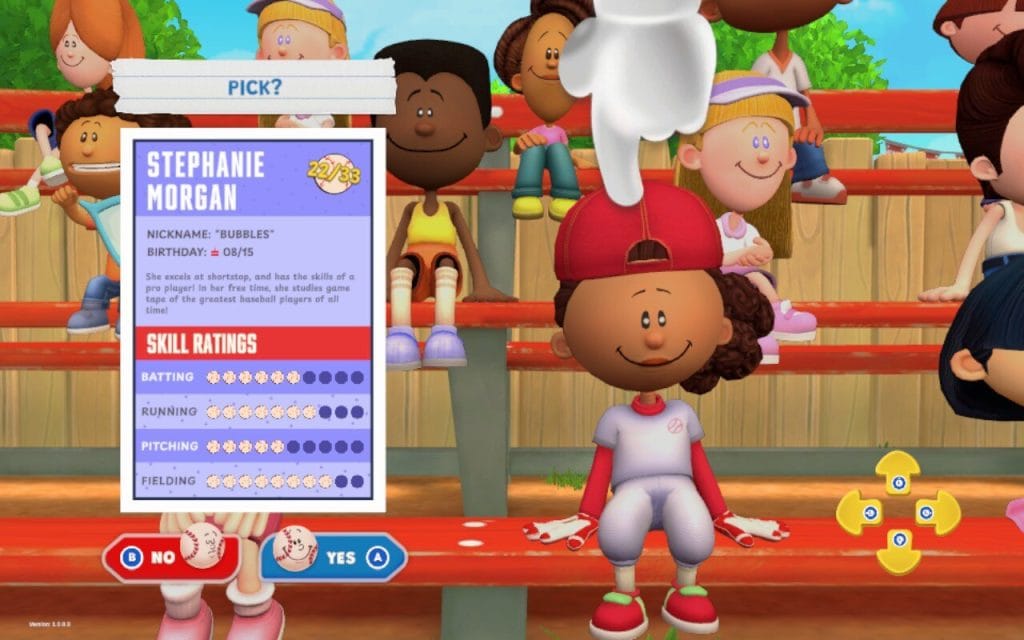
When I saw all my old friends sitting on the bleachers, I cheered out loud. I was surprised that I could remember so many of their names — Kenny Kawaguchi, Stephanie Morgan, and of course, Pablo Sanchez! I loved that Backyard Baseball (2026, Mega Cat Studios and Playground Productions) let me dive right into a pick-up game immediately.
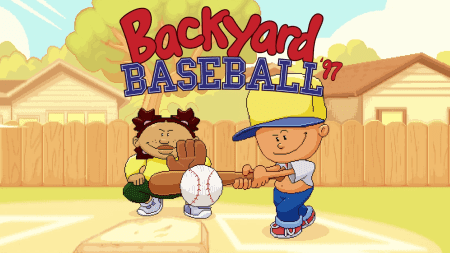
Like many other millennials, I grew up playing Backyard Baseball (1997, Humongous Entertainment) and other Backyard Sports titles. I still think fondly of those games and other Humongous creations like Pajama Sam, Spy Fox, and Putt-Putt. The property rights for these beloved games were cut up and sold over the years as Humongous changed ownership. Through hard work, Playground Productions (established in 2022) saved the sandlot. Last year, they released a remaster of Backyard Baseball ’97 that got people excited again about the point-and-click sports franchise.
Released just two weeks ago, Backyard Baseball (2026) is a new game built from the ground up that delivers on colorful nostalgia and playful baseball shenanigans. Unfortunately, it failed to meet my expectations as a modern gamer, and I’m not sure how it will land with new, young players today.
Changing With the Times
The pros of the Backyard Baseball remake are obvious: rich graphics, updated mechanics for batting, and new audio recordings. There’s a lot of humor and heart in the game, which can be most clearly seen in the writing of the color commentary. In my first pick-up game, the two hosts — Sunny Day and Vinnie the Gooch — joked that it seemed like we hadn’t played ball like this “since 1997.” Comments like this are clear winks for returning adults.
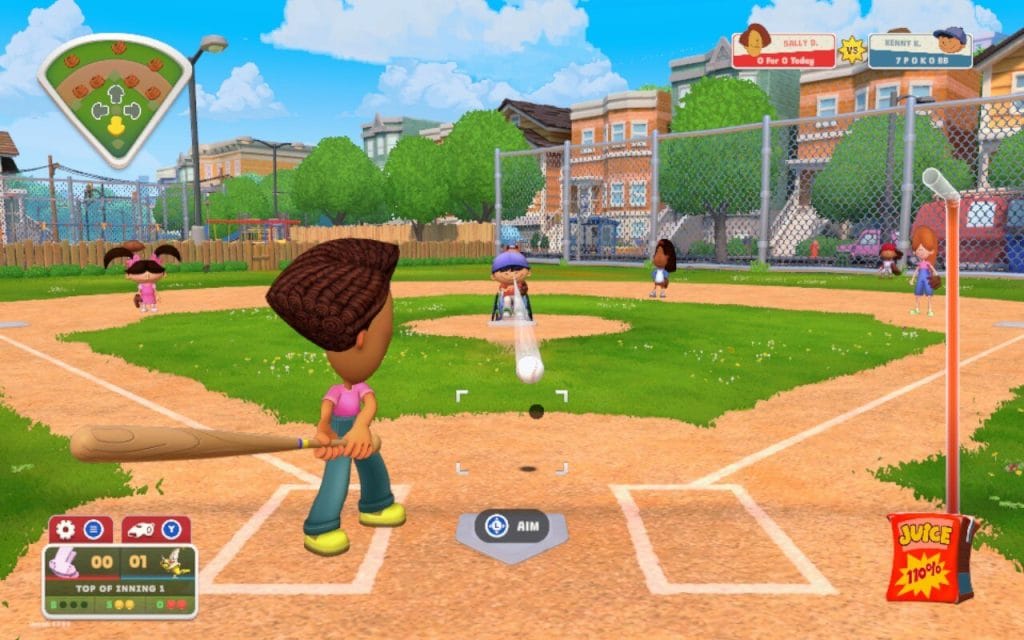
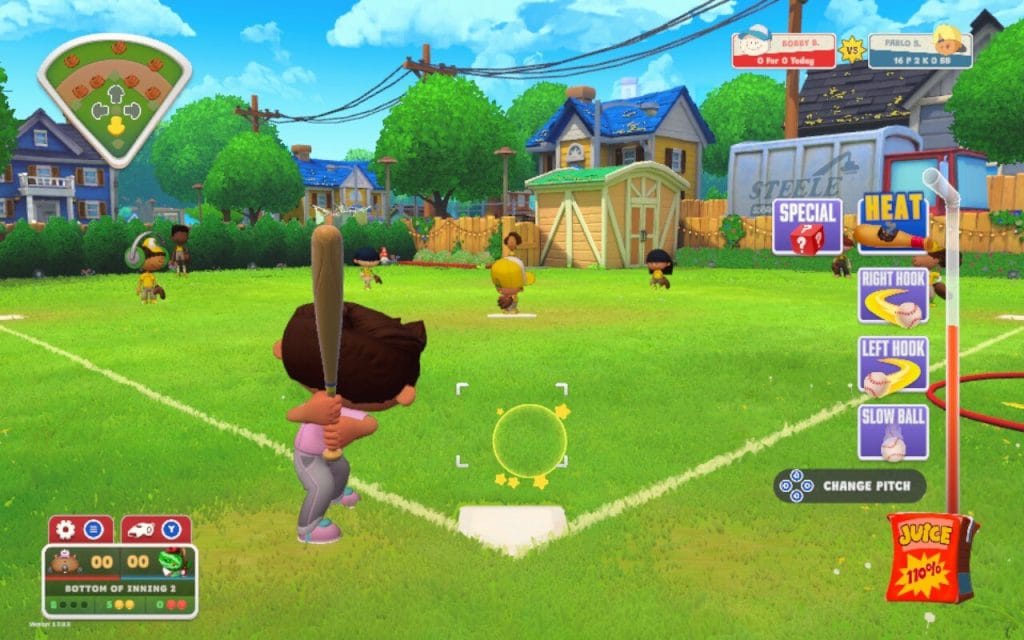
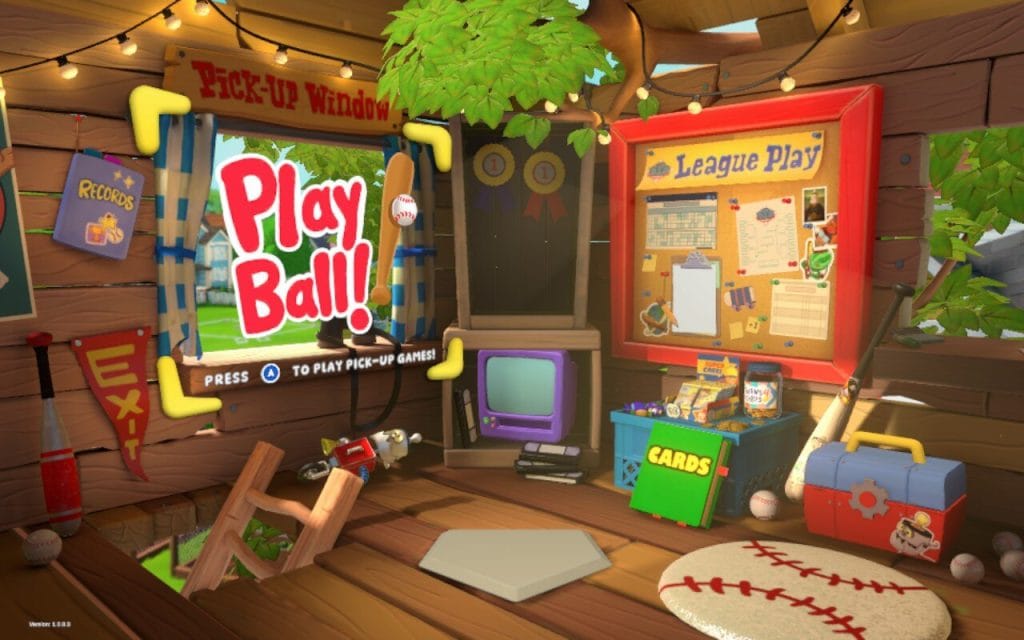
Visually, the game is a colorful feast. There’s a bunch of fun little touches, like putting stickers on a bat, playful menu designs, and reviewing player baseball cards in a binder. I enjoyed directing Pablo to give a pitch some “juice” (which was shown with an energy meter that was literally a juice box).
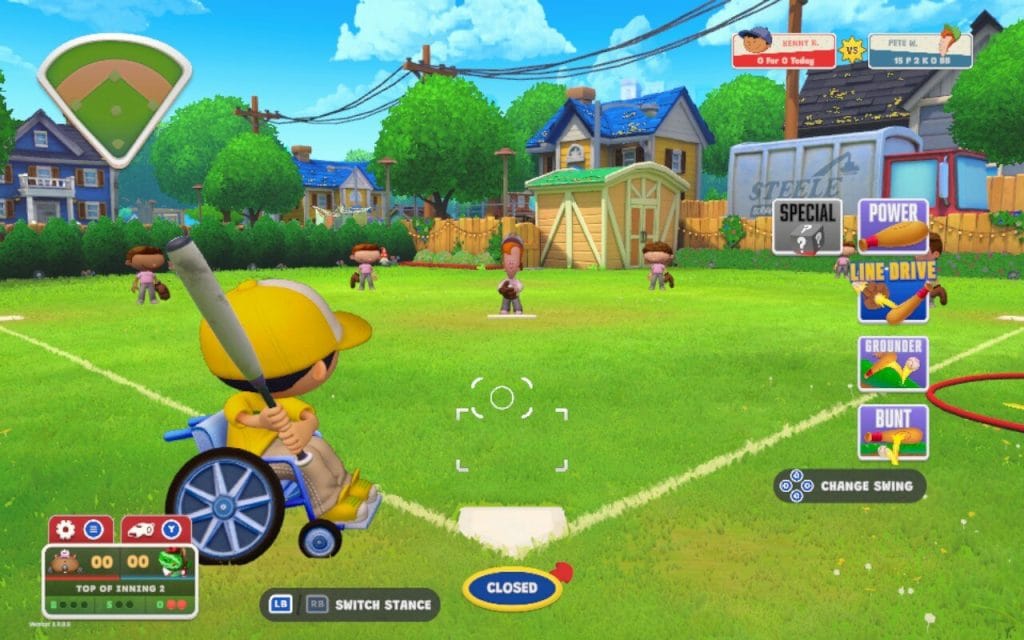
All of the graphics are 3D models compared to the 2D sprites of old, making for a much more visually stimulating round of ball — especially night games, which are new this time around. Each character has a unique animation when they step up to bat, making them feel more personable.1 Pablo cheerfully waves at the player, as if he knows he’s just that good.
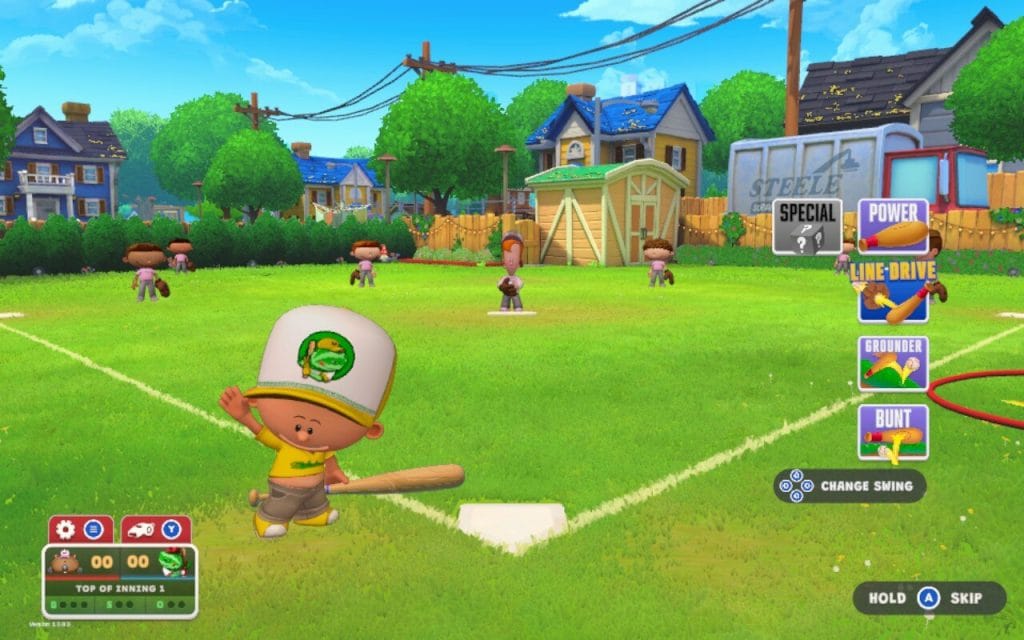
There’s a lot to play with. To start, players can access 30 returning characters, five stadiums, and five gameplay modes (including wiffle ball). Additional characters (up to 10) and lots (another five to six, depending on how you count) are locked behind in-game achievements that are a bit obtuse, but at least it’s not micro-transactions.
Additionally, there are many gameplay settings to customize, from making batting easier with guides to turning off neighborhood kid trash talk. If what you really want to do is just hit the ball with old friends, then you’ll have a good time. But if you want more than that… Well, manage your expectations.
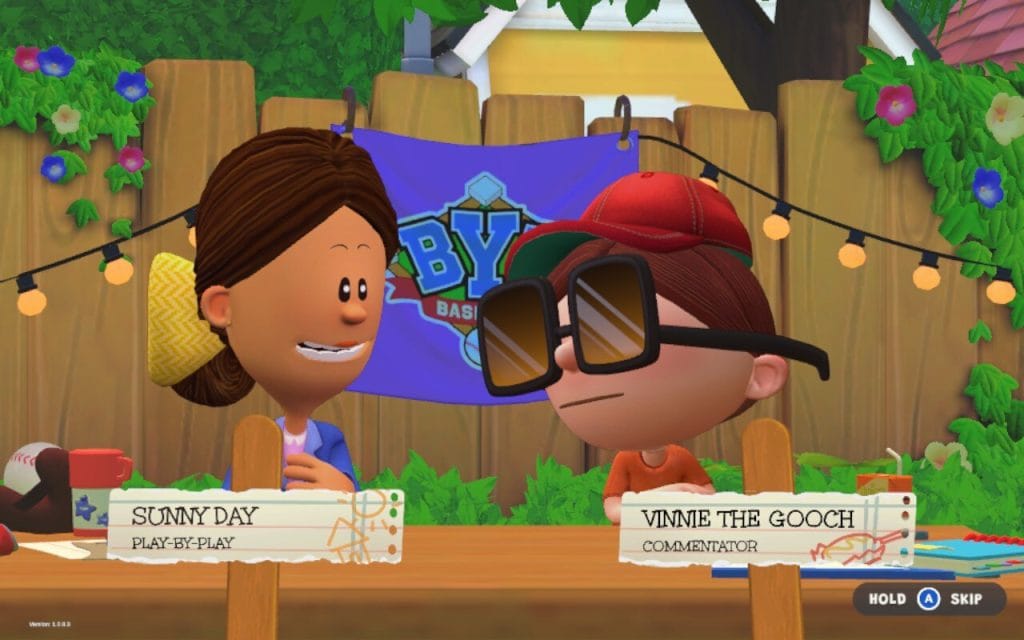
When the game falls short, it feels like it’s because it hasn’t fully maximized its potential in the present. For example, some of the kids’ voices sounded really cartoonish. And like, yes, I know they are cartoons, but voice acting in video games has evolved a lot as a field since the late ’90s. Characters with accents (including Pablo) especially sounded too broad to me and not true-to-life; they often don’t sound like real kids, and sometimes not even like real people.
Similar to the original, there is no plot in Backyard Baseball (2026). There is an option for League Play in which players can customize a basic team jersey and play through a season of games. But other than that, there are no player arcs or missions to save the neighborhood or anything like that. While sports games don’t have to have a story (and many writers, including here, have argued in favor of focusing on the sport), I did think this was a missed opportunity.
I would’ve liked to see Backyard Baseball come into its own more as a game rather than feel like a glamorous retread of the past, especially when it has gameplay struggles that are reminiscent (in a bad way) of the early 2000s.
How To Play Ball
My biggest critique of Backyard Baseball (2026) is that both its tutorial and its CPUs need work.
Let’s start with the former, which is tucked within the Pick-Up Game menu. In my opinion, the tutorial should be featured prominently in the clubhouse to improve the user experience. As it is, the tutorial is very missable.
Backyard Baseball (2026) may be easy to start, but it’s not easy to get good at. Each screen of game time has many different colorful buttons and icons that appear with no explanation. (They can also sometimes be very hard to read on a Steam Deck screen.) I learned through trial and error (mostly the latter) until I remembered the tutorial existed.
Strangely, the laboriously slow tutorial never actually explains how baseball as a sport actually works. The first lesson is about hitting the ball and that “three strikes make an out,” but there is no context for what a strike is or why an out matters. Adults who play are likely to know what an inning or a ball is, but young players (for whom the game is clearly targeted) might not.
The game itself is just hard to learn and certainly to master, especially in fielding, and this is where it comes to the CPU — both as a competitor and the system that runs your own players’ movements.
I would’ve like to see Backyard Baseball come into its own more as a game rather than feel like a retread of the past, especially when it has gameplay struggles that are reminiscent (in a bad way) of the early 2000s.
For example, when you are playing the field and an opposing runner gets to base, the word Safe! appears on screen, but then there are several lagging seconds where it’s unclear what’s happening. So, you might — on purpose or by accident — attempt to throw the ball to the pitcher to “wrap up” the play and continue on with the baseball game. However, this backfired on me, as the clunky controls meant I accidentally overthrew to the catcher instead, who totally missed the throw and ambled slowly after the ball, ultimately enabling a home run off an in-field grounder. This happened multiple times. It was really, really annoying.
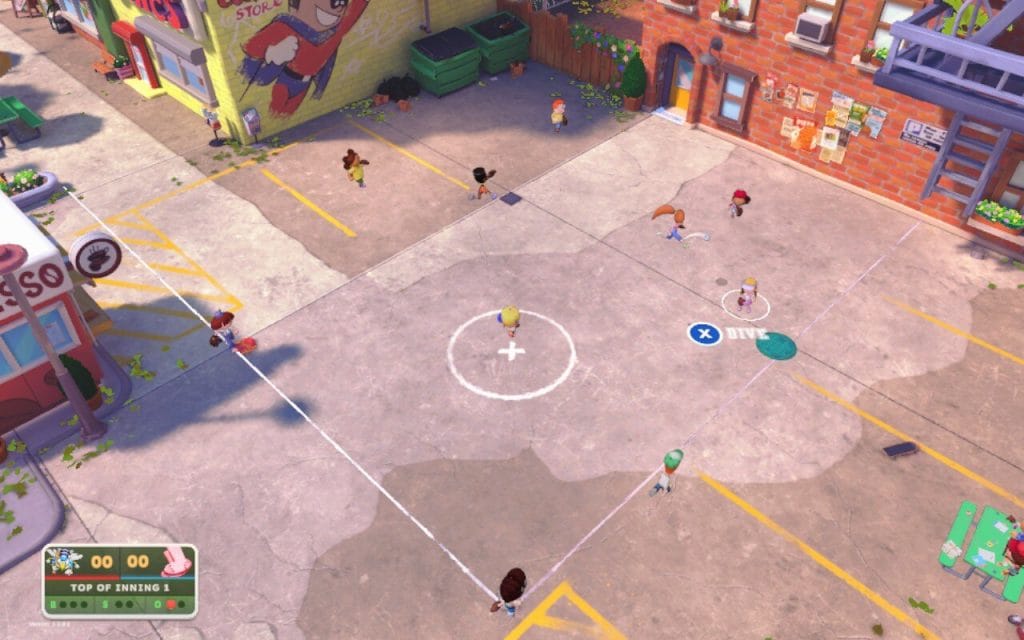
If a ball went to the outfield, that was worse. Similar to Madden and other sports games, the game auto-selects an individual player that you might want to take control of. Unfortunately, it was never the kid who was nearest the ball, meaning I watched several characters sprint and fail to get the ball as I fumbled which one I controlled. The game doesn’t do a good job of signaling when you’re within range of a ball or not; I frequently hit “dive” only to find out that the character was still too far from the ball. It’s also difficult to tell which other character you’re throwing to, causing me to inadvertently pass to someone who had auto-run to stand near my actual target.
Every single kid, no matter their stats, seemed to have no idea that they were supposed to run toward a ball, dive for it if need be, and then throw it to first. Or, if there were already three other kids running to the ball, that you don’t ALL need to run there, too. In my first game, I groaned out loud as I watched my team fail to get a single player out over five innings entirely due to bad throws and mistimed dives. And again, yes, some of this is user error… But I often felt the players of my team were fighting against me as a video game player.
As a result, I found myself regularly only enjoying about half of my time on the field in Backyard Baseball. When things were flowing, I had fun hitting runs and tagging outs. When the game struggled mechanically, I just wanted to give up, and I don’t think that’s the lesson that Mega Cat or Playground wants youth to learn.
Early Out
As I’ve thought about my time with the game while writing this review, I keep coming back to one thought: I wish that Backyard Baseball (2026) had instead released in early access on July 9.
I did not even finish my first baseball match, exiting out early because I was so annoyed. Many Steam reviews report similar experiences, citing bugs and infuriating fielding. It’s obvious that the game still has some work to do, and that’s why many studios choose early access — to field-test gameplay and figure out what needs improvement. Those old games were point-and-click, and this title feels like it needs a lot of fine-tuning to be ready for console controls.
During my playthrough, I often struggled to get characters to go where I wanted them to, and not just on the field (which, again, was quite janky). Even when selecting players on the bleachers, clicking down didn’t always get me to a lower row, and I had to do a finicky zigzag motion to get to the right person. Sub-menus for choosing the type of pitch or bat swing were not always responsive to my button commands or joystick efforts, so sometimes I just went and tapped the screen. The game also has a lot of small text that’s a bit hard to read. The game, to be fair, is not Steam Deck Verified, but rather the yellow shrug-shoulder of “Compatible.” I bet a point-and-click desktop player would have an easier time, but this does mean the forecast is a bit more nebulous for how Backyard Baseball (2026) will do on consoles later this year.
I am sure there were strategic reasons for releasing in July (including the baseball season still being in full swing and appealing to kids on summer break from school), but it feels rushed. If the game had been in early access this summer with a planned full release in the fall, the studio could’ve made sure the game was ready. As it stands, it feels incomplete — and at least is in one respect, since the online competitive mode is not yet available. Yet the game has been launched as a finished product, and thus, I have to score it as such. Right now, while Backyard Baseball is a fun nostalgic trip, it’s not a home run.
In the Dugout
What is perhaps most impressive about Backyard Baseball (2026) is what happened behind the plate in order to save the franchise. Long story short, school teacher Lindsay Barnett fought tooth and nail to bring the franchise back — Alessandra Schade did a great piece at The New York Times about it. Similarly, our own Zack Gulinello had a fantastic time talking to Barnett and the Backyard team at PAX East. There’s a lot of heart at Mega Cat and Playground, and I remain optimistic for the future of the franchise.
Backyard Baseball (2026) won’t hit consoles until later this year — August 18 is the scheduled release for PlayStation 4 & 5, Xbox Series X/S, and Xbox One, and it has a TBD 2026 window for Nintendo Switch 2. I’m curious to see how the game performs on those platforms, especially because I think a lot of my frustration had to do with playing the game on Steam Deck in a joystick layout. I believe strongly that a game should play equally well on every platform it launches on, and I hope the developers can learn from the PC release in advance of consoles.
Right now, while Backyard Baseball is a fun nostalgic trip, it’s not a home run.
Final Thoughts: Batter Up!
There is a lot of potential in the future of Backyard Baseball. I did not get a chance to play couch co-op (though I love that it’s an option!). To many players’ chagrin, online competition is still in the works, despite previously being promised at launch. For now, what’s here is fun and familiar but clunky.
I could recommend Backyard Baseball to nostalgic super-fans of the franchise or sport, but I’d struggle to suggest it for new players, especially given the price point and the fact that the 1997 remaster is available for $9.99. I myself am going to put Backyard Baseball (2026) down and come back later if/when there have been some patches.
Backyard Baseball (2026) still has a long way to go to be ready for the big leagues, but it’s a new season for the franchise. I’m so happy it’s making a return. These games taught me a lot about strategy, statistics, and teamwork; more young people deserve to get to play games like this. I wish the team all the luck in the world as they take the plate.
Score: 6.3/10
Backyard Baseball, developed by Mega Cat Studios and published by Playground Productions, released on July 9, 2026, for PC and Mac. It’s set to release on August 18 for PlayStation 4 & 5, Xbox Series X/S, and Xbox One; a Nintendo Switch 2 version is also planned for later this year. MSRP: $39.99. Version reviewed: PC (via Steam Deck).
Disclaimer: A review code was provided by the publisher.
- The characters also all have unique home run animations, not that I ever achieved them in-game myself. ↩︎

Amanda Tien (she/her or they) loves video games where she can pet dogs, solve mysteries, punch bad guys, play as a cool female character, and/or have a good cry. She began writing with The Punished Backlog in 2020 and became an Editor in 2022. Amanda also does a lot of the site's graphic designs and podcast editing. Amanda's work has been published in Mothership, Unwinnable Monthly, Poets.org, Salt Hill Journal, and elsewhere. She holds an MFA in Fiction from the University of Pittsburgh and a BA in Creative Writing from Columbia University. Learn more about her writing, visual art, teaching, graphic design, and marketing consulting at www.amandatien.com.