
I have been eagerly awaiting The Witch’s Bakery since I tried the demo during Steam Next Fest in February. Imagine me standing outside in the cold in a line around the block at a cutesy bakery trying to get the hottest new pastry. (Yes, I lived in New York during the cronut craze.) After finally taking a bite, I am satisfied, but I wonder if it would’ve been better had I waited a bit longer.
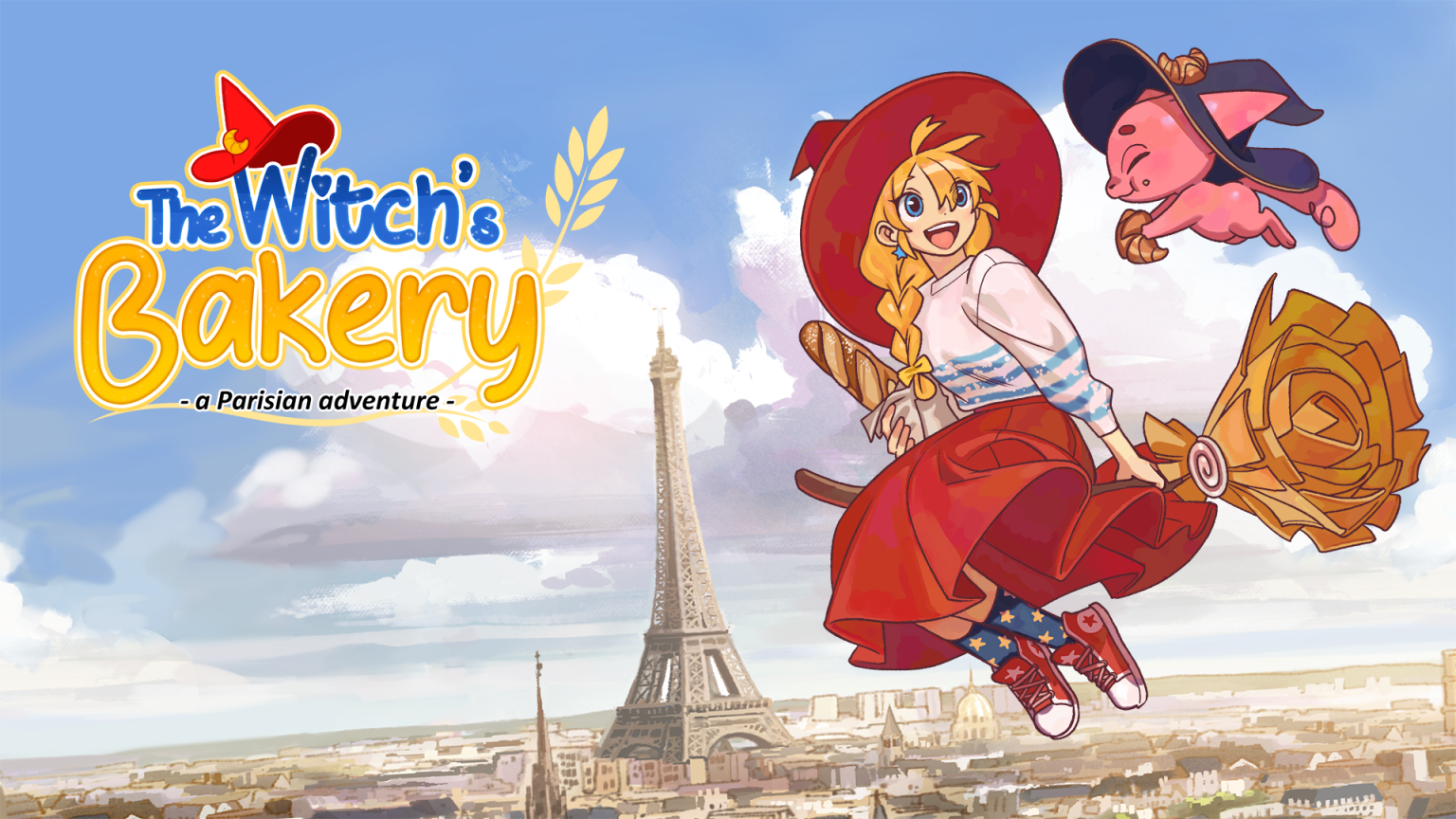
The Witch’s Bakery opens strong with a gorgeous anime-inspired cutscene depicting Lunne, a small-town witch, moving to Paris to open a bakery with her “associate,” a floating pink morph creature named Orio. Lunne is a “Heart Mage,” which means she can dive into people’s souls and help them work past regrets, and she can also sprinkle some emotionally supportive magic onto croissants.
Therein lies the main tension in the game. The Witch’s Bakery feels torn between two very different ideas: a cozy bakery simulator, and a serious-ish puzzle game about mental health. Throughout my 20 hours with the game, I felt the French-based studio Sunny Lab struggling to maintain that balance.
Haute Cuisine
I have digested a lot of cooking and baking content in my life. I interned for nine months at Food Network, and I regularly watch The Great British Bake Off. I co-founded and ran a food magazine in college. I wrote a review series of culinary documentaries. I am aggressively good at Overcooked! So, all to say, when I first saw The Witch’s Bakery trailer, I knew I had to play it, and my expectations were high.
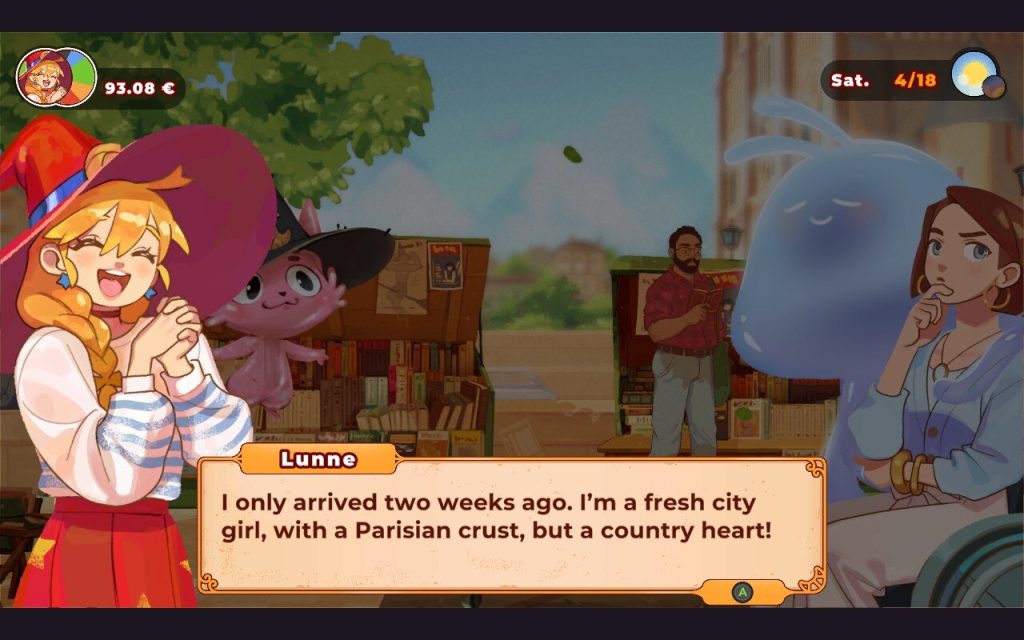
The art of The Witch’s Bakery is so gorgeous, a mix of Japanese manga inspiration and French watercolor Instagram influencer. The game is hand-drawn; no AI here! The visual aesthetics are supplemented by delicate instrumental music, well-timed sound effects, and occasional bursts of French dialogue such as, “Bonne soirée!”
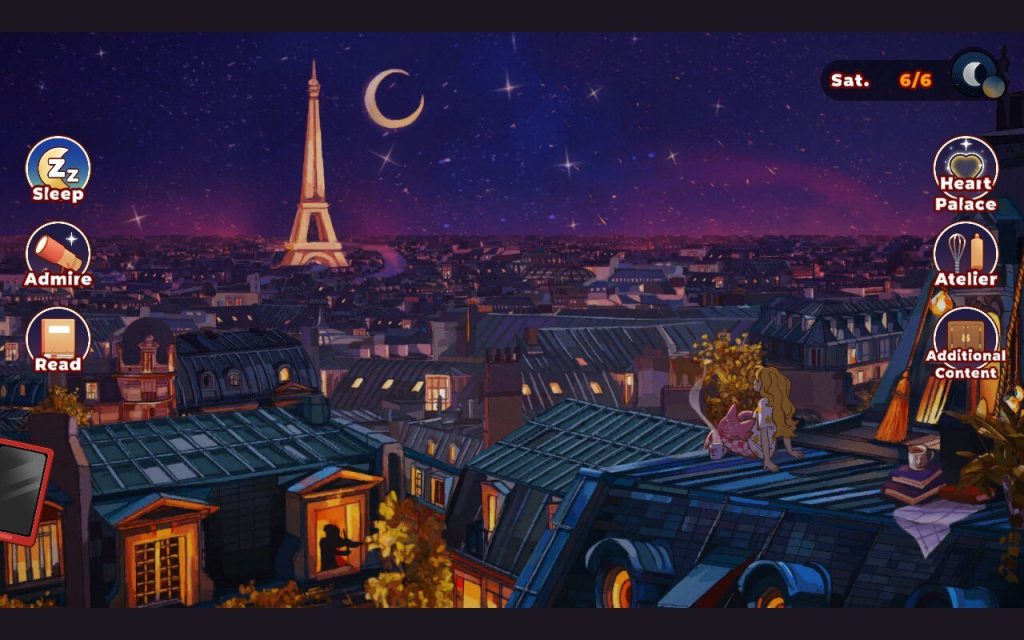
This 2D narrative adventure is clearly designed to capture a vibe. Take the game’s “let’s wind down for bedtime” screen — Lunne sits on the roof of her apartment building with Orio curled up on her lap, looking out at the Eiffel Tower while a luscious rendition of “Claire de Lune” plays. This screen was so cozy that I sometimes also fell asleep in real life because I was so comforted. In one word, The Witch’s Bakery is charming.
The Witch’s Bakery is close to being a great modern cozy classic, but I think it needs more time to cook.
Players can decorate their bakery in a fun expression of individuality. I loved changing up my lamps or bread stand. The aesthetics of the baked goods are reminiscent of the famous illustrations by Tom Hovey on The Great British Bake Off.
Beyond the bakery doors, Sunny Lab makes Paris feel as vibrant and diverse as it is in real life. I was impressed by the inclusion of a main character in a wheelchair, something we don’t normally see in media, and her chair was well-animated and thoughtfully mentioned in dialogue. There’s an interesting cast of characters to befriend. Late-game storylines especially are nuanced and interesting. There is some interesting world-building here with regard to magic, which makes The Witch’s Bakery more compelling than a gacha mobile cooking game or a generic fish-out-of-water story.
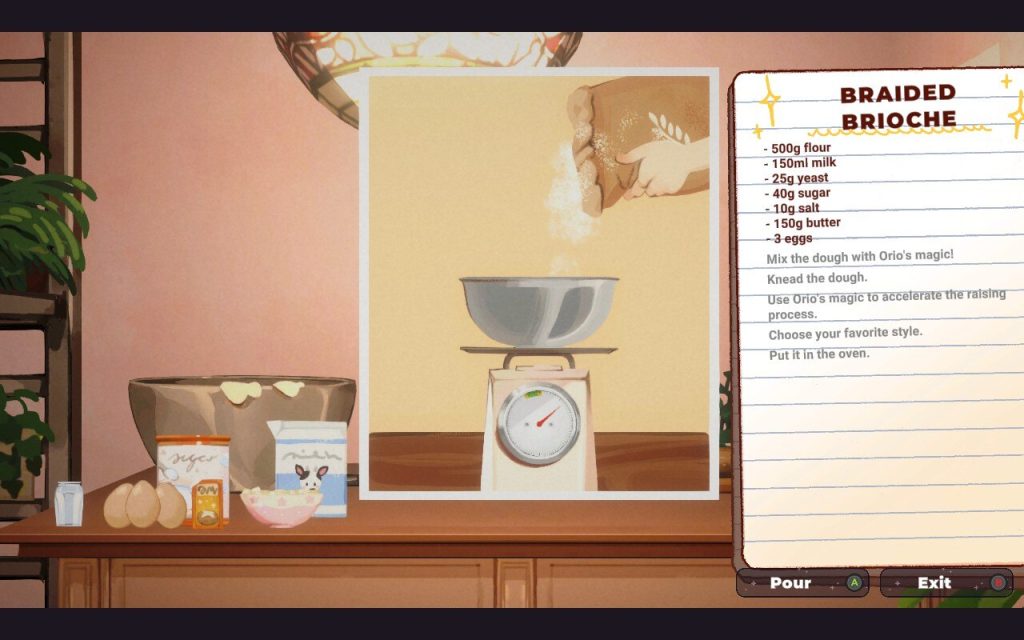
Still, my favorite part of The Witch’s Bakery was when Lunne practiced recipes in her “atelier.” Baking is a beautiful, detailed experience where players have to add ingredients one by one and roll out pastry. While pretty, however, it’s a bit of an empty experience where the player simply imitates instructions. I intentionally messed up a recipe once, and the dish still came out fine, rendering any mimicry of actual baking meaningless. I told myself it was just the magic. Still, it was so pretty and well executed that I couldn’t help but enjoy it. Unfortunately, baking is actually not the main part of The Witch’s Bakery.
Let’s Cook
In my experience, cooking games are most successful when players have to balance frenzied prep with efficient delivery — think of games like Overcooked and Delicious World. Or, they have to focus so fully on the ingredients and cooking experience with no service involved at all, like Venba or Cooking Mama. Unfortunately, The Witch’s Bakery tries to have its cake and eat it, too.
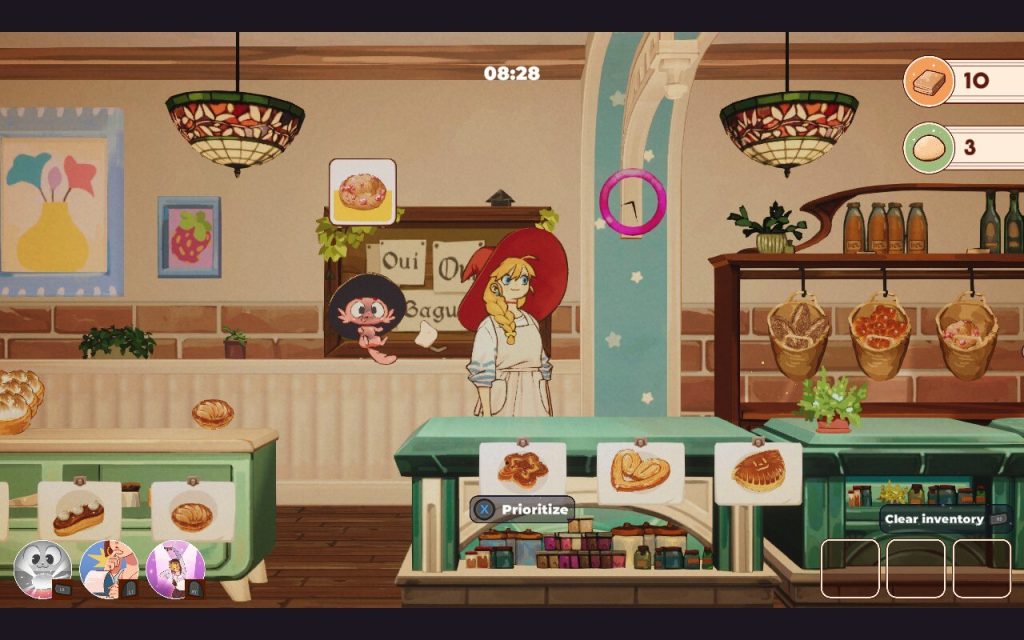
The actual “kitchen” play is kept entirely to the side; players have to choose to practice baking in their “atelier” at night at the cost of losing energy, and, aside from occasional options and late-game choices, can only do this once per in-game day. The main gameplay loop includes opening the bakery each day for customers. Orio, Lunne’s “familiar,” actually does all the baking, repeating what he has seen Lunne do. As a result, players as Lunne simply spend the days walking (ever so slowly) back-and-forth in the bakery to give people what they want, occasionally trying to make more dough in a repetitive mini-activity. It’s not that fun to not be the one baking, but, okay, maybe the delivery could be fun in its own way.
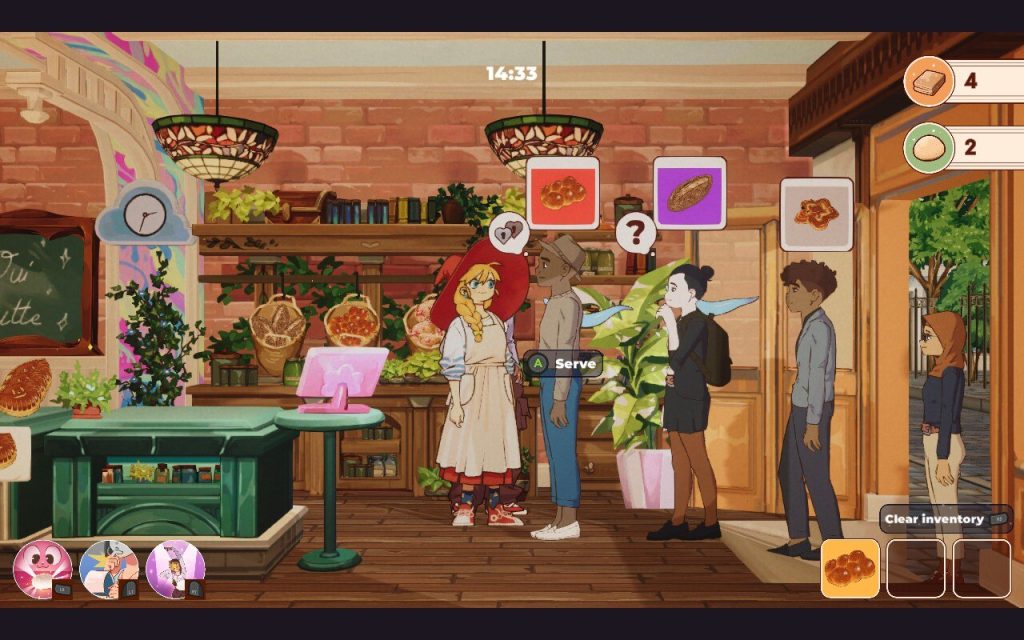
Unfortunately, the game falters at one of its core pillars. Most efficiency games like this would show you clearly what everyone wants (think of an order ticket in the upper left corner). Then, the player finds joy in seeing how much they can get in their pockets and charting the most efficient path before running back to the customer. But in The Witch’s Bakery, customers hover at the far right end of the level, even though all the baked goods are on the left side, so it is actually more of a mini-memory exercise than an efficiency challenge. And, sadly, this just wasn’t that fun.
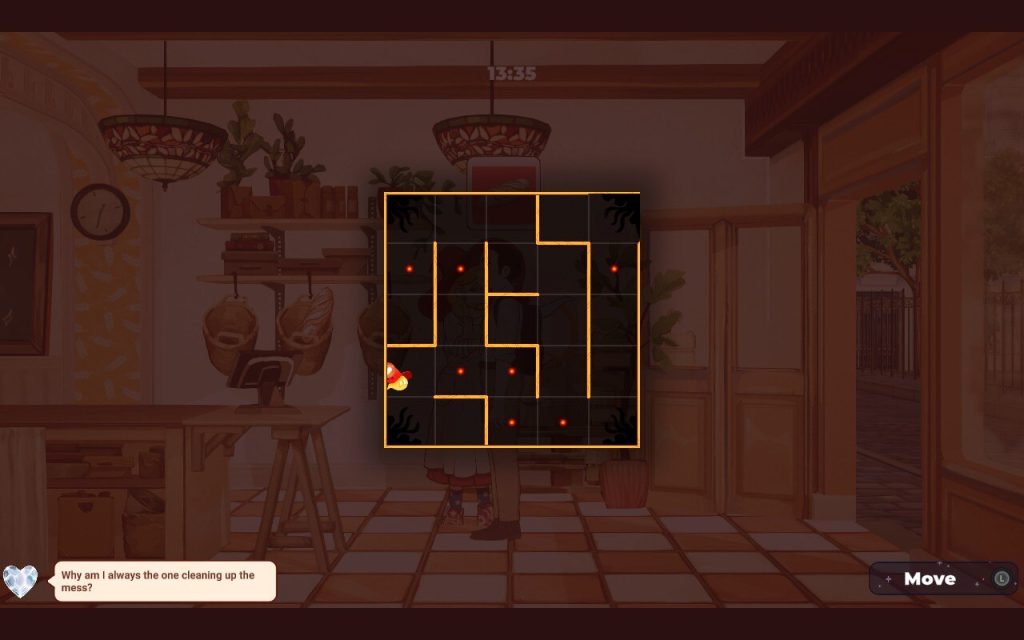
Occasionally, I would get into a flow state of running around the bakery and enjoying my speed-walking, but then the game gets in its own way yet again. Some customers come in with a small regret, visible only to Lunne, like a floating blue snake. When Lunne gives them a pastry, she sprinkles a tiny bit of magic on them, which opens up a mandatory mini-game. I often went out of my way to avoid serving these customers because I found doing the repetitive mazes so disruptive to the flow state and, again, just not that fun.
These micro pacing struggles also translate to the macro. Lunne’s skill and money progression moves very slowly, which made the early hours a bit of a slog. Everything in this virtual version of Paris costs quite a bit of money (so I suppose that’s a nice nod to realism), so it can be hard to build friendships or upgrade the bakery. For example, to befriend shopkeepers, you have to buy things from their store, some of which are wildly expensive, and only by making purchases each day do you increase their heart level. I bought every single item from a bookseller named Hassan before I had filled up his “hearts,” and then he offered me a discount from his store because we were such close friends; too bad I had bought his whole stock already.
However, by 15 hours into the game, I had gotten enough upgrades that my bakery was so efficient that I often just stood around waiting for customers to come in (again, not that fun). One would think that the main focus of a game called The Witch’s Bakery would be the bakery, and yet, the bakery feels more like a jumping-off point for what the creators are more interested in — a story about hiding from feelings.
Deep Diving
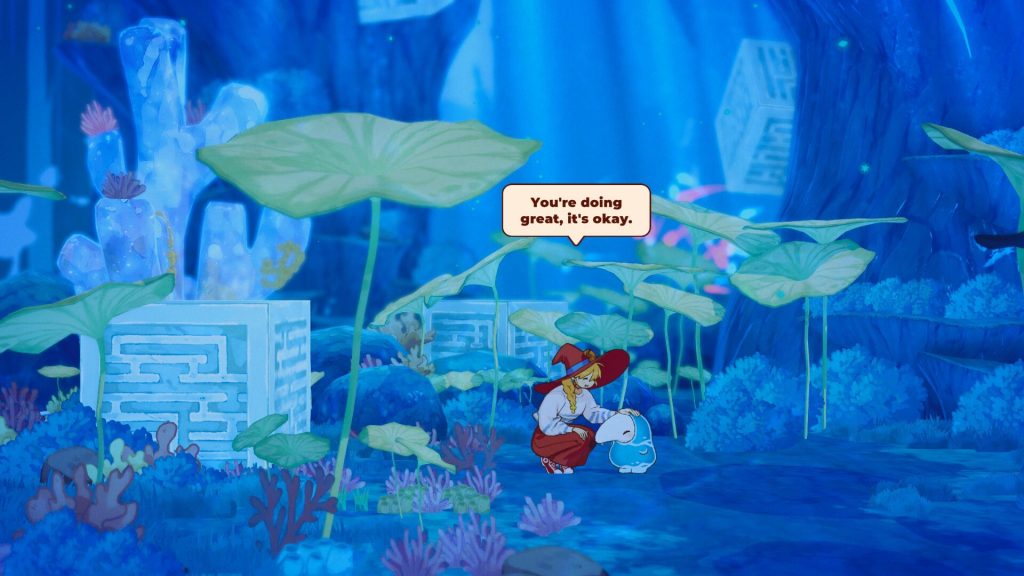
In the early hours of my playthrough, I had started to figure out where the scope creep had begun. When Lunne “heart dives” into other characters, she emerges into a vividly designed and complex level with various simple puzzles. Even though the underwater world of sadness in one character was absolutely gorgeous, I felt the “emotional truths” of what I found there to be as simple and straightforward as the puzzles inside. The heart mage content felt distracting from what I perceived to be the focus of the game: doing cute pastry stuff in Paris.
However, that might be a reductive take on The Witch’s Bakery because, as the game went on, I became more and more inspired by the characters, storytelling, and heart mage levels. I thought the writing got noticeably better as the game went on. I grew attached to characters who had previously annoyed me. I took lots of screenshots when something nice happened with one of the NPCs. And even though the dialogue could sometimes be a little trite, I admired what the story was trying to do in reminding us that everyone is on their own journey and has their own battles. The last third of the game in particular is impressively serious (the game’s menu has content warnings, for good reasons) for a game that features a flying pink not-cat making croissants.
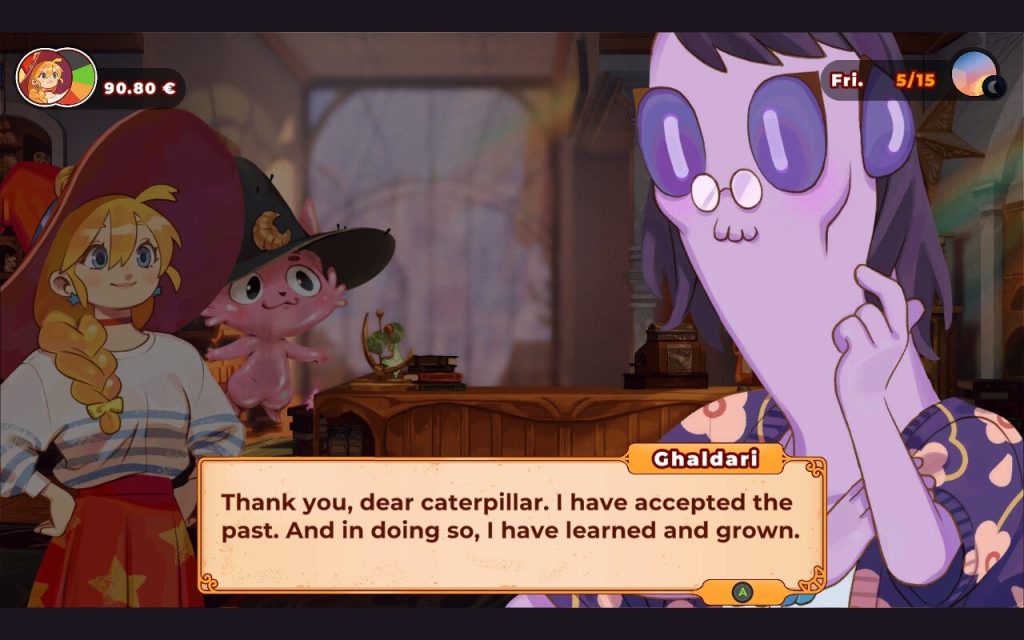
Once again, though, The Witch’s Bakery gets in its own way — some characters get a lot more screen time than others. Lunne will have text messages with some people she meets, but she can only build relationships with a handful of them. Of the people she can befriend, Lunne can only invite some of them out for a coffee or a movie. For example, I would’ve loved to invite Hassan out for dinner, but the only way to his heart was by spending money, sadly.
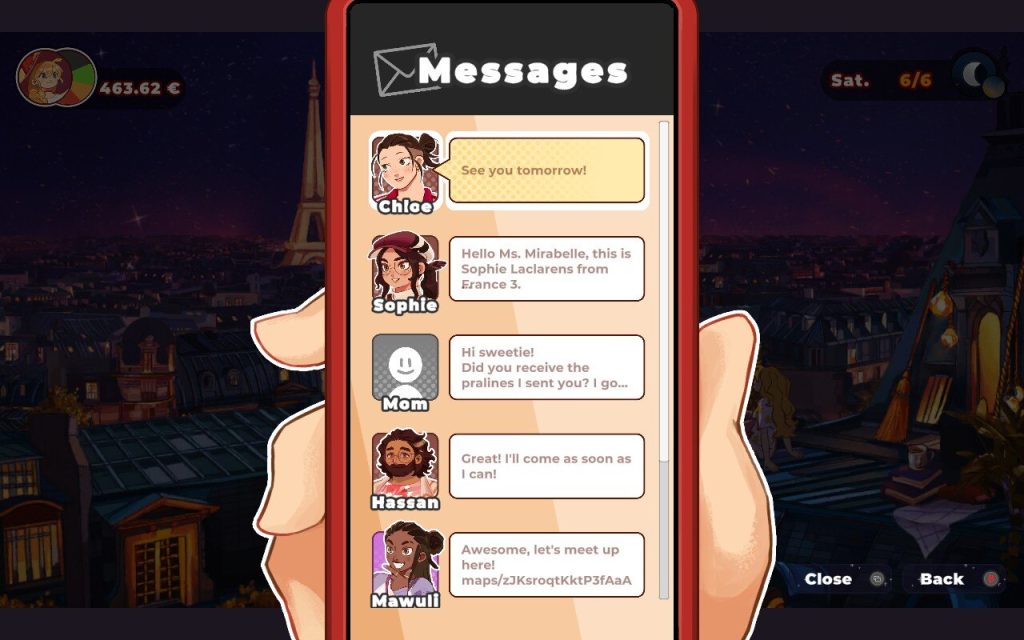
The most egregious misstep for me is that Lunne never answers a text message from her mom, who is also the only contact in her phone listed without a character portrait. At one point in the game, I thought maybe the creators were doing this on purpose, trying to say that Lunne herself had issues with avoidance and that she too needed to do self-work. But the game doesn’t get there — it’s just a failure to pay some respect to Mom.
Similarly, Lunne meets a man named Daniel at a park one Friday afternoon, and the player can choose to meet up there each week to reflect with him. It became one of my favorite relationships in the game. However, one week, he’s just not there. At first, Lunne and Orio are sad and worried; I went back again the next week, same time. He’s still not there. A pop-up indicates a quest has finished. And that’s it. He is never mentioned or seen again.
I found this very strange. I suppose I could bring my own reading into the game, like, isn’t it crazy how sometimes you bond with someone but then it’s just over and that’s it and that’s life? Or the magic of a fleeting connection, something about how people come in and out of your life like seasons? But Lunne and Orio, who otherwise are pretty explicit with their emotional analysis, don’t say anything. So, again, it feels like a missed opportunity… But again, perhaps all of this is just a problem of scope.
Big Appetite
Marketing materials claim the group is made of “industry veterans,” but this is Sunny Lab’s first game as a studio since they launched in 2022. The Witch’s Bakery feels like an incredibly ambitious project as a debut. It’s half bakery management, half visual novel. It’s set in Paris (a real place that needs to be paid proper homage), but also a magical alternate universe of it (which needs proper background lore). There is so much going on here that is quite impressive and beautiful; there are some Big Ideas here and, again, absolutely gorgeous designs.
But there’s also a lot that gets lost — Lunne’s Mom and Daniel are just a few examples. Key details about who Lunne and Orio are to each other don’t get revealed until pretty late in the game, and some only if you go out of your way to read bonus lore. This is fine, but I often found myself experiencing story that should have been the main entree, rather than tucked away as an optional snack. I kept wondering, why did Lunne come to Paris in the first place? I never got an answer.
One would think that the main focus of a game called The Witch’s Bakery would be the bakery, and yet, the bakery feels more like a jumping off point for what the creators are more interested in — a story about hiding from feelings.
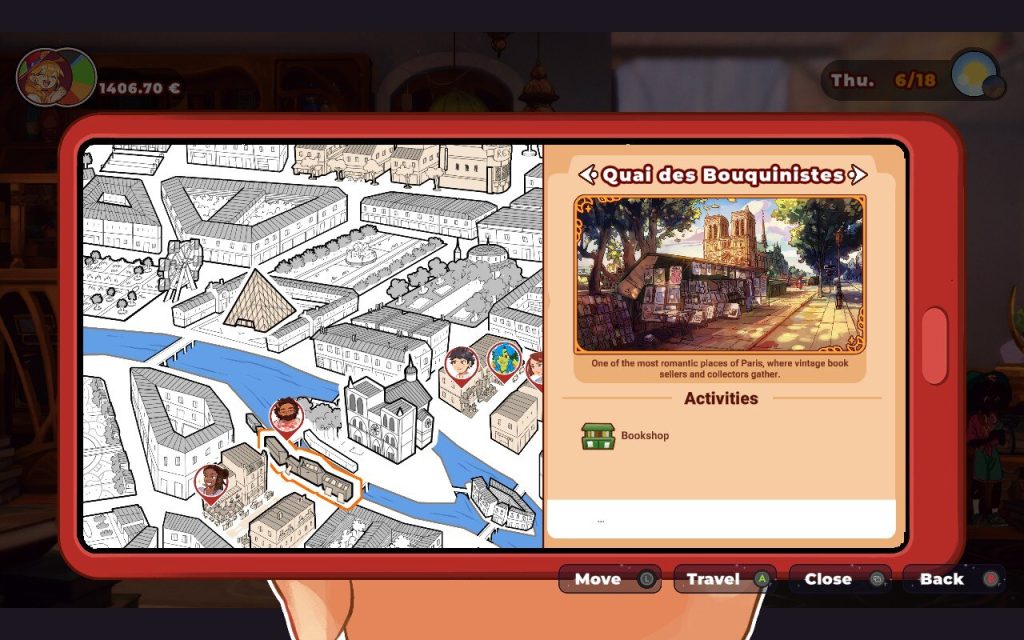
There are many locations that the player can visit, but most feel like set dressing (beautiful set dressing, to be fair) rather than a place I was really exploring or doing things in. The map sometimes gives the feeling of freedom, rather than reality, as many side quests railroad the player into going to a certain location at a certain time. Perhaps most noticeably, when the game ends (again, after a pretty intense story), there’s no post-game — players can’t even return to the bakery to just bake bread and emotionally reset without starting an entirely new game. (There’s also no endless or sandbox mode.)
I got the sense that the game maybe just didn’t have as much beta testing as it should have. Maybe someone would have said that these mini-mazes weren’t that fun, or a tester would’ve brought up poor Mom’s unanswered text messages about pralines. There is clearly so much love put into this game that I want it to fulfill all of its own ambitious promises.
Final Thoughts
The Witch’s Bakery is close to being a great modern cozy classic, but I think it needs more time to cook. Some of the places where the game feels unfinished are noticeable. In addition to an uneven amount of time given to side characters, there are some inconsistent technical choices. The game often glitches after returning from a pause. Some days in the bakery end abruptly at 6pm, others linger on. Every day begins with a non-skippable comic book-style cinematic of Lunne getting ready for the day, and there are many repetitive, slow text conversations about meeting up for the movies or at a restaurant. I found some UX choices hard to parse, like how much time was passing or if making dough cost money or learning hours into playing that I could improve recipes.
A year from now, with a few more patches and maybe DLC for other characters, The Witch’s Bakery could be tidied up into a much stronger experience. I wonder if the developers bit off more than they could chew. They released simultaneously on multiple platforms. The game was delayed a few times. But I admire what Sunny Lab is doing here — they have baked a beautiful, delightful game with a very real, emotional gooey center.
As I played The Witch’s Bakery, I knew I wanted to review it. I wavered on what score I would give; I certainly liked it the more I played. The game reminded me of a coffee shop I often go to in real life; the beverage and service quality can waver dramatically depending on who’s working and what baked goods are in stock. It’s an independent business with employees from marginalized backgrounds, and it has a strong focus on community-building; I want the shop to succeed, so I try to be patient and supportive. But sometimes, you just want what you ordered.
Score: 8.0/10
The Witch’s Bakery, developed by Sunny Lab and published by Silver Lining Interactive, released on October 14, 2026, for PC, PlayStation 5, Xbox Series X/S, and Nintendo Switch 1 & 2, with future plans to release on iOS and Android. MSRP: $19.99. Version reviewed: PC (via Steam Deck).

Amanda Tien (she/her or they) loves video games where she can pet dogs, solve mysteries, punch bad guys, play as a cool female character, and/or have a good cry. She began writing with The Punished Backlog in 2020 and became an Editor in Fall 2021. Amanda also does a lot of the site's graphic designs and podcast editing. Amanda's work has been published in Mothership, Unwinnable Monthly, Poets.org, Salt Hill Journal, and elsewhere. She holds an MFA in Fiction from the University of Pittsburgh and a BA in Creative Writing from Columbia University. Learn more about her writing, visual art, teaching, graphic design, and marketing consulting at www.amandatien.com.