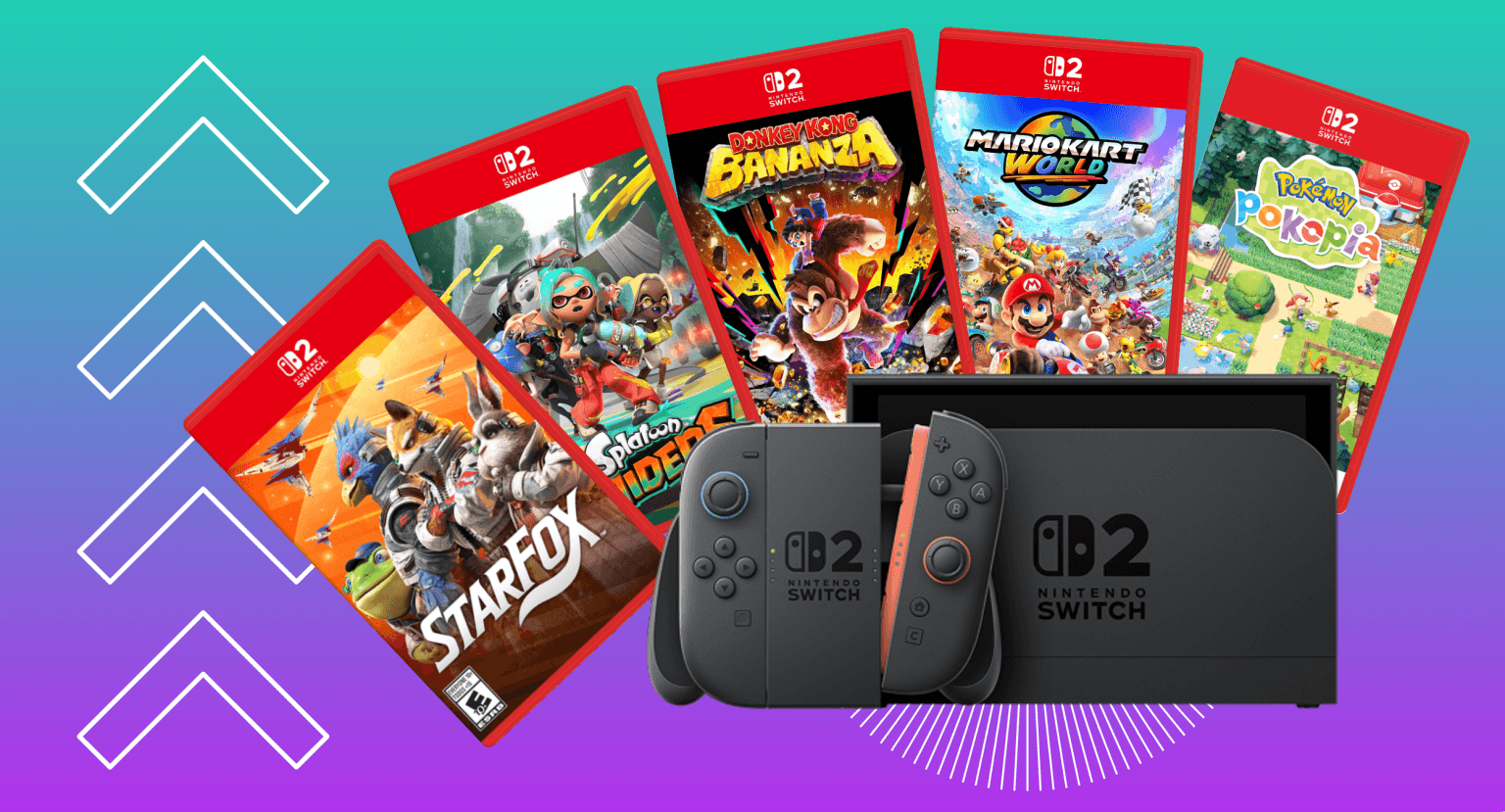

Everyone knows that the heart of every Nintendo platform is its library of exclusive titles. From the ultra-successful Super Nintendo with Super Mario World and The Legend of Zelda: A Link to the Past to the absolute flop that was the Wii U, which still had Super Mario Maker and the first Splatoon, every single piece of hardware the Big N has produced has relied on first-party output not just to sell units, but to determine the overall identity of that platform’s era.
For the Switch 2, Nintendo has placed a particular premium on third-party support, including excellent indies such as Hollow Knight: Silksong and Mina the Hollower and AAA darlings like Resident Evil Requiem and Cyberpunk 2077. While it’s a boon for players to have so many different things to play on their Switch 2 consoles — far more than most Nintendo consoles typically have this early in their lifecycle, anyway — the exclusives have defined this generation. Most notably, the range of first-party games has been particularly interesting, with multiple franchises pivoting in new directions and legacy franchises taking certain risks.
However you slice it, the Switch 2 has already had some pretty damn good games so far, with more exciting ones on the horizon. For this edition of Punished Favorites, we’re sharing our favorite Switch 2 games to date, with a focus on exclusive titles you can’t find anywhere else.
– Written by Sam Martinelli
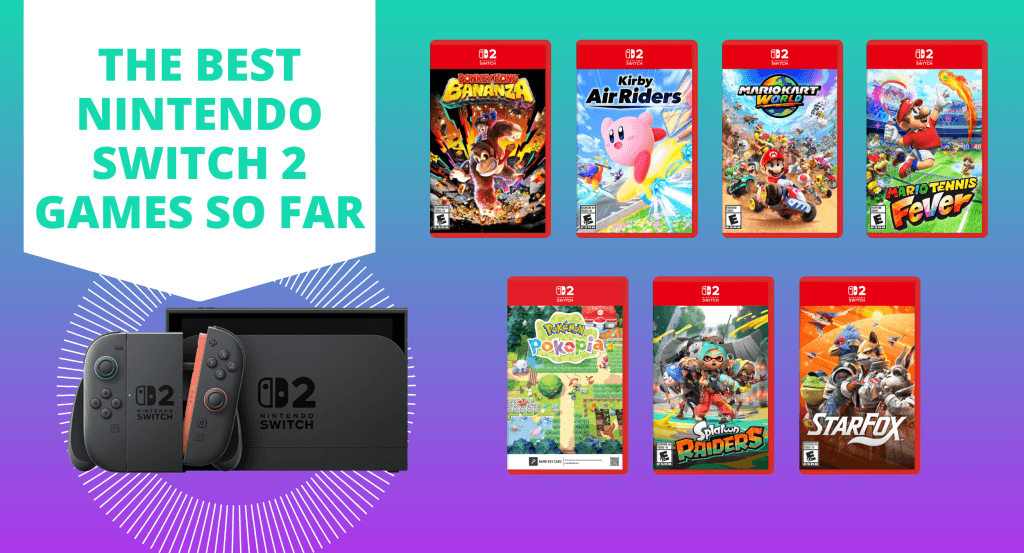
The 7 Best Nintendo Switch 2 Exclusives To Date
If you’re short on time, here’s the full list of the best Nintendo Switch 2 exclusives so far. Feel free to jump to a specific entry to read our thoughts:
- Donkey Kong Bananza
- Kirby Air Riders
- Mario Kart World
- Mario Tennis Fever
- Pokémon Pokopia
- Splatoon Raiders
- Star Fox (2026)
Editor’s note: Fire Emblem: Fortune’s Weave, one of the biggest Nintendo Switch 2 games of the year, came out shortly after this list was drafted. We’ll be sharing our official review in the coming weeks, so stay tuned.
Donkey Kong Bananza
As a lifelong Nintendo fan, I didn’t need much convincing to purchase a Switch 2 around launch. Still, when the Big N showcased that initial trailer for Donkey Kong Bananza during its first major Switch 2 Direct, I knew I had to have this console on day one. I simply could not miss out.
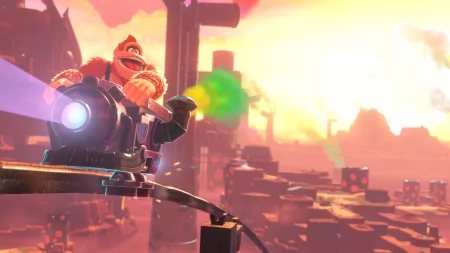
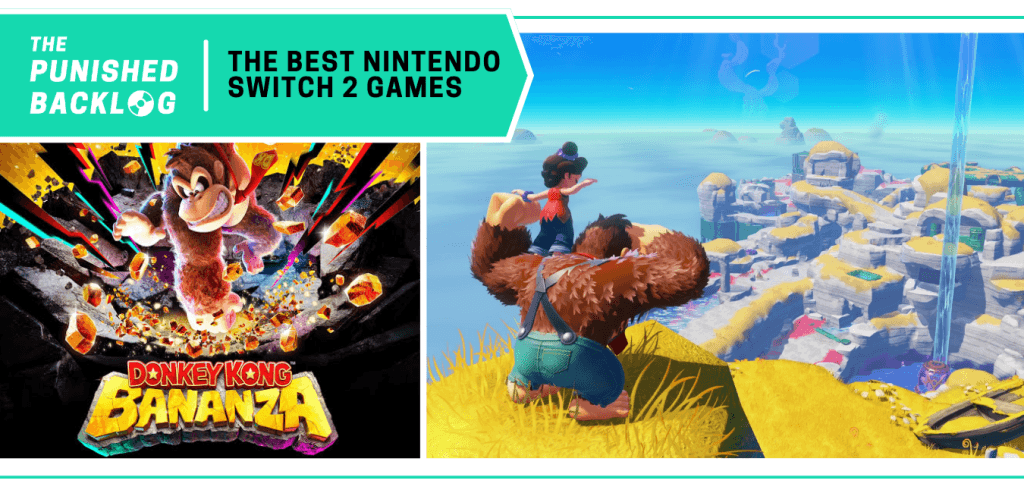
Bananza is unlike any other game in the Donkey Kong universe. It’s only the franchise’s second-ever attempt at a 3D platformer, yet bears basically no resemblance to the previous effort, Donkey Kong 64. Instead, it plays like a 3D Mario game, except if Mario had a power-up that turned him into the Incredible Hulk. The game takes standard 3D collectathon principles and applies Donkey Kong’s brutish strength, allowing the tie-wearing ape to smash through all kinds of different surfaces in search of gold, banandium gems, and fossils.
Moreover, Donkey Kong has a new partner in all this: a child version of Pauline, whose journey from reluctant singer to genuine rock star is as heartwarming to see as it is thoroughly exciting to experience, gameplay-wise. Together, the two take down evil enemies, traverse all kinds of wild terrain, complete hundreds of different platforming and combat challenges, and even learn to transform into different animals, all of which come with their very own song (all bangers, by the way). Bringing all this together is the expectedly excellent Nintendo platformer level design, stunningly bright and colorful visuals, and some truly unforgettable gameplay moments.
On the surface, the sheer variety of verbs involved in Bananza — smash, jump, climb, roll, glide, sprint — makes for a gameplay experience that consistently keeps the player engaged and throws enough curveballs to keep things interesting at all times. More than that, though, Bananza has tremendous heart to it. The demure Donkey Kong’s relationship with the garrulous Pauline is fairly touching, even if a little simplistic. Every single biome teems with character and possibility, where the player feels a powerful sense of wonder at every turn. For someone like me — someone who has treasured the Donkey Kong series for as long as I can remember — Bananza is a unique treat, one that I wished would never end.
– Written by Sam Martinelli
Read our Donkey Kong Bananza review.
Kirby Air Riders
By all accounts, Kirby Air Riders should have peaked as a fun but mostly forgettable launch-year title. That said, few Switch 2 games had me in a chokehold quite the way Kirby Air Riders did. In fact, not that many Switch 1 games did either.
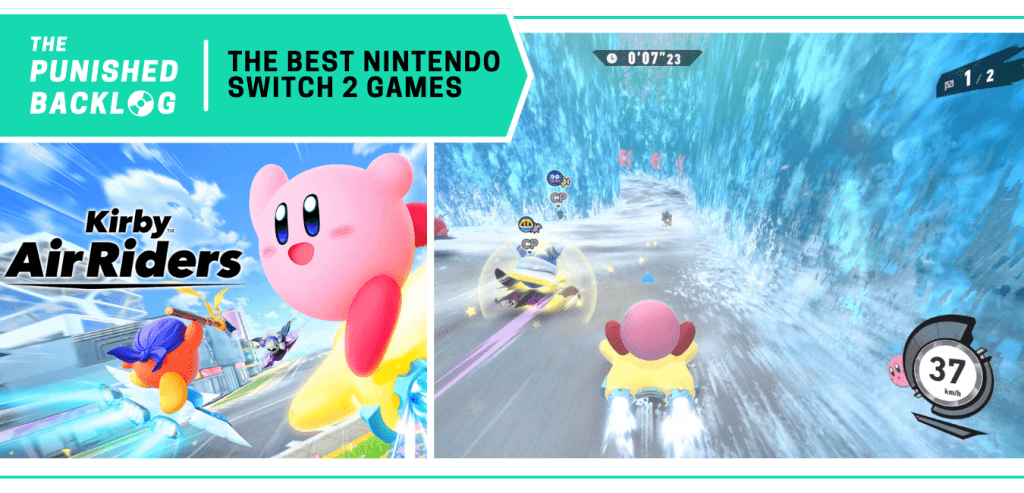
Air Riders, on its face, is a fairly simple game. The main Air Ride mode is a fast-paced racer where players select characters and vehicles with different attributes and try to best their opponents in some truly chaotic conditions. Unlike most other racers, though, everyone moves automatically, having to press a single button to brake while simultaneously charging up your boost. Most items you pick up along the way work automatically (e.g., firing rockets or swinging your sword near enemies without pressing a button), though Air Riders now also has added (gasp) a second button for special abilities that are unique to each character.
If Kirby Air Riders only had the aforementioned mode, I’d forgive you for calling it a clever but underwhelming Mario Kart knock-off. However, Top Ride and City Trial — the fan-favorite mode from the original Air Ride where players gather various buffs in an expanded city-like arena for five minutes before competing in a random mini-game — are back as well, and better than ever. I still can’t say I’ve played anything in modern racers quite as consistently thrilling as City Trial, and even the improved Top Ride mode — which is played in smaller courses from a bird’s-eye view — is well worth the player’s time.
The biggest change, however, is the introduction of Road Trip, essentially a roguelite mode where the player buffs up their racer over dozens of mini-challenges to eventually face some of the craziest bosses in the Kirby series, all while unlocking some truly bonkers lore drops. That’s right: Kirby Air Riders has an actual story, one that’s far more exciting than it has any right to be. Despite Nintendo showcasing City Trial as the main event of Riders, I probably spent the majority of my time with Road Trip, and will likely spend the majority of any future time with Riders there.
Kirby Air Riders is kind of a stupid game, and I can’t fault anyone for kind of hating it. Still, it’s an absolute blast for people like me, as it embraces chaos in a way that’s continuously tantalizing. I never really care if I win any race or City Trial; I just want to keep playing around in these wild environments and let the chips fall where they may.
– Written by Sam Martinelli
Mario Kart World
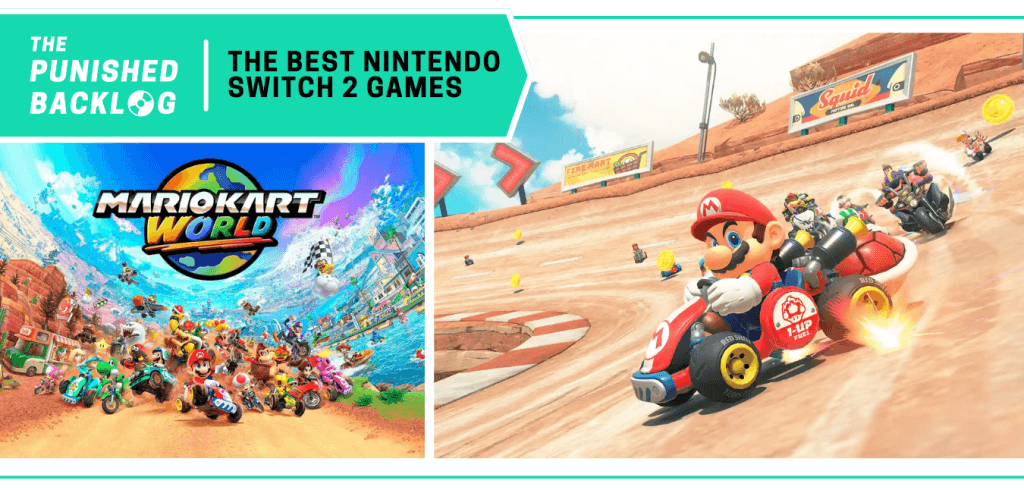
Mario Kart World caused plenty of hubbub at launch, specifically on account of its eye-watering price tag. Whereas many of the other Switch 2 games on this list — Splatoon Raiders, Star Fox (2026) — released at $60 or even lower (if you bought digitally), Mario Kart World cost the same flat rate no matter what: $79.99.
It was a painful pill to swallow, especially as the game itself has been light on updates in the months since release. Compared to Mario Kart 8 Deluxe, which boasts a staggering 24 Grand Prix cups, 96 tracks, and 50 racers, Mario Kart World is decidedly muted. The tracks are less iconic, the action has more peaks and valleys, and the lack of Link, Inkling, Villager, or Isabelle feels like a step back, not just in scope but in heart.
Based on that preamble, you’d be forgiven for thinking I’m low on Mario Kart World or out on it altogether. In reality, though, that couldn’t be further from the truth. Yes, the lighter track count is a bummer, but Nintendo’s latest kart racer offers plenty of charm off the pavement — quite literally.
Two standout additions turn Mario Kart World from a serviceable kart racer to an outright great one. Knockout Tour, which Nintendo heavily marketed as the game’s flagship feature, puts a novel spin on the Mario Kart formula by having players race from one track to the next in off-road glory. Fail to keep up with the competition, and you’re out for the rest of the competition, Fortnite style. While traditional track-based play is still available via VS Mode, Knockout Tour adds some welcome variety by letting players chart a course in near-dizzying permutations… even if this design choice ended up pissing off much of Nintendo’s hardcore audience.
The other major addition, Free Roam mode, lets players explore the expansive biomes of Mario Kart World at their own pace. And while many reviewers critiqued the open world as undercooked, with few rewards to find, I find Free Roam an absolute delight. It’s no Breath of the Wild, to be clear, but there’s just enough secrets tucked within to hold a person’s interest. It’s a great way to unwind on a lazy Saturday afternoon.
The best part of Mario Kart World is that it still has plenty of room to grow. A September 2026 update added SNES-inspired tracks, and I have a feeling that won’t be the last surprise in store. World may not be among the very best Mario Kart games just yet, but it’s already a worthy Switch 2 exclusive, with plenty of upside in its future.
– Written by David Silbert
Mario Tennis Fever
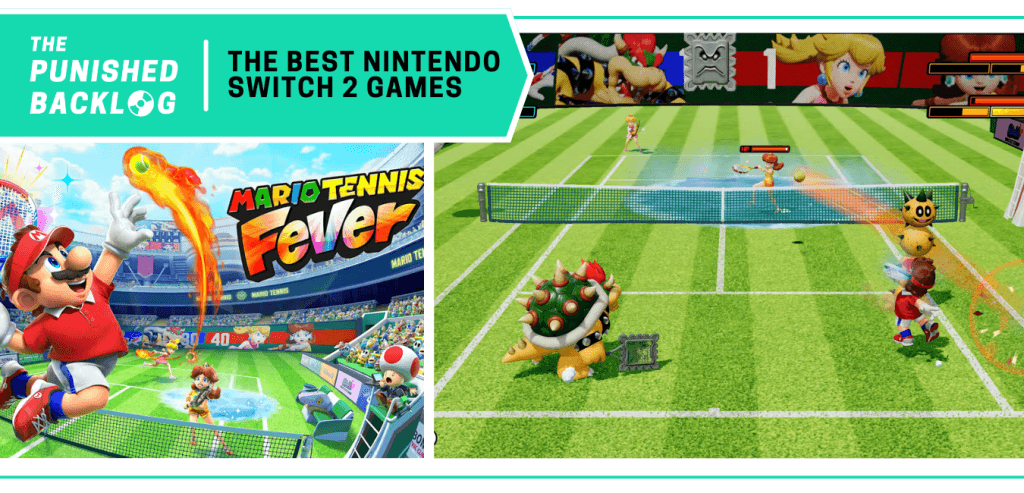
For the most part, Mario Tennis Fever is mostly more Mario Tennis. There’s a single-player campaign that stinks, an awesome challenge mode that quickly fades from one’s memory, and there’s a colorful roster of characters, including ones you’re not sure should be playing sports at all (how does a Goomba hold a racket with no hands?).
What makes Fever stand out, however, is its new fever rackets, which contain special abilities that give you the edge. For example, one racket makes a mini volcano appear, while another makes your character all metal, making them impervious to damage. The one brilliant mechanic that makes the fever rackets all the more interesting, however, is that if a fever racket is supposed to make a hazard appear on your opponent’s side of the net, they can actually make that hazard pop up on YOUR side if they volley it back before it hits the ground. Of course, you can always hit it back to their side before it hits your ground, but already a new wrinkle has appeared: Using your special racket power only benefits you if used properly. Otherwise, it can backfire.
This may seem like a fairly simple addition to the Mario Tennis oeuvre, but it makes a world of difference, especially when playing online. I’ve had volleys go on and on and on and on because both players are simply trying to make sure a ball that makes mini-mushrooms appear doesn’t fall on their own ground instead of just playing tennis normally. It makes every online match all the more thrilling and dangerous, and I don’t think I’ve played a Mario sports spinoff that felt this legitimately competitive before, and I’m not sure it would feel that way if the fever rackets always guaranteed a point.
To be clear, the fever racket stuff is super fun, especially in a classic Mario way! I always expect elements like it to make Mario Tennis or Mario Golf games play like more than just sports games. But these rackets and the way they work feel different; they make Mario Tennis Fever feel like a sport of its own, one where tennis is merely a skeleton for something even wilder.
– Written by Sam Martinelli
Pokémon Pokopia
There are many great Pokémon games out there, but it’s hard not to feel at times like the franchise has stagnated. For every deviation from the standard “catch, train, fight” formula, there are three or four other Pokémon titles ready to repeat the exact same beats I’ve experienced for decades. I played Pokémon Red back when I was six years old. Much like Ash Ketchum’s Pikachu, isn’t it about time we evolved?
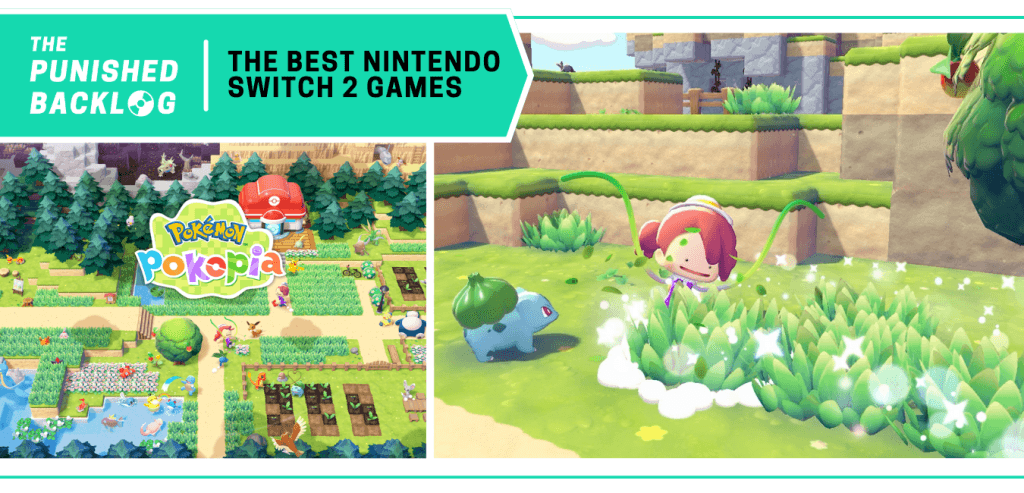
Enter Pokémon Pokopia — a refined take on everyone’s favorite monster-catching series that, refreshingly, doesn’t focus on “catching ‘em” at all. Instead, Pokopia is all about attracting these lovable critters to settle down in your community, one brick house or leafy den at a time. Inspired in equal parts by Animal Crossing and Dragon Quest Builders (the latter of which is an obvious play on Minecraft), Pokopia has you tending to various everyday tasks — chopping trees, watering plants, clearing out brush and debris — so you can expand your neighborhood and improve the quality of life for all Pokémon, regardless of their likes, dislikes, or elemental affinities.
The gameplay is a win, taking the best pieces of cozy games and streamlining them with Pokémon-centric powers. As the protagonist — a Ditto who has taken on humanoid features — you’ll call upon the powers of Squirtle (to water fields), Scyther (to chop wood), Graveler (to roll at great speeds), and many more iconic figures. When you’re not checking items off your town’s to-do, you’re exploring more of Pokopia’s mysterious world, making contact with other settlements, and answering the unsettling question, “What happened to all the humans?”
Nothing in Pokémon Pokopia is entirely new. You’ve seen its features in other terrific cozy games before. However, the melding of its farming-sim mechanics with classic Pokémon characters makes for an experience that feels decidedly unique. Add on a story that is shockingly mature given the cozy wrapper, and you get one of the best Nintendo Switch 2 games on the market, and a Pokémon game that I’d recommend to anyone.
– Written by David Silbert
Splatoon Raiders
Nintendo has never been shy about marketing its Splatoon series, with countless Direct trailers, Treehouse segments, and even features in Mario Kart 8 Deluxe and Super Smash Bros. Ultimate. And yet, despite the mass appeal for what’s become a Nintendo juggernaut, I’ve never managed to get on board with the splashy, ink-fueled franchise.
Part of the reason is Splatoon’s fixation on multiplayer. While I’ve played the occasional Turf War match on the Wii U, and later the Nintendo Switch, the experience has never had much staying power. The action is objectively fun, and there’s plenty of hidden depth for those willing to invest in Splatoon’s mechanics, but I just couldn’t dedicate the time (or the competitive mindset) myself. Add in the lack of a dedicated solo campaign, and the Splatoon games just didn’t speak my language.
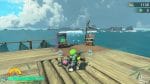
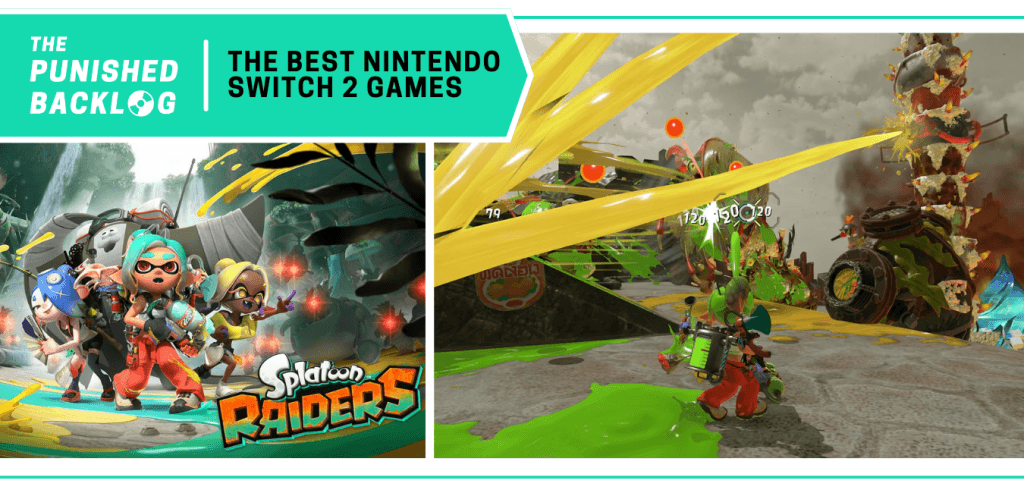
That changed with Splatoon Raiders. The series’ first dedicated venture into solo play (Splatoon 2’s Octo Expansion aside), Raiders caught me by surprise with just how great the Splatoon formula fits an anti-competitive, pro-cooperative format. All the series staples are here — creative weapons, giant explosions, ink-based traversal — but given new life with the addition of skill trees, abilities, and powerful modifications. Instead of PvP action, you’re teaming up with friends (or going it solo) in equally frenetic PvE playgrounds.
I invested over 30 hours into Splatoon Raiders’ generous campaign, which spans a series of increasingly difficult levels as you continuously get new gear, unlock new skills, and upgrade old favorites. There are fun bosses to best, creative puzzle rooms to solve (a la Breath of the Wild’s Shrines), and surprisingly addictive arcade games to get distracted by. I haven’t even begun to dig into the postgame content, which offers even more waves of enemies to conquer, but I know I’ll be back soon enough.
Whether you love the Splatoon franchise or are looking for a crunchy shooter to play from the comfort of your couch (or bed), look no further. Splatoon Raiders delivers the goods.
– Written by David Silbert
Read more thoughts on Splatoon Raiders.
Star Fox (2026)
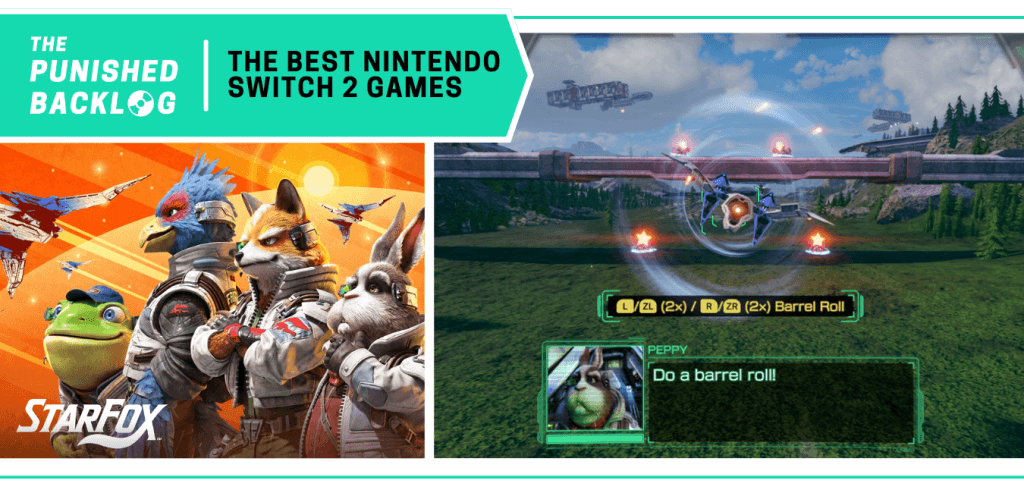
Star Fox (2026) is, in many ways, the ideal 1-to-1 remake: It manages to maintain the content, smooth mechanics, and essence of the original on-rails aerial shooter (in this case 1997’s Star Fox 64) while enhancing the visuals and sound and adding just the right amount of new content to make it feel artistically distinct.
Star Fox 64 remains a bona fide classic with some of the best shoot ‘em up gameplay of all time, but the Switch 2 remake might be the better version of the game in every way. The overhauled visuals make environmental hazards appear more threatening, giant bosses seem more menacing, and dodging enemy fleets feel even more thrilling. The booming orchestral soundtrack gives the iconic tunes of the original more gravity, making every boost through tight spaces and every chaotic dogfight all the more epic and cinematic. Moreover, the new cutscenes in between missions allow characters like Fox McCloud and Slippy Toad to come off as more layered and complex, and make the story feel more cohesive as a result.
Additionally, the overhauled online multiplayer adds so much to the experience, with multiple dogfight arenas that present different in-level rules to determine a winner. It may seem like a tacked-on multiplayer mode to artificially boost one’s playing time, but I haven’t regretted a single moment squadding up for some space shooting as Fox or Wolf. Sometimes, it’s good if a multiplayer mode exists just to be fun and not an endless content wheel!
I know Star Fox (2026) received a lot of flak for being yet another version of Star Fox 64 instead of a brand new experience. I completely understand that viewpoint and hope that Nintendo builds off of its success and gives us a completely new story for Fox, Falco, Slippy, and Peppy. Still, this remake has so much to offer, and no Switch 2 library feels complete without it.
– Written by Sam Martinelli
Read our thoughts on Star Fox 64.
The Best Non-Exclusive Switch 2 Games
Want more of the best Nintendo Switch 2 games? While we focused on Switch 2 exclusives for this list, great news: The console is backwards compatible with most (if not all) Switch 1 titles, meaning your library isn’t limited to just the past few years.
For more great games you can play on Switch 2, check out our list of the best Nintendo Switch 1 games of all time. And, of course, feel free to share your own recommendations in the comments below.

A video game outlet that blends quality words with inclusive voices. For business inquiries and review requests, reach us at press [at] punishedbacklog [dot] com.



Sam has been playing video games since his earliest years and has been writing about them since 2016. He joined The Punished Backlog in 2017 and became an Editor in Fall 2021. He’s a big fan of Nintendo games and complaining about The Last of Us Part II. You either agree wholeheartedly with his opinions or despise them. There is no in between.
A lifelong New Yorker, Sam views gaming as far more than a silly little pastime, and hopes through critical analysis and in-depth reviews to better understand the medium's artistic merit.
Bluesky: @sam-martinelli.bsky.social

David is the founder of The Punished Backlog. He has a problem finishing games he starts.
Just beat: Splatoon Raiders.
Working on: GTA V.
Can't wait for: Ocarina of Time (2026), GTA VI.
Follow David on Twitter at @David_Silbert to keep up to date with all things The Punished Backlog.