
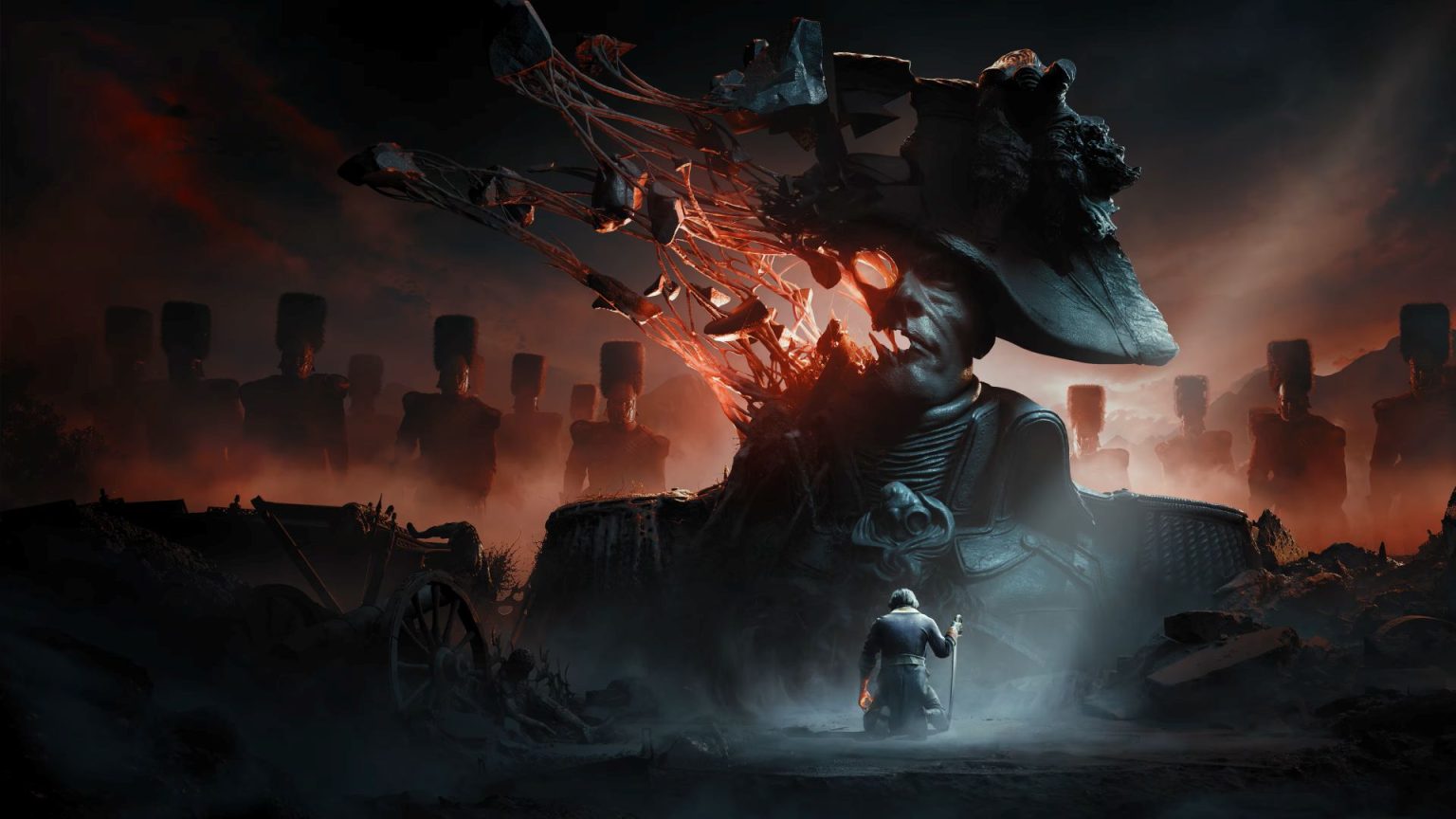

I have a soft spot for developer One More Level. The Polish studio put itself on the map in 2020 with Ghostrunner, a first-person parkour game focused on scaling rooftops, dodging bullets, and slicing enemies in two. Both Ghostrunner and its 2023 sequel, Ghostrunner 2, are well worth a play, though I must admit, they’ll test your patience in more ways than one. Your enjoyment level may vary depending on how much you tolerate difficulty spikes, performance issues, and forgettable stories.
Given the series sold well, I fully expected One More Level — which now employs 70 people — to hunker down, learn from past missteps, and polish up a “Ghostrunner 3” as their next release. Easy money. To their credit, however, the studio zigged when I thought they’d zag, channeling all of Ghostrunner’s frantic, kinetic ideas into a new project: Valor Mortis.
Valor Mortis is beholden to Ghostrunner, Dark Souls, and all the other games that influenced it.
On paper, these IPs could not be more different. One’s a cyberpunk platformer with pulsing techno music; the other’s a grimdark Soulslike centered around the exploits of Napoleon Bonaparte. The moment I learned about Valor Mortis, I was intrigued. Yes, it inherits its predecessor’s first-person POV, but you’d be forgiven for assuming Valor Mortis marks a completely fresh direction for the budding studio.
The reality is more complicated. While Valor Mortis offers compelling combat, a few fresh ideas, and several memorable highs, it’s also beholden to Ghostrunner, Dark Souls, and all the other games that influenced it — for better and for worse.
Do You Hear the People Sing?
Valor Mortis stars William Dowsett, a soldier fighting in a fictitious, supernatural retelling of the Napoleonic Wars. After dedicating his life to the Grande Armée, William falls in battle only to be resurrected by Napoleon and imbued with Nephtoglobin, a powerful substance capable of conquering — and destroying — the world.
A DNA-altering plague, Nephtoglobin has devastated much if not all of Europe, mutating humans into monstrosities, killing countless more, and leaving most survivors orphaned from their loved ones. For William, however, Nephtoglobin brings incredible abilities, ranging from casting fire to freezing objects in space and time.
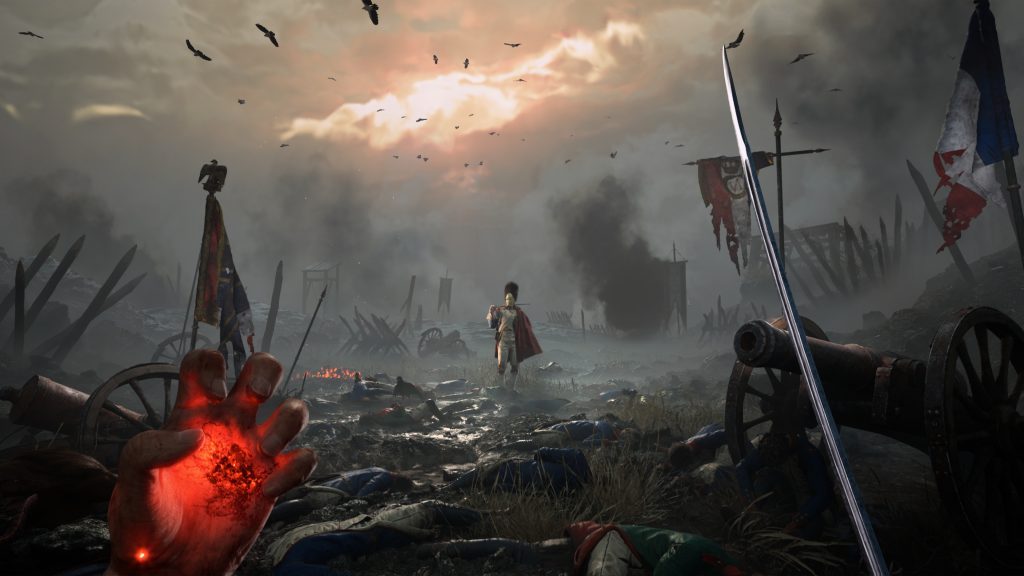
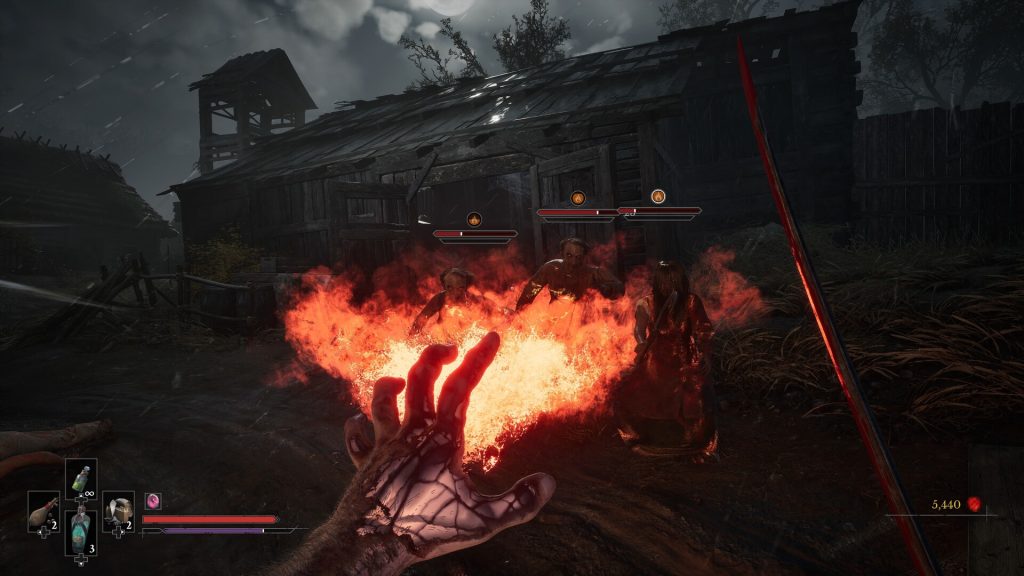
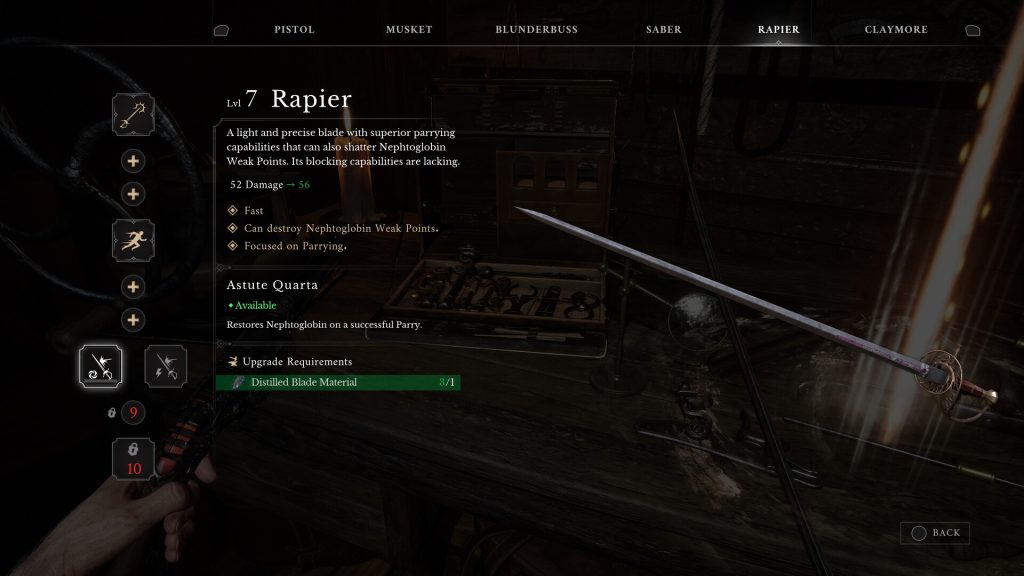
After waking as William alongside his trusty saber, you’ll learn the basic mechanics of Valor Mortis. Much like Ghostrunner, you can hack at enemies with your sword or deflect incoming attacks with a well-timed parry. Yet where enemies in Ghostrunner died in one hit, here you’ll carefully hack away at a health bar, much like in any FromSoftware game. Before long, you’ll get your first Nephtoglobin power — fire — from a fallen soldier in a dramatic, Metroid-esque “upgrade unlocked” cutscene.1
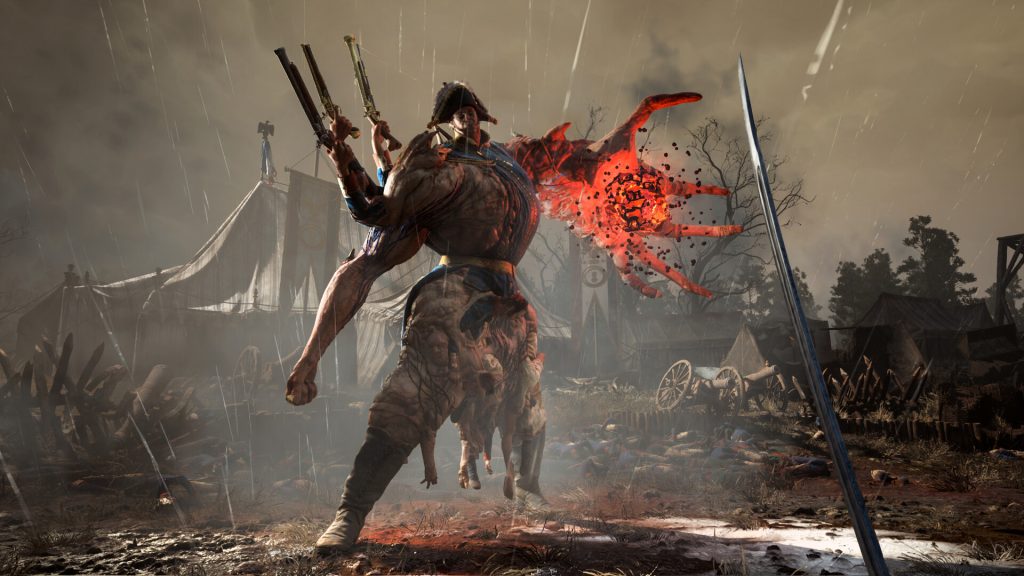
After testing William’s newfound power in a few enemy encampments, you come across a field of fallen soldiers — and General Lothaire, the first of Valor Mortis’ many boss battles. A hulk of contorted flesh with a massive gait and three trigger-happy hands, Lothaire mimics Elden Ring’s Margit, the Fell Omen, as the game’s first “skill check.”
Unlike in Elden Ring, though, your inevitable death doesn’t bring defeat — at least in this encounter. Instead, the player is saved by Lucjan, a bespectacled gentleman who knows more about this devastating plague than he lets on. After exchanging a series of questions and non-answers, William and Lucjan part ways, and Valor Mortis takes the training wheels off. Thus begins a roughly 20-hour journey that’ll take William through various biomes as he attempts to piece together the mystery behind his resurrection, the source of Nephtoglobin, and Napoleon’s ulterior motives.
Viva la Revolution
Valor Mortis offers an enticing alternate-reality narrative, and I wish I could tell you the game knocks this premise out of the park. Unfortunately, it does not.
On the surface, Valor Mortis captures all the same beats as your favorite FromSoftware title. Levels vary drastically between biomes, which range from war-torn city streets to a forlorn university and, of course, a smoggy bog. Scraps of paper tell stories of people who once frequented these haunts. Shortly into the game, you’ll also stumble across a church which serves as a central hub; there, you’ll upgrade your weapons and powers, and engage with NPCs.
That last piece is arguably Valor Mortis’ biggest narrative failing. Unlike Demon Souls’ Nexus or Lies of P’s Hotel Krat, both of which slowly gain denizens as you progress, Valor Mortis opts for just two NPCs: James, a fellow soldier with an optimistic heart, and Louis, a scientist with a callous edge. Neither character is particularly compelling; they serve mostly as superficial foils — the angel and devil on William’s shoulders, respectively. Each time you complete a zone, they’ll have a few lines of dialogue reacting to your recent exploits, but their own motivations (and fates) are left frustratingly open-ended. Throw in Lucjan, who is more compelling but equally opaque, and you have a cast that takes up space but offers little in return.
Valor Mortis offers an enticing alternate-reality narrative, and I wish I could tell you the game knocks this premise out of the park. Unfortunately, it does not.
Given the whole plot centers around Napoleon, I expected history’s famous short man to play a massive role in Valor Mortis. And while he does show up, it’s mainly through sporadic voice-overs that accompany William during moments of downtime — undermining the very few times he actually shows up on-screen. The voice behind Napoleon, legendary French actor Vincent Cassel (La Haine, Black Swan), does a commendable job but is ultimately hamstrung by the material. I cannot believe the team leveraged his talent for a bona fide background role.
Unlike the aforementioned NPCs, Napoleon’s motivations are so blatantly obvious that any attempt at a late-game “twist” comes across as laughable. Throw in a bizarre cliff-hanger ending that offers little resolution, and Valor Mortis sets itself up for a potential sequel at the cost of any meaningful resolution today.
If there’s one saving grace, it’s William himself. In a welcome change of pace from other Soulslikes, William is fully voiced (by James Alexander, who does a wonderful job). His color commentary, as he journeys to understand the secrets of Nephtoglobin, adds much-welcome emotional weight (and levity, at times!) to the narrative.
In a particularly effective mid-game sequence, William befriends a trio of orphans teetering on the edge of insanity. Their story is lamentable, but the humanity that William brings to them (assuming you pick from Valor Mortis’ more positive dialogue options) moved me far more than anything related to Napoleon’s conquest.
Ghostresident Sekiro: BioShocks Twice
Gameplay-wise, Valor Mortis takes inspiration from an array of gaming greats. The most obvious comparison point is FromSoftware’s pantheon of titles. Much like Sekiro: Shadows Die Twice, players will spend their time parrying blows and staggering their opponent for an opportune (and gory2) kill. Players can regain lost health by launching an aggressive counterattack, a la Bloodborne. Bonfire-y “lanterns” and Estus-esque “Ferrofluid Flasks” abound. But the influences don’t end there.
Shortly into Valor Mortis’ second zone (before you reach the church), you’ll find an abandoned carriage containing military armaments: namely, a flintlock pistol. With his saber in one hand and his newfound pistol in the other, William can now fight enemies at close range or headshot them from afar with a well-aimed bullet, complete with a satisfying, Resident Evil-like crunch.
There’s a dance-like element to combat that, if you’ve played Bloodborne, Lies of P, or any other fast-paced Soulslike before, you’ll recognize and appreciate in Valor Mortis.
While Valor Mortis is far from an immersive sim, the introduction of various tools — not just Nephtoglobin powers, but various swords and firearms — immediately made me think of 2K Games’ BioShock franchise and Arkane’s Dishonored. Heck, there’s even a radial wheel to switch between weapons and abilities (more on that a little later).
These series are legendary for different reasons, and it might seem a fool’s errand for Valor Mortis to try to emulate even a smidgen of their success. Thankfully, the concoction functions quite well when it all clicks. Swordplay is crisp (especially parries), and each gun that William fires (a pistol, a blunderbuss, a musket) has a satisfying, tactile heft to it. Add in some other Ghostrunner staples — wall running, a dash, a grapple, slo-mo repostes — and you have plenty of meat on the bone.
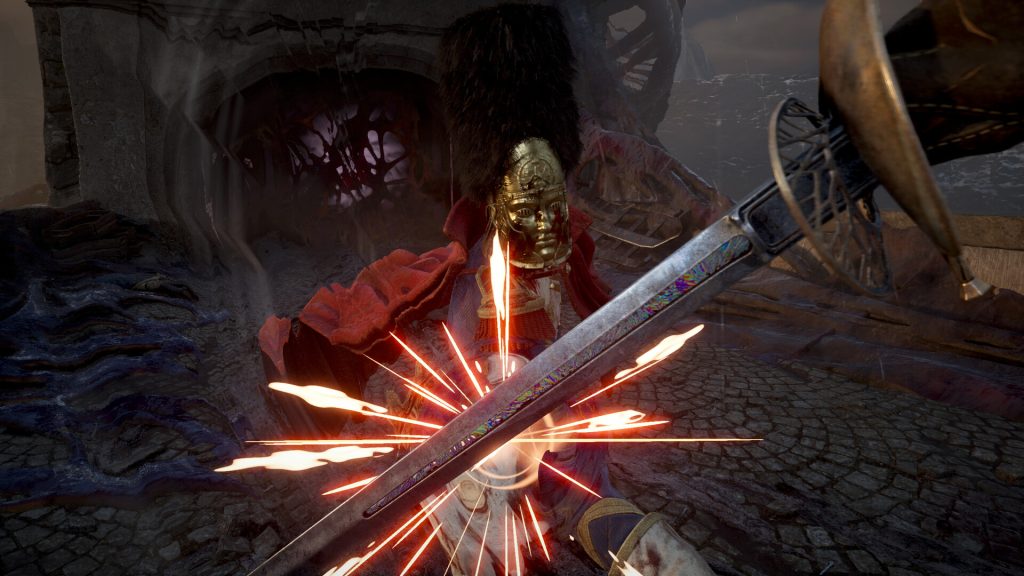
There’s a dance-like element to combat that, if you’ve played Bloodborne, Lies of P, or any other fast-paced Soulslike before, you’ll recognize and appreciate in Valor Mortis. Enemy types get repetitive quickly, but the fundamental flow of hacking, dashing away, and firing a few bullets never gets old. Bosses are a particular high point, and a showcase for the game’s satisfying mechanics. Lucjan might have bailed you out the first time against General Lothaire, but — shocker — you’ll fight him again. That fight, along with a few others peppered throughout Valor Mortis, allows the game’s Soulslike elements to shine.
Likewise, Valor Mortis may not be an immersive sim, but it dabbles with the genre in interesting ways. Most of the game is linear, but a few standout segments — including a late-game sequence where you explore a labyrinthine castle — are nothing short of incredible. The game features ample side content (albeit of varying quality), inviting you to explore. At the same time, it cleverly nudges players forward with a subtle, breadcrumb-esque trail of lanterns. I’ve never seen an objective marker be so innocuous yet so helpful; more developers should take note.
Rigor Mortis
If you enjoyed the feeling of sneaking around Dunwall or getting lost in Elden Ring’s Stormveil Castle, Valor Mortis can scratch those itches… if only for fleeting moments. Sadly, its greatest peaks give way to some rough, confusing lows.
When I first demoed Valor Mortis back at PAX East 2026, I came away impressed by the mix of Soulsborne and BioShock influences. What I hadn’t realized was that the game is essentially trying to be three genres all at once: a Soulslike, a first-person shooter, and an action-platformer. These genres aren’t inherently mutually exclusive, but Valor Mortis leans so heavily into all three that the underlying mechanics suffer.
Take the combat. When I demoed the game (roughly a 20-minute vertical slice), I found the duality of close-range swordplay and long-range gunplay to be a revelation. But after 20 hours, these elements felt like opposing forces. A Soulslike necessitates learning enemy patterns, dodging or parrying at the right times, and closing in to chip away at the enemy. Guns negate any incentive to do so, allowing players to shoot their way through even the toughest enemies, so long as they have enough ammo. (It doesn’t help that the weapon wheel is a real chore.3)
Then there’s the platforming. While most of Valor Mortis is relatively linear as I mentioned before, the game occasionally opens up into free-form combat sequences. Here, the player can scale walls, leverage verticality, and take out enemies in whatever order they see fit. Unfortunately, the emphasis on mobility clashes with the game’s slower, more methodical doctrine. Why would I parkour over to the lumbering mini-boss when it makes more practical sense to hold up my guard and chip away from afar?
Valor Mortis tries to be three genres all at once: a Soulslike, a first-person shooter, and an action-platformer. These genres aren’t inherently mutually exclusive, but Valor Mortis leans so heavily into all three that the underlying mechanics suffer.
These ideals constantly clashed throughout Valor Mortis’ campaign. The game does a decent job of ushering players from one set-piece to the next, each highlighting a different part of the game’s ethos: One sequence involves taking cover in a long-range shootout, while another has players taking down a supernatural boss in a mandatory platforming sequence. However, whenever Valor Mortis lets go of the player’s hands, its disparate parts begin to clash anew. In the end, I was never quite sure which version of William — the rambo, the tactician, the sniper — I was supposed to be.
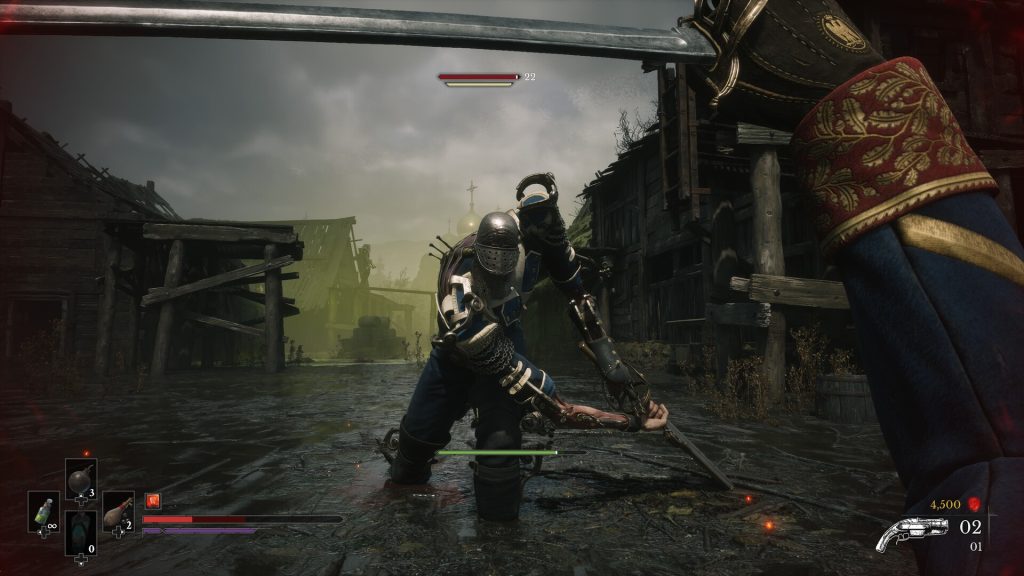
A bevy of technical issues also hampered the fun. The first-person viewpoint is fine for shooting but far less effective for navigation; I often found myself getting snagged on the environment while trying to dash out of the way of an incoming attack. Enemies suffer a similar fate; I cheesed my way through several sequences — and even the final boss — because the enemies hit a weird angle and suddenly stopped attacking me. Performance is also hit-or-miss; I encountered regular frame hitches, especially late-game when environments began to open up.
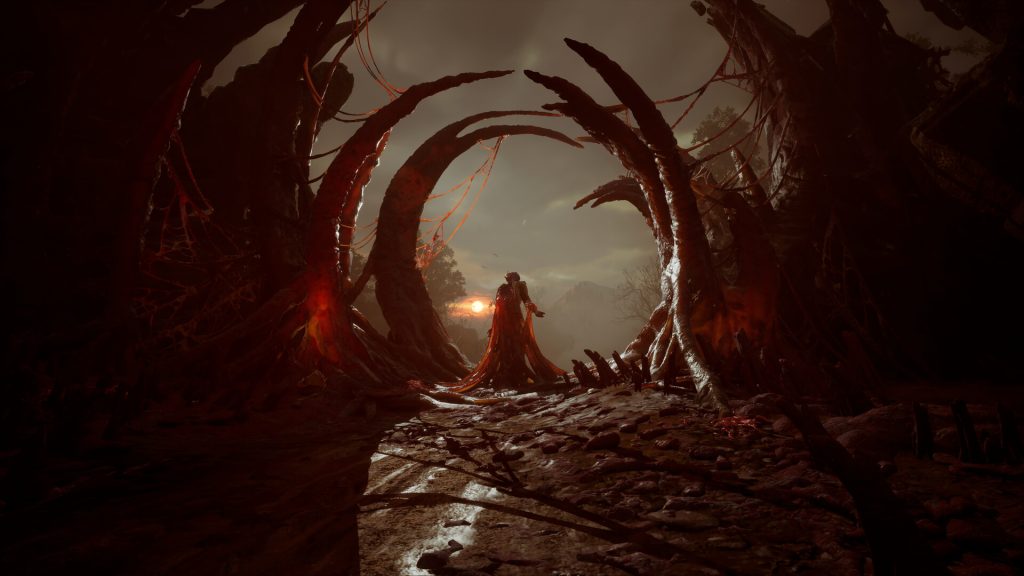
One More Level has never quite managed to optimize their games — Ghostrunner 1 and 2 ran even worse, if you can believe it — so I can’t say I’m surprised by the bugs and glitches in Valor Mortis. Still, it’s a disappointing look for a game that, ironically, looks and sounds quite pretty.4
Final Thoughts
It’s a testament to the creatives at One More Level that Valor Mortis impresses despite its uneven parts. During its best moments — a terrific boss battle, an exhilarating platforming sequence, a tense shootout in an enemy outpost — the game truly shines. Likewise, I enjoyed William’s story even if the game’s peripheral characters and ending felt tragically undercooked.
As a cohesive experience, however, Valor Mortis gets in its way too many times to walk away unscathed. The combat, thrilling as it can be, suffers from an identity crisis. Is it an action game? Is it an RPG? It’s tough to say. Consider also that Valor Mortis continues to suffer from technical issues and bugs — even after a massive day-one patch — and it’s tough to recommend this trip to Europe without quite a few qualifiers.
Still, I can’t help but find myself enthralled by this somber yet often beautiful new IP and what the future might mean for One More Level. The original Ghostrunner left me with mixed feelings, but its sequel thoroughly impressed me with a much more focused core. If Valor Mortis can do the same with a sequel, it’ll be flying its colors high.
For now, much like Napoleon, Valor Mortis falls short of its true ambition.
Score. 7.0/10
Valor Mortis, developed by One More Level and co-published by Lyrical Games and One More Level, released on October 13, 2026, for PC (via Steam), PlayStation 5, and Xbox Series X/S. MSRP: $39.99. Version reviewed: PS5.
Disclaimer: A review code was provided by the publishers.
Footnotes
- As fire surged through William’s veins for the first time, my mind drifted to Rapture and the various plasmids (fire, ice, electricity) that made BioShock such a chilling experience. One More Level took clear inspiration from Irrational Games’ award-winning masterpiece, yet, as you’ll come to read in this review, this is just one of many examples of Valor Mortis channeling a game it cannot hope to emulate. ↩︎
- I’m not much for grisly horror films; video games, however, are a different story. The kill executions in Valor Mortis are among the coolest I’ve ever seen, with William using every tool in his arsenal to fight back against the mutated hordes he encounters. Seriously, don’t play unless you can stomach some wicked moments. ↩︎
- Whereas a radial wheel serves an important function in a slower, more methodical immersive sim, in Valor Mortis it only really detracts from the experience. You end up accruing so many powers, guns, and swords that you’re constantly flipping between them, interrupting the action. I would have much preferred setting my preferred loadout at a lantern and sticking with it until the next reprieve. ↩︎
- I’ve already mentioned the satisfying kill animations, crunching headshots, and compelling (if underutilized) voice acting. But Valor Mortis also looks the part when performance issues don’t get in the way. You’ll encounter some gorgeous vistas along your journey, and certain facial animations (particularly James’) are stunning. It’s not a visual juggernaut by any means, but Valor Mortis holds its own. ↩︎

David is the founder of The Punished Backlog. He has a problem finishing games he starts.
Just beat: Splatoon Raiders.
Working on: GTA V.
Can't wait for: Ocarina of Time (2026), GTA VI.
Follow David on Twitter at @David_Silbert to keep up to date with all things The Punished Backlog.