
Welcome to the 45th edition of Punished Notes! Here, I get into why much of the apparent tedium in the new Fire Emblem is completely worth it. Later, I discuss how Final Fantasy X, a 25-year-old game, actually has much to say about our current political moment. Additionally, I have more LIGHTNING ROUND thoughts on Fire Emblem, Mario vs. Donkey Kong, and… Spanish food?
Championships Are Won on the Bus
Nintendo’s latest Switch 2 exclusive Fire Emblem: Fortune’s Weave has taken the gaming world by storm since its mid-September launch, appearing to sell well (at least in Japan) and garnering an 89 on Metacritic. Despite the largely positive reception for Intelligent Systems’ new tactics RPG, critics have highlighted some of the grindier aspects of the title, arguing that the available activities for the player in between main story missions are kind of a slog, even if they provide benefits such as more money, opportunities to level up characters, and ways to foster relationships between members of your party.
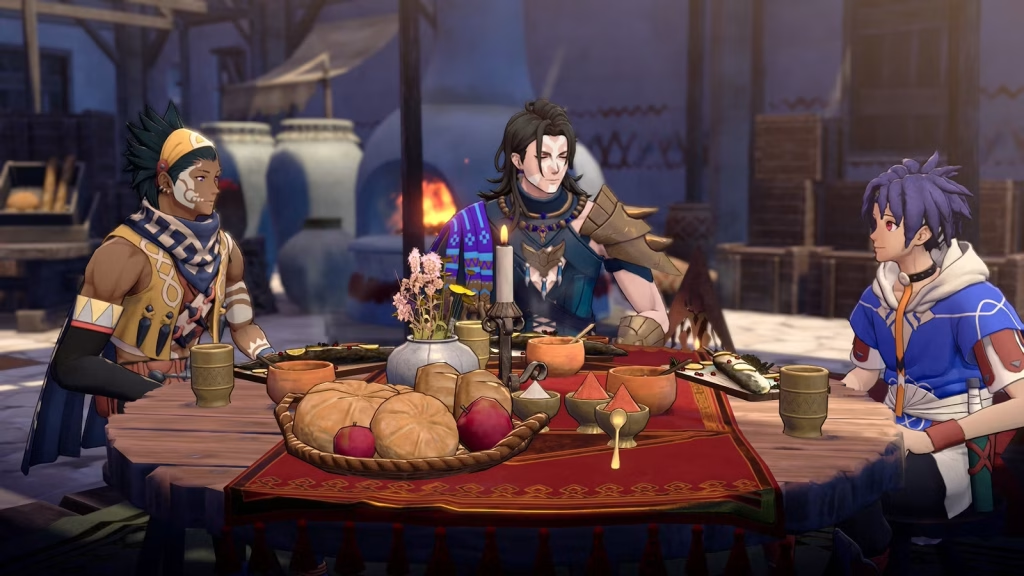
For the record, I completely understand why these activities — and the perhaps too ample time to engage with them — rub folks the wrong way. The classic Fire Emblem chess-like gameplay truly shines in Fortune’s Weave, and the narrative components give each of these battles higher stakes. Why would anyone want to spend their time sharing meals, exploring mostly empty caves with weak combat encounters, performing busy work for temples, and even growing crops when there are epic battles to be won?
I would, however, make two arguments in support of this approach to gameplay in between quests. First of all, I don’t actually find these actions more boring or onerous than they were in 2019’s Fire Emblem: Three Houses. I actually find them slightly more engaging, at least early on, since I’m preparing for epic, glorious battles instead of babysitting a bunch of needy youths.
Second, the whole premise of Part I of Fortune’s Weave centers on the player’s involvement in the Heroic Games, a series of gladiator-like fights in front of massive crowds. In this context, the player and their allies are effectively athletes, and the minutiae leading up to each match largely mirrors how professional athletes prepare for competition. As a result, the wealth of simple side activities actually makes the whole endeavor a little more immersive.
It’s not enough for, say, my large adult son Jalen Brunson to show up for every Knicks game and play hard. He needs to practice new shots and moves in an empty gym. He needs to make sure he hits the weight room and builds up his strength. He needs to maintain a certain diet that maximizes his endurance. He needs to foster a locker room environment that values teamwork, effort, and accountability.
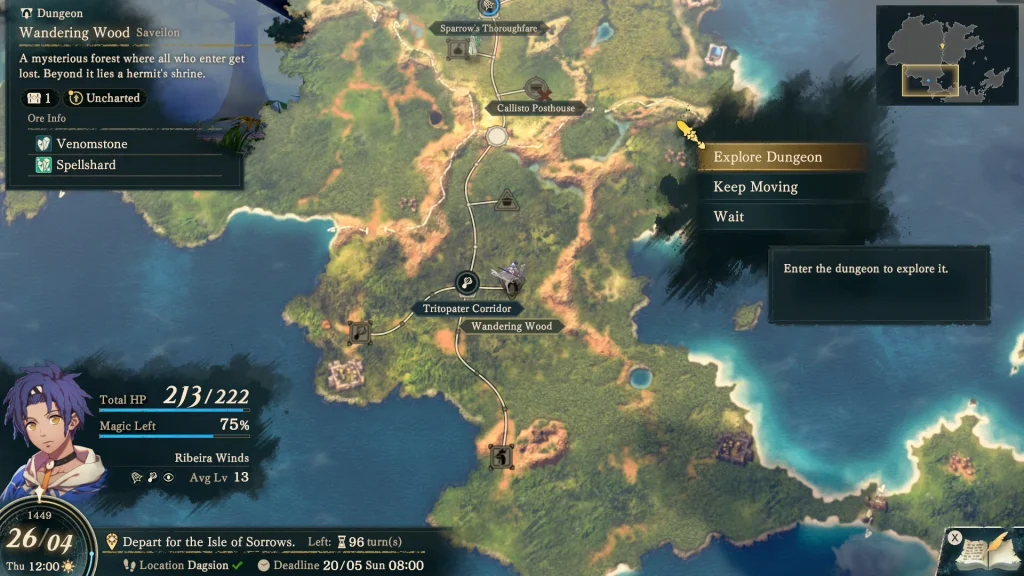
In theory, matters should be no different for Cai, who heads one of four playable pathways at the start of Fortune’s Weave. He needs to complete side quests to improve his renown. He needs to recruit new mercenaries to give him more options in battle. He needs to share meals with his squadmates to bolster connections. He needs to earn money for better gear to give him and his team the edge in battle. He needs to roam the broader Dagda map in search of rare items and unique vendors. And he damn sure needs to make sure he engages in every support conversation between team members. As NBA legend Isiah Thomas famously said, “Championships are won on the bus.”
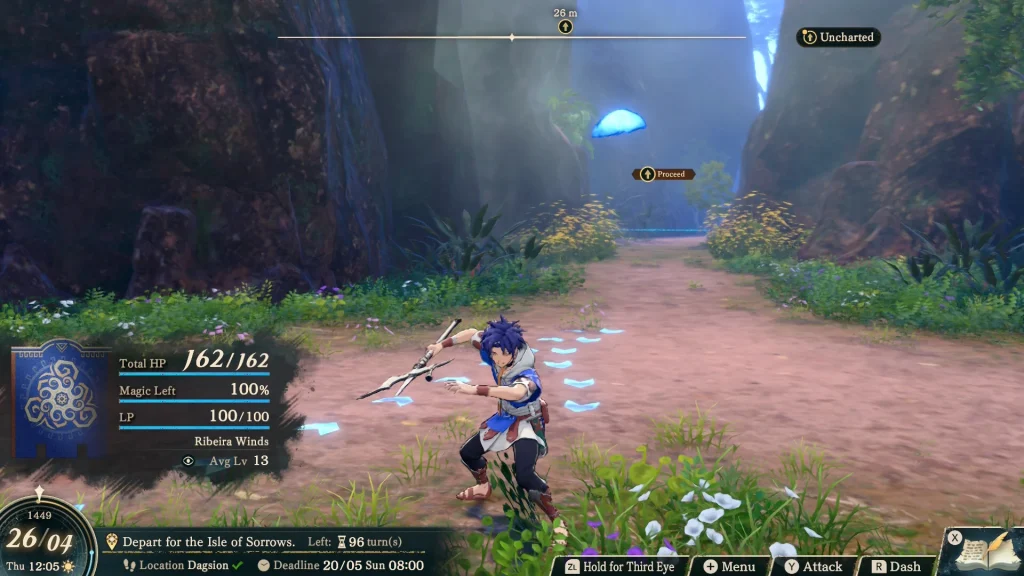
Sure, a lot of these actions may seem part of a tedious grind that artificially extends the game’s length. But here’s the thing: The grind is the point. Nobody in sports, combat, or any other type of competition coasts entirely on talent and instinct. They have to put in the work, even if that means wandering into random caves to easily kill giant bugs, searching for fish and rare coins, or buying weird gifts to give to potential mercenaries. The work is essential to the enjoyment of victory, and every single main story mission feels all the more rewarding and exciting not in spite of how much I had to prepare for each one, but because of it.
Could Intelligent Systems have eased up on some of these side activities a bit? Maybe, and I can’t deny that some of these tasks are more fun than others (catching wild mounts and farming never feel “good” in any sense). Still, if they weren’t there, the major battles would blend together for me and feel less rewarding, and losing a mercenary in battle wouldn’t have the same sting if each match were minutes apart instead of hours. For now, I’m embracing the grind.
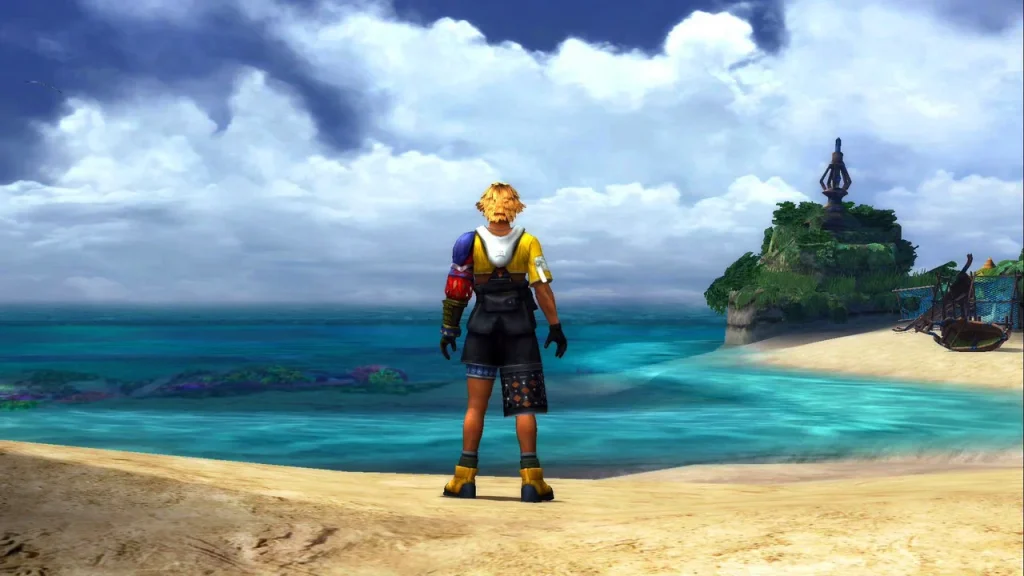
Final Fantasy X and Breaking the Cycle
Spoilers ahead for Final Fantasy X, a game that celebrates its 25th anniversary this year.
AAA video games tend to offer fairly basic sociopolitical messaging, if they attempt to do so at all. The framing of that messaging matters a great deal — for example, the notion that wars are inherently destructive and soldiers are complicit in atrocities lands differently in something thoughtful like Spec Ops: The Line than it does in Call of Duty 4: Modern Warfare — but so often the ultimate takeaway from these grand tales is some version of “you have to fight for the little guy,” or “all violence is bad,” or “the right person needs to be king,” or something like that. Even a game as narratively ambitious as 2024’s Metaphor: ReFantazio largely reflects a liberal status quo view of politics, positing in the end that you just need to have the right people in charge of a kingdom to solve problems that are inherently systemic.
Every now and then, however, we get something like Square’s 2001 classic Final Fantasy X. The story follows a group of pals escorting an up-and-coming sorceress (or “summoner” in this context) named Yuna to help defeat Sin, a giant whale-like monstrosity who appears every 10 years and can only be defeated by a fully trained summoner. Once protagonist Tidus learns about halfway through the tale that Yuna will have to die in order to defeat Sin — and that everyone except for him has understood this the whole time — he vows to find another way, no matter how difficult it is to accomplish. There must be another way.
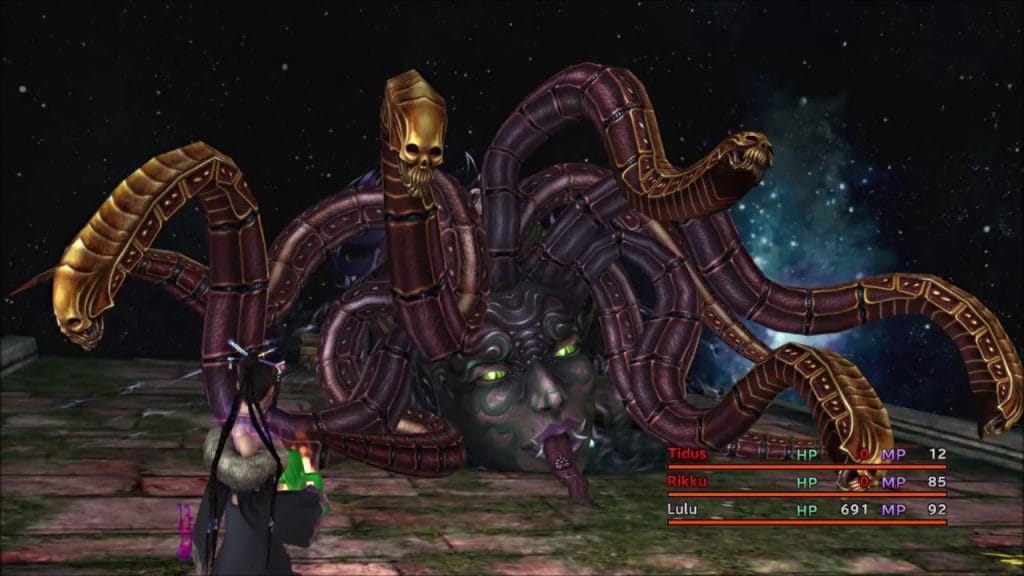
A number of later plot developments outline the myriad flaws and lies associated with the cycle of Sin’s defeat and rebirth, but the most important thing I took away from the experience was that an entire religion and way of thinking had been built around this cycle. The sacrifice of the summoner — as well as the required transformation of one of the summoner’s guardians into Sin as part of the cycle — was an infallible truth to the followers of the deified Yevon, and anyone straying from that path or getting in its way was a heretic who must be shunned and/or punished. Such sacrifices were not just noble; they were necessary and, to some extent, inevitable.
Of course, Tidus and company find a way to save the world, protect Yuna, and break the cycle, but how they do so is largely irrelevant. What’s more important is their insistence that such a construct around the fall and return of Sin doesn’t need to exist for any particular reason. It’s not enough that they dispel the great evil; they strive to replace the cycle with something new, something that doesn’t view human lives as disposable for any greater good.
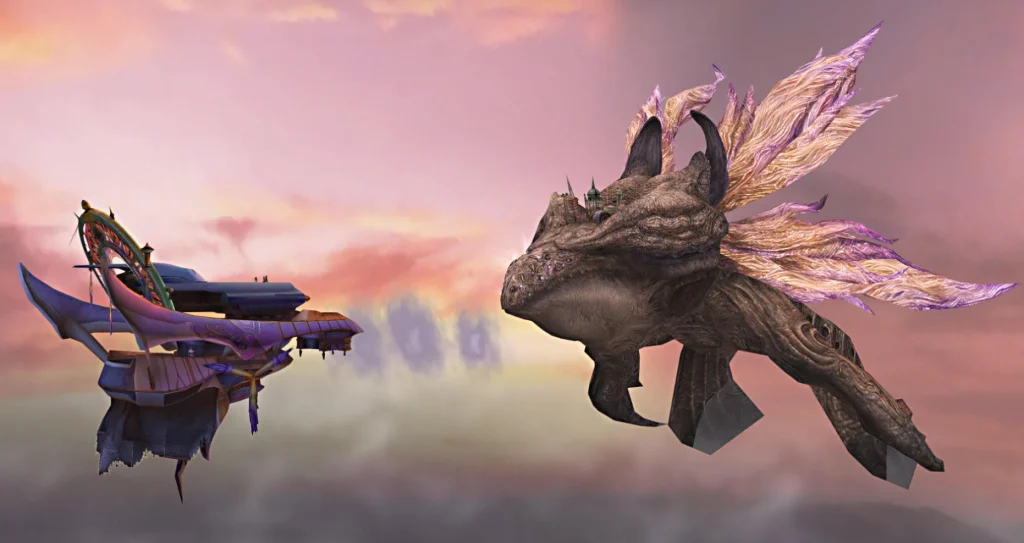
As I played through FFX for the first time this year, I couldn’t help but think of the current political landscape in the U.S., particularly how often people in positions of power and influence insist that certain aspects of daily life in this country simply cannot change; they can only bend based on which people hold public office. You can’t expand the Supreme Court. You can’t go after big corporations in a meaningful way. You can’t just abolish ICE, the police, the prison-industrial complex, or the Senate. You can’t cut military funding, even if it’s to support more social services and programs. You can’t have too many leftists in Congress. You can’t insist that candidates support trans rights. You can’t criticize Democrats too much or too loudly, since they’re more on your side than anyone else. Most importantly, you can’t disrupt the order of things too much.
I’m not going to pretend I have all the answers about how this country can best move forward. But, like Tidus, I know there has to be a better way than what I’ve witnessed in my 35 years of life, and it’s essential to admit that first and foremost. It’s not enough to Vote Blue No Matter Who, or just pick who’s “most qualified” or “most electable”; there needs to be fundamental, sustainable change, and I’m tired of being told that can’t happen just because that’s not how things work. Tidus, Yuna, Rikku, Kimahri, Auron, Wakka, and Lulu understood that, and so can we if we’re willing to actually fight for it.
LIGHTNING ROUND!!!!!!!!!!!!!!!!!!!!!!!!!!!!!!!!!!!!!!!!!!!!!
- Another note on Fire Emblem: Fortune’s Weave: I think the combination of multiple protagonist options, the ability to play through every single story in one save, and the whole mercenary recruitment system make Classic mode (AKA the franchise’s “permadeath” mode) much more palatable. Even if I hadn’t come around on the system in recent years, I still think the setup in Fortune’s Weave makes Classic the obvious choice for the best gameplay experience.
- I played the original Game Boy Advance version of Mario vs. Donkey Kong recently after having previously only played the 2024 Switch remake, and you know what? I think the original looks way better. The Switch version has smoother, more modern 3D graphics, but completely lacks any character or substance. The GBA version, meanwhile, feels much more deliberately designed, with beautifully colorful backdrops and delightful 2.5D animations.
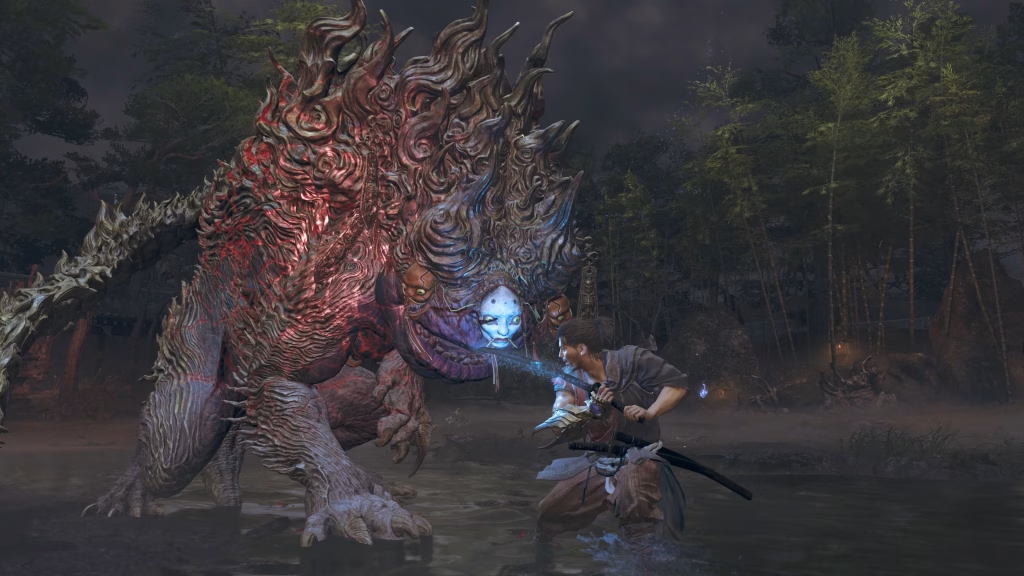
- Having only played the Switch 2 demo of Onimusha: Way of the Sword, I feel like I can safely say it’s a good-ass action game that I hope to play in full at some point. It’s also the latest proof that 2026 is an absolute banner year for Doritos and Mountain Dew games.
- I appreciate Nintendo adding new Knockout Tour paths to Mario Kart World, but you know what I’d really like? More P-Switches and other open-world content for the Free Roam mode. There’s so much potential there! Come on!
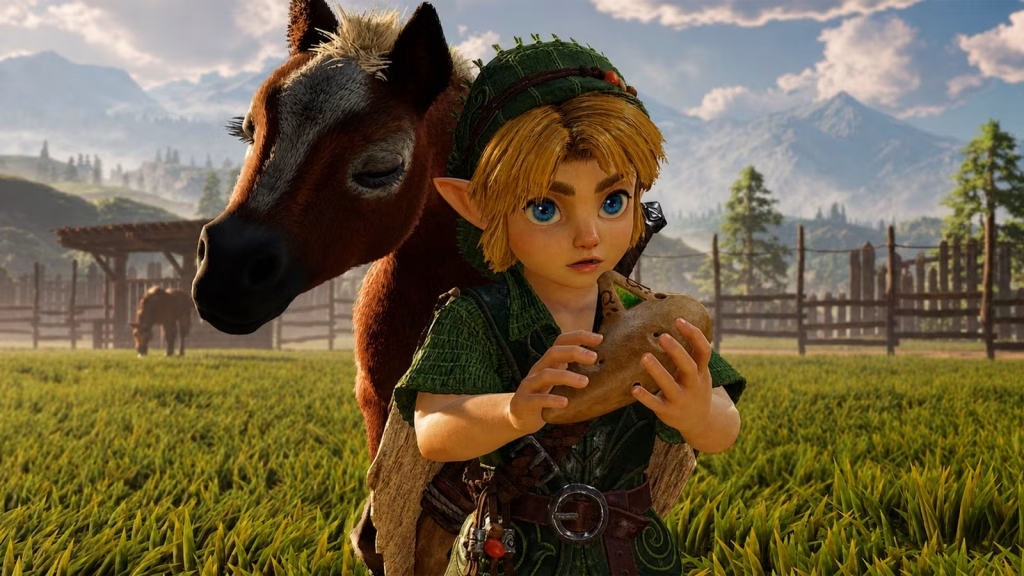
- There’s already been much debate over the visual stylings of the upcoming remake of The Legend of Zelda: Ocarina of Time, but I’d like to state for the record that I think the more detailed stitching and design of Link’s cap and tunic are good and cool. I’m glad that was the first thing we saw in that Zelda Direct a few weeks ago.
- During a recent trip to Portugal and Spain, my wife and I tried some truly incredible food while on a tapas tour in Madrid. In particular, there was a type of sliced, aged beef we ate on top of some bread with smashed tomato, and it might have been one of the most incredible things I’ve ever eaten. I don’t remember what the meat was called, but our tour guide said it wasn’t something we could likely get outside of Madrid. Since that evening, I’ve almost felt a kind of grief that I will probably never eat it again in my life. I can’t say for certain I’ve eaten anything else that has made me feel sad about its inevitable absence thereafter.

Sam has been playing video games since his earliest years and has been writing about them since 2016. He joined The Punished Backlog in 2017 and became an Editor in Fall 2021. He’s a big fan of Nintendo games and complaining about The Last of Us Part II. You either agree wholeheartedly with his opinions or despise them. There is no in between.
A lifelong New Yorker, Sam views gaming as far more than a silly little pastime, and hopes through critical analysis and in-depth reviews to better understand the medium's artistic merit.
Bluesky: @sam-martinelli.bsky.social