
Days have passed since I rolled the credits of The Incident at Galley House, yet I still haven’t shaken its final moments. As I sat there, my Steam Deck running hot at 2 a.m. on a late Saturday turned early Sunday, I felt a sharp pang of emotion. Part of it was fatigue after the marathon of hours logged; part of it was relief at this winding journey having reached its conclusion. Another part still was anxiety: a realization that the time I’d invested (11 hours), the events I’d witnessed, and the characters I’d gotten to know, had all culminated in something equal parts enlightening and utterly deflating.
Yes, reviewing The Incident at Galley House is a difficult endeavor indeed.
Let’s start with the basics. Galley House is the product of two entities: solo developer William Rous and indie game studio Evil Trout Inc. If the latter name rings a bell, it’s because they’re also responsible for 2025’s excellent puzzler The Roottrees are Dead. In that game, players assume the role of a private investigator who’s been tasked with piecing together an elaborate family tree to discover the complicated (and dark) secrets at the center of the family.
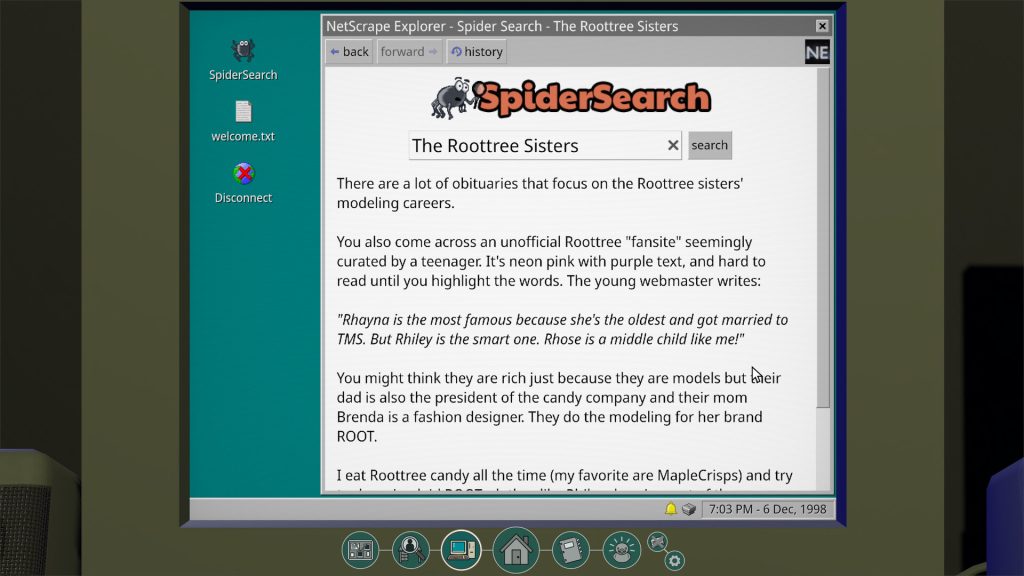
The Roottrees was a mind-bending experience — one that had me and my partner huddled around a laptop, sifting through photos, webpages, and other bits of evidence as we reconstructed the family’s lineage, one name at a time. “Aha!” moments abounded, giving us that perfect dopamine-fueled satisfaction of seeing each new puzzle piece fit neatly into a large, sprawling jigsaw.
The Incident at Galley House is not at all like that game. Gone is the open-ended design, replaced instead with a more linear, cinematic focus. Where I enjoyed The Roottrees as a collaborative effort, Galley House is clearly intended as a solo experience. The graphics are slicker, the music is stronger, and everything is fully voice-acted. And yet, the game feels decidedly one-dimensional by comparison.
There are some very valid reasons for these differences, which I’ll get into later. But that doesn’t lessen my disappointment with The Incident at Galley House, nor does it negate the feeling that this game could’ve been so much more.
One Sad Party
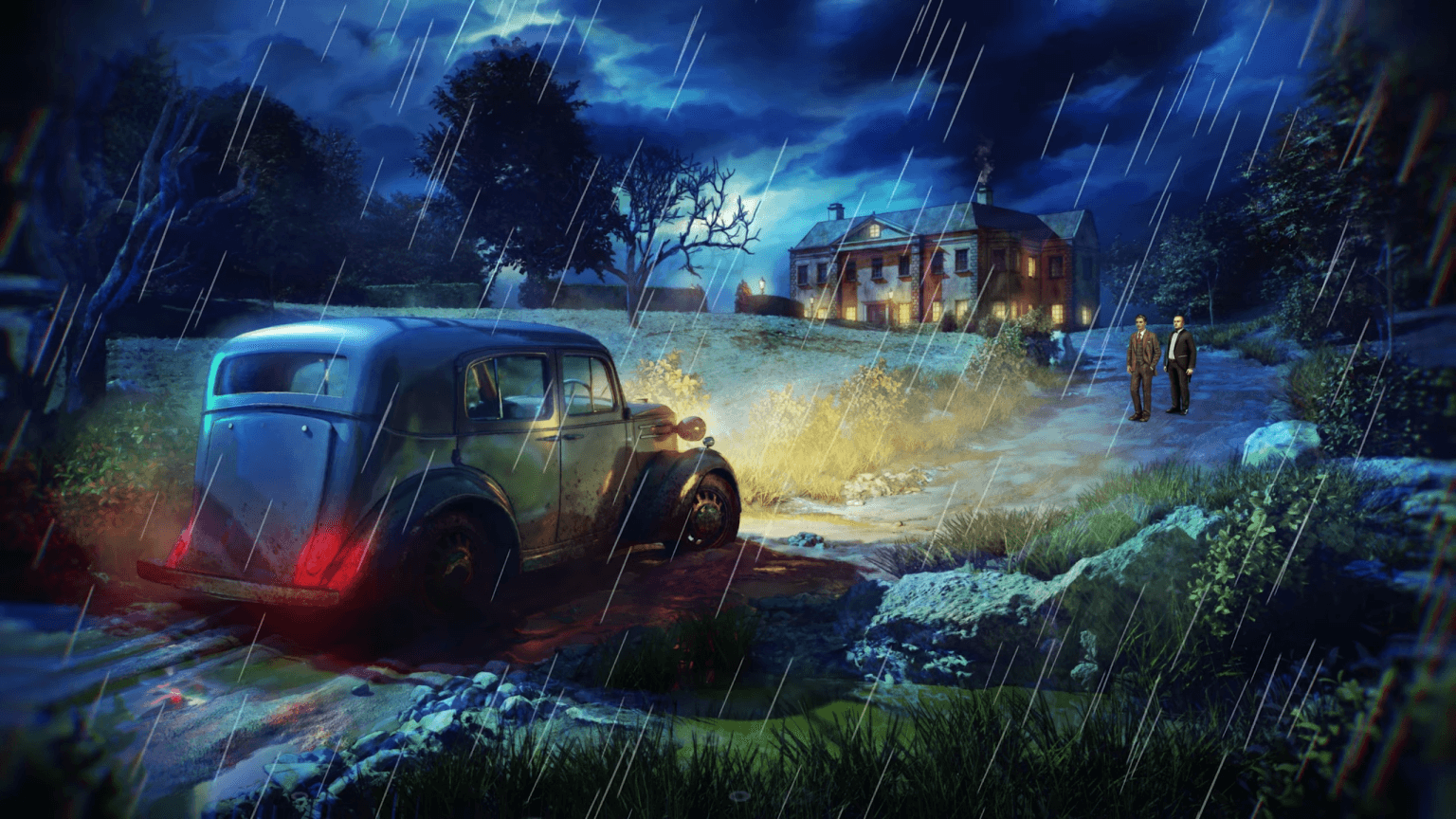
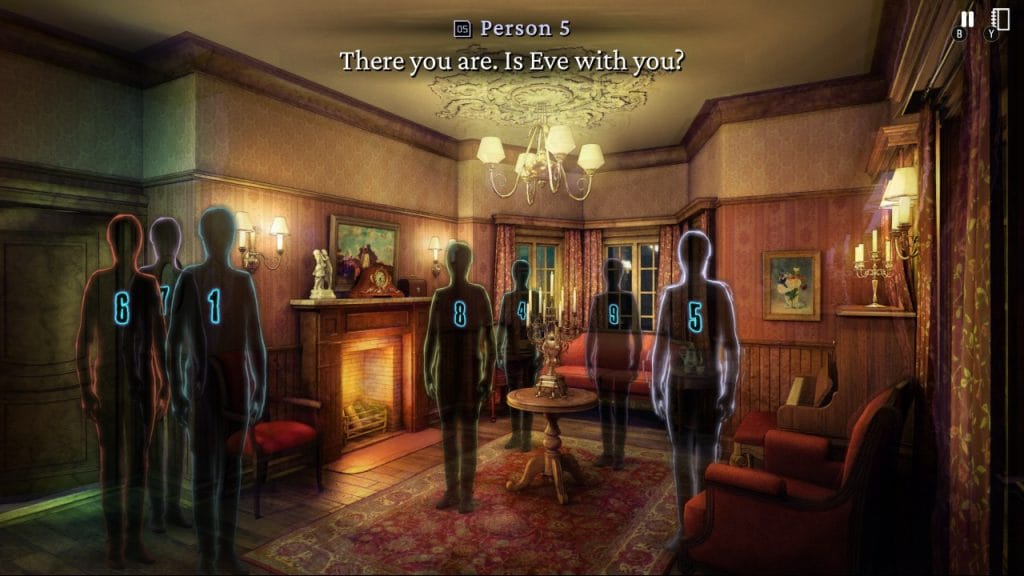
The Incident at Galley House tells the ill-fated story of the Galley family, a group of socialites bound by friendship, marriage, and blood who have gathered for an evening at the titular Galley House. In an opening scene, the reason behind the soiree is revealed: A man named Rupert Galley has invited his closest confidants for a small birthday celebration.
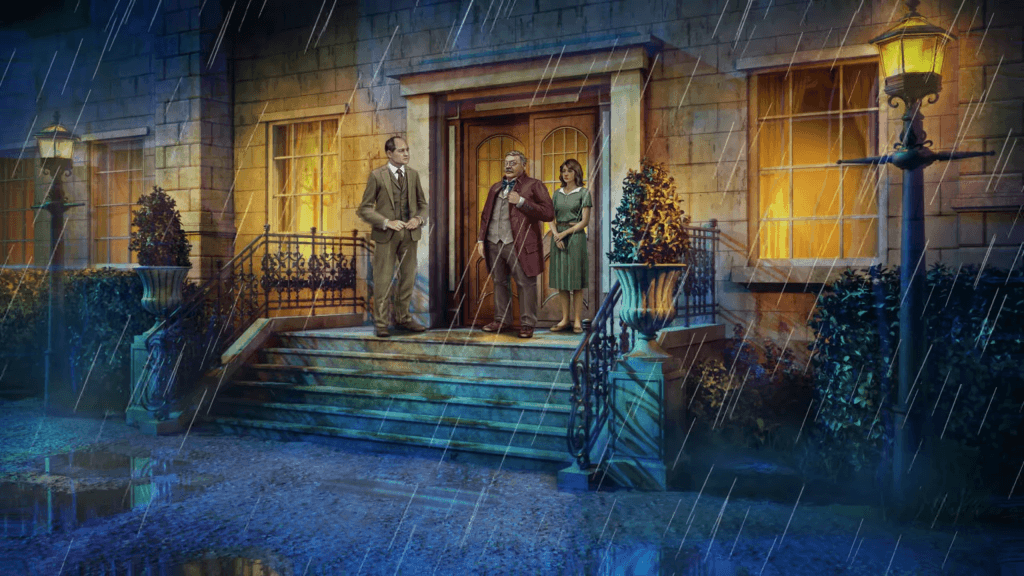
At least, that’s the premise on paper. In an opening scene, players are introduced to a character named John, the “protagonist” of Galley House, for lack of a better term. After stalling his car on the grounds of the estate on his way to the gathering, he’s ushered by a nameless man to the front entrance. John knocks on the door, only for another (also nameless) man to exclaim he’s “never heard of” a Rupert Galley.
John heads into the Galley mansion, but is dismayed to find that everyone else at this party shares the same reaction: They have no clue who Rupert Galley is. Thus begins the core mysteries at the heart of The Incident at Galley House: Who is Rupert Galley? Why was John invited to his birthday? And why can’t anyone seem to recognize the name?
Making matters worse for John and company is the fact that, shortly after his arrival, people keep mysteriously dying. First, it’s a man in a study; next, it’s someone in the kitchen. And on we go, watching as the various partygoers meet their untimely but assured demise.
Back to the Future
As the player, you’re keen on figuring these mysteries out. I said earlier that John is the pseudo-protagonist of Galley House, and that’s because the true protagonist is someone else entirely.
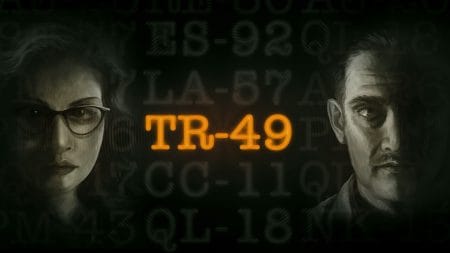
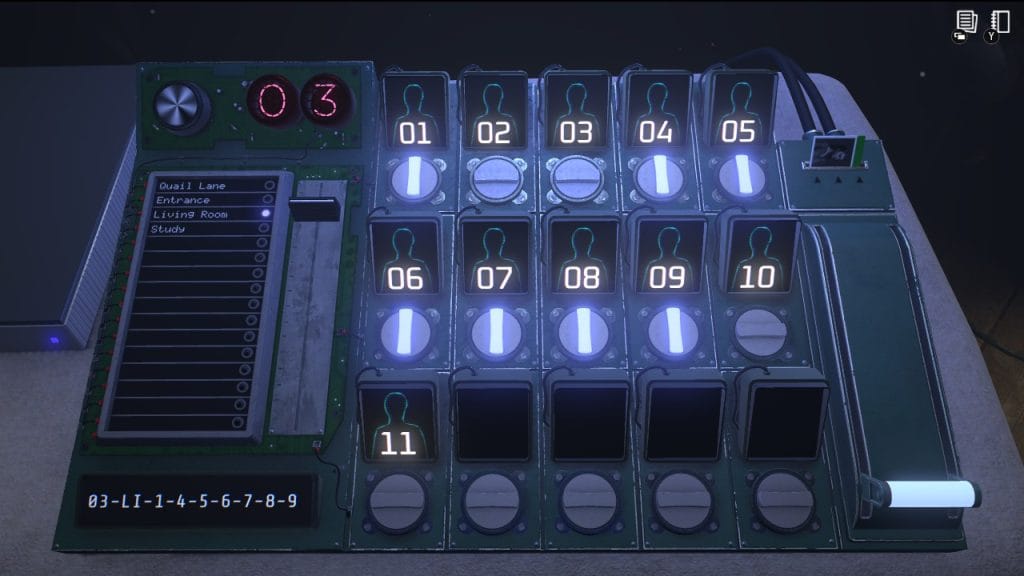
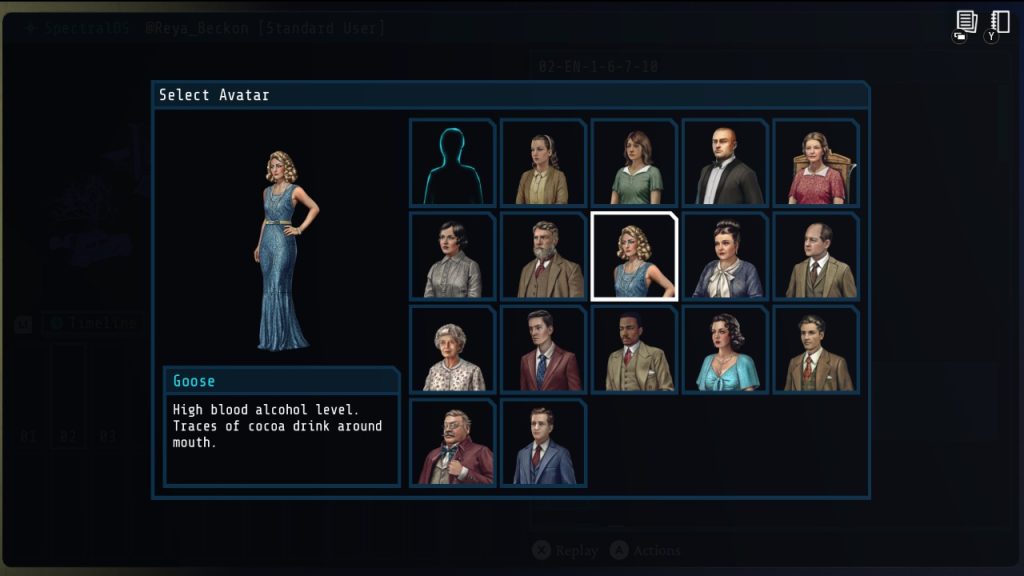
You play as Reya, a young woman who is visiting Galley House decades after the titular “incident” has taken place. In a dilapidated version of the estate’s living room, you’re logged into a mysterious machine — not unlike the terminal from this year’s TR-49 — that lets you travel back in time to revisit the events of that evening.
Naturally, time-traveling isn’t exactly an easy endeavor. To successfully recreate the memories of John and the others at Galley House, you must first ascertain the names, locations, and times of each “scene” that took place throughout the course of the evening. Think Clue, but instead of “Colonel Mustard with the gun in the library,” it’s “John and Thornton in the study at time 06.”
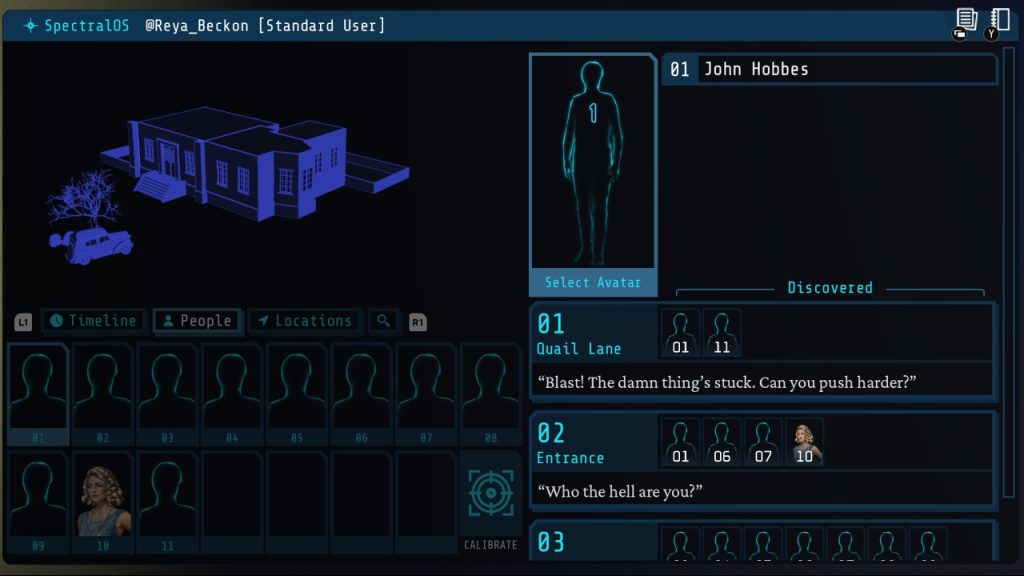
This sets up an interesting puzzle not too dissimilar from The Roottrees are Dead, at least on the surface. Just like The Roottrees, you’ll be bopping around various computer screens, sifting through lines of text, highlighting key information, and using clues you’ve previously gathered to make new breakthroughs.
Unlike The Roottrees, however, The Incident at Galley House is far less open-ended in its solutioning. With 2025’s puzzler, one in-game Google search might yield four or five crucial clues, each of which will send you to different branches of the Roottree family tree. With Galley House, you can also explore scenes non-linearly… but only in a very superficial sense. Oftentimes, sleuthing consists of triggering a scene and simply waiting for a character to say “Let’s talk more in X room, Y person” before they exit the room together. (And those who didn’t exit are likely staying back to chat among themselves.)
This results in a game loop where scenes are always uncovered in succession (e.g., from 01 to 02, or 26 to 25) rather than true independence (e.g., 01 to 05 or 26 to 18). That makes logical sense, as I imagine it’d be exceptionally difficult for the developers to have a character telegraph a scene that doesn’t immediately follow or precede the current scene. Still, games have succeeded here before (look no further than Sam Barlow’s terrific Immortality).
The linearity ultimately makes for a simpler, more predictable experience — one that gets old rather quickly. While deciphering the rare scene will make you feel like the sharp-eyed Miss Marple, far more often you’ll feel like the bumbling Jacques Clouseau.
And Then There Were None
While the gameplay loop in The Incident at Galley House gets repetitive, the actual story was more than strong enough to compel me to see the mystery through.
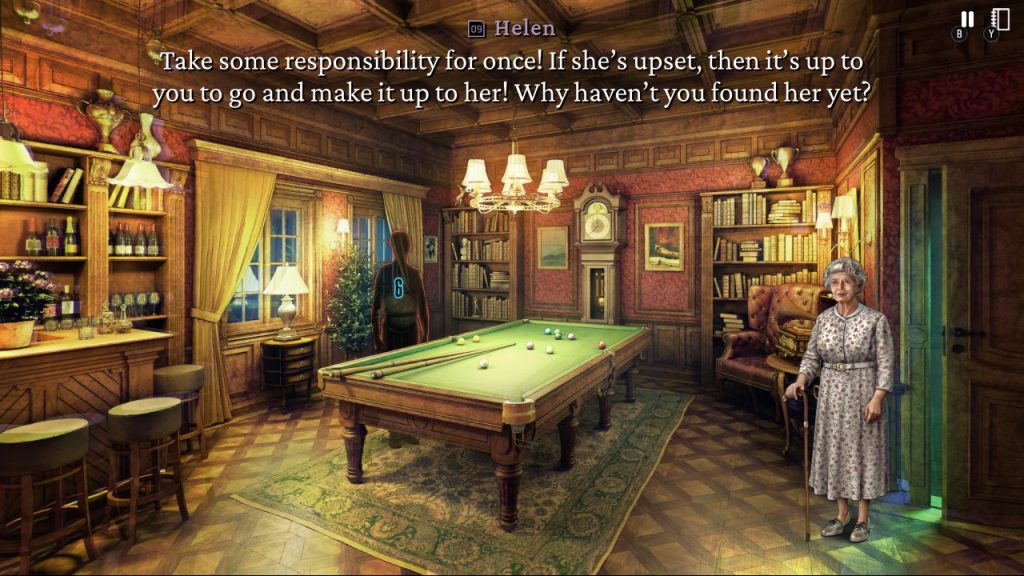
At first, Galley House masquerades as an inspired take on Agatha Christie’s And Then There Were None. An eclectic ensemble shows up at a mansion for various reasons, and before long, individuals start to drop like flies, one at a time. From posh English accents to ornate visual backdrops, Galley House doesn’t shy away from its Christie influence — that is, until it turns the whole premise on its head.
I won’t give away the twist, as it’s obviously a huge driving force behind the fate of Rupert Galley and all else who visited Galley House that evening. Just know that not all is as it seems, and that once you discover the true culprit, you’ll look back on the game’s events in a whole new light.
While I generally liked the twist, I should warn that The Incident at Galley House really isn’t for whodunnit purists. The game’s eleventh-hour deviation from the Christie formula is a double-edged sword; it makes the narrative more unpredictable (and certainly more memorable), but it also means you literally won’t be able to predict the ending. If you can’t suspend your disbelief at the notion of a machine that lets you relive memories from the past, you won’t enjoy what Galley House ultimately has to offer.
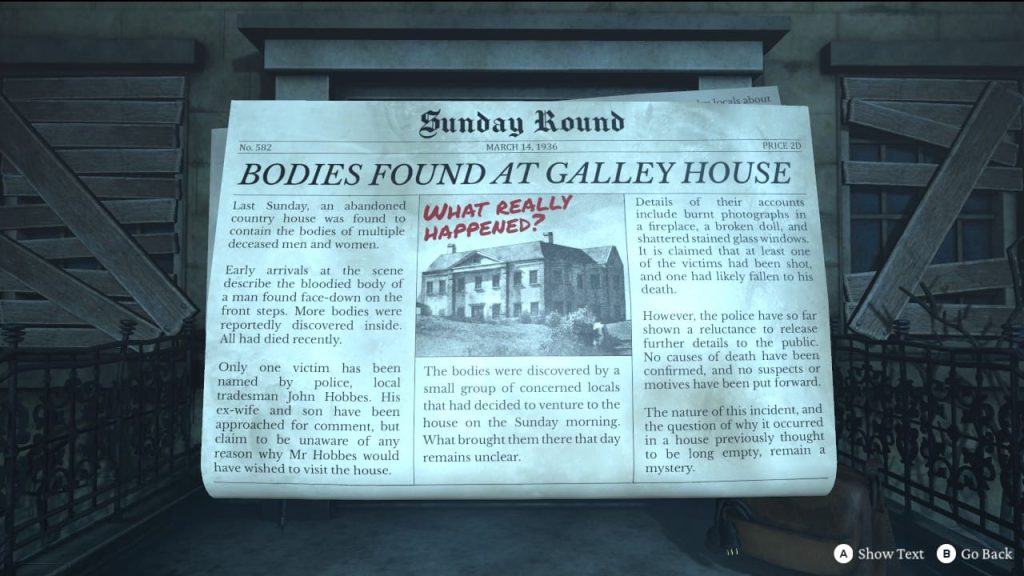
Further impacting the overall journey is the game’s audiovisual presentation, which I found a bit of a mixed bag. Compared to The Roottrees are Dead, the game is a clear step up, with superior visuals, original music (Roottrees used royalty-free music, cheapening the general aesthetic), and fully voiced-acted scenes. I quite enjoyed the art and soundtrack; it’s the voice acting that gave me pause.
The game’s cast delivers their lines admirably, but there’s a hollowness to the entire setup I could never quite shake. I think this is less an issue with the actors themselves and more so the writing, which — again — is often focused less on developing the cast and more on explaining everyone’s whereabouts at any given time. While certainly not bad enough to derail the plot, these moments were plentiful enough to distract from an otherwise enticing story.
The Ghost in the Room
As I intimated at the beginning of this review, there’s a reason why The Incident at Galley House feels so different from Evil Trout’s previous oeuvre, and it’s a pretty simple reason at that: Galley House isn’t a 100% original work.
In 2025, William Rous, the solo developer who partnered with Evil Trout on Galley House, released a game titled Type Help for free on itch.io. A text adventure (think Zork), Type Help tasked players with entering various commands to solve a mystery about a man who’d disappeared from his own birthday party.
The script of Type Help is almost identical to The Incident at Galley House, from the names of the characters to the line-by-line dialogue. Obviously, Galley House overhauls the experience, bringing visuals, character models, voice acting, and a proper UI to the mix. But the core loop of scouring text, uncovering scenes, and discovering the mysteries of Galley House remains almost entirely untouched.
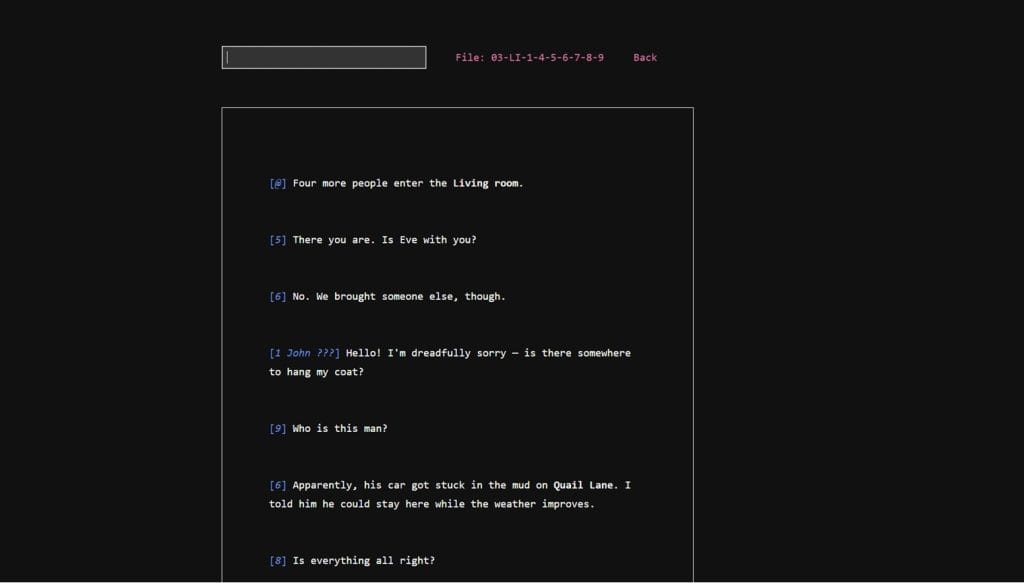
I don’t bring this up to suggest that The Incident at Galley House isn’t worthy of its own merit; it certainly is. Rather, I bring it up to explain why the game’s design feels so dramatically different from The Roottrees. (It also explains why the voice acting sounds a bit stiff, as the original game was clearly written to be read on a page versus heard.)
I only learned that Galley House was a remake after I’d completed it, but the discovery didn’t alter any of my underlying criticisms (nor did it impact my score). Rather, it is helpful context for anyone who, like me, adored The Roottrees are Dead and wanted something similar from Evil Trout’s follow-up. You’re not getting that here, and that’s okay — so long as you don’t mind a far more linear adventure.
Final Thoughts
As a remake of existing material, The Incident at Galley House is a mostly successful reimagining. It preserves the core of Type Help while adding visuals and music that make it easier to appreciate William Rous’ creative take on the standard whodunnit.
At the same time, there’s a part of me that prefers the simplicity of Type Help (having sampled it after completing Galley House). The introduction of voice acting in the remake distracts more than it adds, and the gameplay loop of searching for scenes feels much snappier within the context of an old-school text adventure.
As it is, The Incident at Galley House is a confident mystery, but an underwhelming puzzler. Had it taken more risks with the original script (if only to make for smoother voice acting, much less take advantage of the new visuals) and incorporated some of the non-linear puzzle design I’ve come to love from Evil Trout, it could have been a transcendent detective video game. Instead, it’s a safe play that feels like a massive missed opportunity.
Score: 7.3/10
The Incident at Galley House, developed by William Rous and Evil Trout Inc. and self-published by Evil Trout Inc., released on July 14, 2026, for PC and Mac (via Steam). MSRP: $19.99. Version reviewed: PC (via Steam Deck).
Disclaimer: A review code was provided by the publisher.

David is the founder of The Punished Backlog. He has a problem finishing games he starts.
Just beat: Splatoon Raiders.
Working on: GTA V.
Can't wait for: Ocarina of Time (2026), GTA VI.
Follow David on Twitter at @David_Silbert to keep up to date with all things The Punished Backlog.