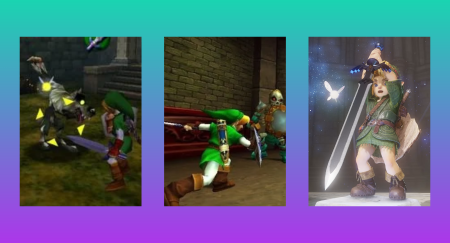

When it first came to light that Nintendo planned to bolster its 2026 lineup with two remakes of classic N64 titles, I was skeptical. Much of Nintendo’s magic lies in its commitment to fresh worlds, new innovations, and unique fun. Star Fox 64 is great, and The Legend of Zelda: Ocarina of Time is an all-time classic, but the notion of revisiting those pasts — not even two years into the Switch 2’s lifecycle — left me wondering whether Nintendo’s powers were somehow fading.
The initial showcase for Nintendo’s Ocarina of Time remake didn’t assuage my feelings. From an oddly paced demonstration by series director Eiji Aonuma, to internet jabs about Kokiri Forest and young Link looking like an elaborate fan project, to questions of whether this game would entice a new crop of Zelda enthusiasts in a post-Breath of the Wild world, the noise became deafening in the hours following that Zelda 40th Anniversary Direct. Much like a Deku Scrub lost in Death Mountain, I let my fears run wild.
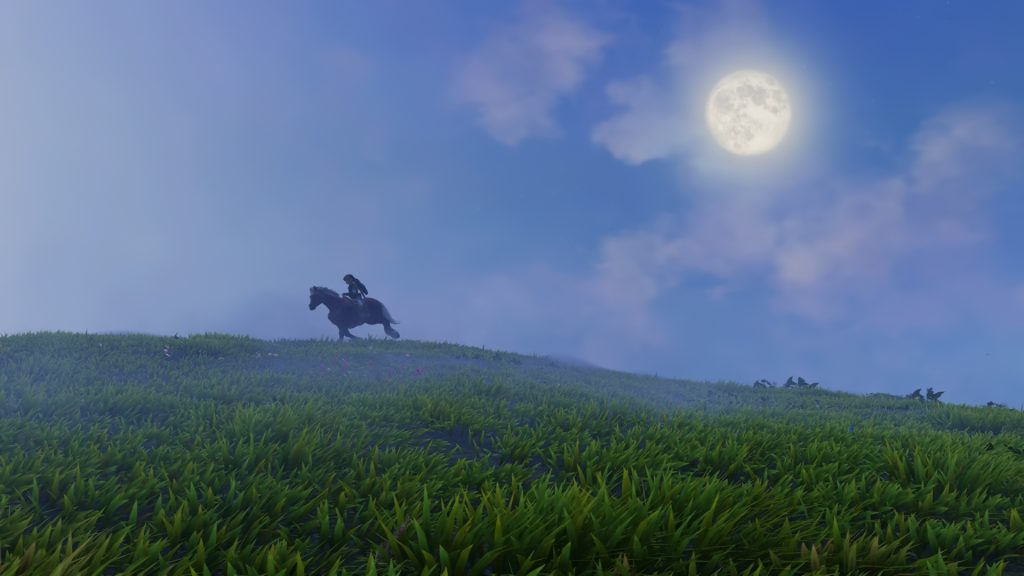
I shouldn’t have worried. The Legend of Zelda: Ocarina of Time (2026) has only been out for a week and change, yet after 25 hours and near-100% completion, I’ve successfully fallen in love with the charming land of Hyrule all over again. The remake faithfully preserves all the elements that made the original 1998 N64 adventure sublime while sharpening its rougher edges with smart, modern enhancements. This isn’t a total reimagining, but when the source material is timeless, it doesn’t need to be.
The Legend of Zelda: Ocarina of Time may be up against a behemoth in Grand Theft Auto VI this November, but if there’s one thing Link’s coming-of-age tale has going for it, it’s 30 years of legacy. The remake is an assured Game of the Year contender, among the very best Nintendo Switch 2 games to date, and an easy recommendation heading into the holidays.
Nearly 30 years ago, Nintendo showed us what’s possible with great writing, great design, and great heart. Now, in 2026, history has repeated itself.
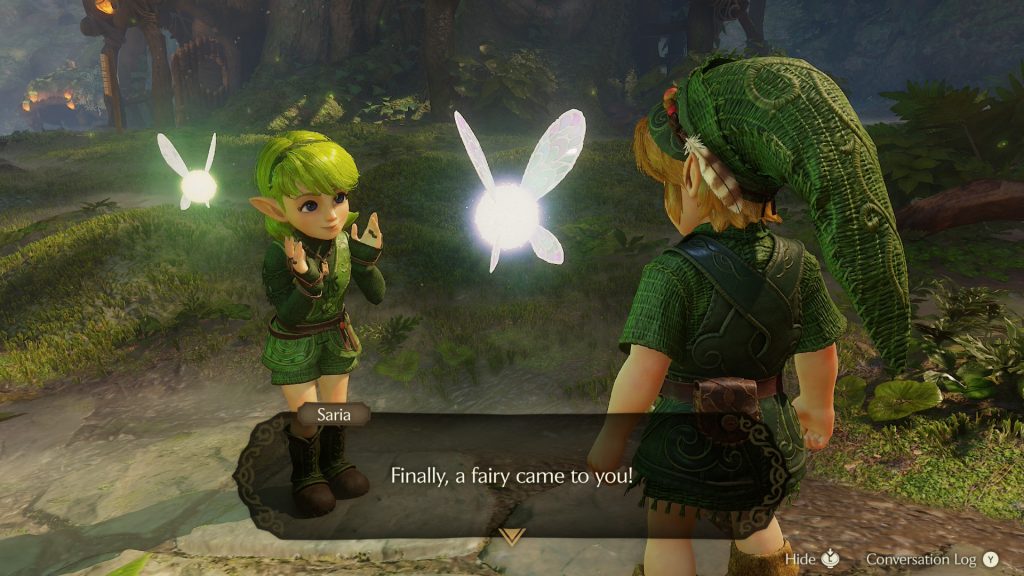
Hey, Listen!
Whether you’ve played Ocarina of Time countless times before or this is your first foray, the remake immediately grabs you with its opening. After taking in the game’s iconic title screen and theme (now with new visuals and music), players are treated to an opening cinematic detailing Hyrule’s deeply woven history — quite literally. Against the backdrop of an ornate tapestry, the game introduces locations like Hyrule Castle, Kokiri Forest, and, of course, the boy without a fairy: Link.
The rest is well-trodden ground for any Zelda fan. The Great Deku Tree, who protects the innocent Kokiri children, muses to himself that his time is growing short. With a deep darkness threatening Hyrule, he entrusts stewardship of the forest — and world — to Link, but not without some help. Navi, a fairy without a Kokiri, fetches Link from his home at the Deku Tree’s behest. From there, the two join forces and begin their journey: first by investigating the darkness ailing the Deku Tree, then by leaving Kokiri Forest to aid other species across Hyrule.
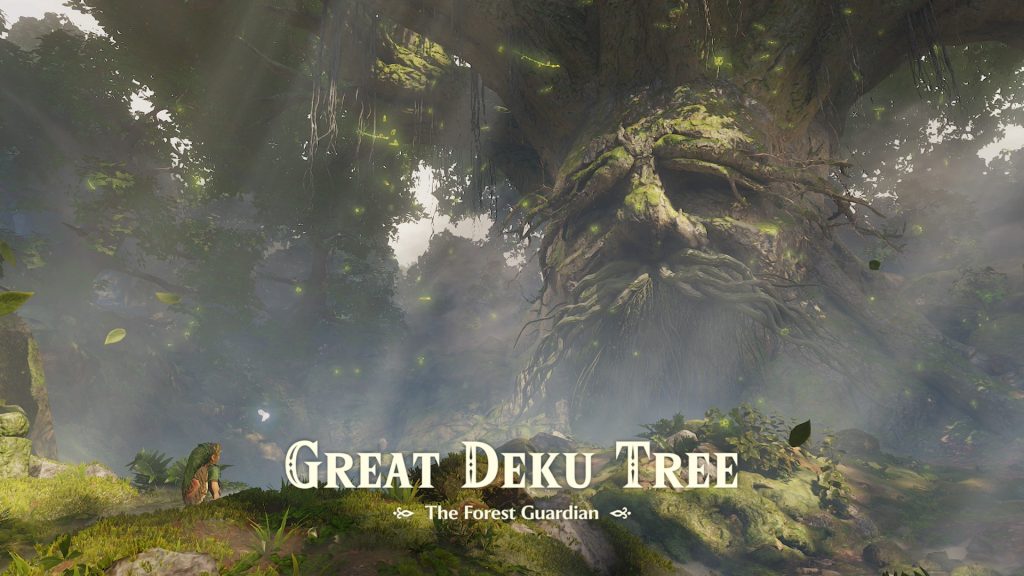
If you’ve played Ocarina of Time in any past format (on N64, on GameCube via the Master Quest bundle, on 3DS via the Grezzo remake), these beats will be intimately familiar. Still, I cannot stress enough how new and fresh the story feels in this Switch 2 remake. Kokiri Forest teems with greenery, and realistic lighting and particle effects bring the environment to life. Everyone — save for Link, of course — is fully voiced, from the gentle Deku Tree to the emotive Navi and somber Saria. Cinematic cutscenes pepper the experience, adding seasoning to a story that, despite being 30 years old, still holds up exceptionally well.
I’ve never been one to praise Nintendo’s storytelling, but this Ocarina of Time remake feels different. Every part of the game’s direction has purpose, from the camera angles to the vocal performances (which range from solid to outstanding) to the music, which swells and tapers at just the right moments to propel the narrative’s emotional current. The direction is truly outstanding, and it’d be a mistake to write off Ocarina of Time as “just another Nintendo story.”
The narrative isn’t perfect. Some characters, particularly the Goron Darunia and the Zora Ruto, drift too far into the melodramatic for my taste. The pacing also errs at times; the opening in Kokiri Forest is damn near exceptional, while some mid-game beats (once Link becomes an adult and must retread familiar paths) drag on just a hair too long. But these nitpicks don’t detract from what’s otherwise a terrific story of friendship, growth, and courage through adversity. And if the ending doesn’t move you, I don’t know what to tell you.
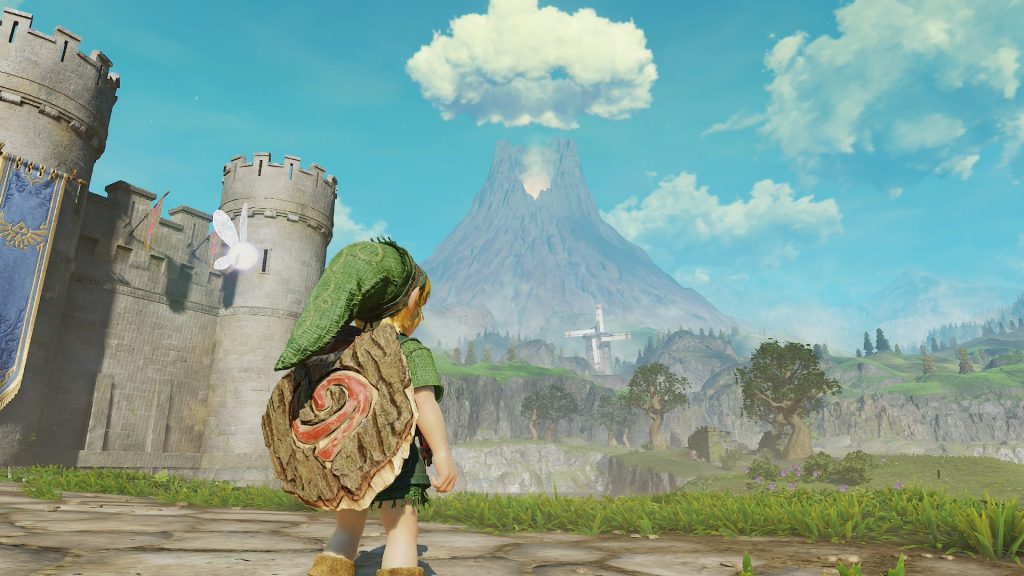
The Highs of Hyrule
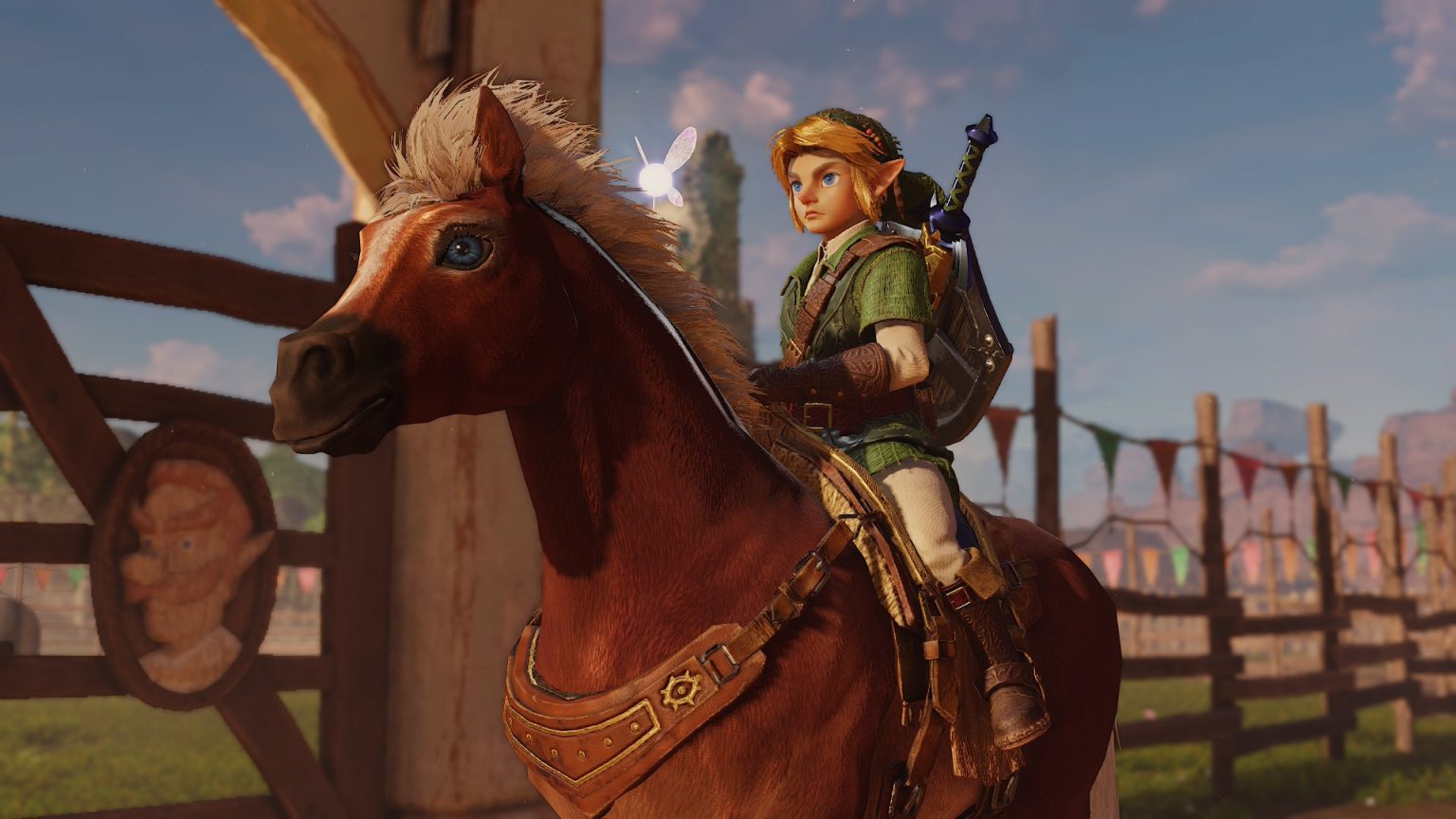
One of the greatest achievements of the original Ocarina of Time is its ability to pack so much charm into a relatively concise package. Across 25 hours (30 if you see and do everything), you’ll help the powerful Gorons of Death Mountain, infiltrate the impenetrable Gerudo Fortress, and even save a princess from the depths of a giant fish. You’ll hunt for Heart Pieces, befriend your trusty steed Epona, and win various prizes in the heart of Castle Town. There are also Cuccos to collect, graves to pilfer, pots to smash, Poes to collect… You get the idea.
All of these classic memories have made the successful transition to the Switch 2 hardware — with a few enhancements for good measure. As advertised during the Zelda 40th Anniversary Direct, you can now manually jump and dive. You can also flip through items with a simple quick-select menu, or sprint by holding the roll button. These mechanics seem small at first but contribute to an experience that feels far closer to modern Zeldas like Breath of the Wild and Tears of the Kingdom. (Just like those games, “jump” is initially mapped to the “X” button, which I changed immediately.)
It’s an interesting duality: Ocarina of Time (2026) is extraordinarily faithful, yet the game plays exceptionally modern thanks to the smartest of in-the-margins tweaks.
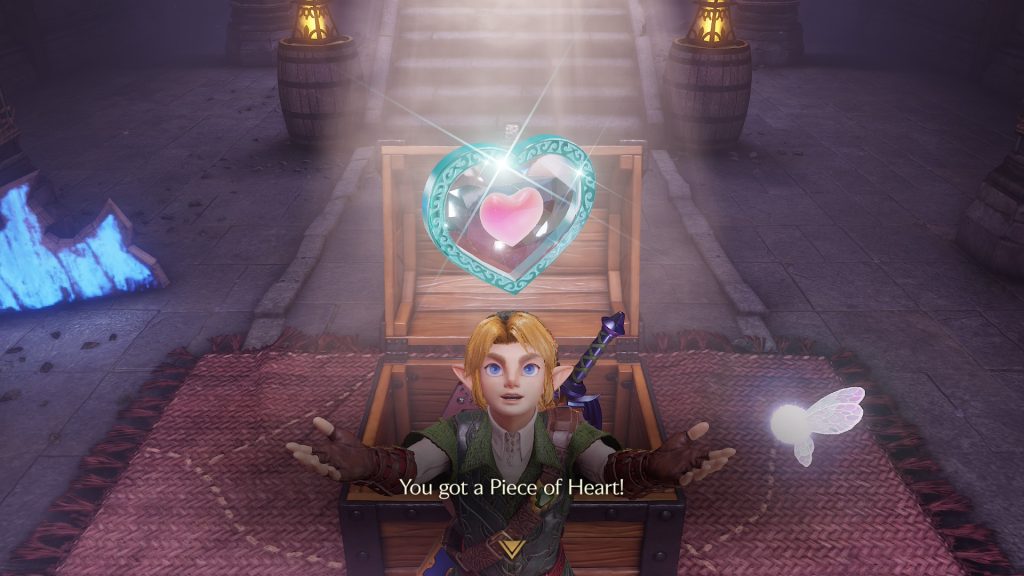
As I mentioned earlier, The Legend of Zelda: Ocarina of Time (2026) isn’t a ground-up reimagining of the original OoT. This isn’t a Final Fantasy VII Remake-level project that expands on the source material, adds a bevy of side content, or fundamentally reworks the combat system. There are meaningful differences — Skulltulas spin rather than turn, Din’s Fire casts in real time, there are five bottles instead of four, etc. — but this is more or less a 1:1 remake.
And that’s all for the best. As much as I would have liked the Ocarina remake to add lots of bells and whistles, there’s something refreshing about Nintendo EPD’s decision to restrain itself. The bulk of the changes are technical and come from the visuals, the (outstanding) music, the new freeform camera (again, just like BotW and TotK), and other tweaked mechanics. (I have some additional notes at the end of this review if you want more color on specific changes.) What made the original game so great remains completely untouched.
It’s an interesting duality: Ocarina of Time (2026) is extraordinarily faithful, yet the game plays exceptionally modern thanks to the smartest of in-the-margins tweaks. That is an incredible feat, one that allows the remake to lean into what it does add to great success.
An Audiovisual Feast
At the time, Link’s 1998 adventure was an unparalleled showcase for the Nintendo 64 hardware. Its massive, non-linear zones allowed a level of freedom rarely afforded by other video games (Zelda franchise included). The graphics pushed boundaries, with a dynamic day-and-night cycle that, while not the first of its kind, helped popularize the feature in open-world games. The soundtrack was arguably even more impressive, utilizing a wide range of instrumentation to capture the various moods — whimsical, somber, exuberant, terrifying — of Hyrule.
The remake faithfully preserves all the elements that made the original 1998 N64 adventure sublime while sharpening its rougher edges with smart, modern enhancements.
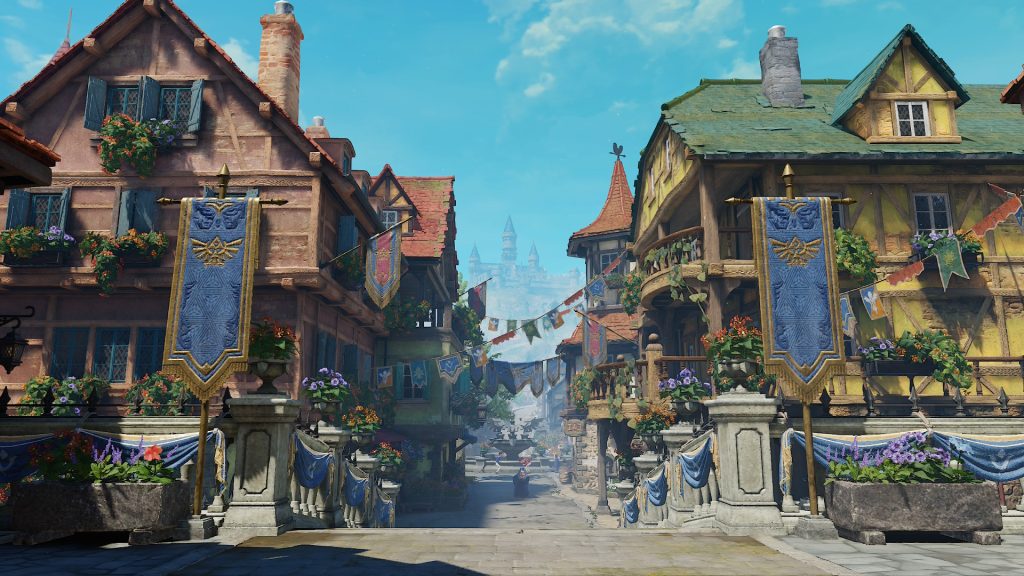
It’s hard to imagine Nintendo capturing lightning twice with the same game — yet, somehow, here we are. The Legend of Zelda: Ocarina of Time (2026) is a tour de force in the audiovisual department. Every area you’ll visit is stunning. Kokiri Forest won me over with its mysterious serenity, while Kakariko Village made me melt with its warm denizens and quiet lifestyle.
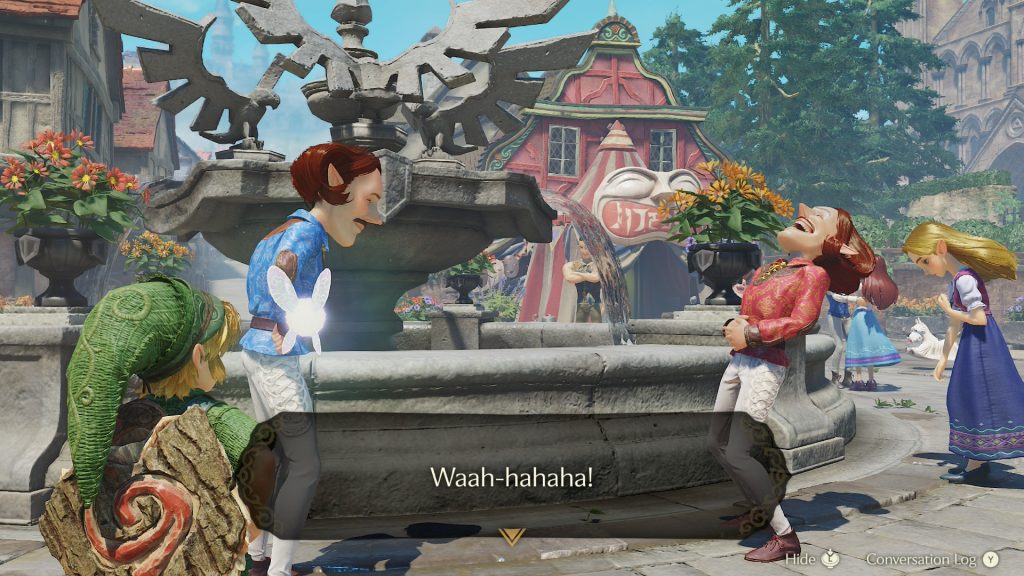
But Hyrule Market is the real standout. An upbeat hub for traders, dancers, and dog lovers, the market was by far my favorite place to frequent in the original game. Here, it’s somehow made even better with more varied dialogue exchanges, beautifully rendered character models (from the dancing couple to the laughing brothers), and a theme song that is as rich in its arrangement as it is delightfully replayable.
Other updates are equally welcome. Navi, a character who infamously annoyed players with its barrage of “Hey, listen!” and “Watch out!” interjections, now shares most asides via unobtrusive comment boxes. Kaepora Gaebora, the wise owl that helps guide Link in his journey from boy to man, has received a gorgeous facelift. (My partner, who loves owls, immediately fell in love with him as I played.) Virtually every character you’ve come to know and love (or hate) has been reworked with the care only Nintendo is known for.
Add in a soundtrack that takes the nostalgia of the original and only improves on it, and you have a hallmark experience that stuns on Nintendo Switch 2, regardless of whether you play docked or in handheld mode. Take my advice and savor every moment.
Final Thoughts
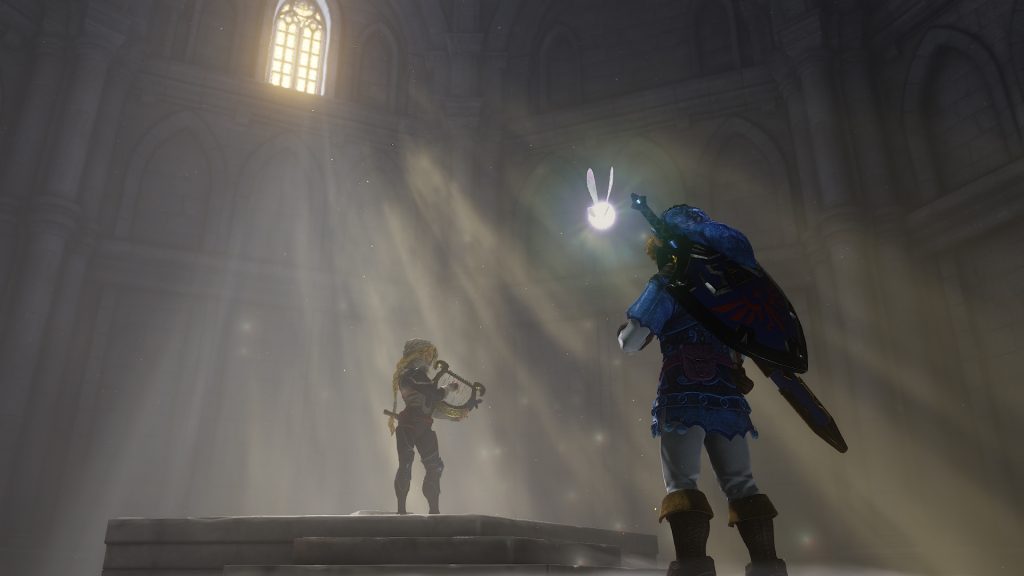
The Legend of Zelda: Ocarina of Time (2026) is a perfect remake of a perfect game. It honors everything that made the original 1998 game a classic while updating every aspect of the experience for the modern player. It looks great, sounds even better, and plays like butter.
The addition of voice acting and new cutscenes provides a cinematic flair befitting Link’s flagship adventure. It doesn’t take many risks, but it doesn’t need to. Nearly 30 years ago, Nintendo showed us what’s possible with great writing, great design, and great heart. Now, in 2026, history has repeated itself.
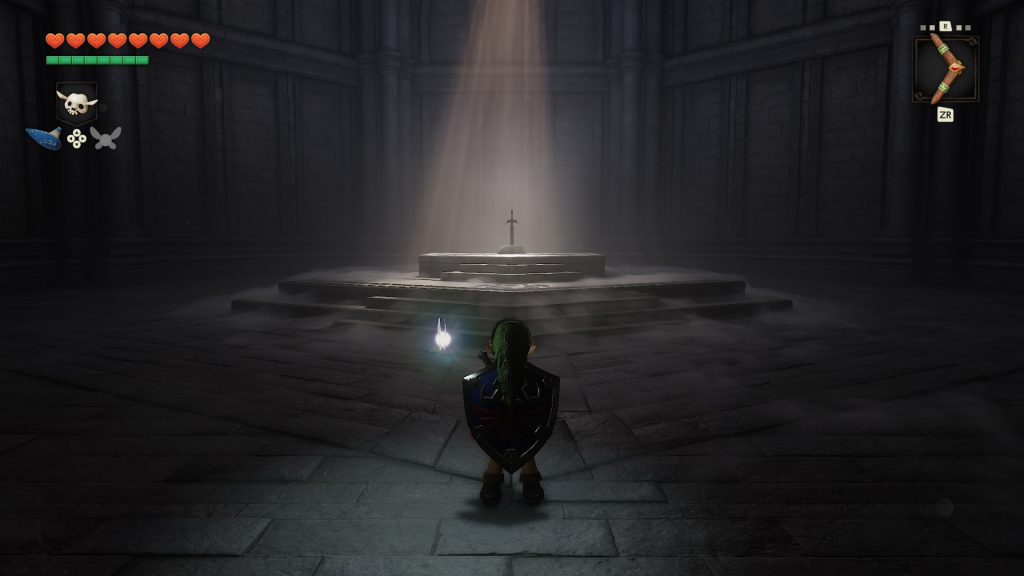
If you want Zelda at its absolute most modern, Breath of the Wild is still your ideal starting point. Even as I played this remake, I realized how much the franchise has evolved (in a good way!) since 1998. But legacy is important, and Ocarina of Time’s legacy precedes itself. If you value the game that made all other 3D Zeldas possible, you owe it to yourself to play the Song of Time and pick up the Master Sword once more.
Score: 10/10
The Legend of Zelda: Ocarina of Time, developed by Nintendo EPD and published by Nintendo, released on November 5, 2026, exclusively for Nintendo Switch 2. MSRP: $69.99 (physical); $59.99 (digital).
Disclaimer: A review code was provided by the publisher.
Additional Notes
- When developer Grezzo created the 3DS remake of Ocarina of Time, they added some welcome quality-of-life features — namely, gyroscope aiming and the ability to quickly swap Link’s boots and headwear with a tap of the d-pad. Those changes are thankfully preserved in the Switch 2 remake.
- Another (less crucial) addition in this remake: the ability to hum, or use an instrument you own, to play Link’s ocarina. It’s as much of a gimmick as it sounds, and after appreciating the novelty for a moment, I turned off this setting without a second thought.
- I was surprised by which dungeons I struggled with in the Switch 2 remake and which I found refreshingly smooth. The notorious Water Temple was my absolute favorite; the layout is the same, but the refreshed controls dramatically improve the experience. The Forest Temple, meanwhile, stumped me for longer than I’d care to admit.
- Perhaps the biggest content addition to the remake is a boss-rush mode, accessible after a certain point in the game by sleeping. Doing so brings you to a dream-like realm where you can view statues of past enemies you’ve defeated, or take on a gauntlet of past bosses (there’s a gauntlet for young Link, one for adult Link, and one mega-gauntlet for the true sickos). It’s a nice way to add some replayability without altering the actual campaign.
- Following the 40th Anniversary Direct, fellow writer Mark Bowers wrote an op-ed lamenting the emptiness of Hyrule Field as a first-time Ocarina of Time player. I don’t disagree with him. While I ultimately respect Nintendo’s desire to preserve OoT exactly how players from 1998 remember it, it would have been cool to see a few extra landmarks, or even a stray NPC or two (the Hylian runner aside). Ultimately, this was just a passing thought; I came to appreciate the emptiness of Hyrule Field, just as I had decades ago.
- Though I decided to award Ocarina of Time (2026) a 10, I won’t say with confidence that it’s a must-play for every single Zelda newcomer. If you hate backtracking or puzzle games with very specific solutions, you’ll probably prefer Breath of the Wild. But this is a legendary title, and it’s worth sampling this piece of gaming history for yourself.

David is the founder of The Punished Backlog. He has a problem finishing games he starts.
Just beat: Ocarina of Time (2026).
Working on: Fire Emblem: Fortune's Weave.
Can't wait for: GTA VI.
Follow David on Twitter at @David_Silbert to keep up to date with all things The Punished Backlog.