
Nowadays, it feels like any description of a new video game includes one of a select few keywords. You can’t read more than a couple of reviews without seeing “Soulslike,” “roguelite,” or “first-person, turn-based, tactical open-world sandbox hack-n-slash RPG with survival mechanics.” Okay, maybe not that last one, but sometimes it feels like every sales pitch has to fit into a tidy category for it to click with gamers and give them an idea of what they’re in for.
These comparisons can obviously be helpful, but with The Merlies, a recent release from developer Darjeeling and publisher ARTE France, I came across a term I’d never heard before. The game’s marketing calls it a “wholesomevania,” and though this might be the first time I’ve played one, I hope it isn’t the last.
The Merlies certainly has some metroidvania DNA, but as someone who’s been playing video games for 25+ years, I don’t think I’ve played a game quite like it. It’s exciting when something comes along that feels fresh and unique, and that alone is a strong selling point for The Merlies. It’s not a perfect game, and not every design choice fully lands, but for the most part I found this attempt at a genre-blending experience to be a success.
I’m going to do my best to describe The Merlies without relying on cliches and buzzwords, because I think not only is its novel gameplay tough to put in a box, but I also appreciate the creativity on display and want to do it justice. Getting to review indie games like this is a great reminder that the talent in the games industry isn’t just at the AAA studios. There are so many fantastic ideas put into the universe by smaller developers, and The Merlies is the latest example.
Three Little Birds
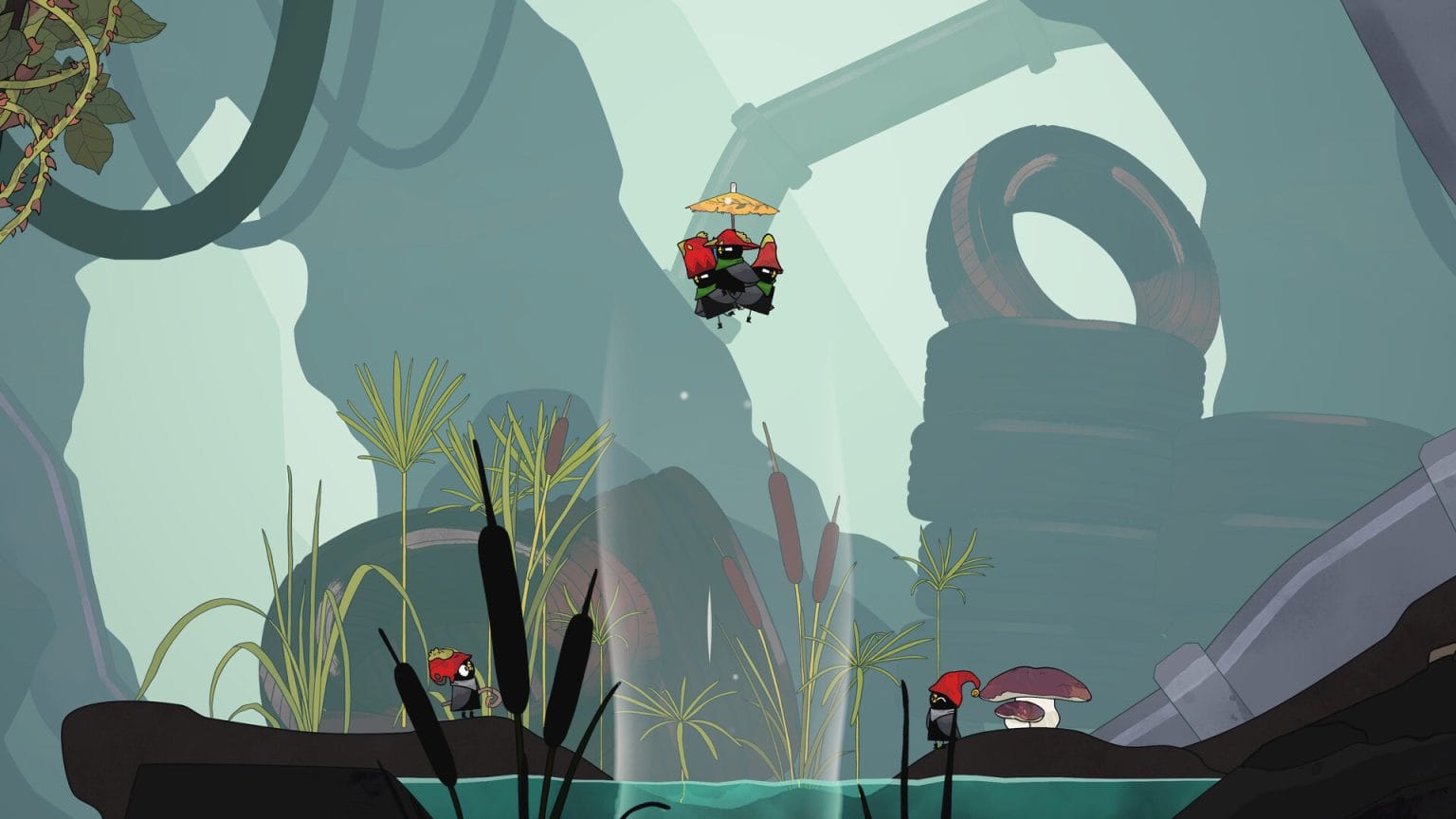
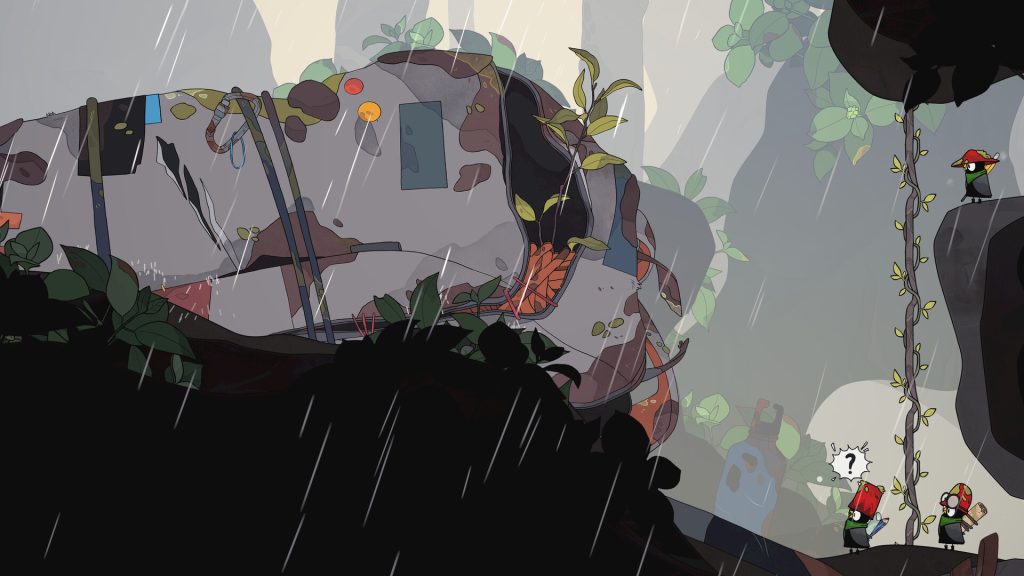
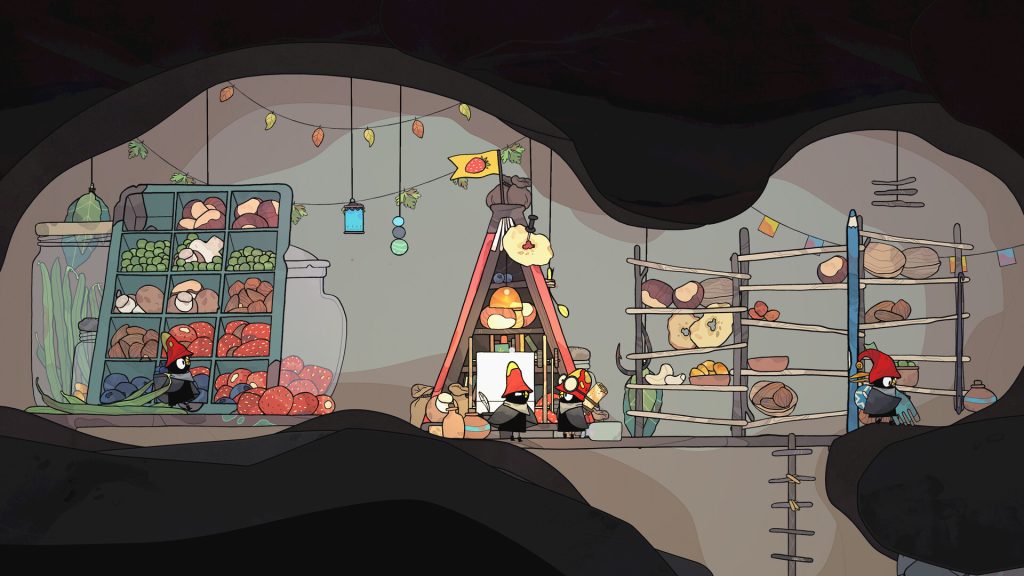
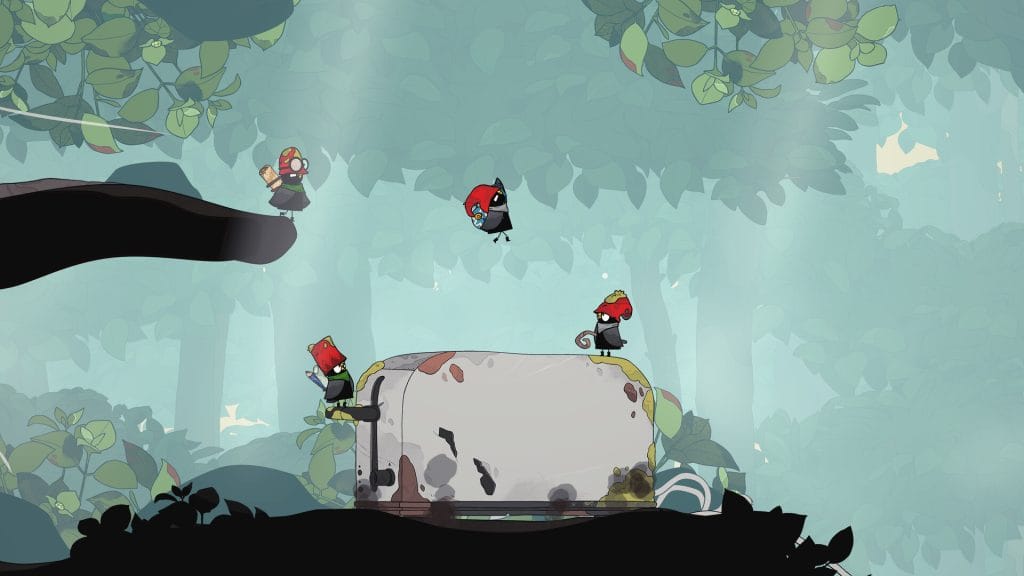
Our adventure finds three birds, named Merlies, rebuilding their home in a post-apocalyptic setting where humans appear to be long gone. Your mission is to set out into the world, round up lost villagers who have been displaced by a storm, and pick up items along the way as infrastructure for your town, dubbed The Stump. What starts as an empty “nest” full of nooks and crannies to fill soon becomes a lively environment full of bird-friends and discarded treasures like ice cube trays, old shoes, and other common household objects.
Gameplay is simple but enjoyable. There are no enemies to fight or significant hazards to overcome; instead, exploration is the name of the game. The ability to go at your own pace without facing penalties for failure makes for a very calm and largely relaxing time. The 2D world is full of tunnels to navigate, different landscapes to admire, and of course, plenty of avian pals to discover. The main loop involves platforming and solving minor environmental puzzles in order to locate lost Merlies, who you then bring back to your village.
As you flap and flutter across the map, you’ll stumble upon not just potential pals, but also their new housing. Players must match up each Merlie with one of the aforementioned human items so they can fulfill a duty back at home. Matching up residents with their unique shelter lets you access a new resource or ability when you go back to check on the progress being made at The Stump.
Birds of a Feather
In classic job interview form, I found the biggest strength of The Merlies was also its biggest weakness. There’s very little direction in what you should be doing, where to go next, or really even the main goals of the game. I was very conflicted at times, because while wandering around aimlessly can be fun, I spent a lot of time backtracking or trying to brute-force my way through certain sections I thought I should be able to complete.
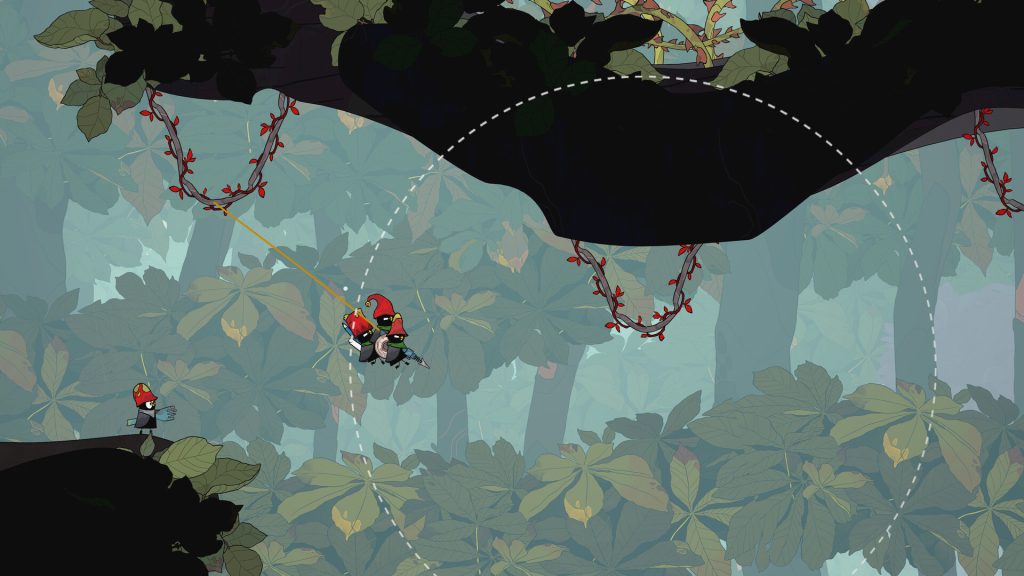
The traversal options at your disposal are relatively limited, though because you control a group of birds, you can do things like stack them, separate them, or huddle them close together. The controls are generally capable, but with multiple characters on screen, there can be times when they don’t act the way you want or expect. There were several occasions when I felt like I should be able to do something I couldn’t seem to manage, and I was left wondering if I was doing something wrong or if I needed to find a new ability to access a later part of the level.
In some ways, I love that lack of clarity. One of my biggest pet peeves in gaming today is that there’s way too much reliance on in-game resources like checklists, mini-maps, quest logs, and objective trackers. A lot of the time you don’t even have to think or remember what you’re supposed to be doing, as games will guide or force you in a certain direction and give you step-by-step instructions on how to complete your task. Back in my day, the game didn’t hold your hand; you had to write things down on a piece of paper or use your brain to recall where secrets were. Because of that, I often relish the chance to get lost in a game and really focus on what it is I might be missing or misunderstanding about how to make progress. There was a lot of that here, but while some of it felt intentional, other parts seemed more a side effect of loose controls, or a lack of explanation about your party’s abilities.
By the same token, I knew I needed to find Merlies and items for them to use, but there was very little rhyme or reason as to how to make the proper pairings. When you find something in the world, it’s automatically transported back to your home base. To interact with the birds you collect or the objects you gather, you also have to go back to the village. There were multiple times I thought I’d go back to find more shelter being occupied, only to realize the lamp I just brought back didn’t match the Merlie I found a few steps away from it. For the most part, this didn’t have a major impact on my experience, but it led to a decent number of trips back and forth from The Stump to the outer reaches of the map. In a surprising turn of events, I came to wish there was a better system to track what I had accomplished, what I was still looking for, and how to better align my goals with the places I needed to go.
Free Bird
Ultimately, these gripes amount to procedural problems that are mostly personal preference. At its core, The Merlies is a game that lets you go where you want to go, when you want, and how you want. If you’re stuck, keep digging, and eventually you’ll find a new path, different ability, or secret trick to help you along. As you find more Merlies, you’ll gain tools and friends who can help you with special moves. These items, like a parasol that lets you float on jetstreams or a pickaxe to break rocks, open up new paths and ways to explore the world around you.
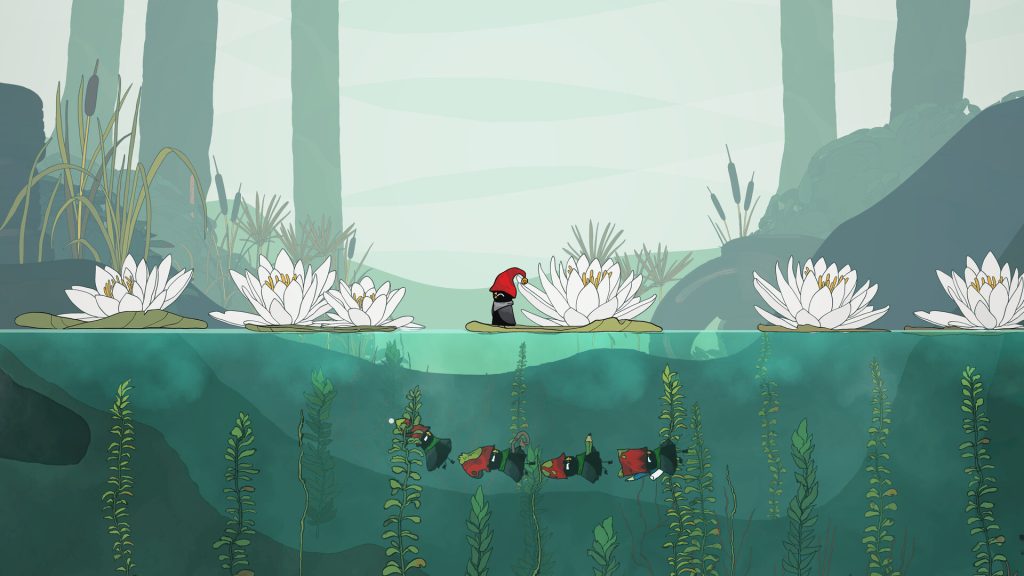
Like most great metroidvanias, it was always exciting to gain a new ability and see how it let me access places I couldn’t previously reach. The game does a good job of doling out new mechanics slowly, giving players plenty of time to enjoy each tool in their toolbox. The platforming gets tricky at times, but checkpoints are plentiful, and there’s no real consequence for dying besides having to restart a particular section. Because there are no enemies, the only dangers are environmental, like contaminated water or spiky vines. There wasn’t much challenge in moving around the world, but a few twisty, turny areas made navigation just tricky enough to be rewarding when you managed to work your way through.
Final Thoughts: The Bird is the Word
The Merlies is a warm hug of a game, with elements that casual and seasoned gamers alike can enjoy. It’s a rewarding adventure with a story about overcoming adversity, building community, and appreciating the world around you.
A lack of in-game direction and some less-than-stellar controls hold it back from being a true gem, but anyone who loves exploration and stress-free gaming will no doubt find a lot to like here. The idea of a wholesomevania is fantastic, and the execution of The Merlies makes for a game well worth diving into.
Score: 7.5/10
The Merlies, developed by Darjeeling and Blue Ramen and published by ARTE France and GCORES Publishing, released on September 29, 2026, for PC and Mac (via Steam) as well as Nintendo Switch. MSRP: $19.99. Version reviewed: Nintendo Switch.
Disclaimer: A review code was provided by the publisher.

Zack has been hooked on games ever since his older brother taught him where to find the secret warp whistles in Mario Bros. 3. He has never felt more joy than when Yoshi congratulated him on getting 120 stars in Mario 64 or more sadness than when he played Kingdom Hearts 3 after waiting 14 years for it. Zack mails a letter to Nintendo every day asking them to bring back Chibi Robo and will gladly tell you all about why it’s one of the greatest games of all time. He was hoping that writing for the site would help him get through his backlog, but it actually just made it worse now that he’s hearing about so many more great hidden gems. Oops…