

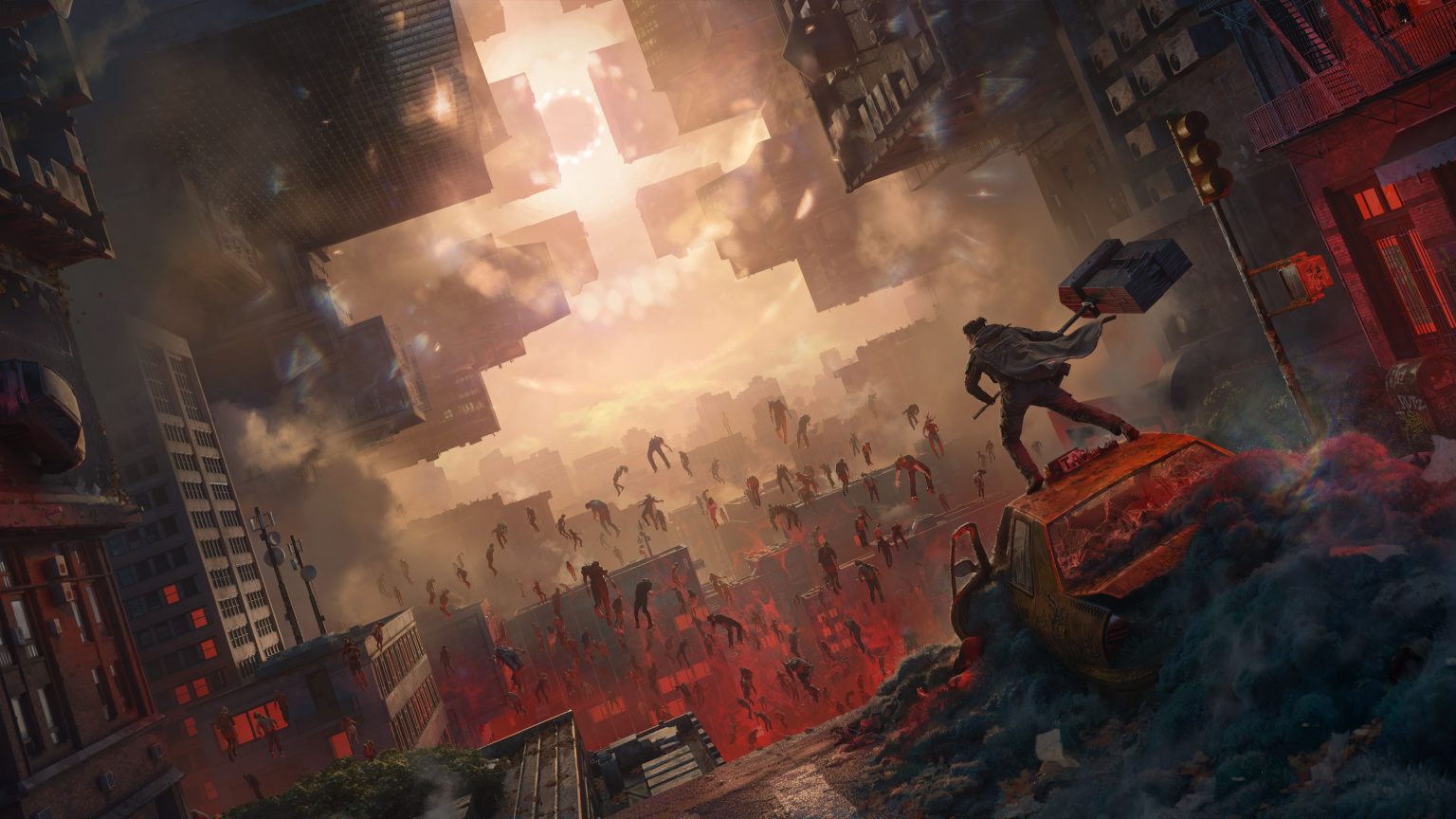

Tell me if you’ve heard this one before: A young, socially awkward lad is tasked with finding his love interest (often a woman) or sibling (often his sister) from a supernatural enemy that has captured a familiar-feeling city (modern like New York or fantasy like Hyrule). While familiar, the premise for Control Resonant sounded promising.
I love 2019’s Control. The aesthetics of the Oldest House haunt me to this day. I found Jesse Faden to be Remedy’s strongest and most interesting protagonist to date. Jesse’s search for her brother Dylan and their origin story in the town of Ordinary sparked my imagination. Control may be the game that I have played through the most from the last seven years.
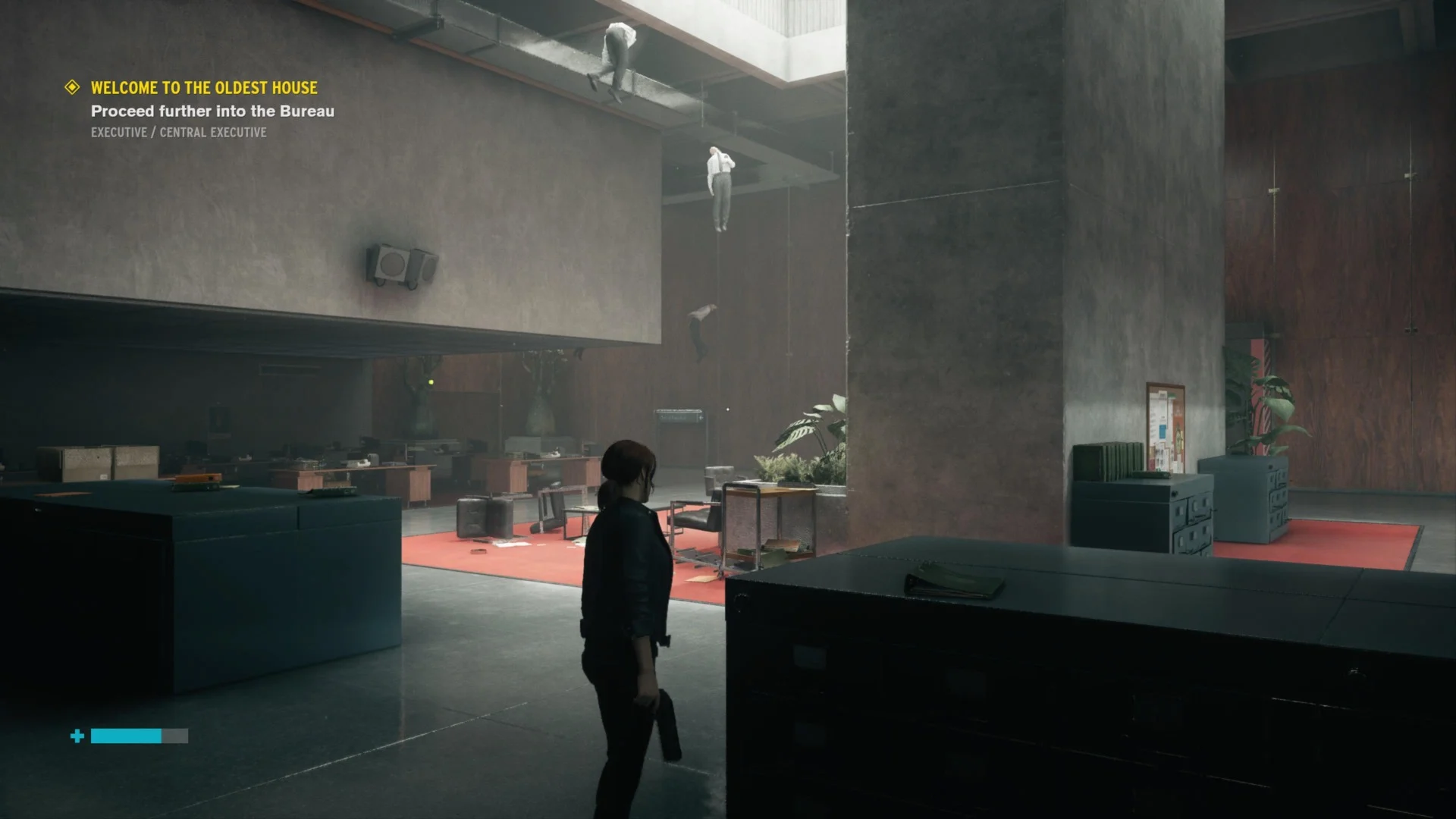
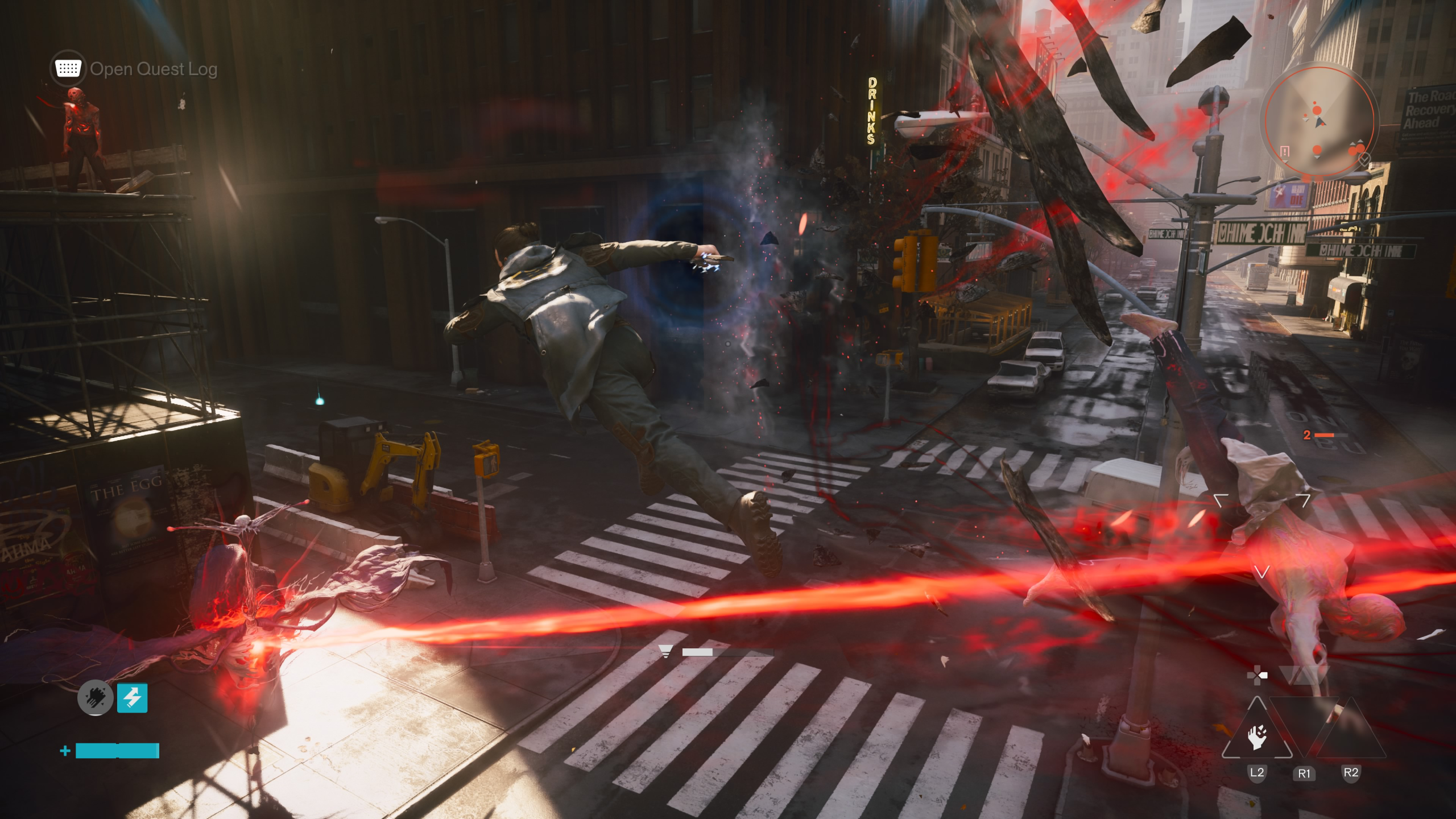
I was thrilled about the changes announced for Control Resonant. We would now be playing as Dylan Faden, escaping the Oldest House (with the shadow of its brutalist architecture never far away) rather than going deeper in. Additionally, the new emphasis on melee gameplay would move us away from Remedy’s clunky gunplay. Alan Wake, Alan Wake 2, FBC: Firebreak, Max Payne, Max Payne 2, Quantum Break, and Control are all lovely games, but the gameplay always plays second fiddle to the narrative. This new game provided an opportunity to meld gameplay with theme.
Unfortunately, I quickly ran into an issue when actually playing Control Resonant: Its gameplay wasn’t the immediate hook that I expected it to be. On top of that, Dylan’s social awkwardness narratively makes sense (he has effectively been a prisoner in the Oldest House since he was a child), but I occasionally found the writing around his story to be a bit threadbare. To be frank, I didn’t find Control Resonant all that fun until many hours into Dylan’s adventure. Both the gameplay and the narrative ultimately become more compelling (albeit a bit thematically uneven), and I found it easier to forgive the game’s flaws whenever Control Resonant worked to make Dylan a more sympathetic character.

Faden Feels
Control Resonant picks up seven years after the end of Control. The Hiss (the primary hostile inter-dimensional force-possessing folks) have broken out of the Oldest House; Director Jesse Faden is missing. We play as the director’s brother, Dylan Faden, who doesn’t have the best track record with the Federal Bureau of Control (FBC). His relationship with the Hiss — which possessed him prior to the first game — haunts him and the FBC agents that surround him.
Dylan and Jesse’s relationship is the guiding light of Control Resonant. Fans of Jesse might find themselves frustrated by the story, which often casts aside the excellent femme protagonist of the first game for a more generic, less interesting male protagonist. A brief and unsurprising spoiler is that Jesse is found, and becomes a supporting character in a game that demands we remember her strengths in the previous game. The result is an uneven story that saves its best reveals for the last few hours. In a shorter game, this wouldn’t be a problem, but the completionist run of Control Resonant will keep players busy for 50+ hours.
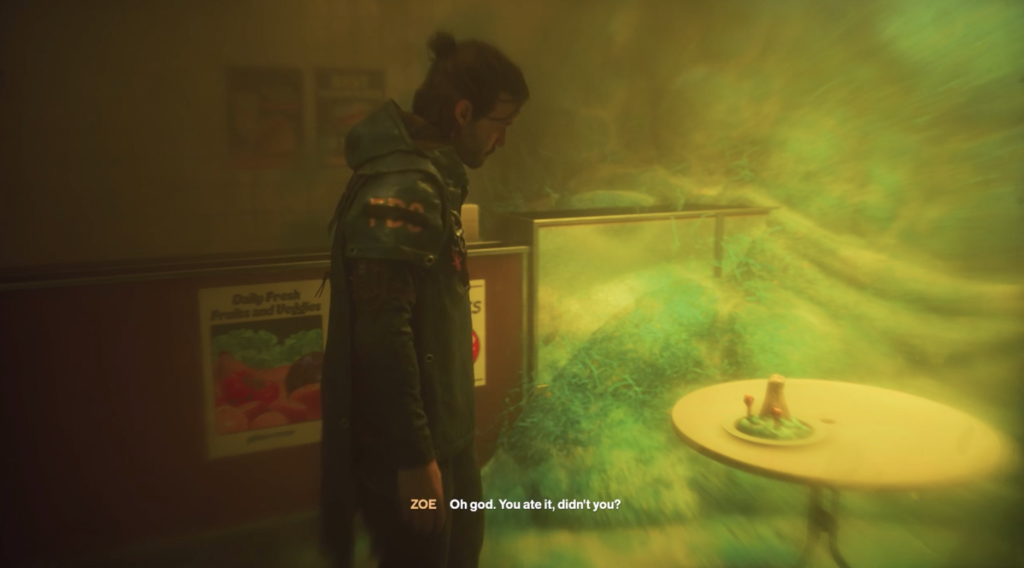
Dylan’s various relationships with FBC agents don’t always provide the depth I would’ve expected from Remedy. That said, I grew to appreciate Dylan’s relationships with returning characters, like Security Chief Simon Arish and Dr. Emily Pope. There were moments in particular in which Pope’s responses to the world around them (and Jesse) broke my heart.
I found it easier to forgive the game’s flaws whenever Control Resonant worked to make Dylan a more sympathetic character.
Dylan has an FBC handler, Zoe De Vera. Zoe quickly became one of my favorite characters, rivaling Alan Wake 2’s Kiran Estevez as my favorite FBC agent. As for our returning characters, there were moments where Remedy overplayed their frustration with having to work with the new protagonist. It just took time for these narratives to move beyond the characters’ initial distrust of Dylan.
I appreciate the different perspectives we get on Dylan’s more chaotic past, such as Arish’s anger and Pope’s distance. Following the reveals explaining the “whys,” Dylan becomes a more sympathetic character. But on the flip side, forgiveness from many characters then felt too easy and uncomplicated.
Fables and Fights
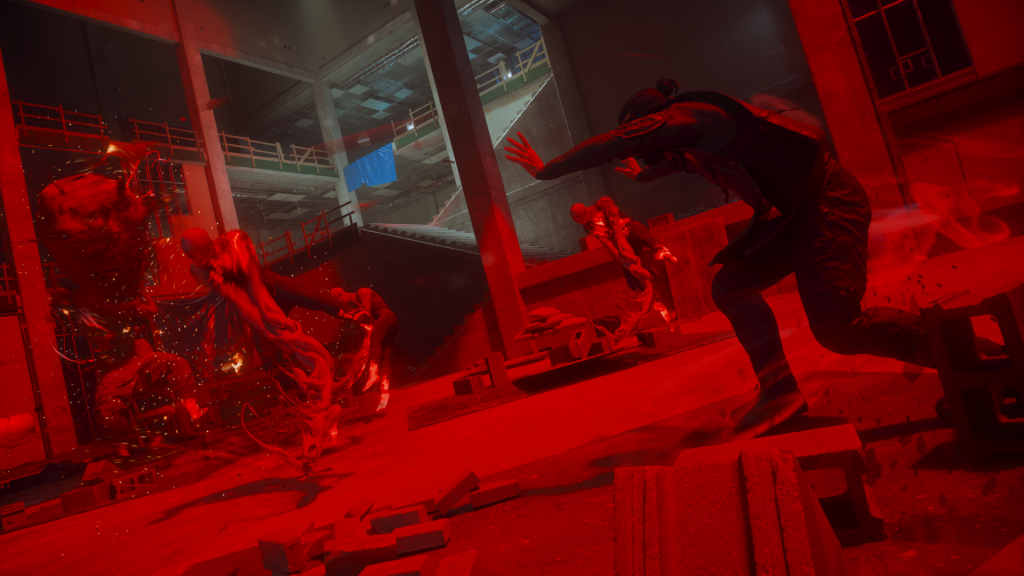
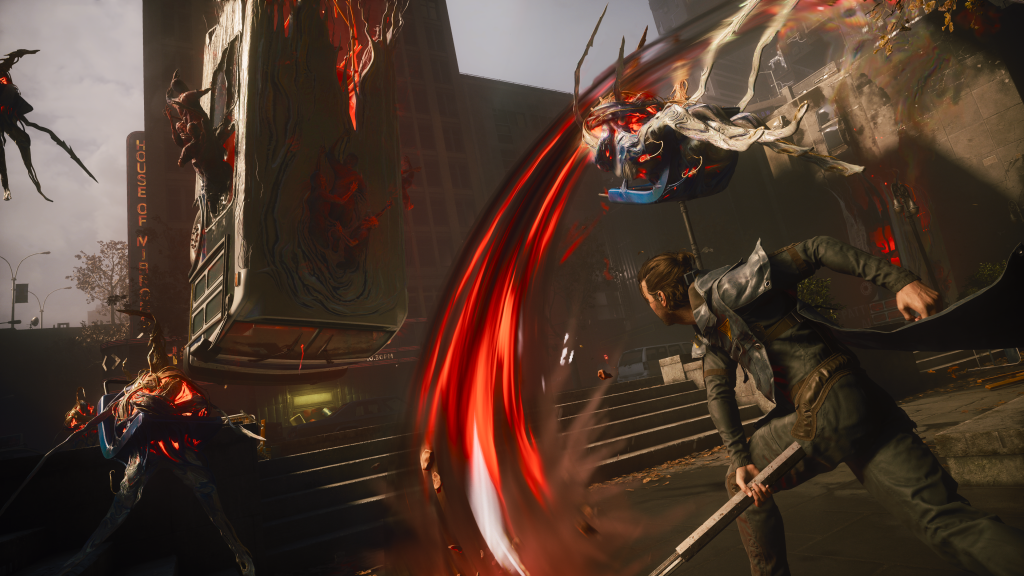
Control Resonant’s last 10 hours are so excellent that it makes up for the elongated initial 10 hours. This imbalance is felt both narratively and in the gameplay. The combat never quite reaches the speeds that I had hoped. Despite promising marketing trailers, Control Resonant is not Devil May Cry 6 by way of Remedy; Dylan lacks both the charisma and the fluidity of Dante.
Dylan will acquire different abilities throughout Control Resonant. Each set of skills is mostly gained and experienced through non-main quests. I don’t necessarily want to call these missions “side quests” since Control Resonant places those stories in a separate category, but there’s not a great name for them. These non-main quests — including taking down key enemies and navigating platforming levels with a key character — move Dylan’s narrative forward while rarely restricting activities that can be completed immediately.
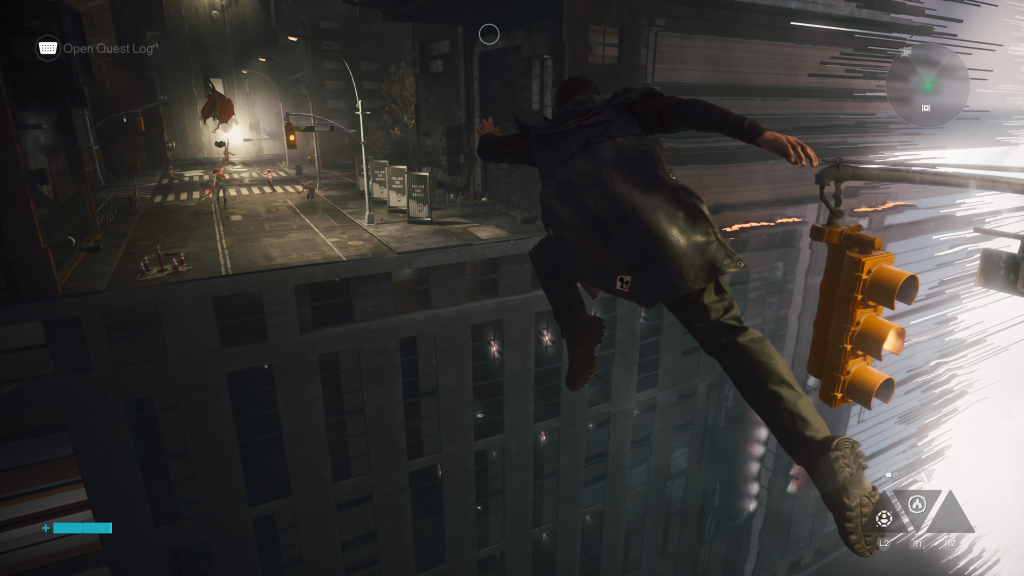
The traversal abilities feel like a natural evolution of Jesse’s powers in Control scaled up for a more open world. These range from flying around to changing the horizontal axis of the screen, allowing Dylan to walk up walls. I don’t want to talk too much about the platforming “faults” here — I encourage readers to experience those without spoilers, as the Fadens’ best narrative moments happen in these sections.
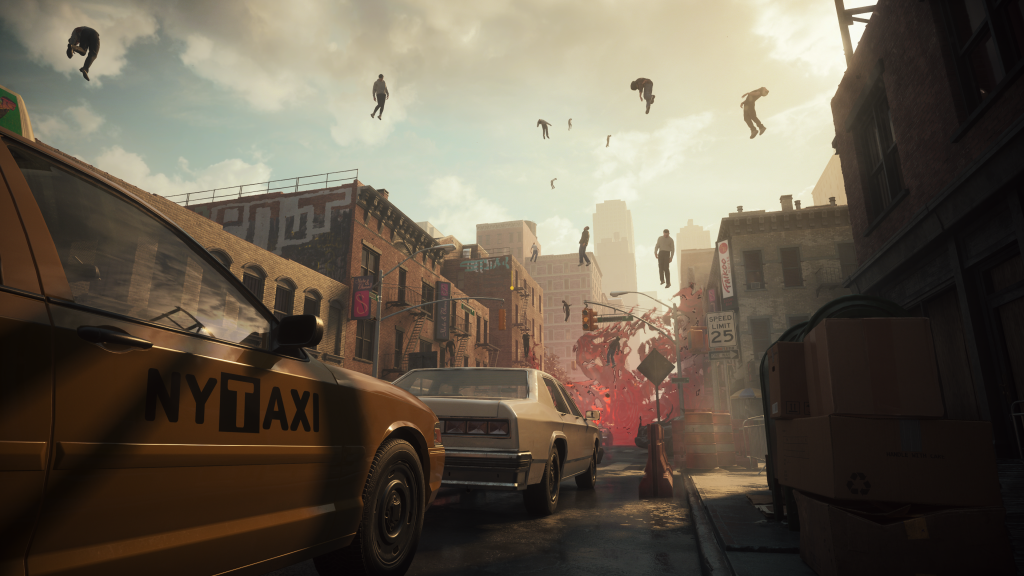
Manhattan has never looked quite like this in a video game: The cityscapes are stunning, twisted, and weird. Each of the game’s zones is an incredible kaleidoscopic representation of the city’s parts.
The Resonants, alternatively, provide the most interesting individual stories of this twisted Manhattan. Each Resonant is a transformed human, and the stories told through collectibles for each are worth sitting with. The boss fights themselves show Remedy at their most creative, making use of the different combat systems. Each boss feels like an exam about particular traversal or combat skills acquired. The Resonant battles are especially interesting as compared to the rest of the fighting.
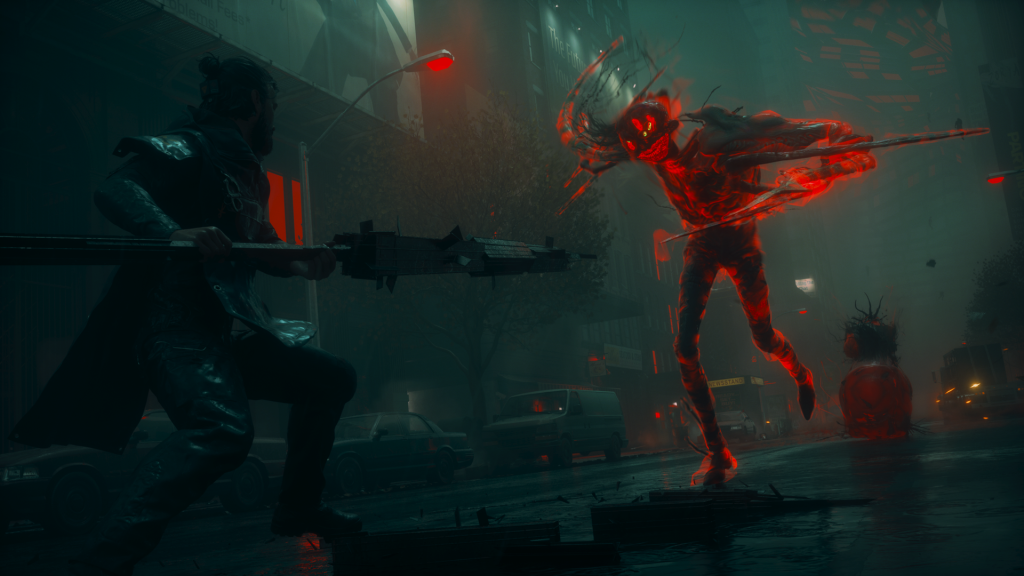
Early enemies feel like sponges for melee abuse. Players pick from three melee weapons after obtaining the Aberrant, similar to the first game’s Service Weapon. (The other two are unlockable later.) Each form of Aberrant (sword, axe, scythe) has a skill tree that takes advantage of the different economies of the world, both dropped by enemies and purchasable at Ice Cream Trucks in each zone. Taken with a separate skill tree for Dylan’s resonant abilities and talents, the Aberrant skill tree initially feels more robust than it actually is. The best comparison points may be the superhero games Infamous and Prototype. Eventually, Dylan becomes a powerful, nearly unstoppable entity, but it takes some time and grind.
Remedy’s semi-open twisted Manhattan is also full of actual side quests and visual storytelling that occasionally lives up to the studio’s prestigious storytelling. Manhattan has never looked quite like this in a video game: The cityscapes are stunning, twisted, and weird. Each of the game’s zones is an incredible kaleidoscopic representation of the city’s parts. The experiences within, from talking to interdimensional fur friends to an eerie taxi cab, only make the game more strange. Control Resonant’s surrealist aesthetics through reflection, refraction, and fissure will live rent-free in my imagination for years to come.
Fabula Nova
If I may spend some time with Remedy’s meta-narrative, I find Control Resonant echoing surprising past shared universes. Above, I noted how combat feels like Infamous and Prototype in order to project a kind of power fantasy. During my nearly 45 hours with Control Resonant, I also kept thinking about Noctis from Final Fantasy XV. Protagonist Dylan Faden’s movement often felt like gliding through the world, much like Noctis; combat felt far closer to a modern Final Fantasy than Devil May Cry; and Noctis’ drive to find Lunafreya haunted my experience of Dylan searching for his sister Jesse Faden.
This may not be fair to either game entirely, but Control Resonant strangely feels like it is emerging from a similar studio impulse. Final Fantasy XV derived from its previous iteration, Final Fantasy Versus XIII, which itself was an entry in Square Enix’s experimental Fabula Nova Crystallis (meaning A New Tale of the Crystal) project. This project imagined a loosely connected trio of worlds — Final Fantasy XIII, Final Fantasy Agito XIII (which would later become Final Fantasy Type 0), and the aforementioned Final Fantasy Versus XIII. Each promised a different form of combat (updated Active Time Battle combat, action combat, and more traditional turn-based combat, respectively).
In turn, Control Resonant fits into a larger experiment by the folks at Remedy. The studio’s connected universe situates different genres of games alongside one another, alluding to or echoing one another. Control Resonant, like its predecessor Control, resides alongside Alan Wake 2 (third-person survival horror) and FBC: Firebreak (first-person extraction shooter) but exchanges ranged combat for more intimate melee combat. The result is as mixed as Fabula Nova Crystallis was.
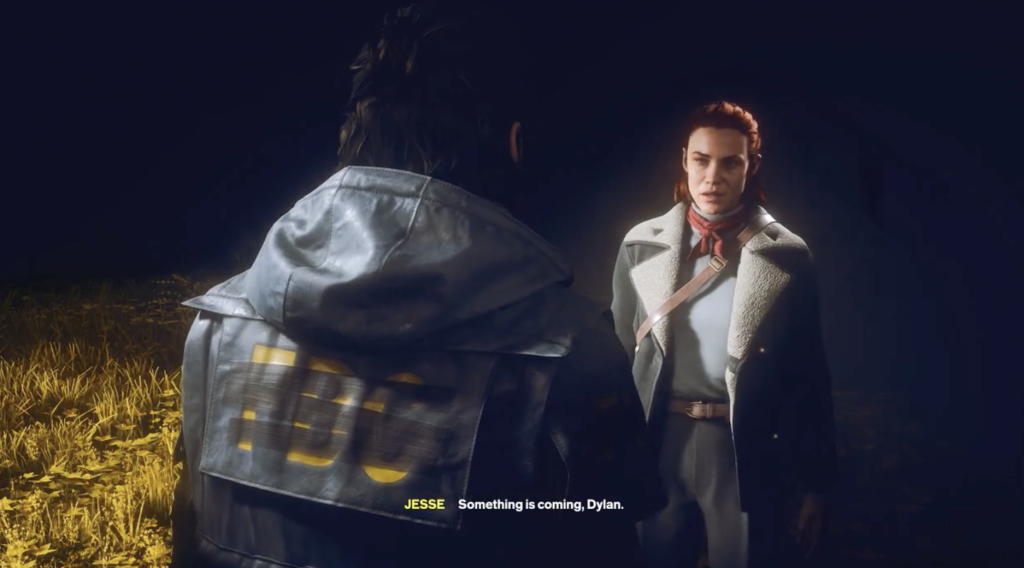
Furthermore, the gender politics of the games’ protagonists (Jesse and Dylan here, Lightning and Noctis then) across shared universes further discontent and frustrate. In their sequels, Jesse and Lightning both end up as background characters, shifted from main character in one game to a supporting role in the next. It hauntingly and frustratingly feels like how Kingdom Hearts (another meta narrative with shared Disney universes) treats Aqua, sealing her in the Realm of Darkness and in turn robbing her of some autonomy while her male counterparts (mostly) continue adventuring.
This last similarity is the most disappointing, as it showcases what I feel is a key missed opportunity with Control Resonant.

Fix Your Hearts or Die
Ahead of Control Resonant’s most grueling Resonant fight in a theatre, there are chalkboard signs framing the doorways that read: “Fix Your Hearts or Die.” This references a quote from an episode of Twin Peaks: The Return where FBI Bureau Chief Gordon Cole tells his trans colleague Denise Bryan:
“When you became Denise, I told all of your colleagues, those clown comics, to fix their hearts or die.”
No individual auteur looms larger in the aesthetic or narrative of Control Resonant’s world than the writer and director of Twin Peaks and actor who portrays Cole: the late David Lynch. His approach to surrealism in film is felt across Remedy’s games but is maybe most visible here. The signage may just be revealing aspects of the Resonant’s backstory; however, the quote may reflect a more significant puzzle piece when taken with the Lynchian vibes of the Remedy Connected Universe. I just wish Remedy had been bold enough to make it more explicit in Control Resonant.
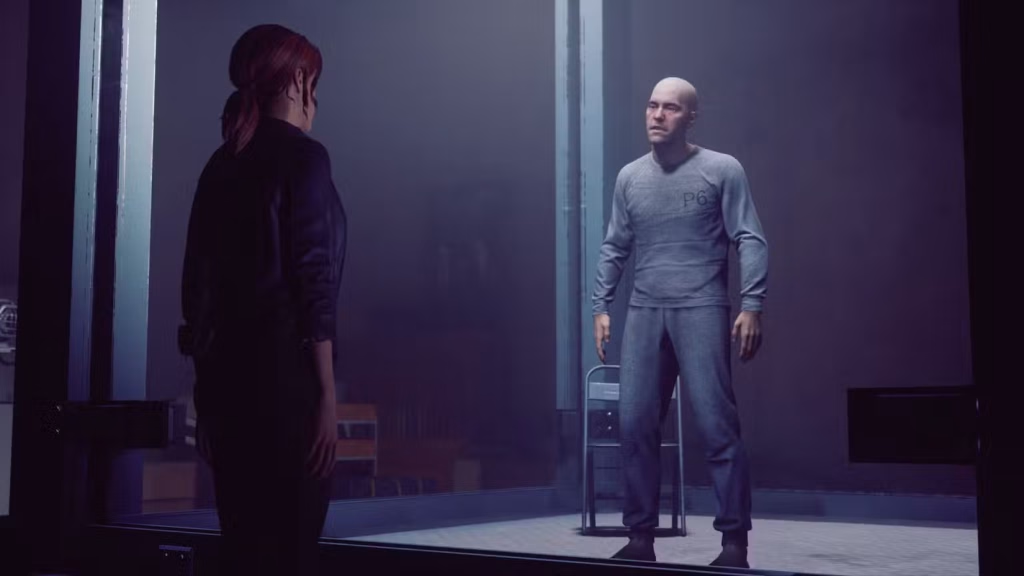
The more I looked, the more often I found the quote in this twist version of Manhattan that Remedy created. It took me back to an important line from the first Control, where a Hiss-infected Dylan tells Jesse:
I was back in Ordinary before all of this happened. But in the dream, I was alone. It was just me. I was the only child, a girl. My name was Jesse Dylan Faden. But then the Bureau came and caught me, brought me back here, locked me up. Have you ever noticed that our names — Jesse, Dylan — they could be girls’ names, boys’ names, could be anything. Don’t you find that weird? I find that weird.
The sentiment of Jesse and Dylan being one person (or there only being one child in Ordinary) is hinted at in a well-placed letter in Control Resonant. I recognize that this is likely a narrative reveal that will play a larger role in the Remedy Connected Universe, but I worry what the cost of such a delayed payoff will be with the length between entries, particularly with the current state of the games industry.
Control Resonant provided the perfect opportunity for Remedy to embrace the potential of this implied trans narrative in a way that organically fit the game’s themes, shift in narrative perspective, transformed New York City, and new gameplay mechanics. I just wish the team had been bold enough to lean into this narrative’s true potential.
Final Thoughts
Control Resonant feels both of our current moment and out of time. Its in media res approach doesn’t necessarily make it welcoming to newcomers, and its combat might frustrate those desiring Remedy’s Devil May Cry. Those looking for easter eggs or echoes through the dark veil of other Remedy properties will find comfort here. However, Resonant is not strong enough to be considered Control 2 nor an intro point for people new to the franchise. Taken as a part of the whole, Control Resonant delivers an emotional first draft of a far more interesting shared world.
Resonant is not strong enough to be considered Control 2 nor an intro point for people new to the franchise.
The first 10 hours are frustrating and lonely. Remedy has captured that feeling of being an essential worker and outcast. Dylan’s social awkwardness works narratively but fails to live up to the writing that the studio has been praised for in the past. Dylan’s pre-Control actions become merely another “hurt people hurt people” narrative where early, interesting nuance gives way to universal unquestionable forgiveness. This trajectory makes me a little uncomfortable, if not skeptical, in 2026. By the end of the game, Dylan is most interesting when he is working on his demons (re: Hiss), improving himself, and serving his community.
Dylan is no superhero, not yet anyway, nor interesting enough to be an antihero; but there is time enough for him to grow into one through the echoes and darkness of the Remedy Connected Universe — if he’s given more opportunity to shine. I hope we know where we’ll see him again sooner rather than later.
Score: 7.5/10
Control Resonant, developed and self-published by Remedy Entertainment, released on September 24, 2026, for PC, Mac (via cloud streaming), PlayStation 5, and Xbox Series X/S. MSRP: $59.99. Version reviewed: PC.
Disclaimer: A review code was provided by the publisher.

Clint is a writer and educator based out of Wisconsin. You can often find him writing about Middle English poetry, medieval games, or video games. He received his PhD in English from the Ohio State University. You can find his academic and public work at clintmorrisonjr.com.







1 Comment
appreciate your thoughts and criticism here, especially around the jesse faden stuff. really disappointing to see her pushed aside (and also then the sort of implication that she might not even really exist? which would be sad?). she’s so cool and awesome and a big part of what made the first control so special. sigh. fingers crossed that “control 3” rights the ship there. you’re the biggest remedy expert/lore-head i know, so it’s always good to read your takes here.