
Asobo Studio’s A Plague Tale franchise has always possessed a strange place. It is medieval fiction, a series concerned with stealth that sometimes invokes horror and occasionally is more action-packed. I found A Plague Tale: Requiem (2022) to be more cohesive than its predecessor, A Plague Tale: Innocence (2019). Requiem seemed to finally find its own voice, style, and emotional stakes as it moved the games away from simply being “medieval The Last of Us.”
The newest game in the trilogy, Resonance: A Plague Tale Legacy, which released on August 27, 2026, is clearly inspired by Naughty Dog’s other flagship series, Uncharted, as well as Crystal Dynamics’ Tomb Raider reboot trilogy. The game also partakes in a more interesting history of the action-adventure genre that devolves into horror. Some may compare this to the more supernatural elements of early Uncharted titles, but Resonance’s roots seem more grounded in the indie and AA horror scene. The terror of being hunted by something that I didn’t understand for much of the game was exhilarating — like playing Alien: Isolation without decades of lore attached to the now all-too-familiar Xenomorph.
These latter nightmarish segments will stick with me long after I have forgotten about the puzzles and platforming that other games have simply done either better or more interestingly. Resonance: A Plague Tale Legacy shines in the darkness even as it risks taking the series in a bold direction at the expense of stifling what made Innocence and especially Requiem so special.
Family Trouble
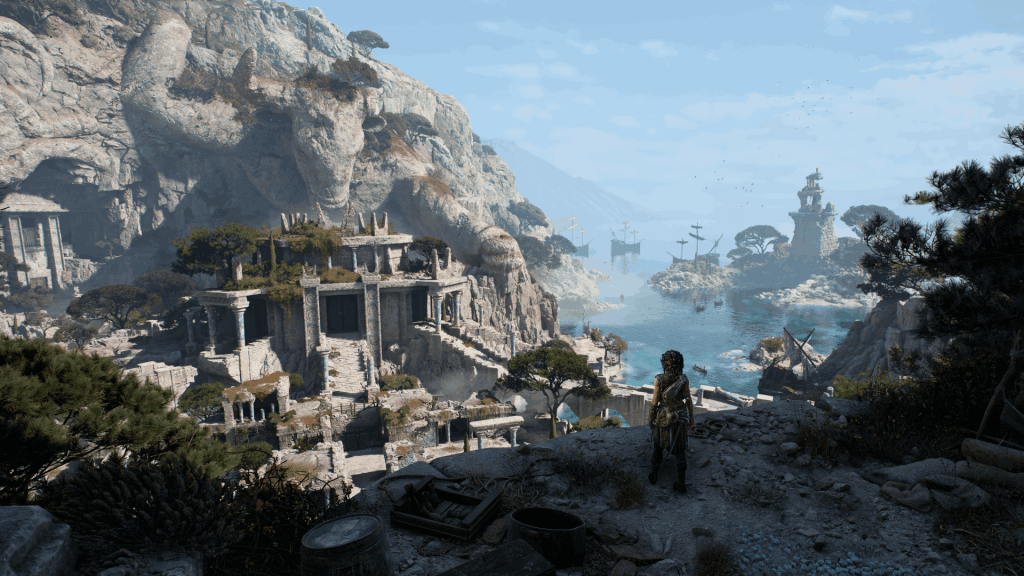
Resonance: A Plague Tale Legacy’s most notable choice is a time-travel function, in which players can switch between Sophia in Crete in the Middle Ages and her visions of the ancient Minoan past. The heart of A Plague Tale: Innocence and Requiem was the relationship between Hugo and Amicia de Rune in 14th-century France. Resonance presents two parallel family dynamics that never quite reach the emotional heights of its predecessors.
The first is the relationship between Sophia and her two father figures. A young Sophia, during sequences that serve as tutorials, loses her father, Alec, offscreen. Her father sought the answers (and treasures) attached to visions that haunt Sophia, manifested physically through drawings.
After Alec is lost to the island of Crete, his right hand, Faro, not only takes up the mantle of the leader of the bandit group that Sophia and her father belonged to, but also becomes a kind of surrogate father figure. Much of the non-supernatural conflict in the first half of the game involves misunderstandings and disagreements between Sophia and Faro; after villainizing him, the narrative attempts a redemption arc for Faro in the second half as he tags along, much like one of Nathan Drake’s companions.
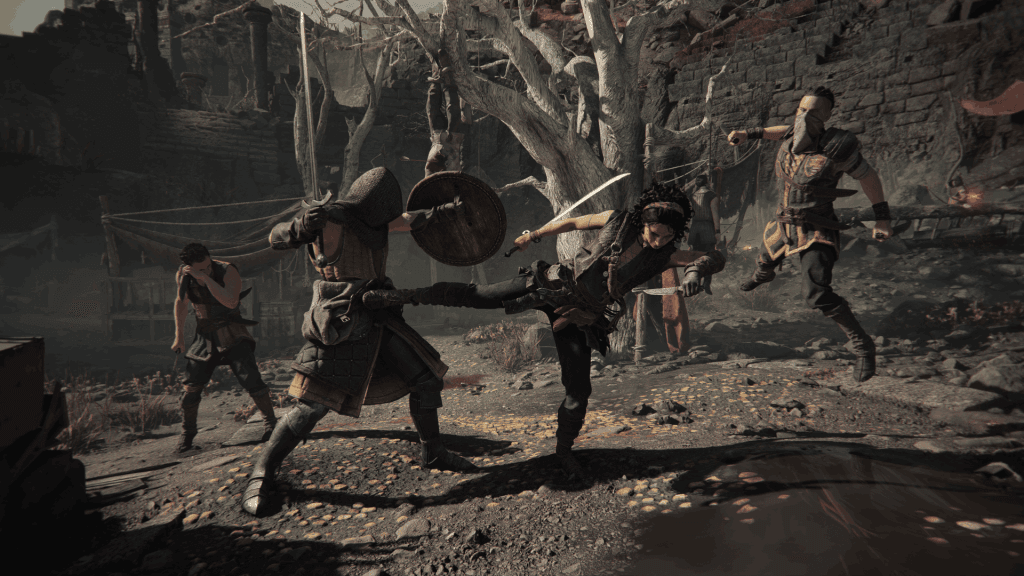
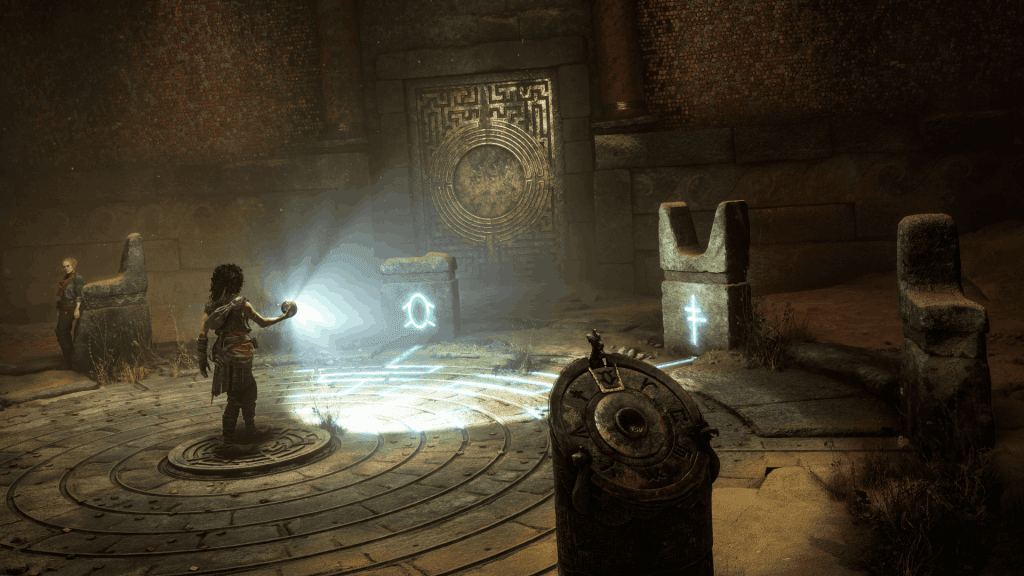
While the most memorable portions of the game isolate Sophia from others, she is never far from companions as she explores the gorgeously rendered island with ruins and caves, solving environmental puzzles, finding wearable items, and building up a skill tree. Her (potentially romantic) friend Leni joins her for much of the first half. The fully voiced banter between Leni and Sophia develops both characters nicely. By comparison, Faro never feels fully developed beyond being a mistrusting father figure.
Speaking of mistrusting father figures: The second family dynamic that would have benefited from a little more screen time is King Minos, his daughter Ariadne, and his son Asterion. Arguably, the relationship between these three figures in the past (through Sophia’s visions) provides the game’s most significant contribution to the Plague Tale’s Prima Macula mythos. Choices made in the past change the present, and the player must keep both timelines in their mind at once.
By the end of the Theban flashbacks, I wanted more story and detail, as they provide so much connective tissue.
Theban Nightmares
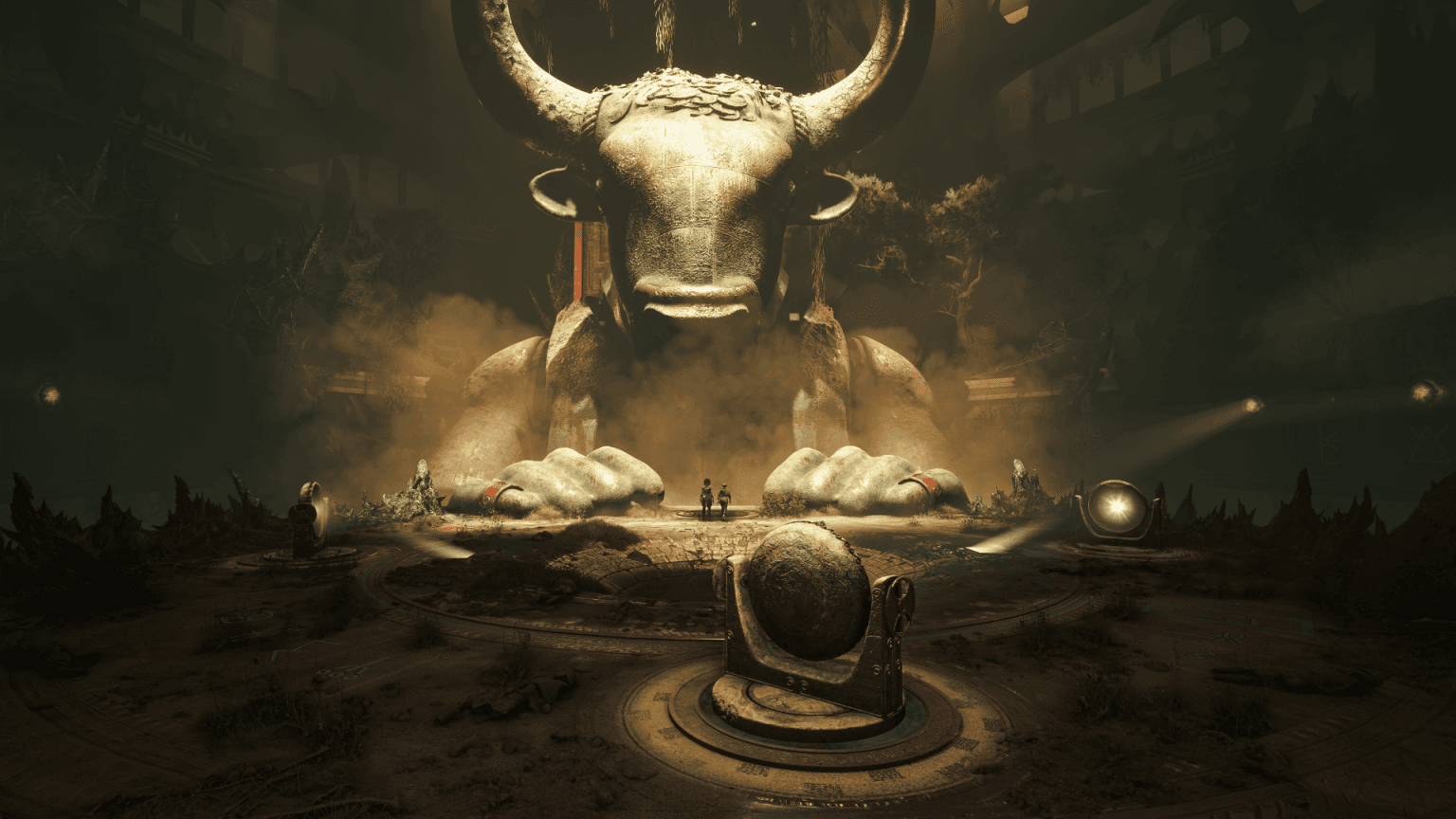
Resonance: A Plague Tale Legacy is occasionally a terrific horror game that folds two timelines together (the Theban past with the medieval present) through the figure of the minotaur.
The central location of Resonance is Crete, former mythological home of King Minos and the Minotaur, and it is ripe creative ground for exploration in a cinematic video game. Theban stories were popular subject matter for late medieval writers. Two versions of the story of Thebes inspired writers through the 15th century, like the monk of Bury St. Edmunds John Lydgate: Statius’ Latin Thebiad and the Old French Le Roman de Thèbes.1
Writers from Boccaccio (Italian) to Chaucer (English) engaged with Thebes in some fashion. Resonance takes place in a fictional 1334, several decades prior to Chaucer’s Knight’s Tale or Anelida and Arcite. The fictional date is less than a decade removed from Boccaccio’s Teseida (c.1340–41).
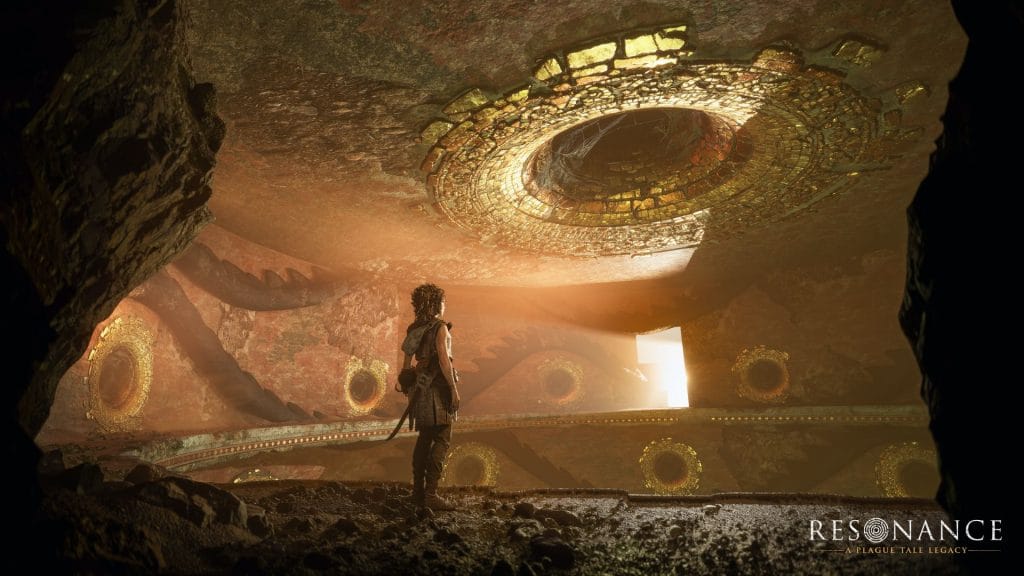
Theseus plays an important role in the adaptations above, but none of the aforementioned versions deal directly with the Minotaur and well-known labyrinth myth. In the Commedia, Dante and Virgil encounter the Minotaur in hell, where Virgil reminds the creature that Theseus slayed it. Ovid’s version of the story in his Metamorphoses also made the rounds throughout the Middle Ages.
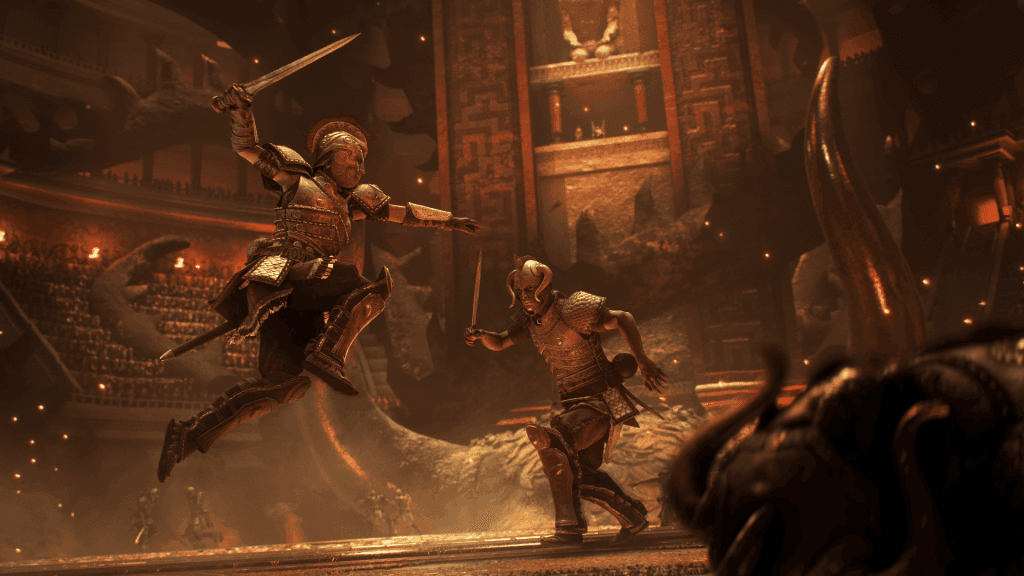
Resonance: A Plague Tale shines when all of this Theban mythology takes center stage. The game’s version of Theseus and the Minotaur are unforgettable. Playing as the former (while bouncing between timelines as Sophia) is spectacular. I would have played an entire action-horror game as Asobo Studio’s version of Theseus, navigating violent arenas, mythological terrors, and toxic family dynamics.
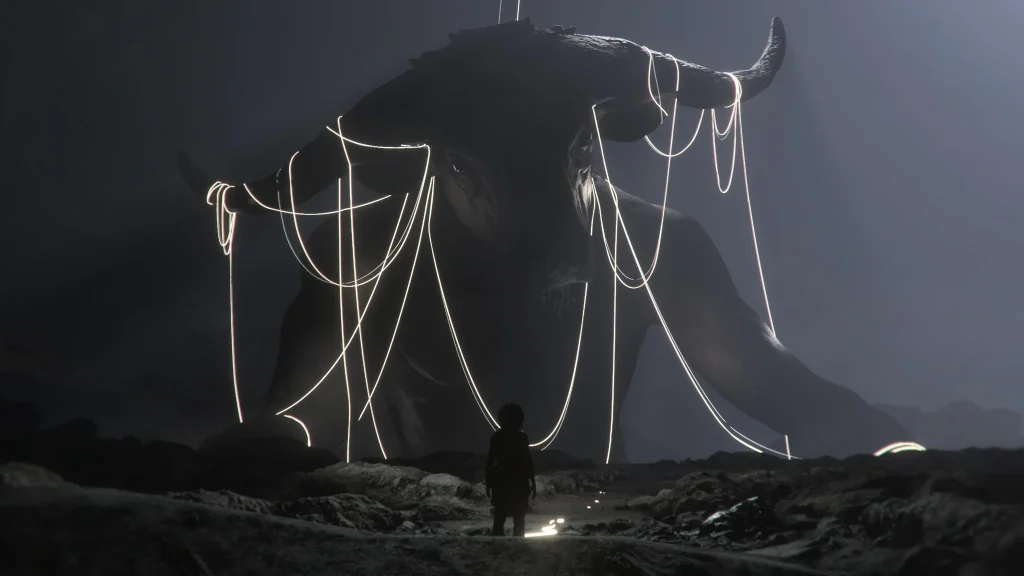
The true star of the show is the Minotaur. This version is terrifying; the sequences where Sophia is tasked with avoiding it often brought to mind The Chinese Room’s Still Wakes the Deep (2024) and proved to me that the hivemind-like tendrils from HBO’s The Last of Us could work very well in a video game.
Still, even with these horror heights, A Plague Tale: Resonance doesn’t commit fully to its most interesting choices. More often than not, the game falls into comfortable ruts of a gorgeous Assassin’s Creed-lite type game. The game is Asobo’s first attempt at action-adventure combat, and it occasionally shows. Sophia is a capable action-heroine who deals deadly blows with various blades, but as a result, the game loses track of the quiet stealth that made previous Plague Tale games special.
Final Thoughts
I spent a very welcome 12 hours in the world of Resonance: A Plague Tale Legacy, which does succeed as both prequel (as advertised) and sequel. The Plague Tale games consistently feel like a hodgepodge of ideas. This game provides a multitude of possibilities for where the series could go next, from more medieval Tomb Raider to re-envisioned ancient horrors.
I must commend how Asobo Studio intertwines Minos’ family story with Sophia’s journey and ultimately the de Rune siblings. Additionally, the game’s setting in Crete rather than France is an inspiring change of pace, especially when accompanied by a stunning soundtrack by returning composer Olivier Deriviere, which features traditional instruments and vocals by the Amalgamation Choir, a group of 20 Greek Cypriot women singing in their native language.
Ultimately, Resonance: A Plague Tale Legacy is a kaleidoscope: a game full of mirrors that reflect light differently based on how it is held. From the right angle, it shines beautifully; however, when Asobo Studio lets its inspirations outshine the game’s uniqueness, A Plague Tale Legacy becomes yet another third-person adventure game with an unnecessary skill tree.
Score: 7.5/10
Resonance: A Plague Tale Legacy, developed by Asobo Studio and published by Focus Entertainment, released on August 27, 2026, for PC, PlayStation 5, and Xbox Series X/S. MSRP: $49.99. Version reviewed: PC.
Disclaimer: A review code was provided by the publisher.
Footnotes
- For more on the Theban story, see Robert Edwards’s lovely introduction to Lydgate’s 15th-century Siege of Thebes. ↩︎

Clint is a writer and educator based out of Wisconsin. You can often find him writing about Middle English poetry, medieval games, or video games. He received his PhD in English from the Ohio State University. You can find his academic and public work at clintmorrisonjr.com.