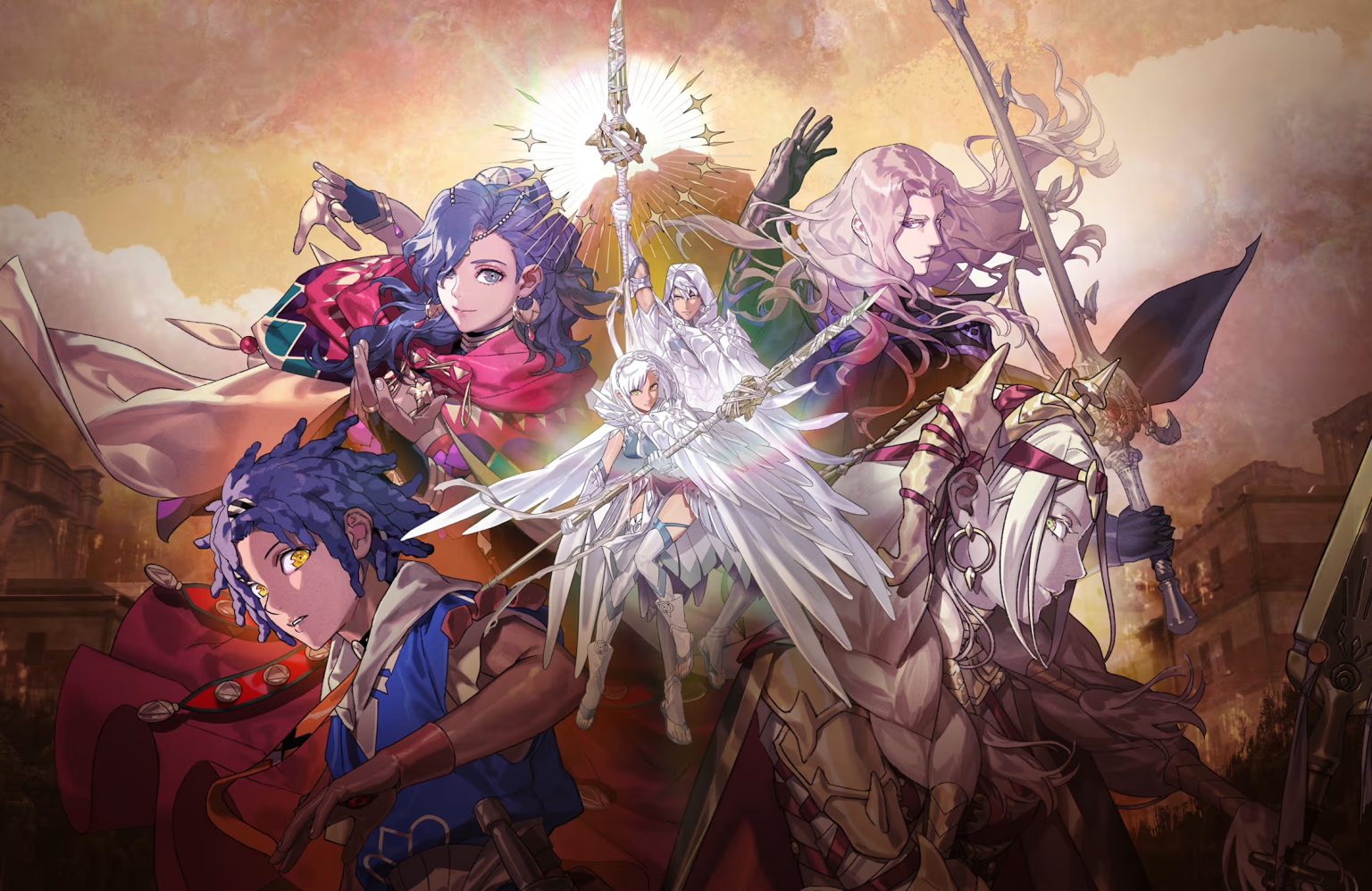

The year is 1454, and the Dagdan Empire is no more. Balor, Demon God and ruler of the Underworld, has been revived, ravaging the land and populace with an army of undead soldiers. The only hope for those still alive is a figure clad in white wielding a damaged spear, believed to be the prophesied Herald of the Pale Raven. But they are desperate for allies, turning to the Goddess Fortuna for help. Luckily, she has reached across time to change the fates of four heroes from five years prior and ensure they live to save the future.
Even leaving out some of the more out-there elements of its intro, Intelligent Systems’ Fire Emblem: Fortune’s Weave starts off with a lot to take in. Some of the confusion is intended, some of it less so, and that conflict persists into the brunt of the story. The overall narrative is incomplete, made even more frustrating by the impression that they are missing not for lack of thought but for lack of time or resources. But despite those gaps, when Fortune’s Weave really focuses on its heroes’ individual plights and struggles, its story shines as brightly as its refined strategy gameplay.
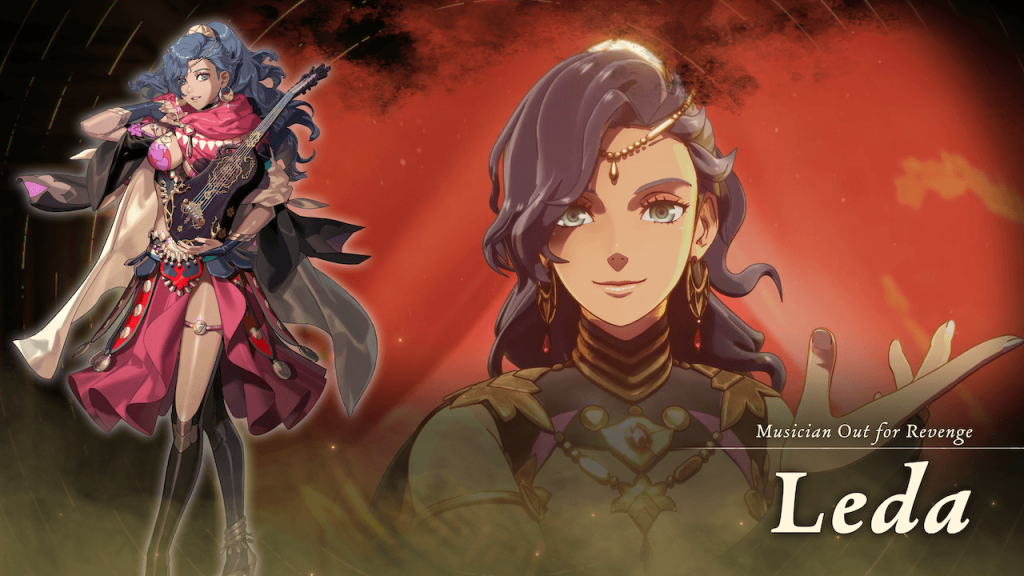
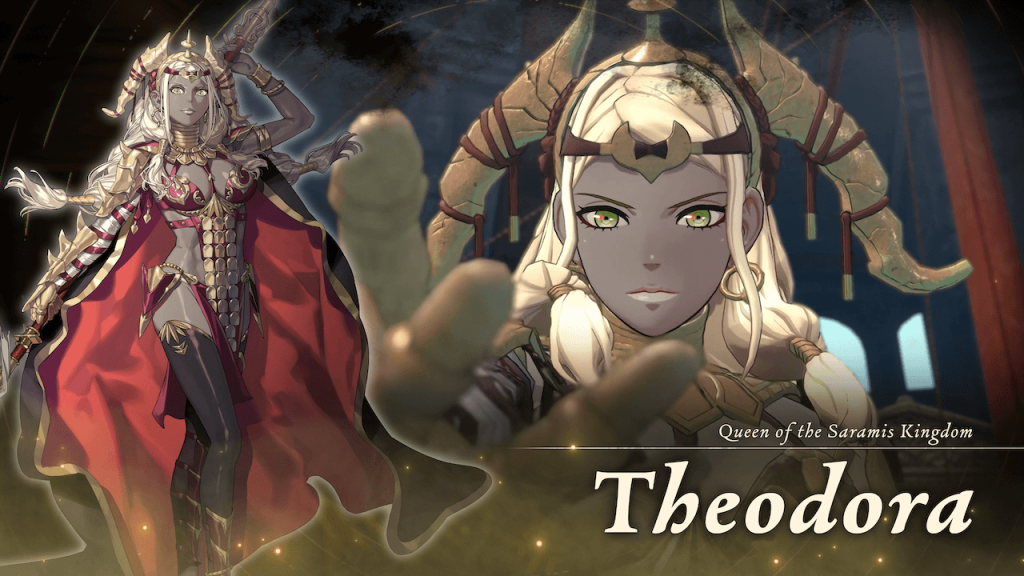
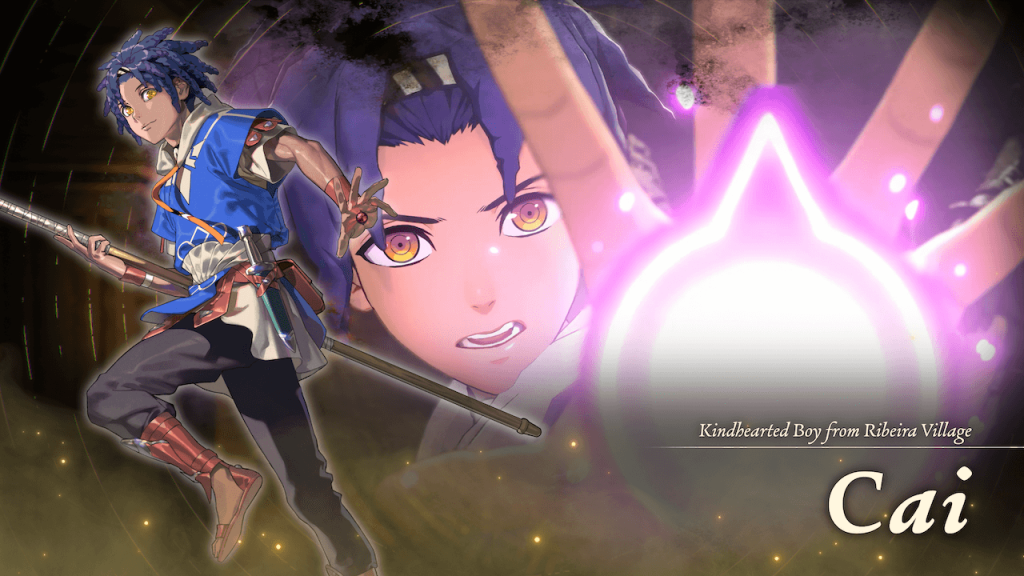
Four Great Routes…
Fortune’s Weave’s structure evokes The Legend of Zelda: Breath of the Wild and its sequel, Tears of the Kingdom, in that the player has an important early choice. Players can choose between an intended path of beefing up their chances by clearing up to four objectives, or making a beeline straight to the end of the game with minimal resources. And though I can understand the appeal of a challenge run, Fortune’s Weave is too good a game to pass up the four stories that make up its intended first act.
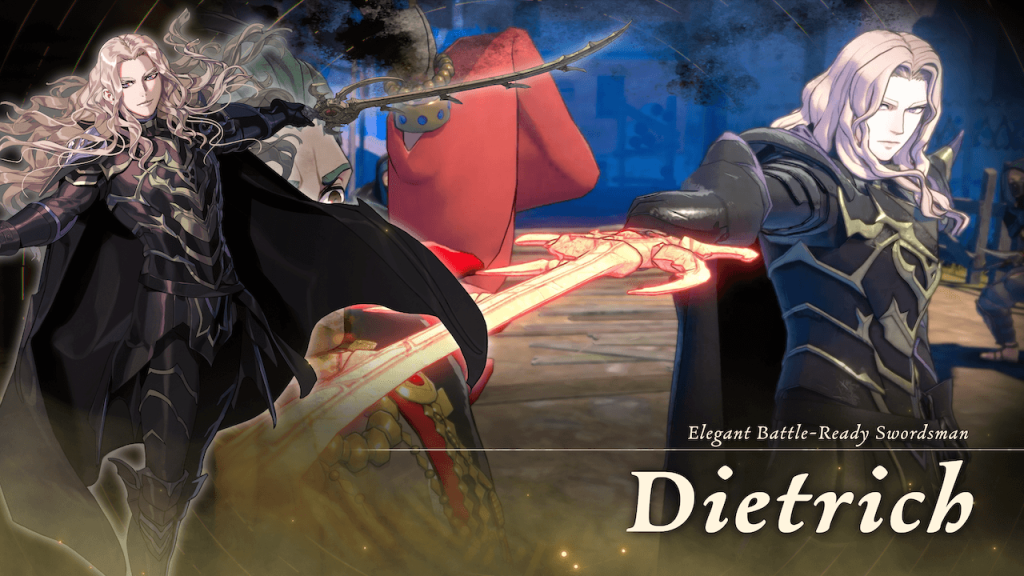
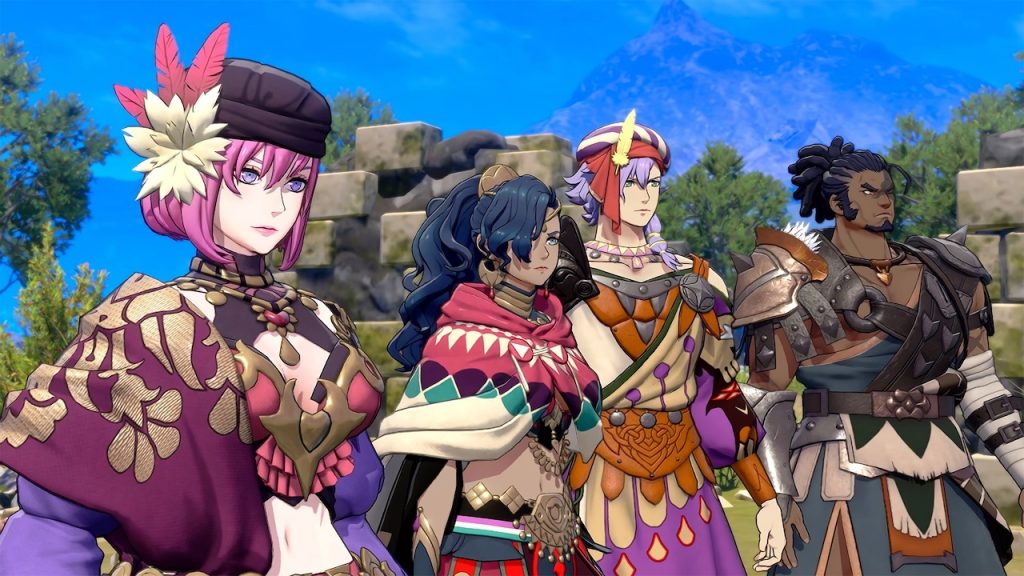
Said first act looks backward in time to the age of the Heroic Games, a tournament with the prize of a request to Dagda’s Divine Sovereign on the line. Four contenders have arrived in the capital city of Dagsion with their own single-minded goals: Cai, a boy seeking a pardon for his incarcerated father; Dietrich, a foreigner to Dagda seeking a thrilling fight; Theodora, Queen of the oppressed Saraminian people who seeks to restore their patron Goddess’ land; and Leda, a dancer seeking revenge on the man who killed her father.
These stories can be tackled in any order, and each offers a unique experience in both narrative and gameplay. Having played all of them, starting with Cai is optimal if you intend to play more than one, as his route’s story and mechanics offer a slower, smoother onboarding experience. Where you go from there is less certain, especially since certain characters’ importance to the second and third sections is more tenuous than others, especially Dietrich.
Fire Emblem: Fortune’s Weave is already one of the best games on the Nintendo Switch 2.
Story-wise, each route has a different premise. Cai’s is an underdog story, Leda’s is a revenge narrative, Theodora’s tale follows her political ambitions, and Dietrich’s is about a bunch of weirdos doing whatever strikes their fancy. None of their stories feel like they’re treading too much on the ground of any other, even as they intersect. That they do this while maintaining consistent themes of familial bonds and making the most of one’s limited time makes for a strong narrative trick, and it’s what lends the story most of its substance. And while they’re all substantial narratives, the lean 12-chapter length keeps playthroughs short enough to make multiple routes a fun time.
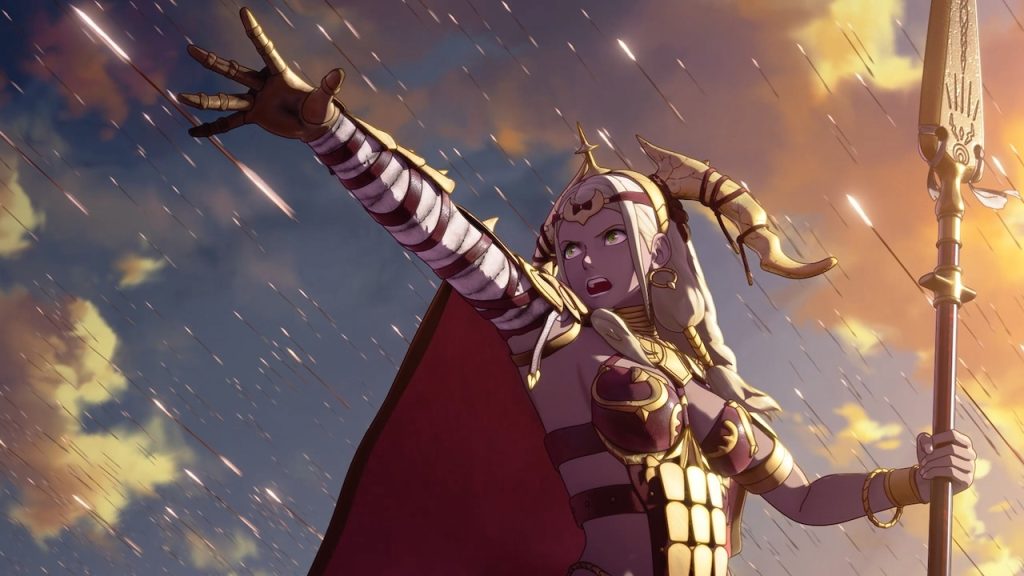
…Eight Total Stories
On the other hand, the pacing and themes are occasionally a bit idiosyncratic. It sometimes feels like conflicts resolve too easily or that the need for the various characters to be present for the Heroic Games leaves them fighting for time to their own story. And most notably, it’s obvious that the rival factions led by Bertrand, Talimun, Anatolia, and Orchel have substantial narrative content that Nintendo has already announced as DLC. Each story still feels complete in isolation, but minor subplots and threads feel as if they are resolving just off screen.
This is especially notable in the support conversations, which are bizarrely few for certain important characters. It’s especially noticeable compared to Fire Emblem: Three Houses, which featured detailed cutscenes for dozens of characters. I enjoyed the game enough that I would welcome additional content as DLC, but I do think the narrative content included at release should probably have done a bit more to feel complete. It doesn’t help that by the final act, the story simplifies to a jarring degree.
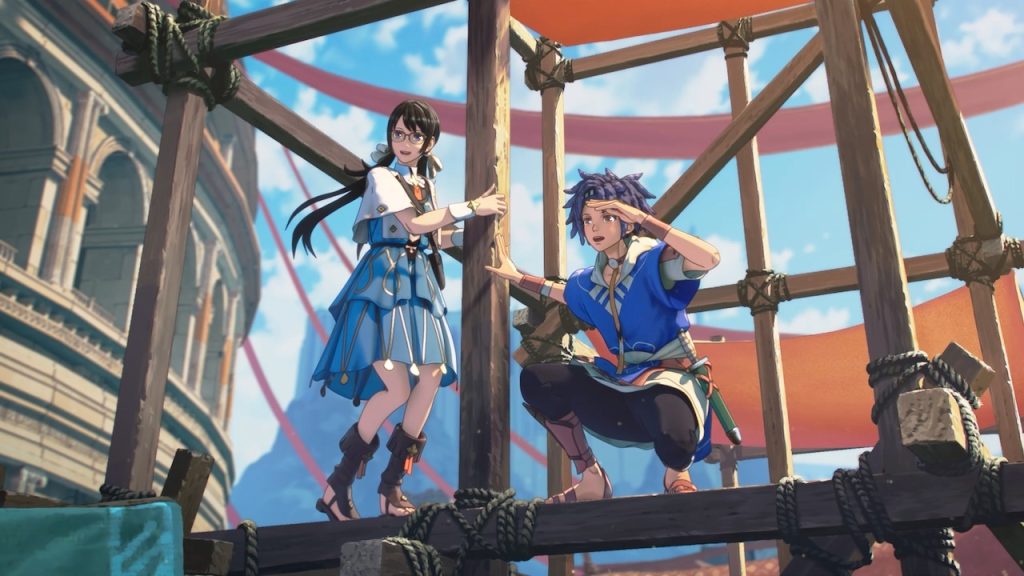
At the very least, the colorful cast is still a highlight. While each character’s list of supports is more spartan than previous entries, with some characters not even getting more than four or five, there’s still plenty of great interplay to be found. Each character has a backstory, personality, and place within the game’s world that reflect Fortunes Weave’s dedication to a lived-in setting, even if a few of the A-rank supports could stand to tone down the romance.
In addition to appealing anime-style graphics and a stunning soundtrack, the characters and story are held up by some great performances. Zeno Robinson as Cai and Shara Kirby as Theodora are the standouts among the protagonists, and the supporting cast is no slouch either. It boasts a combination of veteran and rising talent who all sound at home with each other (as well as an appearance by Obsession’s Michael Johnston as Peter).
But the standout among all of them is Jimmie Yamaguchi as Dietrich’s staunchest ally: Fabio, riding a fine line of haughty indifference and growing affection for the strange company he’s found himself in, culminating in what might be a decisive high point in a game where every route’s story is a good time.
Let the Games Begin
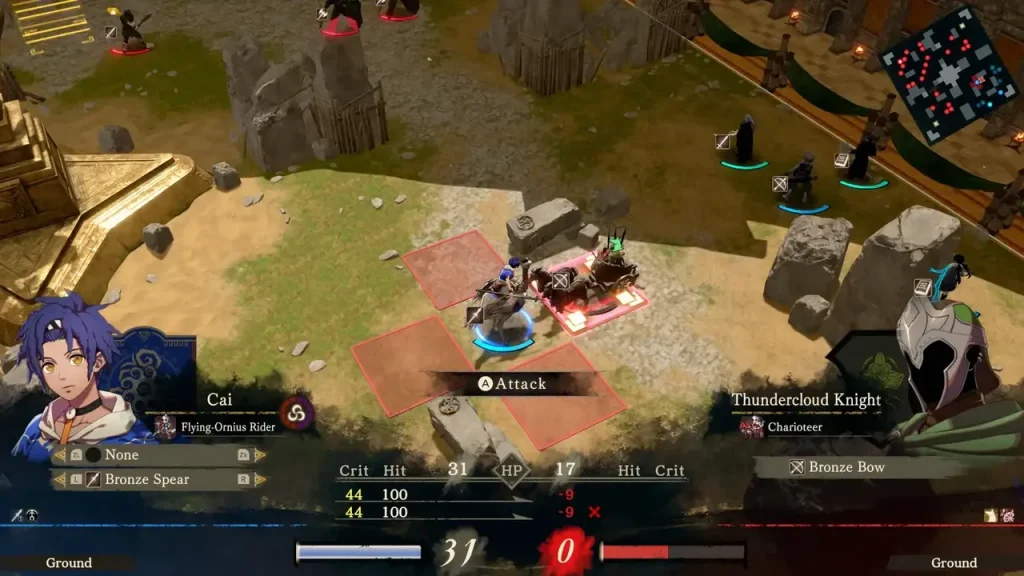
The core Fire Emblem experience hasn’t changed in Fortune’s Weave. It’s still a grid-based strategy game where the player must manage an army of unique personalities as they battle against hordes of enemies with map designs that start out very simple before upping the ante significantly at the midpoint. Granular changes abound, most notably how the weapon triangle has been removed in favor of giving swords, spears, and axes unique niches and attributes. There’s also a decent variety of objectives, even if most of the time you’re making a beeline to the chapter’s boss unit.
It bears mentioning that while you can play each route in tandem, the game’s systems reward you for playing them one at a time. This isn’t communicated particularly well, which is odd considering that otherwise, Fortune’s Weave has several quality-of-life features that help its gameplay shine, such as the visibility of stat growth rates and guest characters sharing EXP they’ve accrued with main party members.
The primary gameplay gimmick of Fortune’s Weave is the signature Blaze Art techniques of each hero. Cai can fire wide-reaching flames, Dietrich can teleport, Theodora can hurl boulders at enemies from a great distance, and Leda can use spellsongs to strengthen her army. This mechanic recaptures some of the appeal of Fire Emblem: Engage’s flashy special attacks, even if it makes the early game quite easy, especially with all the options the player has at their disposal before each battle.
Like Fire Emblem: Three Houses, which it shares continuity with, Fortune’s Weave places great emphasis on preparing for its story battles. In between them and other objectives, the player’s army is given time to train, socialize, and explore the Dagdan continent for resources.
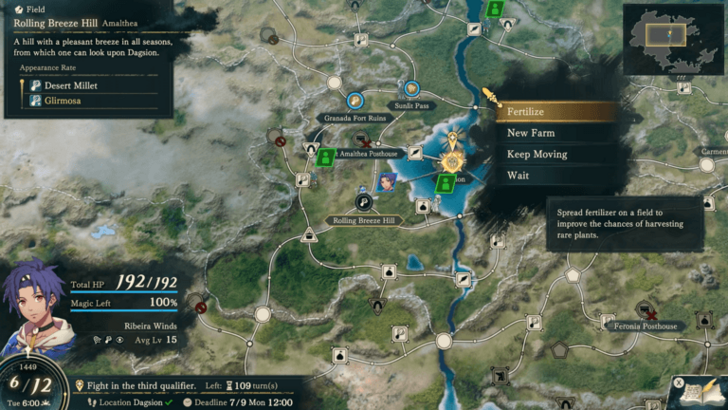
This manifests in an addictive loop of taking care of weekly activities; roaming the map to clear side quests, explore dungeons, or find new items; and returning in time to complete your weekly activities again and repeat the cycle. While it sounds repetitive, especially across four separate stories, there’s enough fun to sustain it. Not that there couldn’t have been more variety, though, what with the dungeons falling into fairly stock templates and their simplified battle system being a bit too streamlined.
Thankfully, there are significantly different mechanics in each route which spice things up considerably. Cai can farm vegetables on open land and capture mounts that provide great benefits to cavalry units, Dietrich can battle enemies for resources to upgrade his weapon skills, Theodora can assign supporting armies to infantry units, and Leda has access to quest chains that see her dance across the continent to upgrade her spellsongs. While some of these change your priorities more than others, the way each of them feeds back into the core gameplay is distinct enough to give each route substantially unique gameplay that justifies multiple playthroughs.
Playing with Fire
I think I’ve made it clear that I love Fortune’s Weave quite a lot. But I also think that many of the flaws that I’m able to overlook, no matter how annoying they were in the moment, may be deal-breakers for others. For example, the auto-save system is keen on activating as much as possible, and while the game allows you to restart chapters such that nothing is truly missable, a dedicated manual save slot would allow for a bit more flexibility, even if it might encourage some save-scumming habits.
Likewise, the system for recruiting new units feels rough and compromised. It seems at first as if the player has to be selective in who they choose to build up support ranks with in order to get the most out of their in-game time. In actuality, support values are maintained across all routes, and won’t decrease even if you reset a chapter or rewind to a previous chapter. So building up support is actually easy, albeit tedious.
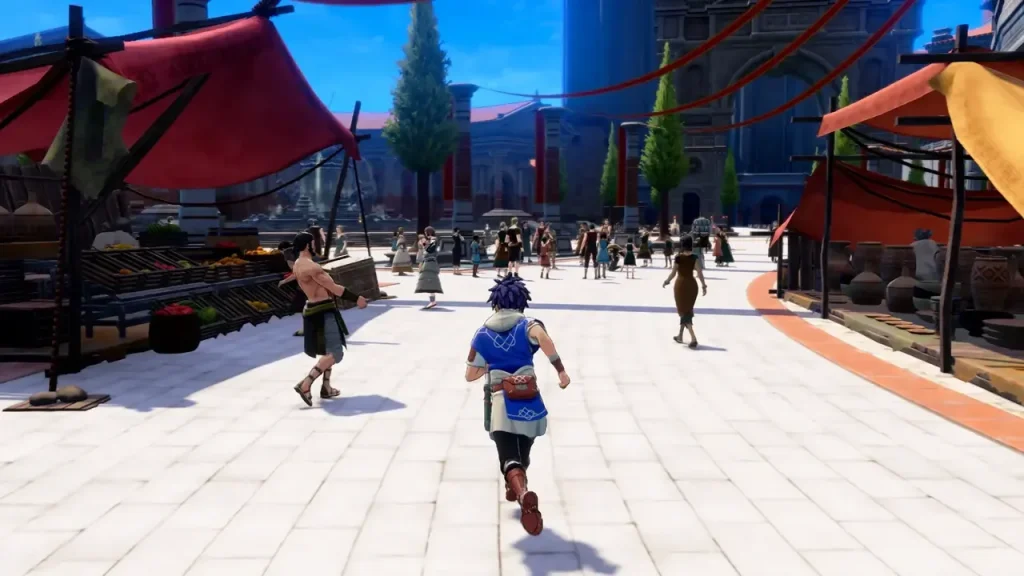
One of the things that irks me most, though, is the multiple optional cutscenes that are so faintly marked on the capital Dagsion’s map that it’s all too easy to miss them. This wouldn’t be so annoying if these optional scenes weren’t important, but on Dietrich’s route in particular, they very much are. Seeing one of them is even necessary for an upgrade to his signature weapon. Of all the things that need to be addressed post-launch, signposting these better is up at the top.
There are a bunch of other minor inconveniences. Unskippable tutorials on replays, limited resources like Karma Shards being lost through late-game mechanics, auto-equipping of speed-hindering equipment, the list goes on. In some ways, it’s inevitable; this is a massive game chock full of content, so regrettably there’s more chances for things to go wrong. But Fire Emblem: Fortune’s Weave still hits far more than it misses, largely because of its ambition. That it’s not always a positive experience is beside the point. Fortune’s Weave works as well as it does because among all other Fire Emblem games, it has an undeniable unique edge: its scope.
From its focus on the world map to its detailed lore, Fortune’s Weave feels grand in a way that many other Fire Emblem games, even many of the great ones, can’t quite measure up to. And that feeling, that the player is taking part in a grand narrative spanning a whole continent and shaping the history of this richly developed world, is almost as satisfying as its battles.
The game’s scope is not always equally applied. Once you get to the later stages, the plot goes from intricate and detailed to a checklist of bad guys to kill. But the third act’s gameplay twists and unique challenges are enough to carry it through. Fire Emblem: Fortune’s Weave is full of these push-and-pull situations, and it ultimately comes out ahead.
Final Thoughts
Fire Emblem: Fortune’s Weave is already one of the best games on the Nintendo Switch 2, and it will likely maintain the staying power that Three Houses did on the Switch 1 before it. It does need some touching up, and hopefully the incoming expansion updates will be well worth it.
I like to think of Fortune’s Weave as four complete story-driven games tied to a much more gameplay-oriented third act that serves more as an extended catharsis than as a story. I acknowledge that drawing that big a divide between them is a big ask, but if that mindset works for you, you’ll probably come out thinking the game is a masterpiece. Even if you don’t, it will still probably be a ton of fun.
Score: 9.0/10
Fire Emblem: Fortune’s Weave, co-developed by Intelligent Systems and Nintendo and published by Nintendo, released on October 17, 2026, for the Nintendo Switch 2. MSRP: $69.99.

Sean Cabot is a graduate of Framingham State University, where he also wrote articles for the student paper before writing for RPGFan. In addition to gradually whittling down his massive backlog, he enjoys reading comics, playing Magic the Gathering, watching as many movies as possible, and adding to his backlog faster than he can shrink it.