
Every day, for the past 11 years and 11 months, has started roughly the same. Regardless of where I am, or what is happening in the world, or how I am feeling, I do the same thing: open my phone and play a round of Threes!
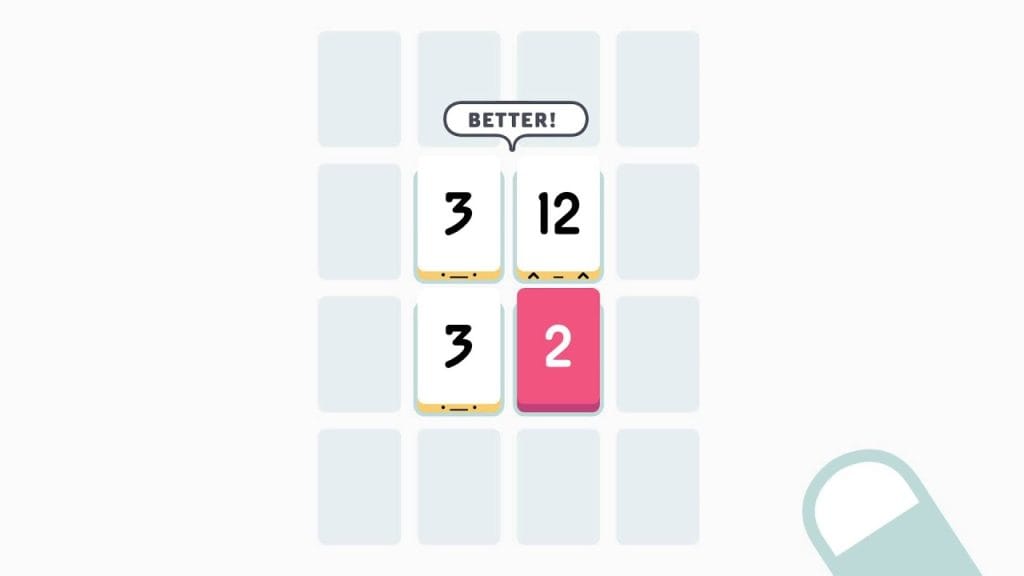
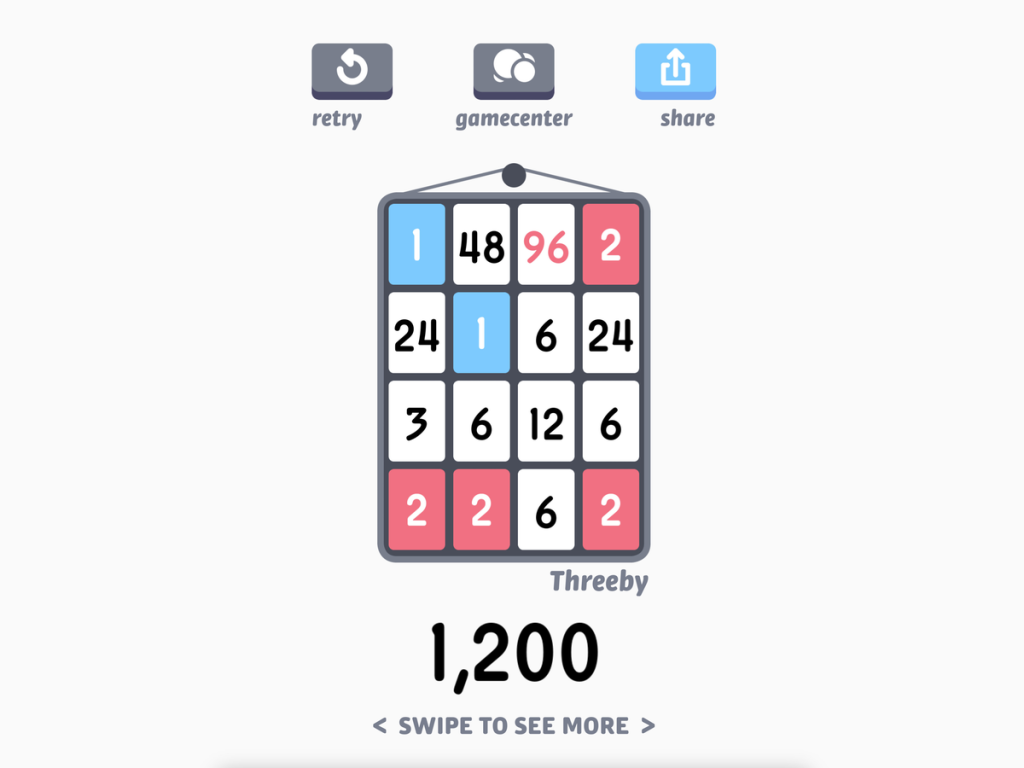
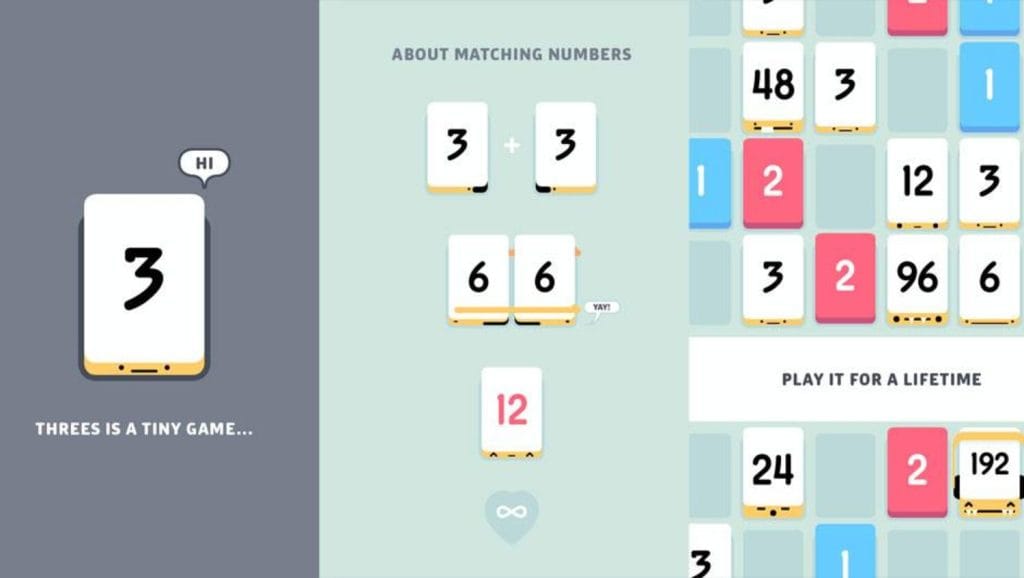
Released for iOS in February 2014, Threes! is a relatively simplistic puzzle game created by Asher Vollmer, then operating as Sirvo Games. The game is built around sliding numbered blocks into each other to create higher additions: One and two make three, three and three make six, six and six make 12, and so on. With the exception of one and two, numbers can only be added to themselves, meaning there is a limit to how many additions players can make. Once the 4×4 grid is full and no further additions can be made, a score is tallied out of the numbers on the board.
Threes!, theoretically, has no ending. Players can play on and on, racking up higher and higher scores, forever. The leaderboards are full of these people, searching for the most optimal ways to secure the highest possible score. And even though I have played this game, every day, for 11 years and counting, I will never be one of those people. Why? Because Threes! is my forever game, and the score stopped being the point a long time ago.
What Is a Forever Game?
Human beings love rituals. Whether it be through routine, practice, or unconscious effort, we search out repetition in our daily lives. We love ordering the same coffees from our favorite shops, regardless of the objective quality. As a proud resident of the northeastern United States, I have a Dunkin order that I’ve enjoyed the exact same way since I was 16 years old: medium iced, regular, cream, no sugar. It does not matter if I’m at a Dunkin in northern Vermont or southern Connecticut; I know what I am getting. It is routine, even instinctual, in my nature. Regardless of where I am, I know my coffee order. Medium iced, regular, cream, no sugar.
A forever game is a part of that routine. For many folks, that game is the New York Times Crossword or Wordle: something that will always be there to fit into a routine, that can be accessed anywhere. Puzzles and puzzle games are great for that, as they require brain power to solve, but not enough to demand full focus (besides the Sunday Crossword, that thing requires every ounce of brain power accessible). How much time and energy a person wants to invest in it is up to them, and if they want to do it every day, it’s available. Low barrier of entry, but endless replayability.
Whether it be through routine, practice, or unconscious effort, we search out repetition in our daily lives.
Threes! provides that. Between the amazingly tactile feel of sliding blocks around to the relatively short nature of an attempt, Threes! can demand as much or as little of your time as you want. Most attempts for me are less than five minutes first thing in the morning, as I swipe blocks around while half dozing.
My scores, usually, suck. I’ll max out the board due to silly errors, hit “next,” and move on with my day. Ritual over, but with an accomplishment already done. Add on the simple but engaging aesthetics and fantastic soundtrack, and Threes! becomes a package that remains easy to return to, day after day.
Where the Numbers Don’t Matter
So how, then, did a game fully built around score become my forever game? Beyond the ritual, beyond the ease, Threes! is a game about numbers. The score at the end is really all there is to mark progress. But I haven’t looked or cared about the final number in years. I return to Threes! every day because I love it. I love the ease. I love the simplicity. I love that, by now, the first few swipes are unconscious for me. By now, I have certainly played enough to learn strategies for top scores. I could spend time min-maxing or developing opening gambits. I’ve seen everything there is to see, and now it could all be refinement.
Threes! is my forever game, and the score stopped being the point a long time ago.
Other games have floated into my “forever” sphere over the past few years as well. Since its mobile release, Balatro has also embedded itself into daily grind. While always pleasant to try and unlock a stake or find a new Joker, Balatro is still built around achievement. Apex Legends and League of Legends both took swings at cementing themselves as games I could return to regardless of how much time I spent away. The excitement and freneticism both offer have enticed me at different times, helped by the social elements of spending time with friends. Forever games need pick-up-and-put-down appeal, and those two offer that in spades. But nothing else has ever given me the routine that I search for quite like Threes! does.
Instead, I will spend every day swiping a few times, watching a number go up, and closing things down once I’m done. No sense of accomplishment needed. Just a sense of simple, clean routine. A clean start, every day, to begin fresh, regardless of what other achievement I make throughout the day. And tomorrow, Threes! will be there again, ready to start the ritual again.

Gary is a jack-of-all-trades video game enthusiast based in Boston, MA. A semi-professional fighting game player, even less professional Apex Legends player, and even less professional adult, he spends most of his time poking at strange indie gems and reading about the need for more diverse voices in gaming criticism. He invites anyone to recommend anything he's missed in the gaming world via Twitter or BlueSky, where he can found under the username @grtnpwrfl. When he isn't spending his time playing games, Gary is an avid New England Patriots fan and frequent hiker.