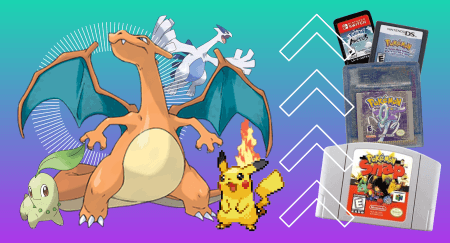


Despite begging for one throughout most of the ‘90s, I never had a Tamagotchi. But one fateful day, my Great Uncle Bob visited. He took me to the local shop and said I could pick out anything from the toy section. And, lo and behold, there was a Pocket Pikachu, Nintendo’s answer to their competitor Bandai Namco’s supremely popular tool of amusement.
The Pokémon Pikachu (as the device was known in North America) and its successor were similar to the Tamagotchi. It was a small, egg-shaped device that housed a digital pet that one could befriend. This device, however, as you can likely guess, only featured one pet option — a Pikachu. The yellow mouse had risen to astronomic heights of popularity through the anime, and the Pocket Pikachu was Nintendo’s way to make everyone feel like the legendary Ash Ketchum.
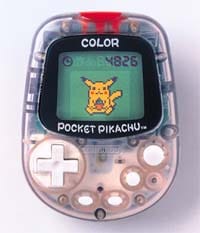
The device was designed to resemble a tiny version of the Game Boy Color. The first iteration in 1998 was bright yellow with a black-and-white screen. Two years later, Nintendo released an updated version called the Pokémon Pikachu 2 GS, which had a sparkly silver aesthetic with a little outline of a Pikachu at the center, in case you somehow forgot the ubiquitous mascot. Notably, the GS version had a color screen so you could see Pikachu in all his bright yellow glory.
I couldn’t believe my luck that my Great Uncle Bob had gifted me with my very own pocket monster, one that I could fit in my tiny little hands. Pikachu was so freaking cute!!! When he brushed his teeth, I brushed my teeth. When he yawned, I yawned! When he ate a strawberry, I complained less when my mom gave me fruit for snacks, too! I couldn’t have a real-life pet of my own, and my Pocket Pikachu’s happy bleeps and blorps made companionship feel much more attainable.
The Pocket Pikachu had three significant differences from the Tamagotchi of the era. Unlike its competitors, Pikachu did not need to be taken care of — no feeding or cleaning up. Second, it could be synced up to your Game Boy Color to share prizes with your Pokémon Gold or Silver save. Third, the device was also pedometer, so you could count your steps before it was cool.
To befriend Pikachu, I had to walk a lot. For every twenty steps I walked, I could unlock “a watt” that would enable me to buy him a present. As an eight-year-old kid, I didn’t have a ton of freedom, so the best place to get that movement in was at school — where electronics and toys were strictly banned. (Funny to imagine that now where students can bring their phones to school, though it makes sense why bans are happening again.)
For months, I snuck my Pocket Pikachu in my backpack or in my jeans pocket. I ran around the gym or playground much more enthusiastically, imagining how helpful these steps would be for my pocket monster. During class, I would surreptitiously peek at Pikachu, smiling when I saw him surfing or napping. Other kids started to notice, and they began hanging out with me to catch a glimpse of Pikachu. I was a very shy kid, and Pikachu had helped me make new friends.
Eventually, I got caught, and I was firmly scolded against bringing the toy to school. Without enough steps, my Pikachu got madder and madder at me, eventually turning his back. I was so sad, and the device eventually went into a storage bin.
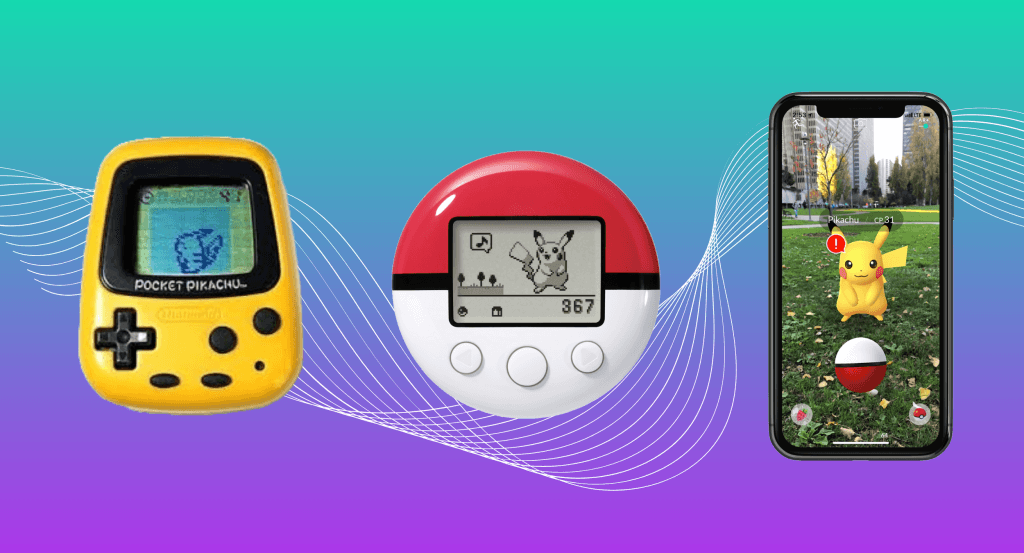
While the Pocket Pikachu was ultimately a short-lived accessory in my life and in the world of business, it has continued to have an impact on the franchise. Years later, the Pokémon company followed up with the Pokéwalker, a pedometer that resembled the omnipresent Pokéball device. It was bundled as a gift for people who bought the updated Pokémon HeartGold and SoulSilver versions on Nintendo DS.
The Pokéwalker was more advanced, coming with a variety of other mini-games and activities. Pocket Pikachu’s essence can also be seen in the wildly popular mobile game Pokémon GO which uses step-counting to influence evolving and catching Pokémon. The walking isn’t just a tiny side effect, either; a 2017 scientific study estimates that Pokémon Go “has added a total of 144 billion steps to US physical activity.”
Walking has long been named one of the healthiest things you can do on a regular basis. The FitBit craze made people say the phrase “getting my steps in” on a regular basis, beginning a trend of wearables like Apple Watches and Oura Rings that continue to emphasize step-counting. Upon retrospect, Nintendo’s investment in movement (and not just with the wildly inventive Wii) can be seen as a lasting influence. This month marks Pokémon’s 30th anniversary; the franchise has its own fascinating origin stories of growing up and making friends, too.
As the years have gone on and I’m getting older, I’ve continued to be aware of how important daily movement is. I need to get more steps in. I’ve been thinking about how fun it would be to have a Pocket Pikachu again. Maybe I’ll buy one off of eBay or check out that old storage bin. After all, there’s nothing like going for a walk with an old friend.
As a little postscript, there are some funny videos on YouTube of people recalling these. This one includes some especially entertaining old commercials.


Amanda Tien (she/her or they) loves video games where she can pet dogs, solve mysteries, punch bad guys, play as a cool female character, and/or have a good cry. She began writing with The Punished Backlog in 2020 and became an Editor in Fall 2021. Amanda also does a lot of the site's graphic designs and podcast editing. Amanda's work has been published in Mothership, Unwinnable Monthly, Poets.org, Salt Hill Journal, and elsewhere. She holds an MFA in Fiction from the University of Pittsburgh and a BA in Creative Writing from Columbia University. Learn more about her writing, visual art, teaching, graphic design, and marketing consulting at www.amandatien.com.