
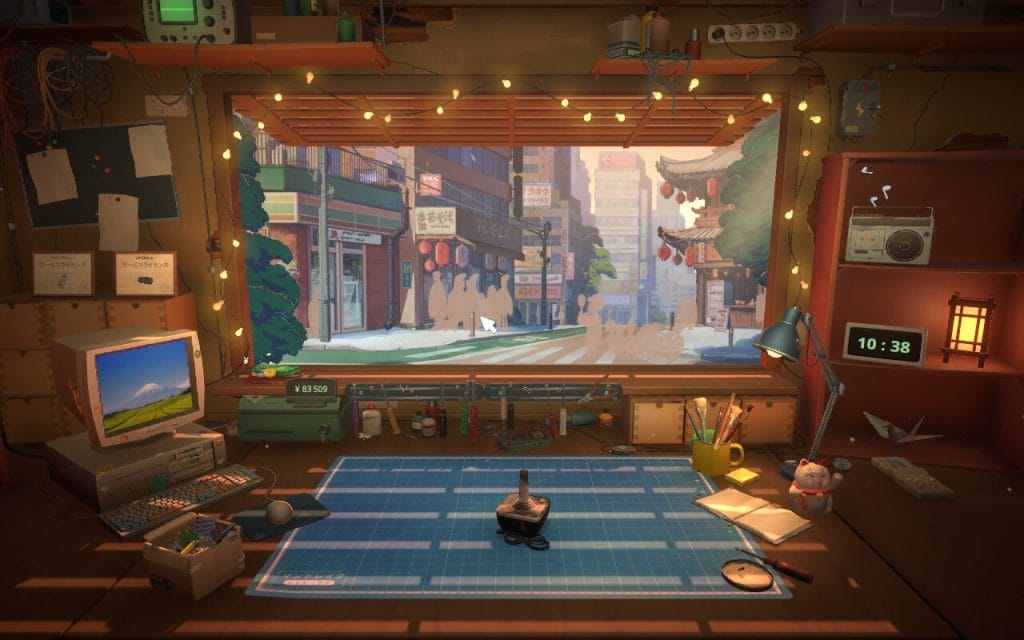

I am not a mechanically gifted person. Any set of instructions — from IKEA directions to recipe steps — is difficult for me to follow. Despite being a nerdy girl with glasses, I don’t (as many people assume) enjoy puzzles or knitting. The shapes in geometry were impossible for me to grasp (meanwhile, I had no problem with algebra or statistics). Trying to set up a new bit of tech for the first time is painful. But this past weekend, I’ve been feeling like a mechanical expert in ReStory: Chill Electronics Repairs.
I have heard fellow writers Allison and Gary talk extensively about how PowerWash Simulator is a deeply soothing experience. As I gently brushed dust off of a broken Atari joystick in ReStory, I felt I finally understood. It’s part of why I’m so impressed by artisan shows like The Repair Shop; the patience needed to fix a vintage radio or pinball machine astounds me. ReStory makes repair feel a little less like fantasy to me.
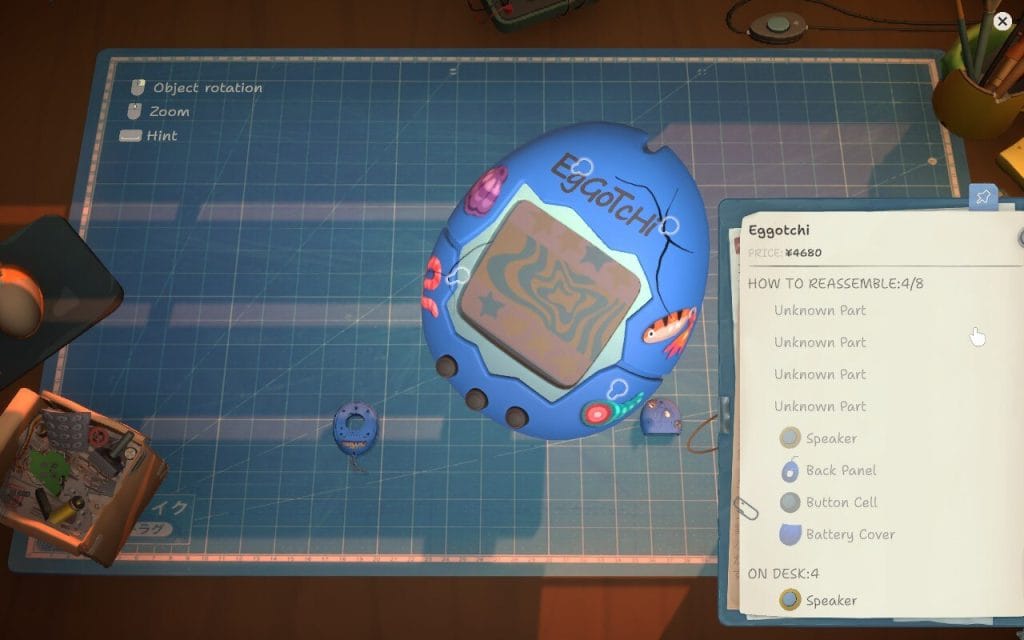
ReStory introduces players to a small repair shop in early 2000s Tokyo. It’s a cozy game that embraces all the good things about the genre — familiar actions, kind characters, colorful setting — without losing its unique personality and edge. Bills come in the mail, but you’ll earn enough to pay them. Some customers are rude, but you don’t have to worry about them. Famous items given clever names like “the Nony PMP” (a.k.a. the Sony PSP) arrive burnt and broken, but they can be fixed.
ReStory: Chill Electronics Repairs recognizes that the joy is in the work.
I first tried ReStory as a June 2026 Steam Next Fest demo, and it released earlier this month. I grabbed it on its introductory sale (which goes through August 20). I’ve only played ReStory for a few hours, but I already feel comfortably in the zone. For example, while making dinner last night, I had to wait 15 minutes for something in the oven, so I took out my Steam Deck and locked in for “a day” in-game of fixing nostalgic Y2K items. It was meditative without dulling my senses, and once the kitchen timer went off, I could easily leave the game to get back to baking.
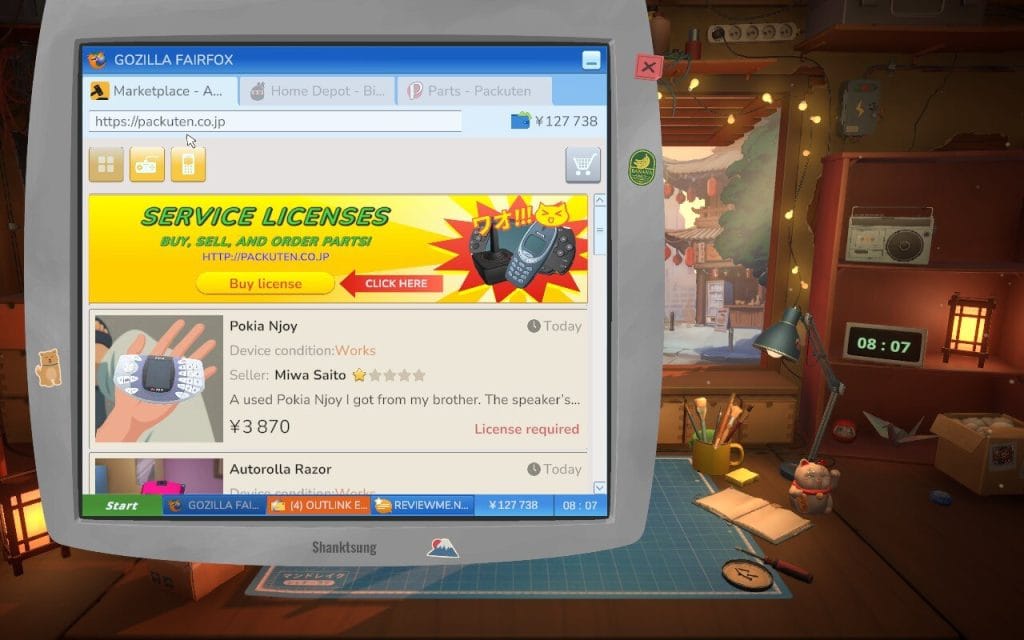
Some days in-game, I choose to accept repair orders on only one type of product and find myself in a flow state of fixing Pokias (the game’s cheeky reference to the famous Nokia 3310 “brick” cell phone, which I had as a teenager). I find myself remembering exactly where parts go and in what order, something I have never achieved in real life. Other days, I like making as much money as I can just by cleaning (a la PowerWash!) any kind of tech. I very rarely have to accept any gigs that I don’t want to; for example, even though I can make good money fixing pink Autorolla Razor flip phones, I find them quite finicky to put together, so I don’t bother. It’s nice to feel productive without having to do anything I don’t want to; it’s the magic of cozy in-game jobs.
Most of the orders in-game arrive via randomized emails on a charmingly boxy computer, but NPCs arrive at the window to deliver main “quests.” Doing repairs for those characters (some of whom are charming) moves the “main story” (used loosely) forward, but nothing has any real urgency. As the name says, ReStory: Chill Electronics Repairs is truly chill, both in gameplay and setting. There are multiple ways to solve a problem — for example, if I need a new display screen for a Nony PMP, I can either buy a new part directly from the manufacturer or take a risk on a secondhand object to cannibalize for parts. The business simulator aspects are just dense enough to feel engaging without feeling stressful.
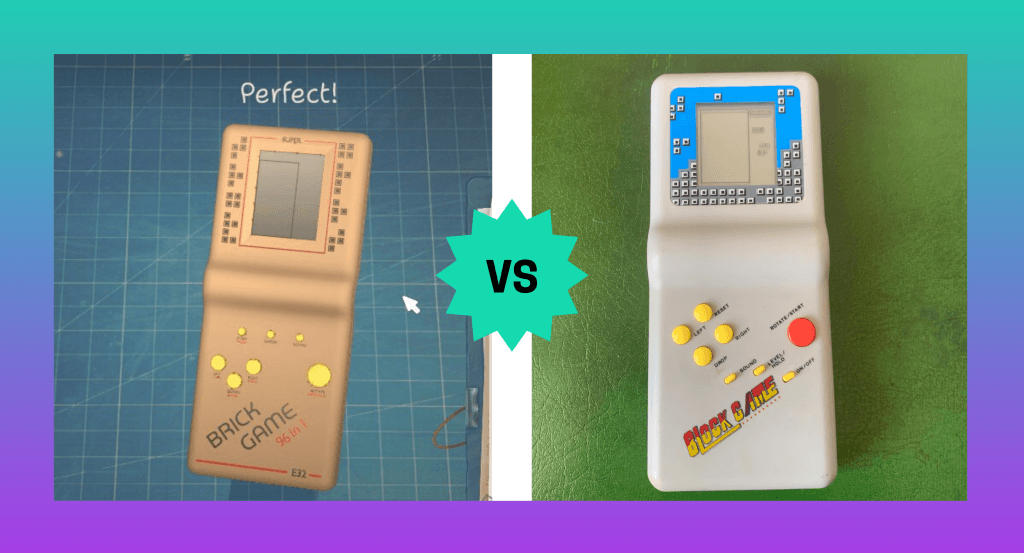
ReStory harkens back to a time when there was internet and video games, but no social media or endless news feeds. The products featured range across a decade (you’ll see a version of a 1990s Tetris device next to a 2001 Game Boy Advance), which feels like entering an imaginary bubble of time. When you take out tiny screws in-game, you never lose them (unlike real life!). There’s background music that can be turned off along with optional hints. Unlike another Japanese shop simulator from earlier this year, ReStory recognizes that the joy is in the work.
ReStory lets you make mistakes but doesn’t really let you fail, which I appreciate. I sometimes put parts back in the wrong order or add in a dirty piece, and after I close it all up, the game gently tells me that something is wrong and that I need to re-check it. This allows me to feel like I really am “fixing” the item, without feeling like I’ll lose my job by failing. Instead, I can steadily move the needle forward, growing my business and decorating my space with twinkle lights. Even though I can buy a “bath” for some of my tech parts, I still choose to brush them off — watching the dust fly away makes me feel both relaxed and in control, a kind of “emotional safety” as Gary calls it.
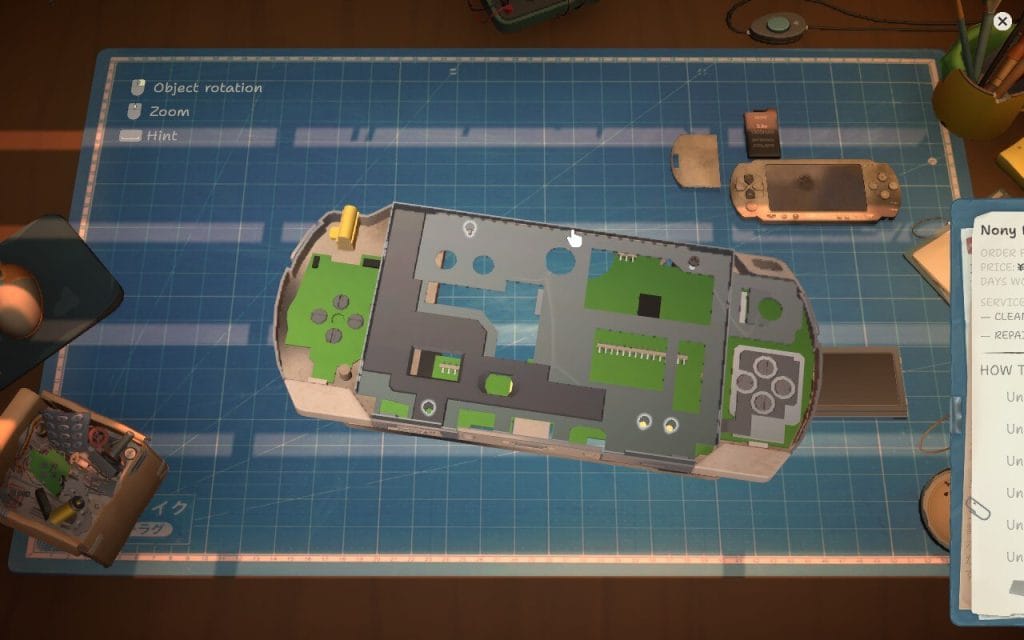
I appreciate that electronic parts in ReStory have only three qualitative states: 1) ready to go, 2) dirty, or 3) broken. I know that fixing electronics in real life can be very complicated; I’ve heard of a lot of trial and error to figure out exactly what’s wrong with a circuit board or a used PlayStation 4. But in ReStory, repairing an object is ultimately quite straightforward, even as you unlock more advanced tools like a soldering iron. These are items that I mostly only recognize from movies and television.
Lately, my husband and I have been watching old episodes of MythBusters. Every time, I’m blown away by how creative the cast is with regards to making something out of nothing to complete an experiment. When I see disparate pieces in real life, I struggle to connect the dots, even if instructions are written out right in front of me. Given all of this, I’m surprised I like ReStory as much as I do, especially since the narrative — which is often a main factor for me when gaming — is adequate at best.
The story in the cleverly named ReStory is not the main focus of the game, and it shouldn’t be what draws players to it. Instead, focus on the play on the word restore — to bring something back to life. As a mechanical dullard, I have finally found the joy of fixing something.
ReStory: Chill Electronics Repairs, developed by Mandragora and published by tinyBuild, was released on August 6, 2026, for PC. MSRP: $19.99. Version played: PC (via Steam Deck).

Amanda Tien (she/her or they) loves video games where she can pet dogs, solve mysteries, punch bad guys, play as a cool female character, and/or have a good cry. She began writing with The Punished Backlog in 2020 and became an Editor in Fall 2021. Amanda also does a lot of the site's graphic designs and podcast editing. Amanda's work has been published in Mothership, Unwinnable Monthly, Poets.org, Salt Hill Journal, and elsewhere. She holds an MFA in Fiction from the University of Pittsburgh and a BA in Creative Writing from Columbia University. Learn more about her writing, visual art, teaching, graphic design, and marketing consulting at www.amandatien.com.