
Whenever I thought about returning to play inKONBINI: One Store. Many Stories, I didn’t think, “Oh, I’m excited to play a video game,” but rather, “Oh, I have to go back to work.” Store simulator games and cozy games that “feel like work” walk a very fine line in curating a feeling of productivity, control, and stability, as detailed expertly by Kevin Cortez in Mothership. However, unlike games like 2025’s excellent Tiny Bookshop, inKONBINI embraces the mundanity of real-life convenience store work to an extreme.
inKONBINI: One Store. Many Stories, which released on April 30, is a serviceable title for lovers of the service industry, but it will fail to impress lovers of cozy games or narrative titles.
Now Open
inKONBINI actually does start strong. Players take on the role of Makoto, a college student working night shifts for a week at her aunt’s convenience store in 1990s Japan. The first night serves as a prologue, and it was also released as a demo that captured my interest during the February 2026 Steam Next Fest.
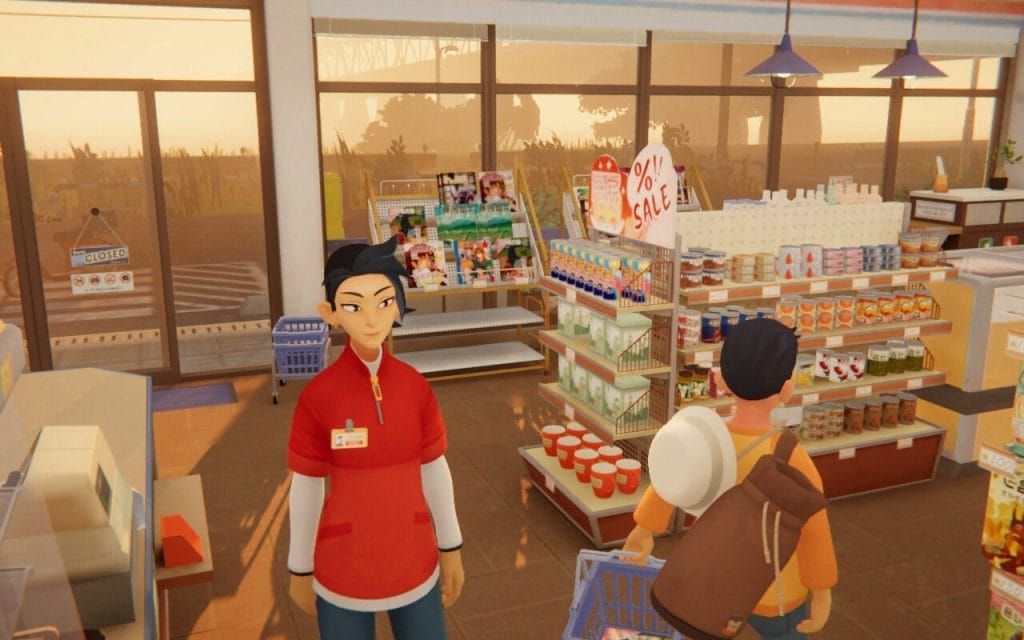
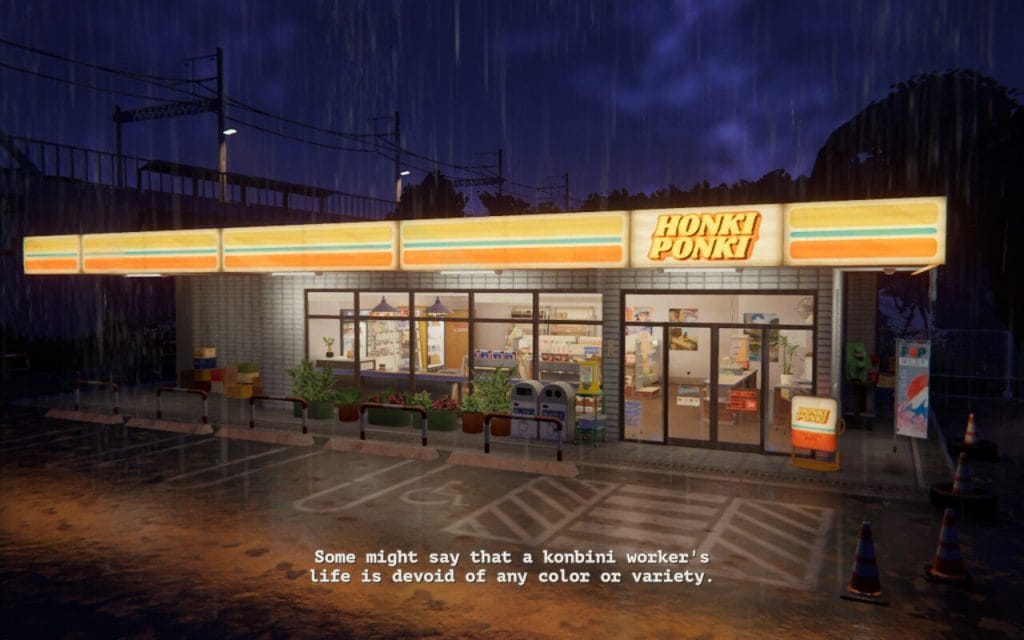
The charm of the convenience store is immediately apparent. The cheekily named Honki Ponki shop is colorful and cozy. It feels the size of a real convenience store. Shelves are jam-packed with bright, colorful products. Most of the actual gameplay consists of stocking up products and rearranging things as necessary. It’s a meditative experience, even in the game’s opening moments.
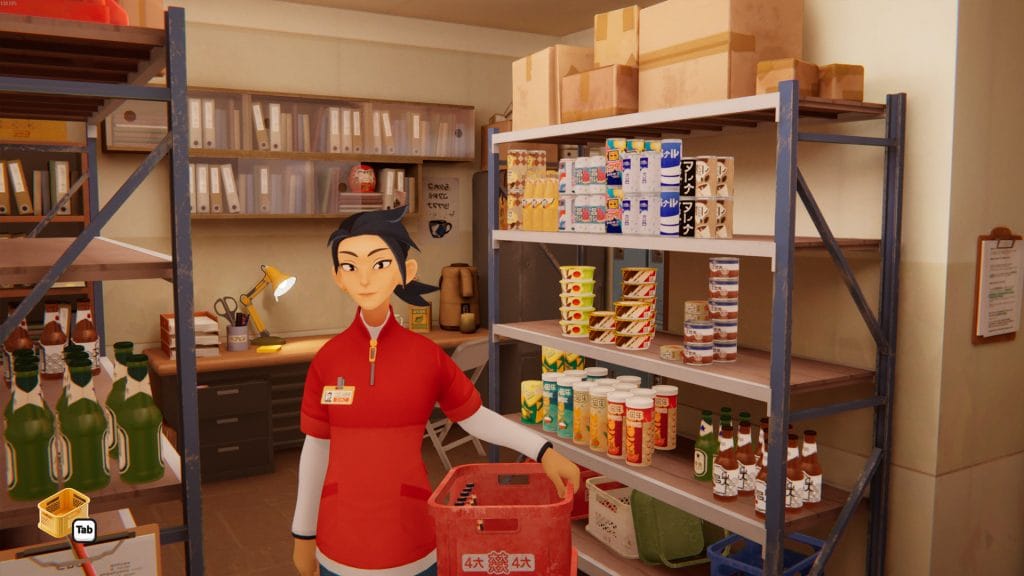
Meanwhile, the back room is filled with behind-the-scenes looks at the lives of others, like an old postcard Aunt Hina has hidden for ages among the accounting books and a journal by a day-shift worker about a customer crush he has. Makoto’s first customer is an old friend of her auntie’s, and she has a heartfelt conversation with him about the future.
Makoto is unsure about her life path at the beginning of the game, but she embraces the week at the store with gusto. She writes in her journal at the start and end of the prologue, which is overlaid with a voiceover. The character’s voice actor (whose name I sadly could not find) has a wistful, romantic tone to her voice. I felt hopeful, too.
But as the game continues, just like a leaky ceiling later in the campaign, the charm drips away.
Just like a leaky ceiling later in the campaign, the charm drips away.
Cleanup on Aisle Four
Most nights in inKONBINI begin with the shop (presumably a 24-hour convenience store) closed. As Mokoto, the player has all the time in the world to set things up just the way they like before turning the sign to open. By the time I started Makoto’s second night, I was already getting frustrated with the game.
A tall man in a white jacket waited with his nose literally pressed to the glass door for 20 minutes as I set up the store. When I finally let him in, he didn’t complain about the wait but merely did his shopping. In real life, not only would a konbini probably never actually close for restocking, but a grumpy customer would never put up with that.
As Makoto, I stood there motionlessly, waiting for him to slowly walk around the shop and pick up items. I couldn’t rearrange things while he was shopping; the game simply paused. So I just waited. Minutes ticked by. When he eventually came to check out, I bullied him into buying green tea that was on sale, and then he left. It was an underwhelming experience, and it forecasted the rest of my gameplay.
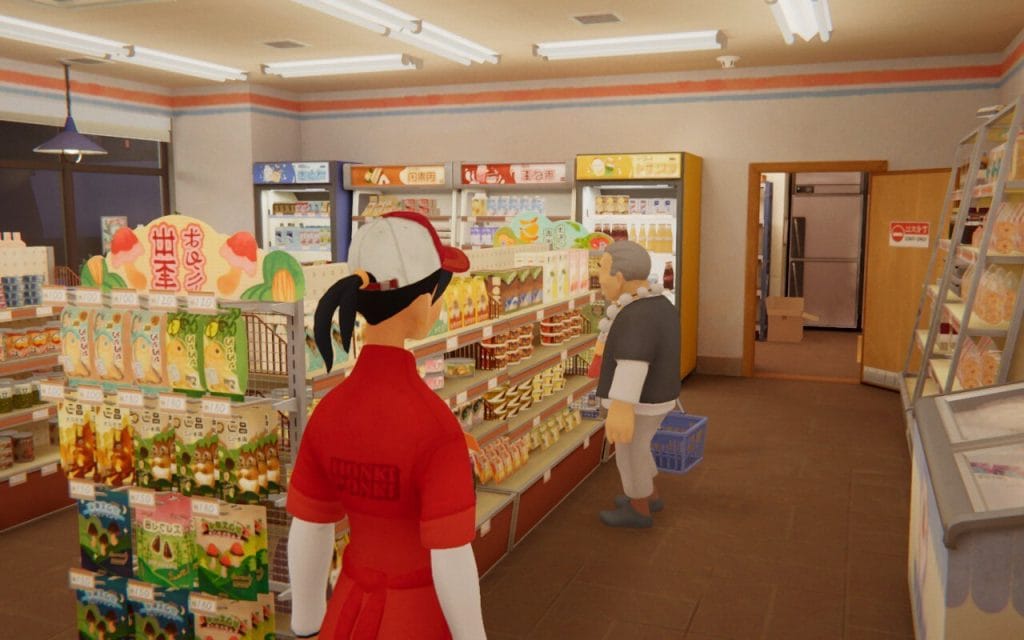
I was torn about the design choice to wait to let customers in. For most of the game, only one customer enters at a time (and over the course of the game’s evenings, usually only two customers will come at all). As a result, there is no real urgency to stock the shelves and reorganize things. On the one hand, this is nice; I can make sure everything is just how I want it before people come in. On the other hand, this can be quite boring and reduces any of the real-life urgency of working a retail job. I haven’t worked retail for a long time, but the last time I did, one thing I actually enjoyed about the job was the challenge of trying to be as efficient and effective as possible, to get things just right before the next customer came in. Here, all of that is gone — for better or worse.
The game’s tension with tension isn’t limited to just that. My actions seemed to have no lasting effect. For example, a customer suggested that I put rice near the canned goods. I moved all the supply over. The next night, however, I saw that the day shift had moved rice back to where it normally is. I can’t really shape the reality of the store, which is one of the hallmark gameplay elements that people enjoy about shop simulators. There is also no financial urgency to the game. If I count out the wrong amount of change, Makoto corrects herself and resets.
There were no real stakes to anything I was doing. Without friction, inKONBINI loses its tether to the difficulties of real life that it is so desperate to achieve in its story.
While there are achievements that can be won, there are no real penalties for messing up in the store. Someone might chuckle about a product in the wrong place, but unlike most store management sims, there is no tracker for sales or customer happiness. I could see the argument that these choices make the game more cozy, but I’d say they also make it less meaningful. There were no real stakes to anything I was doing. Without friction, inKONBINI loses its tether to the difficulties of real life that it is so desperate to achieve in its story.
Regular Customers
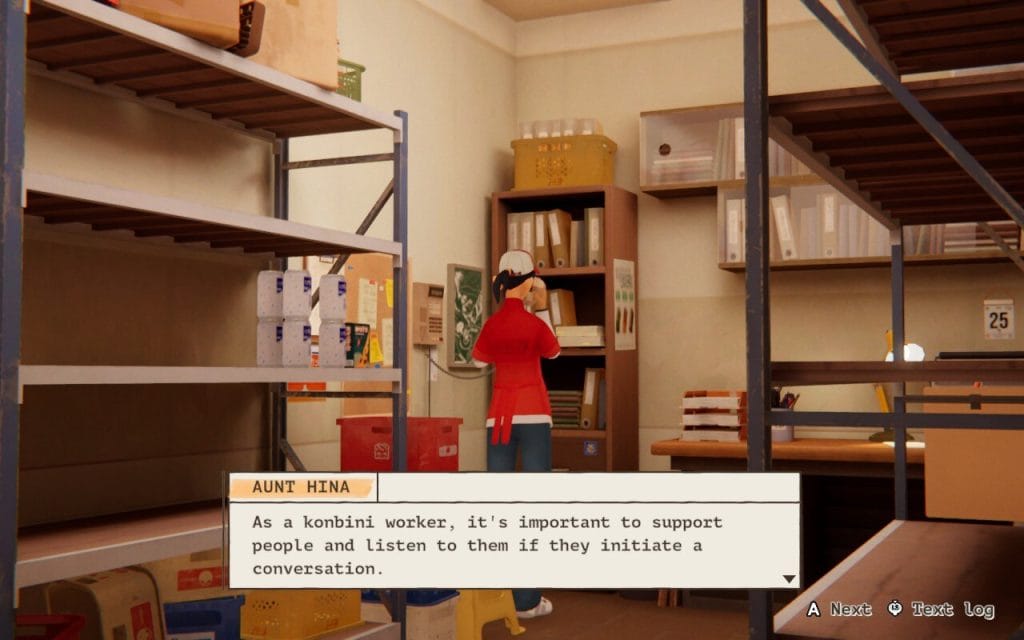
Over the course of a week, Makoto meets four customers. Okay, sure, it’s the night shift in a small town, but I found the scope pretty limited. Each character starts off kind of interesting, with their own interests and needs, but by the end of the week (and sometimes even the end of one night), each scenario descends into the customer opining about the magic of a convenience store as a third place or sharing miraculously spiritual wisdom about how they need to grow as a person. It doesn’t help that the male game models have slightly buggy and drifting eyes, causing them to look a little frog-like. One customer, a 12-year-old boy, so frequently sounds like an inspirational book that Makoto will remark on his wisdom beyond his years multiple times.
Even phone calls with off-screen strangers, like a pre-recorded weather service, will hammer in the same themes over and over again. I started quick-clicking through dialogue, bored of reading familiar platitudes over and over again. It felt like I was listening to a bunch of therapists giving me trite life lessons about how to “appreciate the now” or “love myself as I am.” What started off in the prologue as feeling thoughtful and introspective ended up feeling rote and overdone, with emphasis on the wrong places.
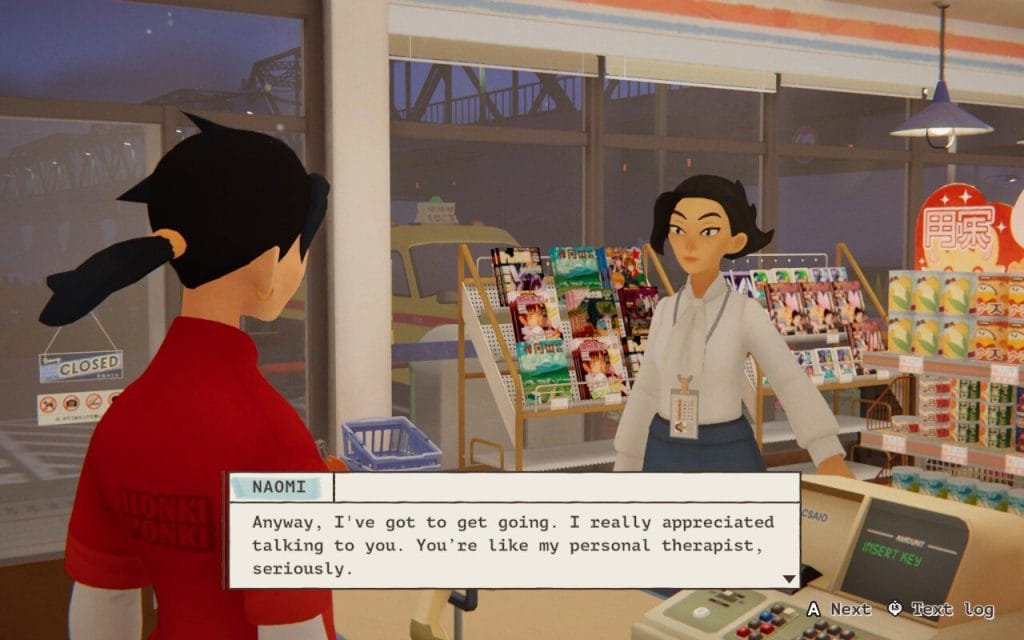
Take, for example, Aunt Hina. Makoto is here on night shift as a favor to her aunt who has been the manager at this shop for over a decade. Aunt Hina is finally on vacation. It’s one of the more meaningful relationships in the game that I don’t want to spoil by saying too much, but it brought me a few smiles. Makoto talks to Aunt Hina each night on the phone, and even promises that she’ll support her aunt in the future with the store (though these pledges are vague as Makoto is also unwilling to commit if she wants a future in retail, much less at her hometown konbini).
But then, very strangely, on the last night, it’s revealed that Aunt Hina has returned from vacation and was even at the store during the day shift but we, as the player, never see Aunt Hina and never see her and Makoto have a reunion. The player is robbed of any meaningful reunion.
Furthermore, Makoto also isn’t given any serious evolution as a protagonist. Even the voiceover that I was so charmed by fails to make an appearance after the prologue. Makoto ends the week exactly where she started: kind of curious about working in a konbini. At least on that, I can agree with her.
Makoto ends the week exactly where she started: kind of curious about working in a konbini. At least on that, I can agree with her.
The Joys of Restocking
The highlight of the inKONBINI, as promoted heavily in its marketing, is the meditative experience of stocking and organizing products. There are very satisfying animations and sound effects of putting items on shelves. I often reorganized things just for the pleasure of it. Checking out a customer was equally satisfying, spinning items to get the barcode and hearing a bright BEEP when I got it just right. It brought to mind the same quiet pleasure I get when packing my own groceries just right in a busy Trader Joe’s line.
The aesthetics of the konbini feel just right, especially when it comes down to the products. Developer Nagai Industries and publisher Beep Japan are based in Tokyo, and while they clearly have some grasp of the vibes, the combination of almost entirely non-native names in the credits and the abundance of cultural platitudes (including detailed emphasis on talismans and the wonders of convenience store sushi) is somewhat eyebrow-raising. I tried to focus on the talent poured into making detailed recreations of recognizable brands like Pocky and Kinoko No Yama.
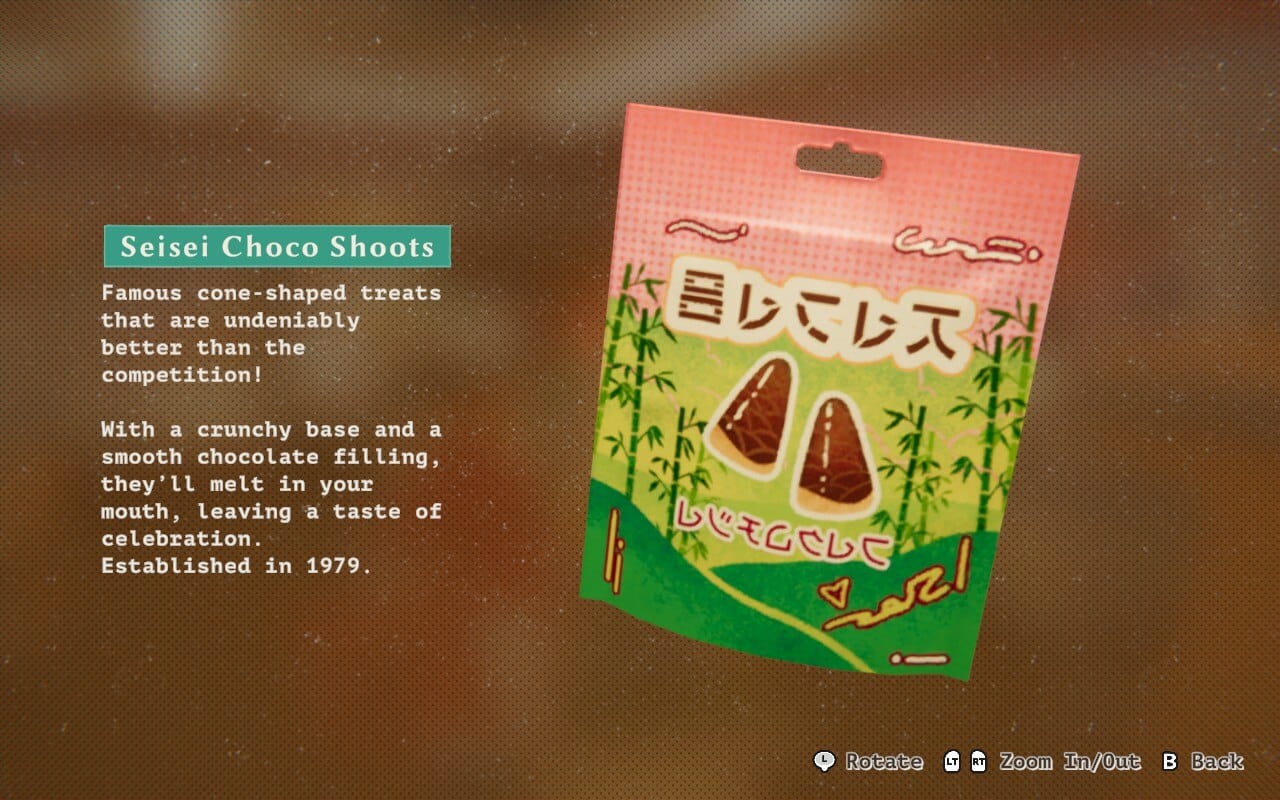
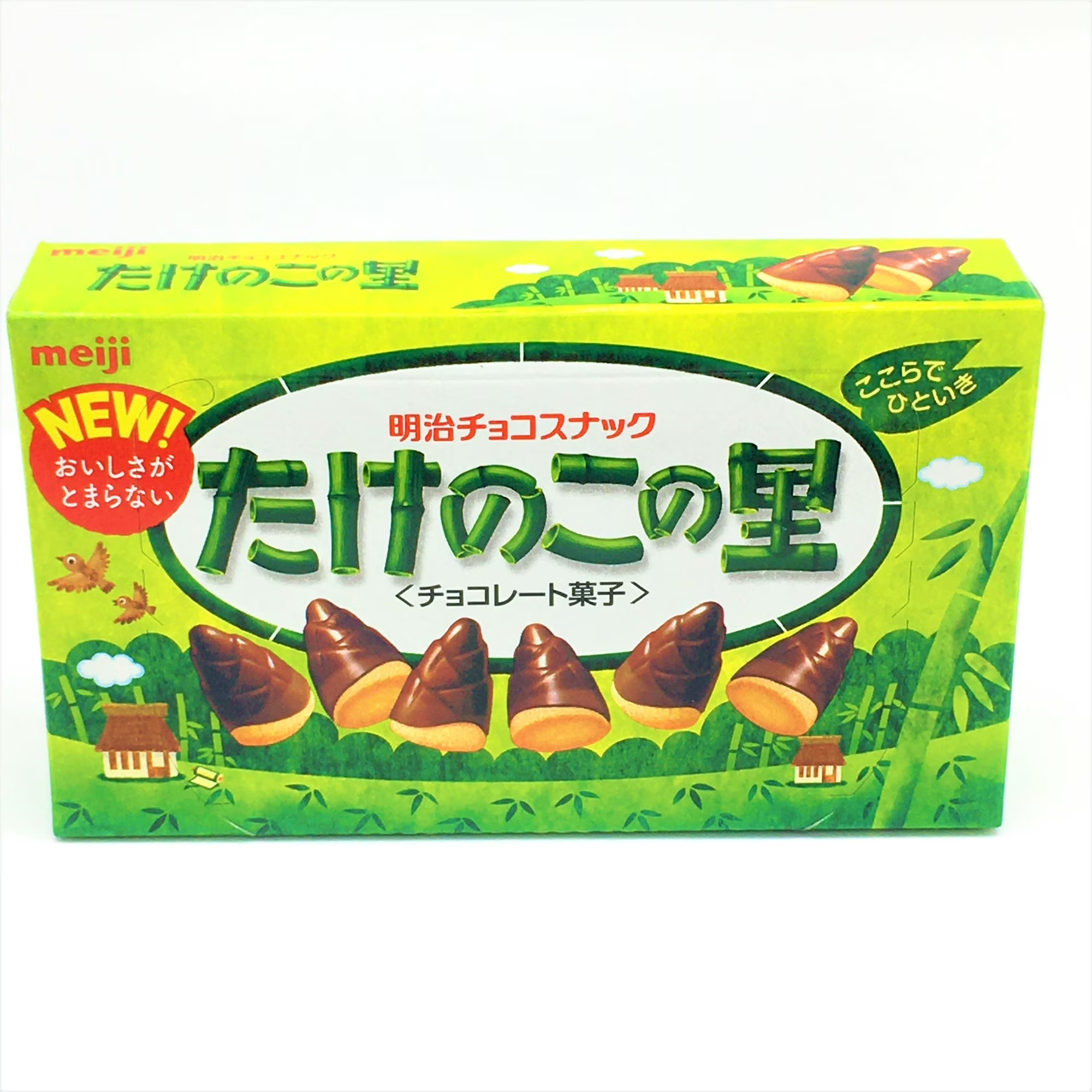
Big picture, I enjoyed the conceit of the people you meet on the job and the little ways you could impact their lives. My favorite parts of the game were when I got to suggest a product for a customer, like when a visiting reporter wants a caffeinated beverage for the evening or a local kid seeks a soft sweet. However, these interactions were few and far between; instead, I spent most of my time trying to keep the shop orderly since the day shift apparently wreaked havoc every single time Makoto went home for the night.
In order to see if a shelf was correctly organized, I had to crouch down to a shelf at eye level and meticulously look over each and every product — just like I would have to in real life. There are probably over a hundred types of products in the game, each with their own art and copywriting description. It’s a loving recreation, but the player will interact closely with maybe a dozen over the course of the game. As a result, the shelves felt more like large swaths of disorganized ornaments.
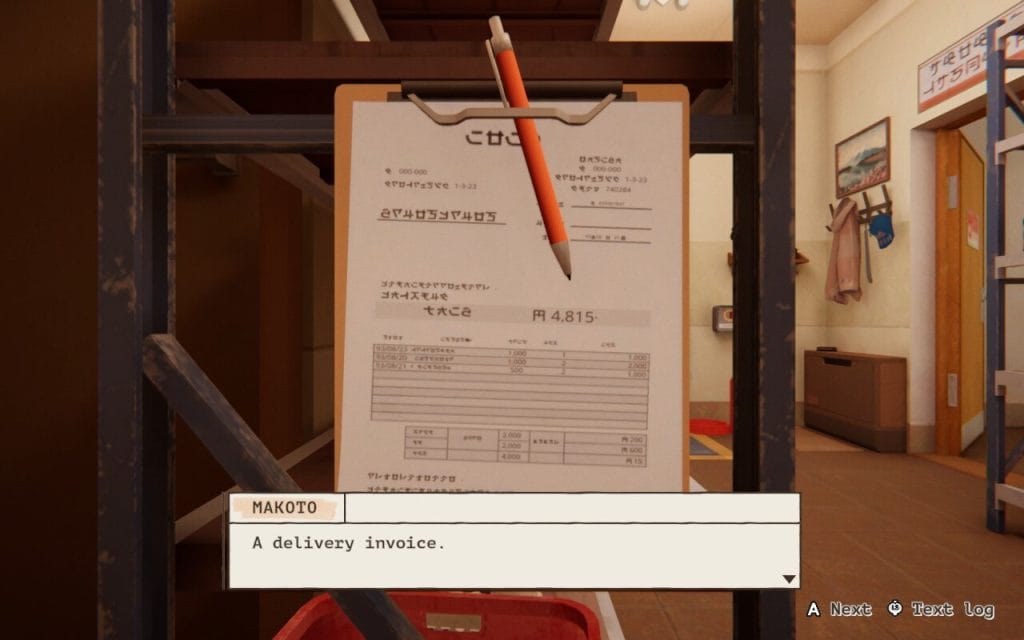
There are too many things to look at but not all of them are interesting. For example, there is a clipboard hanging by the bathroom, and I was surprised I could click on it. Maybe there would be a funny observation or a side quest or something. But nope, Makoto just noted that yes, it was indeed a clipboard to see whose turn it was to clean the bathroom (and not that we could do that in the game… nor would I want to…?). In other instances or with other items, Makoto won’t even comment on it, like she too knows that it’s boring.
To me, all of inKONBINI’s problems come down to a fundamental identity crisis.
Case of Convenience
After playing all of inKONBINI and getting most of the achievements, I think I know what happened here. I get the sense that the creators wanted to make the setting of the konbini, but struggled to find out what to actually do with it afterward, and so the plot and customers were pasted on as a way to make it work as a narrative game.
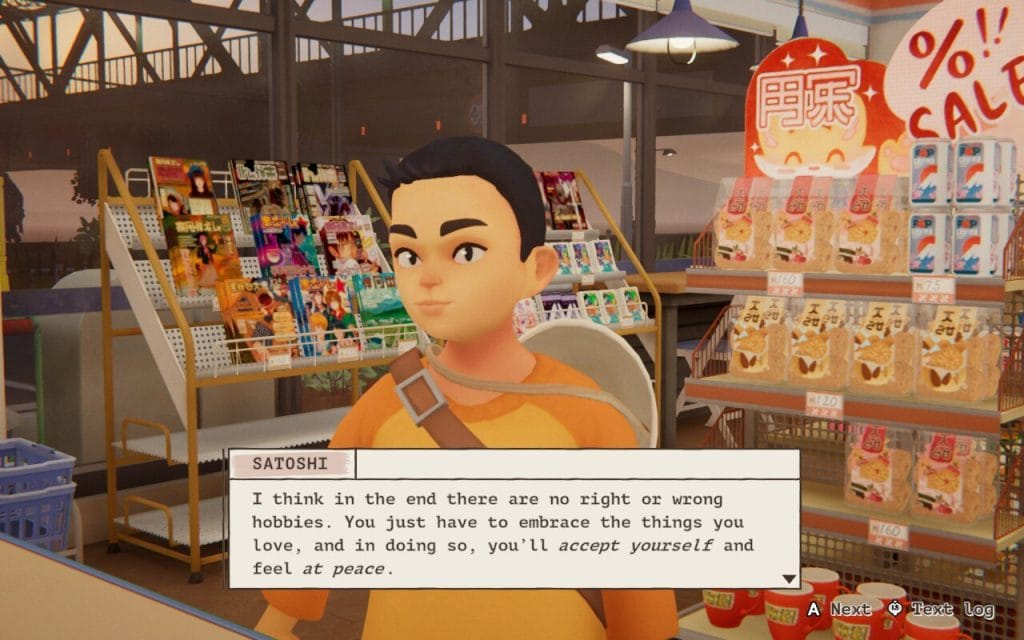
Further evidence is the game’s painfully long official title, inKONBINI: One Store. Many Stories, as it tries to assert that this is truly a title about real people. Unfortunately, it’s also not a super compelling visual novel, as most choices seem to result in the same responses or results, and you seem to “change the lives” of your customers no matter what you do. For example, a customer asked for a caffeinated drink at night — I decided to give her a zen tea instead. The next day, she told me it helped her relax and finish her work. Upon reviewing internet guides, it seems that giving her an energy drink would’ve also benefited her and allowed her to finish her work. So, while it’s a nice veneer of impact, again, nothing substantial has really occurred. Lastly, I noticed several grammatical and punctuation errors, which always annoys me when a game is so heavily dependent on the written word.
inKONBINI is a peaceful enough game to simply be a chill vibe simulator, but it is also not interesting enough to be a shop sim.
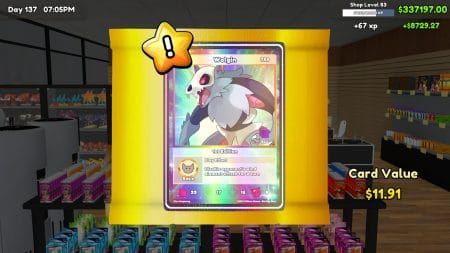
As an ASMR experience in shelving, inKONBINI works great. I did genuinely enjoy settling into those moments. If the developers had leaned into it as a true store simulator like TCG Card Shop Simulator or Retro Rewind (featuring a 1990s video rental store) with a bunch of randomized customers, then all of the best parts of inKONBINI would still work — restocking shelves, finding products for a specific customer, cleaning up the store. However, because it has the ambitions of narrative but fails its characters, it can’t hope to compete with narrative-driven shop games like Strange Horticulture and Strange Antiquities that weave story into the fundamental gameplay.
inKONBINI is a peaceful enough game to simply be a chill vibe simulator, but it is also not interesting enough to be a shop sim. Fans of Japanese convenience shops will find something to love with inKONBINI, but for everyone else, there are many more titles (such as last year’s Tiny Bookshop or this month’s Wax Heads) that will better scratch the itch for a cozy store simulator.
Score: 5.5/10
inKONBINI: One Store. Many Stories, developed by Nagai Industries and published by Beep Japan, Inc., released on April 30, 2026, for PC (via Steam), Mac, PlayStation 5, Xbox Series X/S, and Nintendo Switch. MSRP: $19.99. Version reviewed: PC.
Disclaimer: A review copy was provided by the publisher.

Amanda Tien (she/her or they) loves video games where she can pet dogs, solve mysteries, punch bad guys, play as a cool female character, and/or have a good cry. She began writing with The Punished Backlog in 2020 and became an Editor in Fall 2021. Amanda also does a lot of the site's graphic designs and podcast editing. Amanda's work has been published in Mothership, Unwinnable Monthly, Poets.org, Salt Hill Journal, and elsewhere. She holds an MFA in Fiction from the University of Pittsburgh and a BA in Creative Writing from Columbia University. Learn more about her writing, visual art, teaching, graphic design, and marketing consulting at www.amandatien.com.