
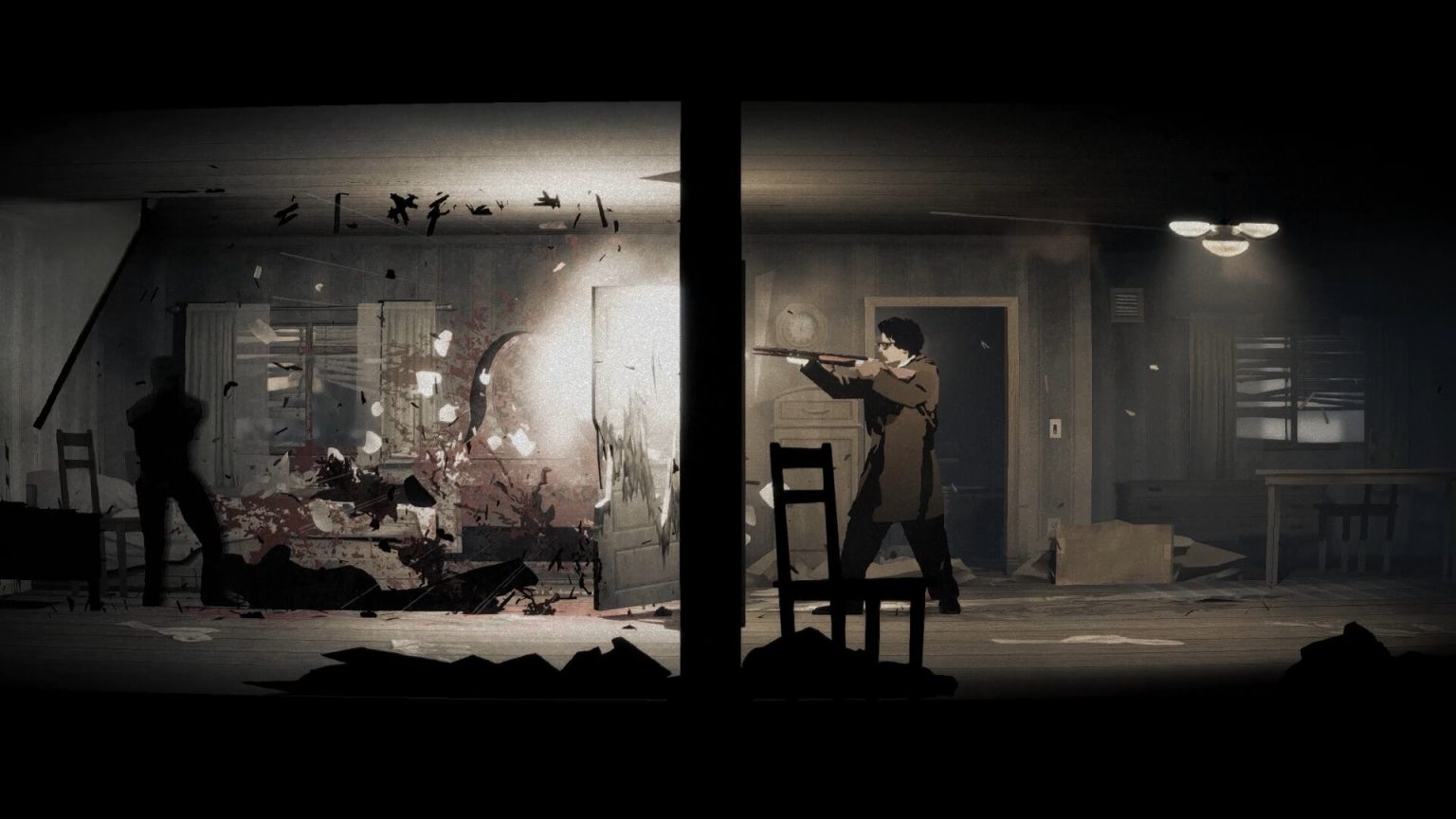

I love David Lynch’s oeuvre. The director’s surrealist approach to filmmaking has inspired many of my favorite games, namely Remedy’s Connected Universe. Twin Peaks continues to capture my imagination; Eraserhead, Mulholland Drive, and Blue Velvet are masterpieces. Thoughts of Twin Peaks: Fire Walk with Me unnerve me often.
Lynch-inspired media has been really incredible, creative, and awe-inspiring in the last few years, from Alan Wake 2 to Julie Pacino’s 2025 film I Live Here Now. The procedural drama of the former focuses on a mysterious murder in the small town of Bright Falls. The latter finds a young woman in a remote, surreal hotel. These two Lynchian works feel especially relevant with my latest obsession: developer Wych Elm’s Silver Pines.
To put it plainly, Silver Pines is a love letter to Lynch’s legacy: a game that melds together horror with metroidvania elements in a town that is equal parts haunted and haunting. Narratively, it occasionally wears its inspiration a little too much on its sleeve — risking a bit of cheesiness — but the vibes are immaculate. Silver Pines hooked me immediately and never let go after 16 hours, three endings, and 99% completion.
Velvet
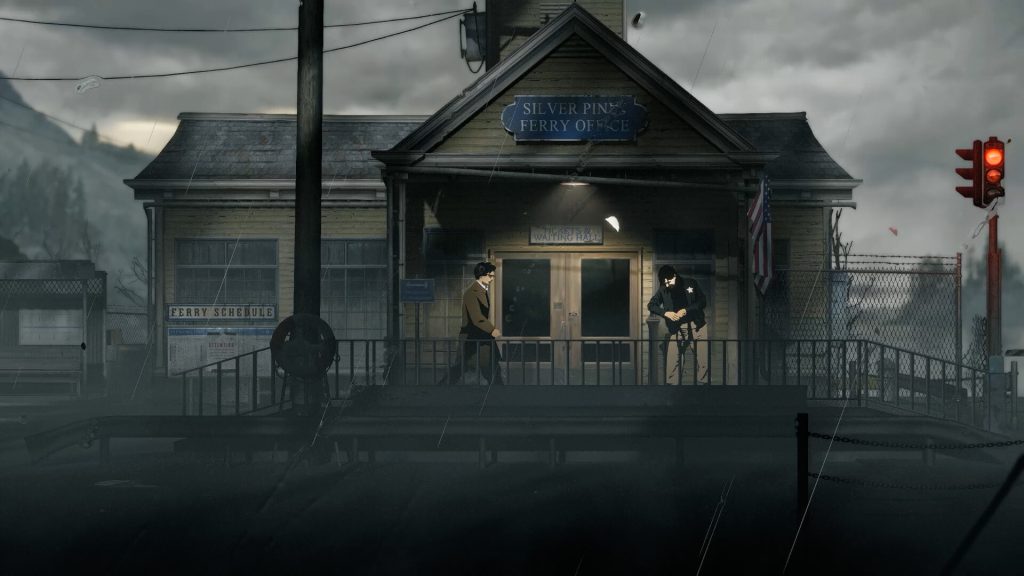
Silver Pines begins with a simple enough premise: The protagonist, private investigator Red Walker, wakes up in an abandoned diner to a ringing payphone; a mysterious voice asks him about his progress on finding Eddie Velvet, a missing musician. In true Lynchian fashion, nothing is quite normal even when it may initially look or feel familiar.
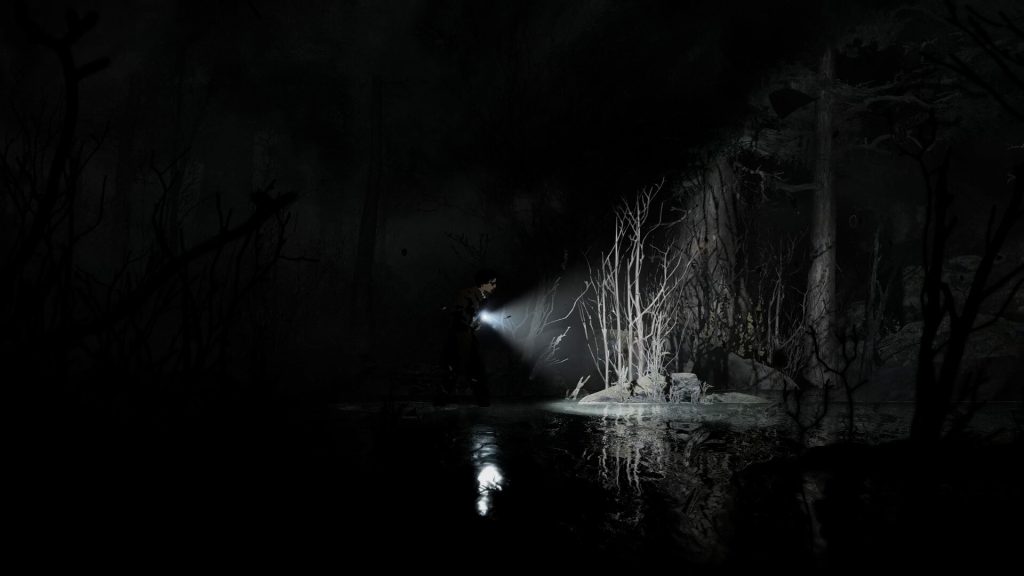
Narratively, Silver Pines takes some incredible swings — some cringy, some beautifully wrought. As a production, the game sets the tone perfectly. Its color palette invokes a ‘90s police procedural drama, like The X-Files or the 2014 first season of True Detective. The art, narrative design, and music all capture the feeling of playing a game based in Lynch’s Twin Peaks, Washington. There are moments when time and space don’t make sense, the music changes, and the color red carefully washes over surfaces — reminiscent of the Red Room in the Black Lodge.

Walker is unwavering in his search for Velvet even when things don’t quite align. Silver Pines is filled with puzzles to solve and temporary roadblocks to overcome with flashlights and sledgehammers. He navigates the small town mostly by moving left and right, echoing 2D Metroid and Castlevania games (more on these echoes in the next section). Each location and local feels like an ode to Twin Peaks — little mirrors of beloved (and less-than-beloved) characters, spaces, and motifs. At times, it makes Alan Wake 2’s use of similar motifs feel subtle by comparison.
There are moments in Silver Pines that disturbed me almost as much as anything I’ve found in gaming’s favorite horrific town, Silent Hill. There’s also a delight to be had at the attention to surrealist detail in every space, sound, and palette choice.
Verity
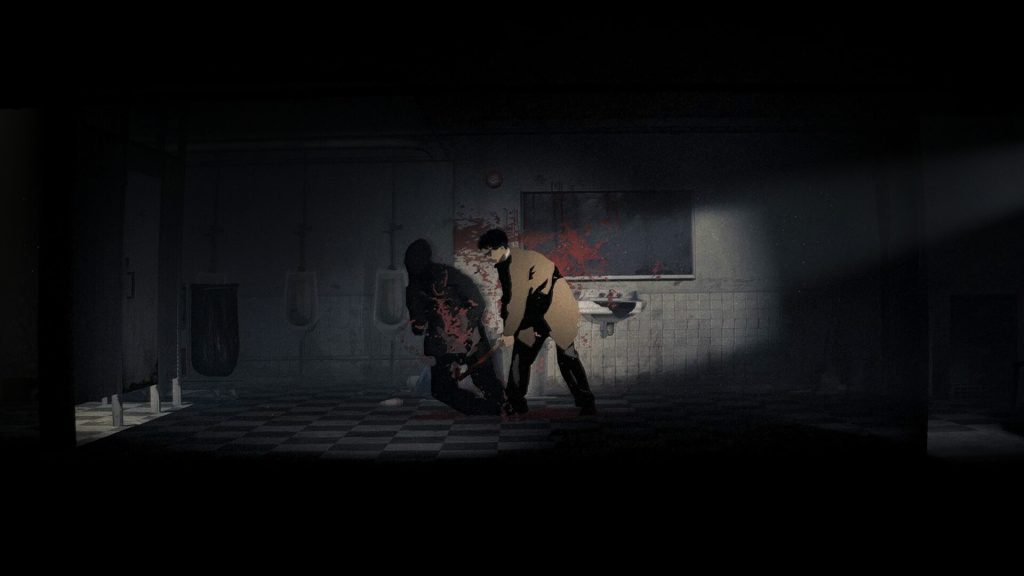
Silver Pines is a beautifully themed metroidvania. Moving forward often requires finding the right key or key items. Several of these items, like the boxcutter or sledgehammer, are also used in combat. No matter their usefulness, each item felt ordinary. These are things that you may find in a Midwest dad’s backyard shed.
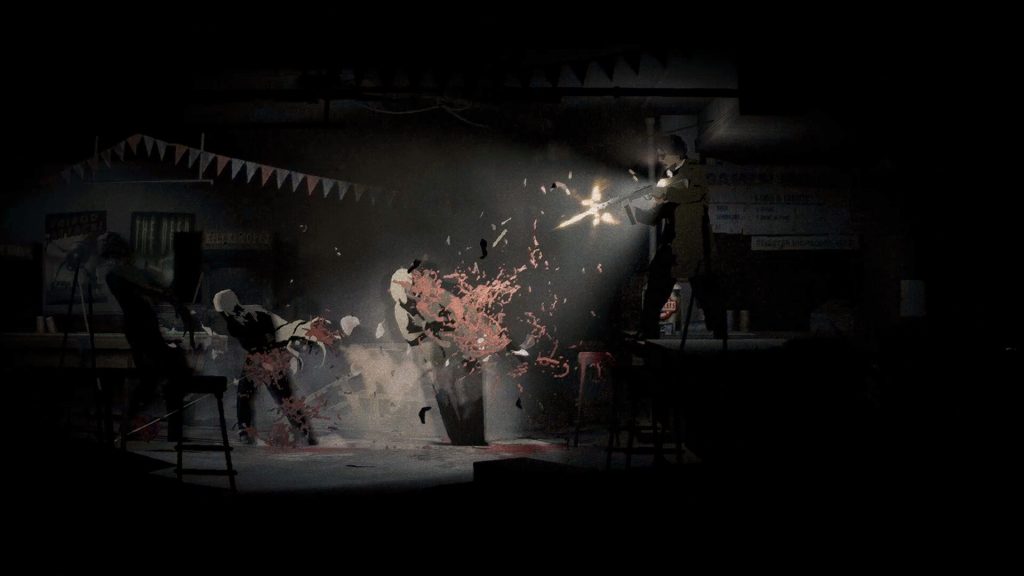
The creatures that haunt Silver Pines are light in variety but heavy with thematic significance. Players of Silent Hill and Resident Evil will feel right at home with combat that combines close-quarters melee with light ranged combat. Melee weapons require maintenance since they degrade over time. Again, the game is mostly 2D — Walker will often have the option to move “up and down” both the map and stairways, with clearly marked entrances and exits — so these fights are intimate and heavy. I was glad that healing items, repair kits, and duct tape were readily available in the game’s vending machines and spread throughout the world, as were inconspicuous green plants.
Green healing plants are not the only Resident Evil-esque element borrowed in Silver Pines. Walker’s range of weapons and their upgrades felt rather close to those found in Capcom’s zombie franchise, from multiple shotguns to Molotov cocktails. The game also features a stamina meter that depletes while running and fighting. Of course, Walker improves his stamina with coffee pots hidden throughout the world and expands his inventory (again, a la Resident Evil) with hip pouches.
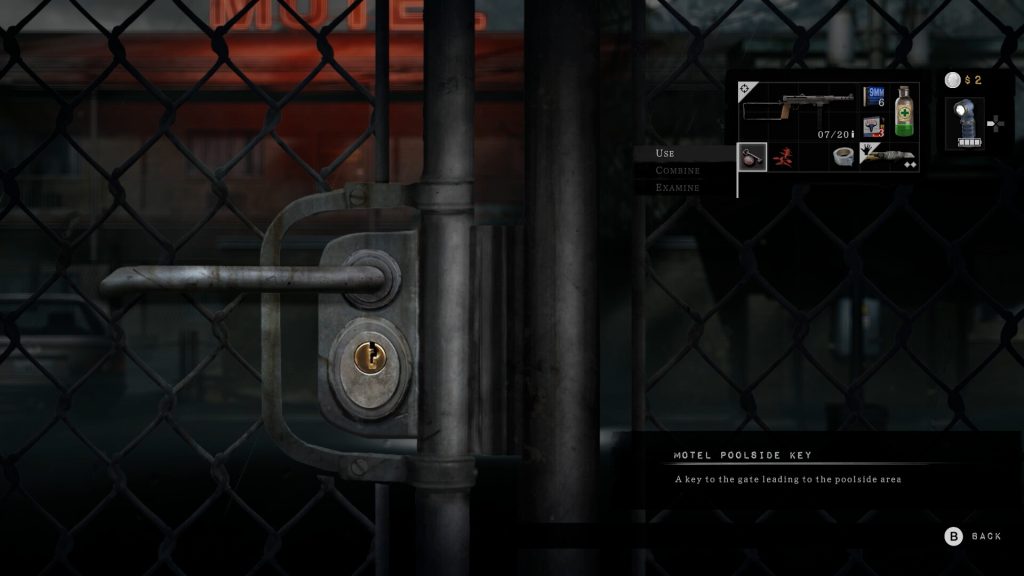
Resource management even plays a role in saving your game file. Like the ink ribbons in Resident Evil, coins are required to save at payphones throughout the world. After significant moments, these phones will also ring to give some exposition. These same coins can also be used to buy ammo and resources from vending machines.
On a supernatural note, Silver Pines tasks players with two sets of collectibles: mementos and vassal shards. The game rewards exploration and completion of eccentric side quests with mementos: strange objects embedded with supernatural abilities. When equipped, these enhance Walker’s stats, from stronger melee attacks to reduced damage. Players unlock more memento slots, meanwhile, by collecting vassal shards; collect four and gain the ability to equip an additional memento.
All 25 mementos are required for the true (third) ending of Silver Pines (the second ending requires the completion of a separate side quest that I won’t spoil here). As evidenced by my playtime, I diligently sought out all of Silver Pines’ various secrets, and I had a great time doing so.
Verge
One thing does deeply bother me about Silver Pines (and maybe surrealist games more generally): Femme characters are not center stage but rather, sadly, vehicles for the masc characters’ stories.
Don’t get me wrong: Silver Pines has femme characters, but they feel like aesthetic choices, decoration for consumption. Two femme characters in particular deserve more than the sidelines of these dark worlds. Alice Baker is our fill-in for Laura Palmer: Her disappearance plays a pivotal part in the game’s second half, but Eddie Velvet’s intertwined storyline ultimately overwhelms hers. The second character doesn’t seemingly get a name (if she did, I missed it) but is “crying woman in motel room #3.” She adds an eerie supernatural vibe to otherwise drab and ordinary moments. While her story evolves slightly by the end, there were angles clearly left unexplored.
Alice and the crying woman’s sidelining feels especially strange when the game franchises that inspired the game (Metroid, Castlevania, Silent Hill, and Resident Evil) regularly feature femme characters. Metroid stars Samus; Silent Hill 3, the recent Castlevania: Belmont’s Curse, and the upcoming Resident Evil Veronica all have their own strong protagonists. Even games that exist within the same Lynchian logic — Control and Alan Wake 2 — succeed where Silver Pines stumbles.
If we get future Silver Pines titles, I would love to see the developers embrace the stranger elements of Lynch’s legacy — ones that offer more than mere echoes. The aforementioned I Live Here Now models this approach well, centering the women of its story in a world of nightmare logic.
Final Thoughts
Despite its narrative shortcomings, Silver Pines is a terrific survival-horror adventure, perfectly suited for a handheld like the Steam Deck or Nintendo Switch. As a Twin Peaks or detective-themed metroidvania, there’s nothing quite like it. The game marries gameplay and narrative design to create a compelling experience that never lets up.
As much as I loved its Pacific Northwest, surrealist police procedural vibe, I wish that its characters and venues felt a little more unique. Silver Pines is so rich for what it does differently than other indie and legacy metroidvanias out there, so it’s a shame the game can’t quite pull away from its obvious homages. Even as an imitation, though, there’s plenty here to love.
Score: 9.0
Silver Pines, developed by Wych Elm and published by Team17, released on October 8, 2026, for PC (via Steam and Epic Games), PlayStation 5, Xbox Series X/S, and Nintendo Switch 1 & 2. MSRP: $24.99. Version reviewed: PC (via Steam Deck).
Disclaimer: A review code was provided by the publisher.

Clint is a writer and educator based out of Wisconsin. You can often find him writing about Middle English poetry, medieval games, or video games. He received his PhD in English from the Ohio State University. You can find his academic and public work at clintmorrisonjr.com.