
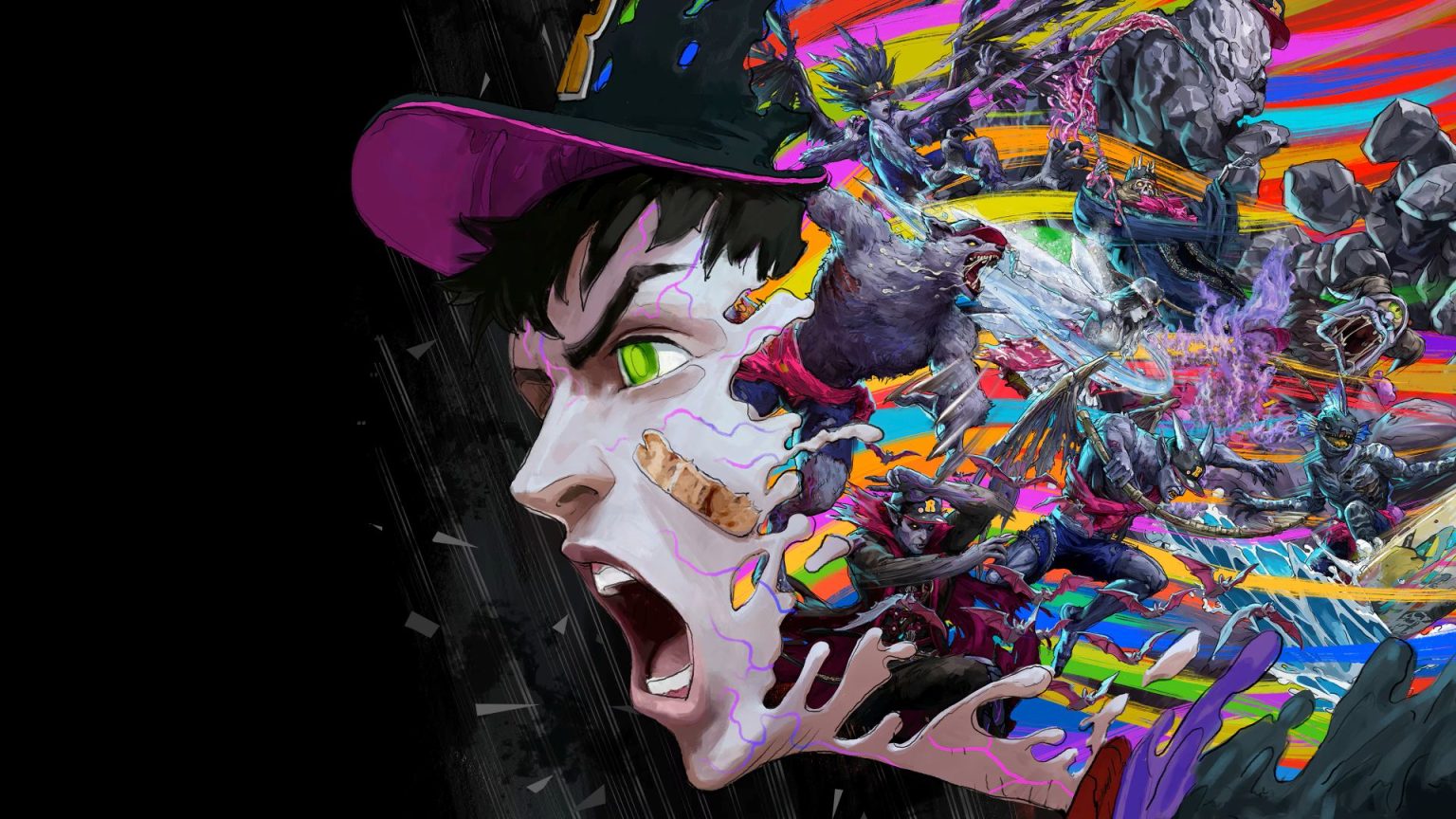

Stupid Never Dies has the art direction, music, and energy of the 2000s. An easier time. A time of skateboarding, the X Games, Mountain Dew, and Limp Bizkit. A time of skinny jeans and Vans, scribbling that pointy S on your desk, and doodling through your favorite class. Its soundtrack sounds like Avril Lavigne mixed with The All-American Rejects, and its main hub is even a mall, that dying, ancient hub of commerce from yesteryear. It’s a fitting callback to all the zombie movies and games set in malls, from Dawn of the Dead to Dead Rising.
It’s the debut game from GPTrack50, a small Osaka studio founded in 2022 by Hiroyuki Kobayashi, the longtime Capcom producer behind series like Devil May Cry, Resident Evil, and Dragon’s Dogma. Resident Evil 6 director Eiichiro Sasaki is at the helm, and Sega is publishing. Between a title that sounds like a riff on Devil May Cry and the series’ producer running the show, I expected stylish, combo-heavy action. What I got was an action RPG roguelike with more in common with Hades and Persona 5. Fresh off marathoning Onimusha: Way of the Sword, I had to readjust my whole mindset about how to tackle it.
It’s charming, colorful, and a lot deeper than it looks. It’s also way, way too long.
Love on the Rocks
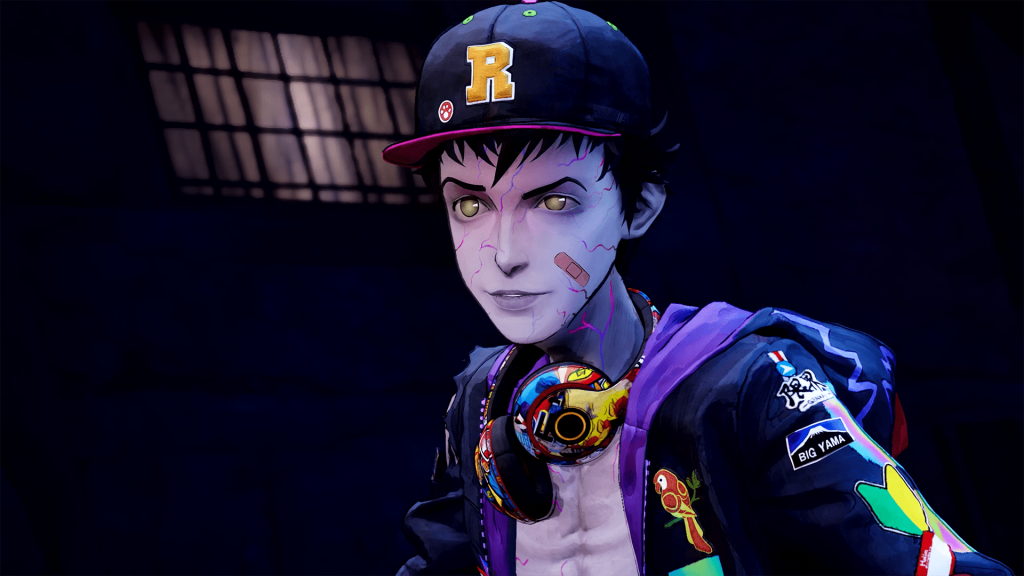
Stupid Never Dies takes place in a batshit insane dystopian future where, after a Great War, monsters rule the land. You play as Davy, a deserter zombie at the very bottom of monster society who falls in love with Julia, a college student who froze to death in the mall freezer she hid in to escape the same war. He forms a one-sided, completely unhealthy “relationship” with her corpse, and Dr. Frank Steiner (get it?), a cyborg old-dude genius who explores the monster worlds via toilet, swears Davy can bring her back if he dives deep enough. The endgame? Kill and eat KOM, the King of Monsters.
When Davy’s new crew hacks into Julia’s phone, Davy mostly wants to know if she had a boyfriend. Instead, they find a devastating final message, and from there, her phone becomes a diary of videos, voice memos, and social media posts that flesh out her backstory, albeit in… not the best way. And without spoiling too much, there’s a lot more to Julia than a girl in a freezer.

That crew is where the game started growing on me. Bessie runs the mall’s burger joint, drives Davy back to the surface on her motorcycle, and is the glue that holds the team together when things go to shit. Goyle is a forgetful, clairvoyant gargoyle, and Acelino is a were-Chihuahua. Sorry, a “Chihuahua man.” You watch these misfits become a real team through little things, like Polaroids of Davy slowly piling up in the room of the companion you have the most beef with early on. Davy grows, too, from creepy, stalkerish zombie to a competent, goofy, slightly dumb guy the team depends on. (Hey, he’s decomposing. I don’t hold it against him that much.)
At its heart, Stupid Never Dies is a coming-of-age story and a teenage love story with zombies and monsters, pretty damn reminiscent of 2013’s Warm Bodies mixed with a classic creature feature. With extra steps. A lot of extra steps. The bonkers plot doesn’t have much profound to say, but it’s charming in a cheesy, old-school horror movie way.
Doodles in the Margins
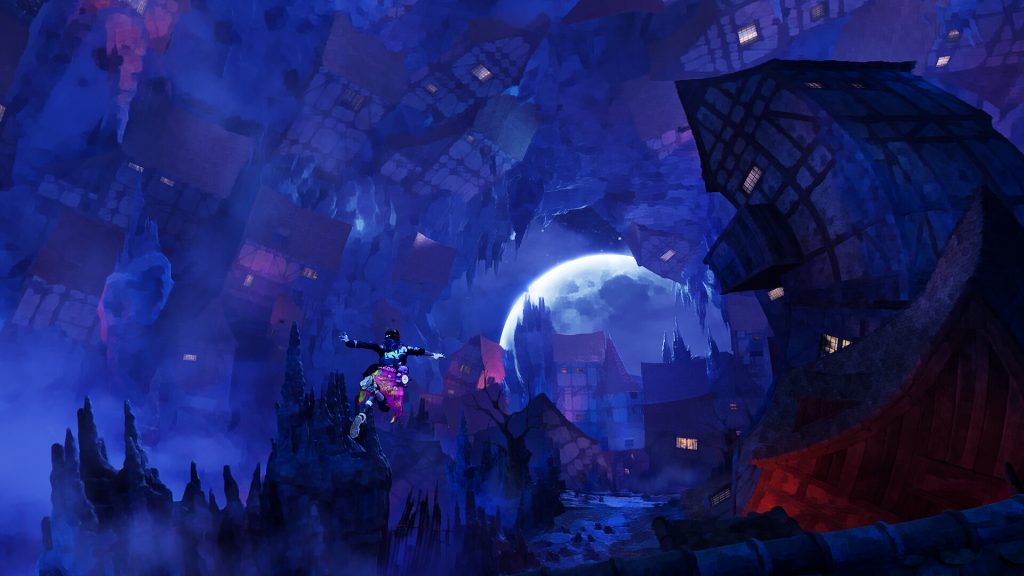
The audiovisual design in Stupid Never Dies is solid. The whole game pays homage to horror movies and the monsters they made famous, from a Transylvanian vampire realm to chain-filled dungeons, all with a pop-punk paint job. Most of the dialogue plays out in animated, Persona-style conversations full of reactions, and the lore cutscenes are a collage of charming yet crude notebook doodles, like the margins of your old notebook came to life.
The user interface is nice, too, down to little touches like the top-right corner of your screen filling up with stickers as you power up. And the music nails the vibe. Davy and Julia sing both the opening and ending themes, and a DJ feature lets you mix up your battle music as you explore.
Zombies Don’t Dodge
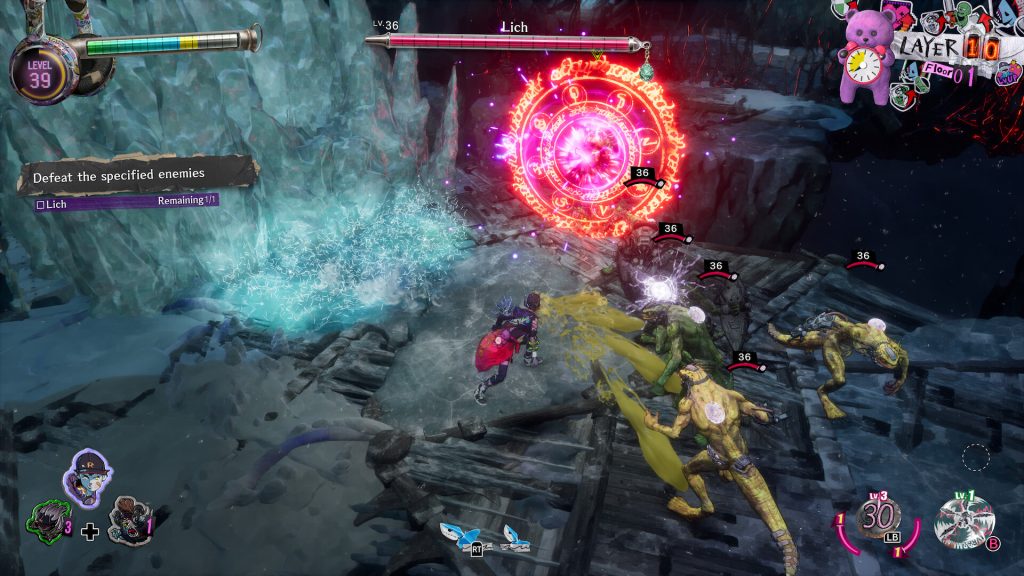
Down in the dungeon’s miasma, Davy drops the shamble and gets back the spunk of the rebellious teen he used to be. But combat feels a little… weird at first. The animations are smooth, and there’s real weight behind the attacks, but the defensive options feel limited, at least out of the box. Your one defensive button, the Stupid Parry, is really just a dash. Davy absorbs a hit and takes recoverable damage, and if you attack right after, he retaliates with a Stupid Impact move that changes with your style. As a lich, it summons meteors. Land one on a yellow-glowing enemy, and you’ll expose its core.
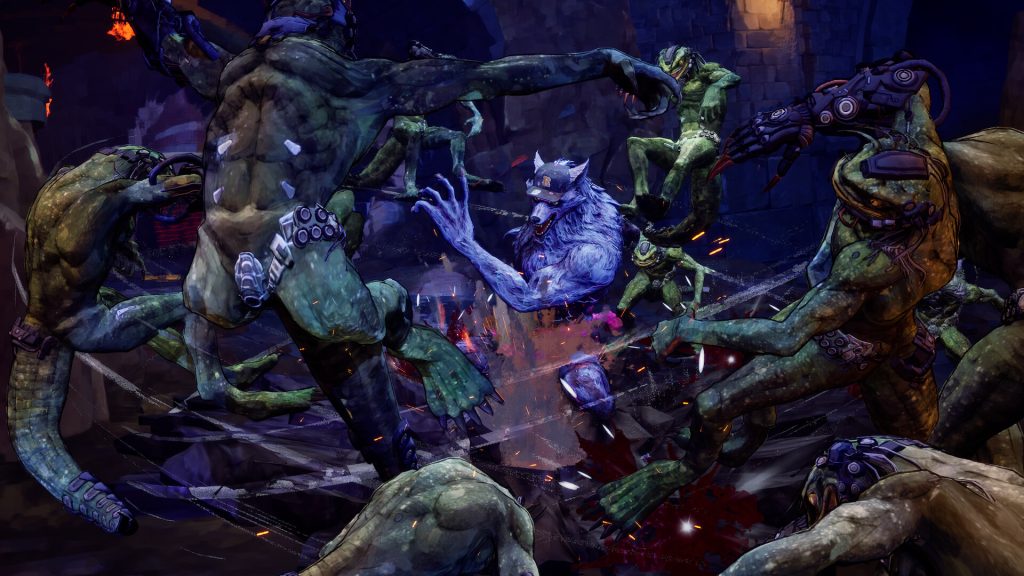
That’s where biting, aka Style Eat, comes in. It’s how you heal and how you steal powers. Attacking or parrying fills your bite meter, represented by two animated shark icons, while chomping enemies restores your energy, the game’s version of health. Bite a weak enemy’s core for a one-time Instant Skill, usually an element-based projectile. Bite an elite enemy, and you take its powers Kirby-style, becoming a werewolf, a harpy, and more. Davy gets this power from a phoenix “egg,” and the phoenix himself, Phoenix Zaza Hotfeathers, a perpetually dancing and smiling Black dude in gold pants, later grants you your “Davy Burst” — basically, a Devil Trigger.
My biggest combat gripe by far with combat in Stupid Never Dies is the lack of a lock-on. With multiple enemies attacking in different ways, some of whom shoot projectiles, it’s not always clear what to parry or what you’re hitting. You get lost in the mob. More than once, I died trying to bite something to heal, only to whiff or chomp an enemy that doesn’t heal you at all, like a skeleton. There’s nothing to eat!
You Are What You Eat
There are 11 styles in all: Davy’s default Zombie style plus 10 more you acquire from elite enemies. Each has its own combo, stats, and style skills on cooldown, from crowd-control explosions to laser beams. Honestly, the Zombie style is the one I enjoyed most, a hard-hitting jack-of-all-trades, followed by the Demon, Cyclops, and Snow Fairy. But elite enemies can make or break a run, since legendary styles, the highest tier, don’t come around often.
I have mixed feelings on the combat, but I lean positive. Part of me wishes each style had more than a basic combo. Think of it more like Hades. Your basic combos stay the same, but they pick up slight variations as you absorb stronger enemies, and you can swap between three styles at a time. I also love the game’s take on a Devil May Cry-style ranking meter, which boosts your item drop rates the longer you chain uninterrupted attacks. And, if the action ever gets too repetitive, an optional setting called Go Nuts Mode helps you speed through some of the game’s more sluggish parts. It makes Davy “strong as shit,” dropping most enemies in one or two hits, though the game gets extra easy as a result.
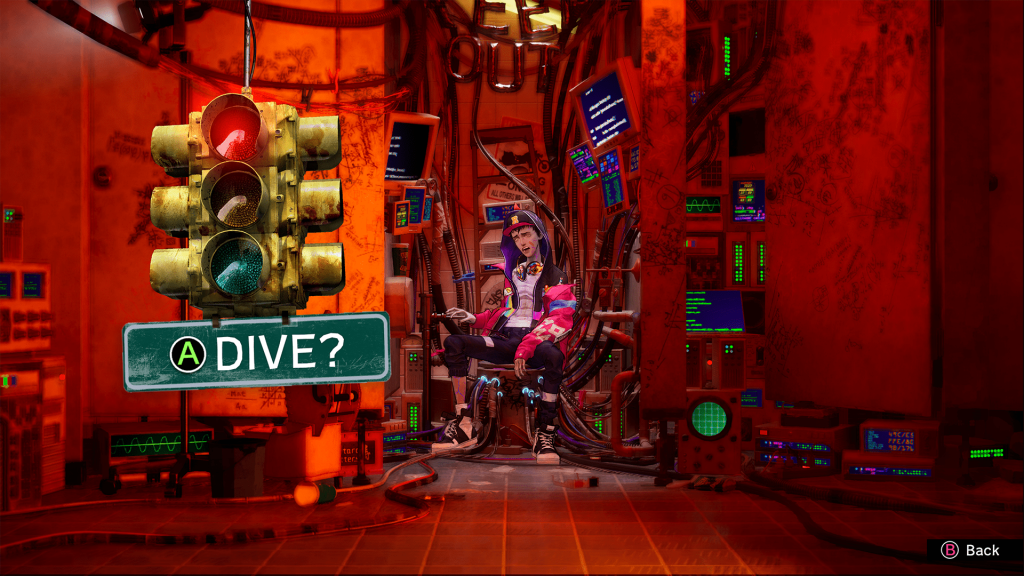
Each layer of the dungeon in Stupid Never Dies is basically its own dimension and monster world, huge and packed with hazards and interactions like cannons, giant saw blades, and teleporters. Think Tartarus in Persona 3 or, better yet, Mementos in Persona 5. The loop gives you plenty of choices. Skip floors for tougher enemies and faster EXP, or clear every floor for rewards. Fight a boss underleveled for materials, take on floors with penalties for bonuses, or skip the boss entirely.
Meanwhile, TickTock Teddy, a teddy bear clock, counts down each dive, and when time’s up, enemies go berserk and your energy drains. It’s tense and sometimes oppressive, so I was thankful when the mall’s gelato shop let me extend it. You even earn new teddy designs, and my sequined disco ball teddy was so cute. The layouts start to feel repetitive for a while, but the game keeps feeding you more lore, new worlds, and new monsters to eat.
Watching the Numbers Go Up
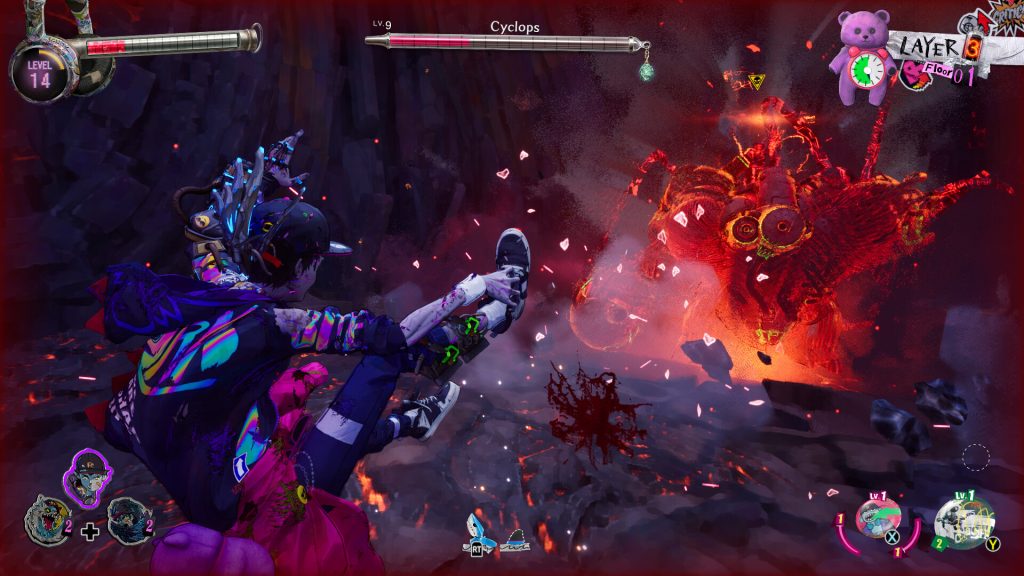
Stupid Never Dies also has unexpectedly deep RPG systems. GPTrack50 built the game around what it calls “blazing fast growth,” and the fast growth is there for sure. It just isn’t explained very well.
Every dive starts Davy back at level 1, but the enemies you’ve beaten on past dives help him level faster each time. Early on, leveling is slow. By the end, you can finish the first stage at level 20. Level-ups usually earn you “receipts,” roguelike pick-one-of-three upgrades that only last for that run, though the game’s description just says you get them “on certain levels,” which is vague, to say the least. Chests drop them, too.
Then there’s OT Gear: cybernetic parts that Acelino installs on Davy. It’s here where most of your defense actually lives. There are parts for a classic hard block and parry, a bubble shield you can move in, and blades that spin around you, but every defensive part costs a slot you could’ve used for rocket launchers or extra attacks. (I opted for offense. Clearly.)
Each part rolls random stats, like loot in Diablo or Nioh. Same combos, same weapons, different stats. You also collect “presents” for Julia (ew) that boost Davy Burst, and every boost comes with a gross power-up screen that pastes their heads over other people’s photos. Real stalker-type shit.
Honestly, keeping track of all the numbers going up got overwhelming, and the tips screen didn’t help much, so I mostly shrugged and went with the flow. Even so, I can tell so much effort went into making these systems rewarding, and most of the time, the game juggles them well.
My Princess Is in Another Dimension
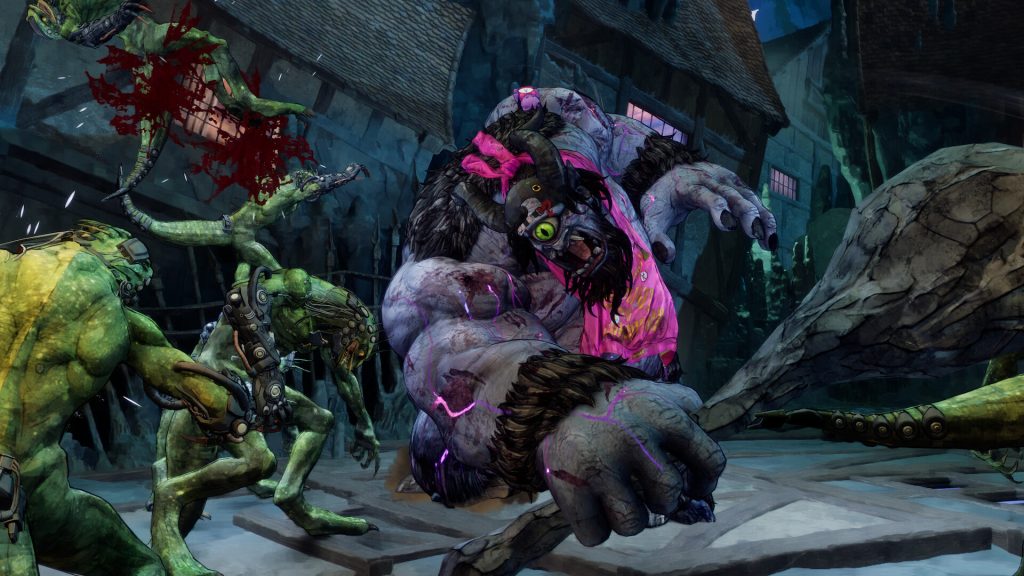
Stupid Never Dies has one serious flaw, and it’s the pacing and bloat. Far, far too many times, the objective was right in front of me, only to get interrupted or delayed for some random reason, and then I’d have to start over from the beginning. By the 20-hour mark, I’d unlocked every style, seen every monster, and faced most of the bosses, and tedious missions were still dragging me back into the dungeon for some item this ever-expanding plot needed. As soon as I got it, I was back at square one, and all that blazing fast growth was gone.
I wanted so badly to face all the KOM “Generals” in one go, collect all the items in one go, and find the person I’m supposed to find in one go. Instead, I got sent back to the surface time and time again, which padded the game out an extra 10, maybe 15 hours. And those roadblocks got more frequent right as the story hit its most exciting twists, sucking all the wind out of my sails. Every time, I’d think, “Oh great, my princess is in another fucking castle… again,” before getting forced into the passenger seat of Bessie’s motorcycle for the ride back up to the mall for a story cutscene.
The grind made it worse. I never seemed to earn enough to upgrade my receipts, so I’d dive just to farm resources for another shot at a stubborn boss. Nothing was more frustrating than grinding to the bottom, stacked with rare power-ups and overleveled, only to get eviscerated by a new boss’ crazy attacks. That’s where the Stupid Parry feels useless. It soaks so much damage, especially against multi-hit attacks, that if your bite meter isn’t built up and your build isn’t ready for it, you’re in trouble. Even scrap, a currency I hoarded for 20 hours, only became useful once I finally unlocked top-shelf equipment. By then, I was just ready for it to be over.
Final Thoughts
Stupid Never Dies should be called Stupid Never Ends.
After nearly 30 hours, it’s still a fun action game with accessible combat and a deep enough RPG system to add some complexity. There’s plenty of replayability thanks to its roguelike structure, along with a strong degree of player choice and freedom… right up until the game forces you to start over for arbitrary reasons. That pacing drags it down heavily, and even 11 styles couldn’t keep the formula from going stale. I wanted to feel warm and fuzzy inside by the time I finished. Instead, I felt exhausted and glad it was over. It was a pretty fun road trip that was just a bit too long, with too many stops.
Still, I appreciate GPTrack50 for making such a colorful, unique game that doesn’t take itself too seriously. It’s held up by its diverse cast of monsters, former humans, and kinda-humans, and it’s another great “spooky, not scary” game, perfect for anyone looking for something like that.
Score: 8.0/10
Stupid Never Dies, developed by GPTrack50 and co-published by GPTrack50 and Sega, released on October 21, 2026, for PC (via Steam) and PlayStation 5. MSRP: $49.99. Version reviewed: PC.
Disclaimer: A review code was provided by the publishers.

Donovan is a lifelong gamer with a love for fast-paced, single-player action games—especially Devil May Cry, Metroidvanias, indies, and action RPGs. He’s also an “advanced scrub” at fighting games and will play just about anything fun. Donovan is passionate about seeing more diverse characters and creators in the industry—or at least better hair options for Black people. With over a decade in journalism, he joined The Punished Backlog in 2023 to write more about what he loves. Follow him on Twitter and Instagram @dono_harrell.