
As one of several Resident Evil fans at The Punished Backlog, I was especially excited for director Zach Cregger’s cinematic take on the franchise. I was caught off-guard with the twists and quality of his 2022 film, Barbarian. And while I haven’t seen his follow-up to that, Weapons, I’ve heard nothing but great things about it.
I expected his newest movie to finally be the definitive adaptation of the franchise, breaking the curse of mid live-action and digital adaptations of this long-running zombie rollercoaster.
So, did it break the series’ curse? After watching Resident Evil twice, it looks like I’m going to have to keep waiting for that dream adaptation. While the film had some genuine strengths, the execution of its premise and its abrupt ending ultimately pissed me off.
But before we get too deep into this, this is a spoiler warning for basically the entire film.
Creepy Camera Angles
Despite loving the Capcom franchise, I didn’t mind that Cregger decided against making a one-to-one adaptation of the games’ storylines, and I don’t think it necessarily needed to adapt iconic characters like Leon Kennedy or Jill Valentine. I’m not a complete hater, after all.
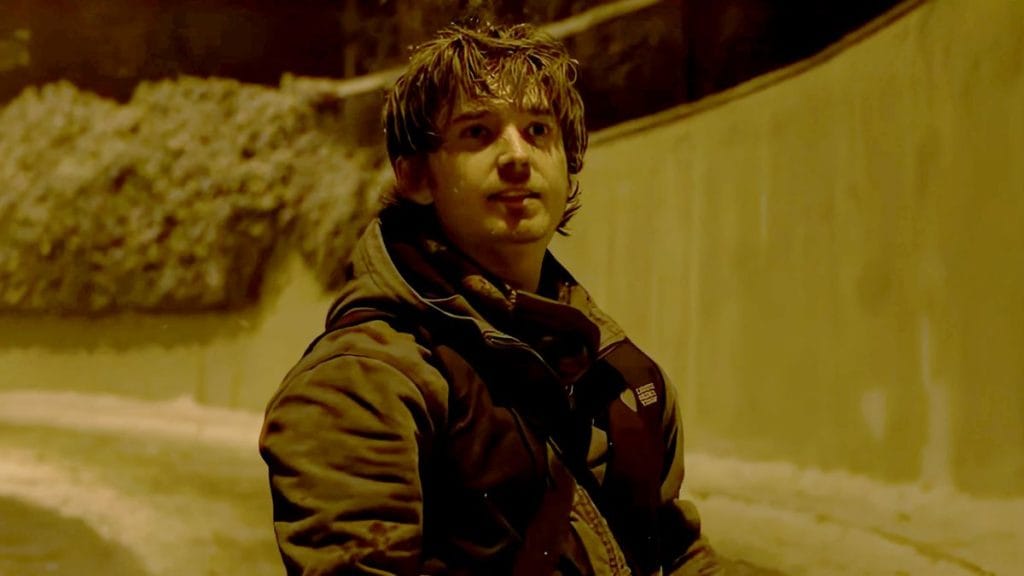
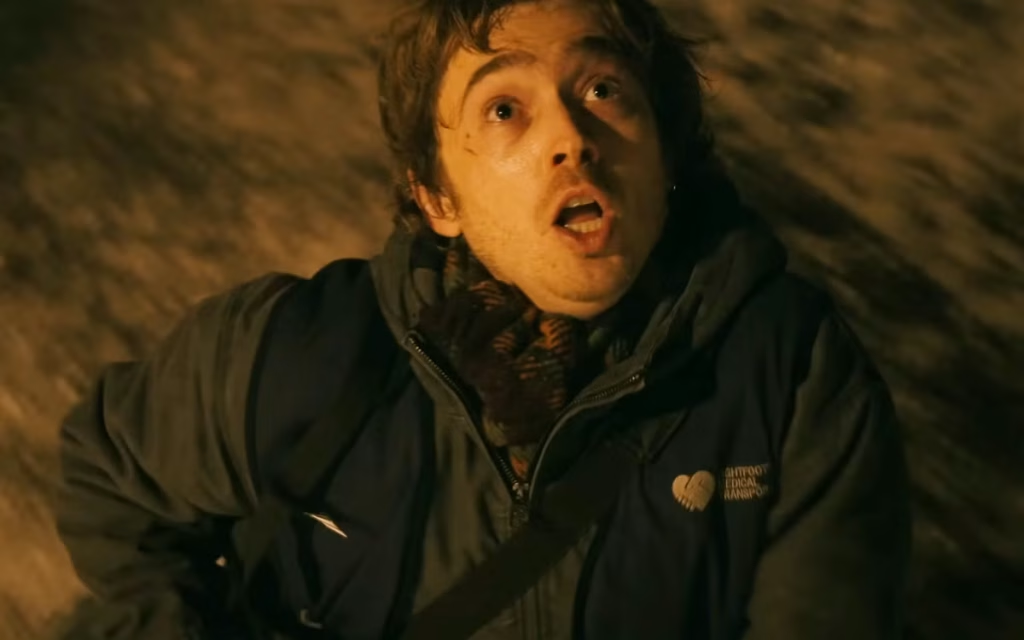
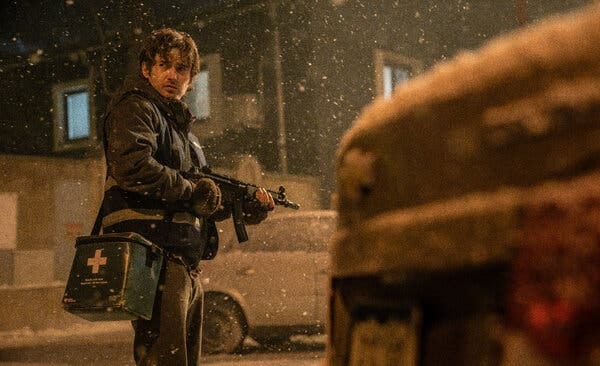
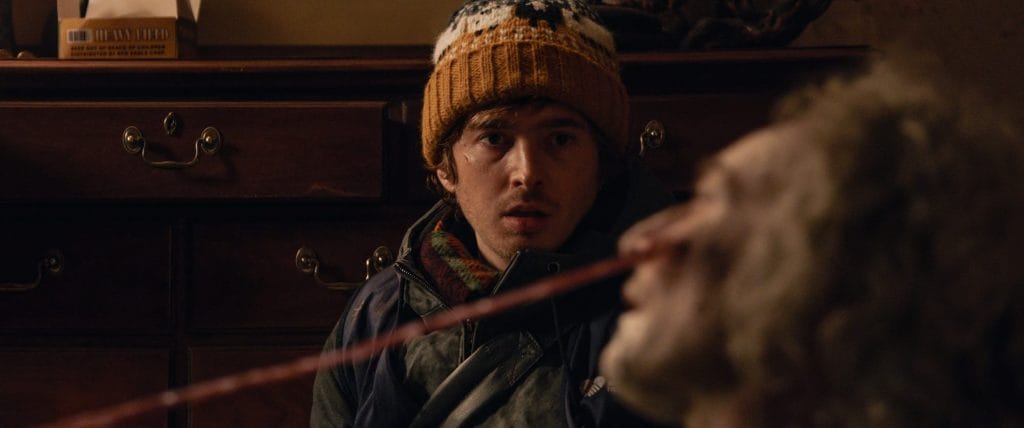
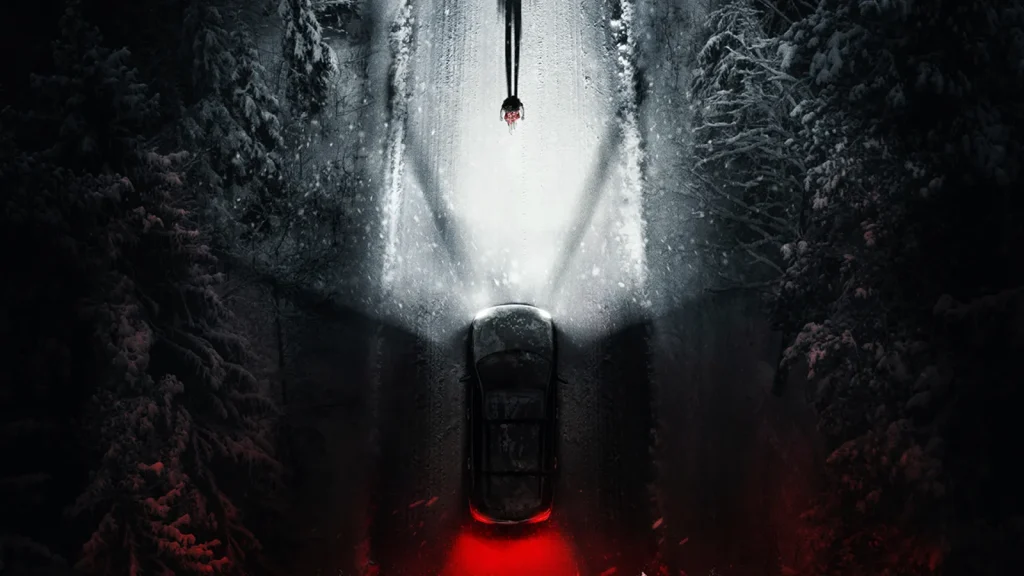
Instead, we follow Bryan (played by Austin Abrams), a courier transporting organs on a snowy night that quickly turns to hell after he, in true Resident Evil fashion, runs into a strange woman on the road. Shit immediately hits the fan from there and cascades into an absolute trainwreck.
While he figures out how to navigate the escalating terrors, Bryan struggles with many of the survival-horror game challenges I’ve had while playing through the Resident Evil franchise, with many series mainstays along the way. We even get to see Bryan scrounging for ammo, finding a typewriter, and ignoring First Aid Spray and Green Herbs (he really needed those). We got guns and inventory management. We got zombies and mutating monsters.
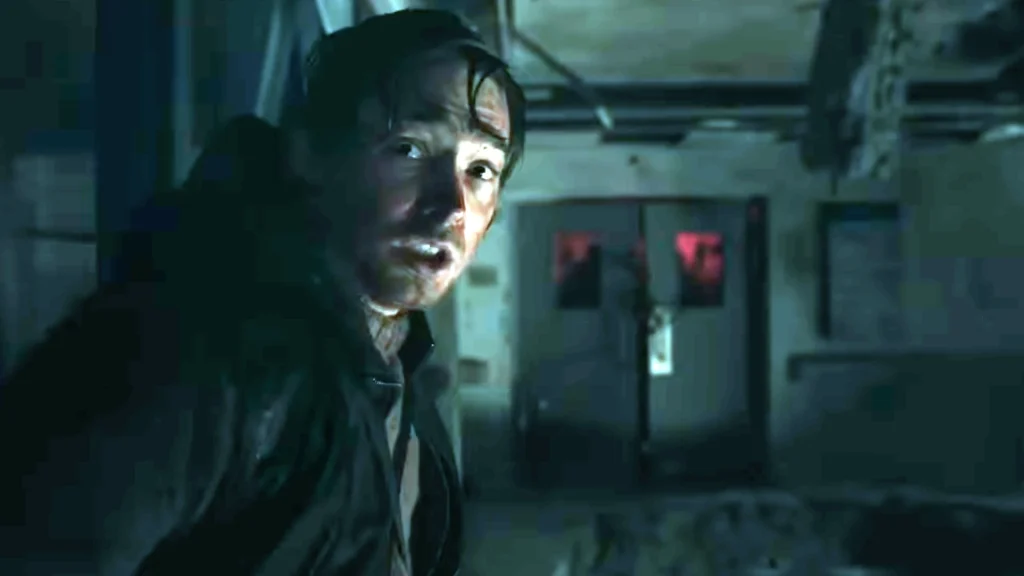
The film even mimics the structure of the games: starting with a car accident, leading to a small house with evil residents. There’s multiple dark cramped spaces that lead to a shitstorm in a city. We spend time navigating an unnecessary sewer level. The whole thing even ends in a lab, as nearly every game in the franchise does.
To say this ending felt rushed would be an understatement. I’d say it’s unfinished.
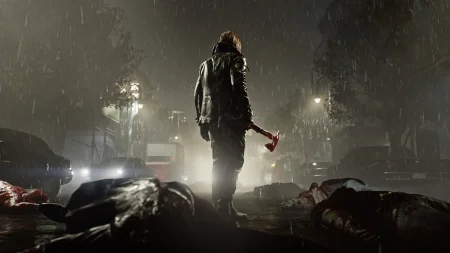
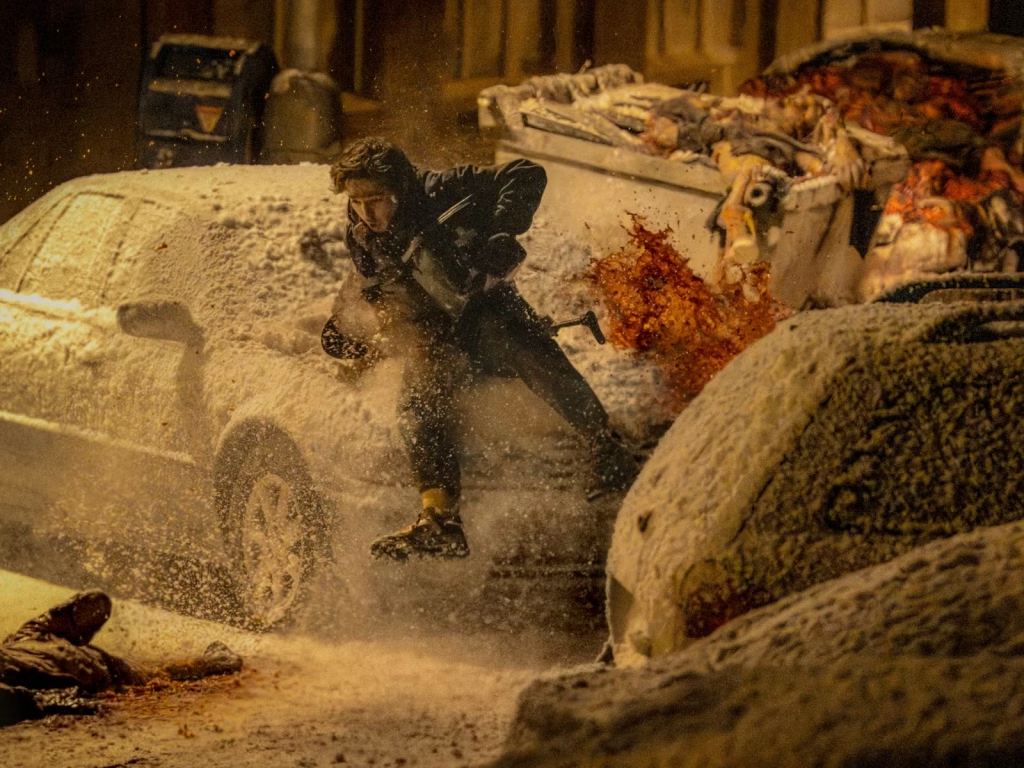
One thing I especially liked about this movie is Dariusz Wolski’s cinematography. The camera mostly hovers over Bryan’s shoulders and follows his gaze in third-person shots reminiscent of the recent Resident Evil remakes. Occasionally, the camera switches to first-person shooter angles during the more tense, intimate moments. This creates powerful visual storytelling and spectacle. Even though it didn’t snow during the game’s original outbreak, the constant visceral color contrast with the weather made me think that maybe it should have.
I haven’t even gotten to the scares yet. There were some genuinely terrifying moments that got a few jumps out of me, especially in the early parts of the movie.
I’m not the biggest fan of jump scares. One choice Cregger makes that I wish more horror movies would emulate, though, is to just let me watch the hideous, unsettling thing relentlessly making a beeline to a character as they watch on, scrambling to figure out a plan. Those visuals pull genuine, sleep-with-the-light-on fear out of me.
These positive aspects exist, and they’re nice. But that’s all the positivity I can muster for this film.
Do You Really Feel Like You’re Watching Resident Evil?
I knew I wasn’t getting a movie where the heroes survive and ride off into the sunset in a helicopter away from the nuke destroying Raccoon City. But I also wasn’t expecting Cregger’s avatar of a relatable, “average” gamer’s experience with the Resident Evil series to manifest into a cowardly, incompetent, mediocre white man stumbling his way from one horror set piece to the next.
I don’t think Cregger fully achieved this vision. The underlying issue is that the movie is unsure if Bryan is supposed to represent the “average” person’s experience while playing a Resident Evil title, or exemplify what an “average” person would do when dropped into a Resident Evil-like situation. This results in a disappointing, uneven experience that attempts to subvert the franchise’s tropes through excessive humor and a bumbling protagonist who doesn’t save the day, and literally becomes the monster he’s running from instead of blowing it up with a conveniently placed rocket launcher.
The film insists that an average gamer’s experience is like that of Bryan, who “sucks with guns” (one of many Bryan-isms). There are only two types of humans in this movie: the “competent” ones, one of whom is great with guns, who are quickly dispatched unceremoniously off screen, and the humans dying on screen, all of whom are either turned into zombies or brutally killed after making strange, questionable decisions.
Mixed Messages
Humor overwhelms Cregger’s apparent reverence for the games and their ability to convey a sense of dread, suggesting something more cynical: There is no level of competence that could survive Raccoon City. Survival shouldn’t be taken seriously. After all, it’s based on a silly video game series with a silly premise starring silly characters with their silly one-liners. Anybody would act silly when subjected to this level of psychological stress. This was still the message even though the released cut has reduced jokes after test audience complaints.
Cregger himself said Bryan is an idiot and intentionally wrote the character this way. Based on the critical reception, that decision somehow resonated with people. Critics have lauded the incompetence of the film’s protagonist. The overwhelming sentiment is that this movie provides the definitive recreation of the Resident Evil experience.
But I have issues with that assessment. I think that critical praise for Bryan as a protagonist is fueled by two primary things. One, the bar for Resident Evil adaptations is far beneath the floor into the grueling sewer levels. And two, insufferable fans’ responses to the trailers created preemptive outrage to the point where Cregger said he felt like he was on an apology tour while promoting the movie. I think that created a general bad vibe that colored expectations going into the movie premiere.
After watching this movie twice, I think Cregger might need to go on a new apology tour.
Now that the film is out and isn’t entirely terrible, I think the pendulum of public and critical reception has swung to the opposite extreme to combat fans’ criticism, both premature and legitimate. The evidence is blatant, with numerous reviews directly addressing gamers, encouraging them to see the film despite Cregger’s untraditional take. I think people are turning a blind, gigantic, yellow mutated eye to the movie’s flawed execution of its premise.
A Weakness Fantasy
I can easily concede that the adaptation captured the mechanics of the games well. But if Cregger’s goal was to truly capture the experience of playing through the series, it only captures a fraction of it. Bryan is the walking embodiment of a YouTube or Twitch playthrough with overly exaggerated reactions.
A Resident Evil game experience is more than the survival horror tales of you, the player, struggling with your own incompetence in a stressful bioweapon outbreak. They’re also boulder-punching, slo-mo back-flipping, roundhouse-kicking power fantasies. The missing ingredient is in the title of the genre the franchise pioneered: survival horror. The design intent is that you improve and overcome the overwhelming odds.
One obvious analog I can find to Bryan is Resident Evil 7: Biohazard‘s protagonist Ethan Winters, an everyman who didn’t have training of any kind forced into one horrifying situation after the next. But even as Winters’ story continues, he slowly, consistently builds up a level of skill to overcome the supernatural threats he faces. He has concrete motivations to face these horrors and goes through a personal journey scored by several familial tragedies.
Bryan says he sucks with guns, and he does burn through a lot of ammo, but the plot simultaneously demands expert critical shots at key moments. And Bryan’s moment of emotional growth and reflection in the form of a heartfelt voice memo gets interrupted for comedy. He does not have the opportunity to improve in any meaningful, believable, or relatable capacity on screen before the end of the movie.
Even Ethan is allowed to evolve to the point he can pilot a mech made of scrap metal by the end of his journey in Resident Evil Village. By comparison, after wasting so many bullets, Bryan can finally shoot a stationary broomstick reinforcing a doorway.
A Shallow Story
Merely capturing the “feeling” of playing the games isn’t enough for me, even if it’s the main thing this adaptation excels at in comparison to the other adaptations. A great video game movie adaptation doesn’t run on gameplay vibes alone. Its characters ideally should have compelling motivations, a decent story, a reason to use this feeling to propel the main narrative forward. This is a movie after all, not a game.
There isn’t much of a narrative to begin with in Resident Evil. Bryan needs to take the green box from point A to B. Padlocks, monsters, useless cars, and incompetent NPCs get in the way and scare him toward point B. He becomes a monster himself because of the collective cast’s incompetence.
I’ve been hungry for more Resident Evil media that explores the perspectives of the tragic survivors attempting to navigate the horrors of the Raccoon City outbreak, on a street level, only to get bombed for their efforts. There’s so much potential there. There are many aspects of society to explore during an active apocalypse, so many vantage points, so much commentary to make on the functions of Raccoon City society and how it breaks down during a collapse. All of it was right there for Cregger and co-writer Shay Hatten to explore.
But they didn’t.
The feeling of Resident Evil games isn’t this horror comedy, Evil Dead-like vibe. While the plots of the games have never been the best — and some have funny moments, intentional or not — at least they had plots that tried to say something about terrorism, the futility of war, government cover-ups, and the dangers of companies with unchecked power.
I watched this movie a second time because I thought I was losing it after seeing the critical reception. We couldn’t have seen the same movie, I thought. But I only realized something on the second viewing. We didn’t get the story about the action hero that rises to the occasion and survives; we got fanfiction of one of the many unfortunate victims we learn about in the franchise’s bloody notes, voice recordings, and journals. Even those scraps of a story have a stronger narrative and more compelling characters moving the story forward when compared to Cregger’s adaptation.
Monsters Mashed
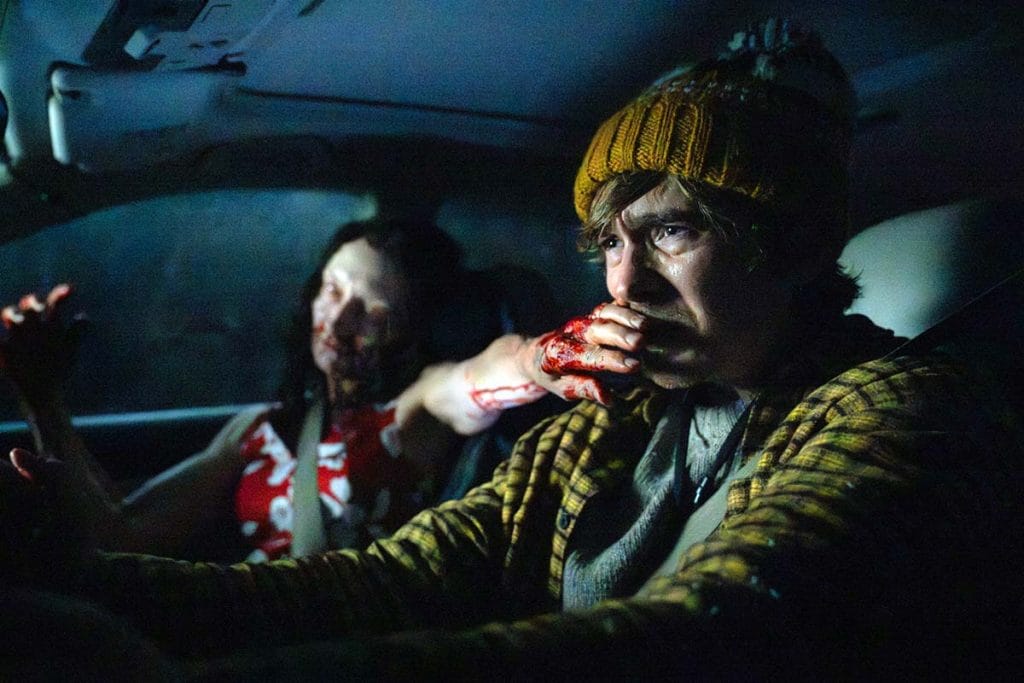
When it comes to the co-stars of Resident Evil — the monsters, of course — I also had mixed feelings. The monsters, and their wormlike tentacles, have genuinely horrifying moments and designs at times. They behave something like a mix between Resident Evil 4’s Ganados and the Molded Winters faces from RE7 and RE Village. There’s even an acid-spewing Boomer zombie reminiscent of Left 4 Dead that melts an elevator Bryan rides. Admittedly, that was another pretty cool sequence.
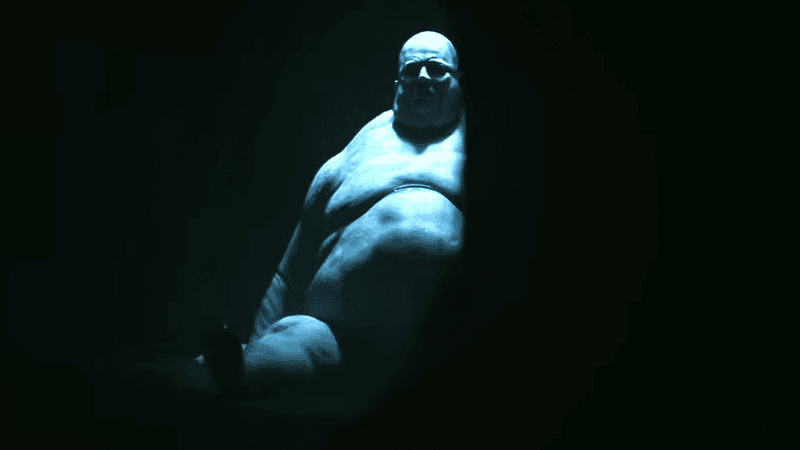
In another Resident Evil tradition, there’s a stalker enemy haunting Bryan for the entirety of the movie. It’s a shame that instead of a tall guy in a snazzy coat, we get a goofy, janky, CGI sentient Katamari Damacy ball made of grafted, mutated human limbs. When it appeared during the worst moments in Bryan’s journey, limbs flapping, I cackled so hard, I couldn’t tell if I was supposed to laugh or feel horrified.
The mutant zombies in this adaptation evoke the body horror imagined by John Carpenter’s The Thing and David Cronenberg’s The Fly more than the terrors the viruses create in the Resident Evil games. When the movie ended, I felt like I got a mid follow-up to The Thing masquerading in a Resident Evil skin. I got The Thing 3: Thing in the Big City.
Dreadfully Dumb
Additionally, the movie’s logic surrounding its monsters, even with a clumsy expository dump in the middle of the movie, was inconsistent. That incongruity diluted the dread that the games master, the thing Cregger seems to love.
In one of the best visual sequences of the movie, Bryan runs down an empty street while zombies chase him from the rooftops, plummeting and splattering all over the road. But they don’t revive. The character notes this as though it might become relevant later. But it doesn’t come up again.
Where the hell were the rest of the zombies on the ground while Bryan whimpered down that street? This version of Raccoon City is surprisingly empty and quiet with only one crowd on the streets to show for its zombie mutant apocalypse. They’re all taken out by one character. Compare this to the opening moments of Resident Evil 2, where you’re immediately flung into burning streets overflowing with zombies, forcing you to run or die while wasting your ammo.
Bryan was able to walk and run inexplicable distances with only the Katamari ball and a few stray zombies in the way. We get evidence, and blatant exposition, that the zombie outbreak just happened a few hours earlier. But there are so few to be found on the ground of a metropolitan city. I call bullshit.
A few moments earlier during the franchise’s traditional annoying sewer portion, Bryan shot up scores of infected rats, somehow managing to liquefy them all with ammo to spare. But Bryan notices the liquefied rats start piecing themselves back together, mutating into something before he gets the hell out of the sewer. Why couldn’t the liquefied zombies on the street mutate together like the rats did?
If you’re going for the feel of Resident Evil, rationing your ammo should feel like a matter of life or death, right? Bryan shouldn’t have had enough ammo to survive all those rats, let alone with bullets to spare — even with Resident Evil 5′s ammo capacity upgrades. The movie makes a big deal to show the scarce bullets for the handgun and the double-barreled shotgun but neglects the details for one of its most powerful weapons.
A Missing Menace
Even though it’s a Resident Evil staple to have a weak third act ending in an Umbrella lab, the threat of the Umbrella Corporation is largely absent. Its on-screen presence amounts to one security guard that gets cut in half off screen, a goofy exposition scientist that becomes part of the Katamari ball, and a gaggle of incompetent laboratory scientists. All of them die. Even if Bryan fully stopped “sucking with guns,” there would be nothing to shoot by the end.
If the goal was to capture the feeling of playing Resident Evil games, Umbrella wouldn’t be reduced to a punchline, even though it’s cartoonishly evil. Its agents are the deep state pulling government strings, selling bioweapons to terrorists. They ruthlessly experiment on innocent people and kill whatever doesn’t serve their interests. Umbrella is Amazon, UnitedHealth Group, and The Coca-Cola Company combined.
I’m shocked he didn’t slip on a banana peel for one last giggle out of the audience.
Once we got to the end of the movie in its rushed 95-minute runtime, Bryan meets Umbrella scientists. I was tempted to cut them some slack since the COVID-19 pandemic showed me that the zombie trope where somebody hides the fact they’ve been infected is quite valid. But still, why the fuck would Umbrella scientists just let any stranger into their top-secret lab?
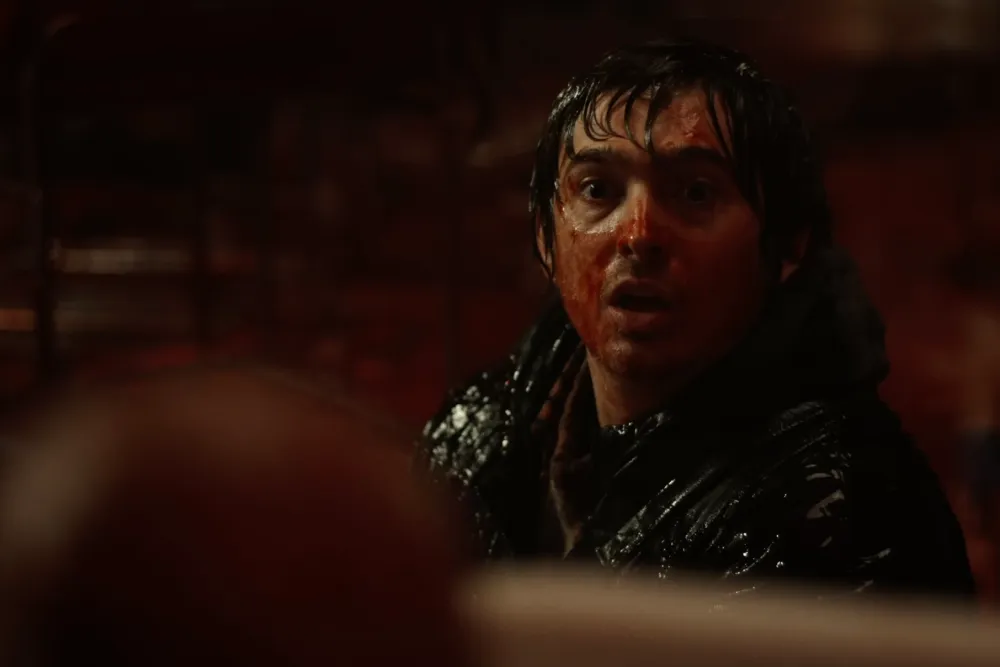
The scientists even remark that Bryan is lucky to be alive after surviving everything to get there, leaving each fight covered in the bloodspatter of the infected. It’s a truly baffling decision that the movie offers no justification for. Hell, I would’ve accepted that they needed a sample of someone infected by the virus to test it on to see if the cure they were working on even works.
The lab sequence ends in a frustrating body-horror slapstick comedy routine that overshadows the tragedy of Bryan succumbing to the virus while begging for the cure just out of reach. And that’s it. That’s the movie. Bryan, now a hideous monstrosity reminiscent of Resident Evil 2’s William Birkin, roars at a looming helicopter. Roll credits. I’m shocked he didn’t slip on a banana peel for one last giggle out of the audience.
I guess that’s another franchise tradition: an ending with a hideous blob monster covered in eyeballs. To say this ending felt rushed would be an understatement. I’d say it’s unfinished. It made me want a refund.
Final Thoughts
Resident Evil is yet another tragically flawed adaptation of a franchise I love so much. It’s saved only by its strong first half, expert cinematography, a few cool sequences, and successfully capturing some of the feeling of playing the games.
But honestly, I’d rather go watch the Milla Jovovich adaptations again. And, dare I say, I’d sooner watch the abysmal Welcome to Raccoon City adaptation again. I’d even suffer through the CGI movies again. I’d watch all the adaptations (except for Netflix’s adaptation starring the late Lance Reddick, we don’t talk about that one) before I watch this movie again. At least they have complete stories.
After watching this movie twice, I think Cregger might need to go on a new apology tour, or at least go back and finish making the movie he started and re-evaluate what the “average” person’s Resident Evil experience is.
One of these days, Resident Evil fans will get the movie adaptation they deserve, main characters or not. But that day ain’t today, despite the critical acclaim. I don’t have enough copium to make this movie feel better than it actually is.
Score: 5.0/10
Resident Evil, directed by Zach Cregger and distributed by Sony Pictures, released theatrically in the U.S. on September 18, 2026.

Donovan is a lifelong gamer with a love for fast-paced, single-player action games—especially Devil May Cry, Metroidvanias, indies, and action RPGs. He’s also an “advanced scrub” at fighting games and will play just about anything fun. Donovan is passionate about seeing more diverse characters and creators in the industry—or at least better hair options for Black people. With over a decade in journalism, he joined The Punished Backlog in 2023 to write more about what he loves. Follow him on Twitter and Instagram @dono_harrell.