
Gary Wilson: Mass Effect is a series dedicated to homes, both big and small. Defending your right to exist within a space from outside invaders, whether that be spooky robot ghosts of the distant past or Batarians. Building a found family in a shared space-boat. But all of that is big and heady, so instead, we’re just going to be talking about the shiny buildings that make the original Mass Effect trilogy special.
Amanda Tien: I’m so here for this.
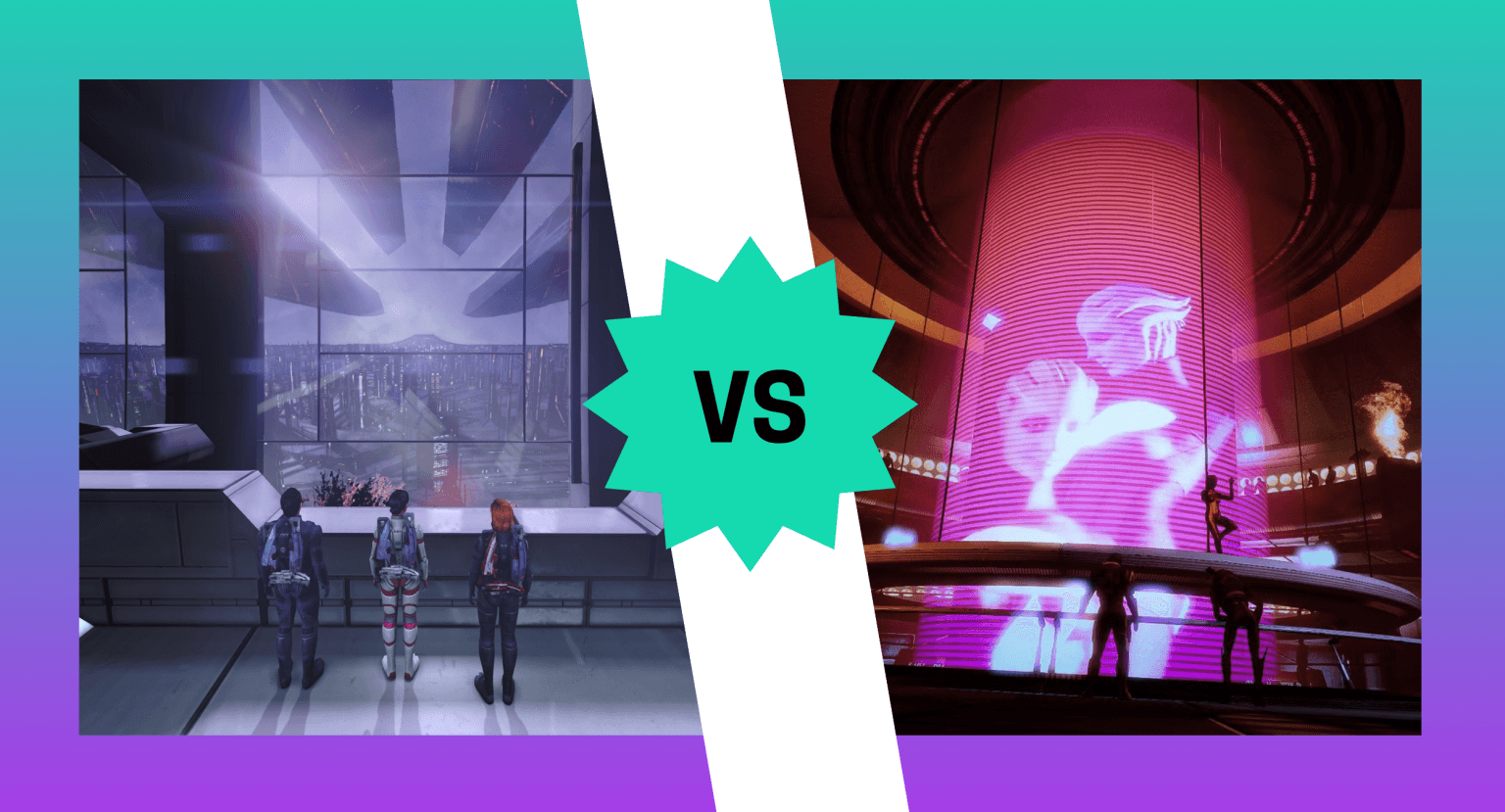
Gary: That’s right, I’m joined here by Punished Backlog Editor, Writer, and Mass Effect Super-Nerd Amanda Tien to debate which hub in Mass Effect is better: the Citadel, home of the Galactic Council of Stuffed Shirts, or Afterlife, Omega’s den of villany and joy.
Amanda: As you can tell by Gary’s definitely impartial tone, he’ll be taking the side of Omega’s Afterlife, while I’ll be defending the honor of the Citadel.
Gary: Let’s get into it.
Editor’s Note: Full spoilers for the original Mass Effect trilogy below.
Category One: Story Importance
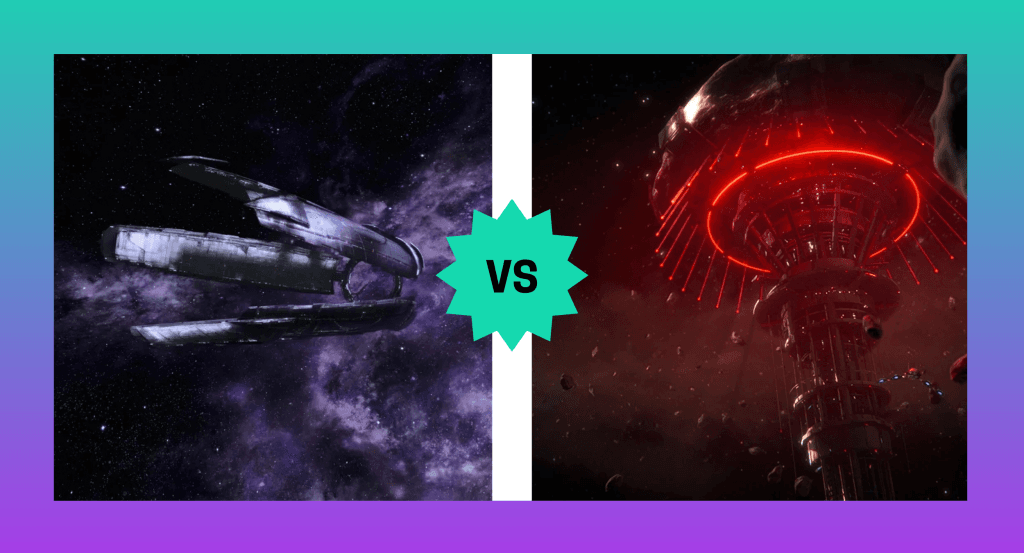
Amanda: I feel like this is a slam dunk for the Citadel. It has massive main-story level importance in every game. In the first game, it’s where Commander Shepard stands in court and becomes a Citadel Council Spectre. How much of the Citadel is saved is literally a key choice at the end of the first game! Okay, sure, I’ll admit, it’s less key in Mass Effect 2, but it’s back strong in Mass Effect 3 and is where almost all significant companion dates and hang-outs happen.
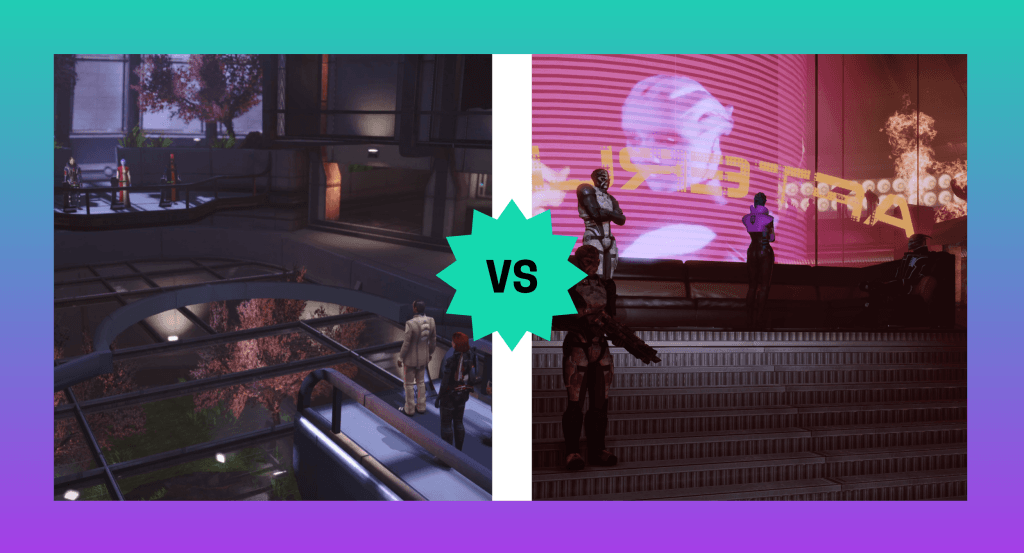
Gary: Okay, sure, the Citadel is where the story really begins. The Council sits here, Saren tries to blow it up, Garrus is a cop, all important. But Afterlife is where Shepard truly becomes the person they will crystalize into. It’s within Afterlife, within the steely gaze of Aria T’Loak (more on her later), that Shepard learns the “do what it takes” attitude that will carry them through the rest of the journey. Afterlife’s blend of seedy nightclub, board room meeting house, and Queen’s throne room opens the previously rigid eyes of Shepard.
Amanda: Dude, that’s a fair point.
Gary: Even in a Renegade run, in the first Mass Effect, Shepard is basically a boy/girl/non-binary scout: pretty to the letter, to the point, either good or bad. It’s through Afterlife that Shepard learns the gray, the complexities of morality.
Amanda: True, but two counterpoints: 1) In Mass Effect 2, Shepard also learns moral ambiguity because of working with Cerberus who was previously an enemy, so I don’t think we can give it all to Afterlife, and 2) like you said, Shepard has always been a goody goody at heart, and goody goodys love saving the Citadel.
Winner: The Citadel!
Category Two: Aesthetics
Gary: It’s rare for any nightclub in a game to not lean into parody. Unc-ing beats, flashing lights, ladies on tables: You know the score.
Amanda: Yeah, in the first Mass Effect, there are two nightclubs in the Citadel and they both fit that description to a t.
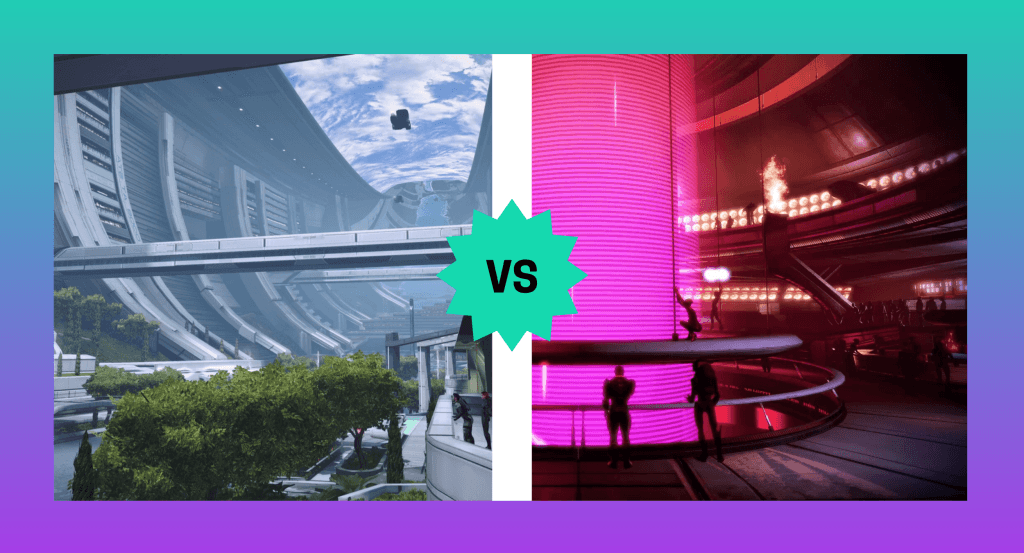
Gary: At first, Afterlife is no different. It’s dripped in pinks and neons, tables crowd the space, patrons shuffle about with their libations. But after taking a closer eye, Afterlife does rise above its digital bar brethren. There is care in the construction, the layout makes sense, and the design of all eyes focused towards the raised center, built around a central couch: Afterlife is built to represent its ruler. It’s shadowed without being dark, pulsing without aggressiveness. It’s a club I want to visit!
Amanda: You’re not wrong! I want to party there!!! It also does a lot to create a very private sector power counterpart to the Citadel, which asserts public sector power.
From its first appearance to its last, the Citadel demands to be taken seriously. There’s that show-off-y atrium where there’s a lake with fountains inside of a space station. Like this place is so clean and so pointedly impressive. There’s numerous floor-to-ceiling windows to watch space ships fly by. And if we’re arguing about partying, there’s multiple dance clubs (but agreed, none are as good as Afterlife).
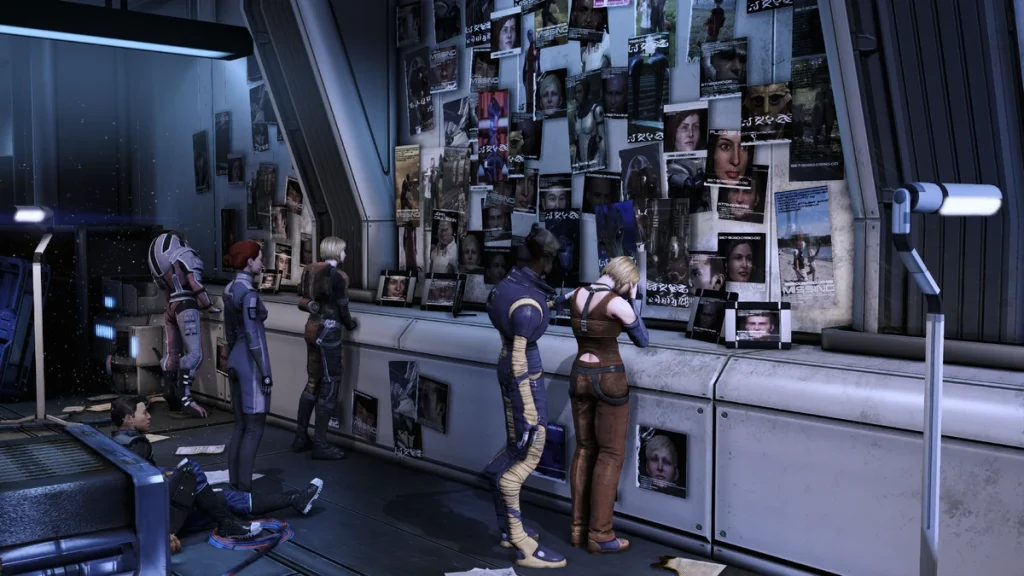
I think the Citadel’s aesthetics level up in Mass Effect 3, actually, but not for the reason you might think of — the refugee wards and port entrance area really touched me. Shepard can walk around, seeing closely rendered “missing” posters of people trying to reconnect with their loved ones across time and space. The makeshift village shows beings from across the universe trying to save and build a new life. Amidst the neon and the glitz, the Citadel makes it clear that there is something real here.
Gary: Before Mass Effect 3, the Citadel would lose for the same reason the USS Enterprise would lose: it’s too clean. But you’re right, Amanda, the inclusions of the grime from the war around it drags the Citadel into feeling more like a real place, and less like a fortress of Dyson Products.
Amanda: Thank you! But yeah, to be honest…If you asked me where I’d rather go for the weekend, I’d say Afterlife. Still, if there was a place I’d want to live… I’d rather be in the Citadel and not Omega, the downtrodden astroid-city where Afterlife is.
Gary: I can’t disagree.
Winner: Tie!
Category Three: Returnability, Usefulness, and Quests
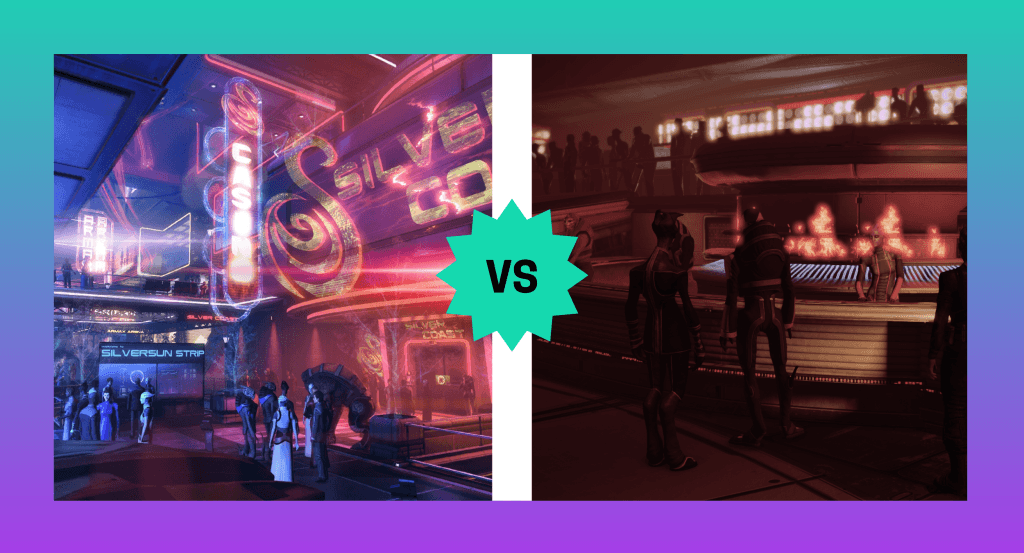
Amanda: Okay, I will admit, the Citadel is maybe a little too useful? And this is not me trying to do a bit of like “Oh no, I’m too good at my job.” Each time I replay the original Mass Effect, I’m again overwhelmed at how much the game gives you when you get to the Citadel. It is the hub of hubs. There is too much going on. You go from being a space zombie shooting bad ass to doing pseudo-political errands in a giant mall the size of a planet. I actually find the shopping to be the least useful part of the Citadel.
Gary: This is the Citadel’s curse: There is just too much going on. Too many weird corners, too many floors, too many shops, too many NPCs, too many things to do. Afterlife is direct, focused: you’re here to dance, take some jobs, maybe shoot a guy upstairs and get out. Direct and to the point.
Amanda: The biggest pro for the Citadel is how many quests — main and side — happen here. Besides, where else can you advertise for your favorite shop on the Citadel?
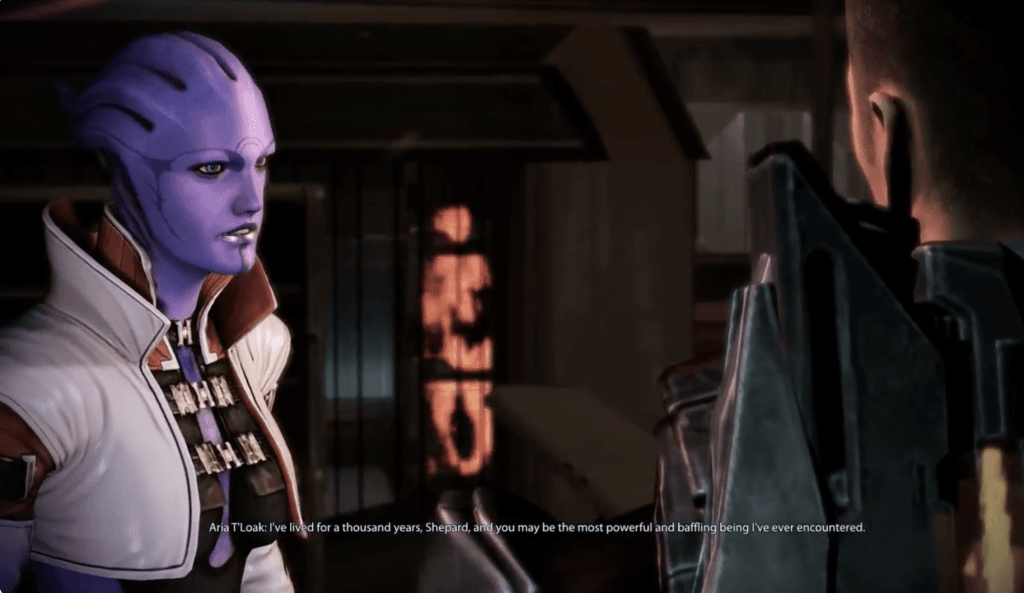
Gary: On top of the directness of Afterlife, it also has the benefit of the Significantly Better Liberation Situation. Sure, the ending of the first Mass Effect is okay, but the fight up the Citadel is marred by the atrocious Mako sequence beforehand. But liberating Afterlife with Aria in Mass Effect 3? It’s an epic confrontation that feels like a battle for the true soul of Omega. A fight to throw off the yoke of militarism and return Omega to what works: lawlessness.
Amanda: Look, I won’t disagree that liberating Afterlife with Aria isn’t cool, but each game roots the player in the Citadel. I mean, it’s the only place that Shepard ever gets to put a poster on the wall. All roads lead to Rome, you know?
Gary: And Rome, in this case, has the hustle-and-bustle. There’s always something to do at the Citadel. Afterlife… Well, I’ll admit, you can only watch Shepard dance for so long.
Winner: The Citadel
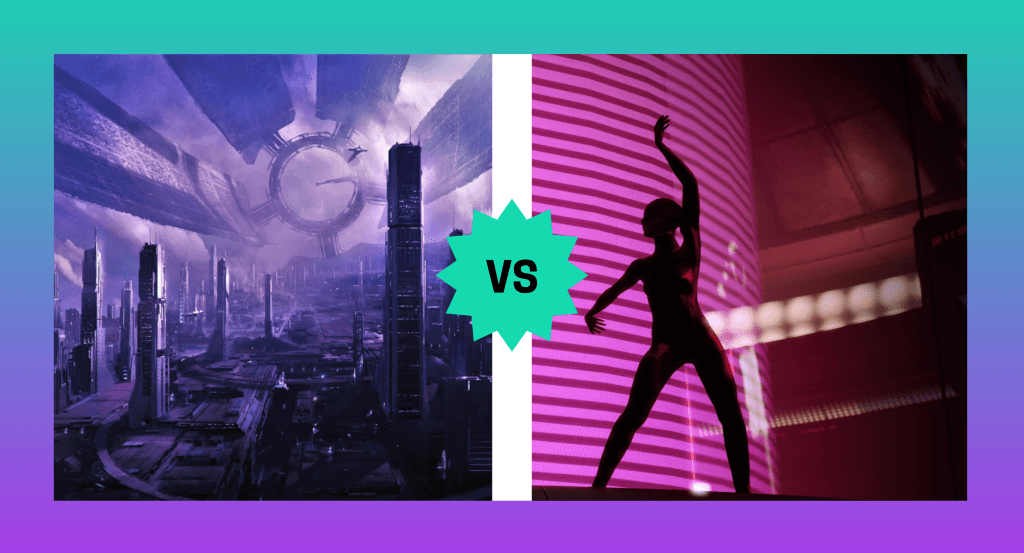
Category Four: Music
Amanda: Eh, I can’t even really argue for this one for the Citadel. The Presidium theme is cool for about two seconds when you first enter the grand atrium and you’re like, Damn, this place is huge! But then it becomes sort of nauseatingly, minor-chord elevator-y. Including with literally too many elevators.
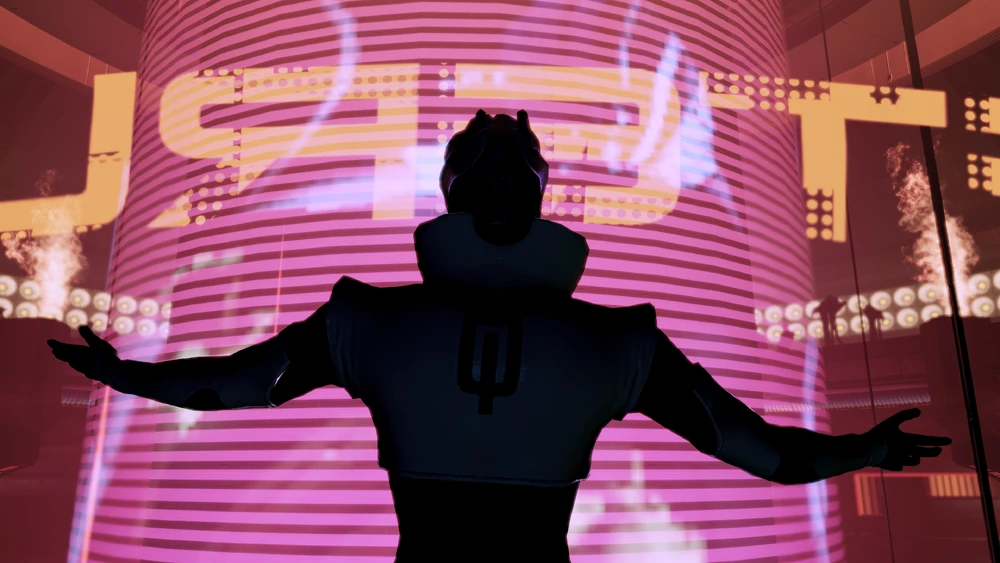
Gary: Did you know the dance floor music (“Callista” by Saki Kaskas) in Afterlife was originally in a Need For Speed game? I didn’t! And not only does Afterlife have that banger upstairs, who can forget the arm throwing anthem (“Lo-Fi Epic” by Jesse Allen) of the VIP section?

Amanda: Yeah, I’m totally with you.
Winner: Afterlife, obviously!
Category Five: The Wild Card
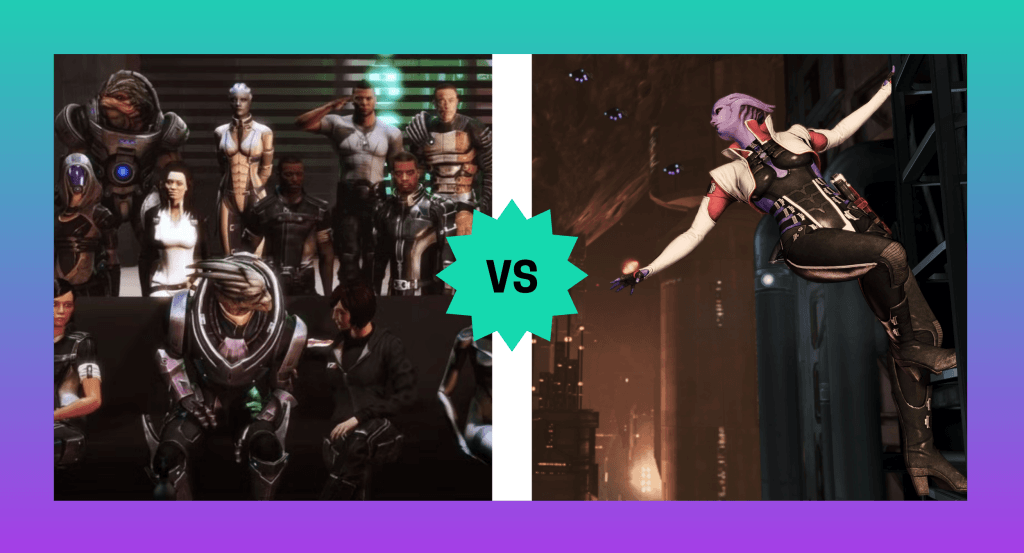
Amanda: Okay, we already know the deck is stacked against Afterlife, and the piece d’la resistance is the Mass Effect 3: Citadel DLC. Stefon Voice: The Citadel DLC has everything. Sexy night clubs. Laugh-out-loud gags. Cool fits. Meaningful heart-to-hearts. Space hamsters. The Citadel grows in importance every game, but it really brings it all home (literally) at the end. Shepard finally has a place to call their own and throws a house party for their friends. That’s peak!
Gary: Regardless of the plusses of the Citadel, the importance, what have you, nothing on the Citadel compares to the Pirate Queen, Aria T’Loak.
Amanda: Aria is so cool.
Gary: Voiced amazingly by Trinity of Matrix fame herself, Carrie Ann Moss, Aria is the most impressive person in the entire series, much less in the Mass Effect 3: Omega DLC. She singlehandedly built a ruling structure into the Terminus systems that doesn’t disregard its drive towards lawlessness, but instead celebrates it. She’s cool headed, a master manipulator, and a fucking badass.
Amanda: Okay, but I can also have the best date of my life with Garrus on the Citadel soooooo…
Winner: Tie!
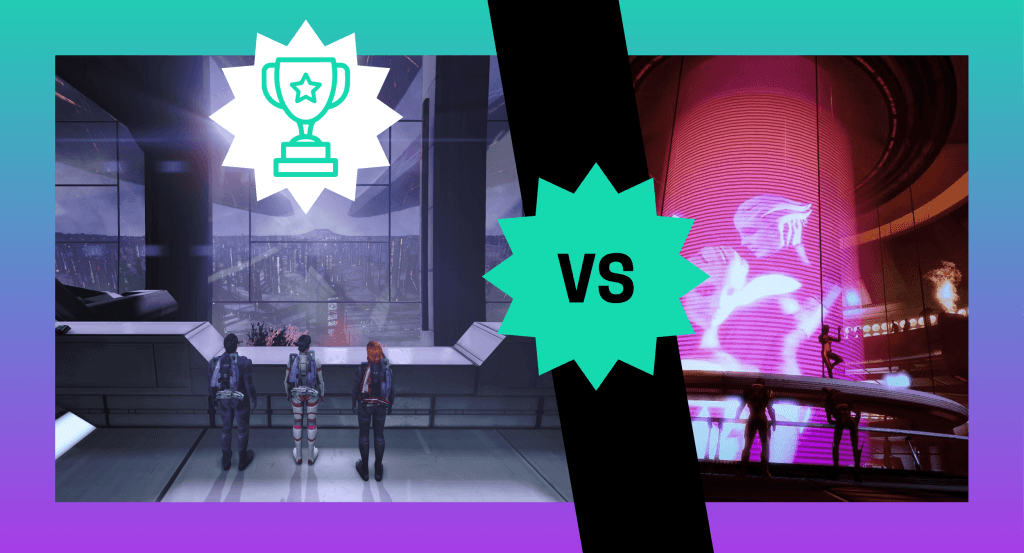
And The Winner Is…
Amanda: It’s the Citadel, right? You knew it, I knew it.
Gary: I did know it, yeah. It’s the brain to the Normandy’s heart, ya know? But Afterlife is a special place, and deserved to be mentioned as the…lungs? In this stretched metaphor.
Amanda: But you made a good case and I respect the hell out of that. But I wonder — what would win between the Citadel and the Normandy?
The original Mass Effect trilogy, developed by BioWare and published by Electronic Arts (save for the first, which was published by Microsoft Game Studios), released between 2007 and 2012. The Mass Effect Legendary Edition, which bundles all three games and DLC, was released in 2021 for PC, PlayStation 4, and Xbox One. It is playable via backwards compatibility on the PlayStation 5 and Xbox Series X/S.

Gary is a jack-of-all-trades video game enthusiast based in Boston, MA. A semi-professional fighting game player, even less professional Apex Legends player, and even less professional adult, he spends most of his time poking at strange indie gems and reading about the need for more diverse voices in gaming criticism. He invites anyone to recommend anything he's missed in the gaming world via Twitter or BlueSky, where he can found under the username @grtnpwrfl. When he isn't spending his time playing games, Gary is an avid New England Patriots fan and frequent hiker.





Amanda Tien (she/her or they) loves video games where she can pet dogs, solve mysteries, punch bad guys, play as a cool female character, and/or have a good cry. She began writing with The Punished Backlog in 2020 and became an Editor in Fall 2021. Amanda also does a lot of the site's graphic designs and podcast editing. Amanda's work has been published in Mothership, Unwinnable Monthly, Poets.org, Salt Hill Journal, and elsewhere. She holds an MFA in Fiction from the University of Pittsburgh and a BA in Creative Writing from Columbia University. Learn more about her writing, visual art, teaching, graphic design, and marketing consulting at www.amandatien.com.