
Like many people my age, my love for fantasy began with The Chronicles of Narnia. I fell in love with the idea of worlds laced with magic, where myths are known as history, and the fantastical is ordinary. Though there was no sign of a forest in my wardrobe — and I really checked — I found other ways to have my own fantasy adventures. Between reading Throne of Glass, watching The Lord of the Rings and The Witcher (not season four, sorry, Liam Hemsworth), and playing The Elder Scrolls IV: Oblivion and Final Fantasy XIV, I’ve had a lot of them, but I’m always on the lookout for more. Besides, there are only so many YA fantasy books you can read before they start to feel repetitive.
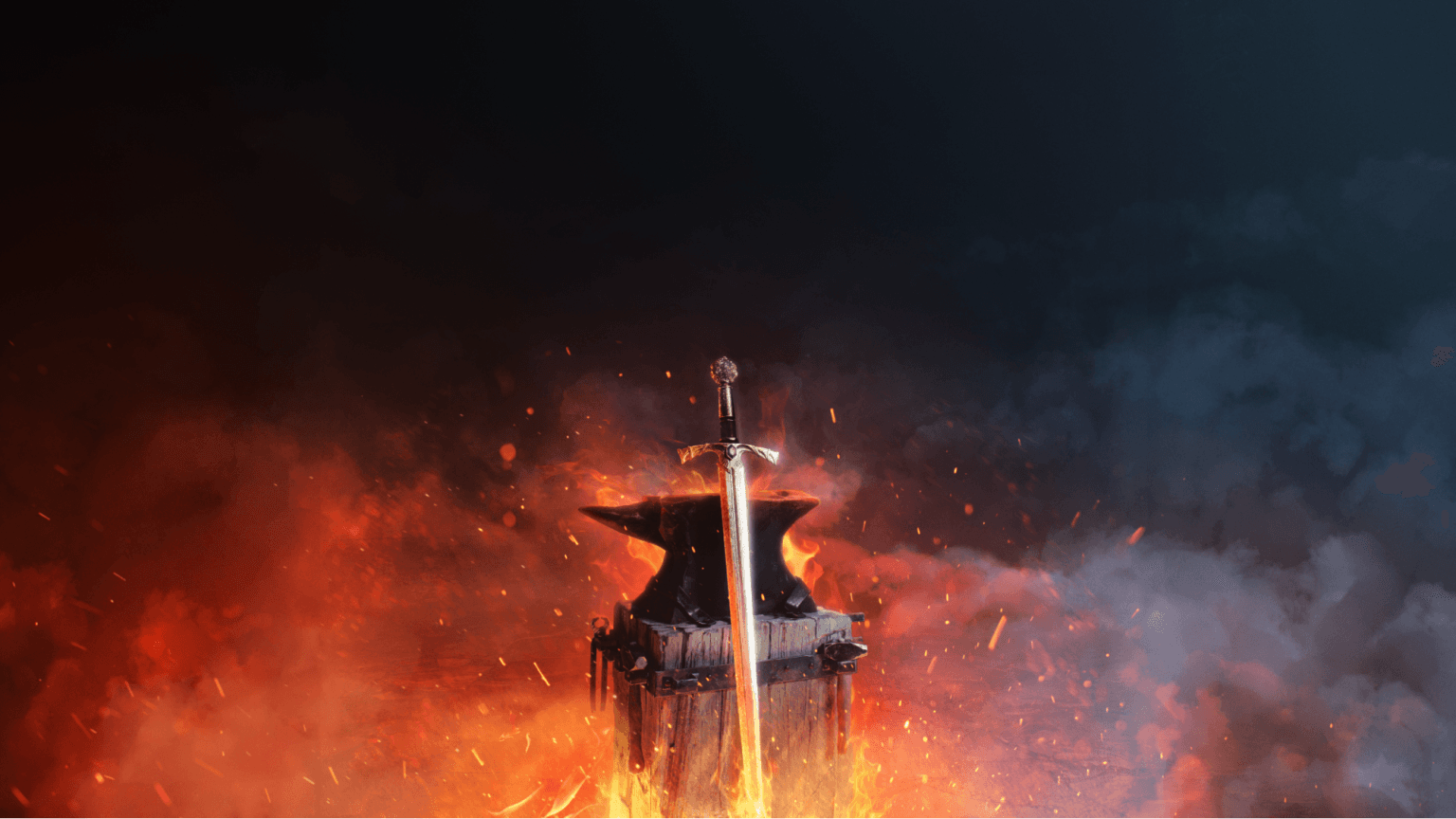
I heard about Bladesong the same way I hear about most games — random Instagram reels — and immediately got excited. The idea of a sword-making game had never occurred to me, and I couldn’t wait to design my own Lord of the Rings-esque blades. The demo was a lot of fun, so you can imagine how happy I was when we received a review code a few weeks later, and I was given the opportunity to delve deeper into the world of Bladesong.

The Camp
Bladesong is the debut title from SUN AND SERPENT Creations. An up-and-coming indie studio based in Germany, SUN AND SERPENT is headed by David Kuri, who previously worked for Moon Studios on No Rest for the Wicked. The team began active development in 2023, releasing a demo in September 2025 before launching in early access on January 22, 2026.
SUN AND SERPENT has been focused entirely on Bladesong for over two years, and the effort has clearly paid off. Though the game is not complete, the early access version provides a unique and polished sword-making interface that lives up to its self-described title as “the ultimate sword making game.” While its capabilities as a smithing simulator are the game’s main selling point, it also includes an enthralling storyline that players can experience alongside the forging.
In campaign (story) mode, customers will come to you with commissions to make new weapons or repair old ones. You’re given a set of varying requirements for each customer, which you’ll have to meet when creating the blades. Some are more specific than others, requesting a certain balance or level of stiffness, whereas some will be happy with anything vaguely sharp and pointy.
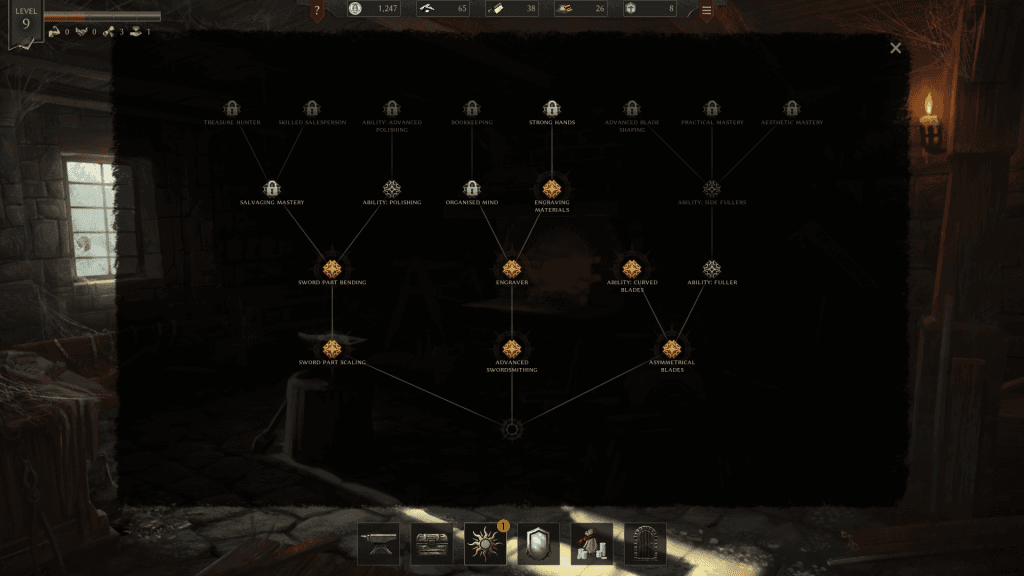
With every commission filled, you earn experience points, which, you guessed it, eventually make you level up. At each level, you can choose to unlock another node in the skill tree, providing you with new smithing skills to experiment with at your forge. If you prefer a little more freedom, however, you can forge to your heart’s content in creative mode with every skill unlocked, unlimited resources, no requirements, and no interruptions.
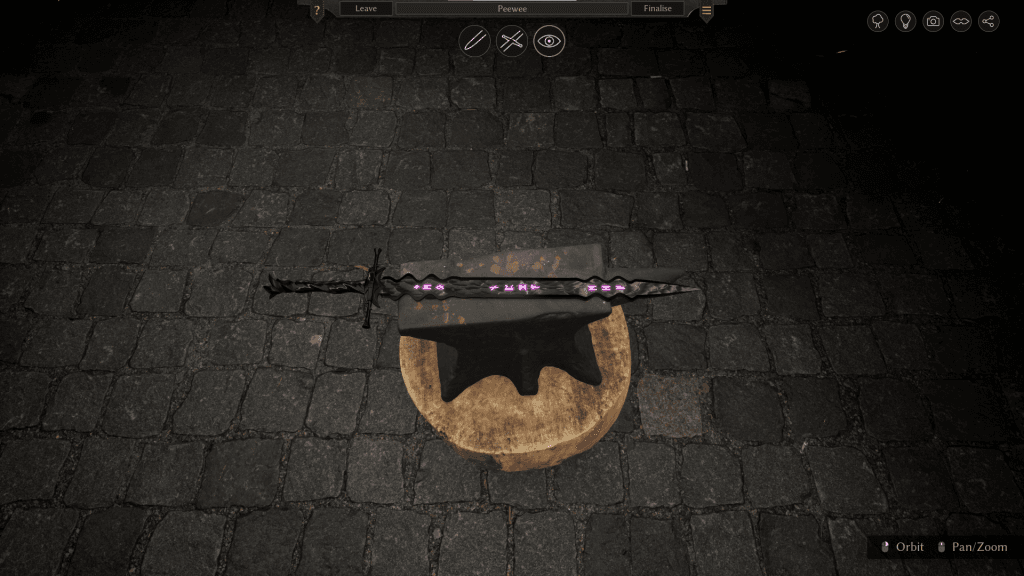
Overall, the forging mechanics are intuitive and precise, allowing you to create interesting and imaginative blades. They’re not overly complicated, but there is a bit of a learning curve, especially if you want to make something more intricate. Personally, I had some issues with the “balance” requirement in campaign mode. There were a few occasions where it was irritatingly difficult to get it right, and I ended up having to put two or three humongous pommels on the handle to balance the blade, which seemed slightly absurd.
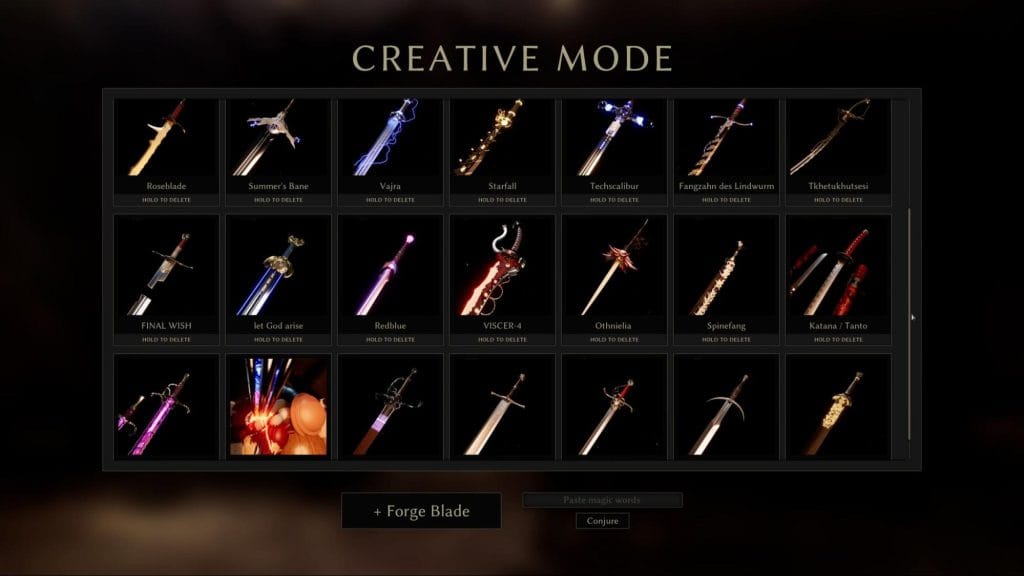
My own struggles aside, players have created some truly incredible works, replicating swords from various media or designing their own original weapons.
The Forge
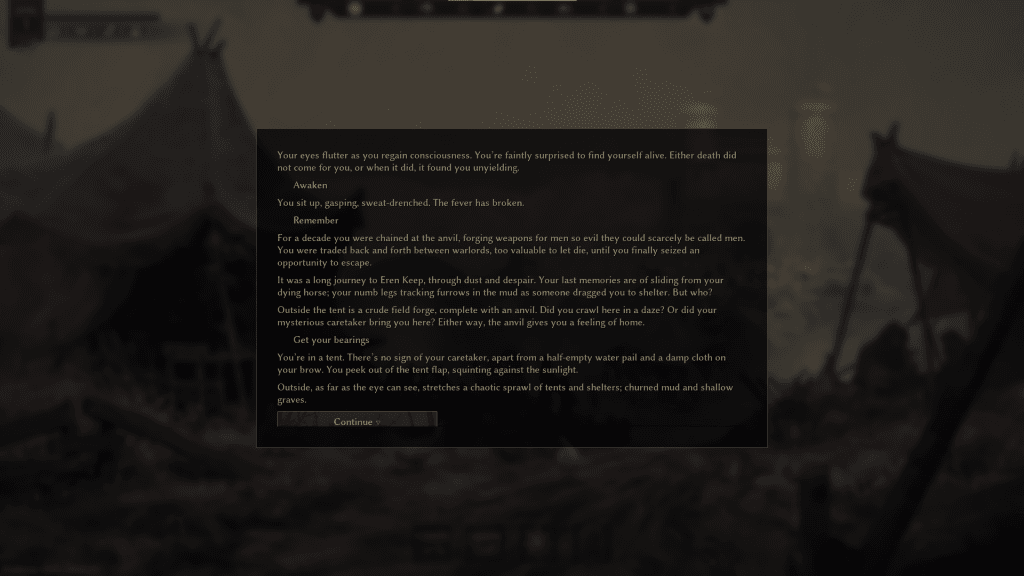
Sword-making was what first attracted me to Bladesong, and I loved designing my own weapons, but for me, the story was the best part of the game. You play as a blacksmith, relying on your trade to keep you afloat in a world abandoned by its gods, referred to as the “Voices.” When the story begins, you awaken in a makeshift camp populated by the desperate and deplorable, being nursed back to health by a mysterious old woman who I found downright terrifying. In your feverish daze, she asks about your past, beliefs, and motivations, allowing you to build your character’s backstory.

When you finally reach full consciousness, the woman is nowhere to be found, leaving you to rebuild a somewhat functional forge and a shattered life. Your only hope of comfort and safety lies in the possibility of gaining entry to Eren Keep, a heavily guarded city known as the “last haven of a dying world.”
As you progress through the game, you begin to unravel dark mysteries and nefarious plots, earning allies and enemies while discovering more about the events that led to the dystopian state of the world. Although the gameplay is heavily text-based, which may be a downside for some players, the skilled writing and intriguing characters create an immersive and exciting experience that’s more than worth the amount of reading.
I could happily gush about Bladesong’s narrative for several paragraphs, but it was the creativity and originality of the world-building that stood out to me the most. When you speak to certain characters within Eren Keep, you have the opportunity to ask them questions about the history of the city and the downfall of the world itself. If you ask enough questions, you start to reveal important details about the supernatural and divine aspects of the game, which are mostly based on music. One of my favorites was the idea of the “choristers,” inhumanly beautiful creatures with the power to sing magical songs that mesmerize and control their listeners. The game is overflowing with enchanting details like this that bring the world to life, and are truly a testament to the love and effort that SUN AND SERPENT has put into Bladesong’s development.
The Arena
In the absence of animation (outside of the sword-making, that is) and voice acting, Bladesong has to rely much more on its players’ imaginations than a 3D game such as The Elder Scrolls V: Skyrim. The developers have utilized incredible illustrations, sound effects, and a fantastic soundtrack to effectively bridge this gap and maintain player attention.
The game’s artwork is nothing short of stunning. Every one of the 10 visitable locations is illustrated in a detailed and realistic style reminiscent of antique oil paintings, which matches the medieval feel of the game. NPCs also have their own portraits, which appear when you interact with them, showcasing their unique designs. The list of artists involved in the game is extensive, which is unsurprising considering the quality and number of illustrations.

Bladesong’s soundtrack currently contains 18 instrumentals composed by Submerged Tapes (Jake Gaule). They fit the mood of the game perfectly, capturing the darkness, cruelty, and haunting beauty of the game’s narrative. Together with atmospheric sound effects, the music transports you into the dark fantasy world and makes you feel as if you’re truly there.
The Citadel
Since Bladesong has only just entered early access as of writing, the game is far from complete. There are still heaps of improvements, new features, and four chapters of story planned and on the way. As it currently stands, Bladesong is a truly brilliant game, with a huge amount of painstaking effort put into its development. The story is novel-worthy, the artwork is breathtaking, and the sword-making mechanics are innovative and enjoyable to use.
While it isn’t perfect and could use some polishing in places, the game has incredible potential, and I’m excited to see what it becomes. If you have an interest in fantasy, history, weaponry, or even just enjoy a good book, I cannot recommend Bladesong enough.
Score: 9.8
Bladesong, developed by SUN AND SERPENT Creations and published by Mythwright, was released in early access on January 22, 2026, for PC (via Steam). MSRP: $19.99. Version reviewed: PC.
Disclaimer: A review code was provided by the publisher.
Update (2/5): David Kuri previously worked on No Rest for the Wicked during his time at Moon Studios. He did not work at Ninja Theory, although another member of the team, programmer Christian Sonderfeld, did. We’ve updated the review accordingly.

Darcy loves anything fantasy, sci-fi, or adventure. Her dream is to finish her degree and write her own fantasy book, hopefully squeezing in a few games as she goes. She’s a big fan of games where she gets to fight with cool swords, befriend cute animals, and get lost in the story.
You can read more of her writing on her website: https://darcymaunder.com/