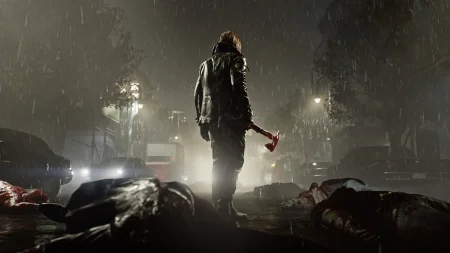

After I earned my first-ever platinum trophy in Resident Evil Requiem, I felt like a fraud.
I’d come to the Resident Evil franchise through the back door. The 2019 remake of Resident Evil 2 hooked me a few years ago; from there, I tore through the franchise all the way to Requiem, which finally pushed me past the platinum finish line for the first time in my gaming life.
Since then, I’ve been filling in the gaps. I just beat Resident Evil 5. I’m currently grinding through the much-maligned Resident Evil 6, working my way to Resident Evil 7: Biohazard, the actually scary one, which is sitting on my Steam Deck waiting for me to work up the courage.
Resident Evil isn’t survival horror. It’s your stern, haunted kindergarten teacher wearing a Party City zombie mask.
I decided that Resident Evil, the 1996 original (or rather, its 2002 GameCube remake), would help me procrastinate next. So, welcome to the latest entry in my non-linear Resident Evil franchise exploration. Fitting that I’m doing this franchise out of order, given the original game is built around backtracking and figuring out what order to do things in.
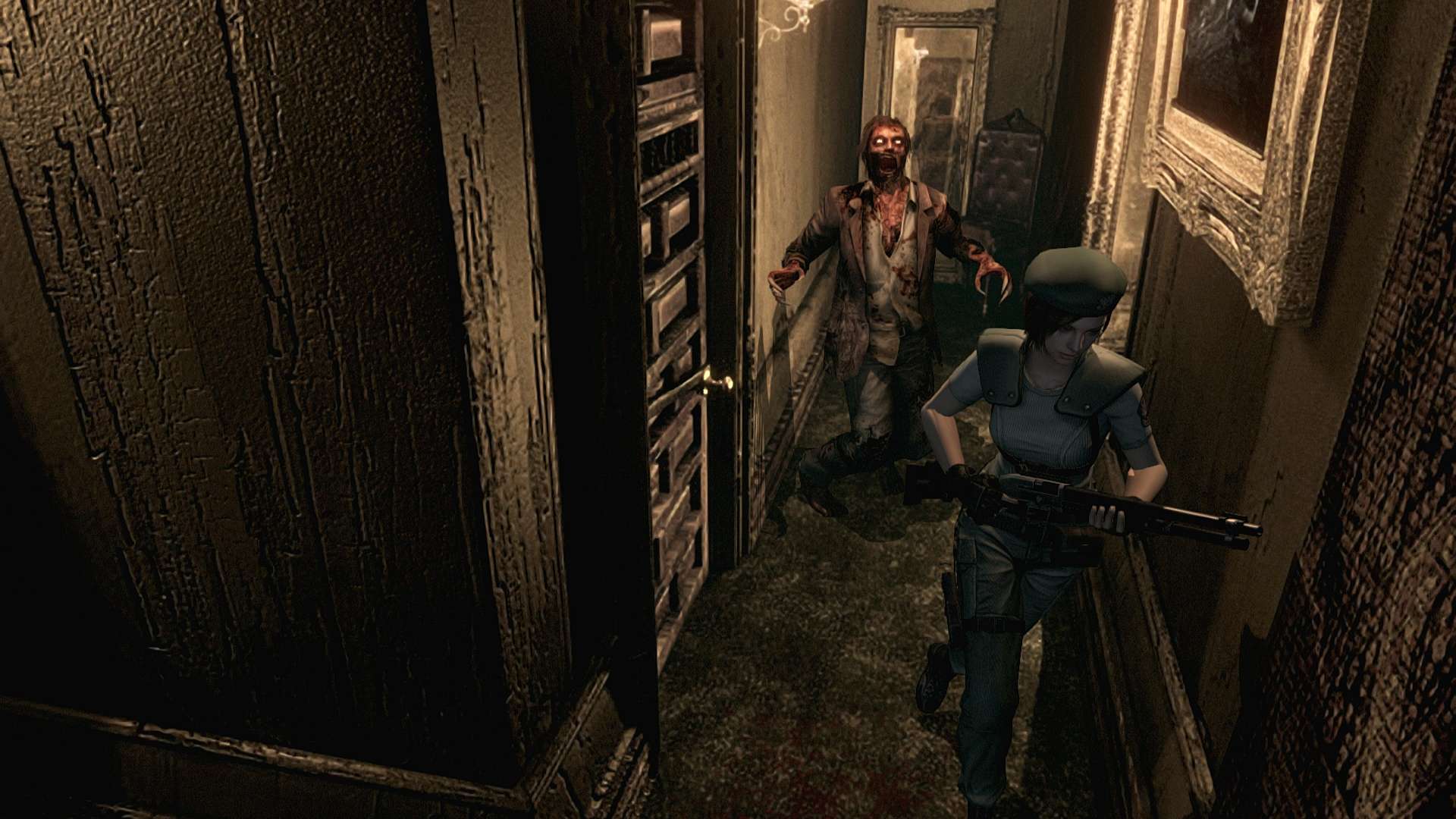
I wasn’t about to dig out an actual PlayStation (or emulate it), so I grabbed a copy of the 2002 GameCube remake — re-released in 2015 as the Resident Evil HD remaster, now on Steam. It felt like the right historical detour. The static camera angles. The ’90s horror camp. The PlayStation-jank masterpiece that started it all, polished. I fired it up on Steam Deck.
I knew I wasn’t walking into a modern RE experience. I still expected the guns. The zombies. The spooky setting. I got all of those.
What I wasn’t prepared for was the puzzles.

Survival Horror? More Like Survival Sudoku
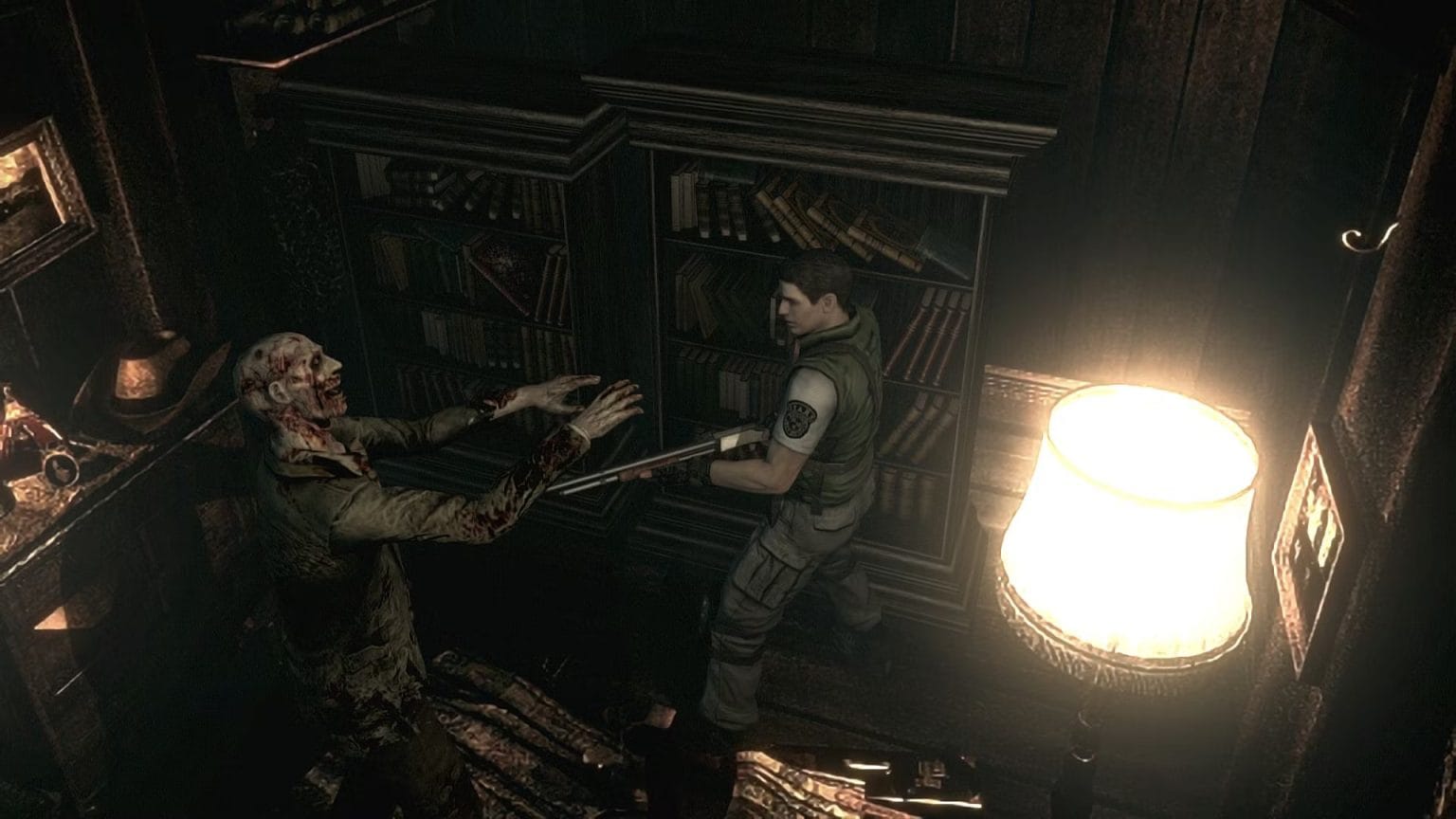
By the time the credits rolled, I think Resident Evil was billed to me wrong. This is not a survival horror game with some puzzles in it. This is a puzzle game with some zombies in it. The zombies are barely the point. They’re scenery between you and the lever, the gem, the emblem, the crest, the broken shotgun, the bad shotgun, the good shotgun, the fake key, the real key, and the wrong key you carried around for three hours wondering what it was for.
You don’t survive the mansion. You solve it, just for the game to (spoiler alert) reward you for your hard-earned puzzle-solving skills by blowing up the entire mansion. And that’s the good ending.
More than any other element of gameplay, you exist in a permanent state of solving a puzzle — either looking for a piece, looking for the piece that gets the piece, or looking for the piece you swap for the real piece you actually put in the real place. The Spencer estate’s entire architecture is built around making you carry stuff back and forth across rooms full of dead things that are about to stand back up. (Hold onto that thought, by the way. You’ll need it later. Probably.)
The Mansion Is the Real Boss
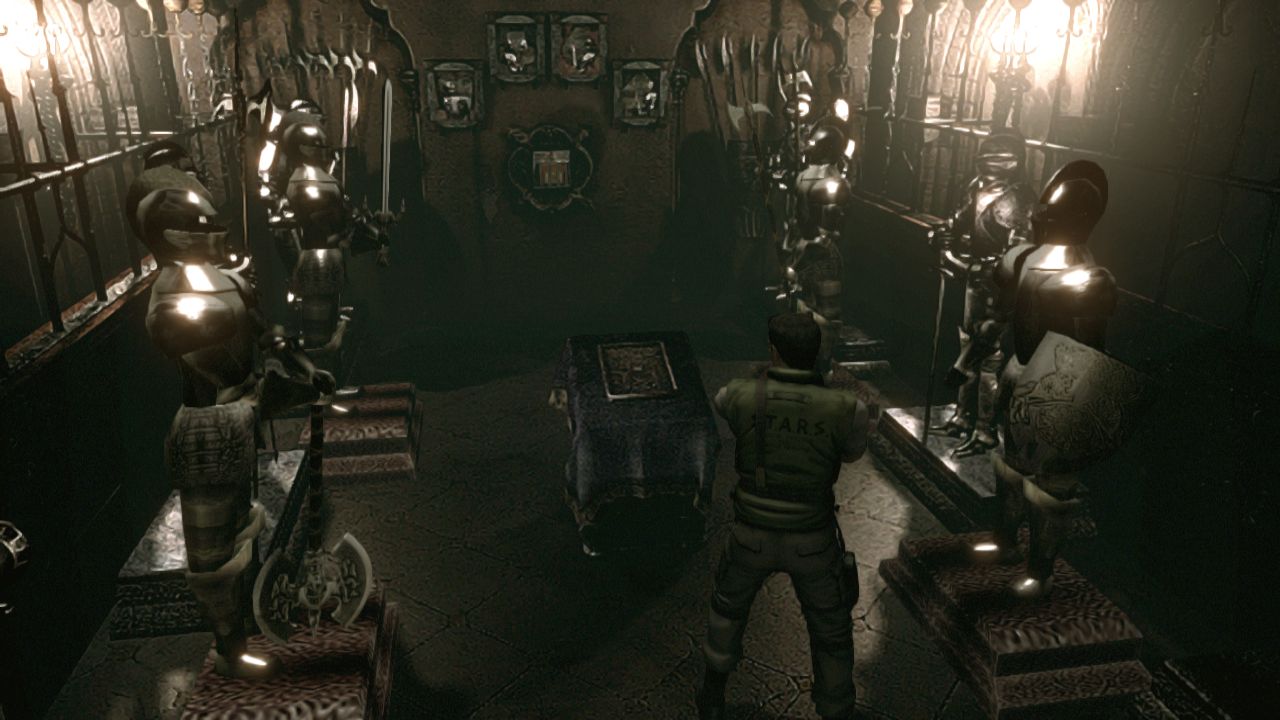
From the moment you walk through the front door, the game stacks puzzles on top of puzzles. There are statues to push. Masks to match. Signs to read like a child’s primer. Sheet music you’ll be carrying around for hours, contemplating when the game plans to cash that check. Spoiler: not soon.
Some of the puzzles are genuinely unsettling. There’s a particular kind of horror that comes from realizing the room itself is the trap, and the only way out is pulling the right levers in the right order before something eviscerates you. Resident Evil predates Saw by almost a decade, but a lot of the scariest moments share its DNA. You aren’t dying because something jumped out at you. You’re dying because you didn’t read the room correctly.
Other puzzles are just tedious. Match these masks to those statues so a coffin will open and reveal something inevitably horrific, like a Rube Goldberg machine designed by a depressed coroner. I didn’t feel amused. I felt like the mansion had assigned me homework.
And it gets worse. You’ll plan your whole route around walking through an obvious door, only to discover the doorknob doesn’t work. Not locked. Not jammed. Just not working. The mansion has decided. Now your whole afternoon belongs to backtracking through three rooms you’d already cleared. The mansion always decides.

Your Inventory Will Outlive You
Quick public service announcement to anyone playing for the first time: Pick Jill. I picked Chris. Like an idiot. I didn’t realize until hours in that Chris carries six inventory slots and Jill carries eight. That is not a small difference. That is two whole items. Two extra mixed herbs, two extra ammo clips, two extra moments of “oh thank god, I don’t have to walk back to the dining hall again.” I was playing the entire game with a smaller backpack because I picked the muscle guy on instinct. Like an idiot.
This was before the humane inventory systems of later RE games. You either carried what you needed or you didn’t. And if you didn’t have the space, the game served up its most insidious puzzle yet: Do you drop a precious green herb to grab the key, knowing you might bleed out before you reach the next save room? Do you double back to the item box and risk a Crimson Head sprinting at you because you didn’t burn that corpse with kerosene three rooms ago, like the game basically told you to?
Or, my personal favorite: You find a new room, and the obvious path forward is blocked in some way, like a wall of murderous weeds, for example. Of course it is. So you need a bag of herbicide. Where is the herbicide? On the other side of the map. Of course it is. You should’ve grabbed it when you first saw it. Now you’re hiking back across the mansion, herb supply dwindling, knowing you’ll have to drop something to make room for the herbicide once you get there. Probably the herb. Definitely the herb.
The puzzle of inventory management will haunt you longer than any zombie. Crimson Heads show up on a schedule. Your inventory crisis is constant. Every door is a math problem about what you’re willing to leave behind to keep moving forward. I don’t love it. But it forced me to respect it — like a guy in a Party City zombie mask slapping and scolding me because I forgot to pack deodorant and toothpaste for my trip out of town. Again. Like an idiot.

Hold That Key, Idiot
Then there are the puzzles that aren’t really puzzles. Match the triangle to the triangle-shaped hole. Read the sign and rotate the statues so they face the way the sign told you to face them. Did you put the round peg in the round hole? Yes? Excellent! Here’s your magnum, congratulations on graduating from kindergarten.
Even worse are the puzzles where the mansion pretends to give you instructions. The painting puzzle that hands you a riddle about life stages and color and expects you to translate vague flowery language into the obvious answer. The cryptic signs that tell you exactly what to do in language clearly written by someone who got paid by the syllable.
When you finally solve a puzzle in this game, it doesn’t feel like a triumph. It feels like relief. And then, almost immediately, like regret.
The instructions are vague and the answers are obvious, which is the worst possible combination, because you spend twice as long deciphering the clue as you would spend just guessing. These don’t test you. They stall you. They’re speed bumps dressed up as obstacles, and after the fourth or fifth one you start to suspect the developers were getting paid by the lock.
Quick question: Did you hold onto that thing I told you to remember a few paragraphs ago? Up there, in the survival sudoku section. Don’t remember which one? Yeah, that’s how the mansion gets you. By the way, you needed it about two paragraphs back. Now a Crimson Head is eating your face. Sorry. Should’ve been paying attention. That’s the Resident Evil experience — the developers mercilessly taunting you. Sorry about your inventory space. Idiot. Too bad, go back to the item box. Sorry about the Crimson Heads. You should’ve saved your kerosene to burn the right zombies. Or you should’ve held onto the green herb you tossed three paragraphs ago. Idiot.
I didn’t feel scared playing Resident Evil. I felt hated. I felt bullied by the developers, personally, by name, for 12 straight hours.
And I couldn’t put the controller down.
Hit Me Again
Here’s the part I keep circling. There were too many goddamn puzzles in this game. They overshadowed the spooky atmosphere, the bonkers lore, the kooky environments, the cheesy 3D cutscenes that somehow still capture the spirit of the original’s live-action camp. They overshadowed everything. And I enjoyed it anyway.
What does it say about me that one of the best entries in a series I’ve spent the last few years devouring is the one that spent its entire runtime dunking on me for not memorizing the floor plan of a Victorian mansion? I guess I’m a masochist. The mansion bullied me for a dozen hours, and the whole time I was thinking “thank you, please hit me again.”
When you finally solve a puzzle in this game, it doesn’t feel like a triumph. It feels like relief. And then, almost immediately, like regret. All because you stashed the fake key at the wrong moment, or you torched the wrong corpse, or you carried the sheet music for so long you forgot what it was for. Idiot. You’ll go back. You always go back.
Once in a while, you get one right. You put the triangle in the triangle hole on the first try. The Party City zombie mask guy doesn’t slap you. And somehow that’s worse. Now you’re just waiting for the next slap, flinching each time he fakes you out. The mansion always finds a way to keep you backtracking on your toes.
Resident Evil isn’t survival horror. It’s your stern, haunted kindergarten teacher wearing a Party City zombie mask. It’s the foundation of one of the greatest franchises in gaming, and it’s meaner and smarter than I gave it credit for going in. I didn’t enjoy it the way I enjoy modern RE. I enjoyed it the way you enjoy a good bruise. And I still can’t get enough of the franchise. Now for the next game.
Hit me again, please.
I’m an idiot.

Donovan is a lifelong gamer with a love for fast-paced, single-player action games—especially Devil May Cry, Metroidvanias, indies, and action RPGs. He’s also an “advanced scrub” at fighting games and will play just about anything fun. Donovan is passionate about seeing more diverse characters and creators in the industry—or at least better hair options for Black people. With over a decade in journalism, he joined The Punished Backlog in 2023 to write more about what he loves. Follow him on Twitter and Instagram @dono_harrell.