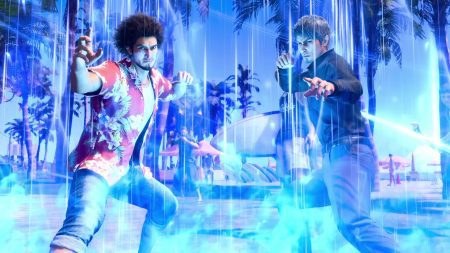


When I was just a middle schooler, I could not have possibly said “yes” fast enough when my dad offered to take my family (sans my sister) to Japan. I was young, dumb, and had a head full of manga and anime. I didn’t speak a lick of Japanese, yet felt like it would be a life-changing experience. Something transcendental or borderline spiritual.
Yet, there was a slight rub to all that. The trip was definitely fun. I went to Akihabara and Shibuya, bought some Japan-exclusive games, saw some delightful sights, and left satisfied. Despite all that, those expectations I had of a manga- and anime-filled paradise were not totally fulfilled. It may have been broadcast on TV, and there was plenty of anime signage and merchandise visible on the streets of Akiba, but otherwise the trip was fairly low-key.
Reflecting on that trip later on made me wish I had focused less on my nerdy obsessions and adopted a more holistic perspective. I was so focused on my personal hobby that I’d neglected to stop and take in the places and culture that had produced it. My fixation was solely on the possession or viewing of the material I loved so much, rather than trying to understand it. That understanding would have given me a greater appreciation not just for that material, but for the people who made it. I was in middle school, so I can’t totally fault myself for being immature, but I still had a chance that I neglected to take.
When I was finally given the chance to return to Japan early this year, I was old enough to realize how much that chance meant to me. With the twofold benefits of being older and not financially constrained by my parents, I eagerly planned several locations and tourist spots to visit. And after a 13-hour flight and a one-hour transfer to Osaka, my family and I set about following through on those plans.
Needless to say, the planning paid off. I could go on for quite a while about every great sight I saw or every great meal I ate, but the most valuable experiences were getting to see locations that I felt intimately familiar with despite only having visited one of them once before. Those places were Dotonbori, Kabukicho, and Shibuya.

Dotonbori
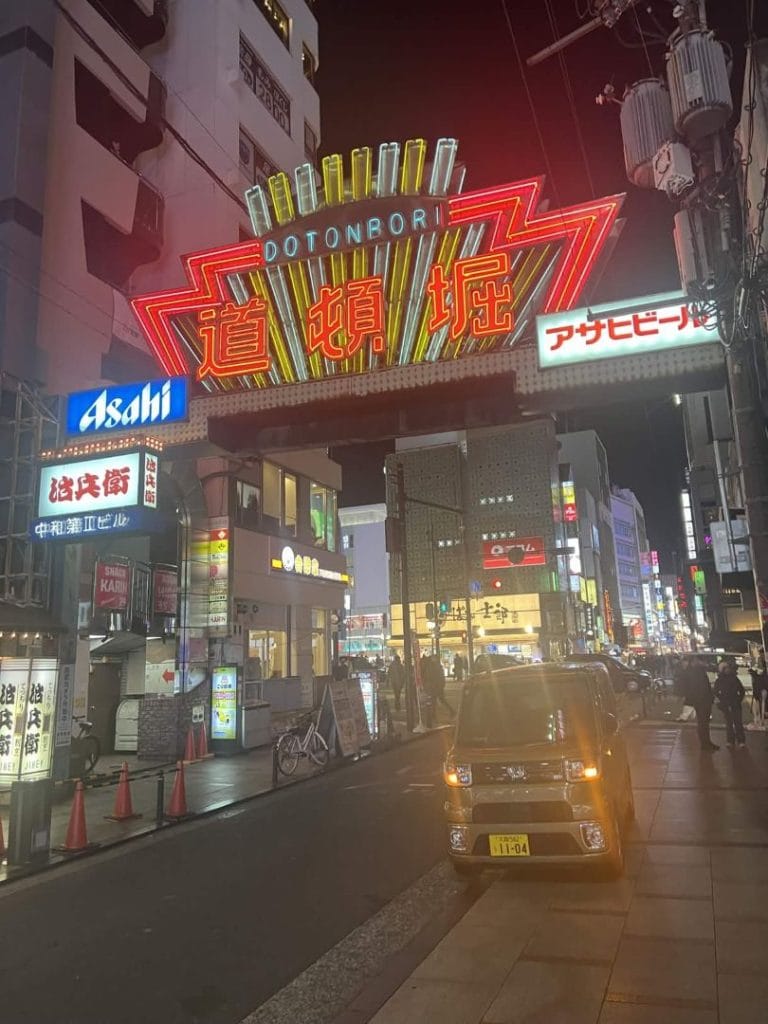
Notable as the inspiration for Sotenbori in the crime-drama Yakuza/Like a Dragon franchise, Dotonbori is an entertainment district known for its neon signs and nightlife. It’s recognizable both in its fictional form and in real life for being situated right along the Dotonbori canal, bridged by the Nipponbashi and Dotonboribashi bridges.
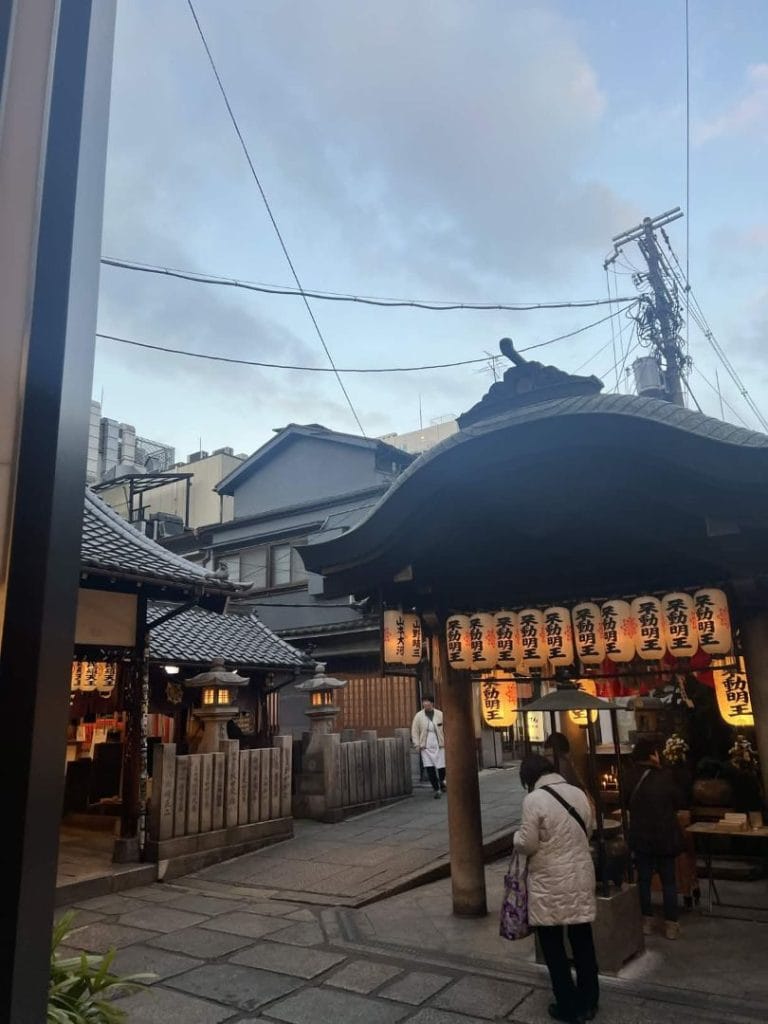
I visited Dotonbori on my second day in Osaka after a short visit to Nipponbashi Denden Town. Immediately upon arriving, I got to looking for recognizable locales, but came up a bit short. The main inspiration for the most recognizable location, the Cabaret Grand, was Miss Osaka, which is located much further south in real life than the Grand in the games. The most distinctive location from the series I could recognize was actually Hozen-ji Temple, which I was pleasantly surprised to find just by perusing the backstreets of the district’s south end that I recalled from the games.
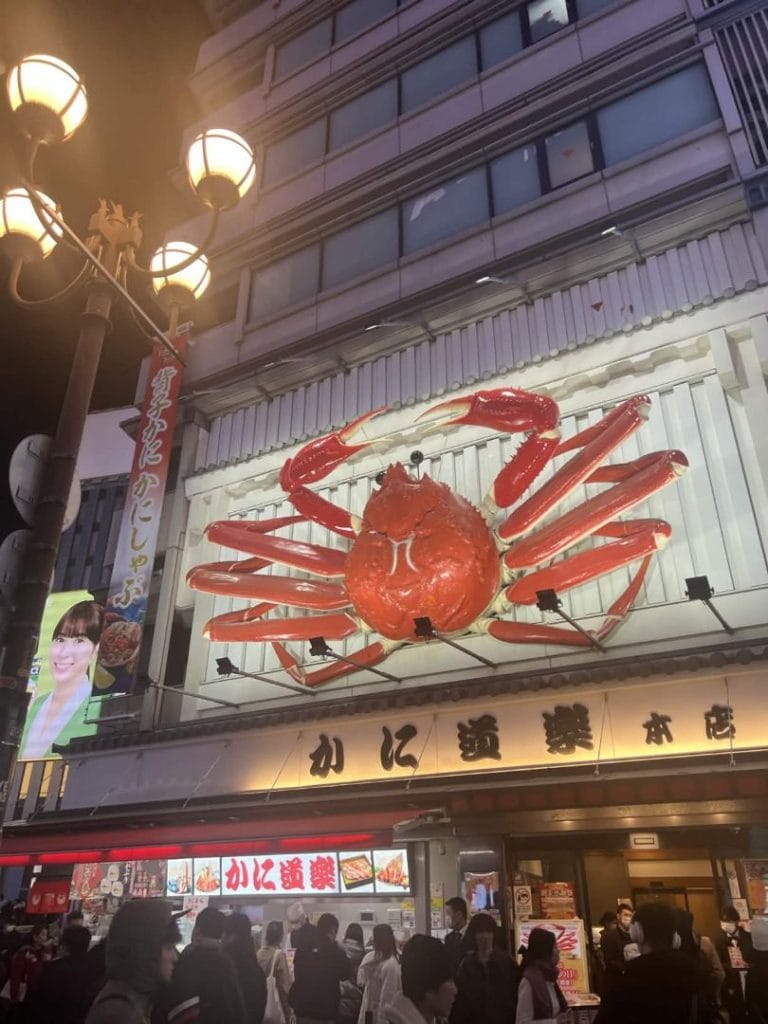
Several of the restaurants featured large sculptures and statues out front, usually reflecting their specialties, like crab or octopus. There was even a massive Don Quixote store with a Ferris Wheel on the north side of the river. However, one of the most memorable was actually the smallest, the clown Kuidaore Taro. Many of these displays can be found in Yakuza in the same relative locations, most notably the large crab sculpture outside Kani Douraku. There’s even a quest to take photos with some of these locations in Like a Dragon Gaiden: The Man Who Erased His Name.

Being a nightlife district, Dotonbori’s portrayal in games like Yakuza 2, 5, and 0 leans heavily into its connections with seedier elements of society. 0 in particular leans into this, with one of its heroes, Goro Majima, running a high-end cabaret in the main story and a smaller cabaret club in a side story, giving its Sotenbori a distinctly red-light flavor. That said, Dotonbori isn’t really considered a red-light district in recent years, if recent social media inquiries are any indication.
This matches up fairly well with my overall experience. While there was the odd seedy establishment or host club visible on the streets, what stuck out most to me was the incredible amount of arcades and restaurants. And in the spirit of Yakuza, I spent way too much time and money on arcade games and claw machines in between snacking on taiyaki. It was a highlight of my time in Osaka, though after some excellent okonomiyaki, it was time to move on. I was going to Tokyo in a few days, and there was yet more to see.
Kabukicho
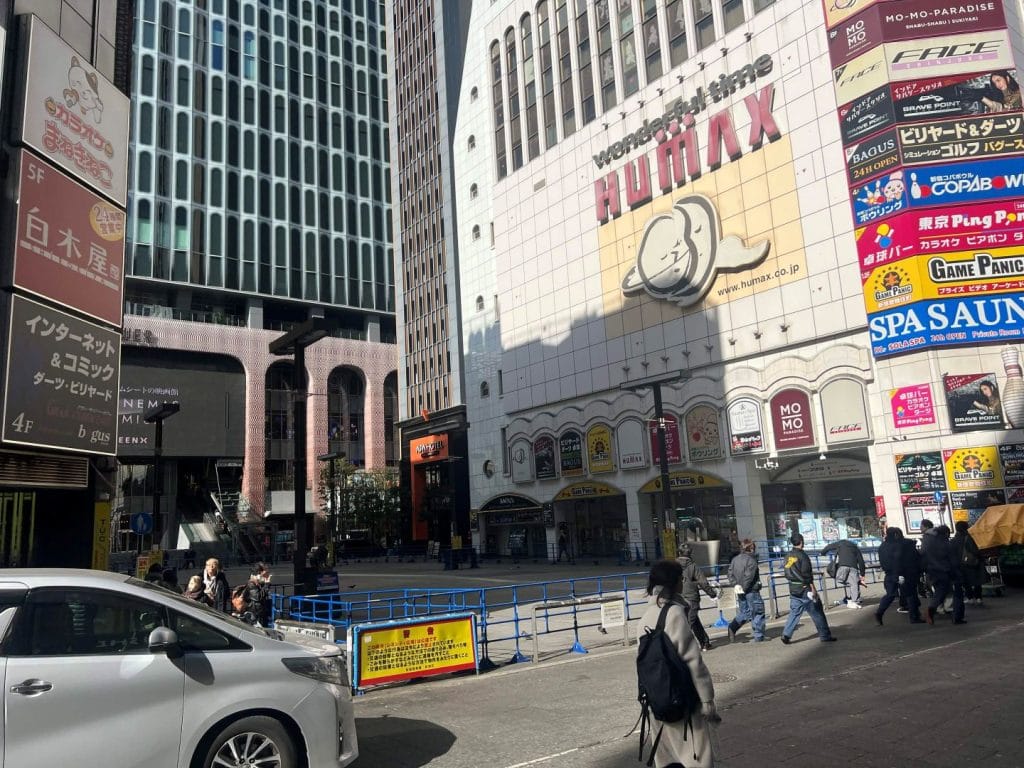
Kabukicho is the direct inspiration for Yakuza’s Kamurocho, which has appeared in every major game in the series. Unlike Dotonbori, Kabukicho is still considered a red-light district, which did put my family on edge when I suggested a day trip there. I wasn’t able to spend quite as long there as I did in Dotonbori, but I nonetheless got a lot out of the trip there.
Despite its red-light reputation, most of the information I found on Kabukicho noted that so long as you ignored the touters, it was a fairly normal and safe city to walk around casually, which I found to be an accurate assessment. One of the most immediately noticeable things was how plentiful host clubs are, as well as how much more they were visibly advertised compared to hostess clubs. The first major landmark I recognized was Theater Square, which was unfortunately undergoing major construction at the time.
Thankfully, after a bit more wandering, I came across a location that was about as recognizable as it was unimportant to any of the games’ plots: a small parking lot surrounded by billboard ads behind the Toho Cinema building. As far as I can recall, none of the main games give this location any major plot significance beyond the Rush Style trainer hanging out there in 0. While it felt a bit weird for it to be one of the first places I recognized, it still got the ball rolling.
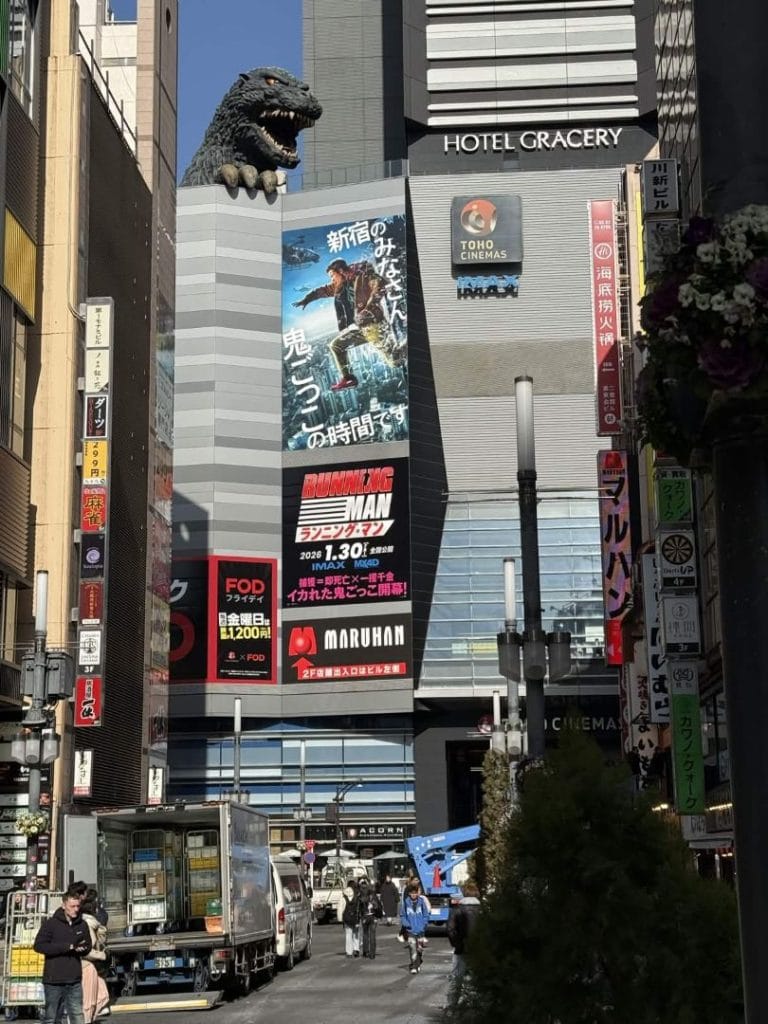
The most recognizable location in Kamurocho is Millennium Tower, a high-rise that has served as a battleground for many a shirtless fistfight. However, it does not exist in real life. Its counterpart, the Hotel Gracery, is directly conjoined to the Toho cinema center, which is represented by “Kamuro Theater” in Yakuza. Though in real life, the Toho cinema is notable for a large Godzilla sculpture poking its head out of the roof.
And rather delightfully, karaoke was ridiculously abundant. I was genuinely stunned to see two large Karaokekan establishments right around the corner from each other, and they weren’t the only karaoke parlors on their respective streets either. I desperately wished I could’ve sung karaoke in one of those booths, or at least tracked down a Majima vending machine, but alas, I wasn’t there for long enough.
An Odd Familiarity
Probably the most surreal element of both of my forays into these districts was how easy it was to navigate them despite my never having been there. While Dotonbori’s streets were as simple in real life as Sotenbori’s were in Yakuza, Kabukicho was more complex, and yet its resemblance to its in-game counterpart was both uncanny and invaluable in tracking down its landmarks. I imagine if you’ve spent a lot of time navigating Kamurocho’s streets in-game, you will likely have a decent sense of where you are should you ever visit the real thing.
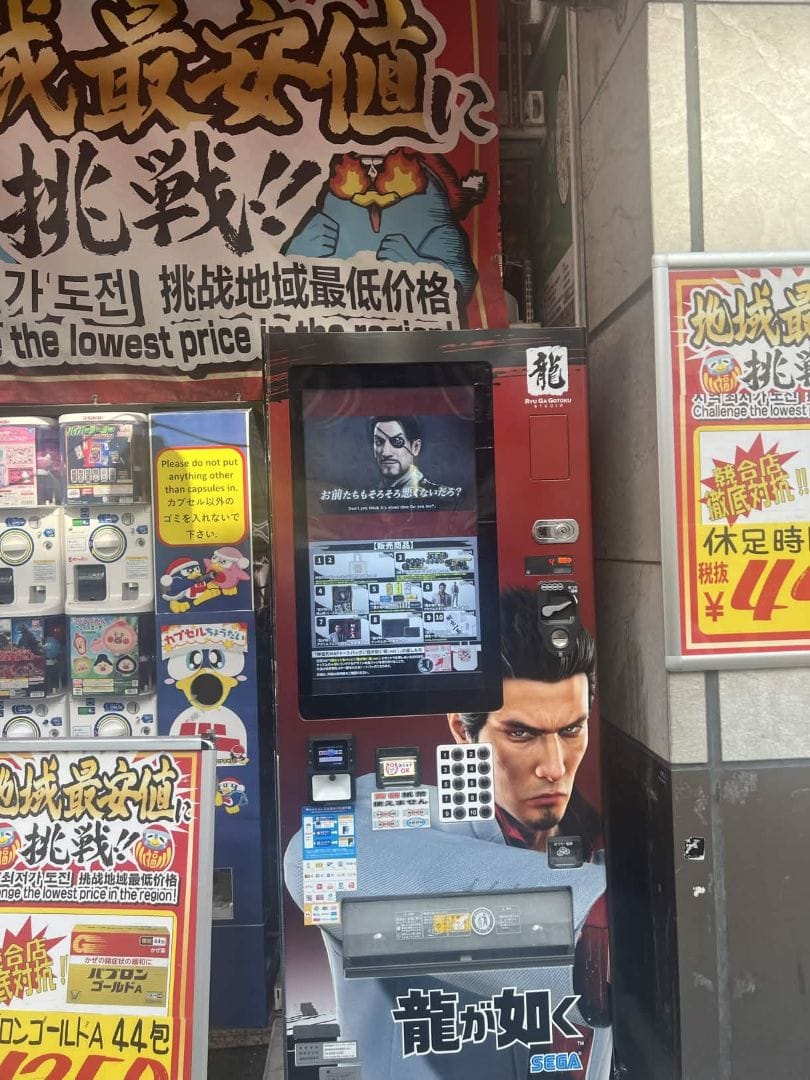
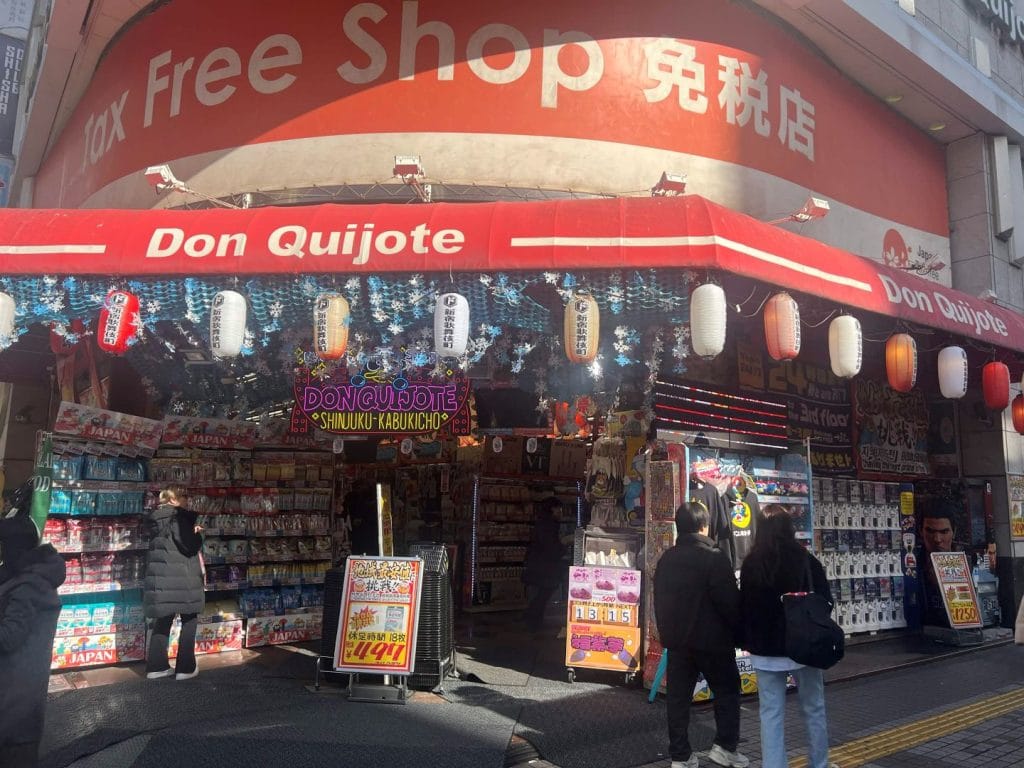
Even beyond that, it was apparent that someone doing business in the city was well aware of game-based tourists like me. Spread throughout the city were multiple vending machines stocked with Yakuza merchandise. Saejima- and Daigo-themed vending machines sat right outside a gachapon parlor, and a Kiryu-themed one sat outside the local Don Quixote, the store situated exactly where it is in every game in which it appears. The clerk who rang me up there even brought up the series by its English name when I referred to it by its Japanese title.
While playing a game can never compare to having actual lived experience in a given place, the familiarity I had with these two districts was reassuring. Seeing their distinct personalities, which were so lovingly captured in the games, in real life was hypnotizing. But beyond these two places, there was one more real-life location that I needed to see for myself. And one whose importance to me went quite deep.
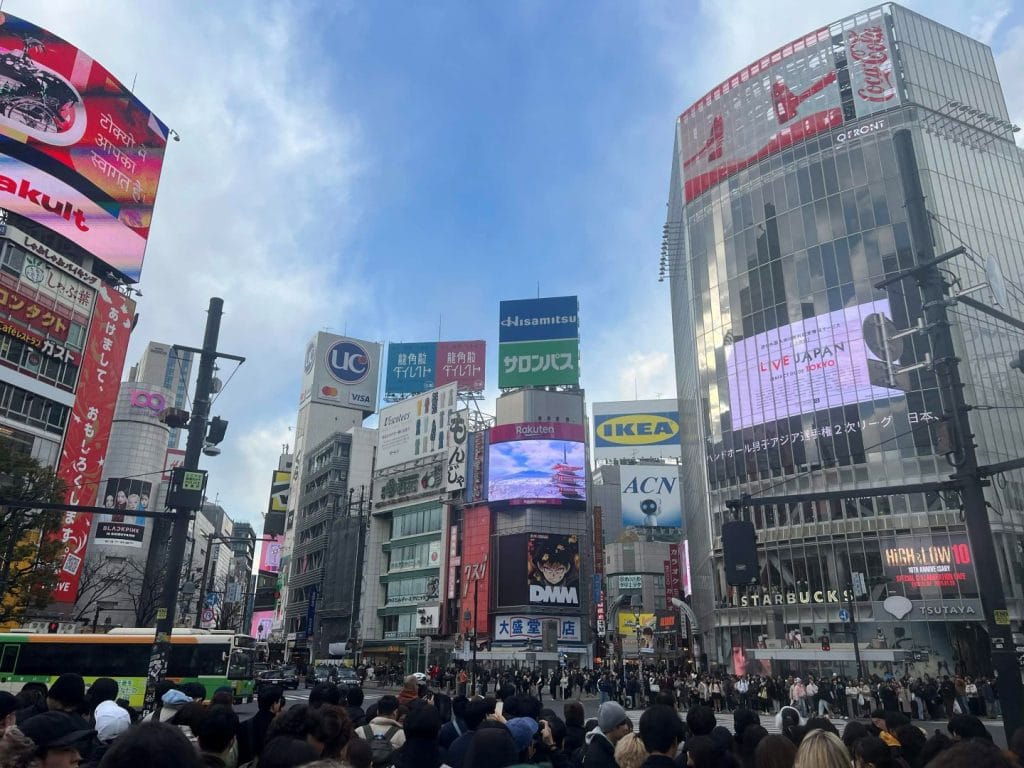
Shibuya
The World Ends With You is one of my all-time favorite video games. On top of just being plainly excellent in gameplay, story, and presentation, it still frames a great deal of my taste in media. It’s so important to me that I even recall the bizarre minutiae of how I discovered it, Googling details of the story of Hachiko after being moved to tears by a recounting of it and finding that the loyal dog’s statue was prominently featured in The World Ends With You. To this day, my mom still eagerly recounts an anecdote of how I navigated me and her toward that statue on our first trip with nothing but my knowledge of the game’s map.
Central to its appeal is its portrayal of one of Tokyo’s most famous commercial districts: Shibuya. There were plenty of places to visit that I eagerly recalled: Cat Street, the A-East concert area, and, of course, Hachiko. Overall I found the city to feel closer to NEO: TWEWY’s rendition, which may have to do with its more restrained camera angles, though the district was still accurate to both portrayals. It was, like in the games, a major shopping center, and I was lucky enough to stop in some incidental pop-up stores.
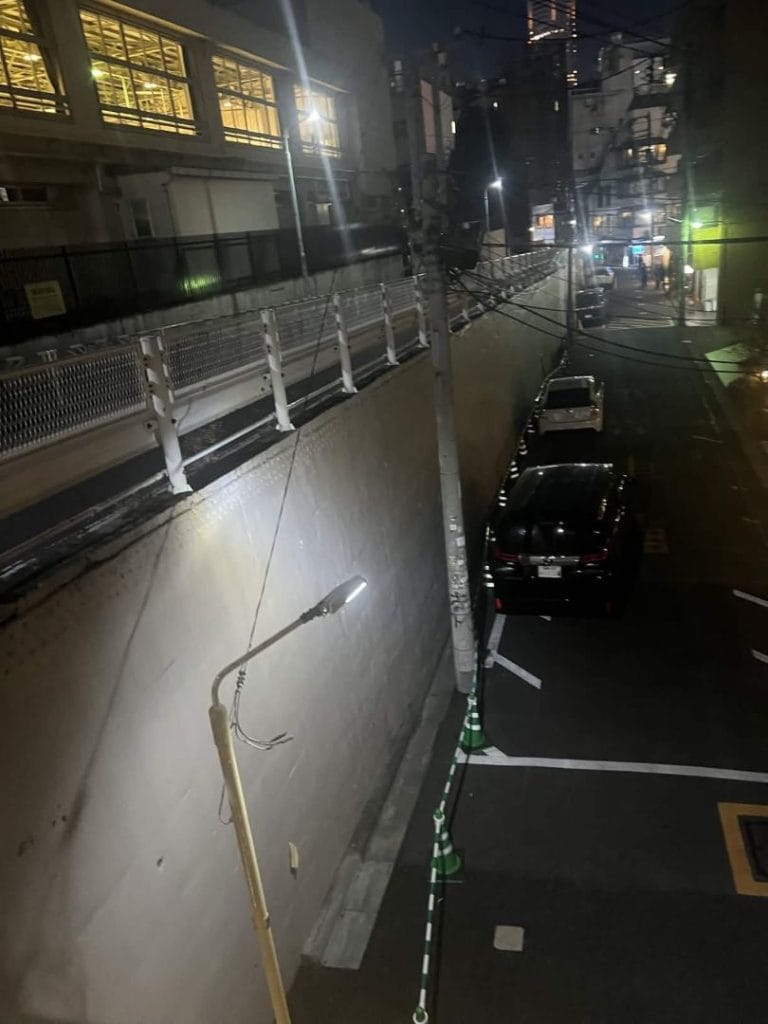
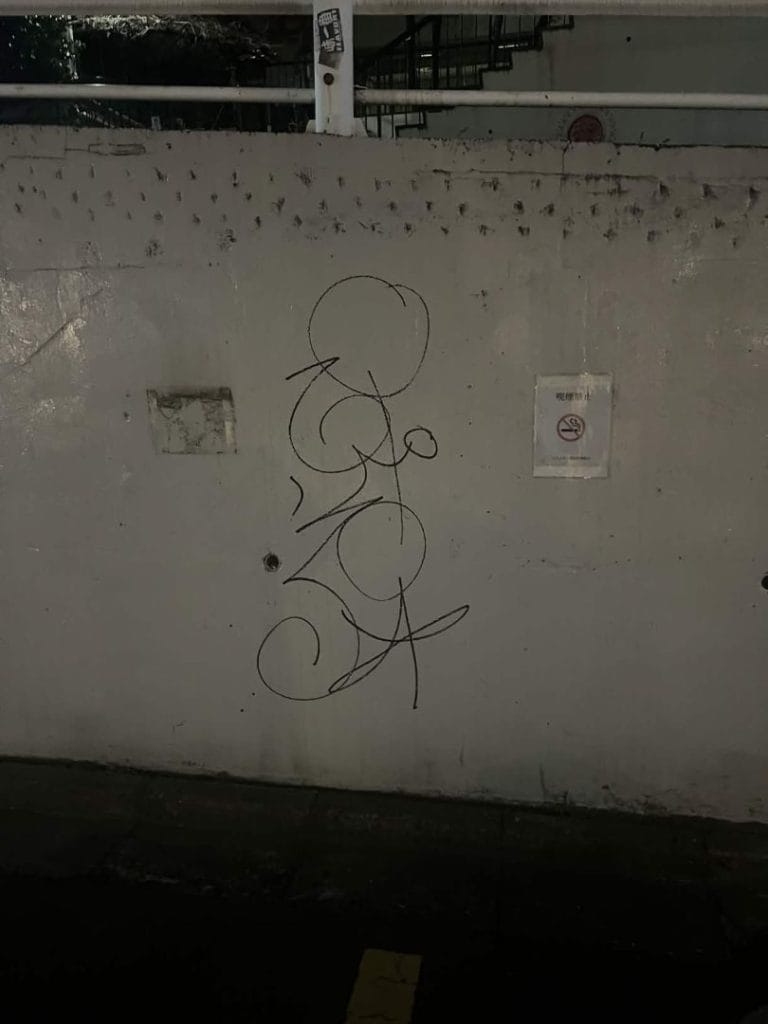
But more than the shops, one place stuck out to me as a must-see: a mural in Udagawa that plays a major thematic role in TWEWY. The prime example of the counterculture art that inspired its protagonist and the game’s aesthetic. Of all the places to visit, this carried a lot of personal weight for me.
And when I got there, there was nothing.
It had been covered with white paint years ago. The irony of this was not lost on me. I had been to this city before; I had the chance to visit this place and see it in its full glory. And yet the thought never so much as crossed my mind. I tried to rationalize away my disappointment. There were still pictures online of its former glory, and that would preserve the art. But if it were just enough to know it existed at all, why did I even come to Shibuya to begin with? Why was I even in this country?
To Make a Place Feel Real
The answer to that question didn’t take much digging: I was there because I had an image of this place in my mind. Though I knew it was a real place populated by real people, my image of Shibuya had no lived referent. I’d only been there once and that was half of my life ago, and even now it’s hard to recall what my exact mind state was. I wanted to come here, to Japan, to Shibuya, to this mural, to see it as it really was, unfiltered. I hoped to make the image in my mind that of a holistic, real place, not a snapshot cut off from its surroundings or lacking in detail. And I had indirectly denied myself that chance.
Yet, even with all that regret, I still couldn’t help but be glad that I came. I knew that I couldn’t change the past at this point, and that what was in Udagawa now still carried echoes of what came before, even if it amounted to just a simple doodle on the wall. Even more than that, looking at that largely blank wall, once I saw it through the view at the bottom of a staircase I recognized on sight from The World Ends With You, looking at it from the exact angle its camera framed it, I could see, in some capacity, the love that made that game.

It’s likely the same love that made Yakuza director Toshihiro Nagoshi and his team render Kamurocho and Sotenbori in such vivid, accurate detail. I was often struck by this feeling just from seeing familiar street corners, even if I didn’t recognize the buildings. A sense of reverence for the architecture and planning of the places these creatives wished to represent, or at minimum a sense of responsibility to convey their character accurately. And whether it was passion or obligation, that the results work as well as they do, that they feel so thematically enjoined to their locations, speaks to the intensity of those feelings.
People made these games, inspired by the very real world around them, and it’s easy enough to forget that even when they aren’t a country away. Heck, when I visit family far away from my home within America, it’s difficult to truly understand their situation without constant exposure to it. It’s easy to use an incomplete picture of places you’ve never been to project your own expectations onto them, and this is even more the case with foreign countries. With that in mind, it was worth it to see that blank wall even just once.
Because even if it wasn’t what it once was, it still gave me that feeling at the heart of tourism and sightseeing. I will, in all likelihood, never know Dotonbori, Kabukicho, or Shibuya like the people who actually live there. Acting like I understand them front-to-back because of a short visit is about as absurd as acting like I understand them because I played games that were set there.
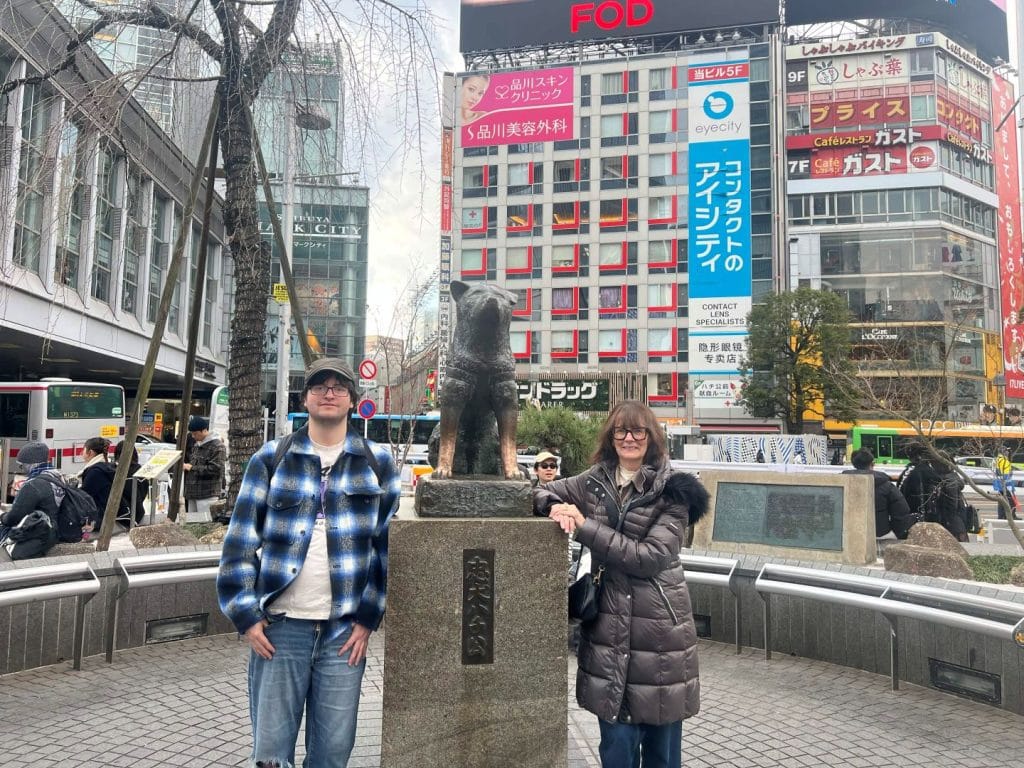
But understanding them just that little bit more meant more than I can say. It embedded these physical places in my mind. Not as mere ideas, but as part of reality at that moment in time. As places that changed in relation to the world around them. As places that people cared enough about to lovingly capture forever so that others could partake of that love. Even if they were an ocean away.

Sean Cabot is a graduate of Framingham State University, where he also wrote articles for the student paper before writing for RPGFan. In addition to gradually whittling down his massive backlog, he enjoys reading comics, playing Magic the Gathering, watching as many movies as possible, and adding to his backlog faster than he can shrink it.