

Mild spoilers ahead for Fallout (Amazon Prime series) and Fallout: New Vegas (video game).
Atom Bomb, Baby!
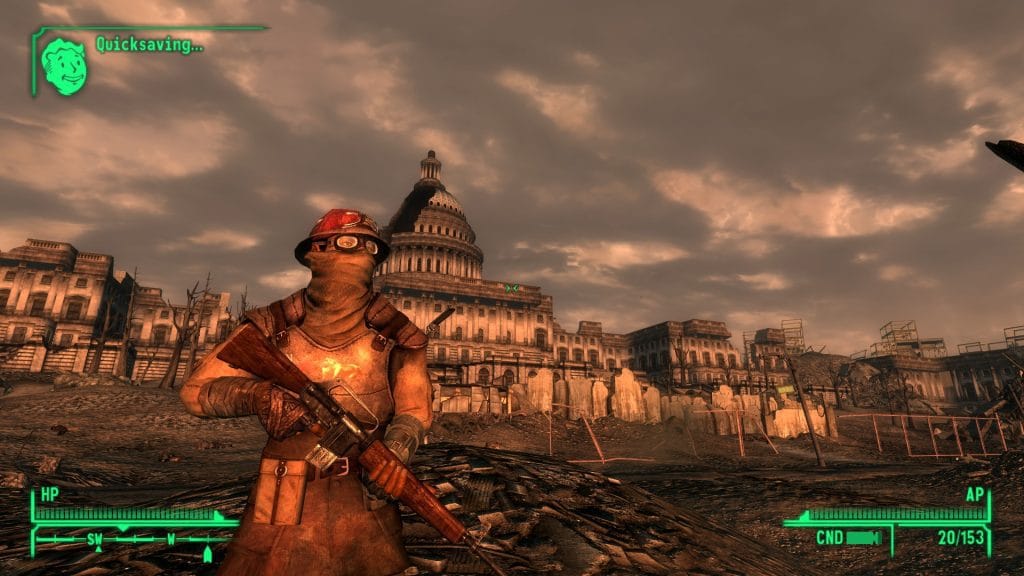
I’ve been enjoying the Fallout streaming series on Amazon Prime Video, which just wrapped up its second season, and have had little to complain about. Even if the acting and characters weren’t up to snuff (which they are), the production design alone is a sight to behold, with its lovingly realized vaults and ruins and some truly spectacular costumes and makeup. Few live-action adaptations could hope to capture the aesthetic of their source material so elegantly.
However, one thought itched in the back of my brain while I was seeing the ruined state of New Vegas, a location that serves as the crux of the latest season. The thought didn’t represent a criticism of the show, but rather a sense that the developments in the setting didn’t reflect my hopes while playing Fallout: New Vegas. I played through that game to save New Vegas from devastation, but as it turns out, it was doomed regardless?
It was quite the bitter pill to swallow, and given what I’ve seen for myself and heard from friends and acquaintances about the response to the show, I’m not alone, and it isn’t the only issue others have.
Admittedly, the range of responses to the condition of New Vegas (or such minor lore details as the inclusion of NCR power armor) varies in intensity, but many are strong enough that series showrunner Geneva Roberson-Dworet and Fallout 3 and 4 director Todd Howard commented on them in a recent interview with GamesRadar+. In response to such critiques, Howard described the series’ approach to storytelling as interpreting a set of “conflicting accounts,” told from different perspectives.
To some, I imagine this might seem evasive, or possibly even a copout; a corporate packaged excuse for the showrunners to run roughshod over the property’s canon. And, on a certain level, I think skepticism toward diplomatic answers such as this is warranted. At the same time, I also think that the reasoning describes a completely valid way of telling multiple stories in one setting. I’d also go one step further and suggest that clinging to specific narrative elements may be flatly unnecessary even if the show were totally detached from prior canon.
Does Canon Matter?
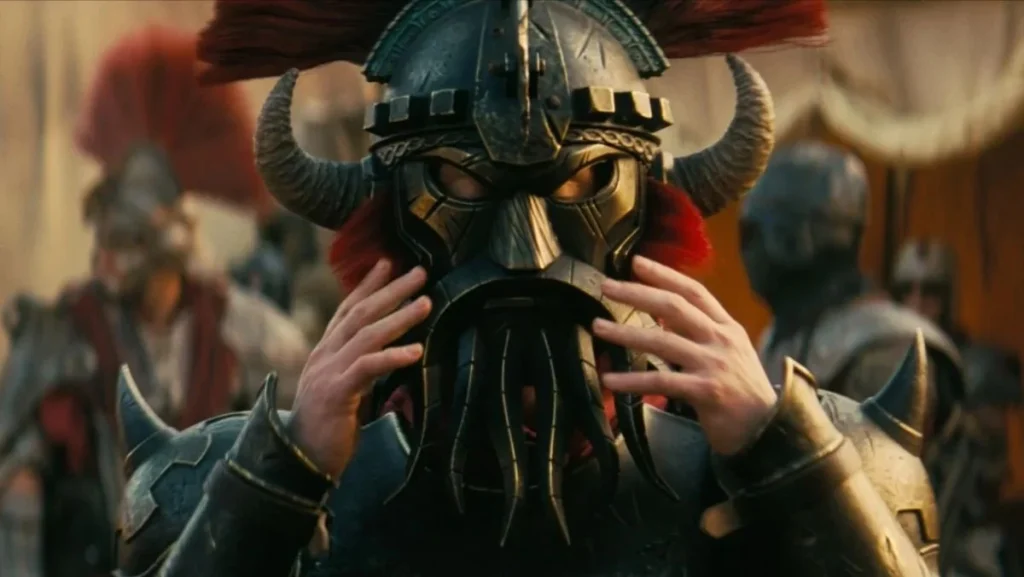
Granted, while I am prepared to justify that sentiment, part of me recoils at the idea that “canon doesn’t matter.” As stated, I too felt some discomfort with the developments for Vegas, the New California Republic, and the Legion, and in this case it’s easy to see why. Fallout: New Vegas is a fairly open-ended game, and as I played, I formed an investment not just in the characters and story, but in the world I wanted to build. I wanted to make a New Vegas that was free of both the threat of the Legion and unreliable authorities.
More than anything, I also wanted to believe that choice was justified, that it would lead to a good outcome. Maybe that was asking too much, as the choices presented are left intentionally ambiguous as to how seriously their costs and benefits will manifest. There’s also great ambiguity in what exactly happened between New Vegas and the Prime Video show to avoid privileging just one ending, though this implies that the ending chosen is of little relevance to Vegas’ ultimate fate. That whatever I did may not have mattered stings about as much as the idea that it specifically led to Vegas’ decline.
With that in mind, it feels clearly wrong to just dismiss these feelings completely. They’re rooted in emotions that the series is likely trying to evoke from players, and even putting that aside, most can safely agree that people are generally allowed to feel how they please about art. That the Fallout show has made people feel upset based on their feelings about a game they’re explicitly making reference to is, on some level, to be expected.
Subjective vs. More Subjective
Simply ending the discussion there, however, would be a mistake. While it’s never fully possible to disentangle personal judgment when assessing a work, some judgments are less subjective than others. That is to say, not every positive or negative feeling about a game or show or any kind of media necessarily represents a flaw in its construction. While what constitutes a flaw is also dependent on the person judging a work, there is a kind of intersubjective understanding that analyzing flaws is a more objective practice than describing one’s personal gripes.
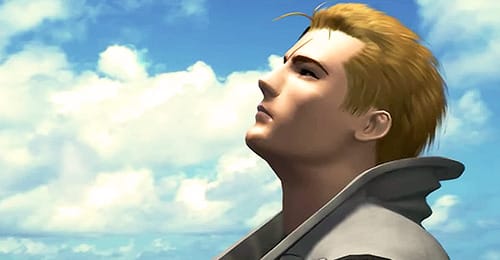
As an example, I think Seifer from Final Fantasy VIII is a poorly written character, and I can justify this claim by highlighting concrete examples of poor writing. His motivations are noticeably idiosyncratic but underdeveloped, and his contrast with Squall and the attempts at forming a love triangle between them and Rinoa are half-hearted.
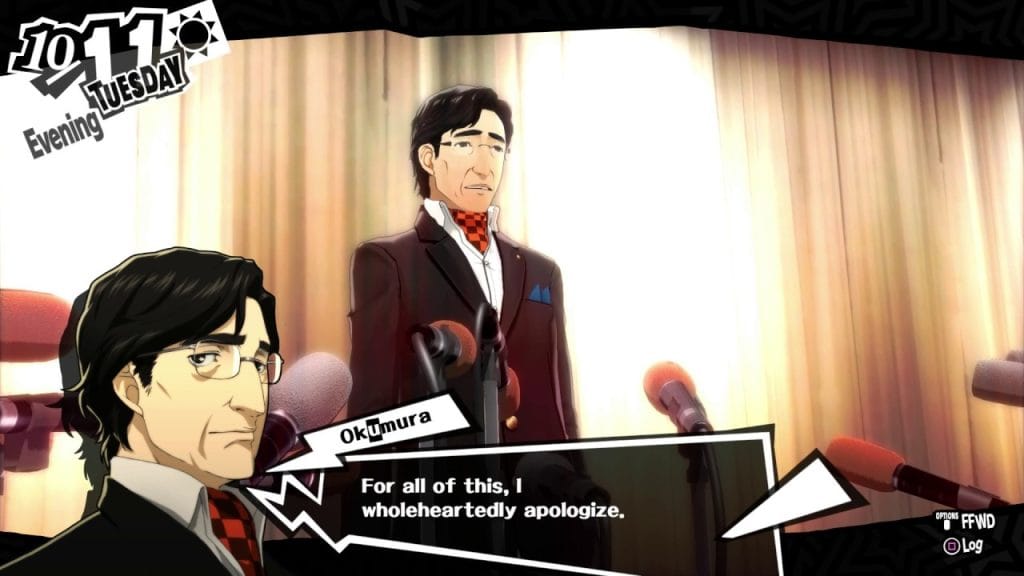
Contrast this with, say, Kunikazu Okumura in Persona 5, a character I dislike personally. I find his disposition unpleasant, his dungeon aggravating, and his boss fight annoying. But all told, none of these issues I take represent failings in the narrative either in concept or execution. Some of these negative feelings are intentional, others maybe less so, but none imply that the character is poorly constructed when I look at the game dispassionately.
I can think of all too many examples of media criticism that have regrettably failed to keep these two types of judgment reasonably separate; some casual, and way too many not. It is uncomfortably common to hear folks make criticisms based on isolated, off-the-cuff emotional reactions without first trying to assess if they simply represent personal distaste.
Hypothetically, this isn’t strictly limited to negative feelings. But with negative criticism often proliferating far more easily than positive criticism, it tends to more visibly run into this confusion. And nowhere do I see said confusion manifest quite as strongly as in discussions of canon, where it’s taken for granted that adherence is an inherent virtue.

Not Just Canon
A similar question also applies to adaptation. Is accuracy to source material an inherent virtue? I don’t expect this to be a universally accepted take, but I would tend to answer “no” in most instances. Coming from a background in superhero comic fandom, I’ve walked in the trenches of debates over canon that usually boiled down to personal distaste for a specific status quo rather than meaningful narrative analysis.
Likewise, discussions on film adaptations of comics often disproportionately center on the accuracy to comics as a virtue in and of itself. And while I personally would absolutely love it if films started taking their comic source material more seriously, that desire is secondary to making a good movie. One of my favorite comic adaptations, Batman Returns, bears little coherent resemblance beyond names and aesthetics to the comics it’s based on, and I would still genuinely argue for its merit as a film.
The process of adaptation, however, differs from canon adherence in a notable way: Adaptation usually concerns art made to be appreciable even without its source material, and canon often involves multiple pieces of art explicitly connected to one another as pieces of a greater whole. But the relationship between multiple works in the same world can be highly variable.
Where’s the Line?
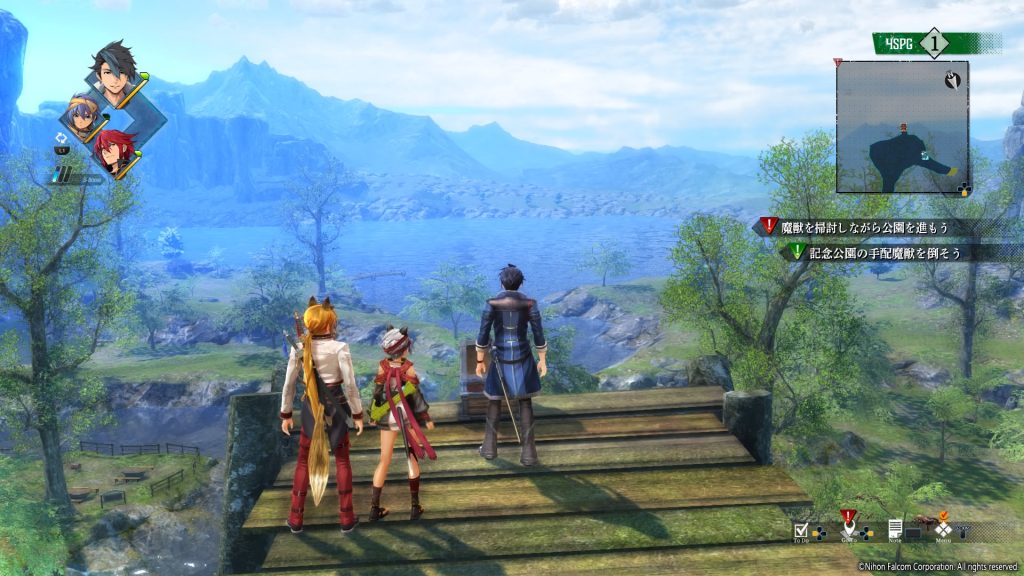
Sequels and prequels with a continuous narrative are clear examples where maintaining continuity matters. The Trails series is composed of highly interlinked entries taking place in the same world, and contradictory story elements would undermine its narrative and potentially confuse players. If the story is more standalone, though, it’s a far more complicated call to make.
A narratively isolated follow-up that can be appreciated without its predecessor can make complete sense and succeed as a piece of art on its own merits, even if it changes details with reckless abandon. For example, should the next Fallout game totally rewrite its lore in an incompatible way to the prior entries, each entry being fairly standalone would greatly mitigate that as a critical factor.
Not every story will fall neatly into these two categories, and in some instances it may be equally fair to judge it on its own or in the context of other entries. Personally, I would choose whatever made me most appreciate said story, canon be damned.
But does that mean that this disregard should be the default assumption for the creators? Heck, let’s take it for granted that canon isn’t the top priority. Shouldn’t it still at least be a priority?
Yes. Kind of. Maybe.
Begrudgingly, I must answer in the affirmative. Even if I were to completely write continuity off as a critical factor, it still must be weighed against the dissatisfaction of devoted fans being a negative outcome on its own and a hindrance to their ability to assess the story on its own merits.
Nevertheless, fans still have their own oft-neglected due diligence. It’s frustrating that discussions of accuracy and canon adherence often serve to obfuscate the elements of a work that give it artistic value in the first place. Narrative structure, pacing, cohesion of presentation and theme, and many, many more important aspects of art are often ignored or dismissed in favor of things that simply would not matter if, say, someone unfamiliar with the source or other entries were appreciating it. And these discussions often veer in rather extreme directions.
I can’t help but roll my eyes when someone, without hyperbole, tries to make the case that a sequel they dislike “isn’t canon.” Obviously, it’s absurd to deny officially sanctioned canon as determined by those in creative control, as the sanction of their authority is the determining factor for canon.

In My Humble Opinion…
That said, I do think this approach, at least when applied as personal appreciation, is somewhat valid. It’s easy to appreciate, say, fan recuts of movies or mods of games as being concrete, distinct creative objects from their original forms. At the same time, there’s no reason to think that the rearrangement of abstract ideas like canon is sufficiently different enough to preclude a unique, personally held idea of a universe’s canon from being its own distinct creative object. That it may only exist in one’s mind doesn’t mean it isn’t real.
Not every emotion about a piece of art needs to represent a quality judgment about it, and that doesn’t mean those feelings don’t matter. Being upset that an adaptation isn’t accurate or that a sequel plays loose with canon are both understandable and completely legitimate emotional responses. All I ask is that we look at our emotions and art within different contexts.
There’s a lot to like about the Fallout show, even if you think the story is a total write-off or you just can’t get past any perceived deviations from the games’ lore. This mindset could go a long way toward reducing toxic or argumentative tendencies in fandom, though that might be wishful thinking on my part. Despite that trepidation, I do hope that, going forward, such a mindset can be shown to be more than that.

Sean Cabot is a graduate of Framingham State University, where he also wrote articles for the student paper before writing for RPGFan. In addition to gradually whittling down his massive backlog, he enjoys reading comics, playing Magic the Gathering, watching as many movies as possible, and adding to his backlog faster than he can shrink it.