Update (6/25/2026): Just a few hours after our NBA The Run review went live, developer Play by Play Studios dropped a blog post announcing bug fixes, new player additions for July, the introduction of season-based content, and — most importantly — a single-player mode. The campaign is still a ways out (it’s planned for spring 2027), and who knows how much the new content patches will impact the overall experience in the meantime. Still, this is a nice step in the right direction. Our original review (below) remains unchanged, but I look forward to seeing NBA The Run evolve over the coming weeks and months.
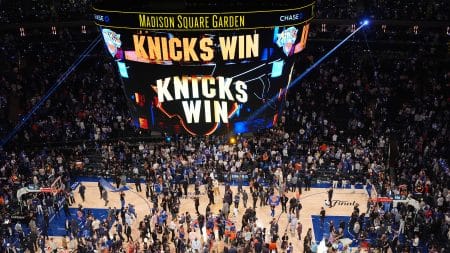
The World Cup may be the summer’s biggest sports obsession, but for a glorious 11-day stretch, that honor went to the 2026 NBA Finals. Although my precious Celtics got bounced back in May, this year’s finale couldn’t have featured two more deserving teams. On one side, we had the Spurs: young, raw, but talented. On the other, the Knicks: older, hungrier, and disciplined. It was a terrific showdown, and while yes, the Spurs suffered a historic meltdown and sputtered out by Game 5, they should be proud. The groundwork is there; now they need to hit the gym.
NBA The Run, developed and published by Play by Play Studios, reminds me much of that Spurs playoff run. It looks the part and plays cohesively, but it just doesn’t have the confidence, the experience, or the polish to get the job done. I rooted for it and invested both time and energy, but I ultimately came away disappointed — at least by this year’s iteration.
Let’s Jam
Much has been said about NBA The Run’s spiritual DNA. Developed by former EA talent, the game wears its influences on its sleeve.
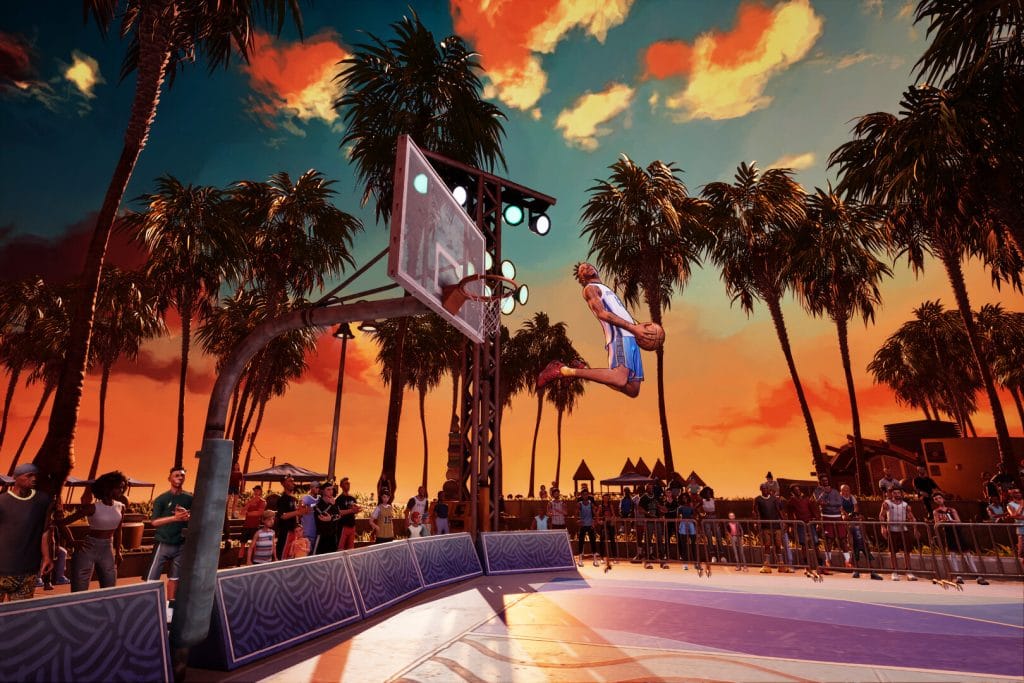
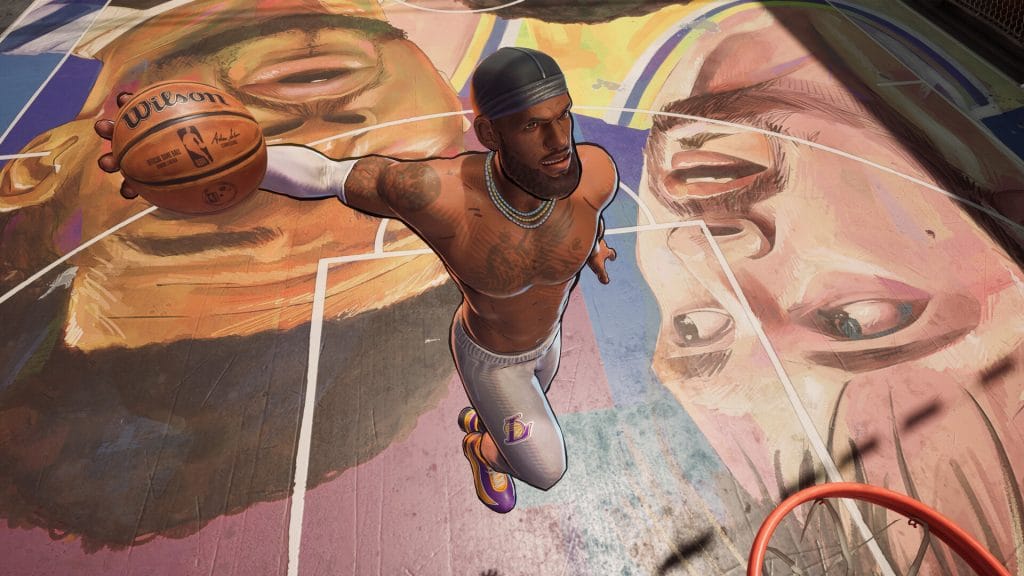
NBA Jam and NBA Street, two beloved franchises that, for better or worse1, are owned by EA, have both gone dormant (shocking!) over the past 15-plus years. NBA The Run is an attempt to recapture their essence, with a focus on 3v3 pickup games, big crowds (and even bigger murals), flashy dunks, and a Jam-esque “Zone” meter.
Boot up the game for the first time, and you’re thrown right into the mix. No cutscene to set the stage; no tutorial to show you the ropes. Instead, you’re treated with a Fortnite-esque lobby screen and left to your own devices. Aside from a barebones “shootaround” mode, which lets you, well… shoot around with your currently equipped character, the only real onboarding in NBA The Run comes from queuing up an actual match and learning as you go.
The game features three modes, each centered around a 16-team, single-elimination knockout tournament. Solos lets you choose three NBA players and go head-to-head with other teams. Squads pairs you up with two other online players for true 3v3 matchups, while Friends mode lets you create a private room and run a tournament with up to 48 friends.
And that’s it. NBA The Run doesn’t contain a story mode, nor does it support local or offline play. (You can use Friends mode to fill a tournament with bot players, but the game’s clearly not designed for that.) Online play is the sole purpose, and if you were looking for something different, you’re going to be sorely disappointed.
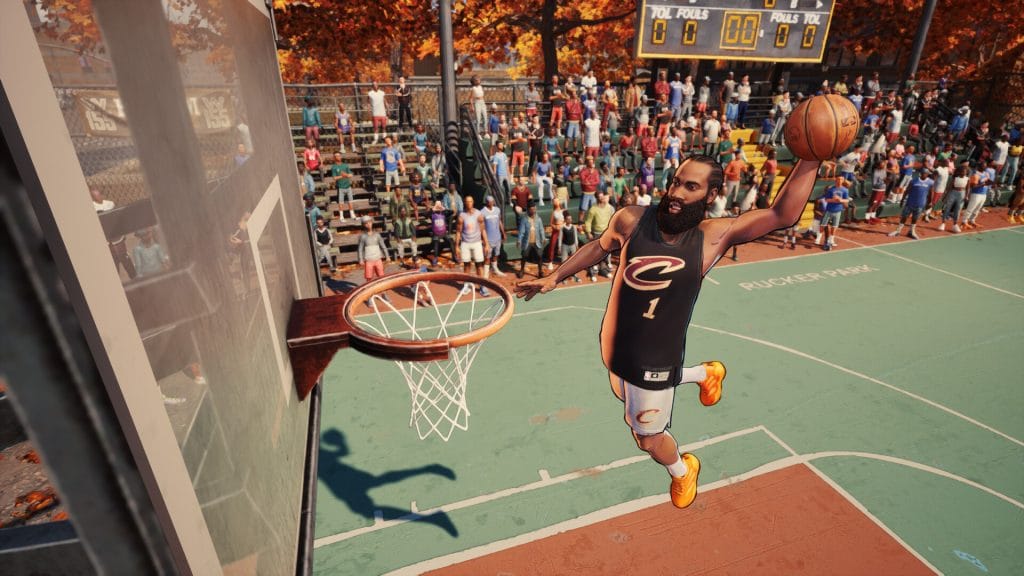
We Have NBA Street at Home
It’s a shame that a game so heavily influenced by the ‘90s and early aughts would abandon its roots. NBA The Run masquerades as a callback to the arcade and PlayStation 2 eras, but in reality, it has far more in common with live-service games like Fortnite or Call of Duty: Warzone.
In addition to the obvious comparison — the elimination-based, battle royale framework — NBA The Run also weaves in some bizarre GaaS-y habits. You earn in-game currency after each tournament, but it’s doled out at a snail’s pace. That currency is used to buy exorbitantly priced emotes, alternate jerseys, and new dunk animations, none of which alter the gameplay in any meaningful way. You’d think there’d be a real-world currency component to speed up the grind, but nope: NBA The Run doesn’t actually have microtransactions. It’s just obtuse.
Outside of cosmetics, NBA The Run does offer the slightest bit of progression. As you play matches, you’ll earn experience and eventually level up, granting access to new characters. Curiously, locked characters consist of fictional characters — apparently created before Play by Play Studios secured the NBA license — while real-life NBA players are all unlocked from the get-go. There are some exceptions (you can buy five “legacy” characters from the shop, such as a Cavaliers-era Lebron James and young Steph Curry), but otherwise, the perennial all-stars and MVP candidates you see in the first five minutes of NBA The Run are the same ones you’ll use after 50 hours of play.
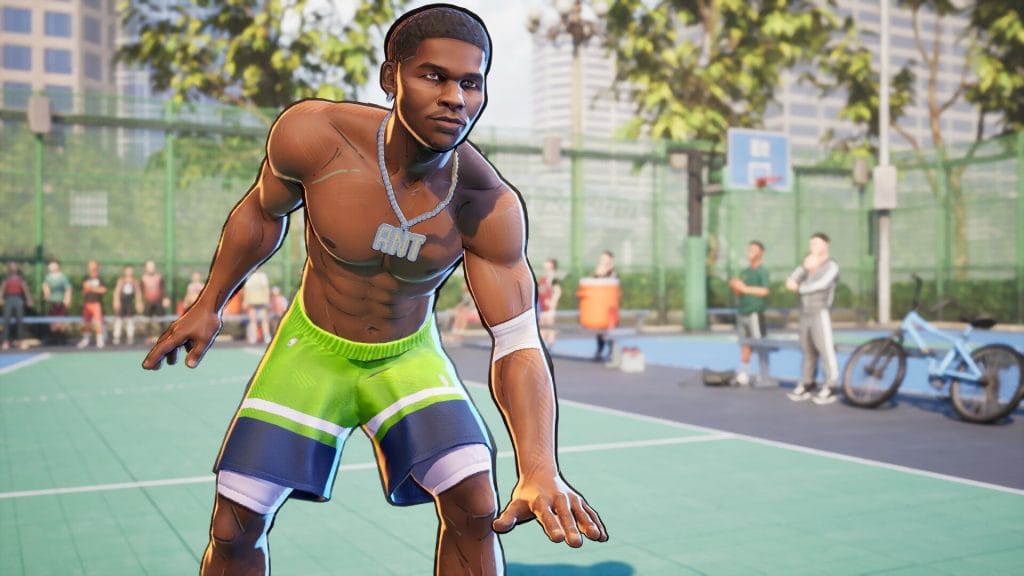
Entering the Zone
So, to recap: There’s no story, tutorial, or local mode. The progression is sluggish, with very few unlocks that make the grind worthwhile. It might sound like I hate this game, but that could not be further from the truth. If anything, NBA The Run’s greatest flaws only underscore how engaging the fundamental 3v3 gameplay can be — in practice, at least.
Matches play out much like how you’d expect them to. You’ve got all the arcade basketball staples. On offense: the ability to pass, shoot, throw lobs, and show off your handles. On defense: the ability to rebound, steal, and dive for loose balls. Throw in some clever use of the right stick, which controls not just spin moves, but also push-offs and stepbacks, and NBA The Run has a surprising amount of complexity. It’s no NBA 2K — you’re not setting screens and facilitating pick-and-rolls — but there’s plenty of depth for players looking to seek it out.
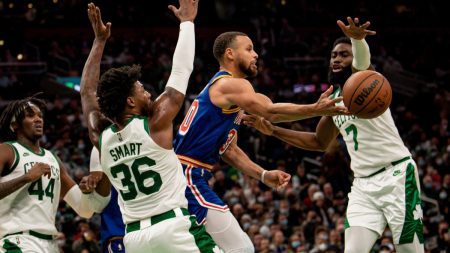
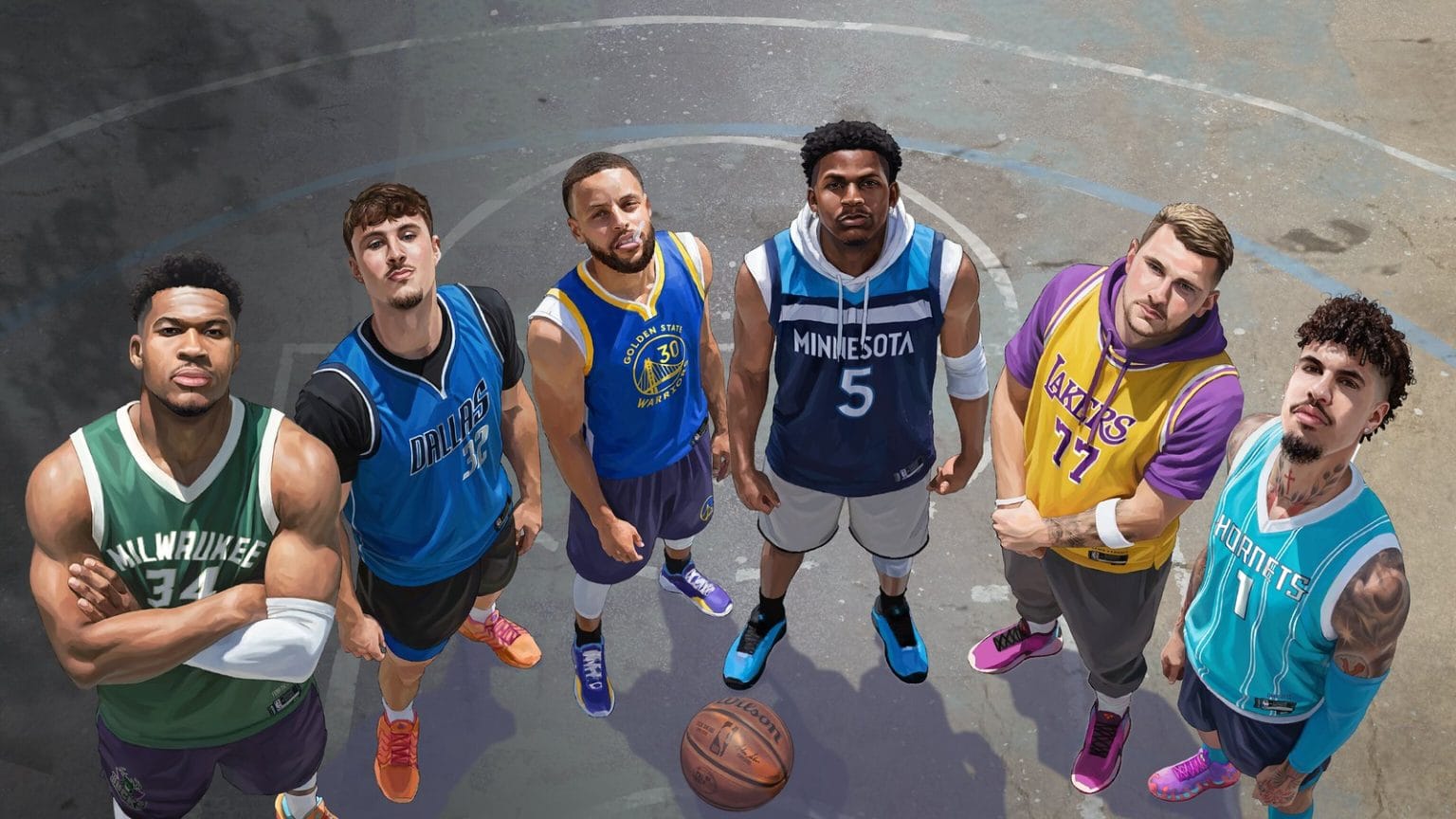
Fictional and legacy characters aside, NBA The Run features 32 current NBA studs, each with the strengths and weaknesses you’d expect from their real-life counterparts. Offensive guards like Luka Dončić and Steph Curry have terrific handles and great shooting, but suffer on the defensive end. Titans of the paint like Giannis Antetokounmpo and Victor Wembanyama can rebound and block shots with ease, but lack speed and mobility. Anthony Edwards can dunk, Kawhi Leonard can steal, Tyrese Maxey can fire up the jets… You get the idea.
I cannot stress enough how true to life these characters feel. Part of the allure of NBA Jam was the ability to embody your franchise’s brightest stars. Whether you were breaking ankles as Kobe or doing poster dunks as Shaq, the commitment to authenticity — albeit in a series where players would catch on fire — made Jam particularly special. NBA The Run recaptures that spark and adds the audiovisual flair of NBA Street (complete with Street Vol. 2 commentator Bobbito Garcia) for a compelling cocktail.
The gameplay takes getting used to, especially with no tutorial and the unforgiving nature of a knockout tournament. Before long, however, I came to relish each new opportunity to prove myself on the hardcourt.
Can You Hear Me Now?
As strong as NBA The Run’s gameplay can be, I found my fun often getting derailed by a glaring issue: the actual online experience.
I live in Boston, where internet bandwidth is readily available. I play games like Marvel Rivals and Fortnite without issue, latency, or lag. Yet despite NBA The Run boasting rollback netcode, I couldn’t play for very long before hitting major choppiness. Frequently, I’d bring the ball up the court only for the screen to stutter, freeze, and resume with my opponent heading toward the other basket, ball in hand.
I connected my PlayStation 5 to my router via Ethernet cable. The action improved, but only slightly. Online connectivity remained a game of roulette — sometimes favorable, many other times not. I’m no expert, but I imagine part of the issue stems from a low player count (on Steam, the game peaked at just shy of 3,000 total players). With fewer possible players to play against, matchmaking may span time zones or even countries.
A low player count isn’t the fault of Play by Play Studios. However, the online woes only exacerbate my issues with NBA The Run — namely, the lack of any meaningful offline functionality. If the title had launched with an arcade-style campaign, or even just couch play, I could recommend it based on the merits of the gameplay alone. As is, however, your experience in The Run is beholden to the strength of its player base (and their routers).
Final Thoughts
NBA The Run is a fun game that’s hampered by stick-thin features. If you can gather some friends who don’t mind spending $30 for a single mode, you’ll have a fun time. Set up a private lobby, let the AI fill in as needed, and have yourself a ball. However, if you’re going into the experience solo, or with two other buds hoping to conquer an online bracket, I must advise against it.
The gameplay is terrific, and I have no doubt future iterations (should Play by Play Studios greenlight a sequel) will only improve on this foundation. But NBA The Run, as presently constructed, just doesn’t have the roster depth needed to go the distance.
The bright side: There’s always next year.
Score: 6.0/10
NBA The Run, developed and published by Play by Play Studios, released on June 9, 2026, for PC (via Steam), PlayStation 5, and Xbox Series X/S. MSRP: $29.99. Version reviewed: PS5.
Disclaimer: A review code was provided by the developer.
- Whereas NBA Street was created by EA Chicago (then NuFX) and EA Canada, NBA Jam was originally developed and published by Midway. Acclaim acquired the exclusive publishing rights on consoles, releasing new NBA Jam entries through the early aughts. Then, in 2010, EA swooped in and purchased the IP after Midway filed for bankruptcy. EA revived the series that same year with a remake, NBA Jam (2010), and while it was generally well-recieved, it isn’t exactly “beloved” like the original arcade games. ↩︎

David is the founder of The Punished Backlog. He has a problem finishing games he starts.
Just beat: Splatoon Raiders.
Working on: GTA V.
Can't wait for: Ocarina of Time (2026), GTA VI.
Follow David on Twitter at @David_Silbert to keep up to date with all things The Punished Backlog.