
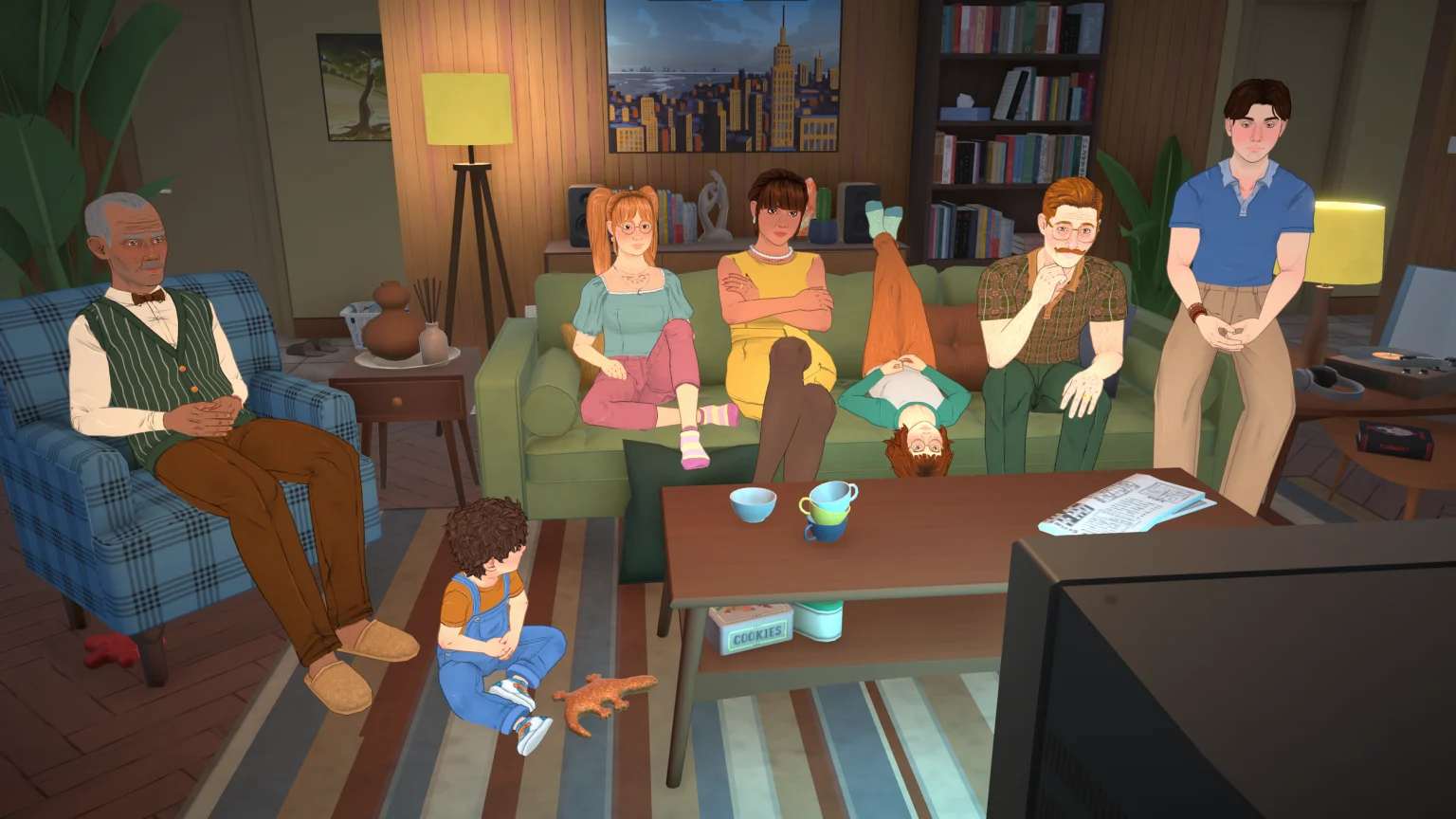

Whenever I start to feel like my real life is spiraling out of control, I turn to life simulator video games. As a kid, I was obsessed with the likes of Virtual Families and other real-time mobile games by Last Day of Work. Years later, I found The Sims 4 (the earlier installations released when I was still playing with dolls). The Sims 4 was life-changing, but the guilt I harbor over spending truly obscene amounts of money on one AAA game1 helped me root even harder for upcoming indie competitors in the life simulation genre.
EA’s monopoly over the life sim genre has been challenged by a few competitors — with middling results. The latest big-hitting addition to this genre is Paralives, released in early access in May by Paralives Studio. I’ve had my eye on Paralives for a few years now, and I’ve been craving a fresh life sim that I can really get behind. And, boy, is this a life sim I can get behind.
The Art: A Breath of Fresh Air
I’m an arts person at heart, so Paralives’ beautiful, painterly art style caught my eye from the beginning. The Paralives team has worked hard to create its charming, lived-in-feeling style. I was on the fence initially, wondering how it would translate into a game, but having played the early access build, I’m all for it. I’m tired of seeing generic art everywhere, especially with the proliferation of AI-generated “art.” Although the new style is (somehow) controversial, it’s refreshing to see a new take!
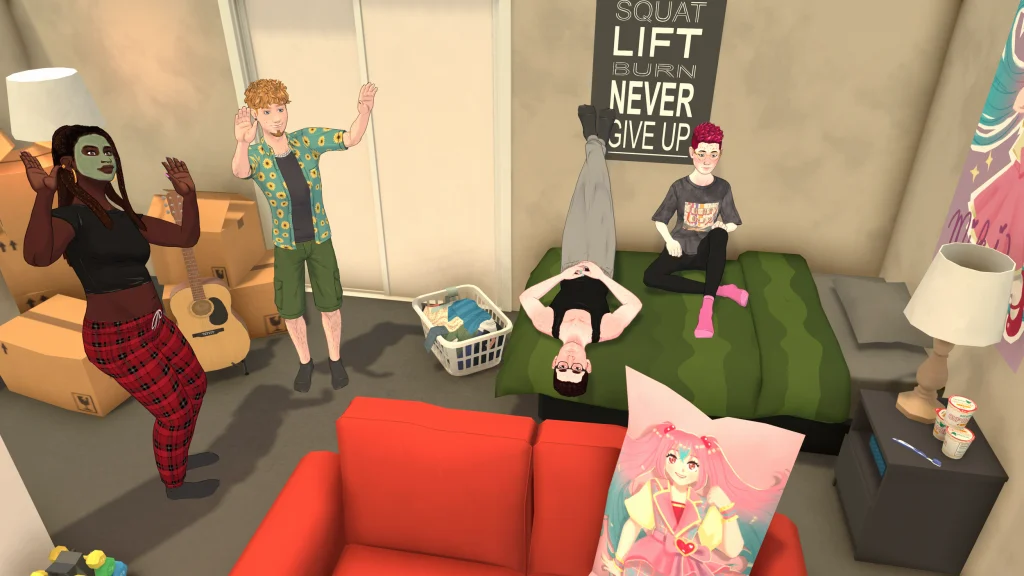
Aside from the excellent visual art, Paralives is positively dripping with environmental storytelling. Sure, there are some small descriptions for the households that you can choose to start with in the tutorial. But the best part is picking out details in households that don’t have descriptions and piecing together their stories.
The most popular and obvious of these stories is that of the Patel family, which consists of a married couple living in a state of physical and mental disrepair. Careful observation shows that they had a son who went missing around Christmas time, and their lives stopped entirely since then. The magic of this story is in the details. You can even find out their missing son’s name if you look closely at the stockings hung in the living room. These minutiae are a sign of a team that’s put their whole heart into their game.
Gameplay: The Good
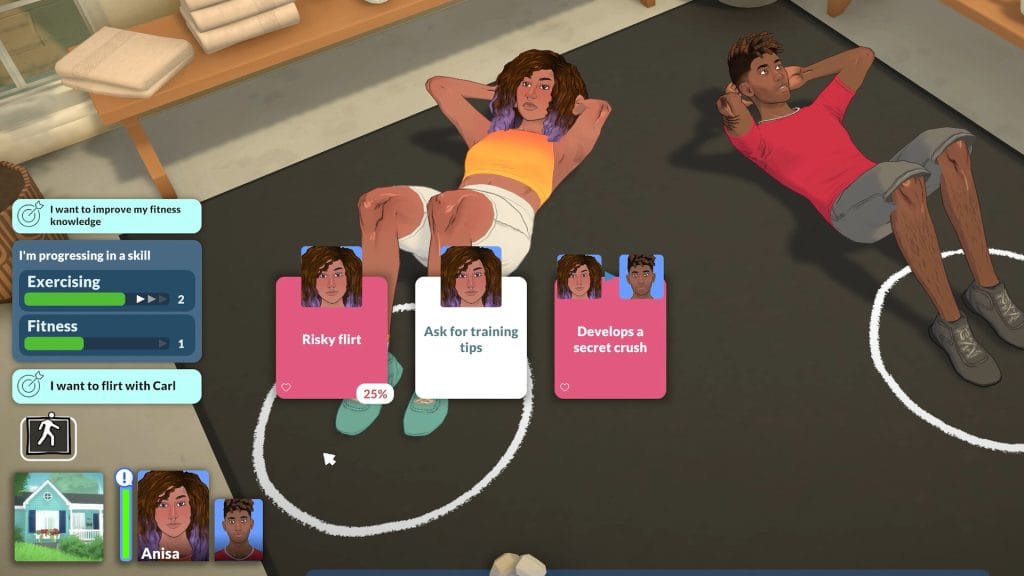
Paralives already has the potential to stand alone as its own pillar in the life sim genre. Part of the game’s huge draw is that it’s not just a “Sims clone.” Sure, you can design your Parafolk (or Para for short) and build your house just like any other life sim. But Paralives has a unique card system for socializing, an open map, and a fully customizable build mode. These innovative mechanics make the game more challenging and life-like.
Life sim games are an ideal outlet for escapism, a way to live many different lives. We can build a big house that we could never hope to afford in real life, have a huge family that sounds fun in theory but not in practice, or act out crazy soap operas that are fun to hear about but not to live through.
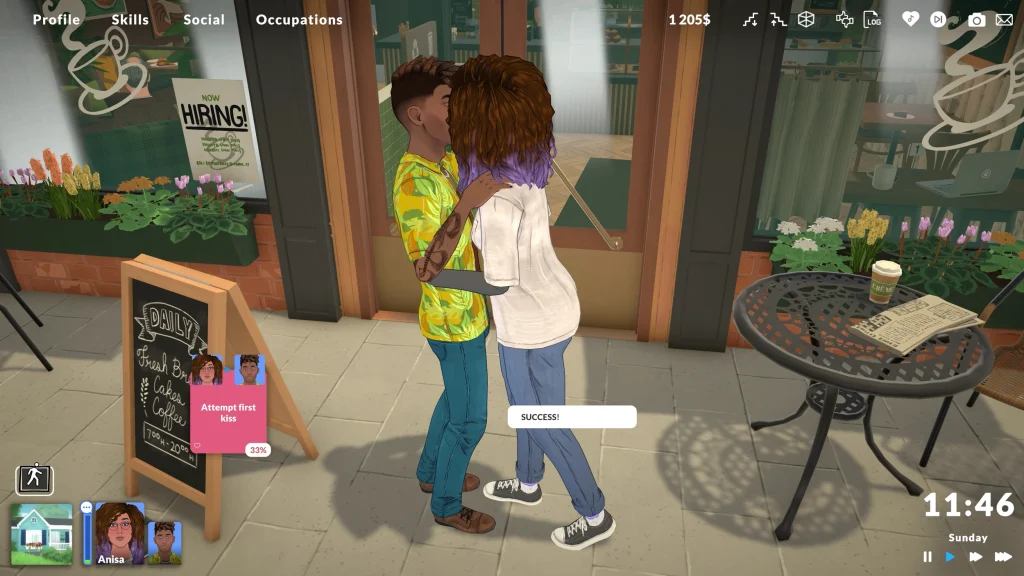
In games like The Sims, it’s easy to spam interactions to quickly increase your friendship or romance level with another sim. But, of course, it doesn’t work like that in real life. I like that Paralives uses a deck of cards to determine for you how likely it is that your Para would say something, for example, flirty or mean. I like that this system lets your Para control the narrative a little more (although I do understand that many people like to have complete control over their story).
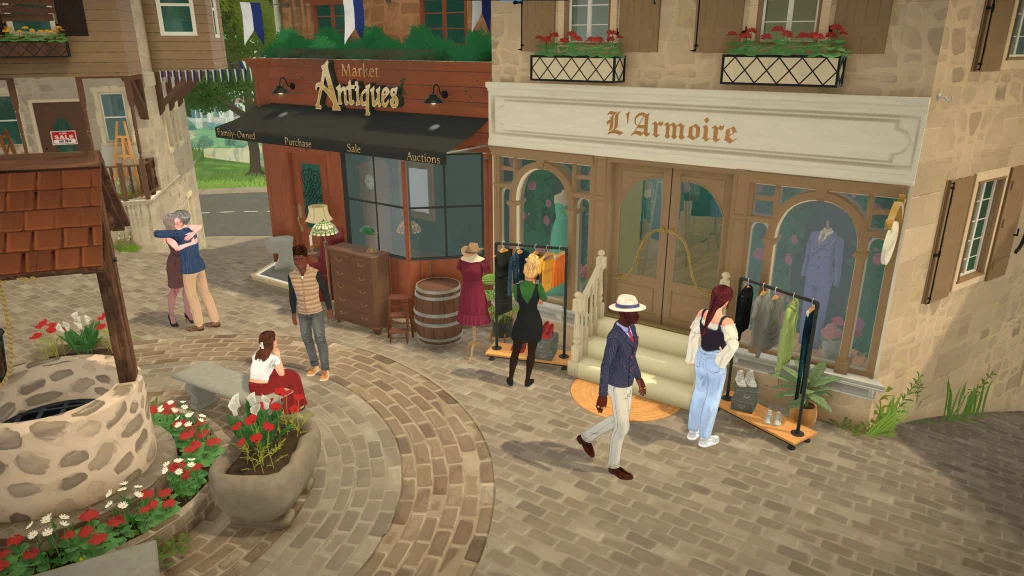
The open map is something I’ve never experienced in a game like this before. It is such a game-changer. I’m sure fans of The Sims 3, which also had a seamless open-world map, are over the moon with this feature. It’s changed my gameplay a lot. In The Sims 4, I kind of avoid taking my Sims outside of their neighborhood. I get tired of the loading screen. Why go to the gym when I can just buy equipment and work out at home without waiting a minute to load? In Paralives, I take my Paras outside way more than I ever took my Sims out.
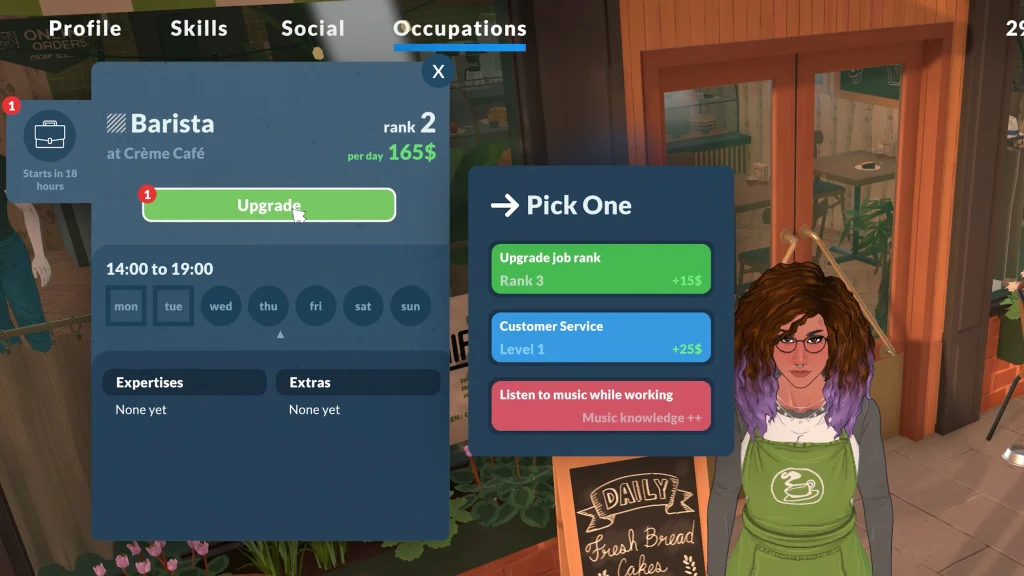
Plus, Parafolk have actual workplaces around the map, so they don’t just teleport to and from their home. I love that Parafolk physically enter and exit their workplace. For me, that means it’s easier to have them do activities out in the town right after work, just like in real life. Somehow, I’ve also found it easier and more intuitive to switch households with this system, although I’m not sure if I can attribute that just to the open map or if it’s the result of many different gameplay features working together.
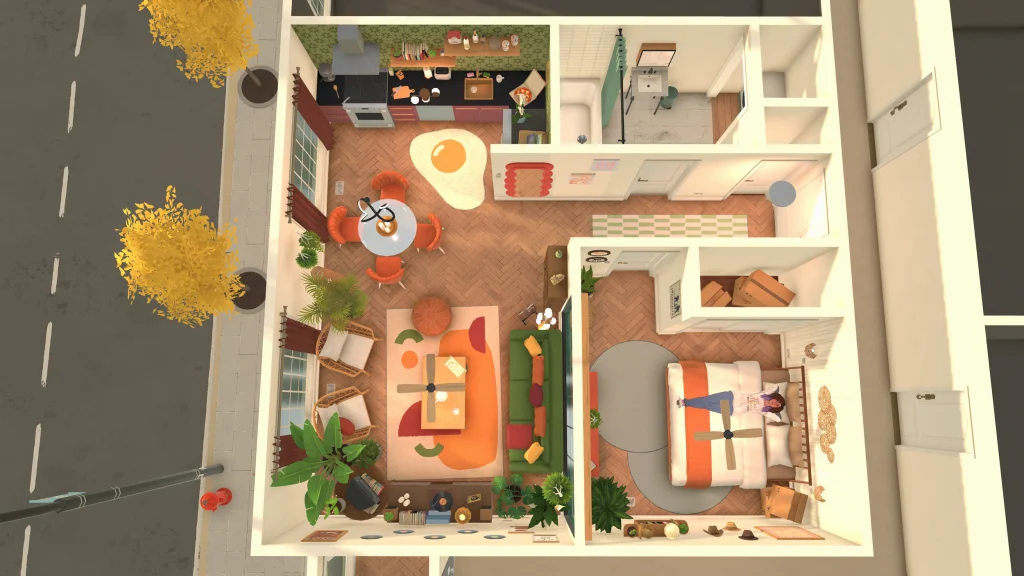
Another (huge) thing that Paralives seems to do better than The Sims 4 is building. In The Sims 4, to make anything interesting, you need to turn on cheats and finagle each and every item. Still, every time, something will be blocked and unusable. By comparison, it is actually amazing how much you can do without any cheats in Paralives!
In Paralives, you can make curved walls, no problem. Adding clutter has never been easier. You can resize pretty much every item without losing functionality. You can even put stuff on top of appliances like the stove and still use them! My only complaint when it comes to building is that sometimes, when I turn the grid mode off, the walls bug and my Para still thinks she’s outside. But honestly, that’s probably a skill issue.
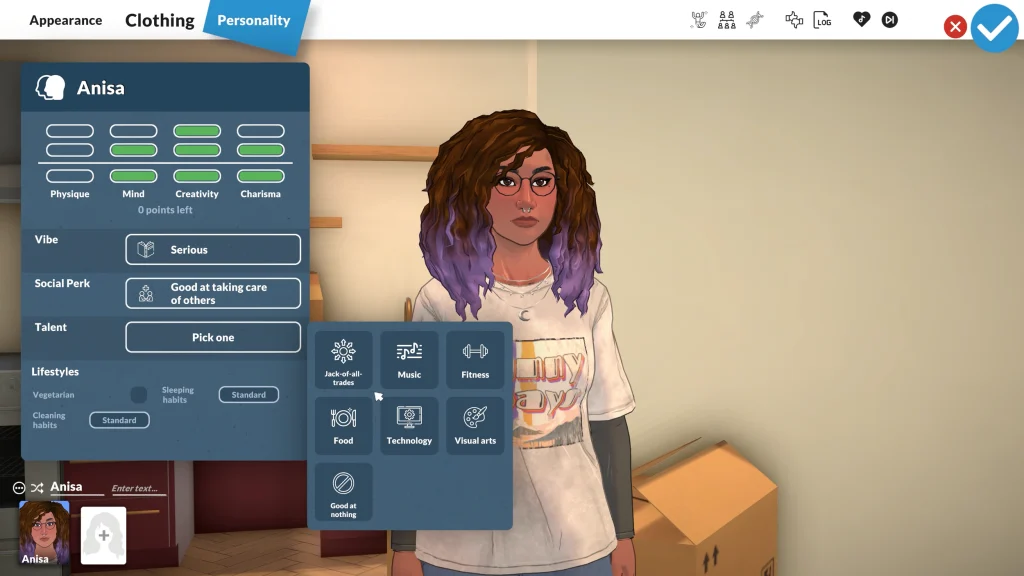
Of all the shiny new features, my favorite mechanic is the way the game tackles personality-building, which involves allocating points to various categories — physique, mind, creativity, and charisma — á la Dungeons and Dragons. You can also choose a talent, “vibe,” and personality perks for your Para. This is a great way to create Parafolk with unique personalities that feel multi-dimensional.
I also appreciate that as your Parafolk age and level up their personality, they gain points that you can assign to each category. It’s a great representation of how personality really does develop as you grow. For my Paras, I like to use their first personality point to determine the direction for their career and interests; for example, I had twins who became a visual artist and a computer scientist, respectively.
Gameplay: The Less Good 🙁
Of course, there are plenty of issues with Paralives this early in development. There has been some discourse about the number of bugs, with some players saying that Paralives should not be for sale yet, even in early access. It’s true that there are a shocking number of bugs, but for me, none of them have been entirely “game-breaking.”
As for my biggest pain point, just when I started playing, the game kept crashing and I didn’t have autosave turned on at that point, so I lost a couple hours of gameplay. For me, this isn’t a huge deal since even The Sims 4, which has been out for over a decade, crashes all the time too. I’ve since discovered the autosave setting, and it doesn’t feel as devastating when it crashes.
Bugs aside, the biggest challenge of Paralives for me is that it is honestly too realistic. Maybe I’m projecting, but it felt so difficult to get my Para to find a partner. It also felt difficult to get her to increase her income to the point where I felt comfortable for her to start having children (but hey, maybe this is just a realistic problem for a chef). And don’t get me started on how difficult it seems to be to get to the point where my Paras could try for a baby! Then, after all of that, my stinky baby kept getting stuck upside down in his crib.
Paralives’ difficulty hits a little too close to home in the reality department and makes it a little harder to play out certain fantasies without cheats. I enjoy the challenge, but it’s hard not to have a soft spot for the more dollhouse-like experience that we get in The Sims 4.
Life sim games are an ideal outlet for escapism, a way to live many different lives. We can build a big house that we could never hope to afford in real life, have a huge family that sounds fun in theory but not in practice, or act out crazy soap operas that are fun to hear about but not to live through.
Paralives’ difficulty hits a little too close to home in the reality department and makes it a little harder to play out certain fantasies without cheats. I enjoy the challenge, but it’s hard not to have a soft spot for the more dollhouse-like experience that we get in The Sims 4.
Final Thoughts: A Buggy But Fun Investment
So yes, Paralives does have a long way to go. But I really believe that we’re in good hands with this one, and it’s been worth the wait. There is a reason that the life sim genre is shockingly unsaturated — they’re complicated and expensive to make! Many have tried and failed. But the Paralives team is unique in that they are entirely funded by their fans. They’re not answering to profit margins, necessarily. They are working in close conversation with their audience. In the first week of early access, they received over 100,000 bug reports (I contributed to quite a few of those), and they’ve already fixed a few of them in their first update! Early access helps devs continue to create and fix a game, especially indie teams.
So yes, Paralives does have a long way to go. But I really believe that we’re in good hands with this one, and it’s been worth the wait.
Paralives Studio is a small team and, as such, it’ll probably take a while to make a polished game, but I’m really excited for Paralives to improve the gameplay and get out of early access. I think it will eventually be worth the $40 price tag, and perhaps even more someday. At this point in development, I would consider purchasing Paralives in early access to be an investment in what the team is trying to build. Paralives is buggy, sure, but it has good bones. It’s worth it if you are excited to try the game as soon as possible. There’s a reason I logged 40 hours in my first week owning it!
The lives of my Paras are just beginning, and so is the life of Paralives here in the real world! I can’t wait to see how my Paras’ lives grow alongside the Paralives team.
Paralives, developed and self-published by Paralives Studio, released on May 25, 2026, on PC and Mac (via Steam) in early access. Version played: PC. Early access MSRP: $39.99.
- The Sims 4, developed by Maxis and The Sims Studio and published by EA, released back in September 2014. Since then, The Sims 4 has received over 90 DLC and expansion packs. ↩︎

Alexia grew up on video games like Zoombinis and Freddi Fish. After she played The Legend of Zelda: Twilight Princess, she decided that games were her favorite hobby. She recently moved back to her home in Central California after graduating with a Bachelor in Social Sciences and Communications in Belgium. Her interests include gaming subcultures, fantasy world-building, and writing about cozy games!