
Toy Story: Retro Roundup! combines two things that are near and dear to my heart: game preservation and Toy Story. I have enjoyed watching studios bring together retro games, like the Mortal Kombat: Legacy Kollection, with interviews and commentary from the creators and developers. This labor matters. These stories behind some of our favorite games and franchises are important to the industry’s history. Further, these collections make games playable on modern hardware that may have been inaccessible prior.
Toy Story was the first movie I saw in theaters. I was a little over two years old. The experience is a core memory, and really established my love for cinema, animation, and popcorn. I continued to return to the theater for the early sequels, and now I go to the new ones with my nephews. Toy Story 5 was terrific, even if I recognize that any film after Toy Story 3 is unnecessary. The new movies aren’t for us young millennials or Gen Z folks who grew up with the original trilogy.
Toy Story: Retro Roundup! seeks to bridge a certain gap between the adults who grew up with the original films and the current youth (Gen Alpha and Gen Beta) who are growing up with the new. This collection contains several versions of five games — including two kart racers, multiple adaptations of the first two films and the Buzz Lightyear of Star Command animated series (not to be confused with the pretty mediocre Lightyear film), and even the game adaptation of A Bug’s Life.
These original titles were developed by various studios, though mostly by Traveller’s Tales and published by Disney. Toy Story: Retro Roundup!, meanwhile, is the work of developer Digital Eclipse and Atari as a publisher. Digital Eclipse has experience doing this, including the aforementioned Mortal Kombat: Legacy Kollection as well as Atari 50: The Anniversary Celebration and Tetris Forever.
Toy Story: Retro Roundup! leans heavily into nostalgia that is clearly meant to be shared, but upon revisiting this collection, I’m left questioning whom the games themselves are for in 2026.
End of an Era
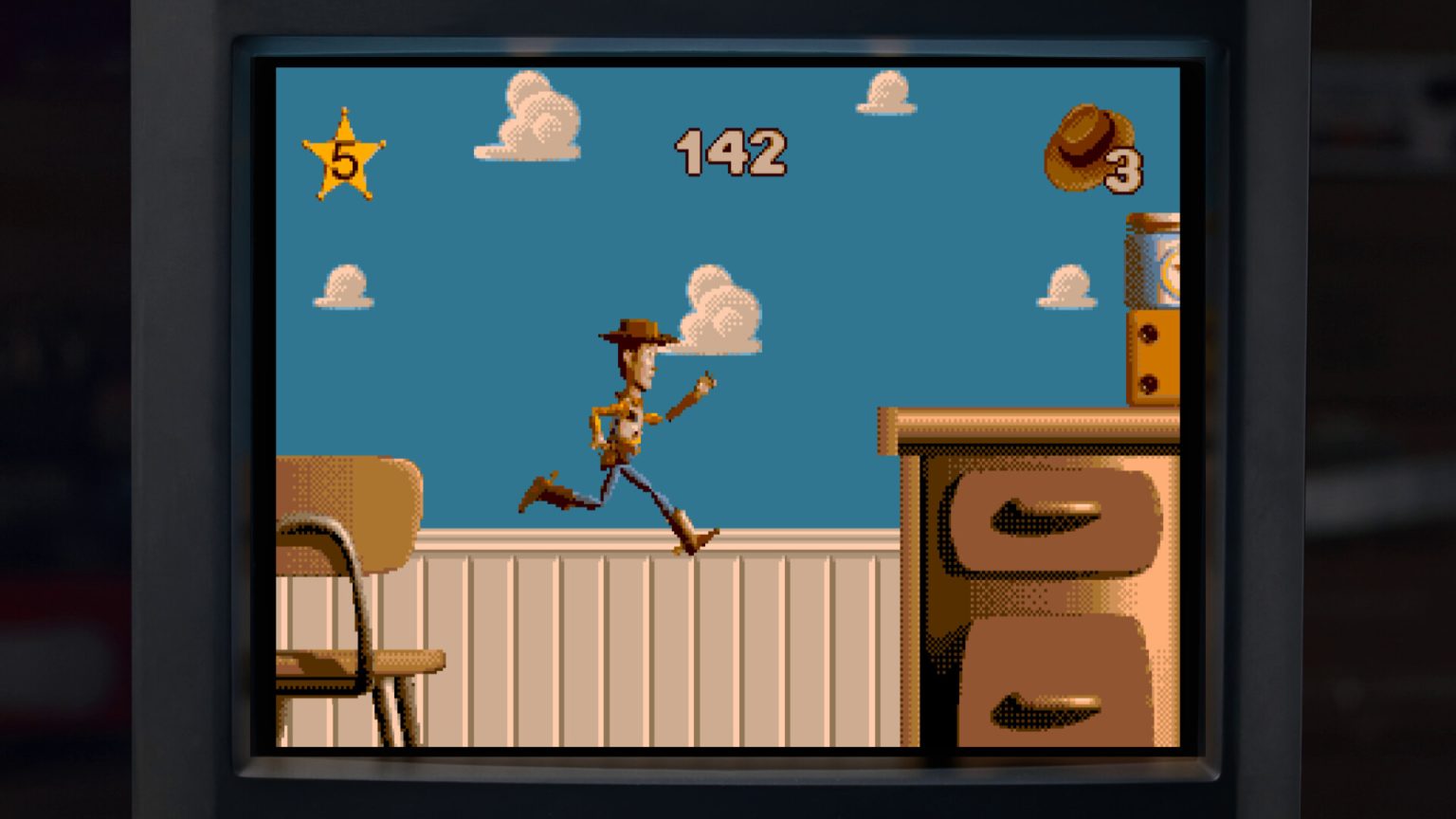
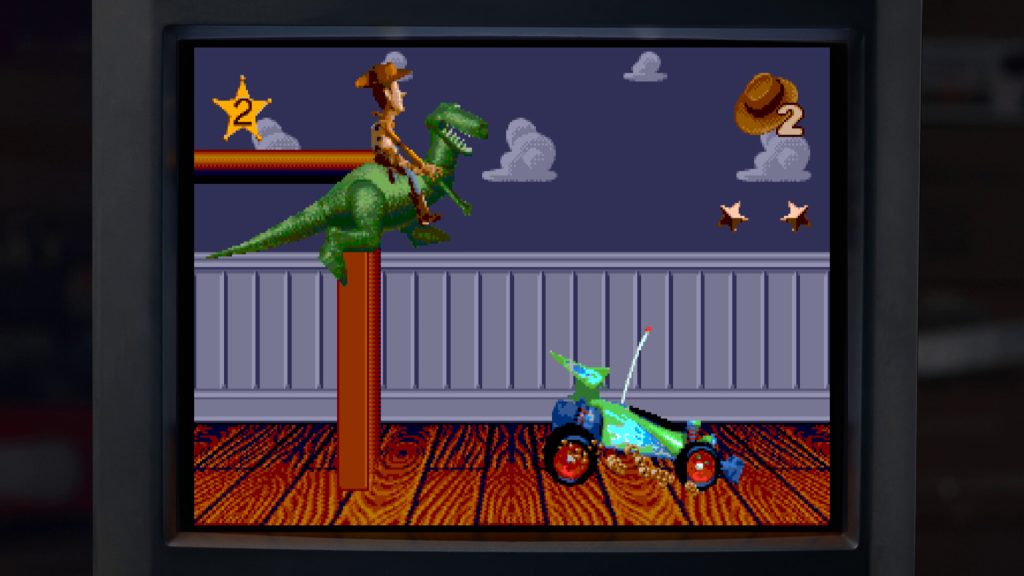
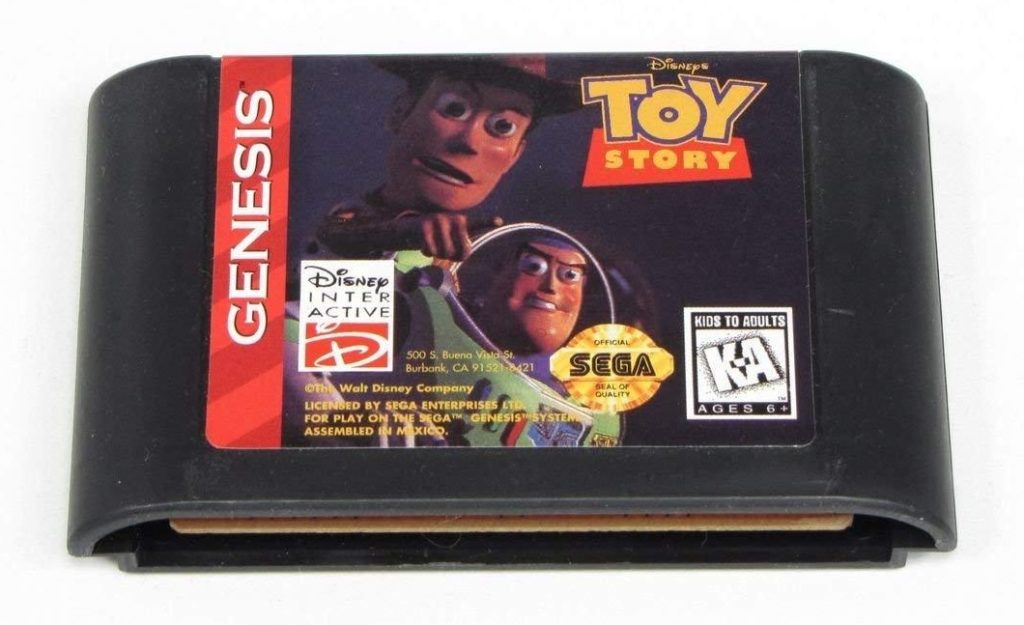
The first Toy Story game felt like a little miracle. After only seven months of development, it launched on the Genesis simultaneously alongside the film in 1995; the SNES, Windows, and Game Boy versions were not far behind.
These games are brief but technical marvels. The ways that they capture the aesthetics, sounds, and feel of Toy Story in a 2D platformer are remarkable. I am still in awe of Woody and Buzz’s designs on these platforms. Both the Genesis and SNES games last around 90 minutes, faster if you take advantage of Rex’s cheat codes before booting up the game (note: these do disable achievements/trophies).
However, I did find myself quickly getting frustrated with all three versions of the game in the Retro Roundup! collection. The Game Boy version was wonderful as a child, but as an adult, it is the weakest of the three, with the most repetition and limitations. Retro Roundup! does not include the PC version of the game; this may simply be because of its similarities with the Genesis and SNES versions. These games are beautifully rendered but poor duplicates of once-beloved 2D platformers. If you go in expecting an experience like Donkey Kong Country, then you will be sorely disappointed.
PlayStation Platformers
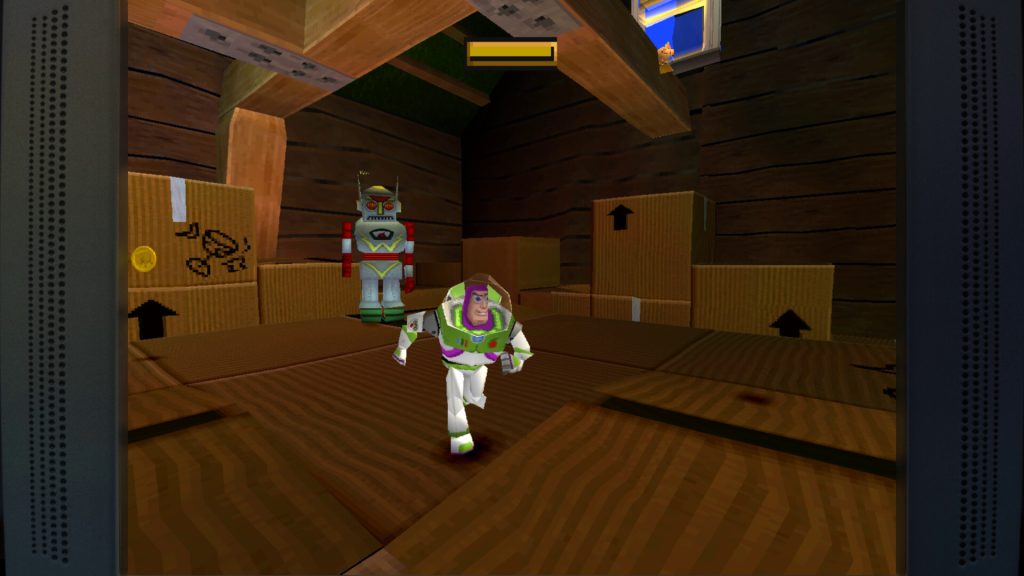
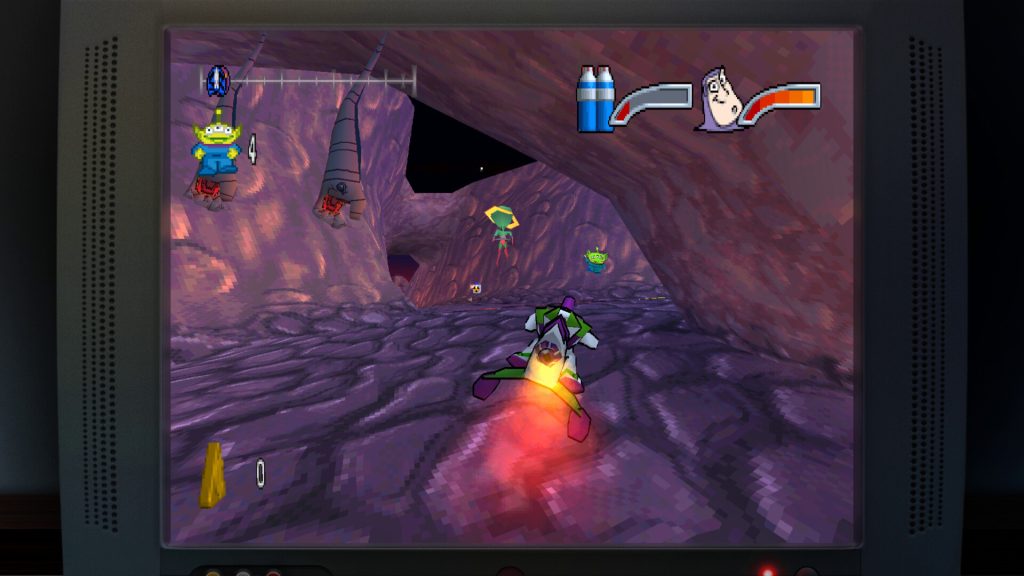
The most interesting titles in the collection — and the games that I have the most nostalgia for — belonged to the first PlayStation. Toy Story 2: Buzz Lightyear to the Rescue and Buzz Lightyear of Star Command are not only more fun than their predecessors, but are also more complete games. The former follows the sequel film Toy Story 2, while the latter follows the short-lived animated series Buzz Lightyear of Star Command.
Toy Story 2: Buzz Lightyear to the Rescue was the game I was most excited to revisit. I spent many hours with it as a child, and I didn’t leave my replay disappointed per se. The sequel provides simplistic platforming and shooting elements. The platforming often frustrates — some of this is generational, as I recently relearned while replaying Conker’s Bad Fur Day. But I also found the controls to be just as clunky as I remember them. I was surprised (in both exciting and deeply disturbing ways) by the boss designs. Notably, Retro Roundup! only includes the PlayStation version of this 3D platformer and not the Dreamcast, Nintendo 64, or PC versions.
Buzz Lightyear of Star Command is a shorter game (around four hours compared to Toy Story 2’s six hours) but is tighter in its focus. The game does the best job in the collection of combining animated sequences from the non-game media between levels. Further, it plays a bit like a proto-Ratchet and Clank, and is littered with both scenes from the animated series and repetitive, if not colorful, boss fights. This was the most fun that I had with the games in Retro Roundup! , even if it is mostly chasing bosses through a linear level where you can’t damage the boss before the boss chamber. Again, Retro Roundup! only includes the PlayStation version of the console game and not the Dreamcast, Nintendo 64, or PC versions. I didn’t personally mind this, but those looking for a complete archive may be disappointed.
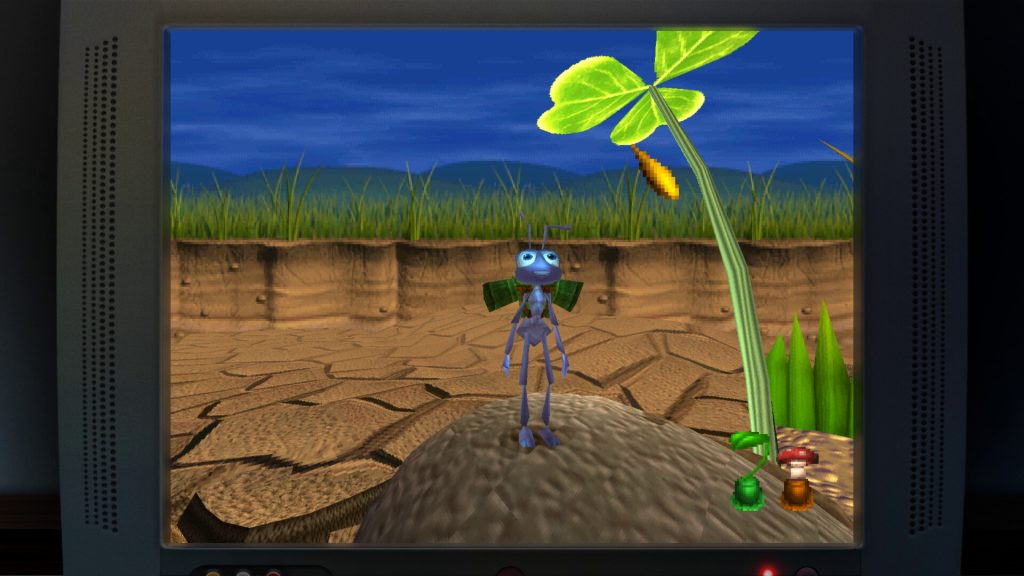
The oddest game in the collection is the platformer adaptation of A Bug’s Life. This is technically the oldest of the three PlayStation titles and feels like the bridge platformer between Toy Story and Toy Story 2. As a result, it is the most experimental of the platformers in the collection as the developers at Traveller’s Tales had to learn the new tech.
A Bug’s Life is a lovely if not clunky time capsule that plants seeds that can be traced throughout Traveller’s Tales-developed games from Toy Story to Lego games. It’s presumably included because it was a Pixar movie and a game made in partnership with the same studio, but it’s a strange addition, much less an objectively strange game.
Retro Roundup! also includes Game Boy and Game Boy Color versions of these three games alongside their console versions. While they possess a certain charm, these are ultimately poor derivatives of their console siblings. I did find myself having fun early on in experiencing the three games, but the charm quickly falls by the wayside and I didn’t feel the need to play the same game again, only smaller and worse.
We Have Mario Kart at Home
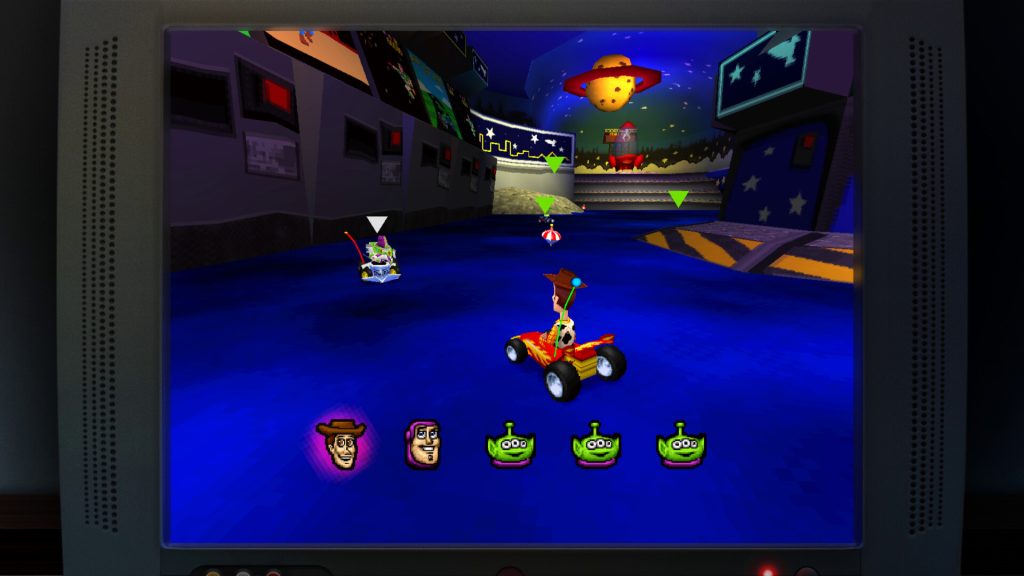
The weakest part of the collection, however, is the two cart racers. I have little positive to say about either in terms of gameplay. The PlayStation cart racer, Toy Story Racer, clearly wears its influences on its sleeve with stripes of Mario Kart and Twisted Metal. It borrows from peers without recognizing what makes different modes engaging or fun. The ways in which the game encourages playing as different racers were interesting, but ultimately meant that if I didn’t like a mode or level that I had to spend even more time with it.
The Game Boy Color version of Toy Story Racer, on the other hand, pulls off some impressive 3D effects within a 2D presentation. It is a graphically impressive game that will remind quite a few of older Mario Kart titles. Its gameplay is charmless, however, especially compared to its console version that’s included in the same package.
This raises a question I had throughout my experience with Retro Roundup! — why draw the lines for these exact versions of these games? If we strive for the completed set, why are we missing console versions of certain games? With Toy Story Racer, there are only two versions, and while there are distinct differences between the Game Boy Color and PlayStation versions, I don’t quite know who their audience is in 2026. They may interest and amuse a preservationist, but the collection isn’t quite complete enough to fully scratch that itch. Meanwhile, I have a hard time imagining one of my nephews enjoying multiple versions of it.
Final Thoughts
Revisiting these Toy Story games wasn’t without some delight. I found myself smiling nearly as often as I found myself cringing. I look forward to introducing my nephews to these games when they visit our new Wisconsin home. I just have to set expectations that our time with the games will be a few hours at best and not the multi-hour adventures that I envisioned.
Toy Story: Retro RoundUp! is no longer for me; I’m okay with that. But these games — with their clunky platforming and vintage graphics — are also no longer for the children growing up on Toy Story today, with Mario Kart World and LEGO Star Wars a button press away. Retro children’s games are difficult for me to judge, as they were meant to be colorful and simple years ago, but as a result, they don’t feel fun for me and likely not for my nephews who are used to glossier graphics and more interesting gameplay. Having multiple versions of the same game included in the collection is nice for record-keeping, but not a very fun experience as a player.
Toy Story: Retro RoundUp! presents an interesting package for preservationists, but little fun for many others who are seeking a retro gaming adventure.
I guess you can’t go home again.
Score: 6.0/10
Toy Story: Retro RoundUp!, developed by Digital Eclipse and published by Atari and Digital Eclipse, releases on October 15, 2026, for PC, PlayStation 4 & 5, Xbox Series X/S, Xbox One, and Nintendo Switch 1 & 2. MSRP: $29.99. Version reviewed: PC.
Disclaimer: A review code was provided by the publisher.

Clint is a writer and educator based out of Wisconsin. You can often find him writing about Middle English poetry, medieval games, or video games. He received his PhD in English from the Ohio State University. You can find his academic and public work at clintmorrisonjr.com.