Video game remakes often raise the same question: Is this actually better than the original? I prefer to ask myself a different question: What exactly is the point of this?
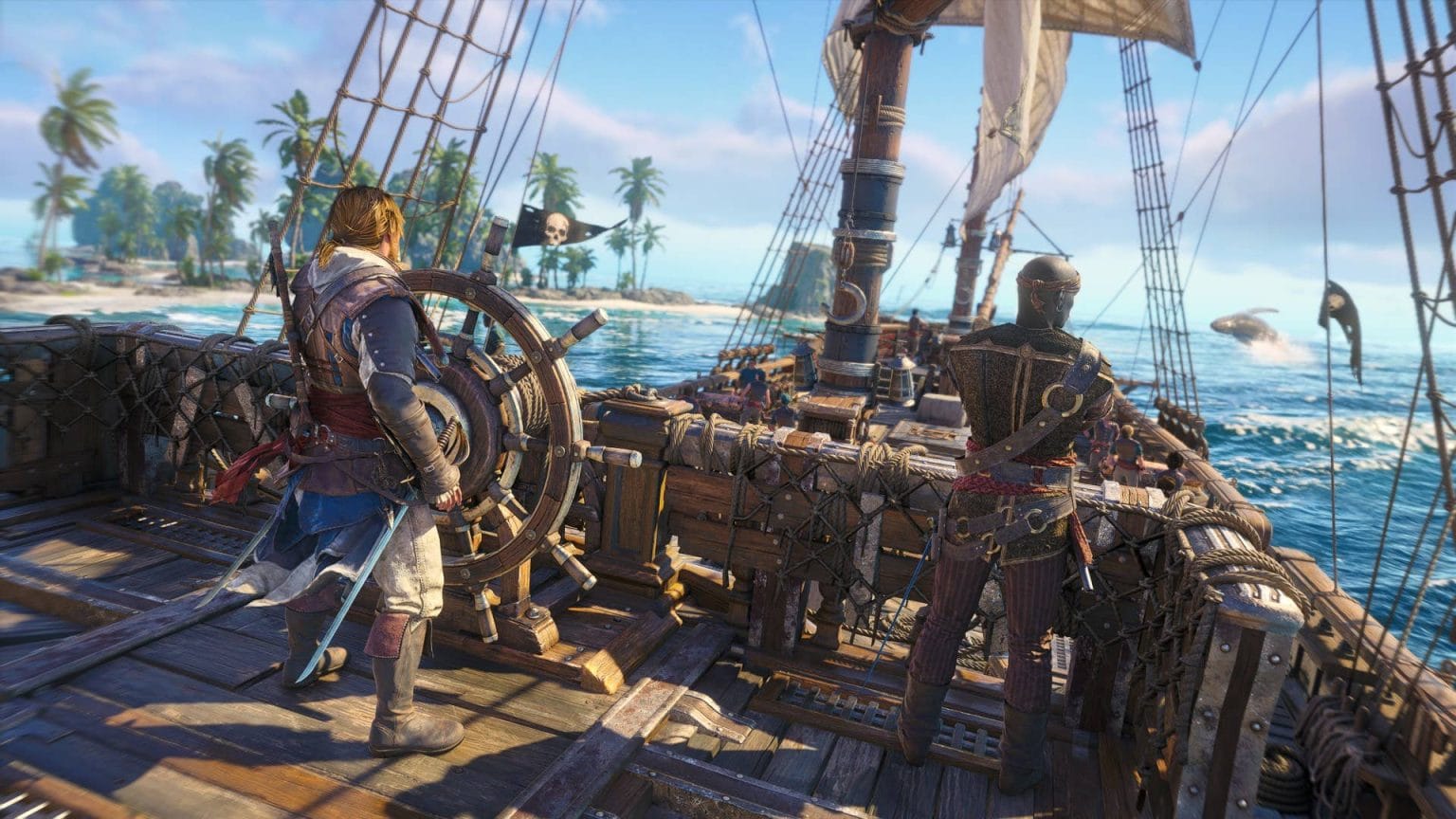
Assassin’s Creed Black Flag Resynced, a remake of Ubisoft’s open-world action-adventure title Assassin’s Creed IV: Black Flag, is in no uncertain terms superior to its 2013 namesake. The graphics are sharper and more realistic. The game runs at a fairly consistent 60 frames per second. The world is just as massive and remains a buffet of worthwhile gameplay activities, with even some new quests for those seeking a fresher experience. The new combat system feels more fluid and intuitive than that of the original Black Flag, but also wouldn’t feel out of place in a 2013 game either.
If you’ve never played any version of Black Flag before, I’d recommend Resynced without hesitation. But then there’s the other query: What’s the point of a Black Flag remake in 2026, only a little more than a decade removed from the initial release? What purpose does it serve when players can access the original on any modern platform for a much lower price? Is Black Flag Resynced a shameless money grab or a welcome addition to the Assassin’s Creed franchise?
The answers to these questions are a little trickier.
By Hook or by Crook
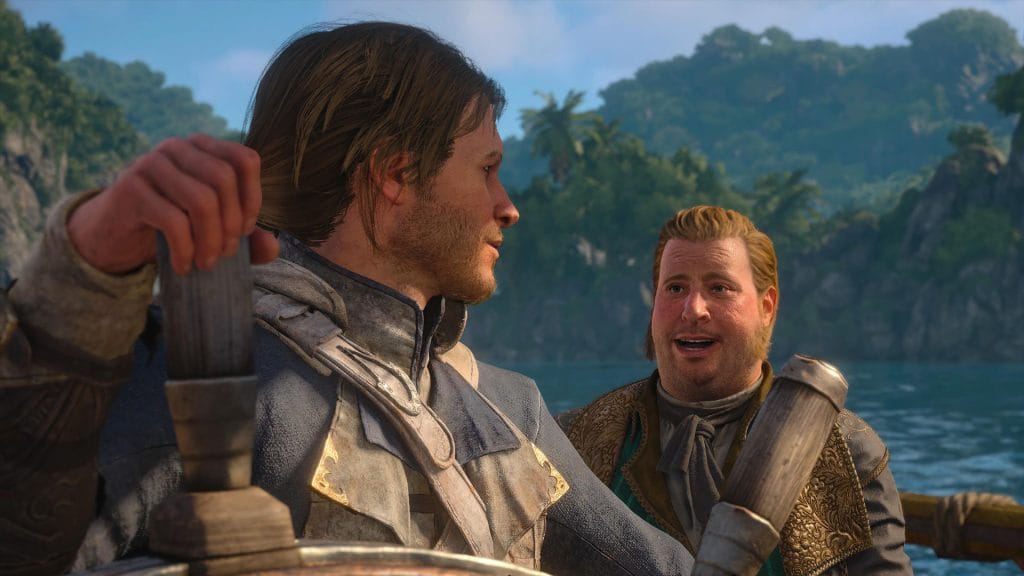
The original Black Flag, which was released on October 29, 2013, for PC, PlayStation 4, Xbox One, PS3, and Xbox 360, is widely considered one of the best games in the Assassin’s Creed franchise and is my personal favorite of the whole series. It tells the story of Edward Kenway, a Welsh pirate sailing around the Caribbean in the early 1700s during what is known as the “Golden Age of Piracy.”
Kenway manages to get wrapped up in the centuries-long conflict between the Assassins’ Brotherhood and the Order of the Templars, but mostly spends his time doing typical pirate stuff: searching for treasure chests, exploring various colonized and uncolonized islands, engaging in ship battles with the British and Spanish navies, and stealing supplies from various fortresses and plantations. Along the way, Kenway meets, befriends, or betrays many of the biggest names and faces of this period of history, including Ed “Blackbeard” Thatch, Stede Bonnet, Benjamin Hornigold, Laureano Torres, Charles Vane, Woodes Rogers, Anne Bonny, Bartholomew Roberts, and many others.
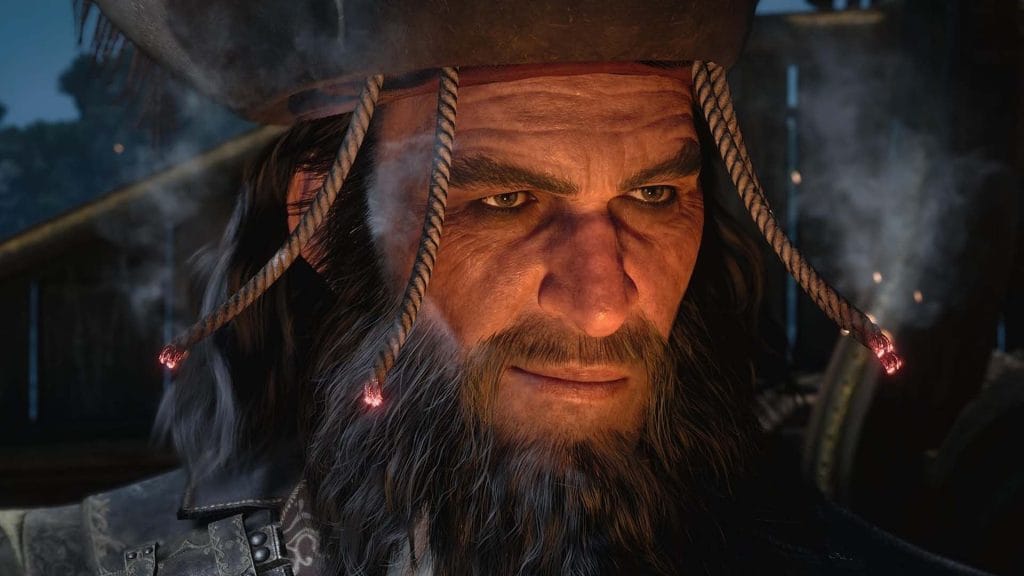
I’ve always found Black Flag’s story uniquely appealing within the AC franchise, mainly because it focuses on a man who is physically and mentally equipped to be a master assassin yet simply chooses to be a swashbuckling scoundrel for most of the experience. Kenway often expresses his ambition to build a civilization free from Royal and Tyrannical control in Nassau, even if in reality he’s killing and stealing just like everyone else. Still, his stated goals are far more admirable than those of the targets of his violence and avarice, as they are mostly slavers, colonizers, and war criminals — essentially murderers and thieves but with nationally recognized flags.
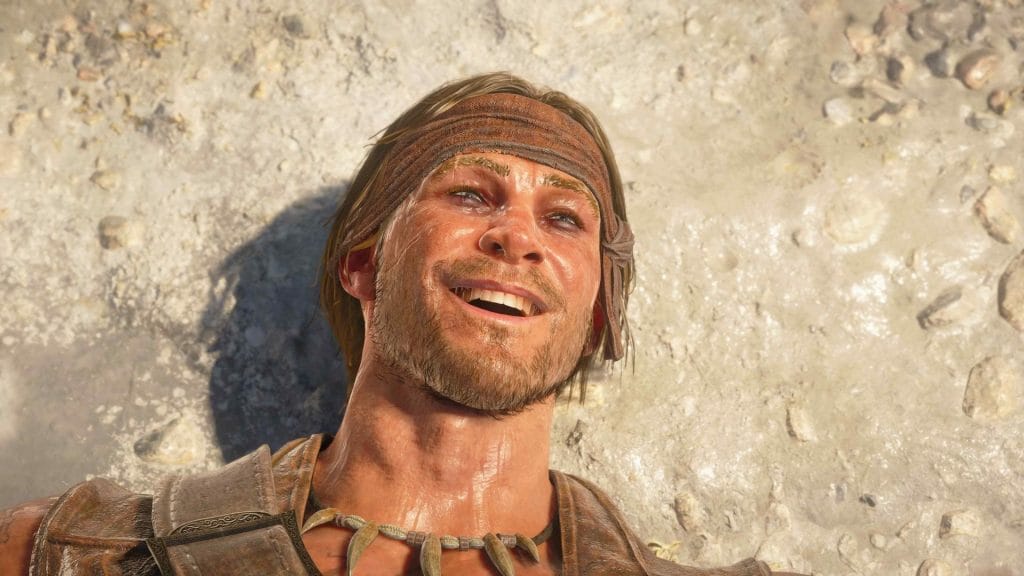
But it’s not Kenway’s activities and desire for freedom that make him a strangely lovable character. Unlike most other Assassin’s Creed protagonists, he seems genuinely happy to be alive, thrilled that he gets to wake up each day and seek out new adventures. It’s a macabre sort of joy, considering the bloodshed and plunder it takes for him to smile ear-to-ear, but it’s a palpable joy nonetheless, a kind the player feels with every ship battle, swordfight, deep-sea dive, and sea shanty. Even when his stubborn ambition unquestionably harms those he cares deeply about — and even those he fails to consider at all — I can’t help but admire his resilience and attempts to better himself.
Black Flag isn’t a depiction of pirates one would expect in a Disney movie.
Edward Kenway is not a brooding, battle-tested antihero motivated by vengeance or scorned by his peers at large; he’s a principled libertine confident in himself and optimistic about the future to the point of delusion. As a result, the player’s side adventures across the game’s expansive islands and waters never feel frivolous or incongruous with the plot’s larger themes and goals, giving the whole narrative experience a level of narrative cohesion rarely found in open-world games. Kenway isn’t just a trained killer wasting time in between historically important main quests; he’s a pirate doing pirate things whenever and wherever he pleases.
Moreover, despite telling the story from the perspective of a white man, Black Flag doesn’t shy away from many of the harsh realities of the setting. Kenway openly discusses topics of racism and slavery with his quartermaster Adewale, himself a runaway slave from Trinidad. Many of the other assassins he meets are also former slaves or even natives of the various lands he traverses (including one series of quests with a Taino). The player frequently walks by enslaved Afro-Caribbean people in colonized cities like Havana and Kingston, and several antagonists love to openly discuss their love of slavery as a business practice. Black Flag isn’t a depiction of pirates one would expect in a Disney movie; it’s a reminder that the glorification of killing and stealing could only achieve a Golden Age during a time like this, when such activities were first and foremost a result of Royal Decree.
Everything Is Permitted
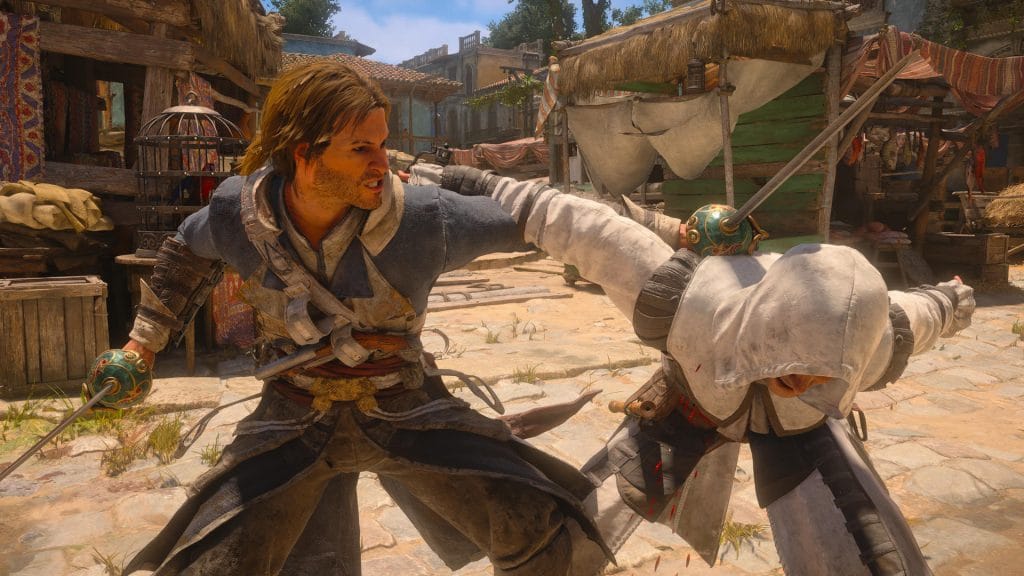
Gameplay-wise, the original Black Flag employed most of the standard Assassin’s Creed mechanics — climbing up buildings, hiding in tall grass, pressing a single button to stab a guy to death, using trinkets like smoke bombs and poison darts to your advantage — yet added plenty of pirate-related fare to stand out from the pack. Most notably, the player has access to a pirate ship throughout the experience, as well as a dedicated crew that follows all of your commands on board.
The ship, which Kenway names the “Jackdaw,” allows for seamless travel across the Atlantic Ocean, through which the player can search random islands for collectible goodies and various side quests. Traveling through the Caribbean often serves as a calming and therapeutic experience (even when navigating through massive storms), with the crew’s performance of various sea shanties from the era creating impeccable vibes, as well as something more to collect (the player can find new shanties to choose from in various cities like Havana and Kingston).
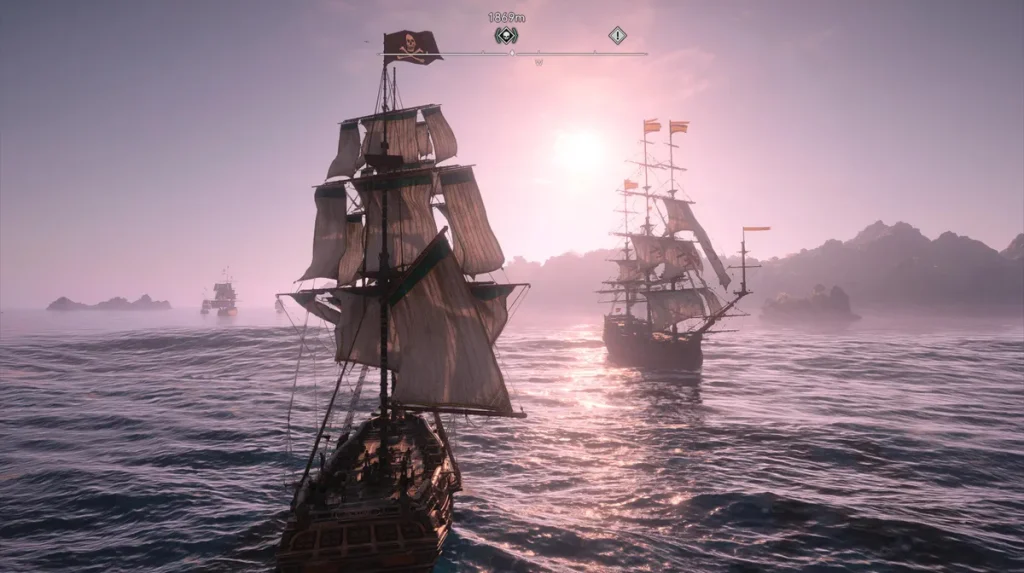
Most notably, however, the player can engage in battles against other ships, mostly helmed by the Spanish or British navies. This specific gameplay system provides so many of the best moments in Black Flag and might just be the most fun set of mechanics Ubisoft has ever put in a video game. Having to perfectly pace your ship to get the best angles for firing cannonballs or ramming damaged ships is tense and thrilling on its own, but nothing truly beats the feeling you get from boarding a damaged enemy vessel and taking on its remaining crew face-to-face.
Attacking enemy ships outside of main quests isn’t just a fun thing to do for the sake of it (or the loot). Once you take over a ship, you have the option of forcing the captured forces to either repair the Jackdaw, lower your wanted level (the higher it is, the more enemy ships are likely to attack you unprovoked), or join your expanded fleet, which you can assign to various missions with your direct involvement. Also, the loot you extract from downed ships allows you to upgrade the Jackdaw’s weapons, hull, and storage space, giving you a greater advantage against tougher enemies down the line.
Ultimately, the combination of the franchise’s classic stealth and sword combat with ship-related mechanics made Black Flag the most consistently engaging game in the Assassin’s Creed series. Honestly, nothing outside 2018’s Assassin’s Creed Odyssey has come close to matching that same level of satisfyingly brutal battles on both land and sea. The original Black Flag might be the greatest pirate game of all time, at least when it comes to combining the right pirate-related mechanics with a compelling narrative and immaculate vibes.
It’s also no surprise that the remake turns everything up just a notch.
Heave Ho!
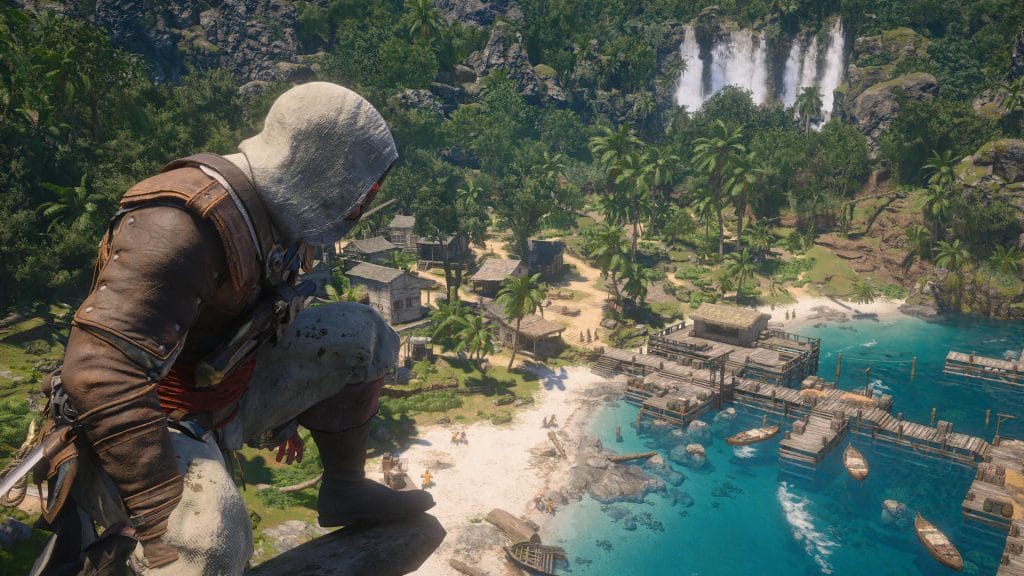
While Assassin’s Creed Black Flag Resynced keeps most of the core experience intact, the changes it makes to the original are pretty easy to notice. Obviously, the graphics are far more detailed, allowing for the natural colors of the seas, trees, islands, and gilded ships to shine even brighter than ever before. Most of the environments include more visual details all over, such as pots, crates, books, and furniture, making every building and street just a little more immersive. The Caribbean Sea is more gorgeous than ever, and the added coat of paint in every facial expression, cutscene, and finishing move makes the whole game all the more dazzling.
There are myriad gameplay improvements as well. Instead of the more haphazard “hit guy in group closest to you and counter-attack behind you” battles of the original Black Flag, Resynced offers a more standard lock-on system similar to what you’d find in any third-person action game from the past decade or so. As a result, combat sequences feel a little more fluid and precise, though not overly complicated and messy like in more recent Assassin’s Creed games.
Black Flag Resynced also adds a simple crouch feature, allowing Edward to hide behind chests or crates while trying to remain stealthy, instead of only climbing up trees or kneeling in the shrubbery. It may seem like a small alteration, but it removes a lot of the clunkiness of the original’s stealth sections. Additionally, the player can dive underwater outside of deep-sea diving sections, allowing players to seamlessly explore the absolutely stunning underwater marine life and even find a few more sunken treasure chests around various islands.
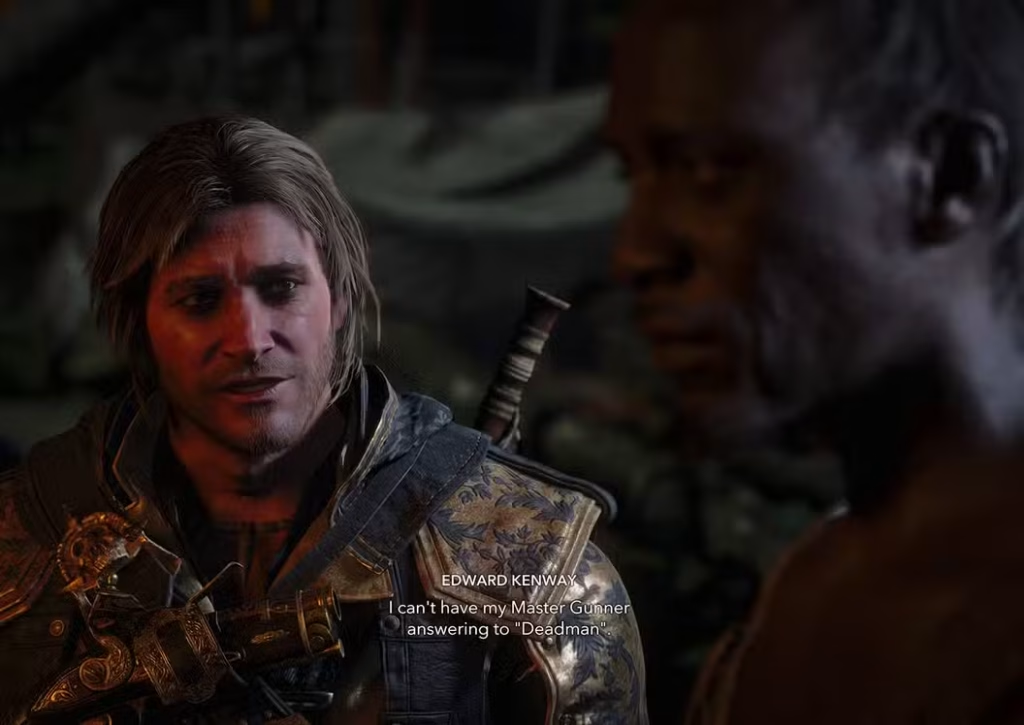
Moreover, Resynced offers many new side quests, including ones that allow the player to recruit a few specific crew members — each with a fascinating backstory that greatly enhances the broader narrative backdrop — that provide upgrades to ship combat. There are also eight new late-game missions that expand the original Black Flag’s story (though obviously I won’t spoil them here), as well as new cozy features related to Kenway’s secret hideout in Great Inagua. All the new content is optional, and these additions affect the main story only so much. Still, they’re welcome enhancements to a game that, while a truly fantastic example of its genre, remains a “checklist game.” In this case, though, most tasks are well worth checking off.
Nearly every single element of the original Black Flag gets at least a small improvement in Black Flag Resynced. The combat feels much smoother. The stealth segments offer a little more variety. The ship battles are more intense than ever. Simply sailing the seas or exploring small islands is more of an aesthetic delight than ever. Heck, there are even more sea shanties for your crew to sing than there were before. These enhancements are just big enough to be noticeable but not so big that they fundamentally alter the core experience. Essentially, Resynced turned a great game into an even better game… for the most part.
Scupper the Present
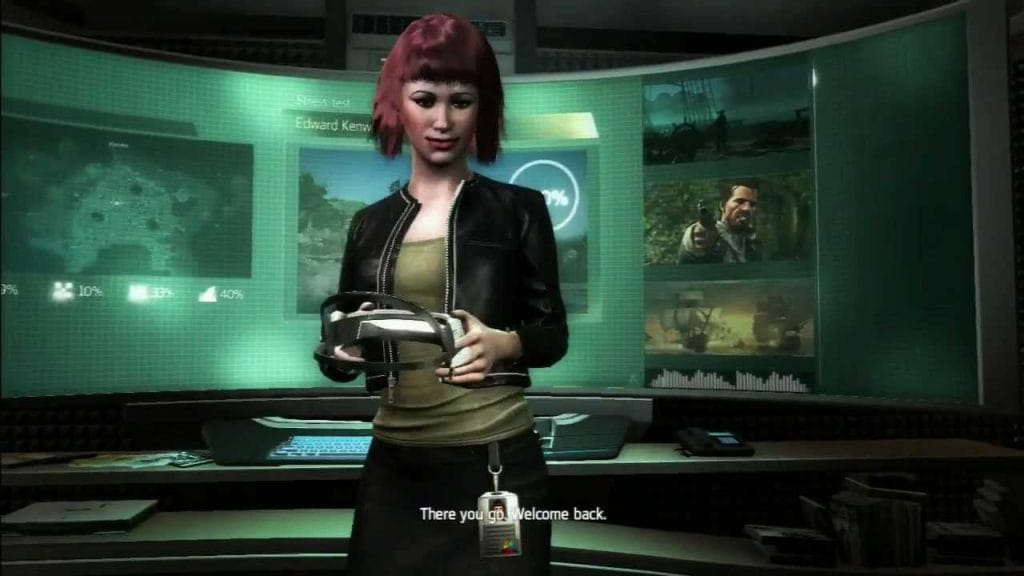
The vast majority of the changes in Assassin’s Creed Black Flag Resynced make it the superior experience, yet one decision (or set of decisions) has given me pause. I wouldn’t say these ideas are necessarily bad, but they do fundamentally alter a core tenet of the original’s narrative. In short, Black Flag Resynced completely removed the present-day gameplay sequences from the original Black Flag, and instead offers a confusing array of Animus-related content that feels mostly pointless and even a little cynical.
In Assassin’s Creed IV: Black Flag, major developments in Edward Kenway’s story were interspersed with first-person present-day segments, where the unnamed player-character works for Abstergo Entertainment to examine Kenway’s memories in an attempt to gather material for an Animus-powered interactive movie. In reality, Abstergo — which is run by the Order of the Templars — is looking for the same magical location, called the Observatory, that Edward wants to find. In these sequences, which mostly involve the player answering emails in a standard office environment, the player gets involved in a plot to hack Animus terminals in order to undermine the Templars’ efforts.
I’ve never particularly cared for the present-day gameplay and story segments in the Assassin’s Creed franchise. At their best, they exist as fun but unnecessary lore dumps. At their worst, they’re intrusive, boring, and matter only to the most dedicated of series fans. I’m here for the tale of a pirate seeking a life of freedom only to see everyone and everything he cared about rot away over the span of a few short years; I’m not interested in any way about how this connects to events happening 300 years later.
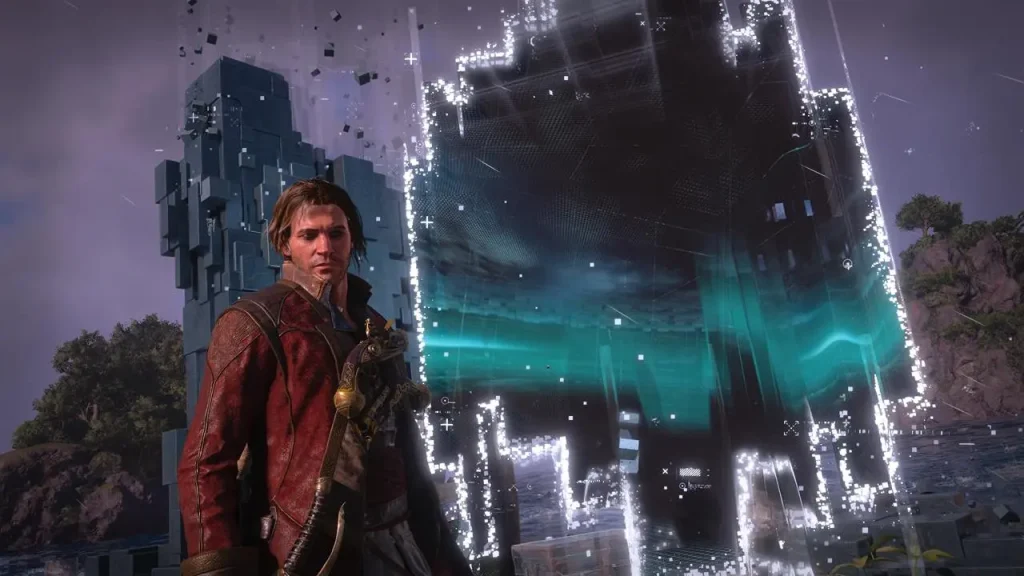
These present-day sequences are completely absent in Resynced, as is basically any mention of them at all. Instead, the game offers players more quest-like opportunities to address “anomalies” and “rifts” within the Caribbean. Some of these have the player engage in “what if…” simulations about how various in-game events could have transpired differently. In other cases, they’re just another random ship to take down or group of enemies to fight. There’s some fun to be had here, but I’ve mostly ignored these challenges.
In addition, Resynced gives the player access to the Animus Hub, which Ubisoft first introduced with last year’s Assassin’s Creed Shadows. The Hub allows the player to gather various cosmetic rewards for progress in supported Assassin’s Creed games, provides access to various “memories” in the AC timeline as well as data files and videos relating to the modern-day story, and includes an exchange where players can use keys (an in-game currency found throughout Black Flag’s world) to unlock “premium rewards,” often in the form of weapons and gear from other AC titles.
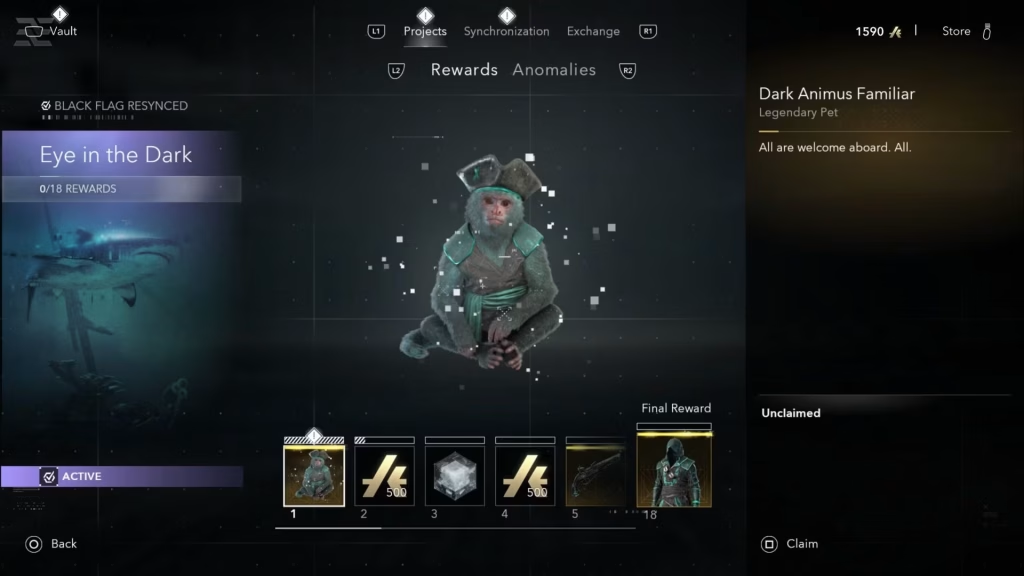
Frankly, I see little value in the Animus Hub unless you’re a massive fan of the franchise and absolutely have to have Altair’s sword from the first game. I’ve mostly ignored the Animus-related offerings entirely, as they feel like more of a distraction than anything; just more content for the sake of content.
I don’t miss the actual gameplay of these [present-day] sequences, but their absence remains a strange blemish on an otherwise thoughtfully made remake.
I’ve never been a huge fan of the present-day segments of any Assassin’s Creed game, nor does the metanarrative around Apples of Eden or Juno or whatever appeal much to me. That said, those elements have been part of the series’ artistic vision since the very beginning, for better or worse. Removing them from one of the most beloved entries in the franchise and replacing them with nostalgia bait and forgettable bonus tasks feels disrespectful to that original vision. It’s the one part of this remake that feels like an erasure of gaming history rather than a retelling of it. I don’t miss the actual gameplay of these sequences, but their absence remains a strange blemish on an otherwise thoughtfully made remake.
Final Thoughts
Going back to the questions posited earlier: The purpose of Black Flag Resynced, ultimately, is to modernize a classic Assassin’s Creed story in a way that enhances what people loved about the original while making its connection to a broader canon largely unimportant. As a result, Resynced serves as a fantastic entry point for newcomers to the series, and perhaps that’s why Ubisoft chose this game over all others for the remake treatment. Remove most of the classic Assassin’s Creed staples from Black Flag, and you still have a fantastic work of open-world historical fiction; do the same for most other franchise entries, and the whole thing falls apart.
Assassin’s Creed Black Flag Resynced is a great remake of an already tremendous video game, and one I imagine I’ll continue playing long after this review goes live. Despite its removal of the present-day sequences, it still maintains the heart of the original and makes its brightest spots shine as bright as ever. Resynced now stands as my favorite game in the Assassin’s Creed franchise, without a shadow of a doubt.
Score: 9.3/10
Lightning Round Thoughts:
- I’m really glad I played this game a couple of years after reading The Republic of Pirates: Being the True and Surprising Story of the Caribbean Pirates and the Man Who Brought Them Down by Colin Woodard. I find this period of history especially fascinating for so many reasons, and while the game does a (mostly) good job encapsulating a lot of that history, there’s still so much more that was left out. I highly recommend this book to anyone who plays Black Flag and wants to know a little more!
- Despite the absolutely gorgeous visuals and the level of thought and detail put into every island, Black Flag Resynced still has plenty of Ubisoft jank. None of the bugs I encountered were game-breaking, but there were a number of times I noticed a ship in a cutscene was mostly underwater, or I witnessed a gun floating in the air near an enemy I just killed.
- My favorite new content addition has to be the new Jackdaw officer quests. Gameplay-wise, they’re all pretty awesome, with one in particular containing some of my favorite ship battles of the whole game, but they also offer different perspectives and insights into what this era of history was like that I found particularly interesting.
- As much as I enjoy the improved close-quarters combat system, it does make a lot of encounters a little too easy at times. The ship battles, meanwhile, still present a great deal of challenge, though the added perks from recruiting new ship officers do give you an edge.
- The community-building gameplay at Great Inagua feels much more fleshed out in Resynced than in the original Black Flag. It’s a feature I mostly ignored previously but find much more enticing in the remake.
- The sea shanties are still an absolute joy, and I really appreciate A) that Resynced added more of them and B) that you can now select which shanty your crew sings, which you could not do in the original.
- It probably won’t happen, but I’d love a Resynced-style remake of Assassin’s Creed Freedom Cry, a standalone DLC for the original Black Flag that focused on Adewale, Edward Kenway’s quartermaster-turned-assassin, and his efforts to free slaves in Haiti. Black Flag is by no means afraid to point out the devastation of colonialism and the inherent cruelty of chattel slavery, but Freedom Cry goes far deeper into such dark subjects. Plus, it does feel good to kill slavers!
Assassin’s Creed Black Flag Resynced, developed by Ubisoft Singapore and published by Ubisoft, released on July 9, 2026, for PC, PlayStation 5, and Xbox Series X/S. Version reviewed: PS5.
Disclaimer: A review code was provided by the publisher.

Sam has been playing video games since his earliest years and has been writing about them since 2016. He joined The Punished Backlog in 2017 and became an Editor in Fall 2021. He’s a big fan of Nintendo games and complaining about The Last of Us Part II. You either agree wholeheartedly with his opinions or despise them. There is no in between.
A lifelong New Yorker, Sam views gaming as far more than a silly little pastime, and hopes through critical analysis and in-depth reviews to better understand the medium's artistic merit.
Bluesky: @sam-martinelli.bsky.social