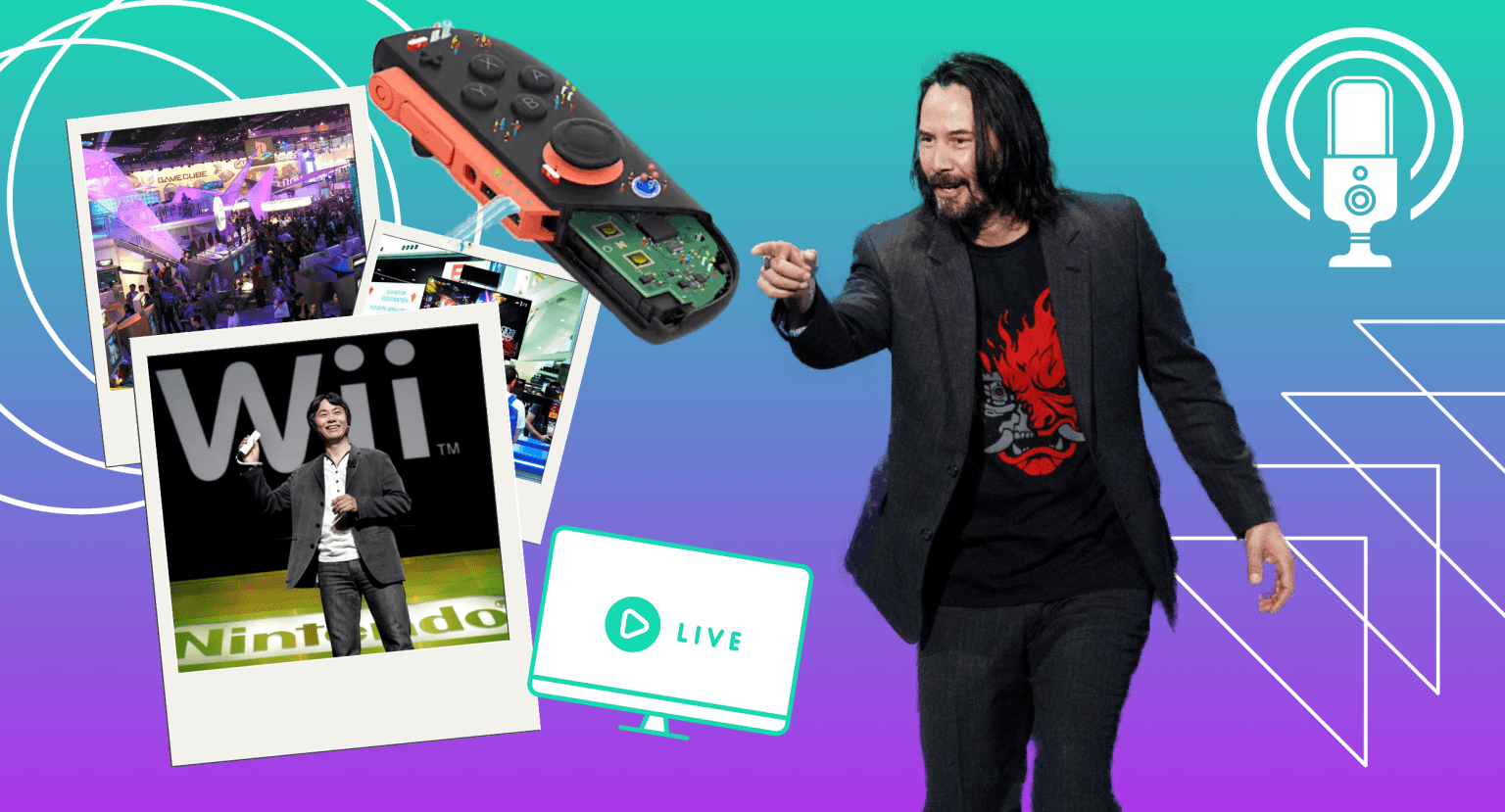

The video game hype cycle has become an intrinsic part of the culture: E3, “not-E3,” trade shows, presentations, trailers, you name it! We’ll get into our experiences with the hype cycle, the good and the bad, and what lies ahead for video game hype in an ever-changing media environment.
Note: This episode contains light swearing.
MP3 Download | Spotify | Apple Podcasts
Timestamps
- 0:00 – Intros: Most Over-Hyped Games
- 05:15 – E3, “Not-E3,” and Best Memories
- 32:00 – Why Do We Care? Why Is Gaming Culture Like This?
- 45:00 – Is All of This Just Ads Now?
- 55:51 – Future of the Video Game Hype Cycle
- 1:06:27 – Making Our Own Dev Showcase (Feat. Dreams of a Moss Cinematic Universe)
- 1:19:55 – Outros: What We’re Playing/Reading/Watching
A Few Excerpts
- Gary: “I’ve been entrenched in ‘Video Game Christmas’ (i.e., E3 and then, after its closing in 2023, replacement shows like Summer Game Fest) for as long as I can remember… The most notable memory to me was when, every single time, Ubisoft decided to open their presentation with Just Dance. Because they would fill this theater full of journalists who don’t give a flying crap about any of this stuff with dancers and music and lights and this big board that would show off the Just Dance background… and everybody would look super bored. The joy of these conferences, especially eventually, it really transitioned from ‘What’s a great time to showcase [new] games?’ to ‘What’s the wildest thing we can do to drive up videos up on the internet?’ And Ubisoft’s answers were dancers.”
- Sam: “I have a quick anecdote of my dad, who went to one of these when they were more trade shows, to other technical people in the industry. It wasn’t E3, but it might have been CES in the late 1980s. He was working for a company that was trying to make playable games on the VHS. This is a real thing. Like you would put the tape in a VCR and fast forward or whatever, and it would be a word game or something, you know, easy to interact with and people already have VCRs. And one of his co-workers comes back to their booth and says to my dad, ‘Guys, we’re fucked. Look over there.’ And it’s Nintendo showing off the Game Boy.” Everyone laughs. “But yeah, what I think we’re getting to here is what made those live shows so interesting…”
- David: “I think you make a good point, Amanda, about the silliness and authenticity of Switch 2 Welcome Tour. Even in this age of a prerecorded Nintendo Direct, there’s still room for artistry. I’m thinking of something Kyle Bosman showed on a recent episode of his show Delayed Input, where he’s showing off Yoshiaki Koizumi doing the thumb wrestling in the upcoming Switch Sports Resort game. And he loses, and Kyle’s like, ‘Wow, now I know there’s stakes here. They can lose?!’ It reminds me of when Reggie Fils-Aimé was willing to play Smash live on stage. Those were the kinds of moments I lived for, especially Nintendo — who’s so buttoned up — to let loose. As you said earlier, Sam, the gaming industry is maturing. There’s some good and a lot of bad when it comes to maturing as a late-stage capitalist corporation that owns a lot of subsidiaries. But when we can have time for fun in these presentations, and remember that the whole point of playing games is to have fun and kind of feel like a kid again, then that’s when they’re at their best.”
- Amanda: “There’s something economic about the video game hype cycle. Even 10 years ago, these are companies who are trying to convince people to buy a $60 game that, in order to fully experience, they’re going to have to play a minimum of 40 to 50 hours, maybe more than that. David, as you said, people can’t play demos of these games at E3 anymore. Sam, you asked about why is gaming culture like this compared to other industries, like books or movies. I have to imagine that some of the gaming hype cycle has to do with the amount of breadcrumbs that developers and publishers have to leave in order to get you excited about it so that months later, you are willing to shell out that money for that game. Like a movie ticket, depending on where you see it, could be $10 to $20, but then it’s over in a max of three hours. A book, if you’re buying hardback day one, maybe it’s $30 [but realistically closer to $15]. But for a game, you are asking for a large investment of time and money — including the hardware it’s on! There’s a kind of literal buy-in that these companies are expecting, particularly during the heyday of console wars, right? Like, ‘How can we make you buy our $400 metal box so you can buy $60 of other little metal boxes? And believe in our metal box more than the other guys’ metal box!’ So, I think that’s why gaming trailers have become part and parcel of the gaming industry. To me, it totally makes sense why the hype cycle is so intrinsic to this culture.”
Listen to the episode for the full conversation!
Credits and Notes
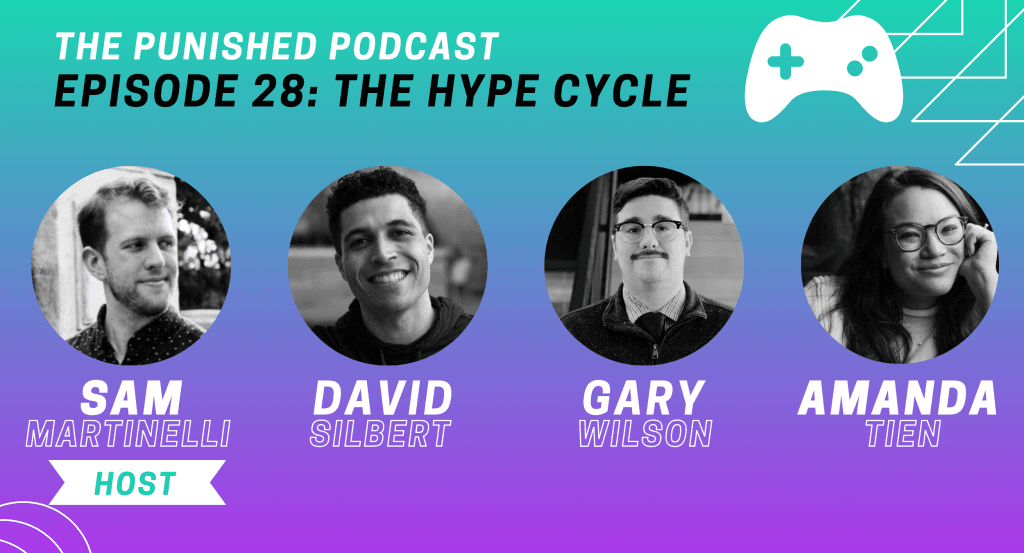
- Podcast Co-Hosts: David Silbert, Sam Martinelli, Amanda Tien
- Podcast Audio & Graphics Editor: Amanda Tien
- Podcast Distributor: David Silbert
- Theme Song Composer: Jason Hulse
Further Reading


A video game outlet that blends quality words with inclusive voices. For business inquiries and review requests, reach us at press [at] punishedbacklog [dot] com.





Sam has been playing video games since his earliest years and has been writing about them since 2016. He joined The Punished Backlog in 2017 and became an Editor in Fall 2021. He’s a big fan of Nintendo games and complaining about The Last of Us Part II. You either agree wholeheartedly with his opinions or despise them. There is no in between.
A lifelong New Yorker, Sam views gaming as far more than a silly little pastime, and hopes through critical analysis and in-depth reviews to better understand the medium's artistic merit.
Bluesky: @sam-martinelli.bsky.social



David is the founder of The Punished Backlog. He has a problem finishing games he starts.
Just beat: Splatoon Raiders.
Working on: GTA V.
Can't wait for: Ocarina of Time (2026), GTA VI.
Follow David on Twitter at @David_Silbert to keep up to date with all things The Punished Backlog.




Gary is a jack-of-all-trades video game enthusiast based in Boston, MA. A semi-professional fighting game player, even less professional Apex Legends player, and even less professional adult, he spends most of his time poking at strange indie gems and reading about the need for more diverse voices in gaming criticism. He invites anyone to recommend anything he's missed in the gaming world via Twitter or BlueSky, where he can found under the username @grtnpwrfl. When he isn't spending his time playing games, Gary is an avid New England Patriots fan and frequent hiker.


Amanda Tien (she/her or they) loves video games where she can pet dogs, solve mysteries, punch bad guys, play as a cool female character, and/or have a good cry. She began writing with The Punished Backlog in 2020 and became an Editor in Fall 2021. Amanda also does a lot of the site's graphic designs and podcast editing. Amanda's work has been published in Mothership, Unwinnable Monthly, Poets.org, Salt Hill Journal, and elsewhere. She holds an MFA in Fiction from the University of Pittsburgh and a BA in Creative Writing from Columbia University. Learn more about her writing, visual art, teaching, graphic design, and marketing consulting at www.amandatien.com.