

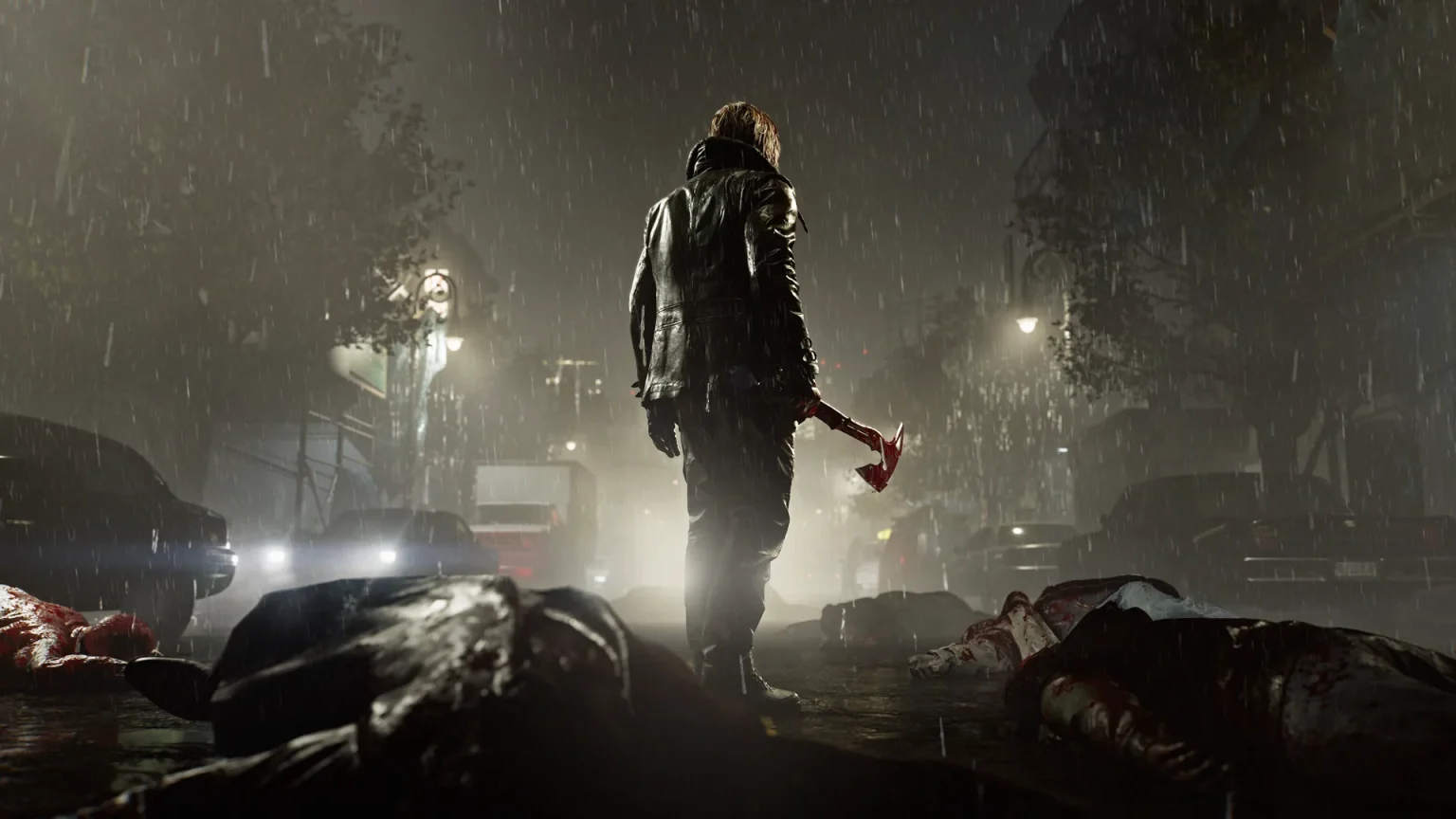
Two quick notes: 1) The following contains spoilers for the mainline Resident Evil franchise, including Requiem, and 2) No legitimate study has found any connection between real-life violence and video games. What follows is an examination of the representation of violence and in no way seeks to claim that violent acts in the Resident Evil series influence violent behavior.
The ammunition numbers no longer appear in the corner of the screen… or at least, I don’t notice them. The HUD feels more limited than usual; the over-the-shoulder shooting turns into classic Resident Evil. I only see Leon, a freshly emerged creature, and Grace on screen. Playing as Leon, I pull the trigger button three times before I recognize that Grace is asking him to stop. She pleads with the player to stop.
This plea hangs thick in the air. I think about the over-the-top violence that the game has presented thus far, and while the Resident Evil series has never veered far from it, opening fire here as former cop/now counter-bioterrorist agent Leon S. Kennedy feels different in 2026 than it did in years past. To put it plainly: The state-sanctioned violence of Resident Evil Requiem makes me deeply uncomfortable. Instead of ignoring it, I want to sit with this discomfort, unpacking where the series’ depictions and encouragement of in-game violence feel different.
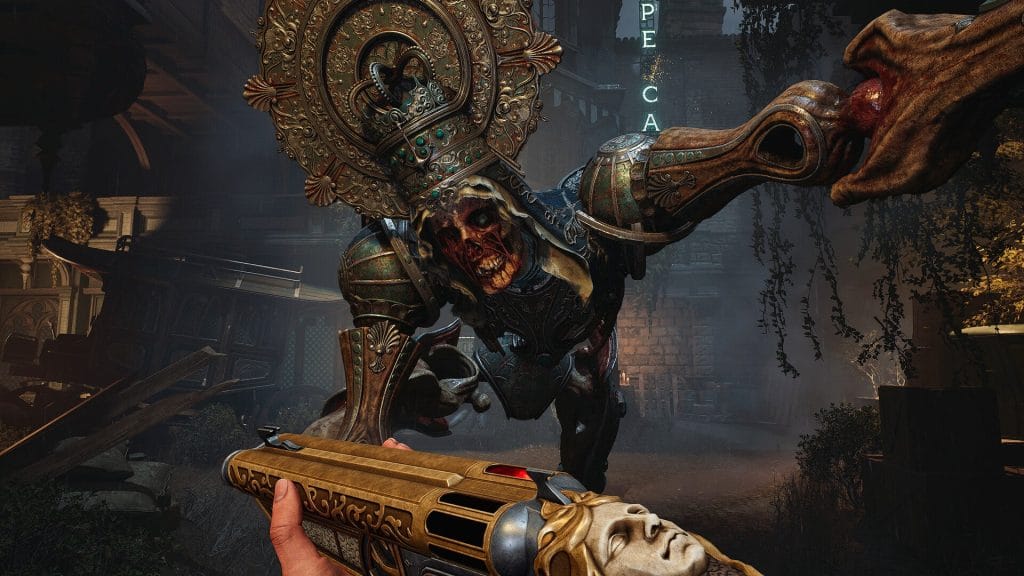
The Bones of Crisol: Theater of Idols and Cronos: The New Dawn
The carnage in Resident Evil is often campy, over-the-top, and dramatic. Violent deaths — zombie, creature, human — linger across the series. Resident Evil doesn’t take itself too seriously, with supposedly serious characters punching boulders and giving ridiculous monologues. My partner and I even have a running commentary on the unlucky fates of nearly every helicopter pilot in the series. We were heartbroken when Resident Evil Requiem inevitably followed the same pattern of poor helicopter pilots.
Requiem solidified some of my thoughts around the series that began forming around Vermila Studios’ excellent Crisol: Theater of Idols and Bloober Team’s Cronos: The New Dawn. Cristol is a riveting Spanish folk-horror first-person shooter that feels straight from the Xbox 360-era, while Cronos is a time-traveling survival-horror game. For me, they both wear their Resident Evil inspirations on their sleeve. Crisol provides a love letter with a bloody twist: You can keep your health meter full of blood, or you can sacrifice some of it to create bullets. Cronos, meanwhile, adapts the over-the-shoulder gunplay against monstrous creatures. While both games are a bit melodramatic, there are also campy elements, like time-agnostic cats and Spanish folk-theatricality.
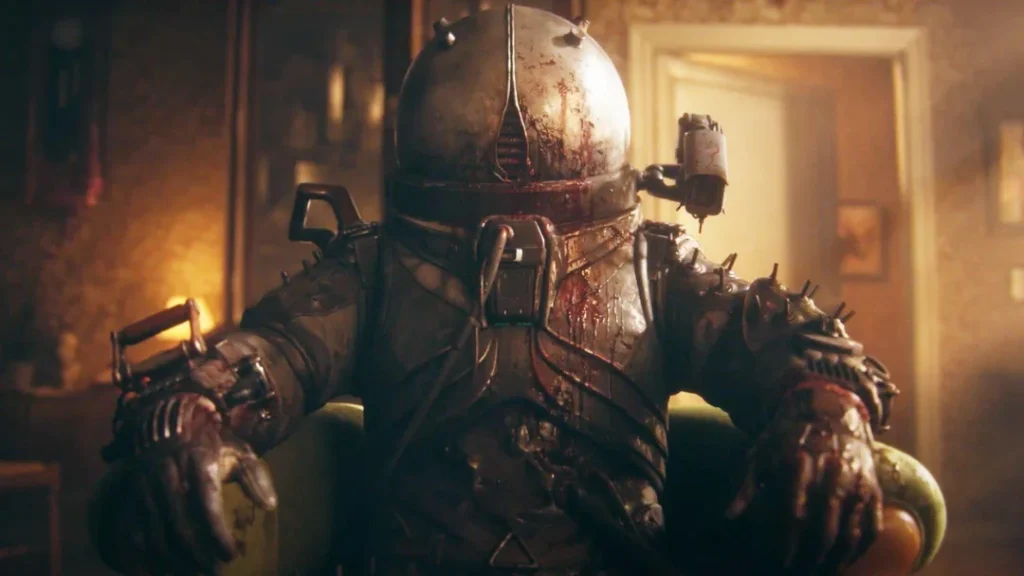
The violence in both seems subverted, somehow. For instance, most of Crisol’s enemies are doll-like, mechanical in their movement and behaviors. The gameplay loop is interesting but gimmicky in its gory toll for each bullet. What really bugged me a bit was the protagonist: the angel Gabriel, who plays the role of grumpy protagonist (think Booker from Bioshock Infinite) and, frankly, cop (think Leon, Chris, and every other Resident Evil protagonist not named Ethan or Alyssa). His attitude about his objective justified the violence against his own body and the bodies of others.
This column, however, isn’t about Crisol: Theater of Idols, a thoroughly enjoyable game, nor Cronos: The New Dawn, an admirable effort. Rather, these two games encouraged me to finally put on paper a horror genre trope that deeply bothers me, and one that I believe is at least partially the fault of Resident Evil. Put simply, I don’t want to continue experiencing horror from the perspective of the cop (angel, human, or time-traveller), secret agent, or paramilitary figure.

Resident Who?
The mainline Resident Evil games are deeply invested in fictions of security and violence — state, local, corporate, and personal. There are no quiet moments in these games, outside of maybe in the Baker House in Resident Evil 7: Biohazard. Its characters are rarely too empathetic for the many, many infected residents that lurk in Raccoon City and beyond. And while empathy isn’t always front-of-mind when a humanoid creature is trying to bite your face, some quiet meditation on who these folks were beyond “collectibles” would help humanize zombies and protagonists.
Let’s consider the background of the protagonists at the helm of the Resident Evil games. The golden boy of Resident Evil 2 and Resident Evil 4, Leon Kennedy, starts as a rookie cop with what can only be the worst (and most violent) first day of work ever. I don’t just want to pick on Leon.1 The same police department also employed Chris Redfield (Resident Evil), Jill Valentine (Resident Evil and Resident Evil 3), Barry Burton (Resident Evil: Revelations 2), and Rebecca Chambers (Resident Evil Zero). Ada Wong (Resident Evil 2, Resident Evil 4, Resident Evil 6) is a spy. Grace Ashcroft (Resident Evil Requiem) works for the FBI. Ethan Winters (Resident Evil 7, Resident Evil Village) and Claire Redfield (Resident Evil 3) are the only mainline RE protagonists who do not present horror from the perspective of a cop, a secret agent acting outside of their jurisdiction, a special forces agent, or a technical analyst with a gun working for the FBI. Claire works for the human rights organization Terrafall, and Ethan was a systems engineer.2
How Resident Evil Justifies Violence
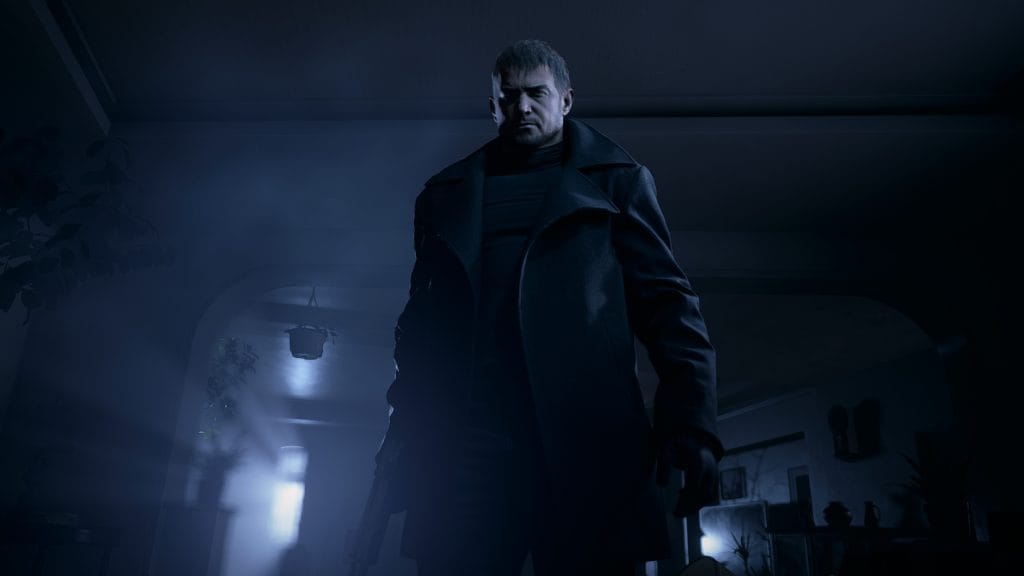
Resident Evil has always been violent, but that violence has changed over time. The first Resident Evil feels more like a haunted house when revisiting it 30 years later. Players take the role of one of two cops in the elite S.T.A.R.S. program (Chris Redfield or Jill Valentine). They navigate the intricately designed Spencer Mansion, haunted by flesh-eating zombies and dogs jumping through windows. Resident Evil 2 puts players directly in the Racoon Police Department as Rookie Cop Leon Kennedy. The shift to Raccoon City in the American Midwest not only evolved the mansion structure but also began to further militarize its handling of the zombies and characters within urban spaces.
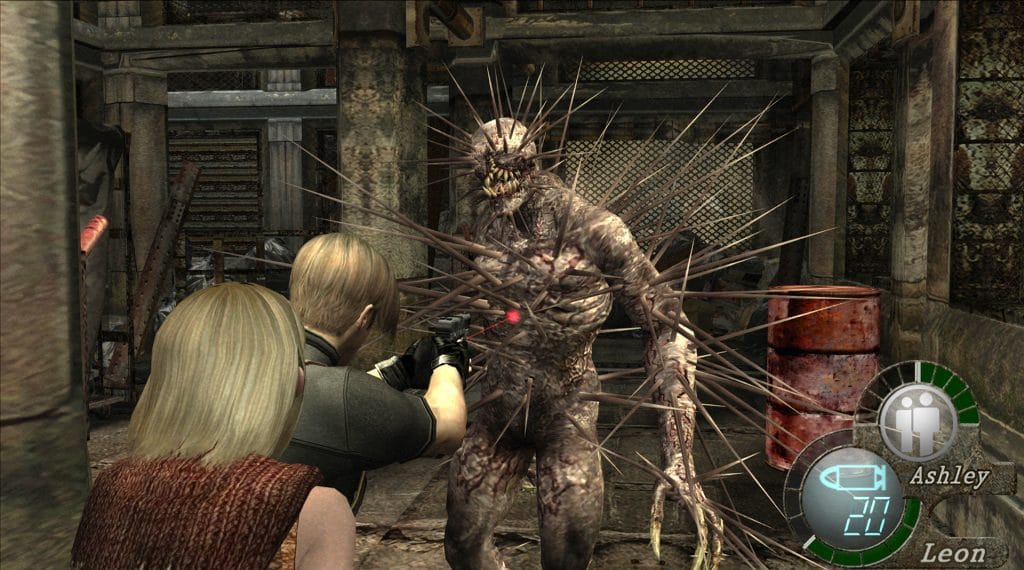
While the first few games in the series balance the structure of its haunted-house origins with the overwhelming terrors of bio-weapons turning people into zombies, Resident Evil 4 took the series into a more action-oriented direction. Leon returns, now working for the feds, to save the president’s daughter. Are we still in the United States? No. The game takes place in Spain, where the infected enemies (Los Ganados) are far more intelligent and demonstrate a greater range of agency.
The legacy of Resident Evil 4 is hard to overstate. It changed the way that horror games approached action moving forward and inspired non-horror third-person shooters. Capcom ported and re-released it on nearly every console since its GameCube release and created a brilliant remake in 2023. Its legacy also cannot be dislodged from a post-9/11 United States and its foreign policy. Leon is an extrajudicial federal officer. The violence that he commits against the villages infected with Las Plagas feels different than the violence he commits in Raccoon City in 1998. The game also takes a mirror to the relationship between U.S. interests and the willingness to commit violence: Leon is effectively there only to gather one of the president’s assets, whereas she has little agency or character development. Rescuing her is Leon’s sole reason for being there.
Violence Expanded
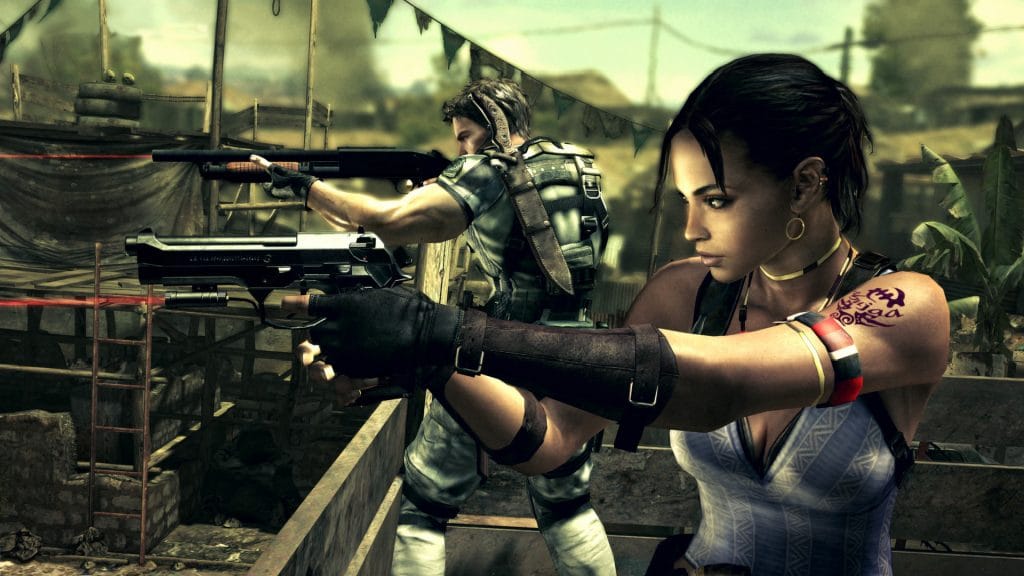
Resident Evil 5 (2009) and Resident Evil 6 (2012) further complicate the series’ relationship with violence. Both games not only released in the post-9/11 world that informs Resident Evil 4 but also arrived during a particular identity crisis across media to be more serious and gritty — see, for instance, the pivot from Christopher Nolan’s Batman Begins (2005) to his The Dark Knight (2008) or from Infinity Ward’s Call of Duty 2 (2005) to the studio’s Call of Duty 4: Modern Warfare (2007). Resident Evil 5 and 6 have more in common with the Activision series than any of the preceding Resident Evil games. Our special agents — former cops of Raccoon City — went on globetrotting adventures to kill mostly non-white infected people.
Both games take the model established by Resident Evil 4 and ratchet it up a notch. While players might remember the more campy aspects of these games (like Chris Redfield punching a boulder), they paint a picture of the violence enacted by U.S. Imperialism. Within the narrative’s logic, the games’ violence becomes more and more justified because the threat of bioterrorism is ever-growing.
[Resident Evil 5 & 6] are the worst kind of cultural time capsules: memories of empty explosions and inconsequential gore against very timely backdrops.
This phase of the Resident Evil franchise’s life feels fraught. They transitioned the series to “HD” and introduced co-op mode to an otherwise mostly single-player experience (with the multiplayer Resident Evil Outbreak spin-off series being the exception). In hindsight, these big swings feel like missed opportunities to comment on the moment of geopolitical distrust that prefaces our current era.
Resident Evil 5 has received a fair amount of criticism for its racism since its release, and many fans would agree that the less said about Resident Evil 6’s convoluted (and frankly messy) globetrotting story, the better. They reinforce the narrative around the U.S. agents’ “responsibility” to keep bio-terrorists at bay.
On a more personal note, I have spent the last few years trying to return to these two entries only to put down the controller after a few hours. I keep finding excuses not to return to either or to quickly turn them off before getting more than a few minutes deep. They are the worst kind of cultural time capsules: memories of empty explosions and inconsequential gore against very timely backdrops.

Turning Inward
Eventually, the external threats end, and that violence is turned inward. Resident Evil 7: Biohazard and Resident Evil Village split the difference. Biohazard returns the series to its haunted house origins against a Louisiana backdrop. This is the most rural that the series gets within the United States. The violence adds more of a Texas Chainsaw aesthetic — the Baker house rots, the food looks disgusting, and the monsters are moldy. The shift to the first-person perspective also transforms the ethos of its central character. Ethan Winters isn’t paramilitary but a systems engineer who is in love. His conflict isn’t policing, and the violence enacted doesn’t come from the same place.
Village differs slightly. The game changes location to Europe again and begins with a conflict with one of the former Raccoon City cops turned agent, Chris Redfield, coming into Ethan and his partner Mia’s home and killing Mia. The scene is frightening and disturbing, maybe even more so in 2026. During the game’s most action-packed sequence, players switch from Ethan to Chris. For a moment, the game plays more like a Call of Duty level. Chris is faster and more ruthless. How he speaks is colder than how Ethan discusses the world around him. The shift from civilian to cop changes the affect.
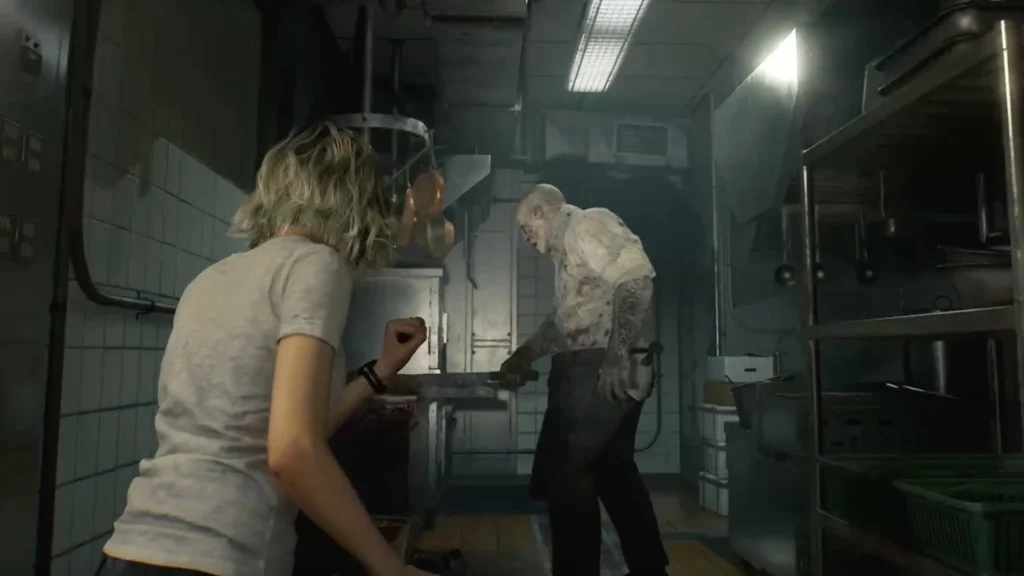
This brings us back to Resident Evil Requiem, which seeks to bring the two legacies of violence together under one roof. Grace may be an FBI analyst who has mostly done deskwork (and who wears her shoes in bed), but her mother Alyssa, from the spinoff Resident Evil Outbreak, is an investigative reporter. Grace’s narrative feels more aligned with her mother’s; her curiosity within the game’s early haunted house structure feels markedly different than Leon’s (notably) shoot-first, question-later navigation of the same space. For Grace, the game’s spaces are opportunities for exploration. With Leon, the same spaces are shooting galleries, privileging enacting the most violence against the most number of bodies.
For Grace, the game’s spaces are opportunities for exploration. With Leon, the same spaces are shooting galleries, privileging enacting the most violence against the most number of bodies.
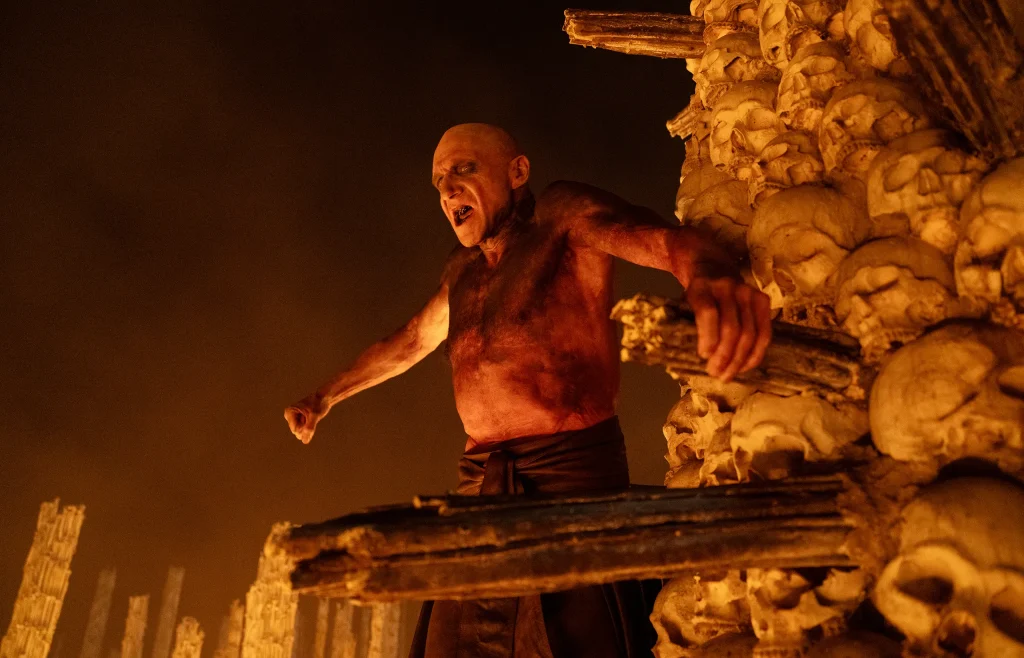
This time the aesthetics and gameplay of Resident Evil 4, 5, and 6 aren’t somewhere else. This is that same extremity and intensity of violence back “at home” against infected bodies that invoke U.S. identities. I found myself struck by the game’s aesthetic choices for folks walking on the streets in the early portion of the game and the bodies of the infected mere minutes later. The people on either side of that coin (walking alone on the sidewalk or in the care center) share space. Their identities are only obscured by narrative design and fear.
Is an Alternative Possible?
Violence itself is nothing new for the zombie genre. From The Walking Dead to 28 Days Later or Scooby Doo on Zombie Island to Warm Bodies, violence is revisited over and over in this corner of horror. These stories, however, don’t always interrogate their violence in a way that is healthy, useful, or satisfying.
I have found myself struck by 2026 zombie films’ engagement with the humanity of the infected, like 28 Years Later: The Bone Temple and We Bury the Dead. Both are very violent, but the violence isn’t merely dehumanizing. In both, at least one protagonist seeks to find the human behind the zombie, not to cause it harm but to return its agency. I left my time with Resident Evil Requiem wondering what a similar video game experience would feel like.
Both films made a certain peace with the zombie-infested worlds around them, with 28 Years Later: The Bone Temple providing an interesting alternative. This humanizing of the zombie may be more of a response to Covid-19; however, what would Resident Evil look like if this response to Covid-19 and the state-inflicted violence were unpacked within the franchise’s canon (much like the pivot post-9/11)? What stories walk past Grace on that busy street? How do their stories overlap with those infected in the care center and beyond? What are their relationships with the paramilitary figures, like Chris and Leon, and the violence that follows them?
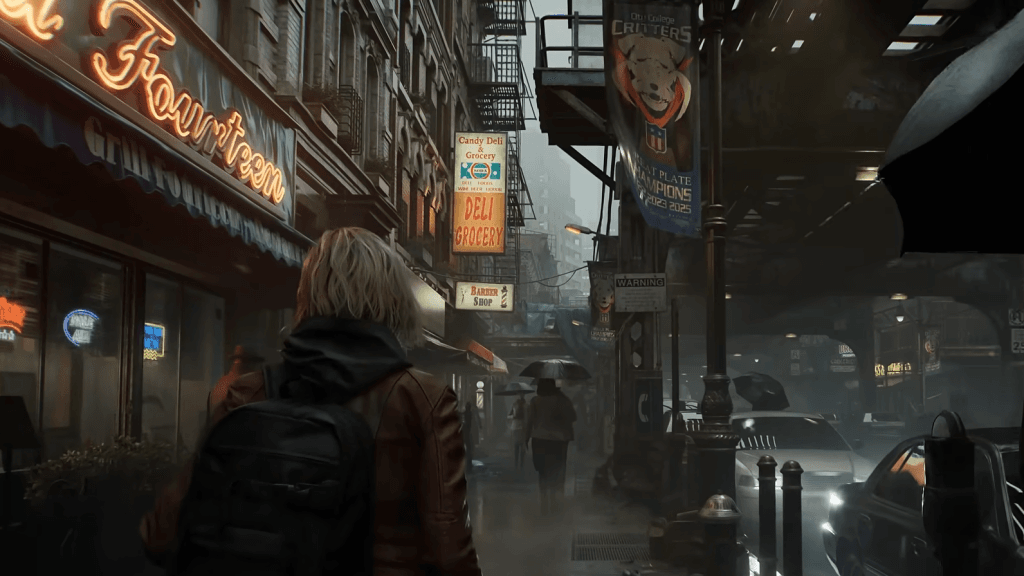
We’ll likely not get these explanations outside of newspaper clippings and emails. These collectibles are but fragments of lives in the periphery — one bad day away from being on the gory side of a Resident Evil title. The series’ sole notable journalist, Alyssa Ashcroft, is now canonically dead, murdered eight years prior to the events of Resident Evil Requiem in another act of violence that traumatized Grace. Her loss ripples across the franchise.
There is hope in the character of Grace and her pleading with the player (and Leon) to stop shooting, if only for a moment. Having briefly known the child who became the creature, Grace never stops humanizing her. The narrative sparing of the creature/child shines some hope that maybe there’s room for the alternative imagined elsewhere, even if only for narrative convenience.
- I mainly don’t want fellow TPB writer Kei to be mad at me for solely picking on Leon. Otherwise, this whole piece would be about the rookie cop’s wild plot development from rookie cop to fan-service counter-terrorist agent who is incredibly attractive but as sexless as a Marvel Cinematic Universe character. ↩︎
- For the purposes of this piece, I have only focused on the mainline games. I recognize that the characters in spin-offs possess different jobs. ↩︎

Clint is a writer and educator based out of Wisconsin. You can often find him writing about Middle English poetry, medieval games, or video games. He received his PhD in English from the Ohio State University. You can find his academic and public work at clintmorrisonjr.com.






1 Comment
Good Points, helps me reframe some of the more ‘fun’ aspects that make the RE series so iconic. Capcom can certainly do better.