South by Southwest (SXSW) is about more than music and films (although those are fun too!). Video games and immersive interactive experiences also make up the event’s technomedia tapestry. Even auteur game developer Hideo Kojima seems to think so, having spoken at SXSW last year to discuss Death Stranding 2: On the Beach’s VR training mode.
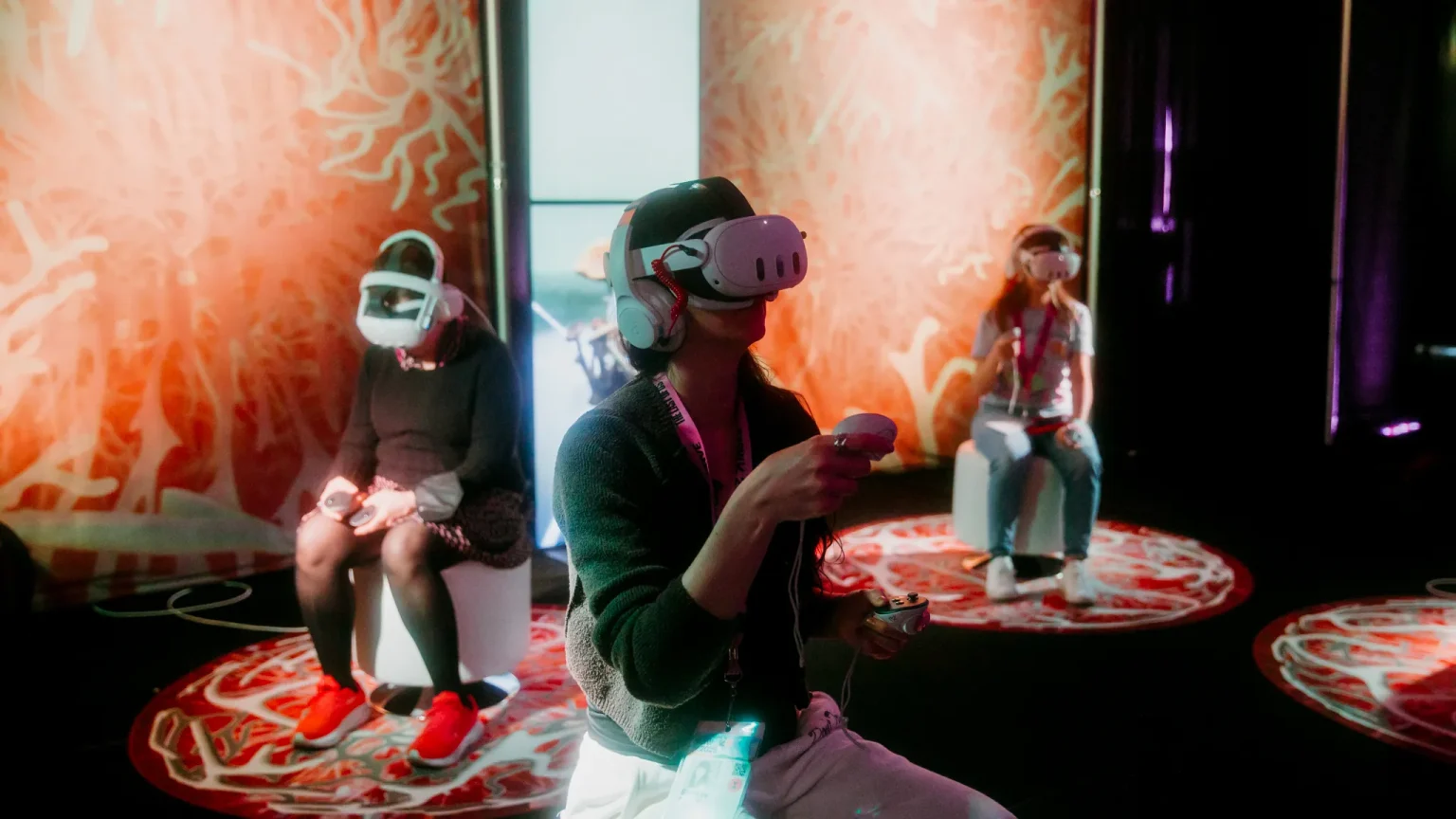
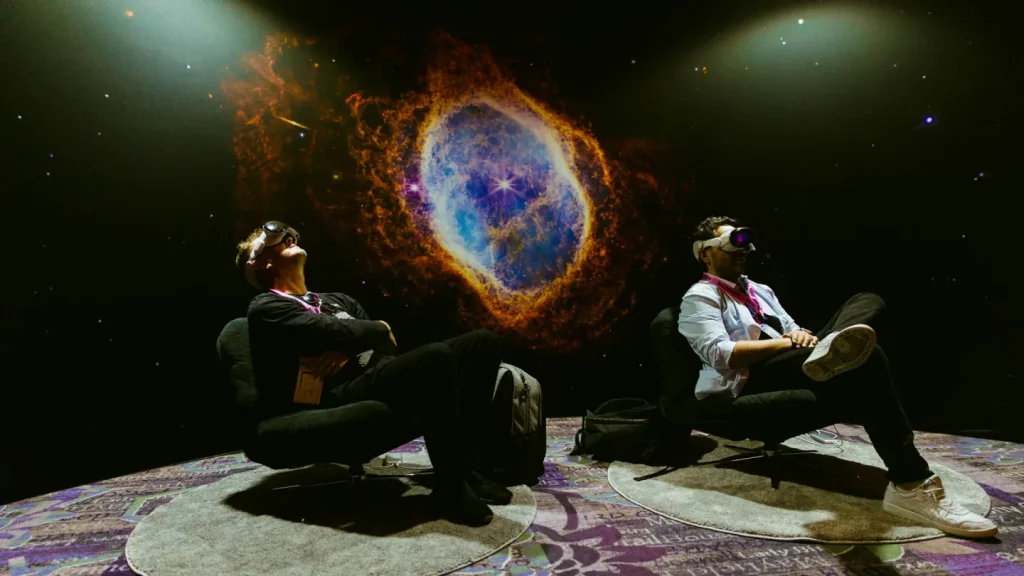
This year, I was able to “play” a series of XR experiences.* The “x” stands for “extended” reality, an umbrella term ranging from virtual reality (VR) to augmented reality (AR). There was a large XR “games” presence at SXSW this year, though to call these games feels like a bit of a misnomer. While I had a VR headset on for most of the experiences, they felt more like an interactive film than, for example, 2025’s great Deadpool VR. For some, I was seated in a wall-less booth (walls aren’t needed when VR supplies them); for others, I had a space to walk around.
Below were my favorite seven experiences. Some will be available to play on home devices, but others were purely festival demonstrations.
*A quick note: Several XR experiences advertised that they used generative AI in some form. I have chosen not to write about those experiences. I apologize if I missed that any of the seven used generative AI.
Header photo: XR Experience – SXSW 2025 – Photo by Natalie Guillot
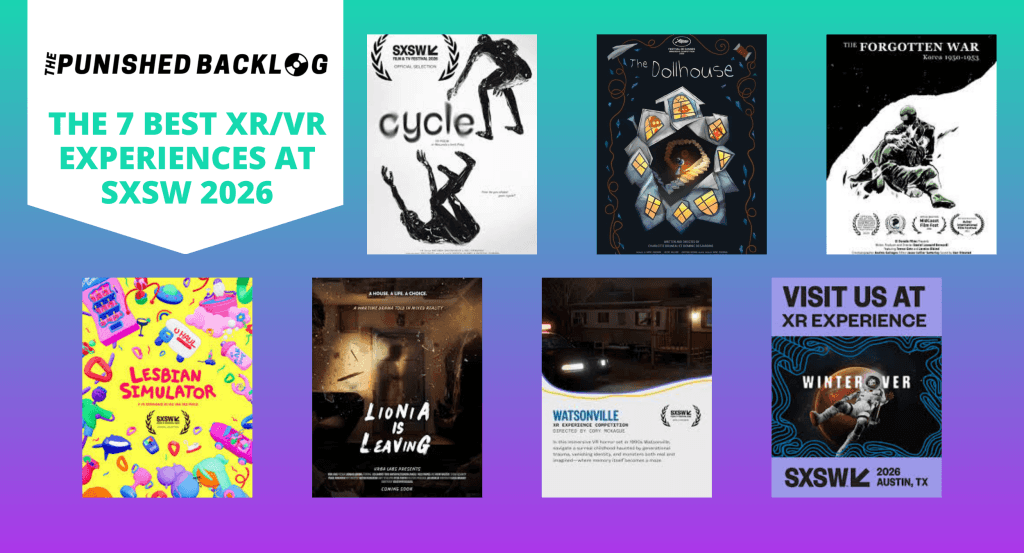
The Best XR Experiences at SXSW 2026
Cycle
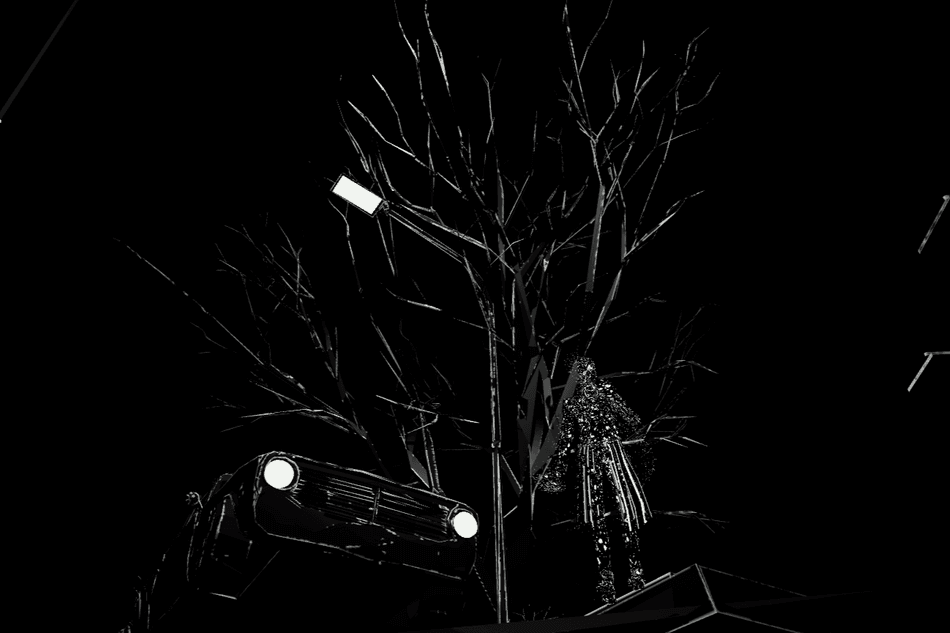
Amit Palgi and Matunda Groenendijk’s Cycle is a VR experience unlike anything else at SXSW this year. The 15-minute experience, which had its world premiere here in Texas, explores the intersection of visual art and poetry. Cycle gives players agency with how the poem is organized, encouraging them to think about their own experiences, lives, and the spaces they inhabit.
Cycle’s evolving shapes and spaces with poetry as more than a mere backdrop created an experience that isn’t quickly left behind. It reminds players of the continuations and repetitions of life as visual art and poetry are deconstructed and reconstructed in the VR space.
Learn more about Cycle here.
The Dollhouse
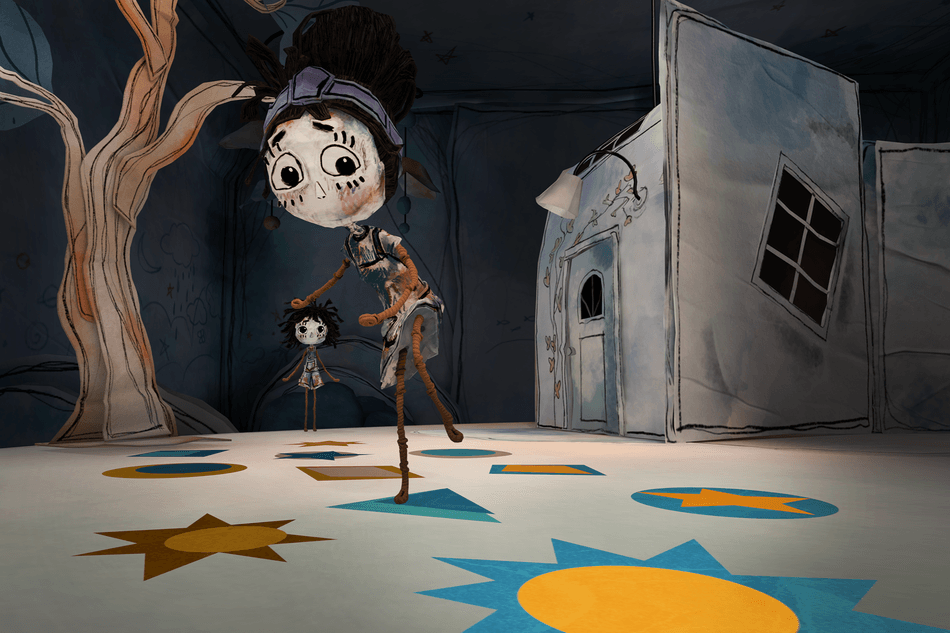
I was told beforehand that The Dollhouse is a family affair. Charlotte Bruneau and Dominic Desjardins’s handcrafted VR story, which premiered at the Cannes Film Festival last year, follows a family and a stranger who moves in with them. It proved to be the most emotional experience I had at SXSW.
The Dollhouse is told from the perspective of a young girl. It challenges the viewer to sit with their own complacency within and without the experience, asking them to sit with these feelings. I cried during my twenty-two minutes with The Dollhouse.
While the interactions were minimal, I found them to brilliantly guide the story forward, asking me to look behind me to meditate on the past. Further, these interactions gave me at least one choice (not to be spoiled here) that I didn’t know was a choice until I took my headset off.
Watch the trailer for The Dollhouse here and learn more here.
The Forgotten War
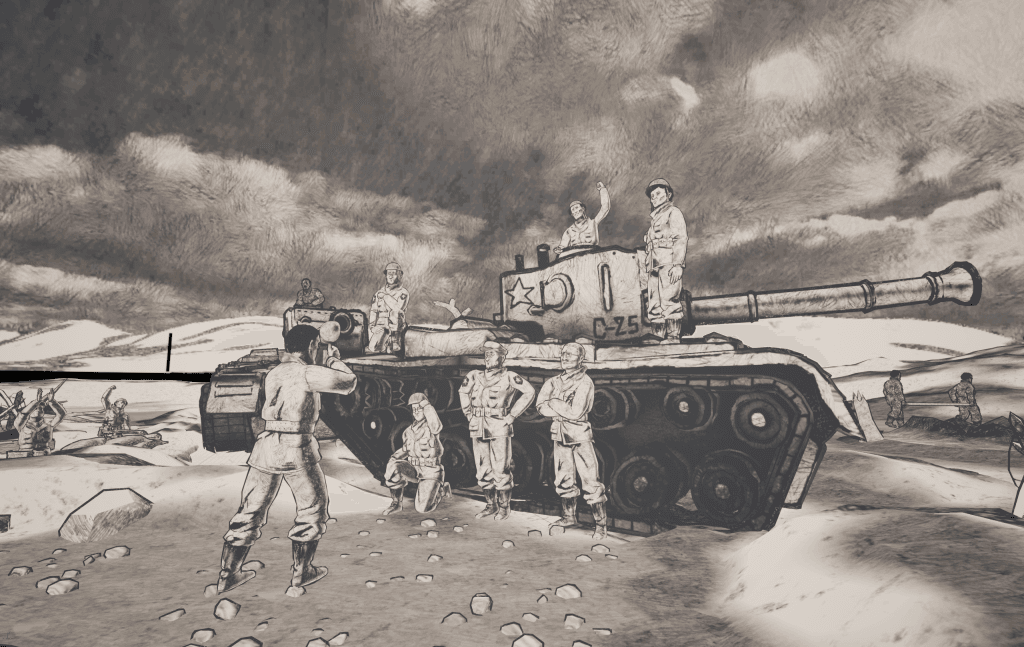
Innerspace VR’s The Forgotten War was by far the longest XR experience at SXSW; it also required the most space to move around. The VR art installation tells the human stories — hardship as well as kinship — revolving around the Battle of Jipyeong-ri of the Korean War.
Each VR vignette featured an individual doing some kind of wartime labor; participants were asked to momentarily complete the task alongside the worker. One of the narrators would then provide context for the moment as the scene around the person and participant is drawn to life. I found the journey of these spaces and stories to be moving.
I learned a lot while moving about the VR space of The Forgotten War. The team, led by director Hayoun Kwon, did a wonderful job transforming their research of diaries, letters, photographs, drawings, and video footage into an approachable and engaging forty-minute experience.
Learn more about The Forgotten War here.

Lesbian Simulator
Netherlands-based Studio Biarritz’s Lesbian Simulator surprised me. The VR experience’s whimsical art style and game elements immediately caught my attention. The game quickly becomes more serious, never shying away from social issues while still “still adding a touch of glitter.”
Lesbian Simulator contains some intense and uncomfortable situations while lovingly giving the player space to sit with the experience, their prior experiences, and their biases. It is a beautiful exercise in practicing empathy, and a model for how video games could create realistic queer spaces, characters, and experiences.
You can learn more about Lesbian Simulator here, including where to catch the game on tour and at festivals.
Lionia is Leaving
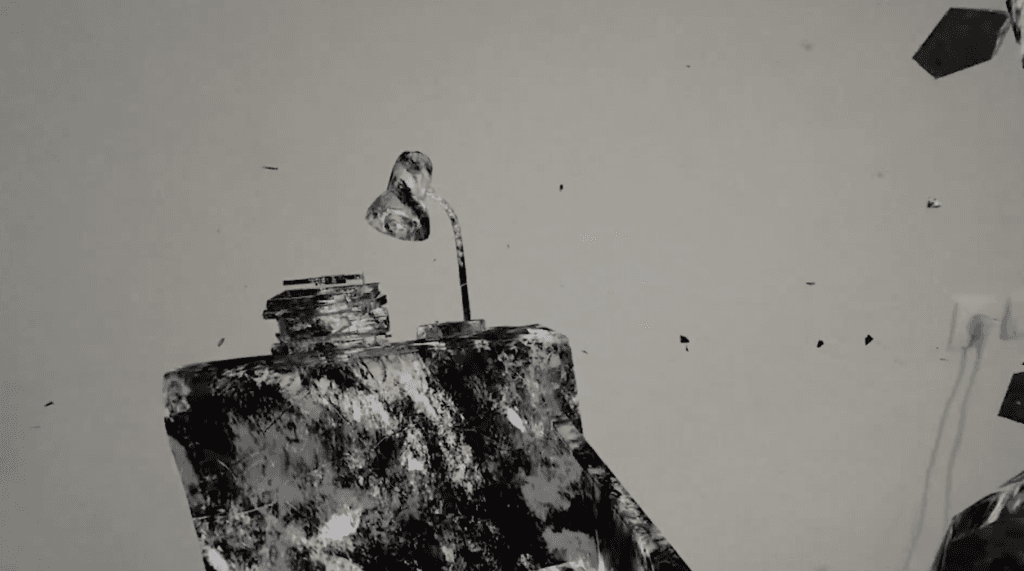
Lionia is Leaving brought me to tears. Simply put, VRBA’s VR film tells the story of a retired engineer and his cat. The retiree, Lionia, refuses to leave his home (echoing his partner’s earlier concerns that cats don’t like moving) while Russia bombed Okhtyrka, Ukraine, in 2022.
Space and audio are used in brilliant ways in the eighteen-minute “immersive mixed reality” experience. Viewers move between modern still-life portrayals of a war-torn life within a single abode. Since the experience takes place in the 2020s, not every virtual still-life portrays rotting fruit, but these moments show a house in decay as Lionia’s family leaves and the attacks continue.
Lionia is Leaving never lets the viewer forget that this is an ongoing daily experience, forcing the player to sit with the tragedies of the Russian-Ukrainian war.
Learn more about Lionia is Leaving, which had its world premiere at SXSW, here.
Watsonville
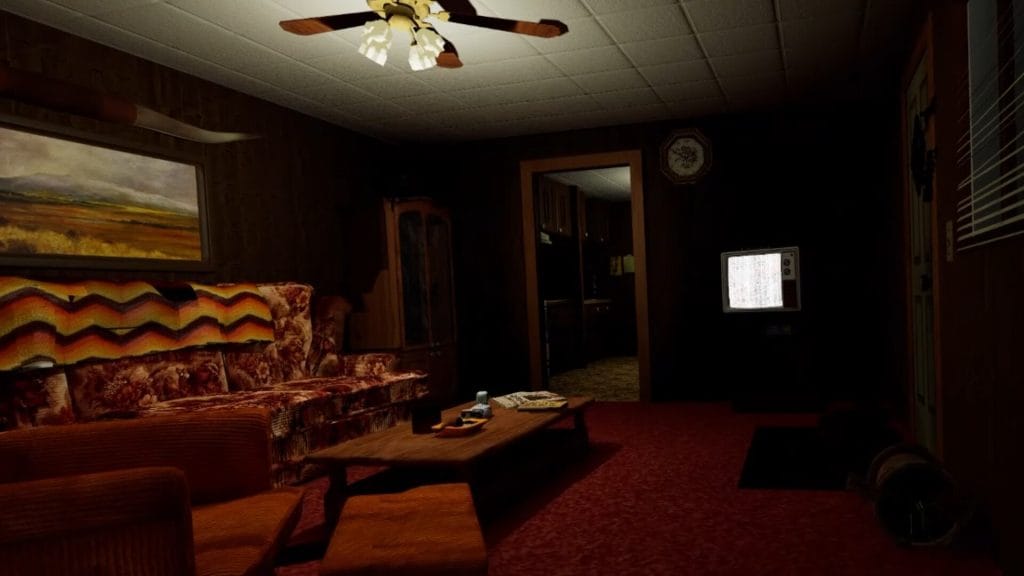
Cory McKague’s Watsonville was the VR game that I was most excited to play at SXSW. It is a first-person horror title that asks its players to navigate a 1990s family trailer house. The opening sequence does a brilliant job setting the scene, complete with a Final Fantasy VII poster and other ’90s media items.
My time with Watsonville was incredible and terrifying. McKague has crafted a series of spaces that serve as interesting and engaging environmental storytelling. These rooms pull back the layers of the burden of generational trauma carried by the protagonist. I can’t wait to experience the full title later this year.
As shared on Reddit, McKague plans to release Watsonville on Halloween for home VR devices. You can wishlist it on Steam here.
WinterOver
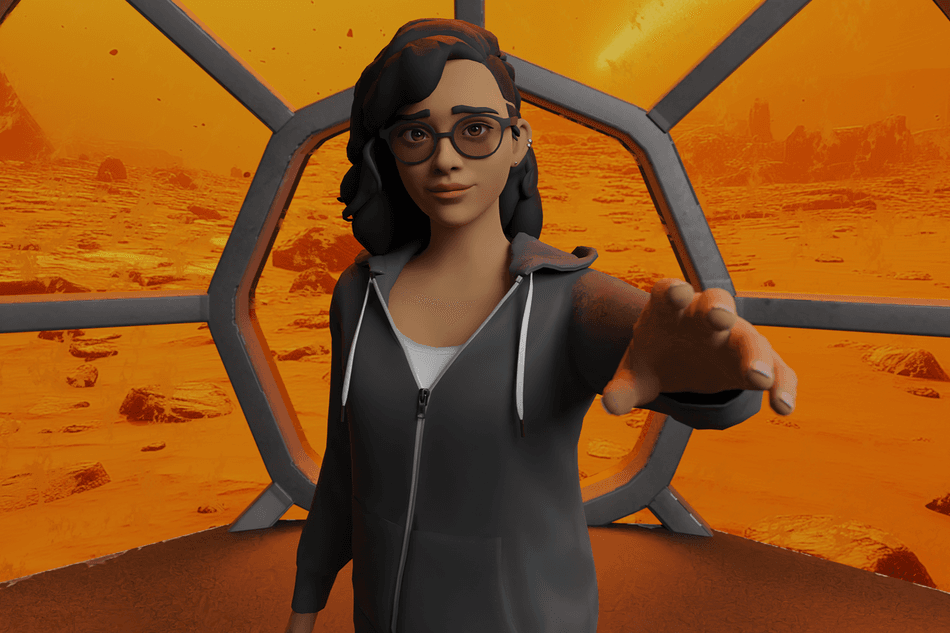
Ido Mizrahy and Nir Saar’s WinterOver is an emotional slow burn. The game demonstrates the potential to combine two of my favorite things: space exploration and family drama.
WinterOver promises a branching storyline that centers on a strained mother-daughter relationship. Natalie Ramirez is an astronaut who discovers a water reservoir on a Mars mission in 2049. This discovery means that her plan to return home to Earth in mere days will be delayed indefinitely. Her daughter is far from thrilled.
My time with WinterOver gave me time to explore Mars and interact with scientific equipment. The story unfolds carefully, giving time to sit with the choices that will draw the player closer to her daughter or drive the wedge between them wider. WinterOver felt a lot like 2016’s Firewatch in all of the best ways.
WinterOver comes to Meta Quest and PC VR this summer. Learn more about WinterOver here.
VR Experiences Are Getting Real
I didn’t know how emotional and raw some of these XR experiences would leave me. I have long believed that interactive storytelling (namely, video games) has the ability to create and build empathy. Each XR experience showcased ways that this medium, especially in VR, can help create bridges between experiences.
This is why it matters that humans continue crafting the dialogue, art, and design of digital experiences. The conference itself seemed to reinforce this: The Forgotten War was set up across from Lionia is Leaving at the convention center, making for a poignant mirroring of experiences about the impact of violence. Generative AI made for some interesting XR interactions, but none of them made me feel as much or as meditative as the deeply human The Dollhouse.
To echo my SXSW 2026 best films piece, I hope humans never stop making and experiencing wildly creative, uniquely weird, and deeply empathic art.

Clint is a writer and educator based out of Columbus, OH. You can often find him writing about Middle English poetry, medieval games, or video games. He just finished a PhD in English at the Ohio State University. You can find his academic and public work at clintmorrisonjr.com.