

I spent a lot of time at my paternal grandparents’ house growing up. My love for horror stems from days with my memaw watching scary movies and shows. My appreciation for Westerns came from hours spent watching them with my peepaw. Fairly optimistically, my young mind hoped for a marriage of the two genres: a horror cowboy flick.
My grandparents are both gone now, but my hunt for this hybrid genre continues. In recent years, I have revisited From Dusk Till Dawn (1996) and Bone Tomahawk (2015), and have recommended to everyone who would listen to please read Stephen Graham Jones’s The Buffalo Hunter Hunter (2025).
Video games have always seemed like a natural place for this genre crossover. Darkwatch (2005), Red Dead Redemption: Undead Nightmare (2010), and Weird West (2022) scratched this itch. Each built on a familiar and established game design — action shooter, open world, and immersive sim, respectively — to ease players into the world’s weirdness.
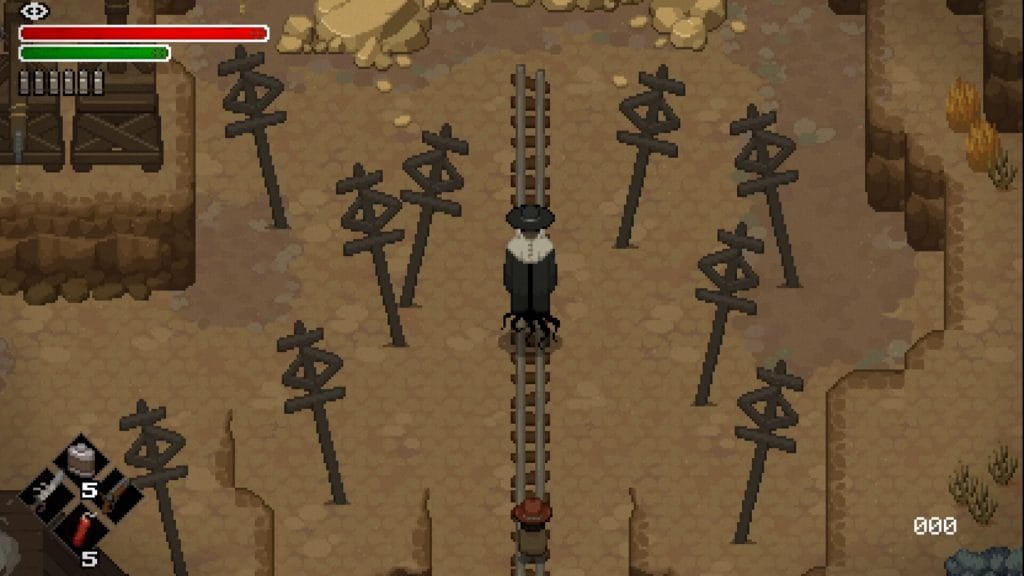
Moth Atlas’ Tombwater is the latest horror Western game to build on a beloved genre. Part Bloodborne and part The Legend of Zelda: Link to the Past, the game is a carefully crafted Eldridge-horror Western game that deftly balances its 2D adventure and Soulslike elements.
A Stranger, a Sword, and a Pistol
Tombwater establishes its environmental narrative early. A prologue finds the protagonist, an unnamed stranger, on a train. This sequence teaches the player the tools of the trade — melee and gun combat in its 2D setting — before diving into the supernatural.
Following the prologue, players choose between seven classes: Soldier, Gunslinger, Occultist, Tinkerer, Spellblade, Drifter, and Nameless. If you’ve played a FromSoftware game where you selected a class, these map nicely onto play styles that you may already be familiar with. Soldier and Gunslinger are great for the first playthrough, privileging close quarters and gunplay, respectively. The Nameless class is much more like the Deprived class in Dark Souls and should thus be attempted by Soulsborne veterans or as a second playthrough.
Our stranger arrives at the train station in the small town of Tombwater in search of his friend, Sheriff Elliott Flintwood. Things quickly become Lovecraftian. From the train station, players can begin exploring Tombwater and its surrounding biomes. There’s little instruction outside of the stranger’s journal and even less handholding.
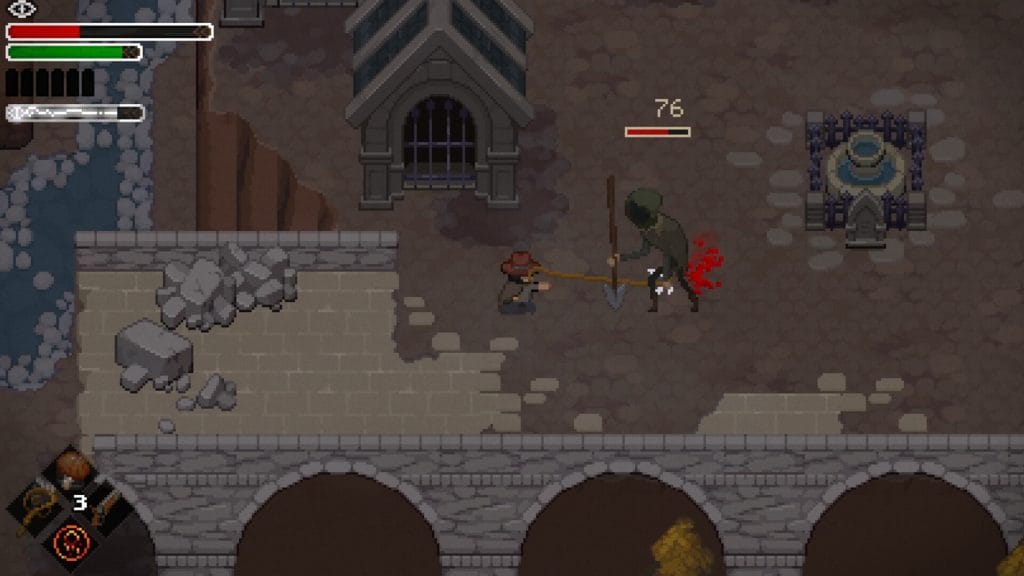
Tombwater’s arsenal of weapons is impressive. The game boasts more than 50 melee and ranged weapons, which can be unlocked by finding them in the wild, by discovering schematics, or by purchasing them from vendors. There are 40 stat-improving charms to be bought or found during exploration. Finally, there are 40 spells to unlock — some of which, while powerful, will inflict madness upon the player. Gain enough madness, and the screen will intensify, and the stranger won’t be able to cast magic for a bit.
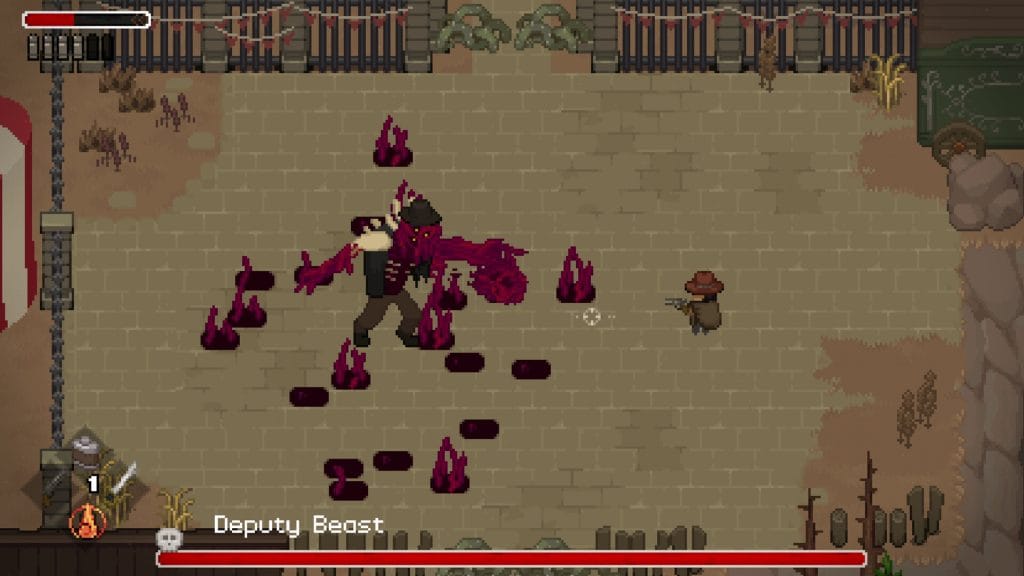
These tools of destruction provide various approaches to the creature encounters and boss fights of Tombwater. Each melee and range weapon feels different, and some are just downright fun (if only in their description). I found the initially unassuming magic system to be the subtle star of the show in its effectiveness.
Haunted Western
Each biome in Tombwater is unique. The creatures and former inhabitants differ enough between areas that moving between these areas feels fresh during the early hours. The map is akin to 2D Zelda-likes, with an interconnected world that rivals A Link to the Past and 2025’s excellent Pipistello and the Cursed Yoyo. Different abilities and crafted items will grant access to new portions of the map, as well as secrets.
Significantly, very little of Tombwater’s world and narrative is linear. If the player grows frustrated with a certain area or just wants a new aesthetic, the biome(s) adjacent to the current one are just a short walk away. Fast travel is also possible once the biome’s Bellpost has been unlocked.
Further, Tombwater will kill its players a lot, leaving them without their money or earned experience. (Note: The “lose everything” aspect can be turned off in the settings for a more forgiving experience.) Campfires serve a familiar function as bonfires in FromSoftware games. After death, the stranger will respawn at the last campfire visited. Once players gain enough experience, the stranger will level up, as well as gain strength and new magic abilities by way of different items used around the campfire. It may seem like a bizarre pairing, but these Soulslike systems fit the Western aesthetic perfectly.
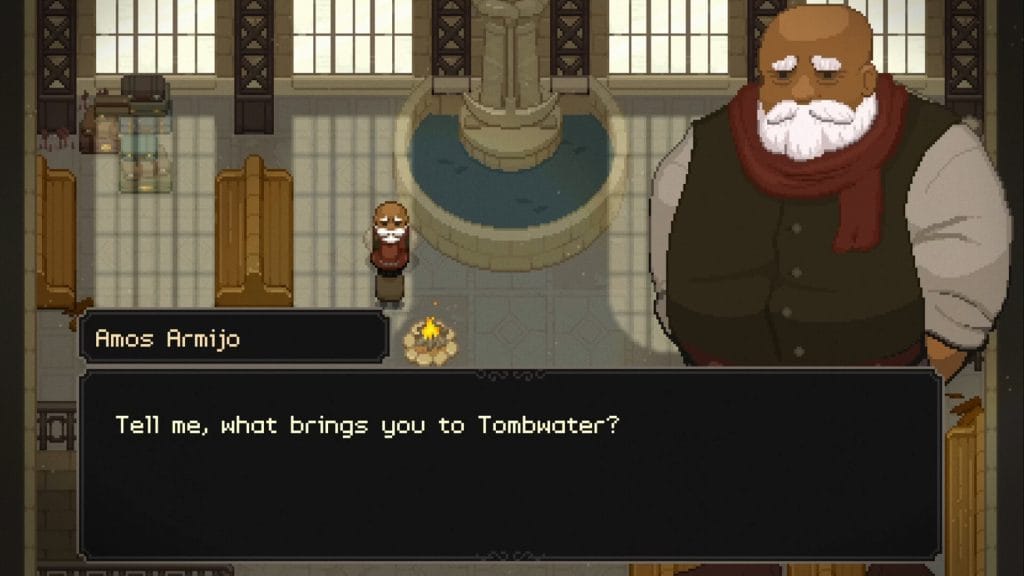
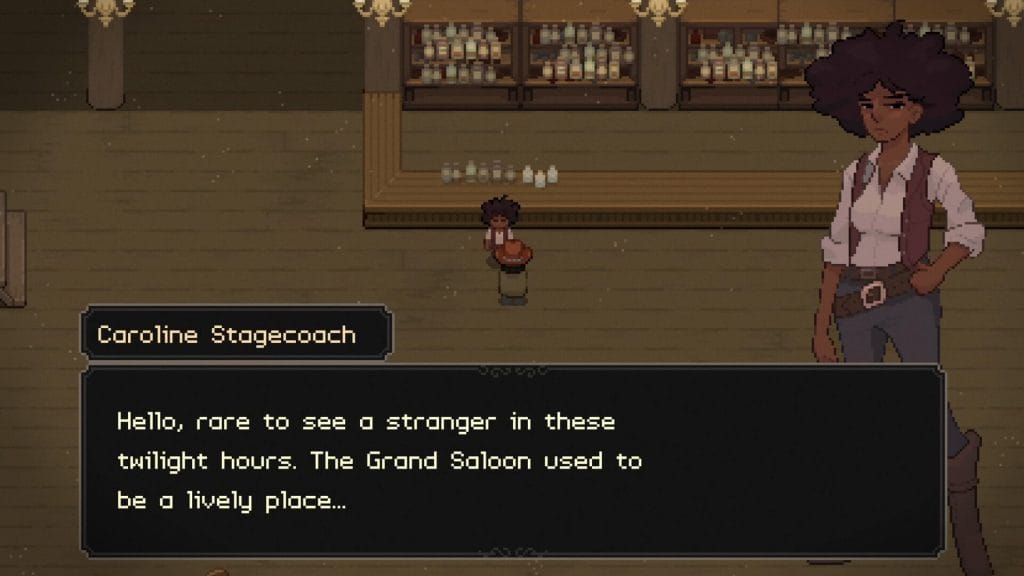
Exploring Tombwater can feel incredibly isolating and lonely. The stranger will come across certain townfolks who don’t transform into Lovecraftian-style creatures or would rather chat a bit than fight. These moments with locals are memorable but rare. The player’s fight — and how they navigate this journey — is theirs alone. The sense of scale and the “ghost town” feel of the cursed Tombwater only enhances the isolation.
Final Thoughts
I rolled credits on Tombwater at the 16-hour mark. I have put an additional four hours into the world since, and I imagine I have a few more hours and another playthrough (as a magic-focused class) before I have seen everything that the game offers.
Tombwater fills a hole in the market left by Bloodborne and 2023’s Lies of P. It is pretty clearly inspired by the former, but I could feel the parallels with the latter throughout. The stranger makes Pinocchio and the Hunter look downright extraverted. Its long, quiet moments create a meditative experience, but also keep the story at arm’s length a bit too much.
The world that Moth Atlas (based out of my beloved Columbus, OH!) created is dark, twisted, and intricate. The art is beautiful throughout. The fights vary nicely, and the biomes are unforgettable. I was able to fight the final boss and watch the credits after leaving the beaten path. An in-game journal encouraged me to stay on task, but my side exploration was well-rewarded.
Tombwater sets up an intriguing space in the current indie game landscape. A Western horror game disguised as a Soulslike is a brilliant sale, but Tombwater is so much more. It is a triumphant realization of the 2D Zelda formula in a non-medieval, Bloodborne-esque setting.
I hope I get to return to this world sooner than we’ll likely return to Yharnam.
Score: 8.8
Tombwater, developed by Moth Atlas and published by Midwest Games, releases on Friday, March 31, 2026, for PC (via Steam). Version reviewed: PC. A demo is available on Steam.

Clint is a writer and educator based out of Wisconsin. You can often find him writing about Middle English poetry, medieval games, or video games. He received his PhD in English from the Ohio State University. You can find his academic and public work at clintmorrisonjr.com.