
Nintendo’s Tomodachi series began in 2009 with Tomodachi Collection, a Japan-exclusive simulation game rife with chaos, shenanigans, and goofy text-to-speech voices. It utilized the beloved, peculiar “Mii” from the 2006 Wii. The sequel, Tomodachi Collection: New Life, was released in Japan in 2013, then worldwide in 2014 as Tomodachi Life, and contained all the ridiculousness of its predecessor, quickly gaining popularity and becoming the 11th best-selling game for the 3DS. Thirteen years later, Nintendo has blessed us with the third installation of the series, updated for the Switch — Tomodachi Life: Living the Dream.
I never played the old games, so my first experience with the Tomodachi series was through whatever clips I came across on social media. When the newest version was announced, I paid very little attention to the smattering of clips and previews sneaking into my feed. It looked funny, sure, but it didn’t seem to me like there was much to it. What was the goal? What made it popular? And, as is usually my question with Switch games, what made it worth nearly 60 dollars?
I wasn’t going to buy it. I really wasn’t. But then one of my friends did, then another, then another, and watching them have so much fun with it made my willpower crumple like wet cardboard. I looked at my bank account, sighed, and hit “buy.”
That said, what exactly is Tomodachi Life, and why are people (including me) falling in love with it?

What’s the Goal?
As far as I can tell, there isn’t one, at least not an all-encompassing one. The main idea in Tomodachi Life is to create whatever Miis you like, add them to your own personal island, and keep them happy by helping them develop their personalities, their relationships, and their means of expression. Leveling up your island unlocks new ways of customizing your island terrain, shops, homes, and other buildings. It also unlocks new quirks and treasures for your residents, so you can make them more akin to their real-world selves. But as far as an endgame, it’s really up to you.
So far, I’ve seen people do a lot with this game. Making the characters from the Avengers movies or the playable heroes in Marvel Rivals. Careful recreations of celebrities, public figures, and pets. Someone (“reen” on TikTok) even made Lin-Manuel Miranda as a pet, which is hilarious. Players are getting creative with their island layouts, too. One player (“marceloogongoraa” on TikTok) made a representation of Oceania in George Orwell’s 1984, which was unexpected and somewhat creepy, but impressive!

What Makes Tomodachi Life Popular?
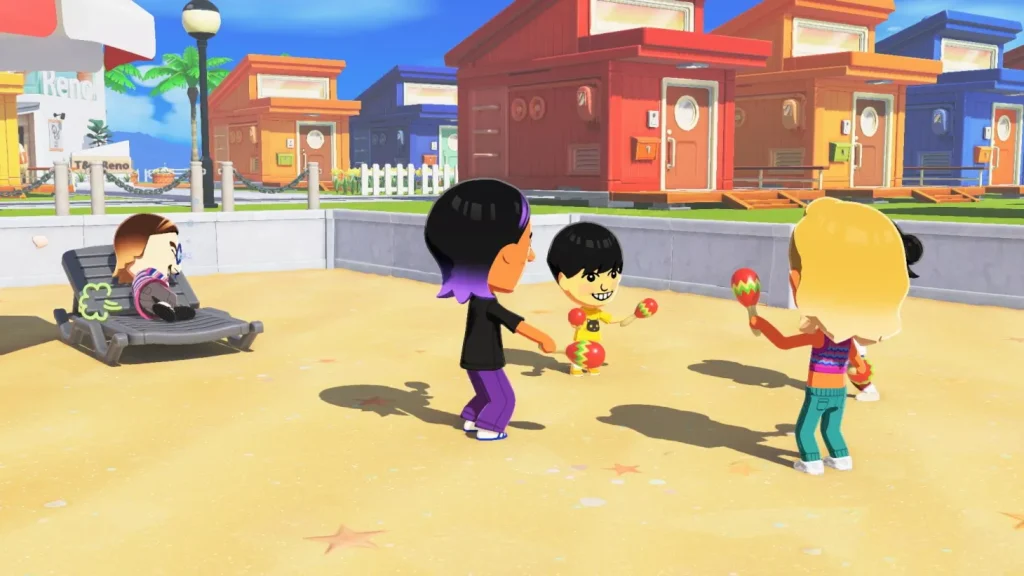
On its surface, Tomodachi Life is an observation-based life simulation; you make your characters and watch them interact with each other and their environment. But the creative freedom that the game provides makes it more than that, because almost everything can be edited to your liking. Paint the houses, paint the ground, paint new clothes, home interiors, objects, food — whatever! Customize your Mii’s voice, their walk, the way they stand, eat, and greet people. You can even give them catchphrases and topics to talk about — a feature which, as you can imagine, is somewhat abused.
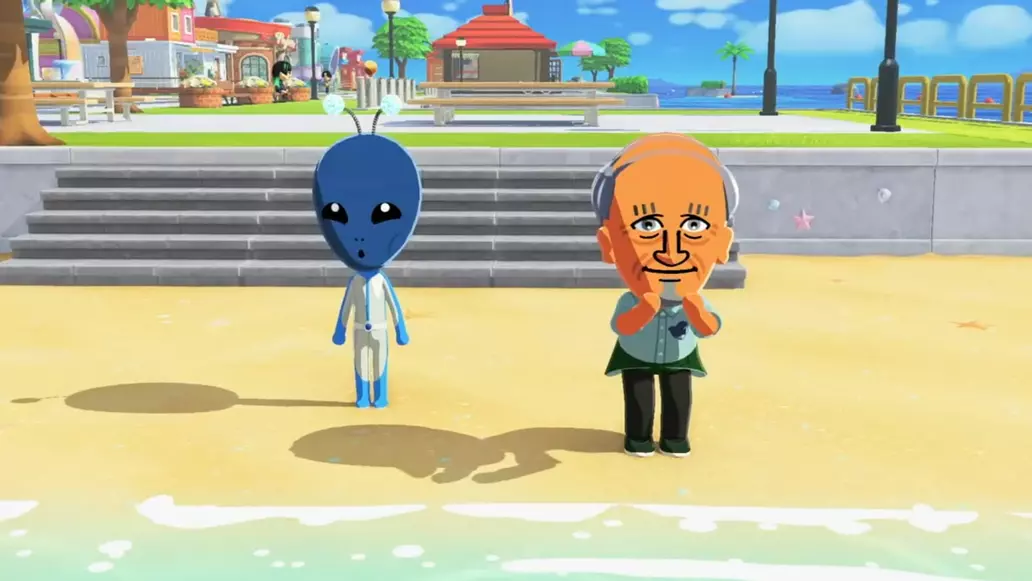
There aren’t many, or even any, other life simulation games that allow this hyper-detailed level of customization, which is what makes it unique (that and the fact that the game as a whole is so wonderfully weird). I loaded up once to witness one of my Mii’s trying to have a conversation with a streetlamp, and I don’t even know what to say about that!
Tomodachi Life: Living the Dream is an absolute mess, but I mean that in a good way. With all the seriousness in our everyday lives, sometimes we need a bit of ridiculousness.

What Did I Do?
In comparison to others, not a lot. I didn’t really have a plan for my island, so when the on-screen prompt asked me to name it, I entered the first name that popped into my head, which was “Dave” for some reason. It was supposed to be temporary, just until I thought of something better. I have yet to come up with something better, so Dave Island it is.
I started out making Miis of my friends and family, giving them silly topics to discuss and even sillier outfits. I’ve also been trying to force the ones that are in real-life relationships to enter the same relationships in-game by repeatedly making them talk to each other, like I’m six years old making my Barbie and Ken dolls kiss. I don’t know how well that will work, but it’s fun to try!
My favorite part of Living the Dream, though, has been the Studio Workshop. The Workshop allows you to create custom items for your island. I haven’t been nearly as creative as other players here, but I have had a lot of fun with it. One of the first things I did was draw a Flareon pet for my Mii, which made me unreasonably happy (as much as I love my real-life pets, I don’t think I’ll ever grow out of wanting to be a Pokémon trainer). Designing clothes has also taken up a lot of my time, mostly because I started making a few fantasy characters, and it felt weird that they were wearing modern clothes. I mean, you wouldn’t exactly expect to see Legolas walking around in trainers and a grey hoodie.
Whenever you make a Mii, you have the option to add face paint, which opens the same interface you use in the Workshop, although it can look like a lot more than face paint if you’re willing to put in the effort. On social media, I’ve seen everything from customized bangs to full hyper-realistic portraits slapped onto Mii’s faces. You can make your residents look nearly identical to a person or character if you have the artistic flair and/or the patience. I don’t have a stylus, so my own attempts at face paint aren’t particularly detailed, but I have been getting more and more comfortable with scribbling on my Switch screen with my fingers, leading to many more fictional characters appearing on my island.
If you want to know who I ended up making, my fictional residents list currently looks like this:
- Erza Scarlet from Fairy Tail
- Legolas from The Hobbit/The Lord of the Rings (I will be making Gimli too, don’t worry)
- Rogue and Gambit from X-Men
- Komi and Tadano from Komi Can’t Communicate
There is, unfortunately, a hang-up with the face paint mechanic. Miis blink and move their mouths when they’re let loose on your island, and if you’ve used the base game eyes or mouths, it can look pretty strange. I filled in the whites of a Mii’s eyes once, in an attempt to make him look more realistic, and every time he blinked, it looked like he’d been possessed by some kind of eldritch spirit. It was pretty funny, but it kind of ruined the illusion.
Closing Thoughts
Tomodachi Life: Living the Dream is an absolute mess, but I mean that in a good way. With all the seriousness in our everyday lives, sometimes we need a bit of ridiculousness, and Tomodachi Life is definitely ridiculous. While I still think it’s a little overpriced, and the frames occasionally drop to about 20 per second on my Switch, I don’t regret buying it.
There’s currently no roadmap for new content or major updates in Tomodachi Life: Living the Dream, though, which is a real shame. Don’t get me wrong: The game is solid as is. Still, I think it could be improved by leaning into the creativity of their player base and adding more customization options, like new bases for custom clothing, accessories, and buildings. Maybe even including more advanced options in the painting mode.
For now, though, I’m having fun, my friends are having fun, and I get to watch a mini version of myself take her pet Flareon for a walk. That alone is more than enough of a reason to play Tomodachi Life.
Tomodachi Life: Living the Dream, developed by Nintendo EPD and published by Nintendo, released on April 16, 2026, for Nintendo Switch and Switch 2 (via backwards compatibility). MSRP: $59.99.

Darcy loves anything fantasy, sci-fi, or adventure. Her dream is to finish her degree and write her own fantasy book, hopefully squeezing in a few games as she goes. She’s a big fan of games where she gets to fight with cool swords, befriend cute animals, and get lost in the story.
You can read more of her writing on her website: https://darcymaunder.com/