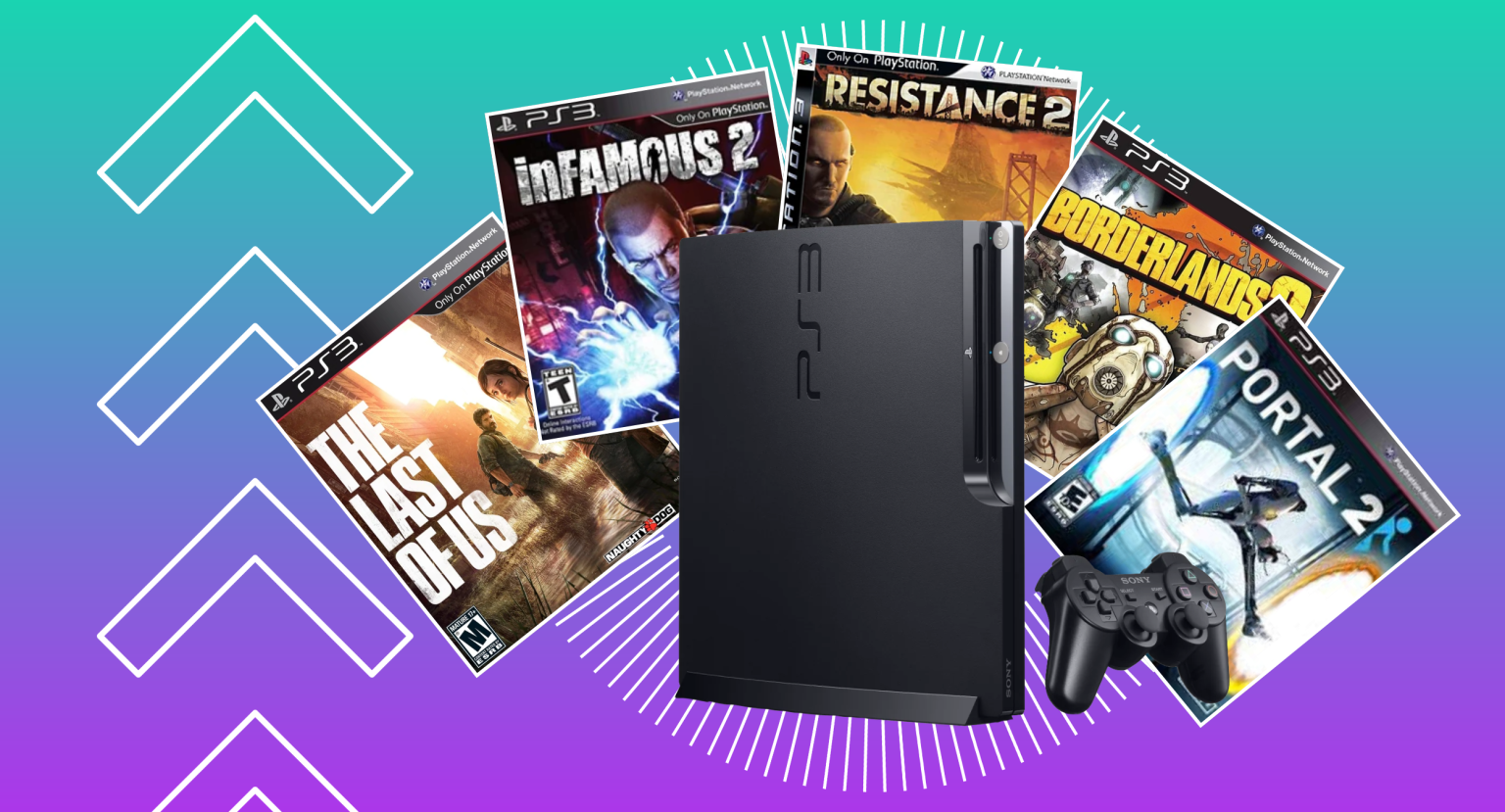

It’s hard to believe the PlayStation 3 is 20 years old, but as of November 17, 2026, that is now the case. In 2006, Sony released the much-anticipated follow-up to its best-selling console, the PlayStation 2. At the time, the PS2 had just passed 100 million units sold — a titanic milestone for any console — and the pressure was on to make an even bigger splash with the PS3. (The PS2 went on to sell 160 million units.)
The hill to climb was immense. Not only was the PS3’s price point steep (an eye-watering $599 for the 60 GB model), but its proprietary “Cell” processor — which Sony stressed would be a game-changer — was notoriously hard for developers to design around. Launch titles for new consoles are always scarce, but the PS3’s lineup was particularly paltry, allowing Microsoft’s Xbox 360 — which had released a full year earlier — to win precious market share. In the end, the PS3 sold just 87 million units, making it the worst-selling PlayStation console to date.
Thankfully, however, the story doesn’t end there. While the PlayStation 3 lagged behind both the 360 and the global phenomenon that was the Nintendo Wii, it amassed quite an eclectic array of titles before all was said and done. From flagship shooters to stealth-action thrillers and superhero adventures, the PS3 had something for everyone. Now, in honor of its 20th anniversary, we’re taking a lot back at its history and celebrating the best PlayStation 3 games ever made.
– Written by David Silbert
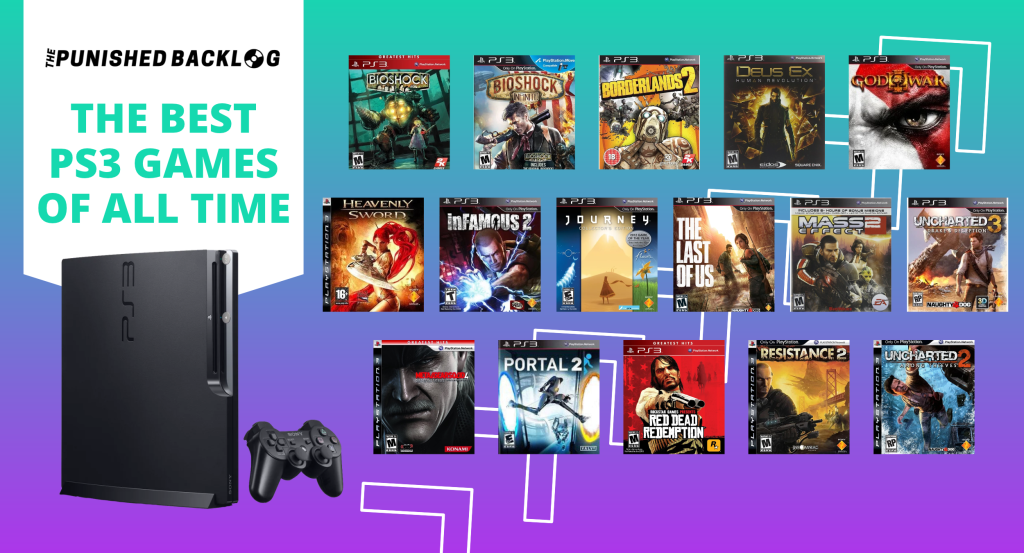
The 18 Best PS3 Games
Want to skip to a favorite entry? Check out our table of contents with the games in alphabetical order, or keep reading on:
- 3D Dot Game Heroes
- BioShock
- BioShock Infinite
- Borderlands 2
- Deus Ex: Human Revolution
- God of War III
- Heavenly Sword
- Infamous 2
- Journey
- The Last of Us
- Mass Effect 2
- Metal Gear Solid 4: Guns of the Patriots
- Portal 2
- Red Dead Redemption
- Resistance: Fall of Man
- Resistance 2
- Uncharted 2: Among Thieves
- Uncharted 3: Drake’s Deception
3D Dot Game Heroes
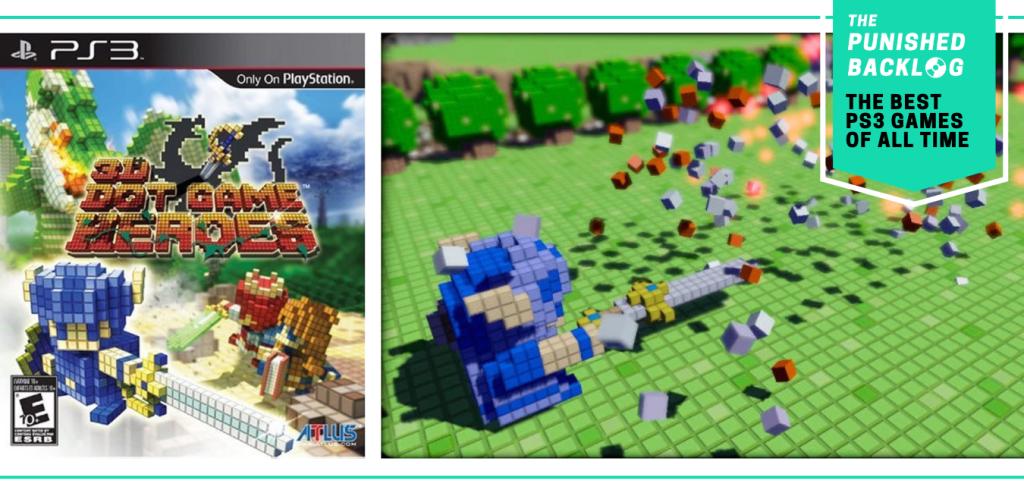
In 2009, FromSoftware released two of the best Zelda-like games of the generation: Demon’s Souls and 3D Dot Game Heroes. The former shares a lot of DNA with the 3D Zeldas of old (like The Legend of Zelda: Ocarina of Time), while the latter remixes the 2D Zelda formula to great effect. To be fair, the latter was co-developed with Silicon Studio, and, rather famously, the two studios made the game in around 10 months. The result captures the playfulness and joy of a genre that Nintendo had previously dominated.
3D Dot Game Heroes is just plain fun. The art style is blocky (literally transformed from 2D pixelated to 3D by the king as a plot point), its narrative is as tropey as its Good Protagonist Hero and its Evil Dark King Villain, and its map is simple to navigate. It is not a complicated game by any stretch of the imagination, but 3D Dot Game Heroes is so clearly a passion project, and one that successfully captures that classic Zelda magic. The experience is simply a joy from beginning to end. I know we all want more Souls, Bloodborne, and Armored Core games from FromSoftware, but I would love to see another remixed take on a 2D Zelda-like.
– Written by Clint Morrison, Jr.
BioShock
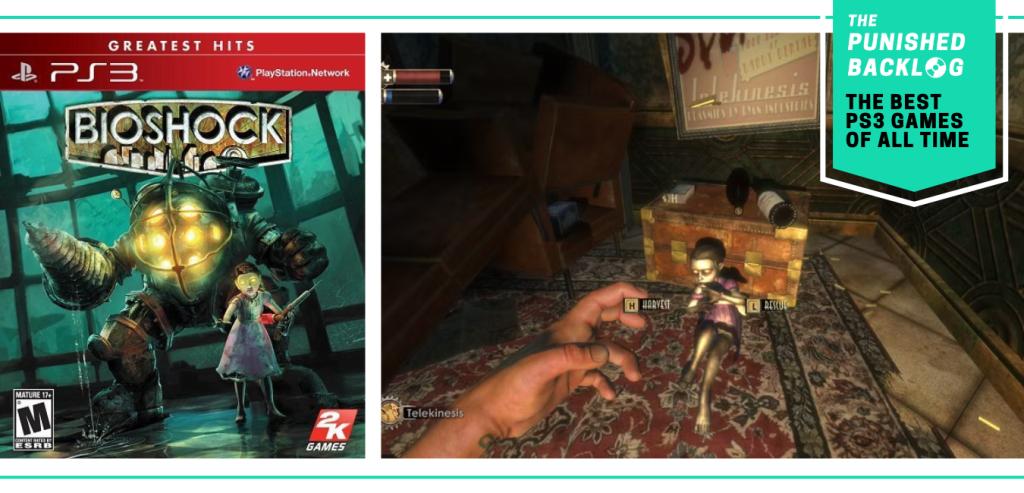
How good does a game have to be at creeping you out to make you stop playing it after investing hours of your life into it? I felt so incredibly icky during the Fort Frolic level of BioShock that I just couldn’t continue. I watched the rest of the game’s cutscenes on YouTube. I still think about BioShock as one of the best games I didn’t finish, and that’s because 2K Boston (later rebranded as Irrational Games) did such a great job at world-building.
From the get-go, players are immersed (literally) in the surreal underwater city of Rapture. The music, sound editing, and visual design all made me feel like I was really there. I found the choices around the Little Sisters the most interesting, even if the game didn’t always stick the landing around player agency. Still, I appreciated its central question: Do I become stronger, or do I help those around me? This question propels Jack’s story forward and ties the player inextricably to him. Unless you stop playing, like me, lol. I truly just could not be complicit any more in Jack’s actions, but that speaks to how “real” it felt.
The art and story of BioShock has had a lasting legacy on the industry. I mean, the freaking Smithsonian Institute featured it in an art exhibit in 2011! The phrase “ludonarrative dissonance” (the conflict between a game’s story and its gameplay) was coined by writer Clint Hocking about BioShock in a viral blog post, and there have been analyses of that analysis by both industry reporters and academic professors. Many games since have been clearly influenced by it. There have been a few more mainline BioShock games and DLC as well; the people are hungry for more!
BioShock was, after all, a rapturous experience.
– Written by Amanda Tien
BioShock Infinite
BioShock Infinite was the first game I ever played on the PS3, back when the console still belonged to my father. He was an exception to the stereotype of parents who hate video games: He had bought the console for himself, so I could only play when my old man was busy.
That memory gives the game a very special place in my heart, especially since my father has since passed away, and the game became important to me for other reasons as well. It was my gateway into a franchise I would come to love, helped me move beyond a very specific niche of games (I’m Brazilian, so maybe you can guess it involves soccer), and introduced me to the first video game story that blew my mind.
Even though I was only 12, I was fascinated by the questions about quantum physics the game raised: “If a molecule can float, why not an apple? Why not a city?” and “If a molecule can exist in two places at once, why not a person?” Until then, no game had ever made me think so deeply.
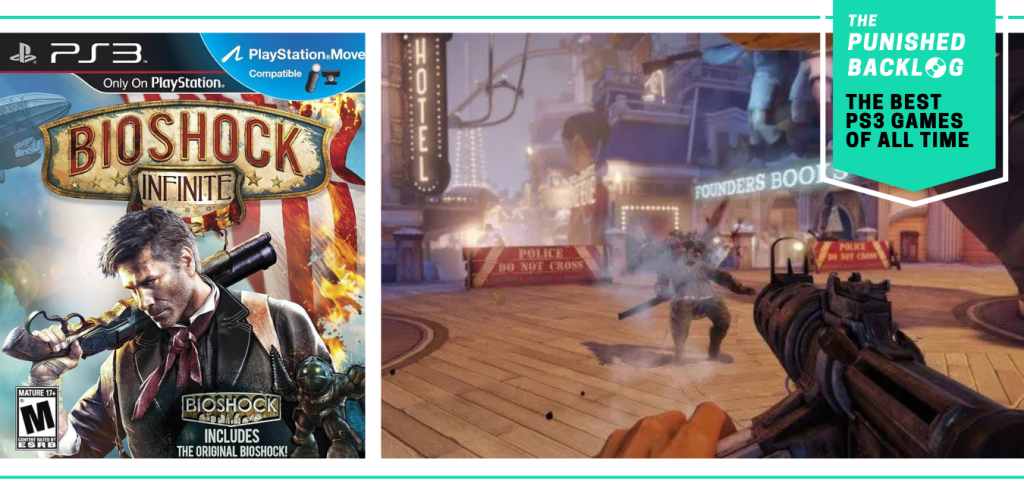
In the 2013 adventure, developed by Irrational Games and published by 2K Games, the main character is Booker DeWitt, who is tasked with rescuing a girl named Elizabeth Comstock from her captivity in Columbia, a floating city that seems to defy every law of physics to remain mysteriously suspended among the clouds. BioShock Infinite is a first-person shooter where Booker fights his way through the town using firearms and “Vigors” (supernatural abilities that offer different powers to deal with enemies). To keep the action frenetic, Sky-Lines let him ride suspended rails that link buildings, fighting while flying through the battlefield.
The experience was so memorable that I went back to BioShock Infinite in 2023, curious to see if it would still hold up after 10 years… and spoiler? The answer was a big YES! The adventure is still engaging, with fast-paced and fluid gunplay that has aged like a fine wine. The game still holds a very special place in my heart, and if you haven’t played it yet, consider this my recommendation!
– Written by Caio Feltrin Crocetta
Borderlands 2
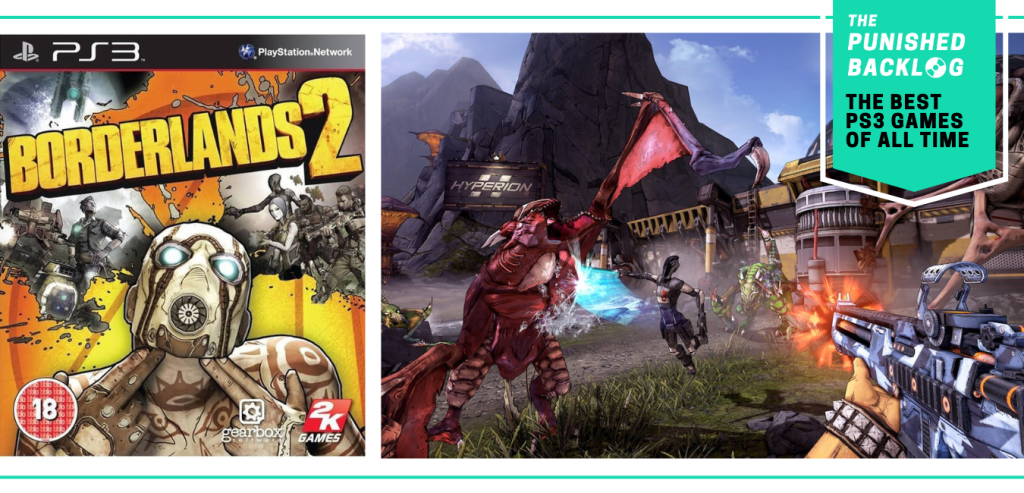
I know the Borderlands games are famously ridiculous (though, believe it or not, they used to be critical darlings) and, for the record, I agree. The games, as well as developer Gearbox, became synonymous with the lootbox genre. The games have a sense of humor that would be most enjoyed by a 14-year-old boy. However, the first two Borderlands games were special to me for three reasons: 1) the graphic-novel-inspired art style, 2) bombastic gameplay, and 3) that they were an absolute blast (in-game, quite literally) to play couch co-op.
Borderlands released in 2009, and Borderlands 2 released in 2012. I didn’t try either game until 2014 when I was looking for a game to play with my then-boyfriend (now husband!). In Borderlands, I chose the only female character, Lilith, who was a pyrotechnic space-witch badass known as a Siren. My weapon of choice? Rocket launcher, including at a way-too-close distance. My boyfriend was always more strategic, playing Mordecai, who balanced a sniper weapon with avian companion Bloodwing. Together, though, we made a great team. Our style choices continued into Borderlands 2, with me once again picking the only female, Maya, another Siren, and my partner selecting Zer0, a masked assassin. Because loot drops are shared in these games, we were forced to discuss what weapons we had picked up and make sure we balanced coins (lest we get into a huge fight about a really shiny pistol). It was, honestly, a good practice in communication about our needs.
Somehow, Borderlands and Borderlands 2 managed to balance the over-the-top violence with some real heart. Borderlands 2 especially stuck the landing on side quests and a big-picture narrative that made us invested in finishing the plot even as we exploded stuff fairly regularly. These stories were about people on the edge of the universe as they tried to find treasure and build community, even when living in the Wild West of space. There was a push-and-pull of a classic story: the Big Bad Corporation versus the Small Bad Outlaws. NPCs like Claptrap, Handsome Jack, and Tiny Tina were part of a lore-rich world that also included a truly dizzying array of weapons that were super fun to shoot with.
We continued about halfway through Borderlands: The Prequel before the series lost its attraction for us and we moved on. (We did give Borderlands 5 a try last year but I got bored, feeling the formula had lost its spark and the story dragged on, though my husband did finish playing it solo.) Still, the original Borderlands and Borderlands 2 will always hold a special place in our hearts. If I had to pick just one of the games, it’d be 2 — I think it nails everything you want a sequel to do. We still regularly quote a line from the first when Scooter, a mechanic NPC, shouts, “This is where the cars live!”
So, thanks, Borderlands, for letting me explode bad guys with my love interest both in-game and IRL.
– Written by Amanda Tien
Deus Ex: Human Revolution
The original Deus Ex is widely regarded as one of the most important video games of all time. A pioneer of the immersive sim genre, Deus Ex released in 2000, providing richly detailed levels and giving players the freedom to chart their own path. Do you sneak in through a vent or go through the front door, guns blazing? The choice was always yours. It sucks that Elon Musk loves the game so much; otherwise, I probably would have played it myself at some point… Alas, I think the game is better off left to history.
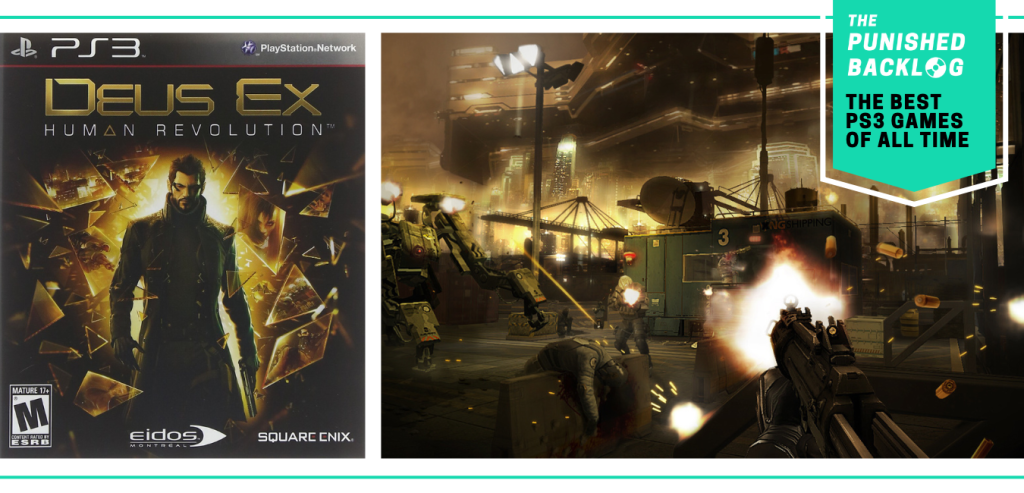
But Deus Ex: Human Revolution, the 2011 soft-reboot of the series that brought the franchise into the modern age? That I fucked with. Developed by Eidos-Montréal and published by Square Enix, Human Revolution told the story of Adam Jensen: a shades-sporting, cybernetically augmented human who leverages the advancements of the year 2027 (lol) to take on the corporate elites at Sarif Industries, a massive biotech company that has the world at its whim.
It’s a little Blade Runner, a little Final Fantasy VII, and of course very much Deus Ex. Even now, 15 years later, I still remember its immaculate level design, excellent writing, and deep progression system. The games industry has grown, but RPGs like this are tragically far harder to come by. A sequel, Mankind Divided, never quite captured my attention, but I’m forever grateful we got these games at all.
– Written by David Silbert
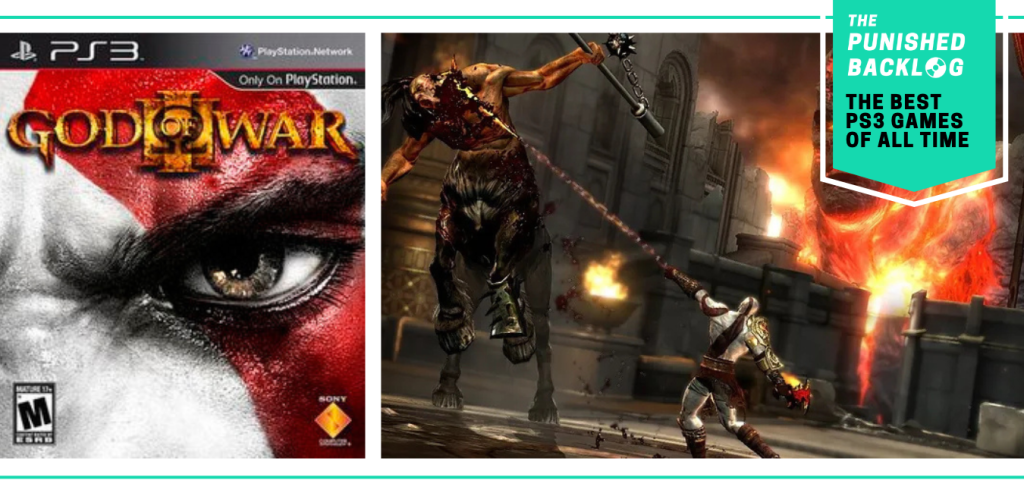
God of War III
Santa Monica Studio’s acclaimed God of War reboot duology has been so successful, it’s easy to forget an entire trilogy (and numerous spin-offs) preceded it. While most fans of the OG games have anointed God of War II as the best of the trilogy, I’m far more partial to God of War III.
By God of War III, series protagonist Kratos has gone full-on berserk. You thought his anger management was bad in the previous games? You’ve seen nothing yet. Over the course of a speedy 10-hour campaign, he slays everyone from Poseidon to Hermes to even Gaia, the game’s narrator. All the blood that was shed along the way sets the stage for an epic, unhinged bout against Kratos’ father, Zeus. Suffice it to say, the Ghost of Sparta holds nothing back.
Has the story aged particularly well? Not really. The sex sequences are cringe, and Kratos’ wanton violence toward men and women alike makes Grand Theft Auto look like a Cocomelon episode. But all his misdeeds (and there are many) only make the Norse follow-ups all the more striking. This was a dude completely lost to the world who managed to develop some semblance of a heart, decades later. As for whether Kratos redeemed himself with Atreus… well, play God of War III and see if the good can ever overcome the evil.
– Written by David Silbert
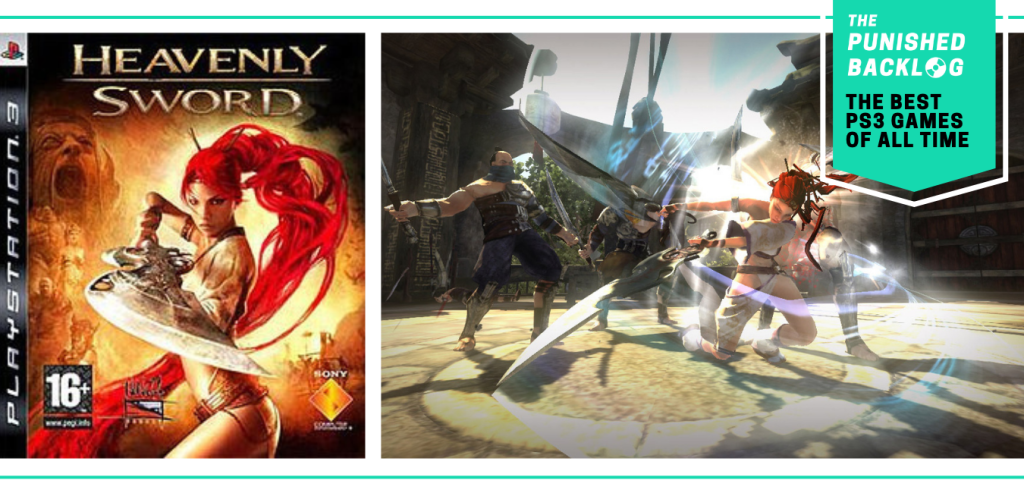
Heavenly Sword
Heavenly Sword is one of the most memorable PS3 releases for its tragic storytelling, engaging combat, and creative use of the Sixaxis controller. The game was a near-launch title for the console, releasing in November 2007 (i.e., about 10 months after). The problem with early PS3 games was that many focused on the gamepad without executing strongly on gameplay or story, but Heavenly Sword incorporated the controller’s features naturally into the game without turning into a demo concept. Nevertheless, Heavenly Sword was too short, a criticism often levied against this successful title, which sold over a million copies.
Driven by a tale of revenge and a great sense of urgency, the red-haired Nariko picks up the eponymous sword to save her people from an invader named Bohan. Ridiculed for her gender, despite being born in the same year as a prophecy of a great warrior’s arrival, she ultimately sacrifices herself to achieve god-like powers and crush the invading army. Each chapter of the five-to-six-hour game feels cinematic. Whether it’s shooting arrows across a chasm to penetrate the throats of enemies, guiding the explosives from a catapult, or facing off against Bohan’s most trusted allies, each moment is action-packed.
The gameplay is reminiscent of the God of War series with the ability to use fast, medium, and heavy versions of the titular “Heavenly Sword.” Additionally, there is a furious pace of combat a la Devil May Cry. Combined, the combat alone was a worthy test of the PS3’s power.
I didn’t play Heavenly Sword until a few years after its 2007 release, but even then, the game felt so damn good. My brother and I went back and forth playing it in his apartment like it was The Legend of Zelda: Ocarina of Time — our first game we beat together — all over again.
Fans of Sekiro: Shadows Die Twice will find that the Flying Fox boss fight in Heavenly Sword feels like a prequel fight to the White Wolf’s battle with Lady Butterfly. I can’t confirm whether FromSoftware was inspired by this, but certainly it’s a reminder that developer Ninja Theory built a memorable experience (and was working on a sequel before it was sadly canceled). That said, Sony owns the IP rights, so we might get lucky…
– Written by Vaughn Hunt
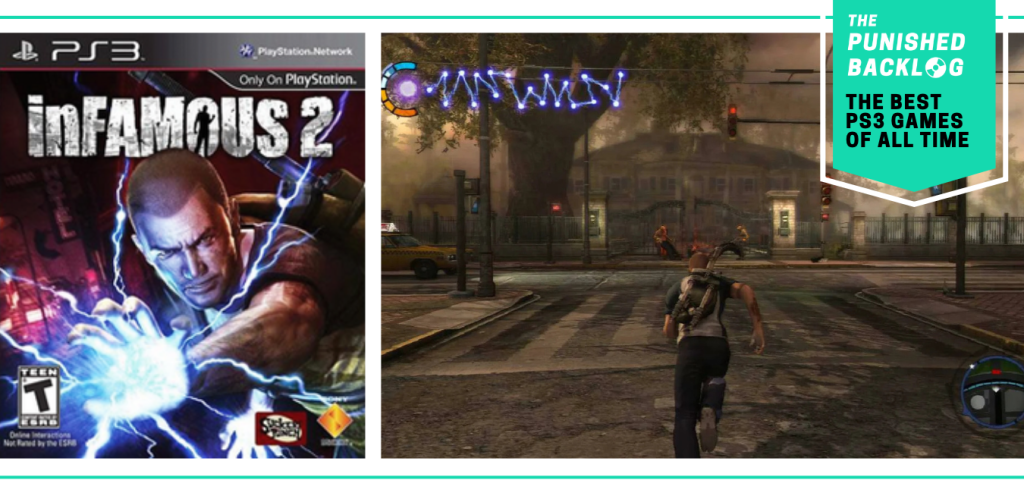
Infamous 2
Infamous is one of those titles that really got me into gaming in the first place. Getting to play in a big open world where I could make real choices was a new experience to me at the start of the 2010s, and Infamous quickly became one of my favorite games. Naturally, I was extremely excited to play Infamous 2 when it came out in 2011, and man… did it deliver.
Everything that made Infamous great was here. You still get to enjoy the electric superpowers of Cole MacGrath, whose abilities play seamlessly as ever as you grind across wires to get around the map. Much of the core gameplay is only tweaked, as developer Sucker Punch really got it right the first time, allowing players to pick up where they left off, with new powers of fire and ice being introduced as the game goes on. And of course, no Infamous game would be complete without a karma meter. Your actions matter here, whether it’s saving a stranger or attacking the police, and the characters and story will change based on what path you pursue.
The true star of Infamous 2 for me, though, is New Marais. Don’t get me wrong — Empire City was a great map for this story to begin, but after a while it got a little repetitive. New Marais, however, feels diverse and worth exploring. Based on New Orleans, the map is uniquely built to resemble the Francophone city as opposed to a concrete jungle. Swamps surround it, along with a flooded side of the city — a stark reminder that nature will unexpectedly strike back. Some of my favorite moments playing Infamous 2 stem from simply being in New Marais, as even 15 years later, I still remember fighting a burrowing monster in a cemetery it chased me into, with every look around a gravestone or tomb offering potential danger as I played a game of chess against it while under cover.
There was no need to end up in the cemetery for this fight — Infamous 2 let me choose that path, rather than locking me in an arena, just as it lets the player choose a path for Cole. Whether you are helping to save humanity or turning your back on it, Infamous 2 proved that, just like the PlayStation, its play had no limits, offering an electrifying tale that lives on in the annals of PS3 history.
– Written by Mark Bowers
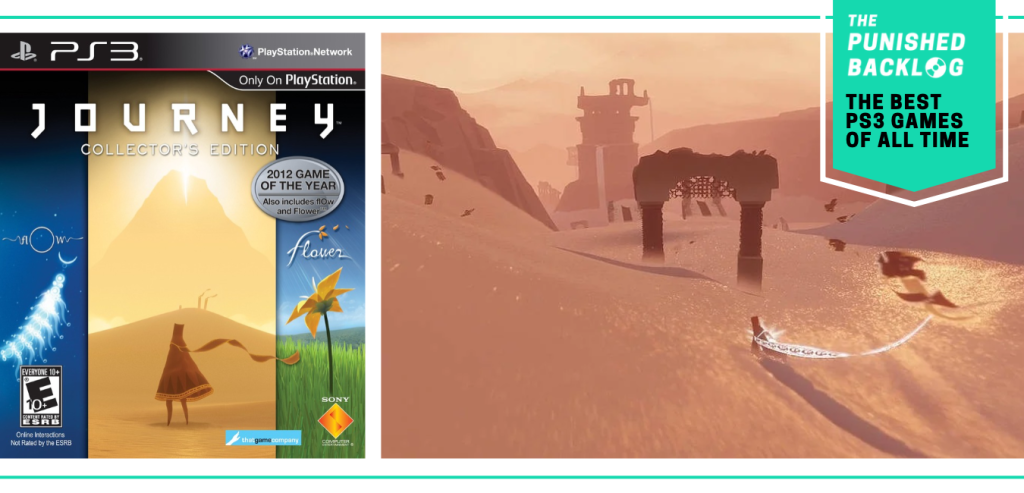
Journey
Journey is a contemplative game that gives the player a much-needed space to slow down and take in the world around them. In an age of screen addiction and forced dopamine hits at every turn, the 2012 game, which was developed by Thatgamecompany and published by Sony, can be a breath of fresh air for anyone looking to give it a try today.
The story and gameplay are fairly simple: We play as a hooded figure crossing a vast desert toward a distant mountain. The game doesn’t even use words to explain what is happening. So much of the experience comes from observing the surroundings and moving forward while trying to understand the purpose of this adventure. In practice, Journey combines third-person exploration with light platforming, such as sliding down the dunes and using our scarf to glide.
The part of Journey that mattered most to me was its “multiplayer element,” which allows other figures to appear along your path and travel beside you. Since there are no name tags above another character’s head and no text or voice chat, any attempt to communicate happens through the funny little chirps our characters make.
The only time another traveler appeared during my journey, I thought they were an NPC placed there to help me cross the desert. We continued together for a while, “communicating” along the way, and I found myself following my new friend to secret areas I would’ve missed had I been on my own. There, we found collectibles that extended our scarves and let us glide for longer. Then, near the moment when we inevitably had to part ways, I noticed something that moved me: The stranger had drawn a heart in the sand with their footprints. Only then did I realize I had been playing with another person all along, someone who had chosen to accompany and help me without expecting anything in return, and whose name I would never know.
That discovery changed the game for me and left a deep impression, especially because I wasn’t used to playing multiplayer games, so saying goodbye felt deeply personal. I finished Journey completely in love with the peaceful experience it had given me, and to this day, that encounter remains my most vivid memory of the game.
– Written by Caio Feltrin Crocetta
The Last of Us
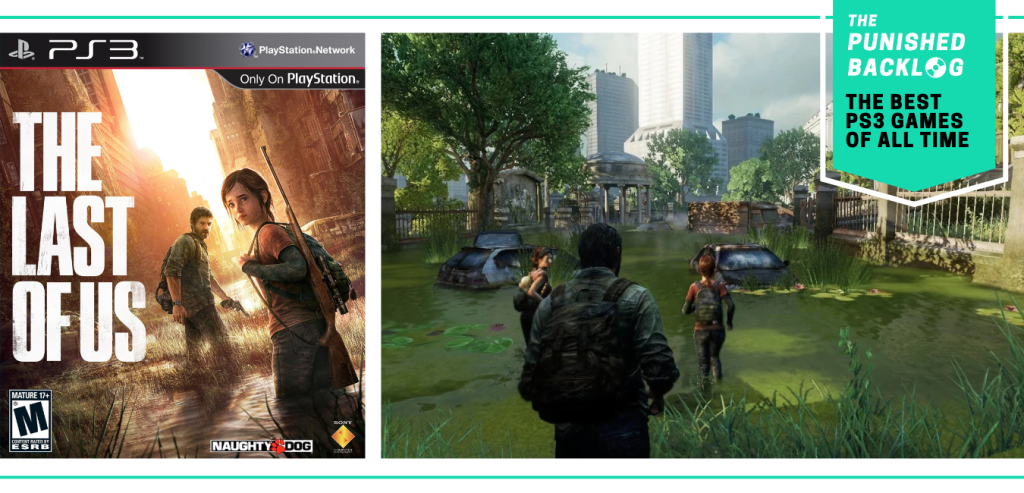
When The Last of Us was first teased, I didn’t know what to think. Naughty Dog is an incredibly talented studio, as evidenced by our Uncharted 2 and Uncharted 3 blurbs. As much as I liked the idea of the studio branching out to a new IP, a post-apocalyptic zombie game felt like a tired idea. Resident Evil had a stranglehold on the survival genre. AMC’s The Walking Dead had just started airing. Was this really the best use of their strengths? I thought to myself.
As it turns out, yes. The Last of Us not only became the fourth best-selling PS3 game (behind Gran Turismo 5 and two Grand Theft Autos), but it arguably surpassed Uncharted from both a technical and creative lens. Its story of Joel and Ellie, two survivors in a ruthless world, cemented itself as one of gaming’s great tales. Over a 20-hour campaign, we play as Joel: from the moment he loses his biological daughter at the start of the Cordyceps pandemic, to the moment he rampages through a hospital in search of his newfound daughter. His decisions are not ours to make — they’re preordained — but as the player, we are witnesses.
The story landed differently depending on the person. Some empathized with Joel (played by Troy Baker), while others found him a monster. While the PS4 sequel, The Last of Us Part II, is more on-the-nose in its depictions of love and violence, the original 2013 game remains an undisputed masterpiece. It’s my favorite PS3 game ever, and among the very best video games of all time.
– Written by David Silbert
Mass Effect 2
BioWare may be gone, but its legacy will never be forgotten. In addition to its Dragon Age series (which I never played but know to be terrific), the late-great studio originated some of the finest RPG franchises known to humankind. Baldur’s Gate wouldn’t exist without the studio. Fans wouldn’t be begging for a new Knights of the Old Republic if BioWare hadn’t first laid the groundwork.
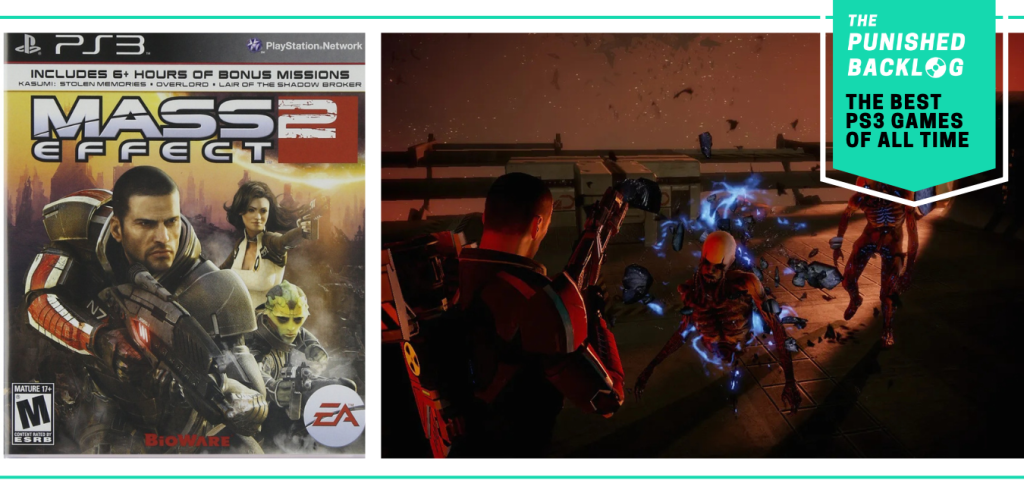
But Mass Effect was BioWare’s greatest contribution, bar none. A sci-fi epic spanning three glorious games, the Mass Effect trilogy did something few games did before: It offered players a choice. Do you want to play the Paragon or the Renegade? Do you want to save Kaiden or Ashley? Which crewmember do you want to smooch before you go kick the alien bad guys’ collective asses? As Commander Shepard, you sat in the pilot’s seat.
Each game has its own merits. Mass Effect 1 set the stage for the conflict and introduced us to the various species who would help Shepard fight the Reapers. Mass Effect 3 tied a bow on many of the series’ biggest character arcs, even if the actual ending left a few too many choices feeling hollow. But Mass Effect 2 was the apex: It threaded the needle between developing the universe and delivering key payoffs when they mattered most. The suicide mission remains one of gaming’s greatest endgame sequences, punctuated by a rousing speech by Shepard that made me want to run through a wall, Kool-Aid Man style.
Even on its own, Mass Effect 2 offered enough thrills from start to finish to rival entire sci-fi series. The fact that it was just the middle entry in an even bigger saga is a testament to it and BioWare’s greatness.
– Written by David Silbert
Metal Gear Solid 4: Guns of the Patriots
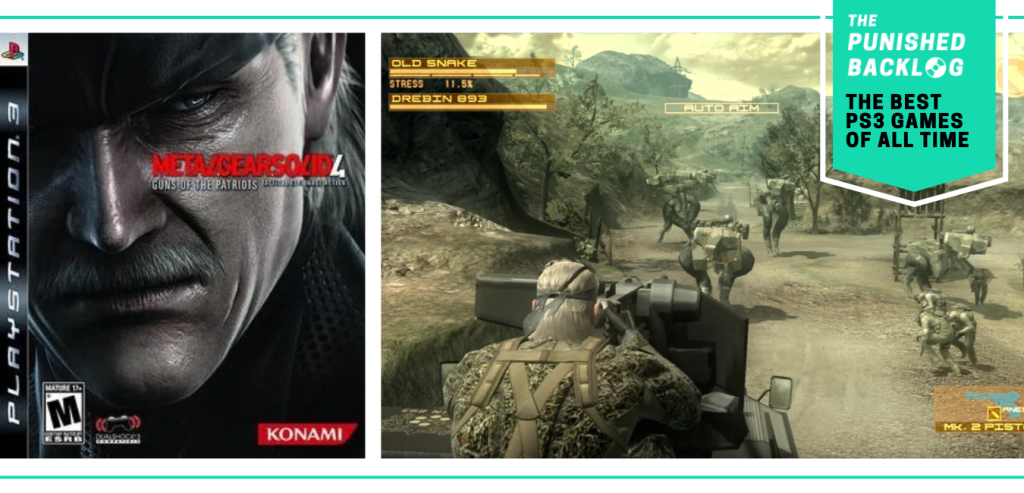
Metal Gear Solid IV: Guns of the Patriots was my favorite video game for 11 years. The behind-the-scenes drama with Hideo Kojima and Konami, the E3 trailers, and the PlayStation 3 exclusivity built up a narrative that I fully fell into. Old Snake is still my favorite iteration of the classic Solid Snake character, and Raiden’s cutscenes live rent-free in my head. The game serves as the finale of Solid Snake’s story and, in both design and narrative, comments on our weird dependence on technology and nostalgia. As a result, it speaks not only back to Metal Gear Solid 2’s postmodern themes but also to our 21st-century millennial anxieties.
Now for the embarrassing part: My first few hours with Metal Gear Solid IV: Guns of the Patriots involved a bit of heartbreak. The console was too expensive for my family in early 2008, so I couldn’t play this game that I desperately longed for. So, I came up with an elaborate plan: I dated someone whose twin brother did have a PlayStation 3. It was love at first sight. That summer I spent several days at their house playing my copy of Metal Gear Solid IV: Guns of the Patriots on his PlayStation 3. For obvious reasons, we broke up shortly after, and it would be several months before I could finish the game.
– Written by Clint Morrison, Jr.
Portal 2
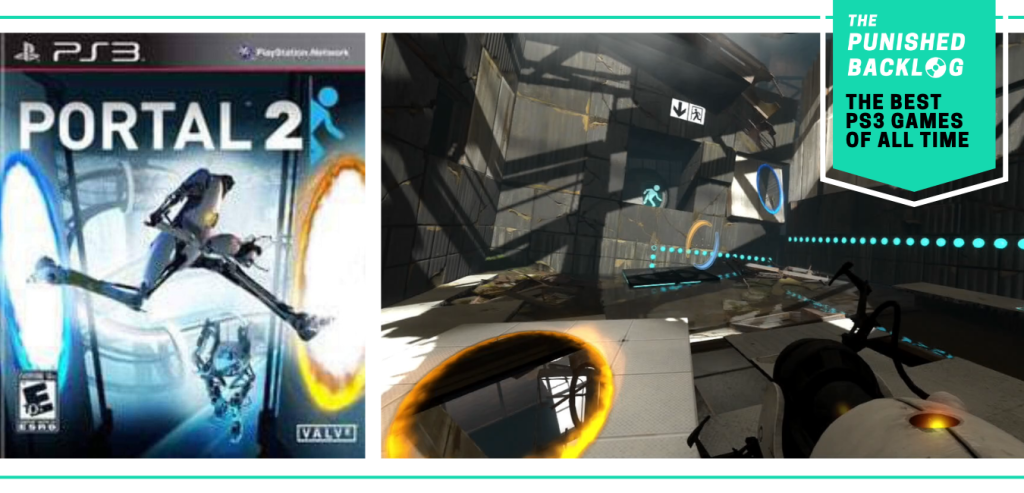
Valve’s 2011 magnum opus Portal 2 exists as a true rarity in the medium in that I simply don’t know how you could possibly improve upon it. It took the wildly inventive elements of the first Portal — brain-bending puzzles, minimal combat, incredible use of physics — and enhanced every single one while adding a compelling (and genuinely funny) story and even a separate co-op mode. Simply put, Portal 2 is one of the best puzzle-platform games ever made, one that succeeds at nearly everything it strives to do and whose essence has yet to be effectively duplicated or repeated.
For the uninitiated: Much like its predecessor, Portal 2 tasks the player with navigating a labyrinthine robot testing and manufacturing facility using a unique weapon (the Portal Gun) that allows you to create two portals that help you solve environmental puzzles to advance from room to room. In addition to using the Portal Gun to quickly travel from one spot in a room to another, players also have to effectively utilize other environmental tools and hazards (such as light bridges and laser beams) to hit switches and create pathways toward success. Many rooms also require the player to utilize some understanding of basic physics to progress, such as falling from a high point into a portal to launch out of another one to traverse long distances (these are always my favorite, even if they can be pretty tough).
I’m not sure I can divulge much more about the game without spoiling it, as actually figuring things out on your own is the crux of the experience. But what has always stuck with me about Portal 2 is how playing it in 2011 felt like you were seeing the medium advance to new heights, even if most of what it was doing was pushing forward basic game and puzzle design concepts that had existed for years. Simultaneously, Portal 2 pushed the medium forward and felt like the natural next step. It’s one of the few games from this generation where recommending it to a new audience comes with zero disclaimers about how its mechanics, graphics, or general vibes have aged. It’s a singular experience, one that every gamer should experience at least once.
– Written by Sam Martinelli
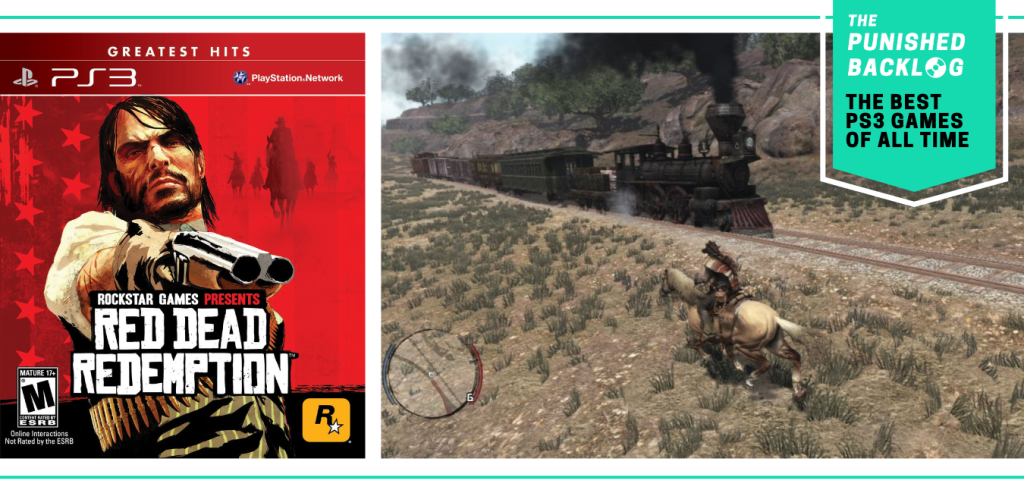
Red Dead Redemption
While not as widely beloved as its 2018 successor, 2010’s Red Dead Redemption remains my favorite Rockstar title. This open-world Western game offers some truly exhilarating cowboy gameplay and immersive world design. Furthermore, its story delves into the folly of American Exceptionalism, the pitfalls of the American Dream, and the idea that no one can truly escape the sins of their past.
Protagonist John Marston, a former outlaw with Dutch van der Linde’s gang (the story of which is the centerpiece of Red Dead Redemption 2), is blackmailed by Bureau of Investigation agents to hunt down his former partners in exchange for the safety of his family on a quiet ranch. Marston himself often expresses guilt for his previous actions — the people he’s killed, stolen from, and terrorized — and knows that he has to resort to his violent, primal instincts in order to turn over a new leaf. Even if you try to keep Marston’s reputation as good as possible, he still has to lie, kill, and steal in order to do what he believes is ultimately right for himself, his wife, and his young son Jack. What follows is an experience that’s equal parts thrilling and heartbreaking, fun and drab, exciting and deflating.
Ultimately, Red Dead Redemption tells a tale of one man’s efforts to find a way out of the sordid lifestyle he once chose but can’t leave behind, where he succeeds, and where he fails. Not every part of Red Dead Redemption’s narrative holds up particularly well — some of the classic Rockstar caricatures come off as, at best, a little insensitive and corny — but the core parts of Marston’s story still hit like a truck. Only in America.
– Written by Sam Martinelli
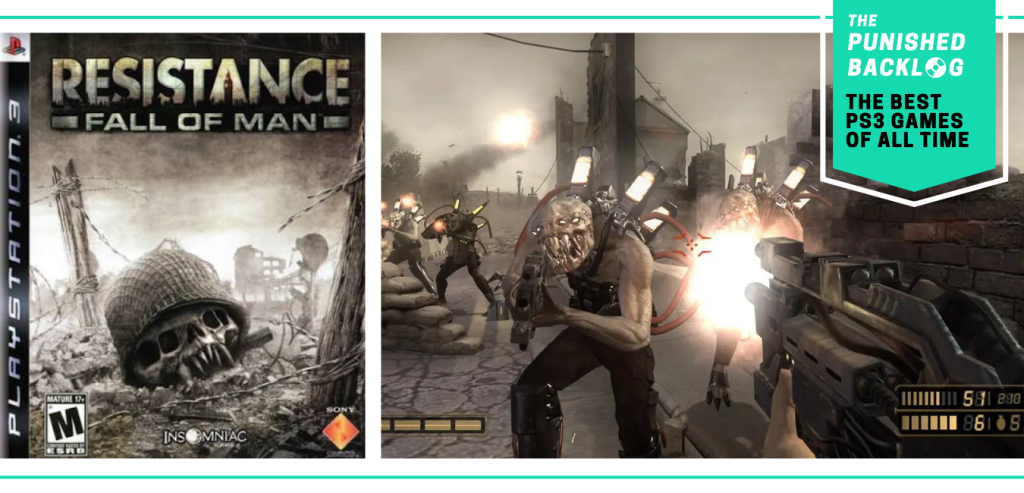
Resistance: Fall of Man
Resistance: Fall of Man gave the well-worn World War II first-person shooter genre a necessary twist. The familiar trappings are present, from European frontlines to grey filters, but Insomniac added one unforgettable element: an alien race known as the Chimera. The bipedal, mutated design of the Chimera proved to be one of the most interesting narrative devices of the PlayStation 3’s launch.
The real star of the show, though, was the weaponry. Fresh off their PlayStation 2 Ratchet & Clank entries, Insomniac provided plenty of inventive guns, especially compared to 2006’s other World War II shooter, Call of Duty 3. Having replayed the opening hours recently, I still find the first alien weapon, the bullseye, so unique. Its secondary fire shoots a homing tag, making it possible to take cover and curve bullets at enemies through the air.
Resistance: Fall of Man set the groundwork for Sony’s first-party experiences throughout the console’s lifecycle. It was a horror game in a familiar setting, with experimental, albeit flawed, gameplay elements. The game provided a more than serviceable launch title that may not have been the “Halo-killer” that Sony so desperately wanted (see also, Killzone 2), but showcased a willingness to fall short with the hope of treading far more interesting ground.
– Written by Clint Morrison, Jr.
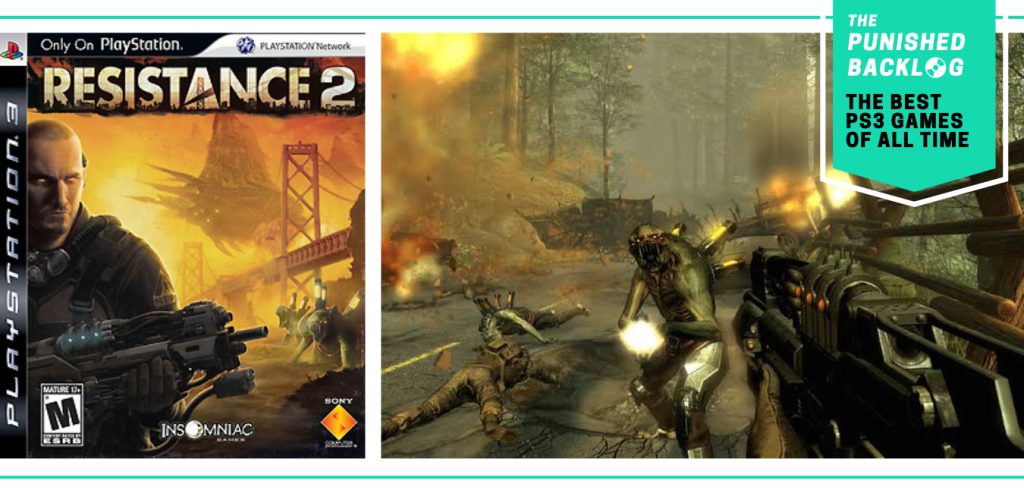
Resistance 2
Resistance 2 continues where the first game left off, picking up in 1950s America with main character Nathan Hale as he discovers he’s part of a project to combine humans with the invading enemy aliens, the Chimera. The Chimera have advanced into America, and it’s Hale’s job to stop them with his elite squad of soldiers. Much of what makes this game great is the seemingly uphill battle the characters embark on in a world ravaged by an enemy who seems insurmountable.
Developed by Insomniac Games, this series was a huge departure from Ratchet & Clank, but still offered glimmers of that creative influence. The weapons in Resistance 2 were wacky, entertaining, and bizarrely dangerous. There were grenades that exploded like hedgehogs, a revolver whose rounds would stack in explosive circles and be remotely triggered at will, and a machine gun whose bullets could home in on a tagged target.
Guns aside, gameplay in Resistance 2 was closer to old-school standard sci-shooter norms. Health could recover, guns dropped at predetermined areas, and there was no “cover” option, a staple of the modern shooter genre. To be frank, the game aged pretty poorly when I revisited it because it lacked this ability to immerse Hale in environmental interaction. I felt he essentially became a bullet sponge.
Resistance 2′s campaign is relatively short, clocking in at about 10 hours. As a result, I spent more time running through the game’s excellent 30-versus-30 team battle mode, a monumental achievement for online lobbies in 2008. (MAG, another PS3 exclusive, built on this energy in 2010.) Victory in these matches was determined by the first team to reach 1,000 kills. While the chaos of team battle took a while to adjust to, I eventually became a good contributor to my team once I figured out how devastating the gas explosion grenade was in crowds and how to unleash a timely ultimate attack. I found the online mode to be a comforting way to relax, coming back to play it every so often throughout its lifespan until the servers shut down in 2014.
The biggest criticism I have of the Resistance series is the abandonment of the main character in this second game for plot reasons. Ultimately, this probably played a contributing factor in the third game’s poor sales and the shelving of this IP, which is retained by Sony. Still, I can’t forget the fun I had in those team servers.
– Written by Vaughn Hunt
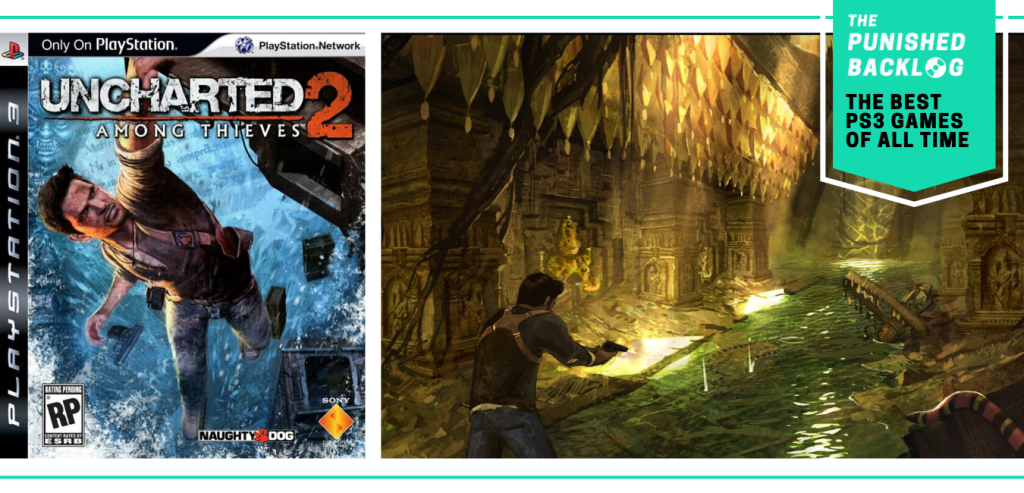
Uncharted 2: Among Thieves
Uncharted 2: Among Thieves cemented Naughty Dog as one of the greatest studios to ever touch gaming when they followed up on the early PS3 title Uncharted: Drake’s Fortune. The first Uncharted was a successful combination of Tomb Raider meets Indiana Jones that felt fresh, mature, and showcased all of the new ways an adventure-shooter could function in the seventh generation of gaming. In his second outing, Nathan Drake tracked the journey of Marco Polo through Asia to stop a Serbian war criminal, Zoran Lazarević, from beating him to Shambala. Along the way, we met Flynn, a slimy thief associate, and Chloe, a stunning charmer who was also a former partner of Drake.
Uncharted 2 opens with a train crash, with Nathan stranded in the middle of snow-covered mountains, hanging on for dear life. It’s one of the best video game openings I’ve seen, and is among the most fun and memorable gaming experiences I’ve had. The adventure maintains this fuel. Packed with a range of weapons, Drake fights his way through scores of enemies, human and supernatural, and can make use of environmental elements to dominate his skirmishes. Also returning was Drake’s ability to access his diary, which contains his thoughts on Polo’s adventure and provides clues to any number of the challenging and well-thought-out puzzles.
Graphically, the game was among the greatest technical displays of what the PS3 could offer until the release of its sequel, Uncharted 3, and The Last of Us. To this day, the game has some of the best snow and ice effects I’ve seen in gaming and features a great assortment of visuals that make Drake’s adventure stand out. While many consider the franchise’s fourth outing to be its best (I give it this from both a technical and gameplay perspective), true fans know the second entry is the winner of this argument.
That being said, Uncharted 2 plays differently from a shooting perspective depending on the version. For example, the original PS3 version featured bullets that flew straight until eventually dropping, while the PS4 remaster used more accurate bullet-curve physics. Either way, Uncharted 2 is an all-around smash hit whose impact influenced many of the games that came after, including the Tomb Raider reboot. Drake’s legacy still endures today.
– Written by Vaughn Hunt
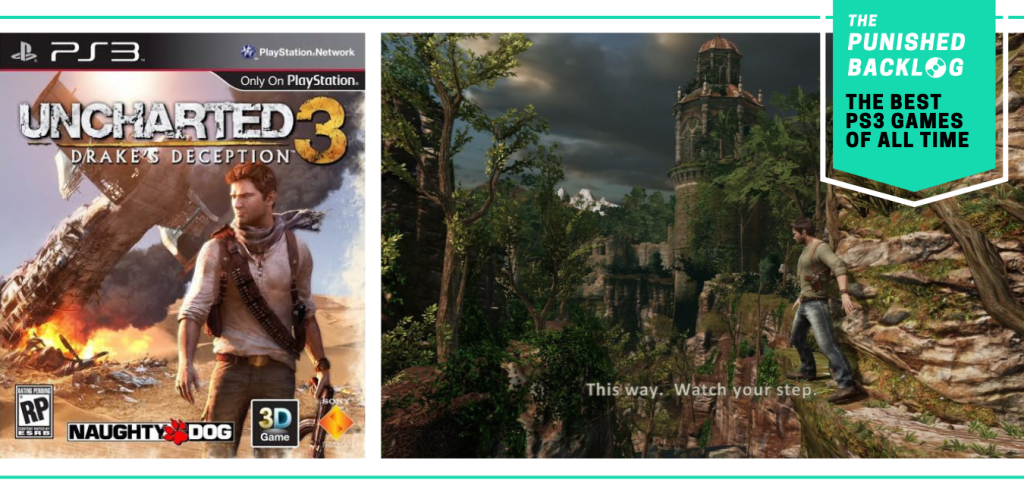
Uncharted 3: Drake’s Deception
Developed by Naughty Dog and published by Sony, Uncharted 3: Drake’s Deception is one of the less talked-about entries in this legendary action franchise, even though it is an excellent game, which only goes to show how insanely good the series as a whole is. This was the series’ third game on the PlayStation 3 in just four years… Those were the golden days, when it didn’t take almost 10 years to get a sequel.
Uncharted 3 was the beginning of my love for the franchise, making me go back and play the first two games. I jumped into Uncharted 4: A Thief’s End as soon as I got my hands on a PlayStation 4, and I revisited the original trilogy when the remasters came out.
This story follows Nathan Drake and his mentor, Victor Sullivan, as they search for the legendary lost city of Ubar, better known as the “Atlantis of the Sands.” Gameplay-wise, it is a combination of third-person exploration focused on climbing and solving environmental puzzles with combat encounters where Drake can either sneak past enemies or go in guns blazing, using firearms, grenades, and hand-to-hand combat. This formula may seem very basic today, yet in 2011, it made one of the best adventures I had and have ever played. I stand by that, even after playing many more games over the past decade.
And I haven’t even gotten to the game’s most memorable big-action sequences, like the famous scene where a plane plummets from the sky and Drake clings to the cargo crates hanging outside. For me, that’s the most striking image from the entire Uncharted franchise, and it sums up what I love about the series: completely absurd and wildly unrealistic moments that still leave us buzzing with adrenaline, even when we know Drake will always make it out alive.
If you haven’t played the series yet, though, I’d recommend doing things differently from me: Don’t start from the third game, because the first two are still excellent to this day, especially in their remastered versions (and don’t sleep on the spin-off Lost Legacy, a great and highly underrated game).
– Written by Caio Feltrin Crocetta
What Are Your Top PS3 Games?
Agree or disagree with our picks? Let us know your favorite PlayStation 3 games in the comments!

A video game outlet that blends quality words with inclusive voices. For business inquiries and review requests, reach us at press [at] punishedbacklog [dot] com.





David is the founder of The Punished Backlog. He has a problem finishing games he starts.
Just beat: Ocarina of Time (2026).
Working on: Fire Emblem: Fortune's Weave.
Can't wait for: GTA VI.
Follow David on Twitter at @David_Silbert to keep up to date with all things The Punished Backlog.

Amanda Tien (she/her or they) loves video games where she can pet dogs, solve mysteries, punch bad guys, play as a cool female character, and/or have a good cry. She began writing with The Punished Backlog in 2020 and became an Editor in Fall 2021. Amanda also does a lot of the site's graphic designs and podcast editing. Amanda's work has been published in Mothership, Unwinnable Monthly, Poets.org, Salt Hill Journal, and elsewhere. She holds an MFA in Fiction from the University of Pittsburgh and a BA in Creative Writing from Columbia University. Learn more about her writing, visual art, teaching, graphic design, and marketing consulting at www.amandatien.com.



Caio is a lawyer, master's student, and longtime gamer based in Brazil. He recently started writing about games professionally, mainly in his native language (Brazilian Portuguese), but also in English! He looks forward to sharing his personal takes, particularly on RPGs and narrative games.


Clint is a writer and educator based out of Wisconsin. You can often find him writing about Middle English poetry, medieval games, or video games. He received his PhD in English from the Ohio State University. You can find his academic and public work at clintmorrisonjr.com.


Mark is a contributor to The Punished Backlog, often promising articles and occasionally delivering when he actually commits to it. Mark games mainly on his PS5 and his Switch, and some of his favorite games include God of War, Ghost of Tsushima, The Witcher 3: Wild Hunt, and his all time favorite, Red Dead Redemption 2. When not gaming, Mark is an avid fan of all Boston sports teams and his Villanova Wildcats. He also loves hiking, skiing, and traveling across the U.S.


Sam has been playing video games since his earliest years and has been writing about them since 2016. He joined The Punished Backlog in 2017 and became an Editor in Fall 2021. He’s a big fan of Nintendo games and complaining about The Last of Us Part II. You either agree wholeheartedly with his opinions or despise them. There is no in between.
A lifelong New Yorker, Sam views gaming as far more than a silly little pastime, and hopes through critical analysis and in-depth reviews to better understand the medium's artistic merit.
Bluesky: @sam-martinelli.bsky.social


Vaughn Hunt is writer who has loved video games since he picked up a controller. His parents wouldn't let him buy swords as a child (he wanted the real ones) so he started writing, reading, and playing video games about them. A historian at heart, you'll often find him deep into a rabbit hole of culture, comics, or music.