

To the surprise of no one, Dragon Quest VII Reimagined has absolutely eaten up my free time since it launched early last month. Despite not vibing at all with the 3DS version of Dragon Quest VII: Fragments of the Forgotten Past, I absolutely adore its modern remake and 100% see myself playing it to completion (and then some). Were someone to ask me if I thought DQVIIR was a good game, I would immediately answer “yes.”
However, if someone asked if the title was a good remake, I’m not exactly sure what I would say.
The Past Is Not Forgotten
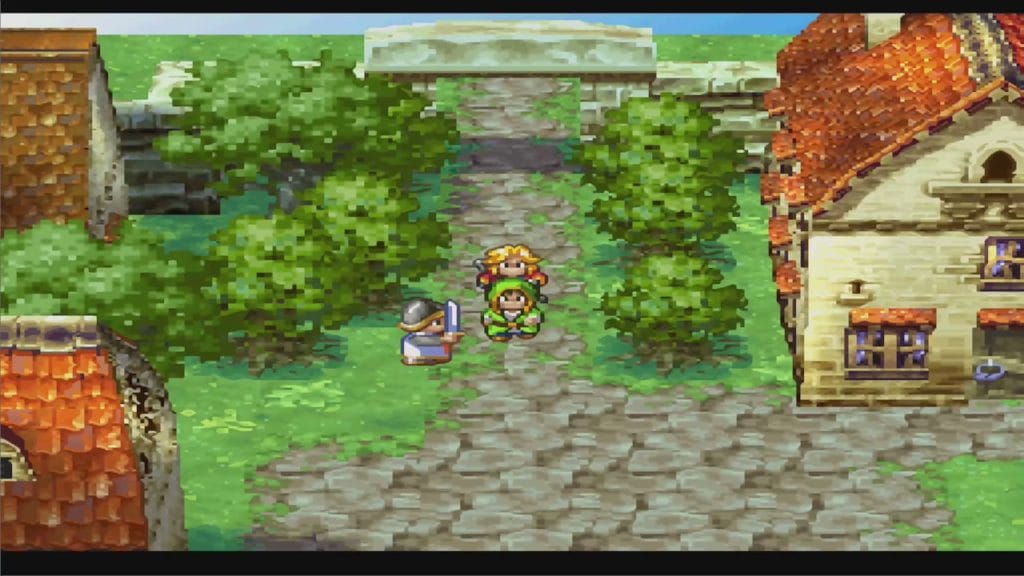
For context, the original PlayStation version of Dragon Quest VII (which, truth be told, I have not played) is one of the more polarizing entries in the long-beloved RPG franchise. It’s the longest game in the series by a good amount — which is saying something, considering the second-longest Dragon Quest game has at minimum a 60-hour playtime — and it doesn’t actually challenge the player with any combat until several hours into the experience. Prior to that, the player has to wade through heaps of bland dialogue, dull puzzles, and endless walks between the opening village and the castle on the other side of the map.
The 3DS remake apparently pared down some of this boring intro, but it was still a tedious mess that pushed me away faster than just about any other RPG ever has. Fans and players for decades have criticized other aspects of DQVII as well, but I can’t speak to those views since I never cared enough to push through the early boredom in the first place.
Imagine a Reimagining
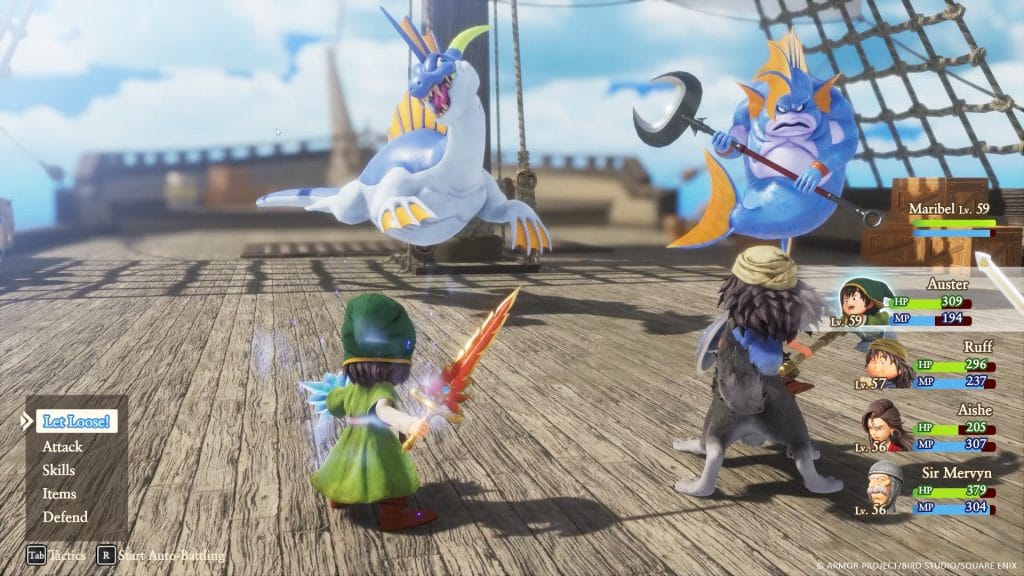
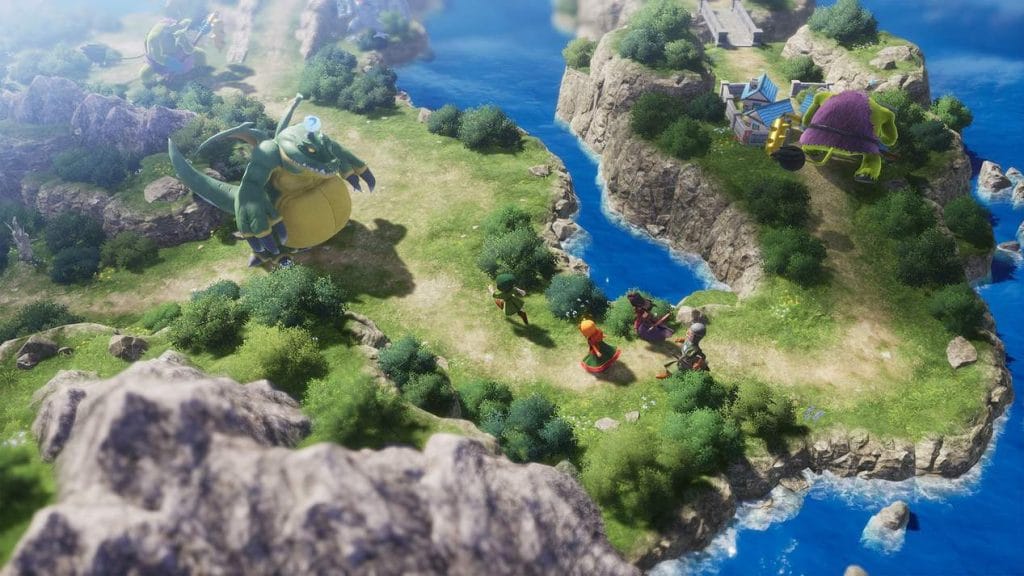
Luckily for me, Reimagined has addressed basically everything I hated about the 3DS version. Obviously, Square Enix gave the game a massive visual overhaul, streamlined the user interface, and added standard quality-of-life features that players may have come to expect (e.g., autosaving, difficulty sliders, accessibility options). Any serious remake would include enhancements like these, but Reimagined goes many steps further: The opening segment goes by much quicker, fast travel via the Zoom spell is available right away and costs zero magic points to use (typically in DQ games, a character in your party learns Zoom after a good amount of time, and it requires at least a few MP to use), combat speed can be adjusted to the player’s liking, and the overworld has shrunk in size, making travel between towns and islands much quicker.
While I personally welcomed almost every single one of these changes — especially the streamlined opening — not every new or altered feature in Reimagined has been met with the highest of praise. Some of the aforementioned quality-of-life features have sanded down a lot of the original’s rough edges, including adding Angel Statues (which fully heal your party and allow you to save) in places all across the map where they didn’t exist before, reducing any need to conserve MP for healing spells or use items to refill MP and health. Additionally, the presence of autosave in Reimagined (previous versions of DQVII don’t have autosave) largely neutralizes the threat of lost progress, removing some tension from major boss encounters.
Meanwhile, party members “dying” in combat no longer replaces their sprite with a coffin as it does in basically every other DQ games; instead, the fallen party member comes back to life with 1 HP after the encounter ends, which heavily lightens the consequences of failure, since you won’t need to use up items, spells, or money at a church to resurrect your allies. Sure, you can ramp up the difficulty if you want more of a challenge (as I have), but you also can’t turn off map icons that tell you where to go next, nor can you remove icons floating above an enemy’s name telling you whether the spell you’re about to cast is especially effective or ineffective against them. Earlier versions of Dragon Quest VII came with many more layers of friction than Reimagined — perhaps too many — but it’s possible the developers went overboard in their attempt to make the game more approachable for newcomers.
It’s not just the moment-to-moment changes that stick out; Square Enix even removed entire regions from its latest remake. Sure, some scenarios and locations have been added as well, but this game’s story is centered on discovering new islands and experiencing a whole mini-plot on each one, with each scenario offering pieces of a broader, more epic tale. Taking some of those away from the player — even just a few — fundamentally alters the overall narrative experience.
Again, I’m loving Reimagined, but it’s easy for me to do so. I’m in no way precious about the original game, so making major alterations to the blueprint doesn’t offend me all that much (and, if anything, made what I viewed as one of the weaker entries in the series far more palatable). Still, I wonder how I’d feel if I had played Dragon Quest VII in 2001 (or even the 3DS version in its entirety). While I appreciate how much easier it’s been to play through Reimagined, I completely understand why fans of the original would hate these quality-of-life changes. Some might even argue that the original’s difficulty and slowness are integral to the experience, and that making things too easy might undermine what made Dragon Quest VII special in the first place.

It’s Tricky
I have mixed feelings on the existence of remakes in general, and while I generally support them if they’re fundamentally overhauling the experience in immediately noticeable ways (and if the original versions are available on modern platforms in some form), part of me bristles at the possibility that they exist to replace their forefathers.
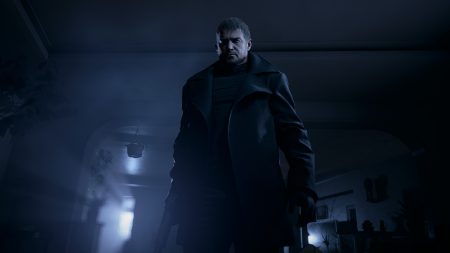
Playing through Reimagined, I’m reminded somewhat of 2023’s Resident Evil 4 remake. Obviously, Resident Evil and Dragon Quest have absolutely nothing in common, but I was a bit apprehensive about a remake of a bona fide classic in Resident Evil 4 (2005), as I imagine many DQVII fans were about Reimagined. I ended up loving the RE4 remake, but not because I deemed it a superior version of the GameCube original. Instead, I enjoyed it as a brilliant new take on the story and mechanics, almost as if someone had thought of all the ideas of Resident Evil 4 in the early 2020s rather than the early 2000s. Both versions of Resident Evil 4 are terrific, and neither one’s greatness renders the other’s existence moot.
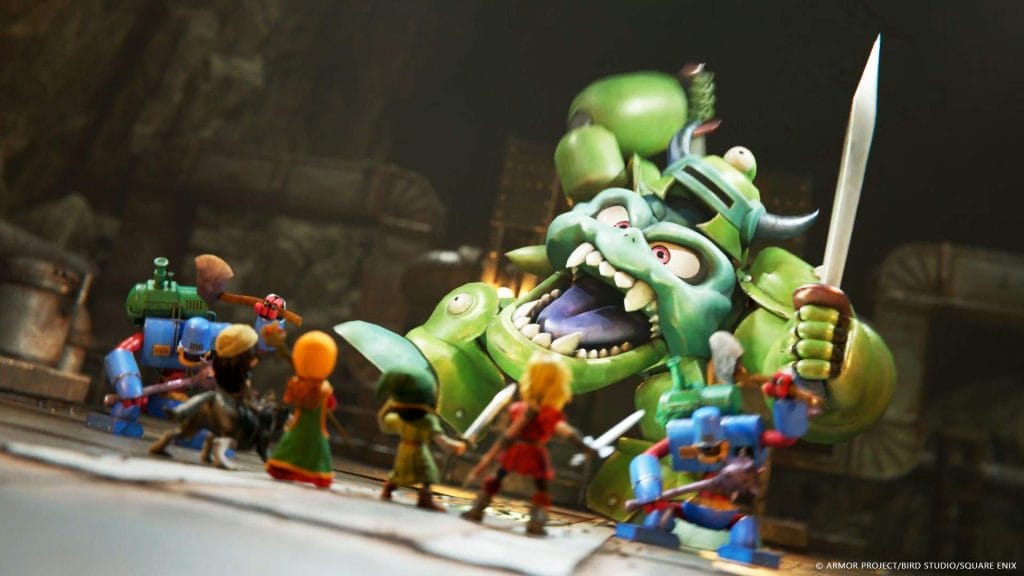
That’s why I appreciate that Square Enix used a word like Reimagined in the title for its latest Dragon Quest remake, since that’s what this game is. It’s not presented as the “definitive” version of DQVII, or even necessarily an “enhanced” one. Dragon Quest VII Reimagined is largely a retelling of its namesake, not a restored copy of it. It exists in conversation with previous versions of the game, offering a new take for modern audiences rather than a “do-over.”
In a sense, to answer the question that sparked this whole blog post, that makes Reimagined a good remake. It takes the essence of an older game and overhauls everything around it to present something that feels fresh and new, all without completely replacing its predecessors or disrespecting their legacy. Maybe it’s a little too streamlined for hardcore fans, but what would be the point of just improving the graphics of a PS1 game and changing nothing else?
Final Thoughts
I don’t know if there’s a world where I’d personally enjoy playing the original Dragon Quest VII over Reimagined, but that doesn’t mean the original has no value at all. Square Enix — much like every game maker that constantly repackages and remakes its legacy titles — should make the PS1 version available on modern hardware, if for no other reason than to give critics of the easy and largely frictionless nature of Reimagined the chance at a tougher, grindier take on the adventures of those charming kids from Pilchard Bay. Capcom gives us options; Square Enix should do the same.
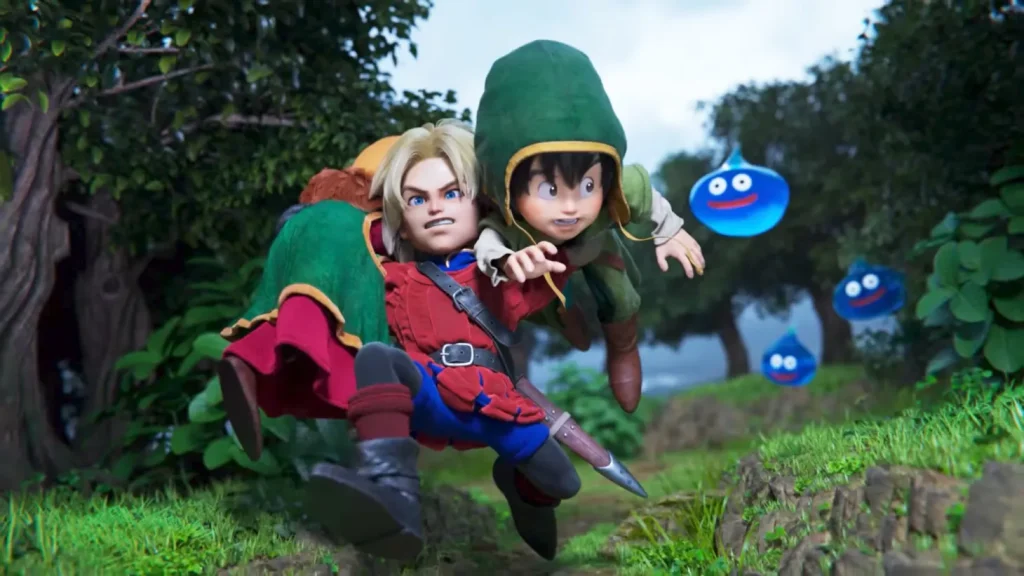
Regardless, I’m glad Reimagined exists. I’m glad it removes layers of tedium so I can get to know Maribel, Ruff, and Aishe better. I’m glad it whittles down some of the friction so traveling back-and-forth between islands never feels like a chore. But I’d be even gladder if fans of the original could play it on modern hardware. That way, Reimagined could stand on its own rather than exist as a replacement for a fragment of gaming’s not-so-forgotten past.

Sam has been playing video games since his earliest years and has been writing about them since 2016. He’s a big fan of Nintendo games and complaining about The Last of Us Part II. You either agree wholeheartedly with his opinions or despise them. There is no in between.
A lifelong New Yorker, Sam views gaming as far more than a silly little pastime, and hopes though critical analysis and in-depth reviews to better understand the medium's artistic merit.
Twitter: @sam_martinelli.