
Upon the release of Pragmata, Capcom’s latest third-person shooter/hacker title, a number of critics identified the tale of human space traveler Hugh Williams and his childlike android buddy Diana as a “dad game.” Some labeled Pragmata as a “sad dad” game, while others rejected the “sad” descriptor, viewing it as a more positive and cheerful take on fatherhood as opposed to notable “sad dad” titles such as God of War and The Last of Us.
Having played the game myself, I’ve actually come to an entirely different conclusion: Pragmata is actually a “fun uncle” game more than anything else.1 Instead of a story of a lonely man finding meaning through a paternal relationship with a child — a relationship notably born out of necessity — Pragmata focuses on how an otherwise content adult gains a new appreciation for the simple things in life by spending time with an easily excited, carefree kiddo.
To the Moon
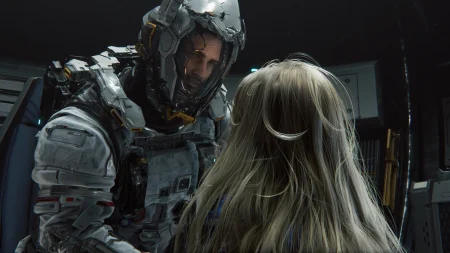
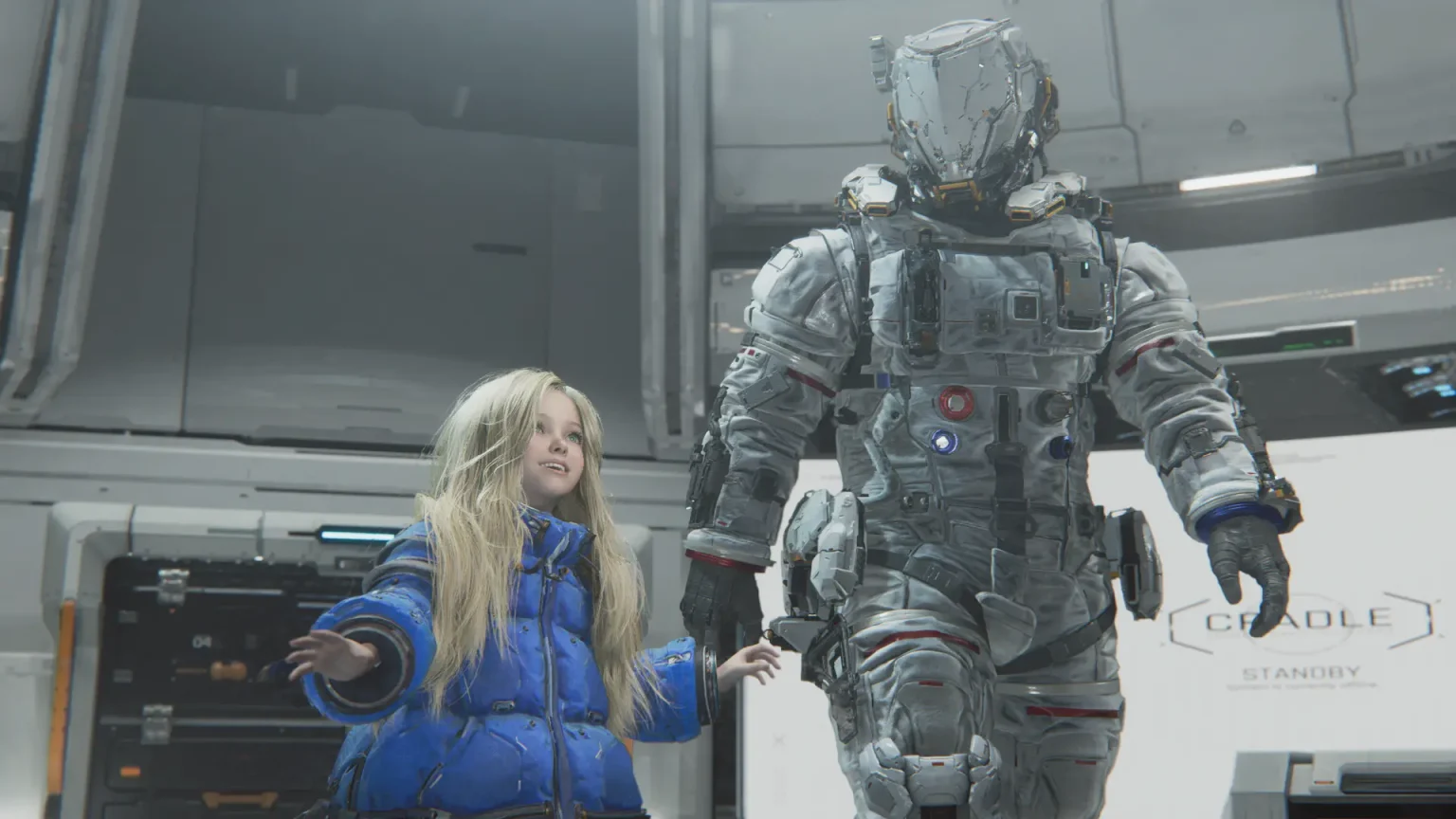
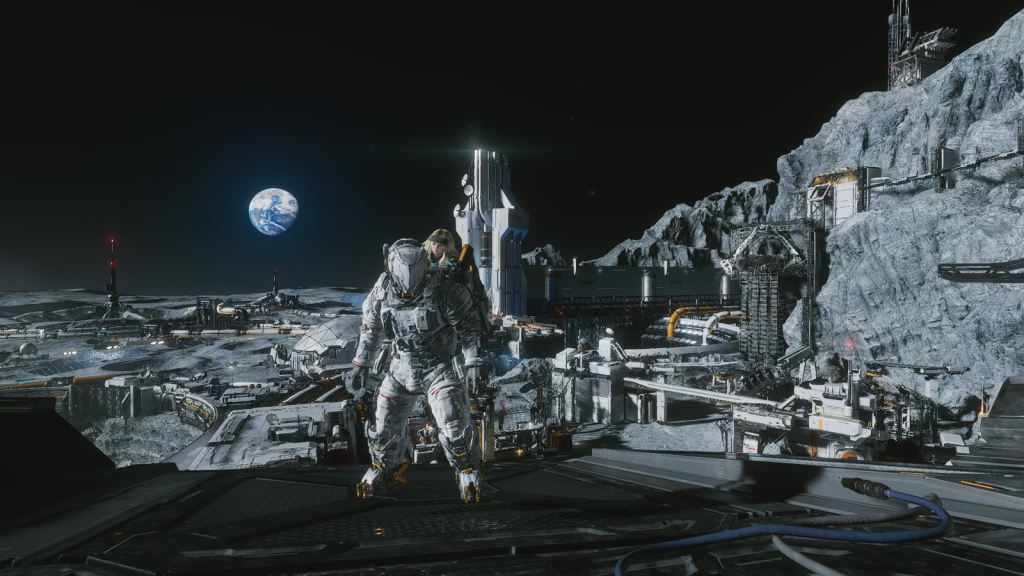
For the uninitiated: Pragmata is a third-person action game that takes place on a massive base upon and within the Earth’s moon. Hugh Williams, the game’s protagonist, works as a systems engineer at the Delphi Corporation, which owns and operates the moon base known as the Cradle on the Moon, which houses a massive 3D printer that can make anything the user wants using a particular material called lunafilament. Williams and a support team go to the Cradle to investigate why communications with Earth have been cut off, after which a sudden moonquake separates Hugh from his team. Hugh then meets a small android known as Pragmata D-I-0336-7 — or “Diana” as he calls her — who resembles a small human girl in both appearance and personality. The two then work together to figure out what exactly has been happening at the Cradle, fighting off rogue hostile androids along the way.
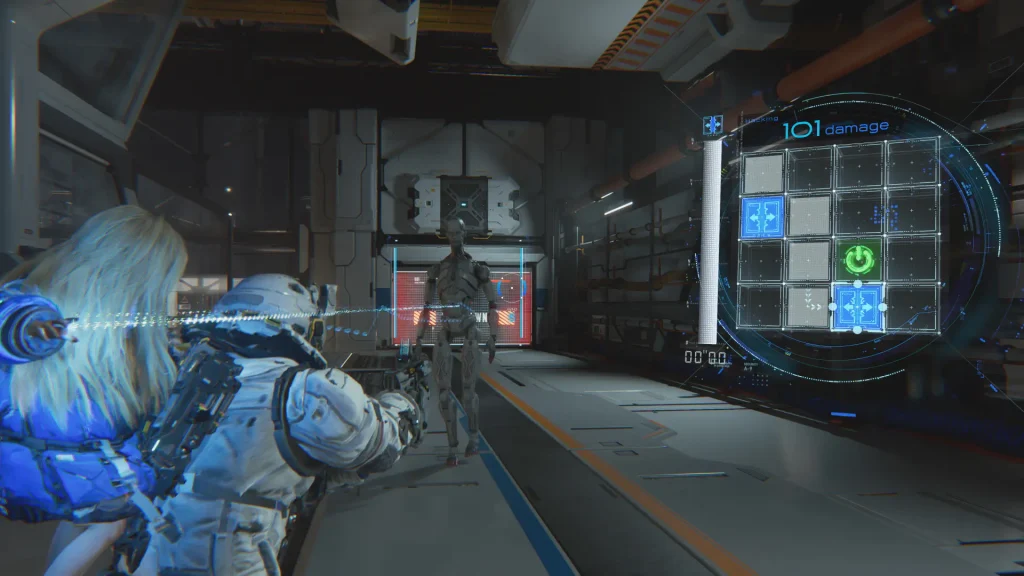
The relationship between Hugh and Diana serves as both the emotional cornerstone of the game’s plot as well as the explanation for its main gameplay hook (Diana rides on Hugh’s back and hacks enemy androids so Hugh can shoot them down). Despite being a seemingly advanced Pragmata android — designed to assist humans on the Cradle with various tasks — Diana looks, sounds, and acts like a little kid, at least when she’s not explaining complex technological events in typical nonsense sci-fi robot-ese. She wears a blue jacket that looks big and baggy on her, enjoys skipping around and playing hide-and-seek, and exudes immense excitement at fairly banal aspects of humanity whenever Hugh brings them up. 2
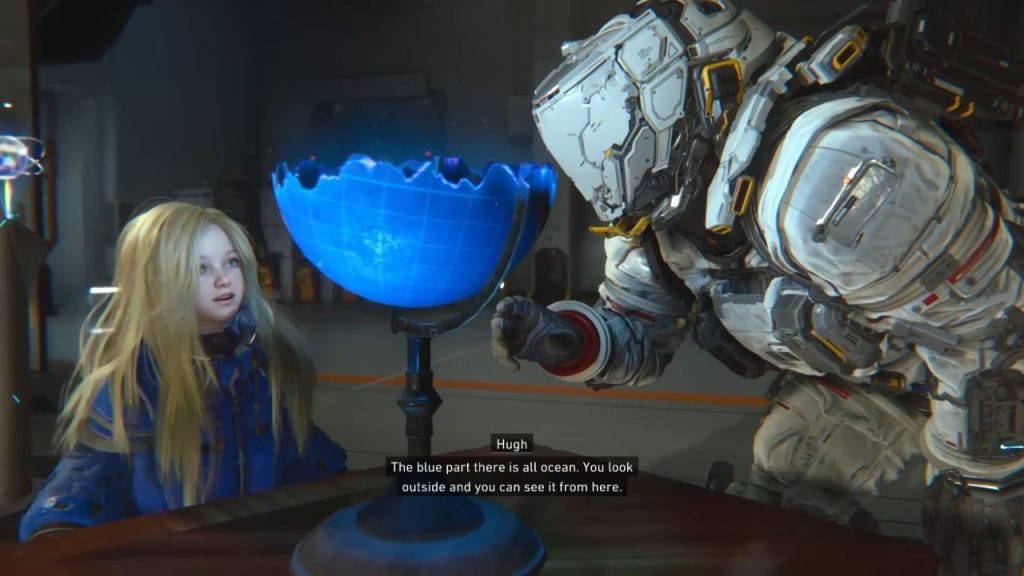
That last bit is essential to understanding Diana as a child, even one capable of taking down deadly robotic monstrosities. We have countless examples in popular media of androids learning to care for others or simply enjoy life through an appreciation of basic objects and phenomena, but Pragmata’s Diana feels different because outside of combat scenarios, her behavior is largely indistinguishable from that of a real human toddler.
When she and Hugh venture through a 3D-printed version of New York, she’s constantly asking questions like “Is every Earth city like this?” or “Do you live here?” the way a regular kid seeing a big city for the first time would. When you take her to a large terrarium-like area, she expresses fascination at the very idea of trees, vines, butterflies, and deer. Interspersed between moments like these are kernels of deeper conversations about the quotidian aspects of human life, like when Hugh explains to Diana the idea of “found family,” as he’s an orphan himself. Just about everything about life on Earth amazes her, just as it would any real child.
Shiny Happy People
Nowhere does this youthful exuberance feel more palpable than when Hugh gives Diana a Read Earth Memory, or REM for short. Throughout the main game, the player can find collectible REMs and give them to Diana whenever they go back to the Shelter, which serves as Pragmata’s main hub where the player can purchase upgrades, complete optional training challenges, or just kick back and relax away from killer robots. When in the Shelter, you can give Diana a present in the form of a REM, which then prints into a set of objects resembling something a child on Earth would love, such as a playground slide, a swing set on a tree, a campfire, or a set of helium balloons.
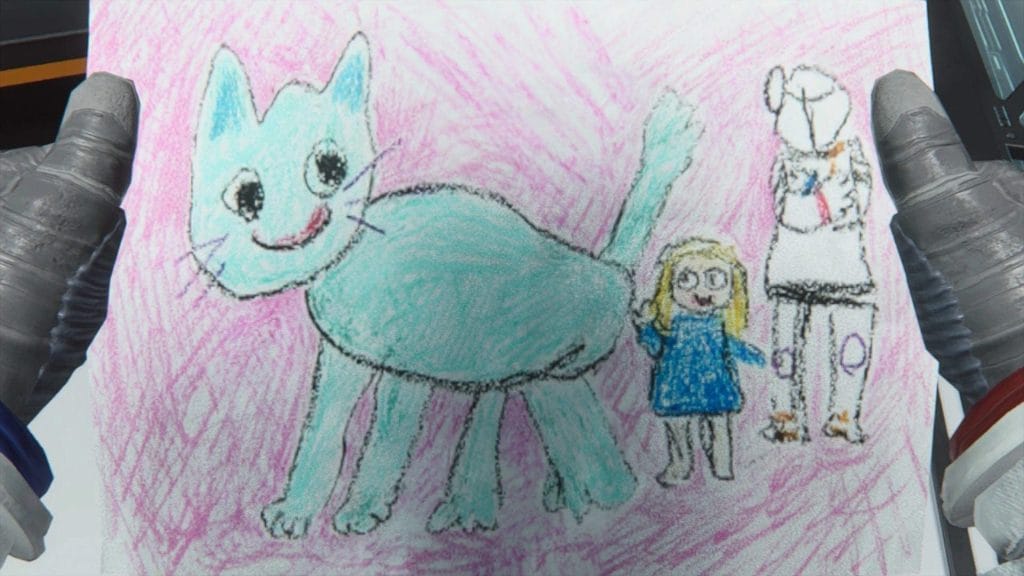
Some of my favorite moments in Pragmata are simply witnessing Diana’s excitement at receiving a new REM. Once the objects are printed, she gazes in awe at this otherwise basic thing, and then immediately plays around with it. She can’t wait to tell Hugh all about how fun it was to chase an errant balloon or pretend she was camping, and even gives him adorable drawings to thank him not just for the gift, but for always talking to her and listening to whatever she has to say. Later in the game, the player even unlocks the ability to play a hide-and-seek mini-game with Diana, which is exactly as cute and endearing as it sounds. In the shelter, Diana just gets to be a kid, and Hugh gets to be a supportive guardian figure, happy to answer any of the girl’s questions about life or just watch her excitedly play with these printed Earth toys.
Takes One To Know One
So, what makes Pragmata more of a “fun uncle” game than a “happy dad” game? Truthfully, I consider myself an expert on matters of fun uncles because, well, I am one.
I have two wonderful nieces, aged two and five, that I adore spending time with whenever I can. Playing with them often involves me taking orders on what my role should be in playtime, like taking “snacks” made out of wet sand clusters and feeding them to fake animal friends. Other times, it involves taking weak beatings from the younger one (unaware of her increasing strength) who’s just trying to get my attention for some silly face she’s making. I also make sure to ask them questions to learn more about how their brains work (much like Hugh does with Diana), and I’m happy to listen, even if I’m being given detailed descriptions of the appearances of cartoon characters I’ve never heard of and will never think about again. I’m always delighted to be a part of these moments, even if I’m a little exhausted by the end.3
The most interesting and illuminating moments I have with my nieces, however, usually occur when they’re projecting their limited understanding of the world, often in a way that makes me laugh. The littler one used to excitedly refer to every wheeled, non-motorized vehicle as “bike” and once called a stuffed dinosaur I gave her “baby dragon.” I once saw the older one endlessly giggle at what she called the “happy cake,” which was a birthday cake where the icing of the word “birthday” had been eaten, but not the “happy.” That same kid had turned her parents’ living room couch into a diaper-changing station for her teddy bears a few years earlier (of course, she commanded me to wipe down these bears for her).
These kinds of moments always stick out to me not just because they’re a little funny (though they are). They’re also examples of kids finding humor or fun in things adults don’t even think about, or at least don’t think about the same way kids do. I get a similar feeling seeing Diana gazing at fake skyscrapers or trying to figure out how a slide works, as I’m able to see these normal, everyday things the way a child would.
Closing Thoughts
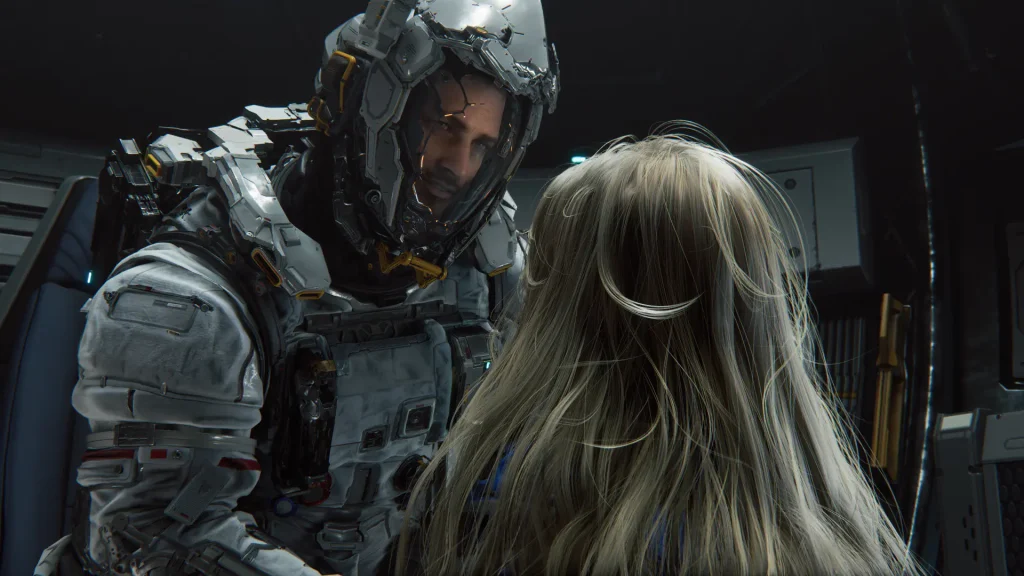
I probably won’t ever be in a scenario in the future where one of these kids climbs on my back so we can take down killer space androids together. Still, I see parts of them in Diana, and as a result see parts of myself in Hugh. I see a man who, childless himself, finds kernels of joy in just watching a kid be a kid. He doesn’t view playing hide-and-seek with her as a burden, nor does he express frustration at her incessant questions about everything that’s happened. He quickly and consistently admires Diana’s curious nature and genuinely enjoys being a part of the fun she has.
Throughout Pragmata, Hugh grows into a kind of caretaker for Diana, but it never feels like he’s her new dad, especially considering how well she can defend herself in many scenarios. He just wants her to be happy and safe, and finds appreciation in how impressed she is with things he’s always taken for granted. He’s there to help her when she needs it, but doesn’t have to feel quite the same pressure that parenthood would foist upon him. That’s how I feel around my nieces. That’s fun uncle stuff.
Pragmata, developed and published by Capcom, released on April 17, 2026, for PC (via Steam), PlayStation 5, Xbox Series X/S, and Nintendo Switch 2.
- To be crystal clear: I am NOT calling Pragmata an “unc game.” I will comment on this matter no further. ↩︎
- Hugh, meanwhile, is mostly a Boring Video Game White Man, but largely an inoffensive one. He’s not gruff or angry like Kratos or Joel Miller; he’s kind, cool-headed, and task-oriented, yet mostly flavorless otherwise. ↩︎
- Also worth noting: Diana doesn’t eat or need diaper changes, nor will she require vast amounts of money to go to college in the future. So, much like an actual uncle, Hugh gets to take part in all the fun times without any of the stress and minutiae of being a real parent. ↩︎

Sam has been playing video games since his earliest years and has been writing about them since 2016. He joined The Punished Backlog in 2017 and became an Editor in Fall 2021. He’s a big fan of Nintendo games and complaining about The Last of Us Part II. You either agree wholeheartedly with his opinions or despise them. There is no in between.
A lifelong New Yorker, Sam views gaming as far more than a silly little pastime, and hopes through critical analysis and in-depth reviews to better understand the medium's artistic merit.
Bluesky: @sam-martinelli.bsky.social