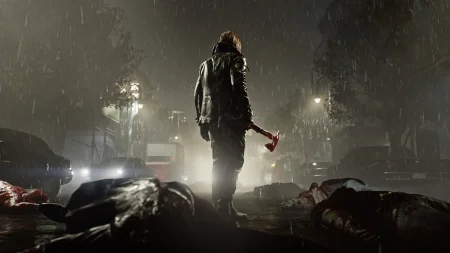
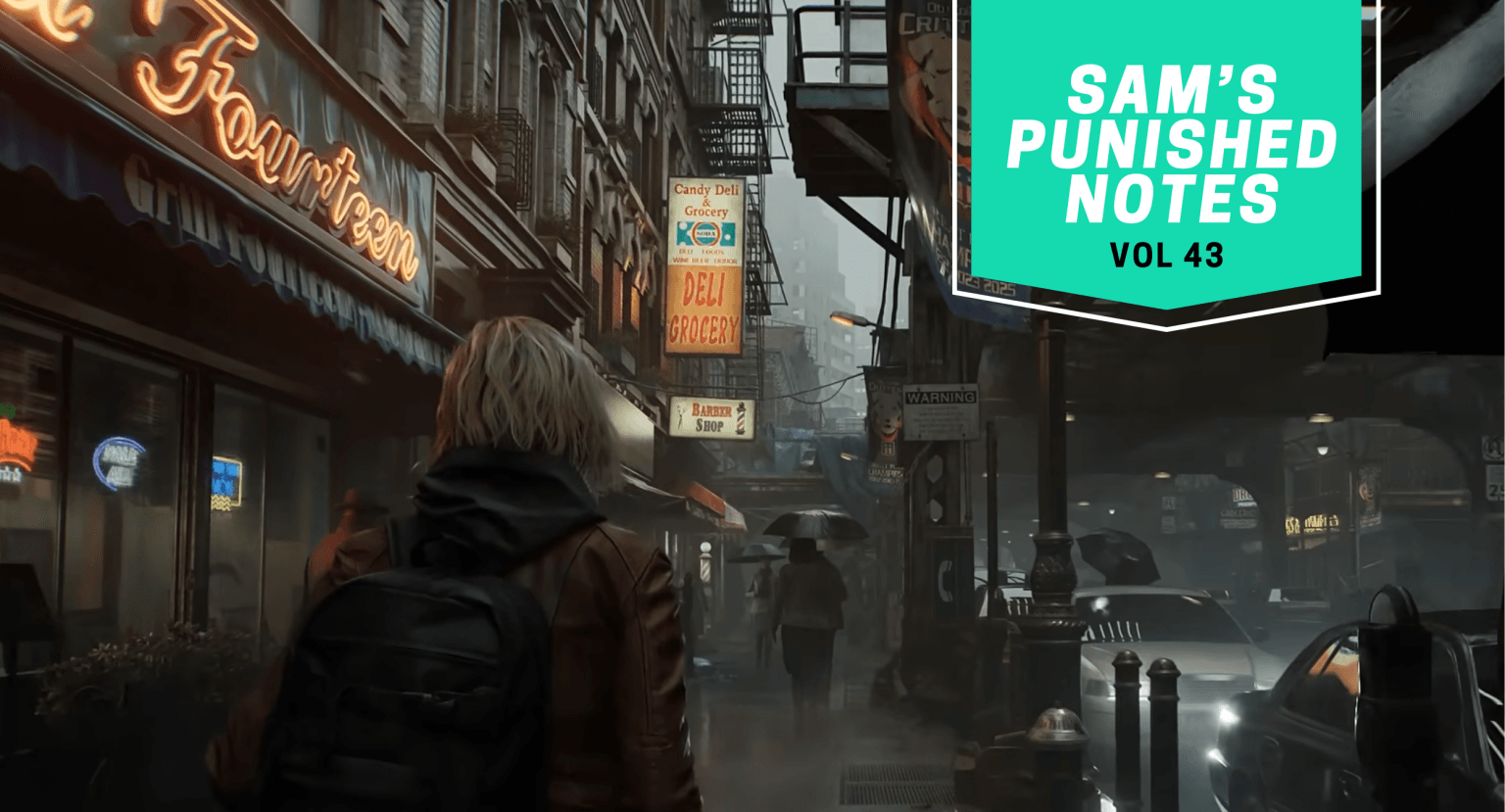

Welcome to Punished Notes, Volume 43! This edition will be dedicated entirely to Resident Evil Requiem, specifically how its decayed world reminds me of our current one. After that, there’s still a fun lightning round of scattered thoughts at the end. Enjoy!
Resident Evil Requiem as a Pandemic Game
Last year, Maddy Myers wrote in an op-ed for A.V. Club about how gaming has entered into an age of stories and worlds inspired by the COVID-19 pandemic.
“The game’s creators haven’t talked about COVID-19’s influence in terms of the game’s story, even though the game’s development began in 2020,” Myers wrote, referring to 2025’s Clair Obscur: Expedition 33, which she identifies as a “pandemic game” in the piece. “But given that the COVID-19 pandemic was the world-shattering event of the past five years, it would be absurd not to assume it impacted the art that was created during its spread, whether the artists in question acknowledge that or not.”
The piece, which also cites other 2025 titles like Death Stranding 2: On the Beach and Cronos: The New Dawn, expertly identifies that while narratives about isolation, mass uncertainty, the spread of a deadly virus, and an enduring sense of melancholy have always existed in games, ones released in the years following 2020 and 2021 seem to take on the added weight of the pandemic, regardless of intentionality. “This is a trend that’s likely just beginning to show itself, and as much as it may hurt to return to my own memories of the early pandemic in playing these games, art is meant to mirror human experience — and this is one we all shared, and one that will keep influencing all of us for many, many years to come,” she said to close the piece.
Playing through the early hours of Resident Evil Requiem, the ninth mainline entry in Capcom’s decades-old horror franchise, I also noticed connections to the COVID-19 pandemic. During those first few hours, it was one of the only things I could really think about.
No Severance
Obviously, Resident Evil’s whole narrative essence relies on the spread of a zombie virus across various parts of the world, the evildoers who wrought such destruction in the first place, and the opportunists seeking to take advantage of such destruction. But Requiem — despite serving in many ways as a “greatest hits” of the franchise, at least mechanically — feels different. Unlike prior RE titles I’ve played, Requiem appears particularly interested in giving the infected more agency, as though simply turning into a flesh-eating monster hasn’t completely robbed them of their previous lives.
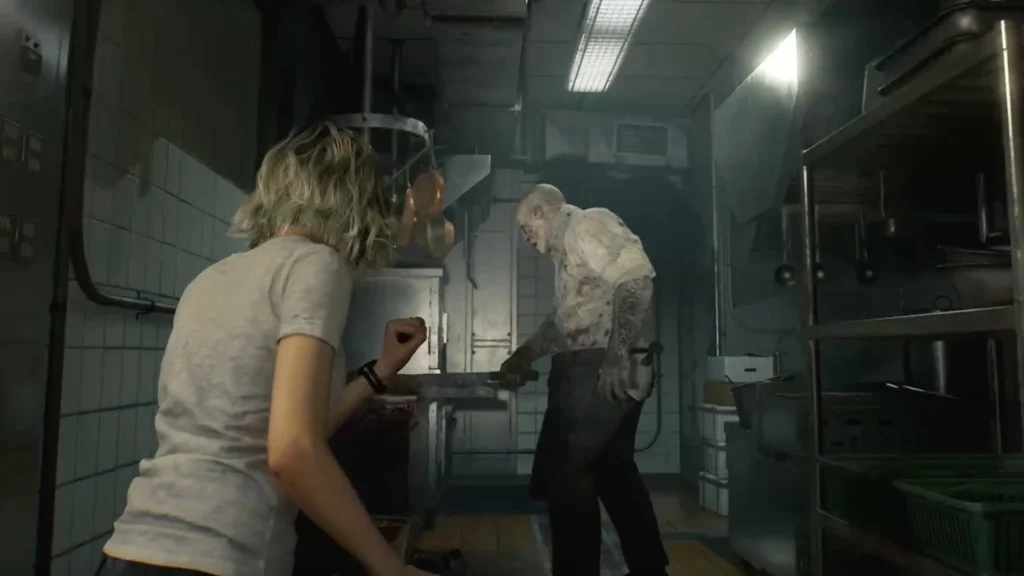
One of the biggest features Capcom highlighted in pre-launch trailers for Requiem was the idea that many of the zombies you encounter (particularly during the Grace Ashcroft sections) still maintain and express part of their identity prior to their infection. A zombified chef is still hacking away at (likely human) meat on a cutting board. An infected maid laments her inability to fully clean a bathroom mirror covered in blood. Even former office executives, still donning sharp suits, yell, “You’re fired!” into broken telephones. Their bodies have fully surrendered to zombification, yet the parts of their humanity centered entirely on work remain in some form or another.
Seeing these once-humans still clinging to shreds of their labor identities, I couldn’t help but think about essential workers during the early months of COVID, the ones thanklessly forced into harm’s way simply because they happened to bag groceries or deliver mail. As the world seemed to be crumbling from this newfound disease, everyone in these roles had to keep working at hospitals, restaurants, and train stations despite the risks. Many got sick and/or died, and the ones who survived this brand new illness were expected to return to work the second they could, despite whatever toll the disease took on their bodies and minds. What mattered was the work, not the person.
Even folks like me privileged enough to work a desk job from home still had to answer inane emails and join endless Zoom meetings that could have been inane emails, all as though nothing about the world around us was any different other than where we were reading those emails. Hell, I had to work through COVID the one time I had it in 2024, and I know I’m not the only person with a desk job who’s had to power through despite the agony. Regardless of whatever job you had, it wouldn’t have been implausible at the time (or even now) if people were supposed to remain at work even if COVID-19 turned them into actual zombies. As long as they could still get the job done, they’d be expected to clock in.
The (Resident) Evil of Banality
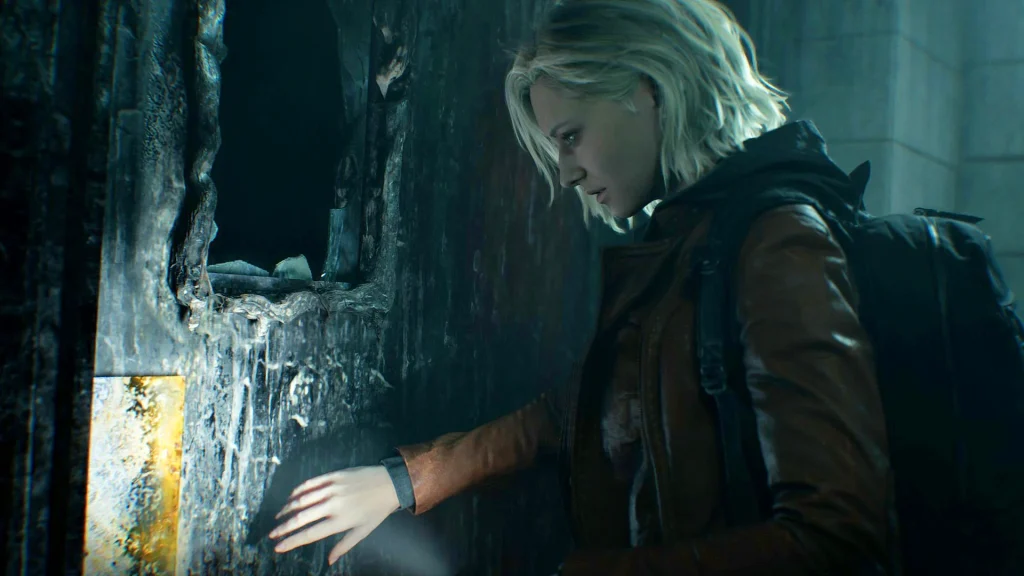
It’s not just the zombies themselves, however, that had me thinking of COVID-19 while playing Requiem. What really struck me were the early hours of the game, where Grace walks through the streets of Wrenwood to investigate a nearby dilapidated hotel. Grace, an FBI analyst, is tasked with investigating the mysterious deaths of survivors of the Raccoon City T-virus infestation (from Resident Evil 2) at the hotel, coincidentally(?) where her mother was brutally murdered in front of her many years earlier.
The city’s sidewalks seem fairly normal, as do all the various passersby trying to catch a bus or avoid getting rained on. There are missing persons posters on the side of a newsstand, but nobody appears to pay much mind to them. Despite the moribund nature of Grace’s visit to this place, everything seems normal. Maybe just a little too normal.
If anything, the world in Requiem should make perfect sense because, in some form or another, we’re already living in one just like it.
One of the funniest things about the Resident Evil games is that everyone in these stories is obsessed with the past, constantly recounting incidents in prior games, but the rest of the world seems either blissfully unaware or completely lacking in object permanence. A zombie infestation spread across Raccoon City, which was later bombed to contain the virus; these are facts that just about anyone in this fictionalized version of America would know about, yet it appears the world has moved on. An unknown virus terrorizes a large midwestern city in the U.S., causing a catastrophe so severe that obliterating that city seemed like the most logical option, and yet enough time has passed by the start of Requiem that most people proceed through life as though something like it could never happen again.
Consider all the other absurd plots of later games in the series: rescuing the PRESIDENT’S DAUGHTER from infected religious zealots in Spain, thwarting bioterrorism in West Africa, discovering the existence of vampires and werewolves in Eastern Europe, and so forth. At least some of these occurrences must be general knowledge, particularly in a social media age (yes, smartphones exist in these games now). Also, it’s clear early on that even the folks who “survived” the original zombie apocalypse decades earlier are experiencing new symptoms in the present day (including co-protagonist Leon Kennedy, who was introduced to the gaming world in RE2), so it’s not like anyone could argue the T-virus is totally gone.
Wouldn’t knowing all that fundamentally alter how everyone sees daily life? Wouldn’t that cause an FBI director to think twice about sending an untrained agent alone to an abandoned hotel where her mother was killed? Wouldn’t that mean those missing persons posters would be taken more seriously? Wouldn’t that mean that Grace, upon seeing these monstrosities in person, would at least seem a little more accustomed to the probability of their existence instead of completely shocked?
It’s Staring Right at Us
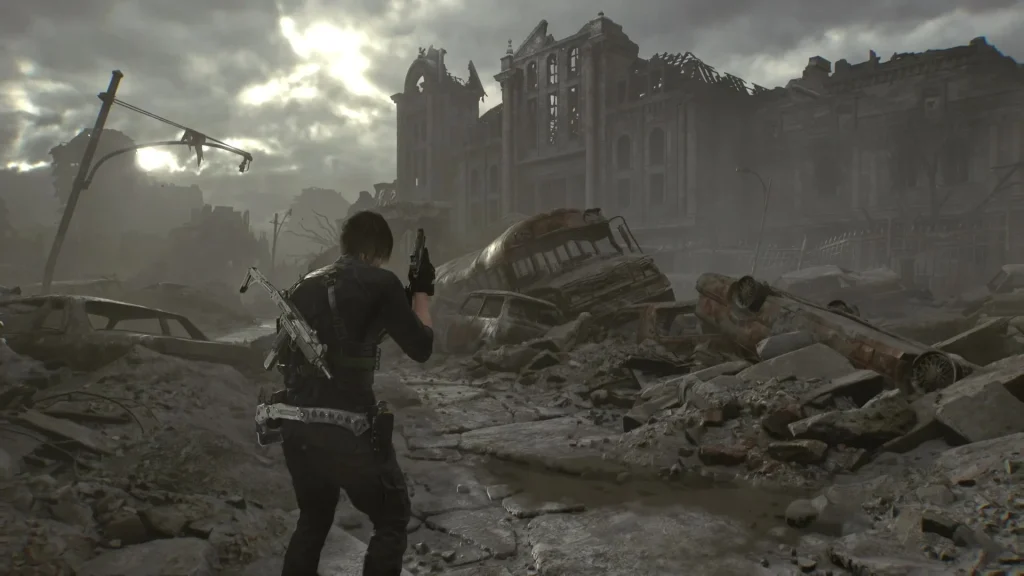
Logic would dictate that something like the Raccoon City incident and everything that followed would be game-changing for everyone, everywhere. However, the real world isn’t dictated by logic, and never has been. Just because people should learn from something doesn’t mean that they ever do. We’re seeing that in real time with every daily news story that reads like it could have been written in 2008, 2003, 1990, 1973, 1968, or earlier. If anything, the world in Requiem should make perfect sense because, in some form or another, we’re already living in one just like it.
We all know by now that at any moment a new virus can completely terrorize the globe, yet most people seem to have simply moved on, barely even thinking about it or discussing it that often in public. Even while it was happening, many acted as though it wasn’t, or at least tried to downplay how serious it was. Resident Evil games all present their stories through the perspective of those mired in whatever new T-virus horror awaits them. For everyone else, though — the regular people, the ones a little farther removed from the dangerous monsters — maybe it’s not so far-fetched that they’d mostly shrug their shoulders about it, say, “Well, that’s a relief” when each outbreak remains isolated, and go on with their lives.
For what it’s worth, I’m not going to pretend I’m still behaving now the way I did in 2020. I only put on a mask when I’m feeling symptoms. I’m not particularly cognizant of how close I am to people standing in lines anymore. I still get a COVID booster every year, but I couldn’t tell you where my vaccine card is, as nobody has asked to see it in nearly five years. When in places that used to give me anxiety about the spread of the virus, like airports and restaurants, I no longer even consider the possibility of getting infected again.
Still, the lack of regular acknowledgement over the millions who have perished from this disease as well as the absence of any kind of national or international day of mourning or remembrance depresses me. COVID-19 remains a potentially serious illness that infects and kills people every day, yet the broad desire for a return to normalcy appears to have superseded any concern over the possibility that another pandemic could happen again. I understand that we’re also living in particularly dangerous times as well, and that it’s difficult to remain focused on any one major issue at a time, but I find it baffling that one of the defining global events of the 21st century — one that, again, left millions dead and remains a threat to many disabled and immunocompromised people — has largely disappeared from regular discourse.
Final Thoughts
To be fair, the majority of my playtime with Resident Evil Requiem wasn’t centered on COVID-19 comparisons. Most of the game follows the kind of absurd survival horror nonsense I crave from the series, where I’m too focused on running away from giant ugly things, solving easy environmental puzzles, and trying to win chainsaw swordfights (this happens multiple times, and it rules). The actual plot — a delightful pile of nonsense and melodrama, as always — has basically nothing to do with COVID-19 at all, and any direct connections between the two are tenuous at best.
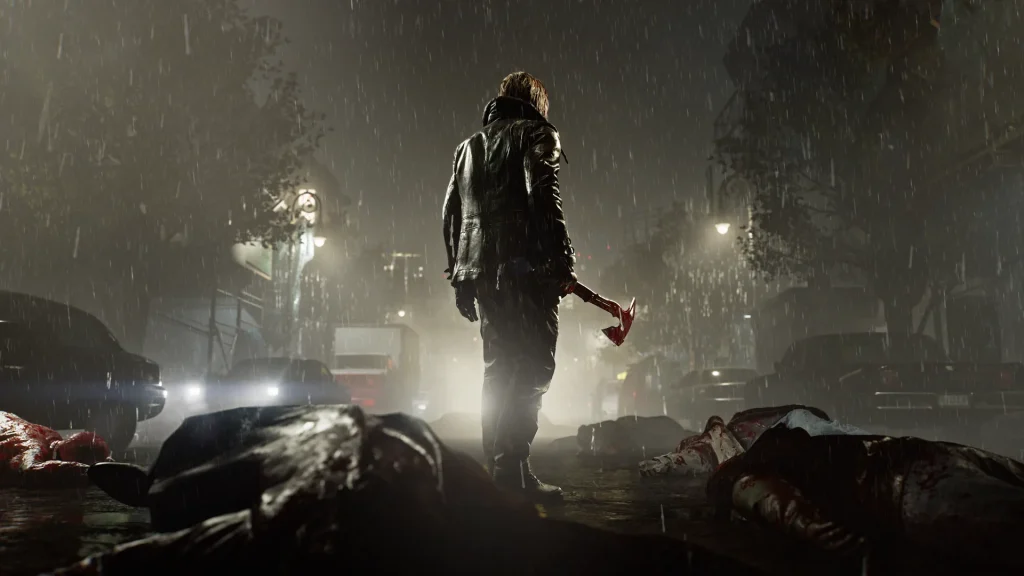
I don’t know if anyone at Capcom meant for Resident Evil Requiem to feel like a game about COVID-19. What I do know is that my life and my view on the world have changed since the pandemic, and the broad range of emotions I felt during those months and years has affected how I view art. Regardless of what anyone working on Requiem intended, I see reminders of what the pandemic felt like while it was happening and what it feels like now. I see it in the emotions exuded by its co-protagonists — Grace’s fear and anxiety, Leon’s exhaustion and guilt — all of which I felt every day from 2020 to 2022. I see it in the zombified workers whose health and well-being never mattered to anyone else. I see it in the otherwise normal streets of Wrenwood and the desolate streets of Raccoon City. And I see it in the fact that no matter what happens, there will always be another Resident Evil, just like there will likely be another major viral disaster that people will eventually pretend never happened.
Thank you for reading my latest edition of Punished Notes. If the main part of this edition bummed you out, don’t worry: Lightning Round is here to save you with other assorted Resident Evil Requiem thoughts!

LIGHTNING ROUND!!!!!!!!!!!!!!!!!!!!!!!!!!!!!!!!!!!!!!!!!!!
- Here’s my quick mini-review of Requiem: The first half is fantastic; the second half is a little messy but still mostly good (like most RE games). I liked the Grace bits more than the Leon bits overall, and the last two hours or so are kind of just bad? For a score, let’s say… 8.5/10. Sure, let’s go with that.
- I played on Casual difficulty (as I often do in horror games), and I still felt constantly at risk of an early demise during all the Grace Ashcroft segments. Even if my life was never actually in much danger — I always stocked up on healing items, so much so that I frequently had to store them away to free up personal storage space — the level architecture, combat mechanics, and enemy design ensured that the fear of dying was omnipresent.
- I can be fairly critical of how words like “immersive” are overused in games writing/discourse, but I did actually get fairly immersed during the early Grace missions. It’s not that the mechanics and systems made everything feel realistic; it’s that the level design, sharp visuals, and “little things” (like Grace’s terrified breathing patterns) had me so convinced that the terrors around me felt real that I forgot that I craft items out of mutated blood and save progress at typewriters. To me, that is real immersion in games: not mechanics that feel realistic, but atmosphere and narrative tricks that make me forget how absurd all of this is.
- While the latter parts of the game definitely drag a bit, I actually really enjoyed the metroidvania-esque nature of Leon’s return to Raccoon City. I actually welcomed some of the slowness to the otherwise chaotic thrill-rides of Leon’s other in-game segments.
- Without getting into spoilers: The final segments of the game (both Grace’s and Leon’s last sections) felt a little half-baked. The game introduces new enemies and mechanics to both characters that feel somewhat out of place within the rest of the experience, and none of it was interesting enough to make those segments feel special. Honestly, my earlier rating would have been higher had these last bits landed with me better (or at least occurred earlier in the game so I didn’t finish the experience with a bad taste in my mouth).

- At times, Requiem can be a masterclass in atmospheric scares. At a distance, simple things like a horse statue, a stain on a wall, or a beam of light protruding through a narrow frame can all look like monsters or enemies emerging from the dark, making even the safest journeys feel all the more dreadful (in a good way).
- The combat-focused Leon segments were mostly a ton of fun, offering nice breaks of Doritos and Mountain Dew goodness in between Grace’s constant sojourn through the most terrifying places imaginable. That said, I don’t think the combat is quite as varied or as smooth as it was in 2023’s Resident Evil 4 remake. The hatchet is a nice addition, as is the ability to pick up an enemy’s chainsaw, but I still think RE4make offered more frenetic encounters with a wider range of combat approaches than Requiem does.
- Given my sparse understanding of Resident Evil lore, a lot of late-game revelations and encounters simply didn’t land for me. I won’t spoil anything specifically, but I like these games better when the broader series connections are hinted at or only mentioned briefly (like in RE Village) than front-and-center and essential to a particular game’s plot.
- Not sure what this means for Requiem overall, but once I finished my initial playthrough, I felt very little motivation to start a new save on a higher difficulty. If anything, it made me want to replay older Resident Evil games, especially the RE2 remake.

Sam has been playing video games since his earliest years and has been writing about them since 2016. He joined The Punished Backlog in 2017 and became an Editor in Fall 2021. He’s a big fan of Nintendo games and complaining about The Last of Us Part II. You either agree wholeheartedly with his opinions or despise them. There is no in between.
A lifelong New Yorker, Sam views gaming as far more than a silly little pastime, and hopes through critical analysis and in-depth reviews to better understand the medium's artistic merit.
Bluesky: @sam-martinelli.bsky.social