
We’ve seen a dizzying number of great roguelikes in recent years. From escaping (or breaking back into) the depths of hell, to traversing a labyrinthine manor, to assembling killer hands in poker, these experiences have been wildly complex and endlessly creative. Roguelikes get a bad rap for being formulaic, but that generalization belies the genre’s true, inner beauty.
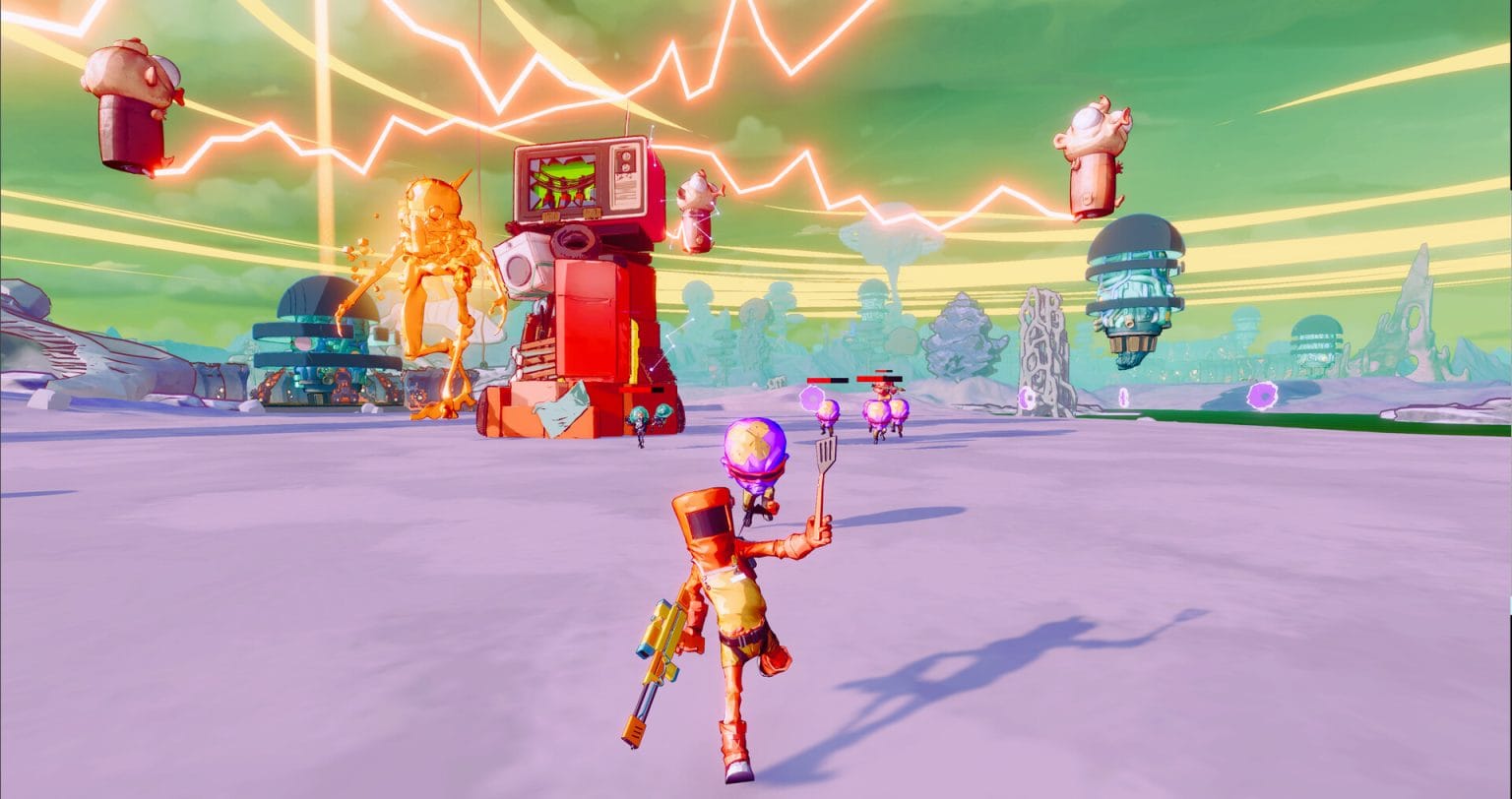
Then, there’s Swapmeat — a game about killing bugs and harvesting their limbs as you hop from planet to planet, plundering natural resources on behalf of your mega-corporation employer. The brainchild of indie developer One More Game, Swapmeat may not be the belle of the ball, but it’s beautiful in its own perverse way.
When I previewed Swapmeat back at PAX East 2025, I found it to be a well-oiled machine, balancing both zany and fun with aplomb. Now, having played the full game, I’m only more confident in my initial assessment. Swapmeat isn’t without its issues — namely, a lack of maps and some wonky RNG — but its unique swapmeat mechanic and attractive price tag make it an easy recommendation for those seeking something new (and weird).
Impossible Meat
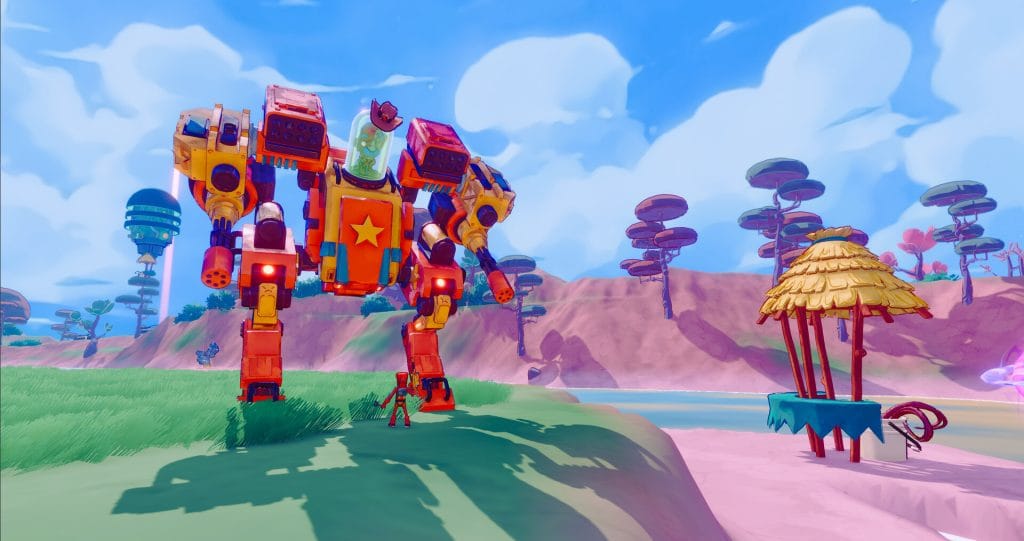
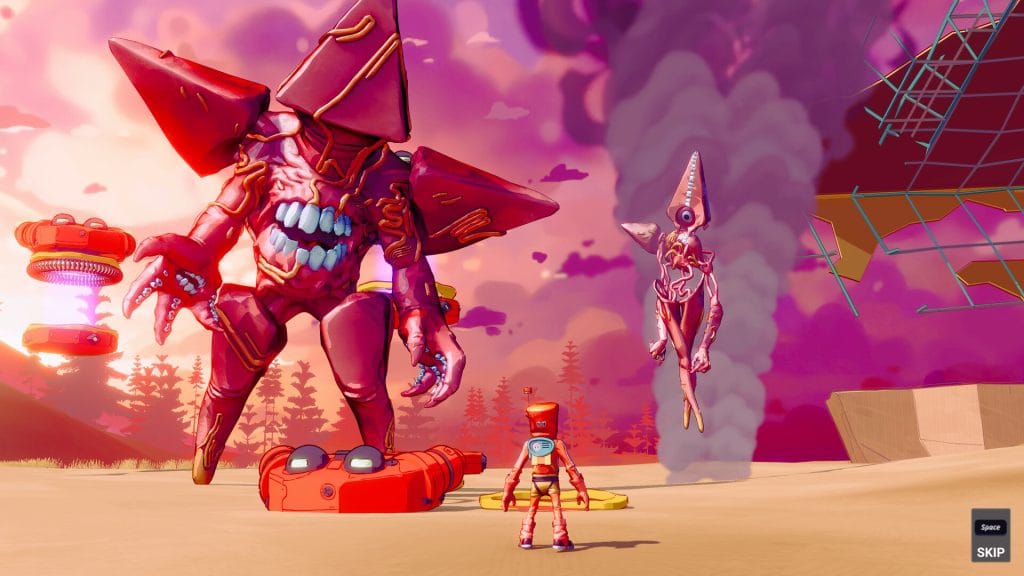
You play as Squishy, a “meat scientist” for mega-company Rangus Corporation. Owned by CEO Carl Rangus (a disembodied head floating in a pool of gel), Rangus Corp. has tasked you and other intergalactic pioneers with traveling to hostile alien worlds, excavating resources, and establishing new food sources, all for the benefit of the galaxy.
In other words, you’re a colonizer and a poacher. While Swapmeat is generally light on story — there’s an intro cinematic, occasional dialogue from Rangus, and the rare codex to collect — it certainly isn’t light on subtext. From the premise itself to various forms of in-game propaganda (Including a stat that tracks how much you’ve harvested a given planet), it’s clear that we, as players, are aiding and abetting the bad guy.
I wish Swapmeat and developer One More Game had a bit more to say in their storytelling. In the end, there are no grand mea culpas, or any real comeuppance, either. Heck, Squishy doesn’t even talk. Still, the general actions of these characters — and the effects on the worlds they plunder — speak volumes. There’s a part of me that pities Squishy (a literal collection of meats, and also a clear victim of Rangus), even if I think his complacency is its own crime.
Perhaps I’m overthinking the story of Swapmeat. Ultimately, the game’s about shooting aliens, racking up damage, collecting loot, and getting out of dodge — not too dissimilar from a Borderlands title or even modern extraction shooters like Marathon. But I think treating it as some Duke Nukem ass-kicking fest is a grave disservice. There’s a real cognitive dissonance on display here, and One More Game does an admirable job of making us question the very game we’re here to play.
Into the Frying Pan
As intriguing as Swapmeat’s worldbuilding is, the real meat and potatoes (I’m sorry) are its intricate roguelike mechanics. Equal parts looter-shooter and extraction shooter, Swapmeat emulates games like Housemarque’s Returnal by having players navigate a treacherous 3D space, fending off enemies while completing side objectives and upgrading their gear on the fly. Instead of swapping out guns, however, you’re swapping out pieces of your body.
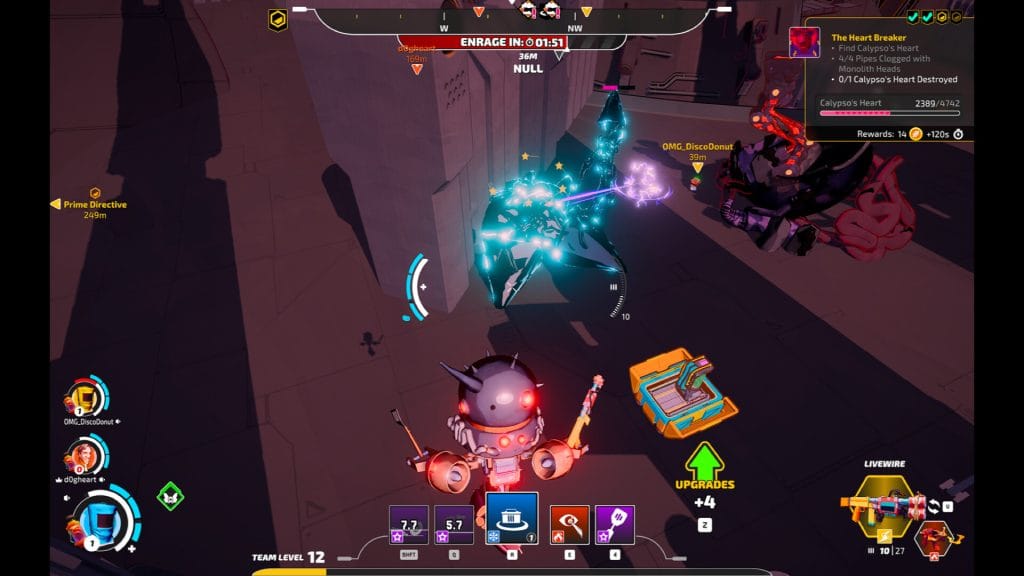
Each run begins with you landing on an alien planet. Like most modern shooters, you have access to two preset weapons you can switch between (think your standard pistol, rifle, SMG, shotgun, etc.), plus a knife you can use as a melee attack. In addition to these weapons, though, you also have several power-ups, which run on cooldowns and each map to a specific key (or trigger/bumper on a controller).
At first, your kit is exceptionally basic: You can dash with one cooldown, trigger a small area-of-effect blast with another, and that’s about it. However, blast a few aliens, and you’ll see new power-ups drop in real time.
Enter the swapmeat mechanic. Each power-up corresponds to a different part of your body: your head, your torso, or your legs. Pick up a new set of legs, and your initial dash gets replaced with the new power. Swap out the torso, and you’ll lose the AOE blast for something of different (and likely better) value.
On the surface, this system seems like a cheeky, if gross, way to weave your average roguelike upgrades into Swapmeat. And while that’s certainly true, it also understates just how interesting this swapmeat mechanic can become. These aren’t your average “increase damage by X%” upgrades; they fundamentally alter the way your character plays. Grab an insect’s legs, and you’ll become nimbler; grab a bulkier power-up, and you’ll slow down. There are torsos that fire massive laser beams, turkey heads that you can throw and detonate like grenades, a head that lets you lasso onto the environment, and so much more.

Sizzling Beef
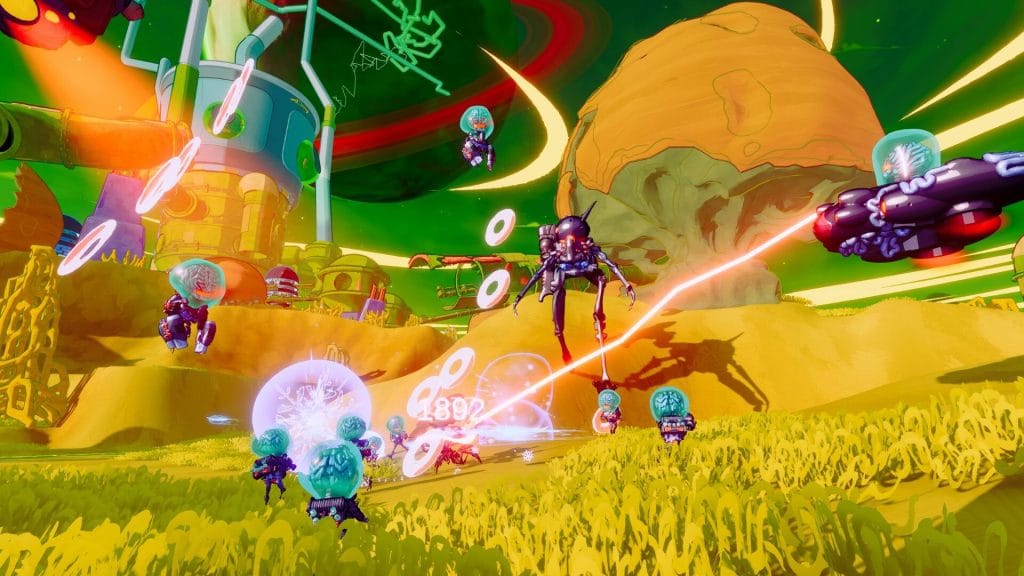
When the system works, Swapmeat is electric. Runs — which are perfectly paced at about 45 minutes total — become a thoughtful balance of shooting, activating cooldowns, and swapping out body parts as they accumulate damage. (Each body part has a dedicated health bar, incentivizing you to adapt on the fly if you don’t want to die.) Add in an active reload (à la Gears of War); a level-up mechanic, which lets you upgrade your weapons with elemental properties; and a pair of “hunters” that chase you when you dally too long on a given planet, and Swapmeat has just enough moving pieces to keep things fast, frenetic, and fun.
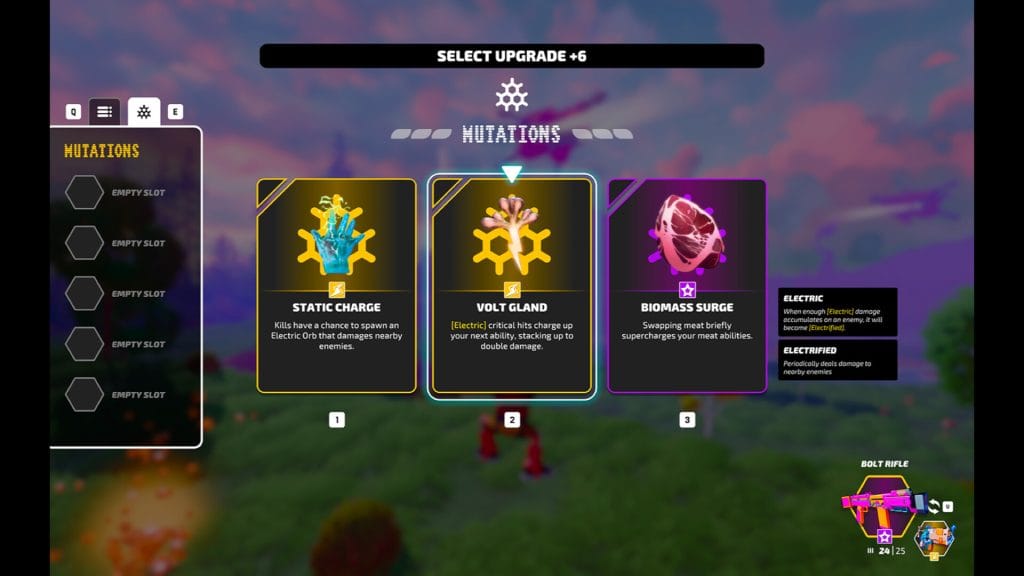
If I have one qualm with this core loop, it’s that the process of actually finding and swapping out meat can be cumbersome. At times, enemies will drop so many parts that you won’t have nearly enough time to stop and choose between them; in other instances, you won’t find a new part for minutes at a time. If you happen to have a weak power — like a sluggish pair of legs — you may struggle to keep up as the game’s clock ticks down to zero. It doesn’t happen often, but poor RNG (just like in any roguelike) can spoil the fun.
There are a few other oddities. This is a physics-heavy game, meaning certain powers may behave bizarrely depending on the slope of the terrain you’re climbing (or descending). Although gunplay is smooth and satisfying, the game doesn’t let players manually reload — a bizarre design choice, even if it’s rather innocuous. Melee combat is also a bit stiff, though One More Game has made some improvements here in the days following Swapmeat’s launch.
In short, Swapmeat isn’t always the most technically precise game, but I’d argue that only adds to the wackiness of its world. Plus, most of the time, I was having too much of a blast to notice.
A Little Undercooked
Much like other roguelikes, Swapmeat follows the “start run, die, return to base, upgrade, repeat” cycle that’s become table stakes. Your HQ in this game is a Rangus-owned spacecraft. After succeeding in a run (or succumbing to aliens), your stack of meat is reassembled, Rangus gives you a little pep talk, and you’re off to make adjustments to your kit.
Ahead of each run, you can equip two weapons from your arsenal, as well as three “flairs” (think perks) that modify properties such as max health or movement speed. You can upgrade weapons and flairs alike using resources you’ll find on each planet’s surface, whether that’s by mining ore, earning gold, or catching fish.
Before setting off anew, you’ll select your destination from a Mass Effect-esque planet map. There are three maps in total — each containing two planets plus a boss fight — plus a randomized mode that’ll shuffle up these planets and bosses for a true roguelike experience. Add in several difficulty modes and the option to play solo or with up to three other friends, and Swapmeat gives plenty of incentives to replay.
And yet, I can’t help but feel like One More Game left some meat (I’m so sorry) on the bone. All told, it took me about seven hours to “beat” Swapmeat, meaning I progressed from one planetary system to the next until I toppled the big boss at the end. Yes, there are more reasons to jump back in; I haven’t scratched the tougher difficulties and want to try new weapons and meat abilities. But I’ve already seen and sampled these sandboxes, and a few more planets would have given Swapmeat that extra bit of staying power.
Still, it’s hard to complain, especially at Swapmeat’s approachable price tag of $16.49. The team at One More Game has also been extremely receptive to player feedback, making in-the-margin gameplay tweaks (e.g., melee combat) following Swapmeat’s 1.0 launch. While they haven’t committed to releasing future planets, it wouldn’t shock me to see more content come down the line. Yet even if the team were to walk away today, they should be proud of what they’ve built.

Some Terrific Sides
Tying Swapmeat together is a surprisingly great audiovisual suite. Technically, the game’s a bit stuttery (at least on Steam Deck, where I reviewed), but artistically it’s a delight. Planets pop with color, ranging from the blue of an ocean beach to the red and purple hues of an alien homeworld.
The game’s further enhanced by great voice acting. Game director Jason Stokes voices Carl Rangus, and he does an admirable job. Despite hating this evil CEO, I couldn’t help but love his catchy one-liners and heavy Southern drawl.
Then, there’s the soundtrack, which absolutely slaps. From the earworm that is “Scooty Doo” (the HQ theme), to various jazzy tunes that fill the space on alien planets, the quality of the music elevates Swapmeat from a “podcast game” to a must-listen. Austin Wintory (Journey, The Banner Saga) is the man behind the music, which certainly explains this wizardry.
Final Thoughts
Swapmeat is a surprisingly deep roguelike with plenty of entertaining parts under the hood. Its titular mechanic is great fun, even if RNG occasionally gets in the way. Runs are challenging but never insurmountable, and the variety of locales, weapons, and powers gives the game plenty of replayability, whether you’re playing alone or with friends.
Its grotesque style won’t be for everyone, and I do wish there were a few more planets as part of the rotation at launch. Still, for $16 and some change, Swapmeat is excellent value — cheaper than most fast food meals, and certainly more savory.
Score: 8.0/10
Swapmeat, developed and published by One More Game, released on June 17, 2026, for PC and Mac (via Steam). MSRP: $16.49. Version reviewed: PC (via Steam Deck).
Disclaimer: A review code was provided by the developer, along with two New York strip steaks. I’m not joking. While delicious, they did not influence this review or its score in any way.

David is the founder of The Punished Backlog. He has a problem finishing games he starts.
Just beat: Splatoon Raiders.
Working on: GTA V.
Can't wait for: Ocarina of Time (2026), GTA VI.
Follow David on Twitter at @David_Silbert to keep up to date with all things The Punished Backlog.