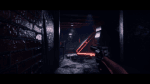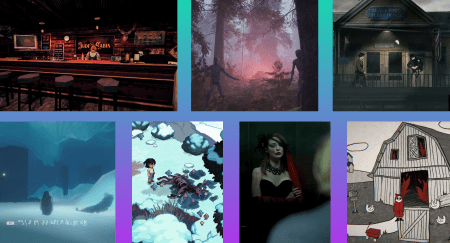

When I first heard about Tenebris Somnia, I was immediately drawn to its unique combination of pixel-graphics gameplay and live-action cinematic cutscenes. I love horror games, and I knew I had to try this strange new title, especially with the game’s heavy use of practical effects. I’m a huge fan of special effects makeup, and it’s always one of the things I pay the most attention to when watching a horror movie. Of course, I don’t get to see this very often in video games, so upon seeing screenshots of Tenebris Somnia’s full-motion video (FMV) segments, as well as some behind-the-scenes material, I started counting down the days until the game’s release.
Directed by Argentine filmmaker Andrés Borghi, Tenebris Somnia was co-developed by Borghi and Saibot Studios and published by New Blood Interactive. The game is described as “a 2D survival horror adventure,” with inspiration drawn from the Silent Hill and Resident Evil franchises, as evident in the way the game presents its entities and body horror. Ultimately, I found this description a far cry from what the game truly is — and the way it pushes the boundaries of horror games as a storytelling medium.


Waking Nightmares
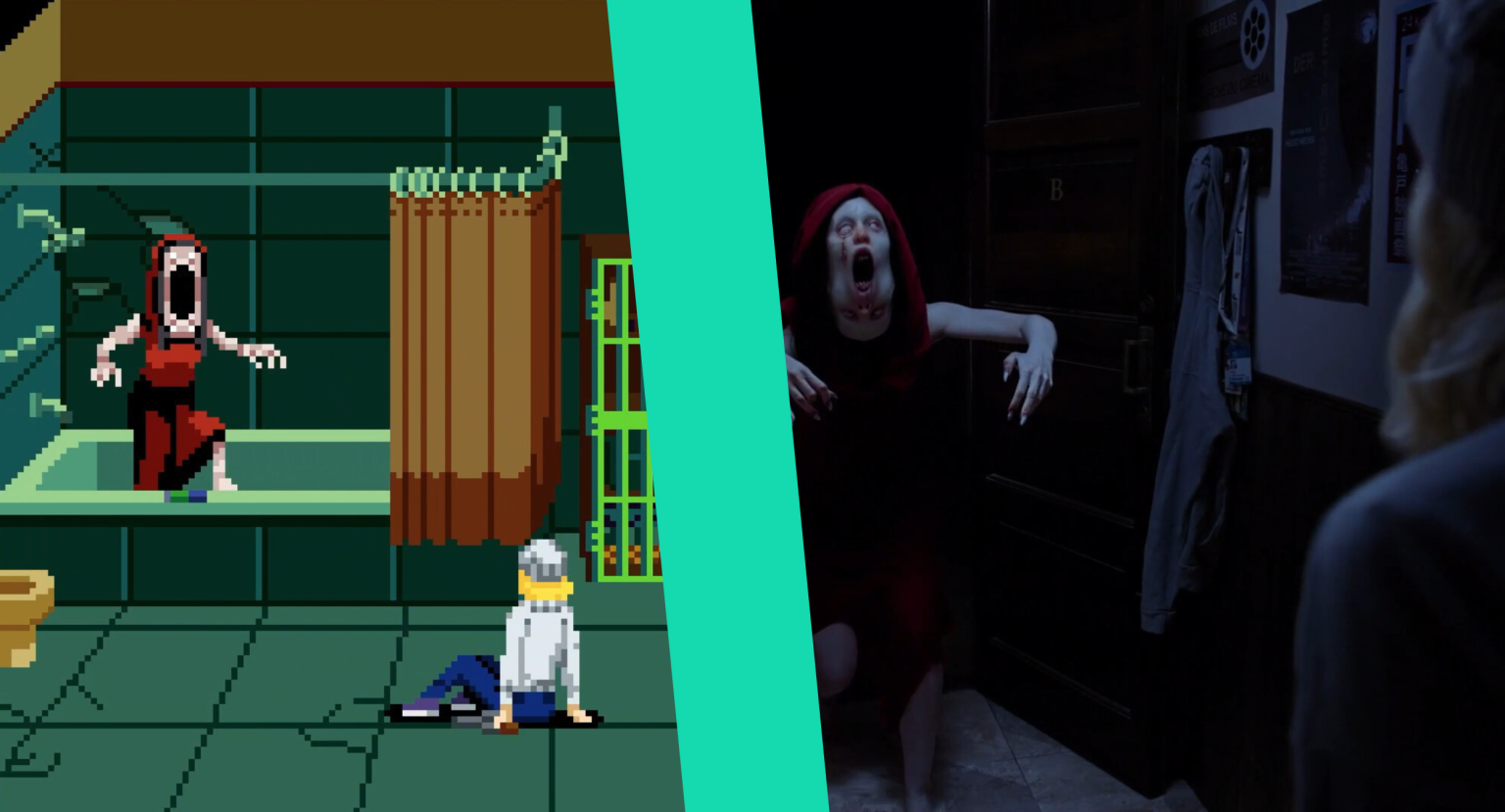
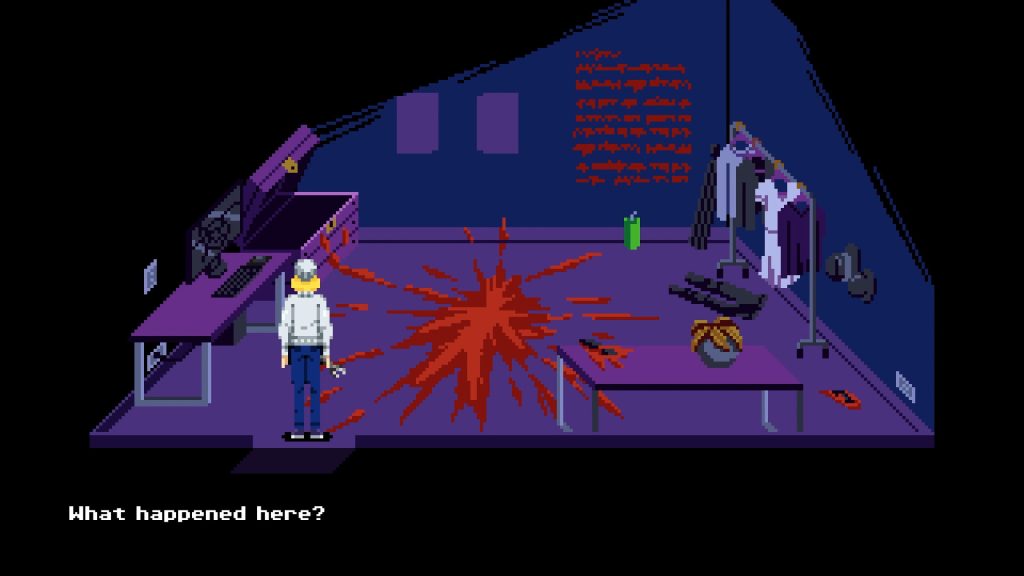
From the get-go, Tenebris Somnia’s defining visual style shapes everything. The FMV sections are filmed in such high visual quality that the switch from its 16-bit-styled graphics is honestly a bit jarring. It’s visually overwhelming, but the change does succeed in heightening the stakes. It’s hard to be genuinely frightened of the pixelated monsters shown in the 2D sections of the game, but once the true form of these creatures is revealed in the live-action sequences, you get a much better idea of these horrifying entities.
The craftsmanship put into the visual effects of these cutscenes is genuinely astounding; I found myself completely unable to tear my eyes away from the screen. It would’ve been easy for the team who worked on the game to take shortcuts making these sections, but because of the clear time, effort, and budget put into them, the world feels visually full.
If you want a game that feels almost like a digital escape room with the way its puzzles are presented, Tenebris Somnia is the game for you.
Tenebris Somnia successfully convinced me that the 2D segments and live-action ones take place in the same setting. It’s hard to convincingly line up two completely different visual styles while still making them feel coherent, but the development team did it perfectly. Not only does the game have spectacular visual storytelling, but nearly all of the objects that you can interact with have some sort of relevance to the puzzles you complete. Everything you see in Tenebris Somnia is important in helping you progress in the game, including the cutscenes themselves.
Put on a Show
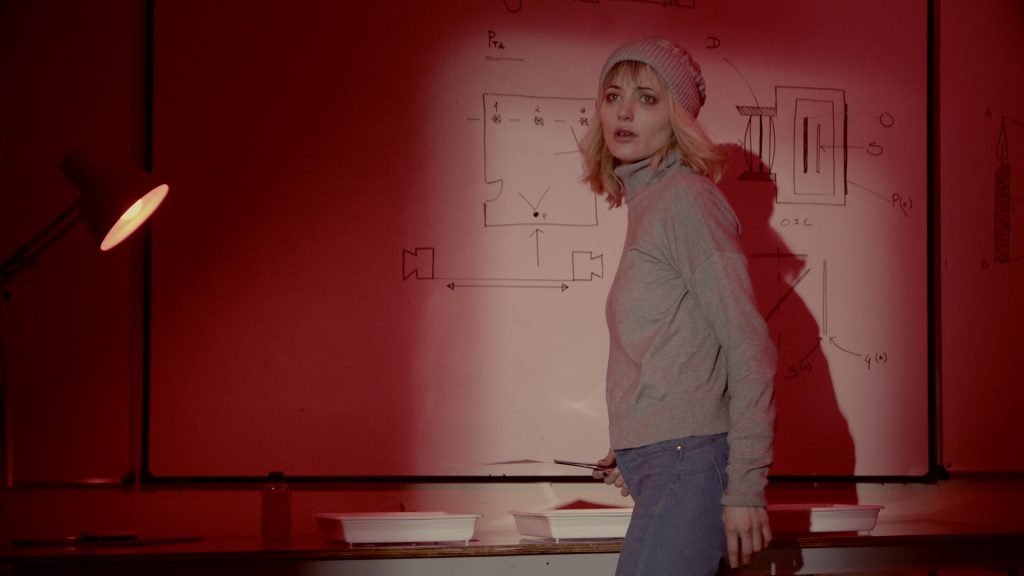
Editor and fellow Punished Backlog writer Amanda Tien described her first look at the game before its release as “cool and deeply horrifying,” which definitely seems to be what publisher New Blood was going for with the game’s promotional materials. Given the marketing push, I went into the game expecting something incredibly scary; however, horror enthusiasts like myself may leave a little deflated and disappointed.
While visually incredible, which undoubtedly ups the fear factor a little, the FMV cutscenes are unfortunately unable to make Tenebris Somnia a genuinely terrifying, white-knuckle experience due to some key creative choices.
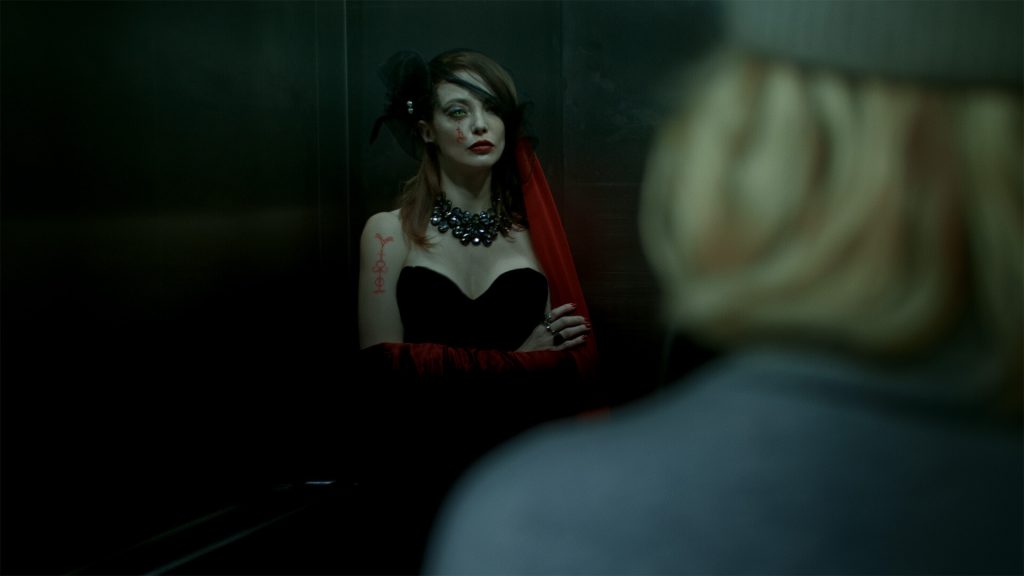
For the most part the acting performances were great, but there were moments where they fell flat. It’s hard to bring characters to life without any spoken lines, but I felt a particular nothingness toward one character: Vitria, initially presented as this intimidatingly gorgeous woman taunting protagonist Julia. By all accounts, Vitria should be the poster child for a spooky character in a gothic-horror flick, but the actress’ performance is simply not convincing. Furthermore, her character design feels out of place, like her costume was thrown together at the last minute with no consideration. The constant Kubrick-stare for the sake of tension gets incredibly tiring after a while.
The music and foley didn’t really do much for me, and I honestly barely noticed them when not actively listening to them for an audio-centric puzzle. The enemies seem to only have one piece of audio each, playing as you re-enter a room you previously left them roaming about in, which loses its fearful impact quickly and instead becomes pretty annoying.
2D Girl in a 2D World
Lore is something Tenebris Somnia bursts at the seams with, so there’s a lot to sink your teeth into. Between the exploration of the Desiderium, where part of the game takes place, and how the Relicta Ghosts throughout the game came to be, it can be an overwhelming amount of information, especially for a game of its nine- to 10-hour length. I do appreciate the story being something other than the standard zombie infection a lot of survival horrors adopt; it keeps the game fresh and interesting rather than feeling like a copy of something we have seen many times before.
At the very start of the game, the main character, a blonde woman named Julia, expresses concern for her ex-boyfriend, Iván, following disturbing nightmares she has suddenly begun experiencing of him being attacked by horrific creatures. The concept of nightmares in horror is admittedly pretty cliche, but by the end of the game they are explained in a way that does feel a little more fascinating. I do wish that the nightmares had been explored a bit more in the early game, just to make the player’s connection to Julia and her life feel a little more real, as on occasion she doesn’t feel like a full person.
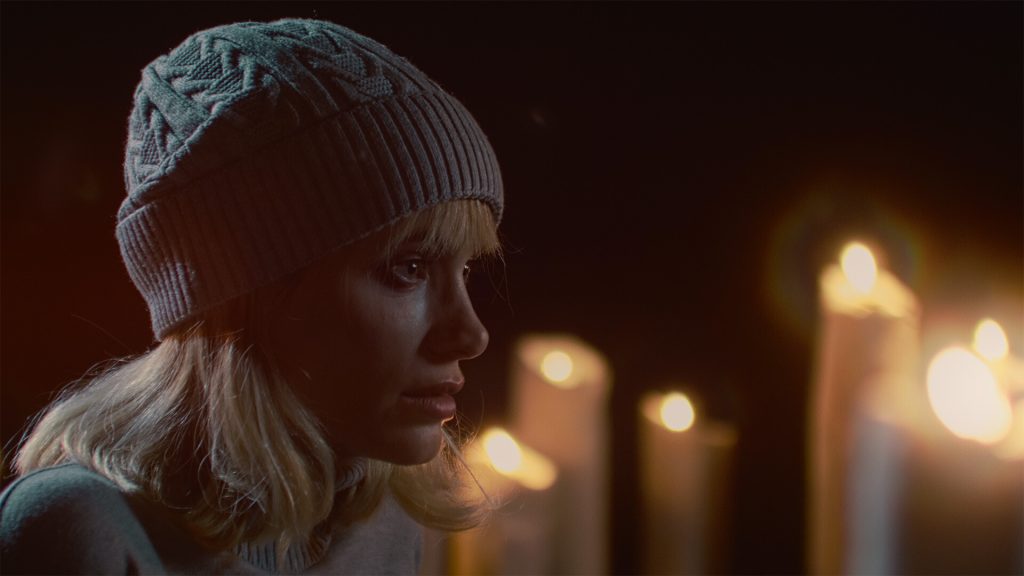
Of course, the story’s focus is Julia and Iván, so their relationship is explored throughout the course of the game, but I found it quite difficult to connect with the characters and their motivations. Julia and Iván are given no characterization beyond the romantic relationship they had together. Despite them both being shown to have vague goals in their careers, they never felt like fully fleshed-out individuals. I initially thought it was a clever way to highlight the codependency issues Iván exhibits, but as the game went on, this felt like a generous read I was choosing to bring to the story that was there. At a certain point as a player, it was hard for me to feel anything toward the characters when I didn’t get much insight into their own motivations and personalities.
It’s worth noting that the story of Tenebris Somnia does cover some sensitive topics in its story around unhealthy relationships and mental health struggles, so consider this before diving in.
Pass the Joystick
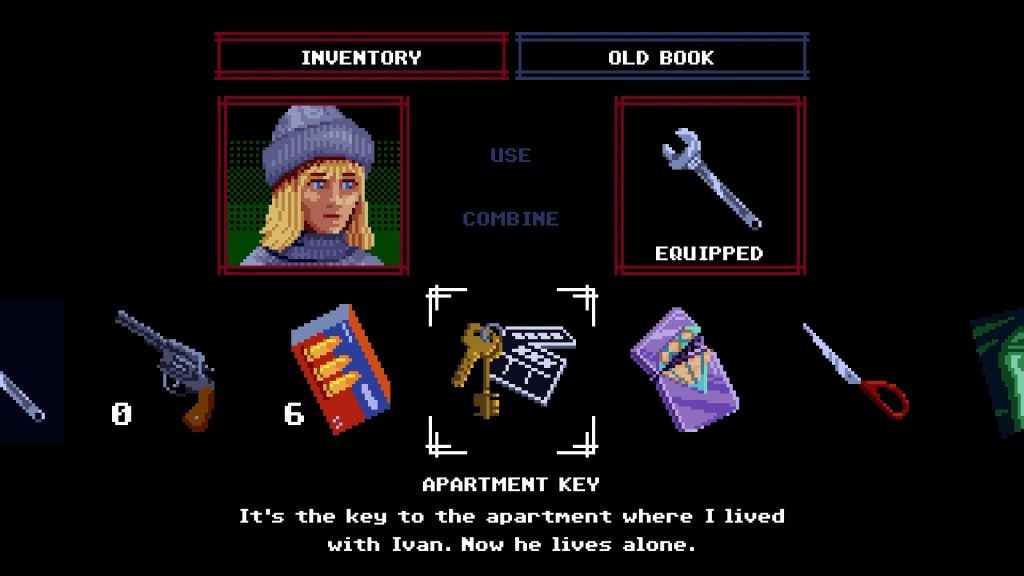
I’ll admit, it took me a second to get into the rhythm of Tenebris Somnia, figuring out the mechanics and how they work. But once I pushed through the initial learning curve, the game became a completely different experience. The inventory layout is nice and makes sense for the style of gameplay. I especially appreciated the ability to reload and swap weapons while the game is paused, especially with how fast-paced some of the combat encounters can be. Unfortunately, those fights are where the game falls a little short.
Each section of Tenebris Somnia builds up to a boss battle. There was one boss fight in particular, the Fumus about halfway through the game, that gave me quite a bit of grief. I don’t want to spoil the details, but I’ll just say that it wasn’t fun. The developers have since released an update, saying they’ve improved the playability of the boss fights by adding healing and combat item drops that have a chance to appear when the player is low on health or ammo. Hopefully this patch improves the experience for others.
Unfortunately, in that same update, a section of the late game seems to have been made significantly more difficult. The segment in question has players running from enemies down a corridor, which sounds simple enough, right? Well, it seems as though the developers thought this sounded a little too easy.
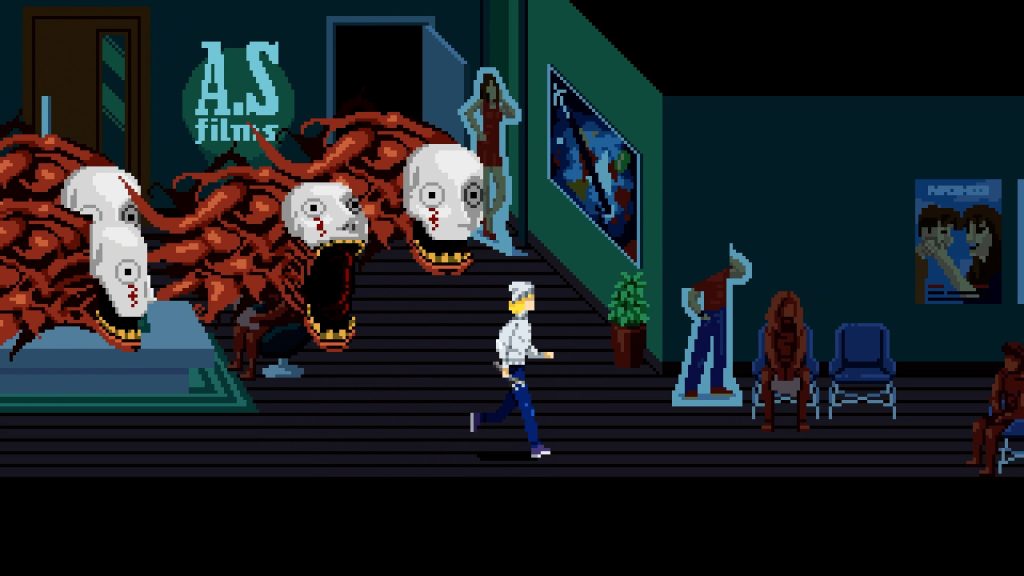
The route the players need to traverse was made more complicated, which admittedly makes a lot of sense, as the original route did seem a bit too simple. But after attempting this updated chase sequence five times, I wanted nothing more than to put down the game and never touch it again. That sounds dramatic, I’ll admit, but after the trouble surrounding the Fumus fight in the game’s 1.0 release, I was nearly ready to give up on Tenebris Somnia entirely.
The game boasts being optimized for controller gameplay, which was great for the entire rest of the game, but in this section specifically, it was as if the controller settings were nowhere near sensitive enough to execute the tight turns needed to escape the enemies chasing you down (with no option to alter keybinds or sensitivity in the game settings, either). The chase lost all of its fear factor as I repeated it over and over again, knowing exactly what would happen.
After nearly an hour of trying and dying in the same spot over and over, I figured it would be worth giving it a go with the trusty keyboard and mouse, despite the game encouraging gameplay with a controller instead. Lo and behold, my first attempt with this fresh setup got me 95% of the way through the corridor before dying, as opposed to the previous 20%. By my second try, I had done it. I will say, the game plays wonderfully on controller for the most part, working well with the pixel graphics and aiding the feeling of Tenebris Somnia being influenced by retro survival games. But for players who have the option, keep a keyboard and mouse on lock just in case, until the developers hopefully find a fix.
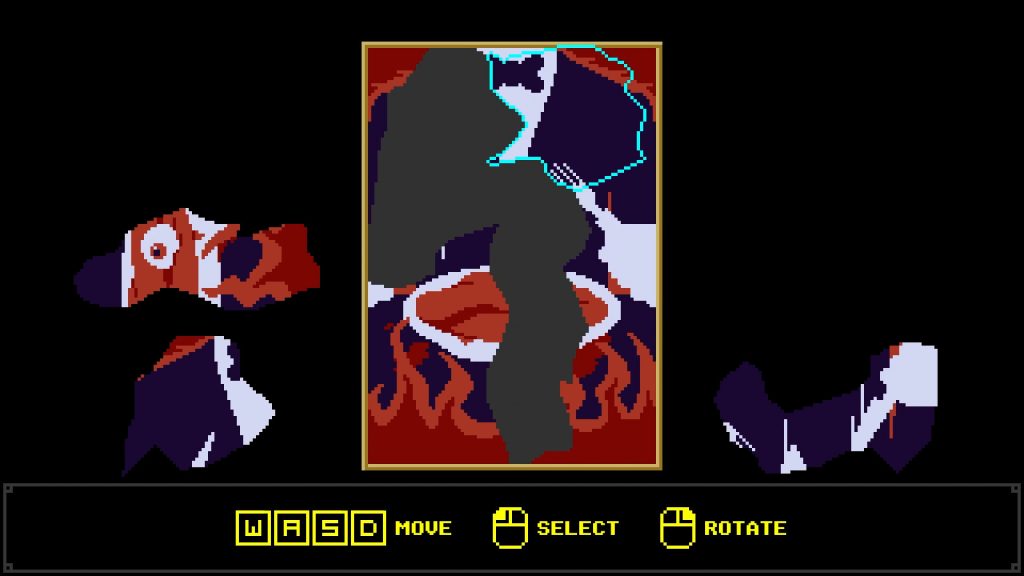
Despite my criticisms of the game’s movement and combat, the excellent puzzle design and variety of puzzles make Tenebris Somnia worth playing for any survival horror fans. The puzzles themselves play very smoothly, with a nice mix of easier segments and those that leave you scratching your chin for a while.
Puzzles in horror games can sometimes feel repetitive or stagnant, but Tenebris Somnia has mastered the art of being a puzzle master.
I genuinely didn’t think it would be possible for Tenebris Somnia to have such a wide range of puzzles; every single one feels different from the last. From making note of visual cues in the cutscenes that help find the puzzle solutions, to figuring out how those seemingly useless objects presented half an hour ago come into play, to cross-referencing colors used in different rooms to solve the next part of the game, there’s no shortage of mental stimulation here. Puzzles in horror games can sometimes feel repetitive or stagnant, but Tenebris Somnia has mastered the art of being a puzzle master.
Final Thoughts
Tenebris Somnia is unusual, and I think that’s a good thing. In promotional materials, the most boasted accolade is that of the award-winning film crew behind the cutscenes. The team did a wonderful job of making the live-action segments feel cinematic and synchronizing them nicely with the actual gameplay sections, but on occasion the other parts of the game can feel neglected as a result. The game advertised was an incredibly scary experience, but I found the fear factor a little underwhelming.
If you want a game that feels almost like a digital escape room with the way its puzzles are presented, Tenebris Somnia is the game for you. But if you’re looking for a genuinely horrifying experience, fumbling to survive while fighting something straight out of a nightmare, maybe give the game a pass or at least temper your expectations.
The game pushes the visual boundaries of horror games, combining two very different styles, which I think is what makes the game so fascinating, and why it had no trouble finding people excited for its release. I’m excited to see (literally) what the creatives behind Tenebris Somnia do next.
Score: 7.3/10
Tenebris Somnia, developed by Andrés Borghi and Saibot Studios and published by New Blood Interactive, released on October 16, 2026, for PC (via Steam and GOG), PlayStation 5, Xbox Series X/S, and Nintendo Switch 1 & 2. MSRP: $24.99. Version reviewed: PC.
Disclaimer: A review code was provided by the publisher.

Scarlet (she/they) is a U.K.-based writer who recently graduated with a bachelor's degree in English and film from Manchester Metropolitan University. She loves a wide variety of games, but has a soft spot for horror games and cozy indie games. She loves achievement hunting and is passionate about queer stories being told in video games. She primarily plays games on PC, but sometimes dabbles in console gaming, usually on the Nintendo Switch with games like Animal Crossing and Mario Kart.