

Nine years after the release of Zachtronics’ alchemy-themed, machine-building, puzzle game Opus Magnum, the company reemerges from the ether and drops a brand new DLC for the game called Opus Magnum: De Re Metallica.
With 17 new puzzles, the DLC took me about 25 hours to complete. Though it’s been nearly a decade, the quality of the game hasn’t dipped at all. If you enjoyed the base game, you are bound to enjoy this fresh content. It delivers more of the same experience with enough new ideas to keep things interesting.
If you need a refresher on the mechanics or are new to the game, check out my previous game diary on Opus Magnum.
Ambition vs. Contentedness
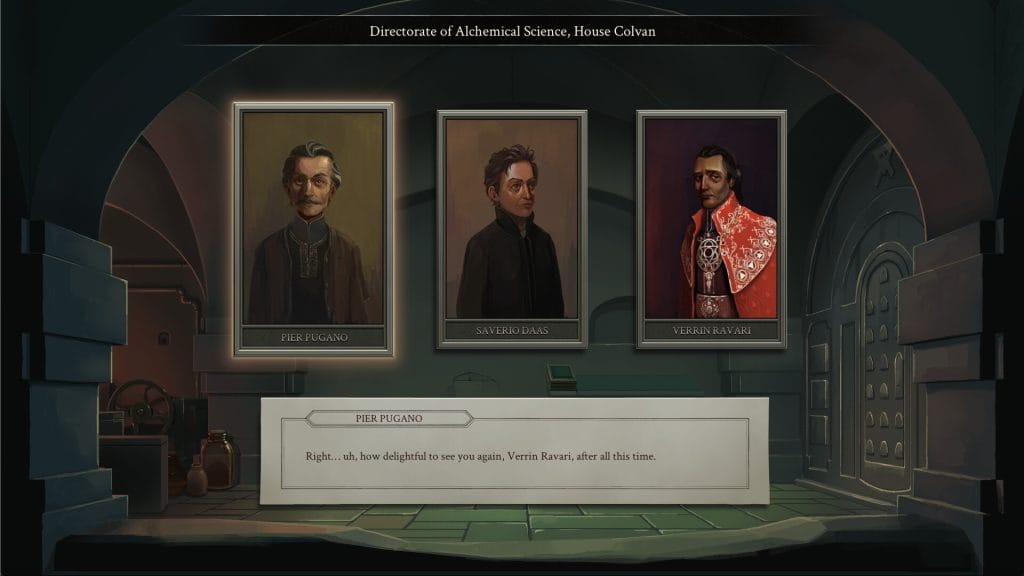
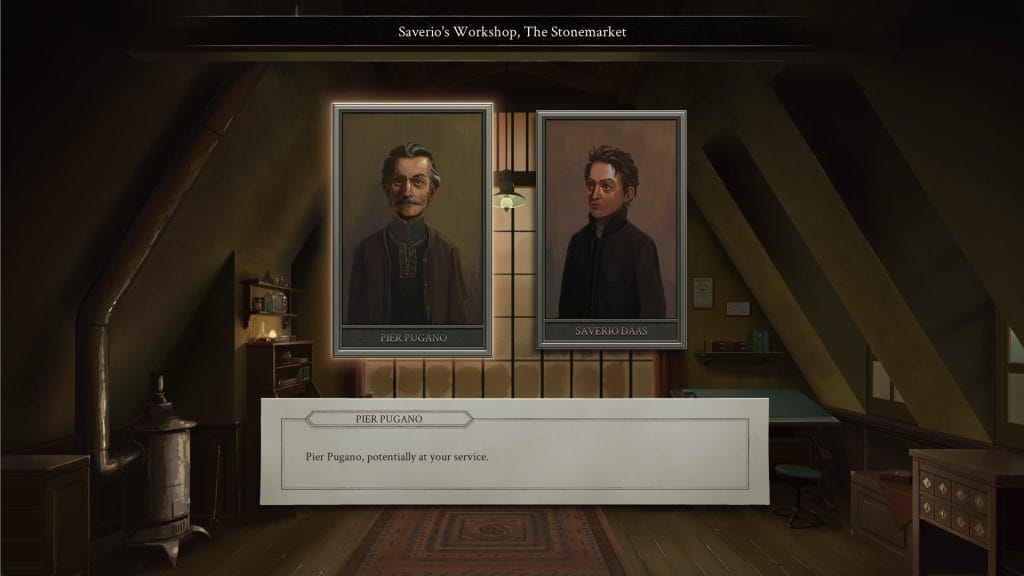
The story, set in the years preceding the events of the base game, follows an alchemist named Saverio Daas and his assistant Pier Pugano. Sevario is a brilliant iconoclast in the alchemical community. He proposes new ideas about the nature of metals and the opportunities they offer, which leaves him ostracized from his colleagues and locked out of employment with the wealthy great houses. Pier demonstrates himself to be nearly as intelligent as Sevario, but far less ambitious. Content to take on new, interesting challenges and watch barges float down the river, Pier’s relatable desire for work-life balance led him to employment in Sevario’s makeshift laboratory.
I was surprised to find myself enjoying the story and characters in the De Re Metallica DLC more than I did in Opus Magnum proper. In the base game, the frequent time skips and barebones storytelling held me at arm’s length. Story sections were sufficiently interesting and provided some context for each new puzzle, but didn’t offer much else. The narrow focus of De Re Metallica, however, allows the characters to shine. I found myself looking forward to each new story section, so I could see Saverio’s passion and recklessness bounce off Pier’s grounded calm.
Escalators Becoming Stairs
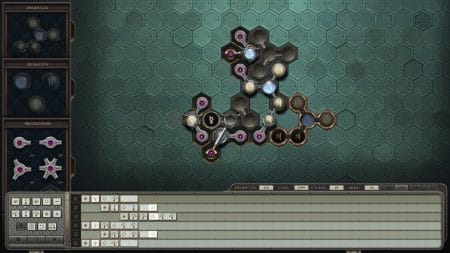
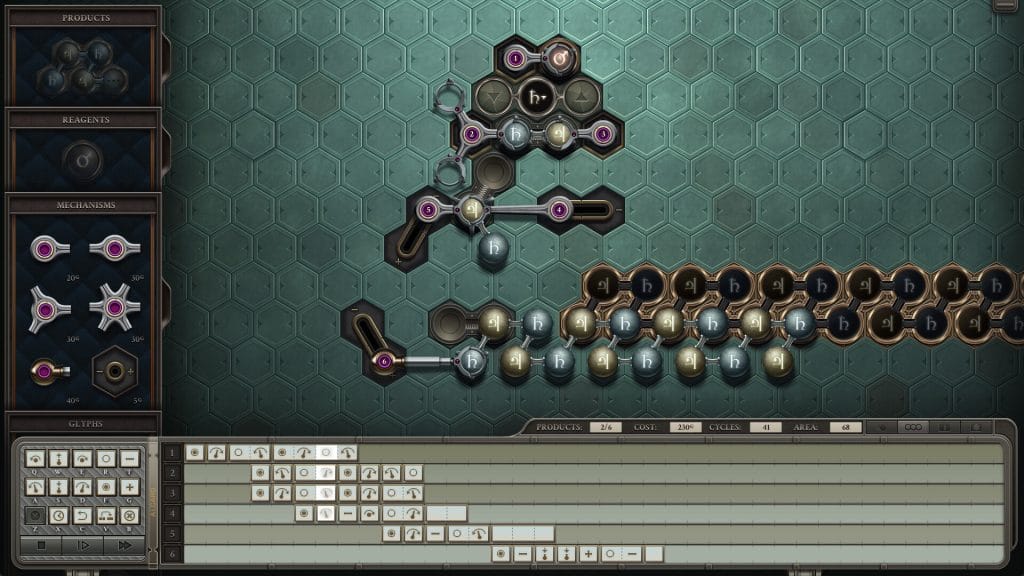
Though there are three new glyphs and 17 new puzzles, there is really one new idea driving the puzzles in De Re Metallica. In the 2017 game, many puzzles revolved around the idea of manipulating metals so they would ascend the chain of transmutation. For example, in one of the first puzzles, you started with lead and created gold. Using the Glyph of Projection, you combined lead with quicksilver to transmute the metal into tin. You continued to add quicksilver, and the marble of metal ascended the hierarchy of metals until it became gold. Originally, the chain of transmutation was an escalator that moved in one direction, with lead at the bottom and gold at the top. Once you had gold, you could attach it to larger compounds, but gold itself was inert.
In the DLC, that has all changed. The escalator has become stairs, which are bidirectional. Metals can not only move up the chain, but the newly introduced Glyph of Rejection forces metals back down that chain by “traumatizing” them. Placing a gold marble on the Glyph of Rejection produces silver and one quicksilver. Then, placing that silver metal on the same Glyph of Rejection creates a copper and an additional quicksilver. This opens up interesting possibilities. With just one marble of gold, a clever alchemist can now create any other metal as well as the quicksilver necessary to transmute another metal up the chain.
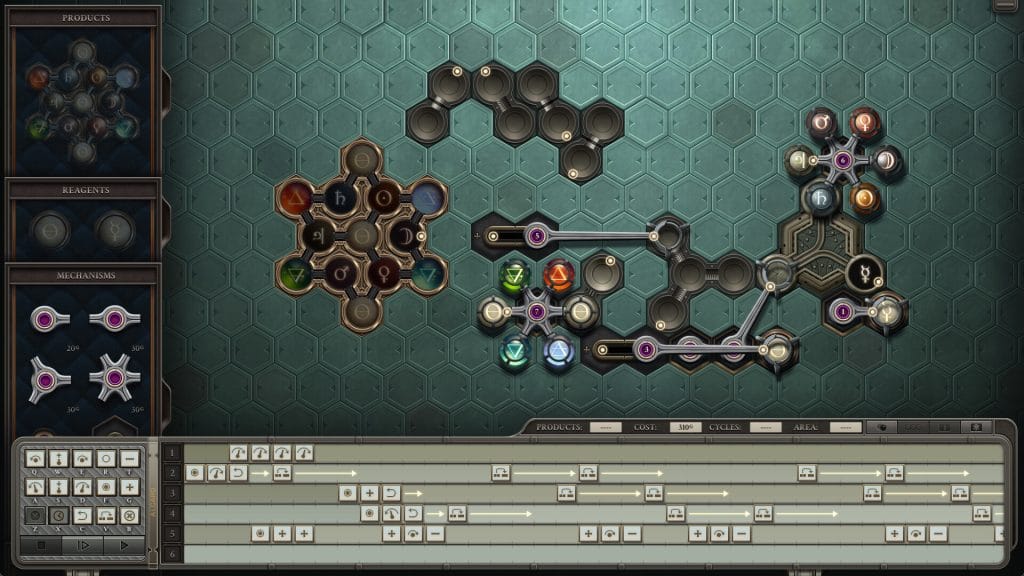
I just want to take a second to appreciate how clever this one seemingly small change to the game is. I was genuinely caught off guard by the number of new possibilities opened by the Glyph of Rejection. Each metal reagent provided to the player is now not only a raw material to be added to a final product. Now, the player must think about the raw materials locked within each metal.
The second chapter of the DLC introduces the Glyph of Division. A metal placed on this glyph is split into two lower metals based on its position in the metal sequence. Gold is the sixth metal. Placing it on the Glyph of Division splits it into two iron, the third metal in the sequence. Since iron is odd, when placed on the Glyph of Division, it divides into one tin (two) and one lead (one). Using the Glyphs of Division, Rejection, and Projection in tandem results in some really cool puzzle solutions, with metals zipping up and down the transmutation chains in insanely satisfying ways.
The final new glyph, introduced in chapter three, is the Glyph of Proliferation. To me, this was the least exciting of the new glyphs. Placing a metal and quicksilver reagent on the glyph doubles the metal. The power of this glyph took away from some of the fun I was having breaking down metals, then building them back up. Act three puzzles were, of course, challenging, but I found the way the first two glyphs fit together in such a satisfying way more enjoyable.
Odds and Ends
The cabinets and confined spaces that characterized the appendix puzzles in the base Opus Magnum game weren’t my favorite. Though they offered an interesting challenge, I missed the openness and freedom the puzzles from the main game offered. Rest assured, the DLC brings back the open workspace. A couple of puzzles are restricted to smaller, confined spaces, but most offer the complete freedom of the open workspace.
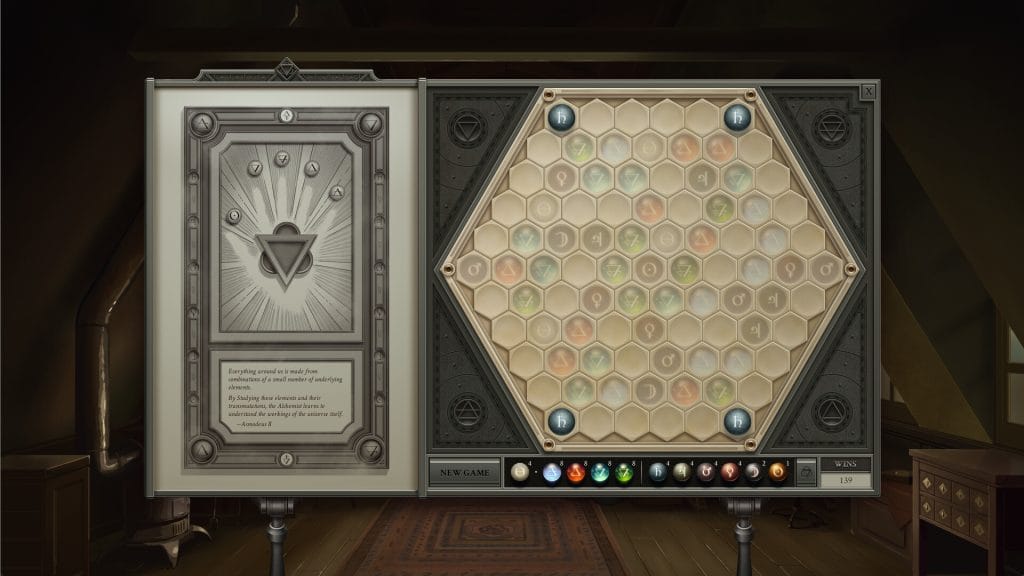
Siegmar’s Garden has returned with some slight modifications. It’s still a nice diversion; however, the changes are so minimal that they barely change the feel of the game. After a few rounds, I was accustomed to the new version and was left wondering, “Why bother?”
The DLC includes three new background songs that play while you solve puzzles: one for each new chapter. They provide nice ambient noise, and are up to the standards of the base game.
Each chapter of the base game featured absolutely gorgeous background art that showed a glimpse into the world of Opus Magnum. It wasn’t much, but it added a bit of flavor that sparked my imagination. This touch did not return in the DLC, and I found myself feeling its absence. In place of the steampunk vistas are two stills of Sevario’s workshop; it’s not horrible, but I just really loved the art in the base game.
Final Thoughts: A Return to Form
I don’t know what made the Zachtronics team wake up one morning and decide to drop a new, surprise DLC to a nearly 10-year-old, phenomenal puzzle game, but I’m sure glad they did. Though I’m mildly disappointed by the modifications to Siegmar’s Garden and the lack of new art, the new content delivers everywhere it counts. The puzzles are just as exciting and challenging as those in the base game, the story and characters mark a step up from what was offered previously, and the Glyphs of Rejection and Division stand out especially as exciting gameplay innovations.
With such a long gap between the release of the original game and Opus Magnum: De Re Metallica, I was anxious to see if the Zachtronics team could recapture the magic of old — especially because the studio was closed by its founder and creator, Zach Barth, in 2022.1 However, I’m happy to say that I found the gameplay just as engaging as it ever was.2
Score: 8.8/10
Opus Magnum: De Re Metallica, developed and published by Zachtronics, released on March 17, 2026, for PC (via Steam) and Nintendo Switch (alongside a Switch port of the original game). MSRP: $12.99. Version reviewed: PC.
Disclaimer: A review code was provided by the developer.
- Though the original Zachtronics team has technically disbanded, many of its developers — including Zach Barth — have continued to work together at a new studio, Coincidence. De Re Metallica was a joint effort between the former Zachtronics team and a group of fans who campaigned for the DLC content and helped with development. ↩︎
- Because my article on 2017’s Opus Magnum was a game diary, I did not structure the piece like a review, nor did I provide a score at the end. If you’re curious what I would have given the base game as a comparison point, it would have been a 9.3. Both are terrific, but the original game gets the nod from me. ↩︎

Matt has loved video games since he played Super Smash Bros. on an Nintendo 64 in the year 2000. Today, the games he plays most often are puzzlers, Souls-likes, and roguelikes, but he really loves any single-player game that's challenging and/or has a great story.
When he's not gaming, Matt's a public policy nerd who will talk your ear off about how well-designed government forms are the lost gateway to utopia.