
As a fan of the big two superhero brands in western pop culture, I feel it’s hard to deny that they’re both in a weird place. The comics are a mixed bag, with DC’s Absolute line being the only major thing giving them the edge among many fans. The Marvel Cinematic Universe, even with many well-received recent projects, no longer commands inevitable box office dominance. James Gunn is attempting to rebuild DC’s cinematic brand from the ground up after a disastrous decade of failure stemming from Man of Steel. And while his Superman film was a success, it’s still a bit early to tell if the franchise will flourish going forward. Even the Marvel and Magic the Gathering collaboration has been met with skepticism by the player base.
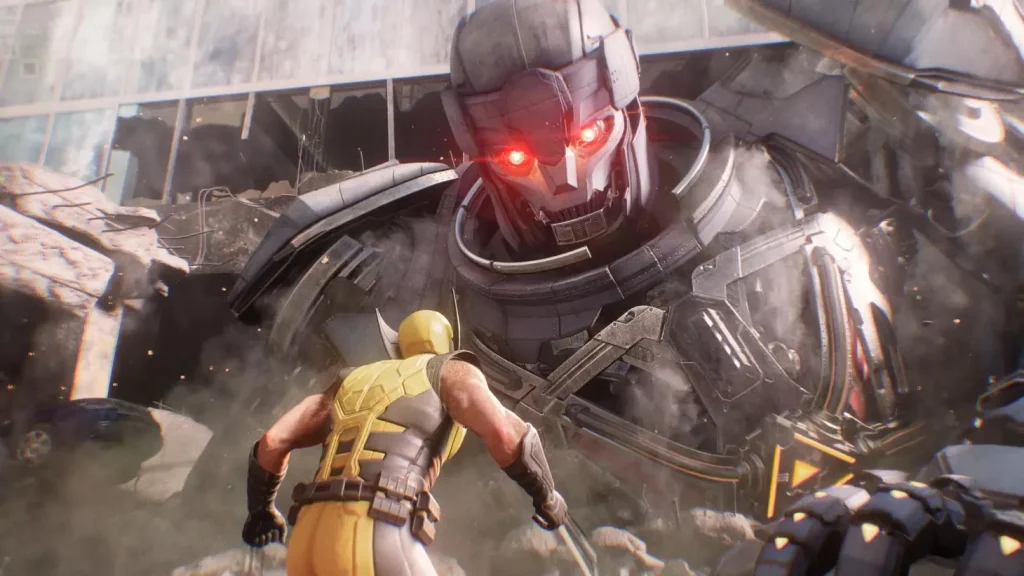
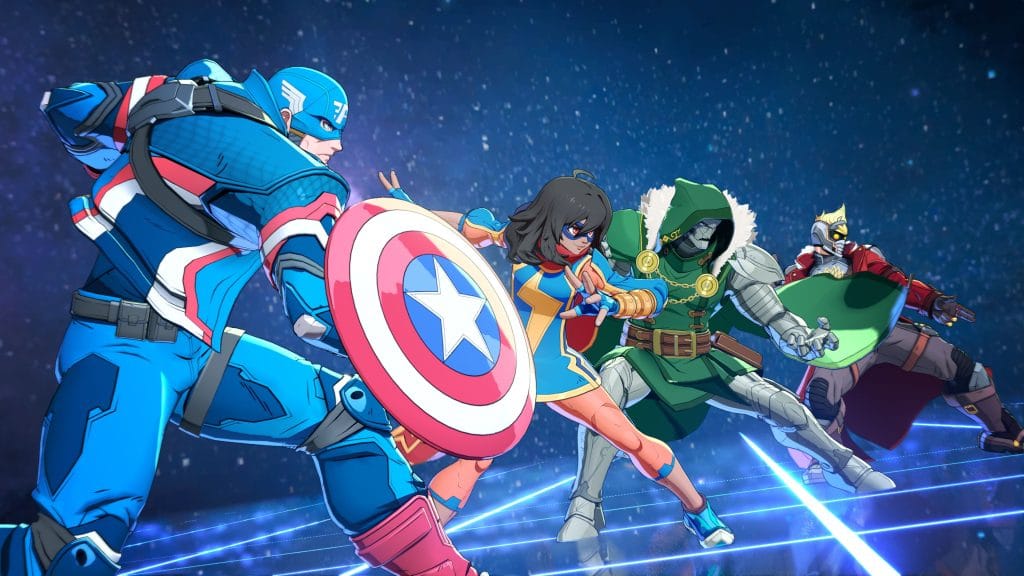
The only medium where there’s genuine, unconditional enthusiasm for superheroes right now seems to be gaming. Marvel’s Wolverine, developed by Insomniac, is one of the most anticipated titles of the year; Marvel Tōkon: Fighting Souls is the talk of the Fighting Game Community; and the recent Lego Batman: Legacy of the Dark Knight has been very warmly received.
But there’s one minor thing that bugs me about these games. It’s not really anything about them as individual products so much as it is the pattern they fall into. To put it bluntly, I’ve kind of done all this before.
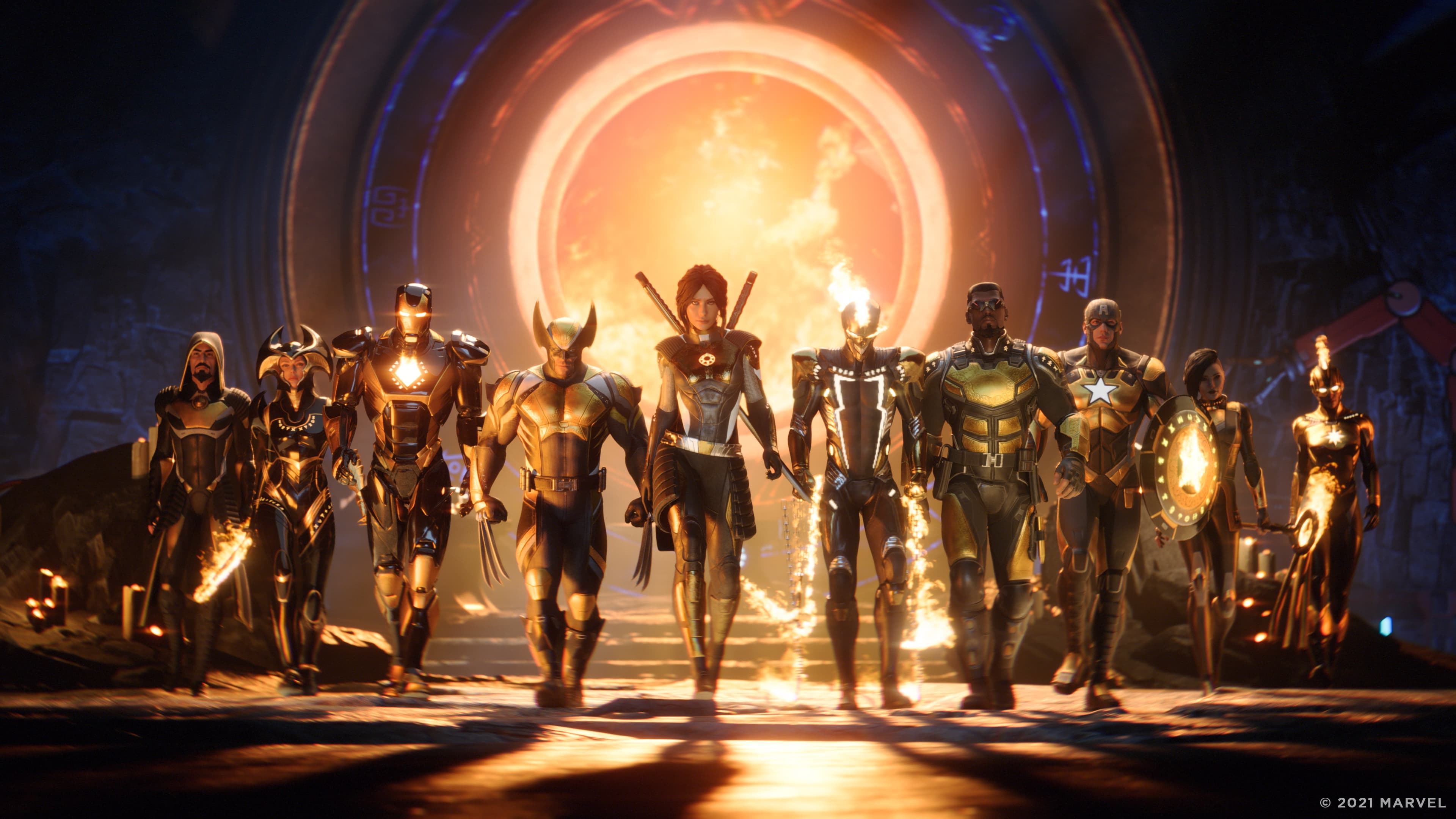
Most major superhero games in recent memory fall into a fairly limited set of genres, usually some kind of third-person action or fighting game. This isn’t an ironclad rule; Marvel’s Midnight Suns was a very enjoyable strategy title, and Marvel’s mobile games occasionally touch on RPG or card battling gameplay. You might even get a first-person outing, though the most recent examples are VR titles like Deadpool VR and Batman: Arkham Shadow.
Superhero stories are, for the most part, action tales wherein the main characters constantly fight supervillains… But the lack of genre variety in superhero video games overall is undeniable.
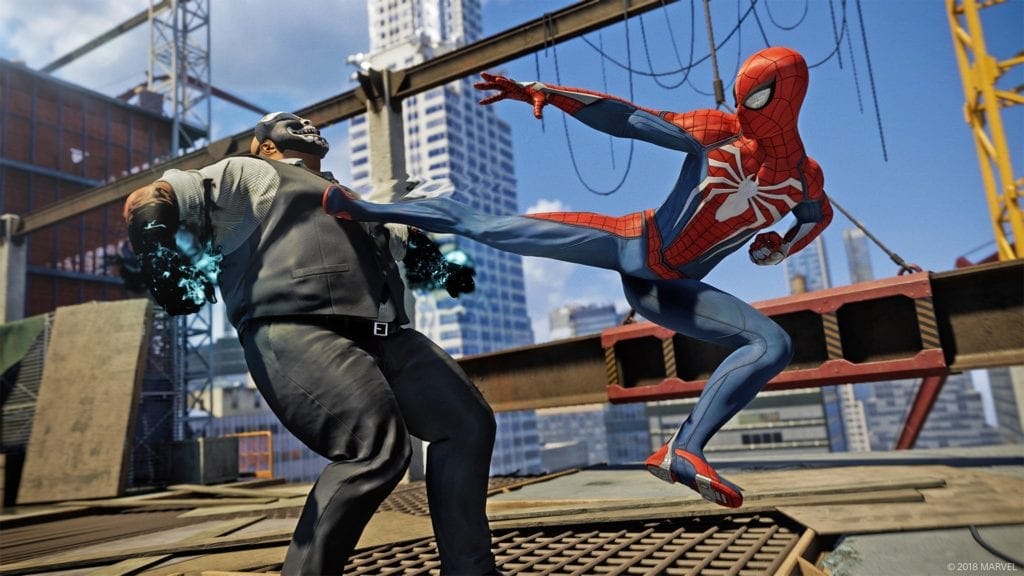
But the most prolific examples, such as Insomniac’s Spider-Man, Marvel Rivals, the Batman: Arkham series, and even more derided examples like The Avengers or Suicide Squad: Kill the Justice League largely fall into the third-person action category.
Fists of Fury
On some level, this is both completely sensible and not that much of an issue. Superhero stories are, for the most part, action tales wherein the main characters constantly fight supervillains. Making them action games is perfectly sensible in that regard and making them third person to keep players aware of their aesthetic identity and brand is also sensible. Who wants to play a Spidey game where you can’t appreciate all of his sick new suits?
Likewise, third-person action, however accurate a descriptor, is a very broad description of many very different kinds of games. No one would mix up Marvel Rivals, Arkham Knight, or Suicide Squad after sitting down and playing them. Even games that share a similar structure or core gameplay mechanics can convey their characters’ unique appeal without redundancy. The Insomniac Spider-Man games and the Arkham games both have broadly similar “punch enemies, beat ‘em with takedowns, use gadgets, stealth on occasion,” gameplay, but the differences in how the characters move both in combat and out, the amount of stealth and how intricate its mechanics are, and several more granular nuances make them obviously distinct.
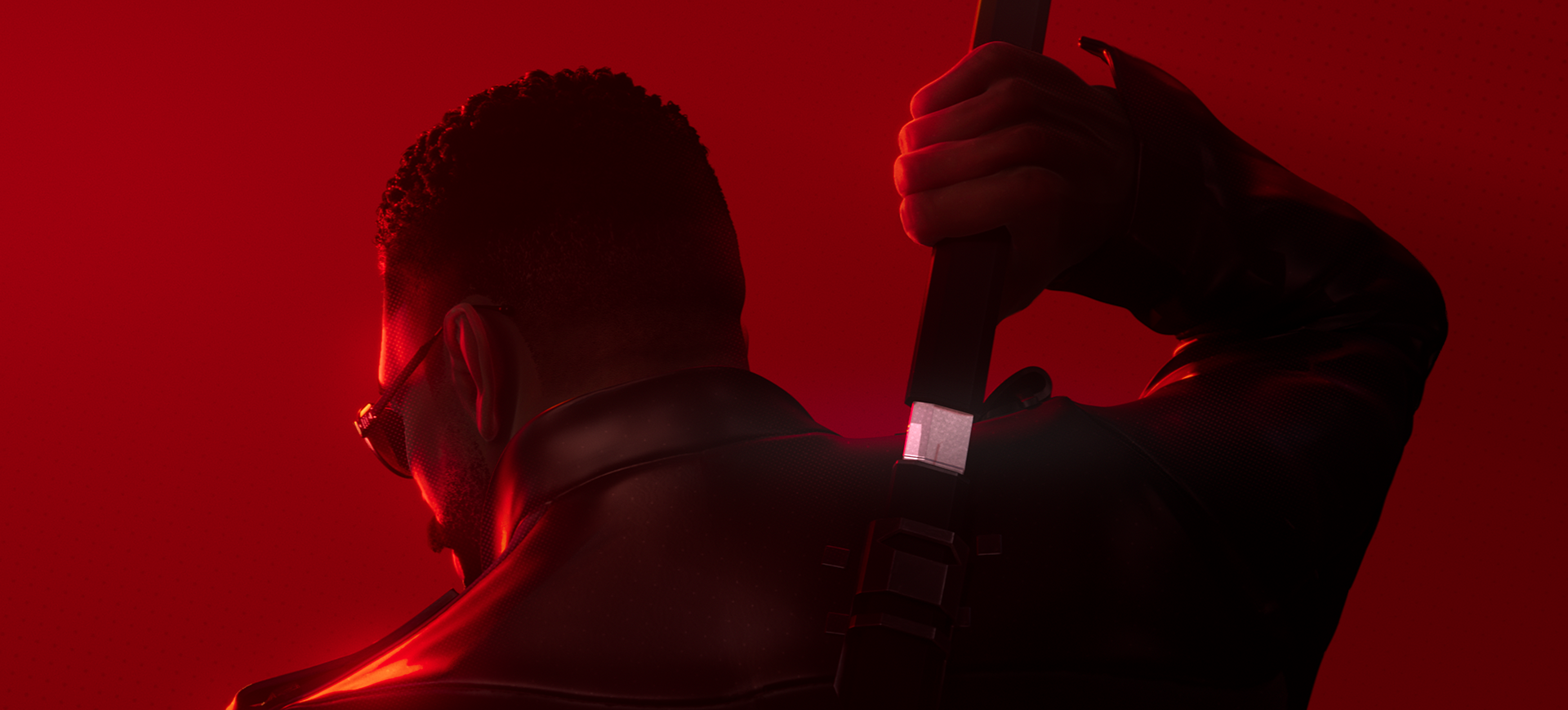
But this still leaves a few problems. First, however distinct these games may be, the lack of variety overall is still undeniable. Upcoming titles like Wolverine, Marvel 1943: The Rise of Hydra, and Arkane Lyon’s Blade — the highest-profile upcoming superhero releases — are all third person action games. The only exception is Tōkon, which still falls under the well-stocked category of superhero fighters.
Second, such a limited range of genres draws focus towards a relatively narrow perception of these brands. No one doubts that Spider-Man and Batman are well-served in action games of this nature. But what about other heroes? What about some of the more obscure members of the Marvel and DC catalogue? Not every superhero is focused on violence as their main method of conflict resolution. This isn’t Kamen Rider.

New Dawn
A good example of an under-utilized superhero character is Norrin Radd, AKA the Silver Surfer, a character I had little interest in before reading Dan Slott and Michael Allred’s exceptional 2014 run. The Surfer’s appeal lies not in how he throws around his incalculable cosmic power, but in his wanderlust and search for belonging in a vast universe. In this light, the 1990 Silver Surfer auto-scrolling shooter game, recently re-released as part of the Marvel Maximum Collection, is an incredibly poor showing of the character’s appeal.
If we wanted to envision something more flavorful, we could look to, say, No Man’s Sky. That game does feature combat, but it emphasizes exploration much more. It wouldn’t make for an exact template, but you wouldn’t even need to replicate the sheer scope of No Man’s Sky to condense the Surfer’s appeal. A single-player narrative adventure where the primary focus is interacting with and solving problems on several alien worlds without just fighting a lot sounds like a perfect fit for the character.
You don’t even need to avoid an action focus so long as it’s contextualized differently. There are plenty of characters who would lend themselves well to, say, a modern turn-based RPG in the vein of Clair Obscur: Expedition 33 or Persona. There are teams of teenage heroes who could recapture Persona’s specific verve, including the Teen Titans or the Champions. I’d even take the New Warriors if someone was willing. But if I got an offer to make a dream game, a Persona-style Runaways RPG would be at the top of my list right next to a Yakuza-style game based on Baccano!

Some characters don’t even call for that much technical ambition. The Question, John Constantine, and even just the Gotham City Police could easily star in a game driven mostly by narrative. If a Telltale-style adventure in the vein of their Batman and Guardians of the Galaxy games is too much, it would be completely reasonable to represent them in a visual novel style.
It isn’t even necessary to limit the discussion to characters. Take Jonathan Hickman’s Secret Wars comic series, an event that saw the Marvel multiverse completely annihilated and reconstructed into a set of warring enclaves united around different themes drawn from across the company’s history. This is prime material for a Civilization-type strategy game where famous world leaders and real-world warfare is substituted with, say, The Thor Corps vs. Marvel 2099 vs Spider Island.
Marvel, DC, and even other comic companies like Image have such a wide variety of characters and stories that it’s easy to let one’s imagination run wild. It’s easy to wonder why they haven’t branched out.
Evolve or Die
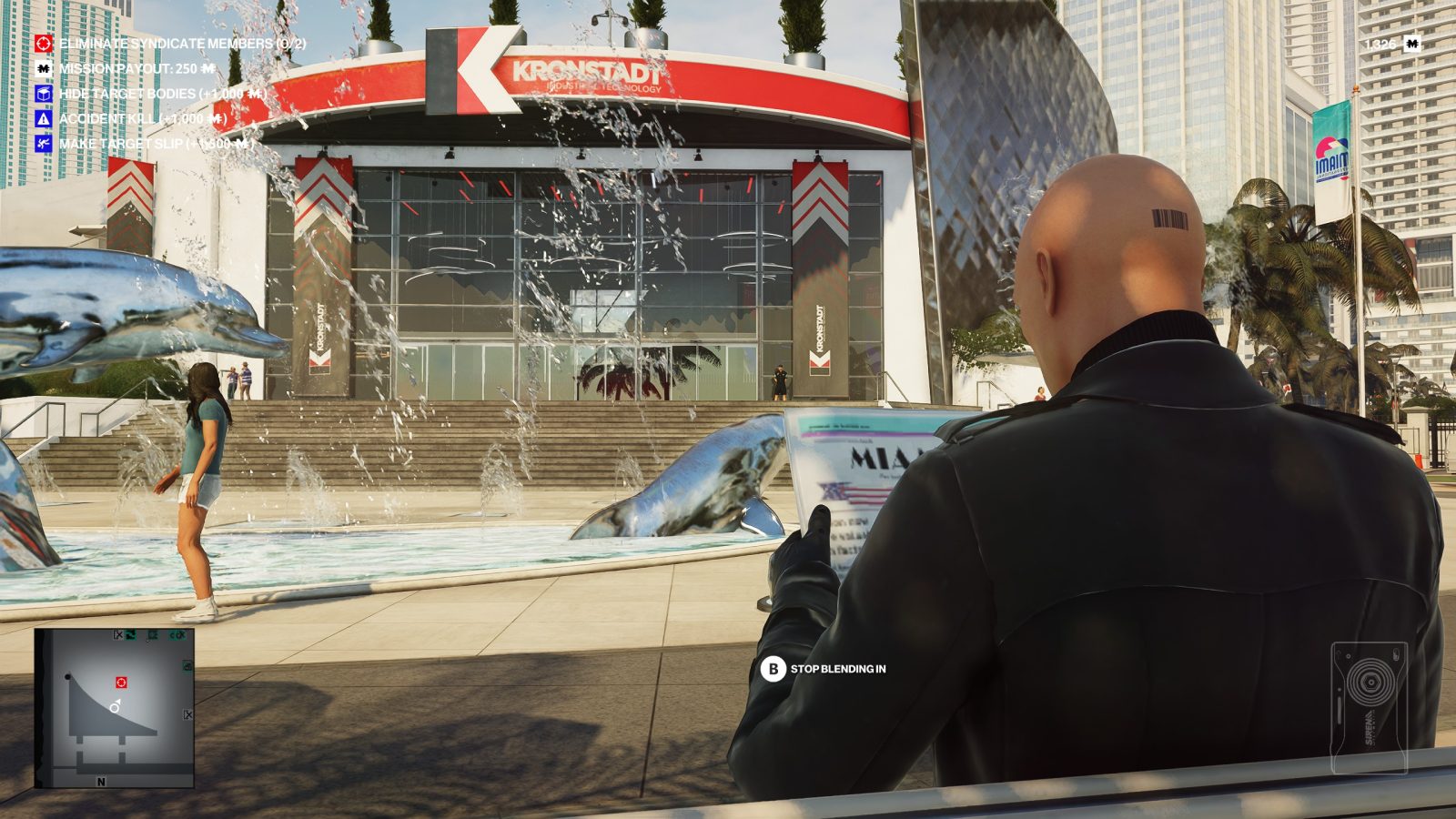
However, it’s also easy to justify their adherence to convention by appealing to scope and risk. Personally, I would love a stealth game starring Ant-Man, the Wasp, or any shrinking hero trying to infiltrate a location or steal an important item. If it had a similar open-endedness as the Hitman: World of Assassination games, it could offer another experience with similar appeal as well as a unique gimmick to set it apart.
It’s a very flavorful and appropriate concept, but it’s also ambitious. Creating an environment that works at both the scale of a normal human and an ant while also maintaining a similar degree of visual fidelity would be a significant technical undertaking even if it were less open-ended than Hitman. And that’s assuming a studio would want to even take a stab at such a concept.
And all of that is before considering whether or not audiences for comic-based games would even want something too outside the mold. Midnight Suns was the last major superhero title to deviate from strict third-person action and it was a sales disappointment. Would dedicated comic fans even want to buy a visual novel? Maybe if Marvel got Charles Soule to write an Ace Attorney style game starring Daredevil and She-Hulk they could attract fans of that series, but would people show up if it were a more traditional visual novel or starred, say, Jessica Jones as the main character? Where’s the cutoff for fan-favorite characters and niche genres?
Where’s the cutoff for fan-favorite characters and niche genres?
The only thing that’s sure is that none of these hypotheticals are a sure bet. But then again, neither is third-person action. Crystal Dynamics’ The Avengers failed to turn a profit, as did Eidos Montreal’s Guardians of the Galaxy. The reasons why any game fails, especially games boasting high-profile brands and prominent marketing, are complex, but the highly inflated budgets of modern triple-A releases are almost certainly a contributing factor.
Small Worlds
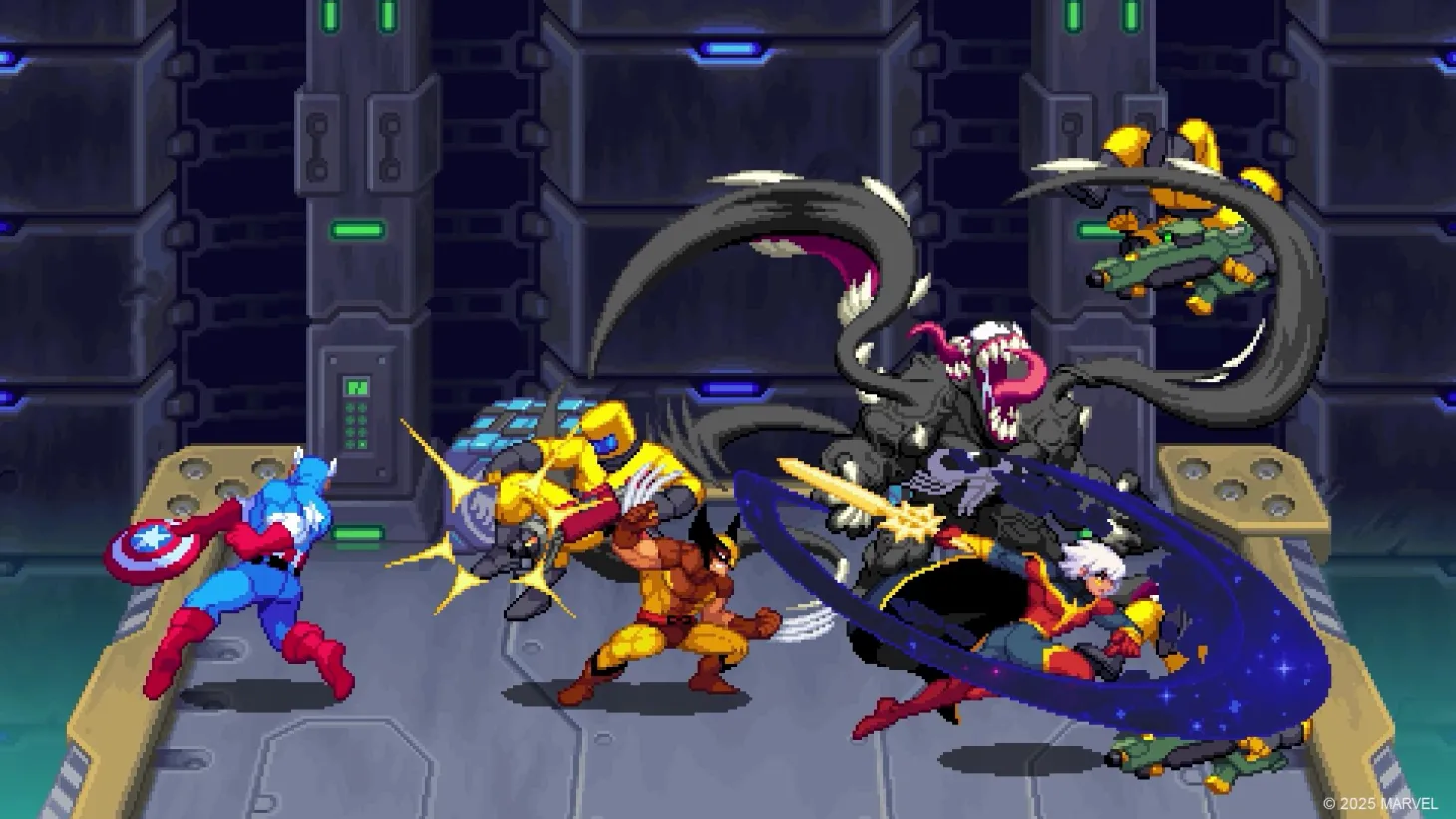
In that light, even if they aren’t the biggest sellers, focusing on more restrained, lower-budget endeavours could pay off. Obsession may have grossed less than half of the DCEU Justice League film, but the former being made on less than one-three-hundredth of the budget of the latter made it a massive success instead of a massive flop. Also, even though all metrics indicate it’s sold less than either Guardians or Avengers, Dotemu’s Marvel Cosmic Invasion seems to be doing fine for much the same reason.
While I would salivate at the prospect of a Runaways game in the style of Persona, realistically all I could hope for is something akin to Earthbound. Of course, Earthbound-inspired games have a good track record, so I’d also be up for that.
Is there a way to effect change and actually get studios to vary their output with these characters more? People will still inevitably buy these third-person action superhero games, and by all accounts they look worth buying. Ultimately, the best we can do is keep on the lookout for more titles like Midnight Suns and not pass them by like that title. Even after its first season pass it felt like that game was still not finished with itself, and the ending left itself open for a sequel that is almost certainly not coming.
Closing Thoughts
I’m content to burn money on skins for Marvel Rivals as long as they actually get around to adding Captain Marvel, Nico Minoru, and Abigail Brand someday, but if that’s all I have to look forward to, it’s undeniably depressing. Part of what endeared me so much to superhero comics when I got into them was their variety. Of course there’s a ton of action, but between that lies trippy, introspective masterpieces like Grant Morrison’s Animal Man or the sweeping, awe-inspiring drama of Kurt Busiek’s Marvels. And those are some of the more well-known examples.
I love action games, I love Insomniac’s Spider-Man games, I’ll probably love Wolverine, and I’ll definitely love Tōkon. But I also love the comics, and I want more of them to get their due even if they don’t fit the mold.

Sean Cabot is a graduate of Framingham State University, where he also wrote articles for the student paper before writing for RPGFan. In addition to gradually whittling down his massive backlog, he enjoys reading comics, playing Magic the Gathering, watching as many movies as possible, and adding to his backlog faster than he can shrink it.