

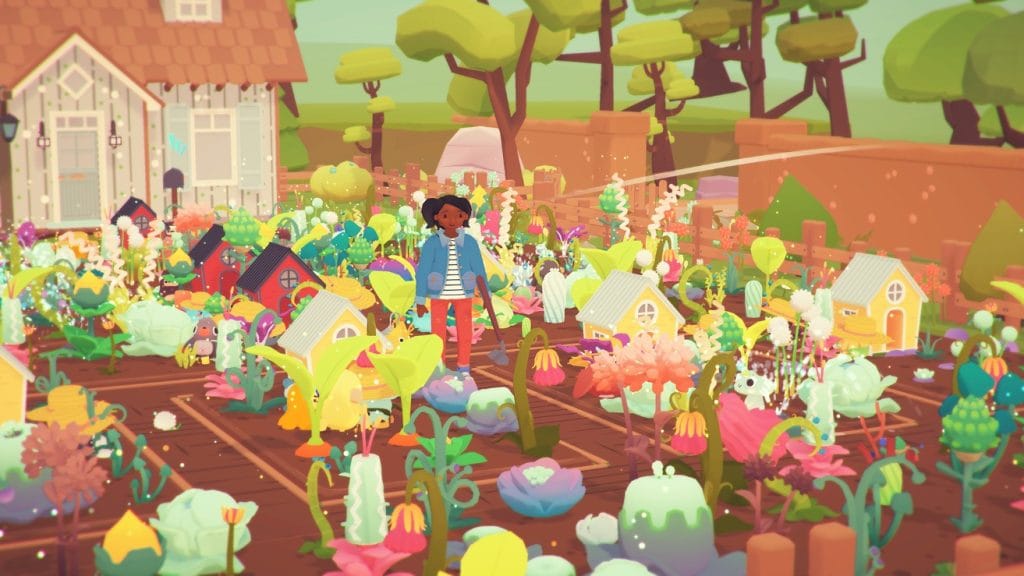

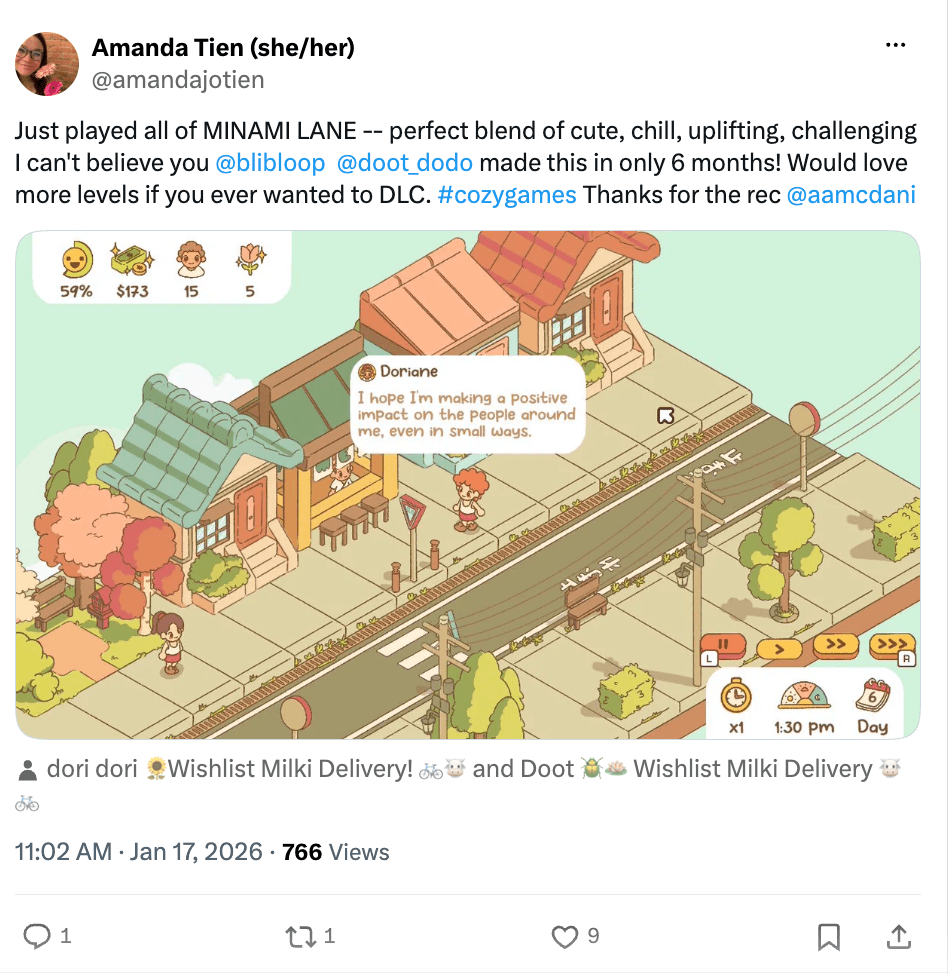
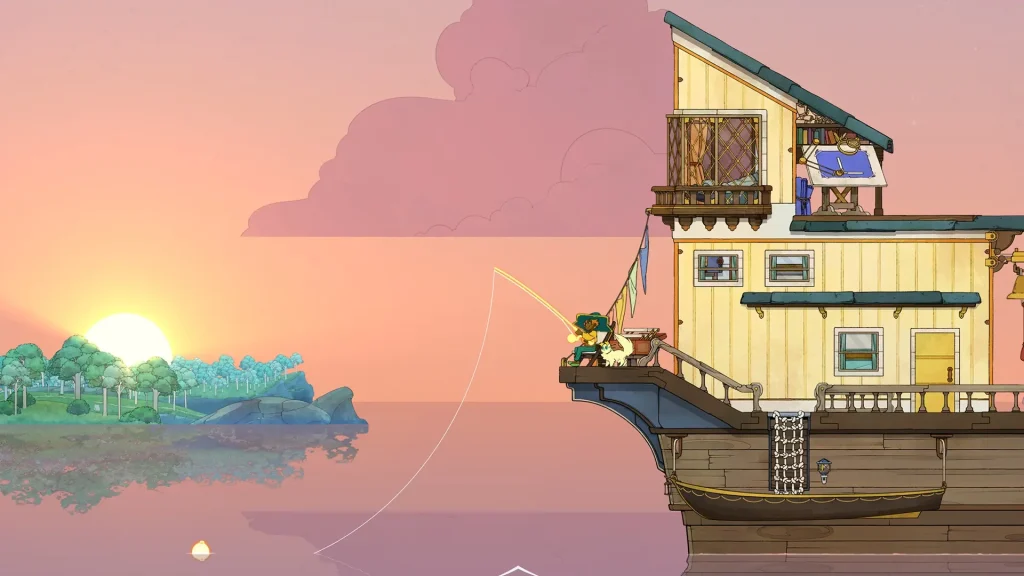
Every few months, I go through a cozy games phase. Sometimes, it’s a replay of a sweet city builder like Minami Lane or a funky farm simulator like Ooblets (pictured above). Other times, I scour the digital storefronts for new games, which is how I found the surprisingly cozy murder mystery, Best Served Cold. I always love my cozy sessions, and when I’m done, just as inevitably, I switch to the opposite — a big, glossy, shooter.
Why do I keep returning to cozy games, even when the genre is over-saturated? Why do millions of gamers play Stardew Valley again and again? As fellow writer Sam Martinelli is fond of asking, why do we like what we like?
I understand why players might seek them out. When video games embrace coziness, they invite players into a gentler version of the world. Cozy games create a reality that dramatically reduces stress without losing joy or delight. In a time where “the real world” is increasingly full of pain and suffering, it makes sense that we seek a more hopeful version in our stories. But why do these games work so well?
Perhaps the answer to why is in the what.
How We Define Cozy Games
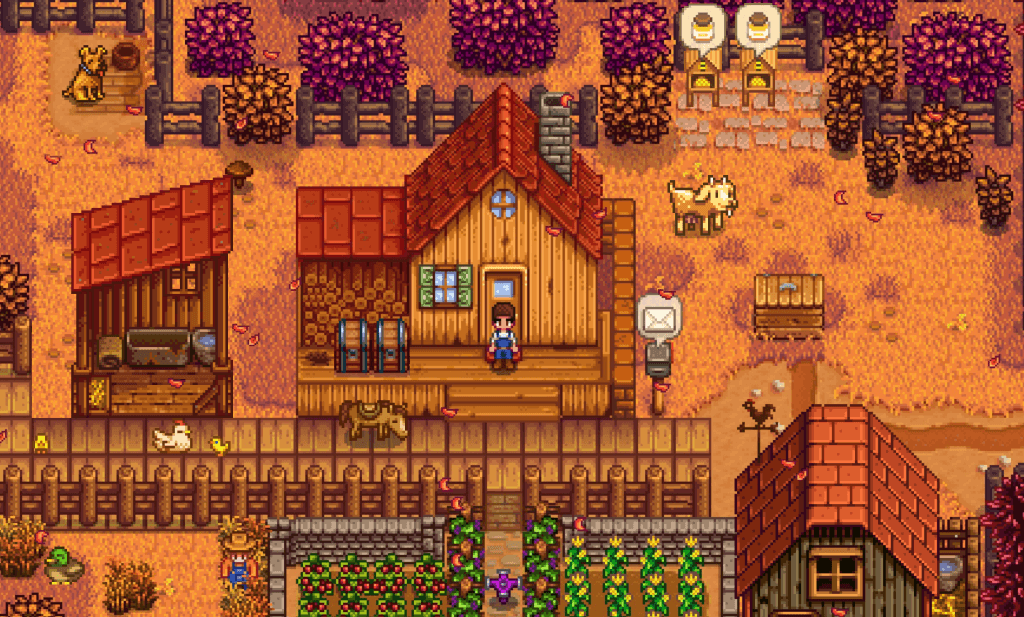
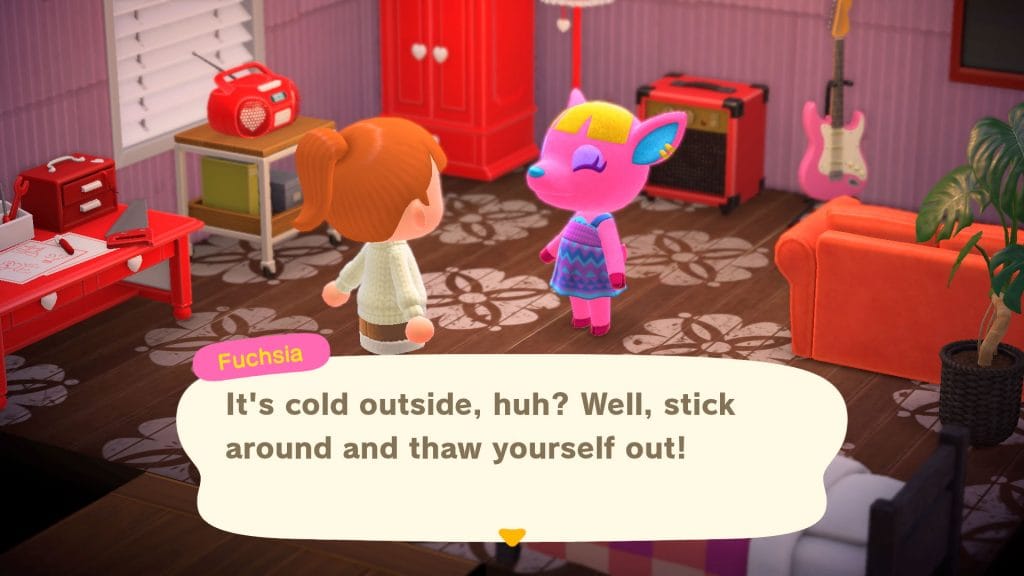
I argue that a game is “cozy” if it allows players to experience the digital world without threat. This can vary by sub-genre. For example, in a cozy murder mystery, the player can’t feel like they are actually about to be murdered; in a farm game, the player must feel they can grow a crop another time; or in a business simulator game, they must assume no risk of bankruptcy. Even if a game has battle mechanics or platforming, if the gameplay is forgiving in terms of movement or time-sensitive actions, it can be cozy, too.
There are more obvious markers, too, though not mandatory. Aesthetically, cozy games are often defined by pastels, warm vistas, and/or silly cartoon characters. Audio-wise, they often don’t have voice-acting — as if the human voice itself might be too reminiscent of reality — but usually have beautiful music, often chill lo-fi. Community is critical for mental health, and so it’s not surprising that these games usually have a sense of kinship built-in.
Interestingly, I find that cozy games seem to exclusively operate at either end of the spectrum, with the few hours of A Short Hike on one end and hundreds in a small business simulator on the other end. I think this is probably tied to gameplay; there’s a sense of comfort in knowing that a game will have a defined end or alternatively that it definitely does not have an end. And perhaps there’s no game more obvious for not-ending than Stardew Valley.
It’s hard to talk about the cozy genre without talking about ConcernedApe’s beloved indie farming simulator. Stardew hit its ten year anniversary this year, and yet Eric Barone is still updating and fans are still playing. Over the past decade, there have been dozens of games that have taken clear inspiration from it — like the addition of magic in Fields of Mistria, the upcoming horror Grave Seasons, and familiar companions in Disney Dreamlight Valley.
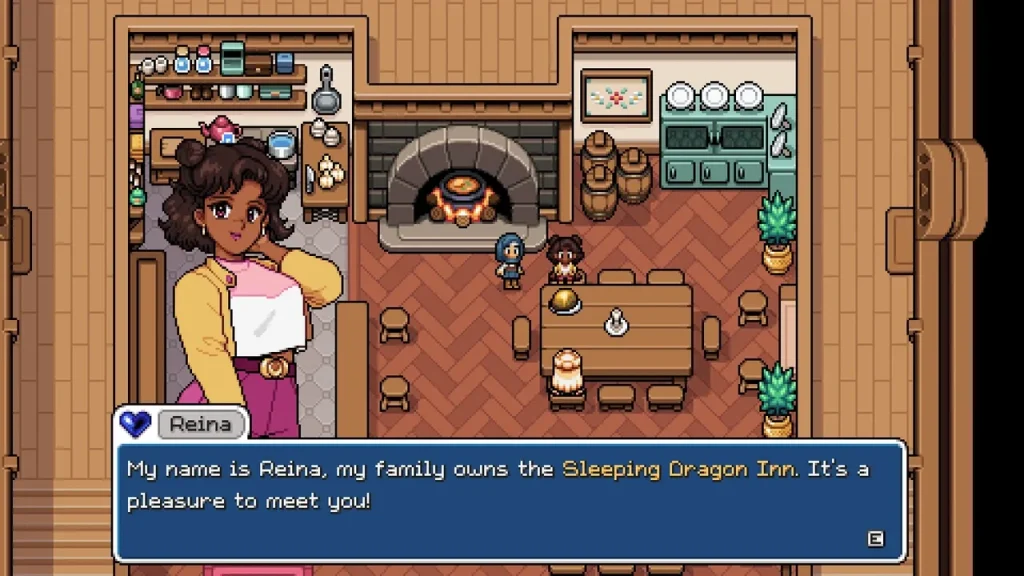
But every piece of art has its roots in something else: Stardew Valley itself was heavily inspired by the Harvest Moon games, which themselves were an homage to the creator’s own rural upbringing.
And again, this brings me back to where I started… Why does it feel so good? Why do we keep hunching over tiny screens in our urban living rooms so we can play in an imaginary country field with cows? Why don’t we, like those games’ protagonists, just move to the country and start a farm? Because, in a cozy game, there is no threat of actual failure.
Too Cozy to Fail
Over the past decade, more and more indie developers have released cozy small business games. Both the cozy genre and the store simulator genre ask for repetition, a sense of calm clocking in and clocking out. But does work still feel like fun? At Mothership, Kevin Cortez answered this question better than I ever could:
In cozy games, the emphasis on labor is uncoupled from necessities like health insurance, social value, shelter, and financial security. Here, the work remains, and it always needs to be done, but the risks of not doing so are removed. Missing rent won’t get you evicted; commutes are joyful and public transit is abundant and affordable; you may have a boss, but they’ll never bulldog you for falling behind. Cozy games don’t erase productivity so much as subdue its output from shareholders.
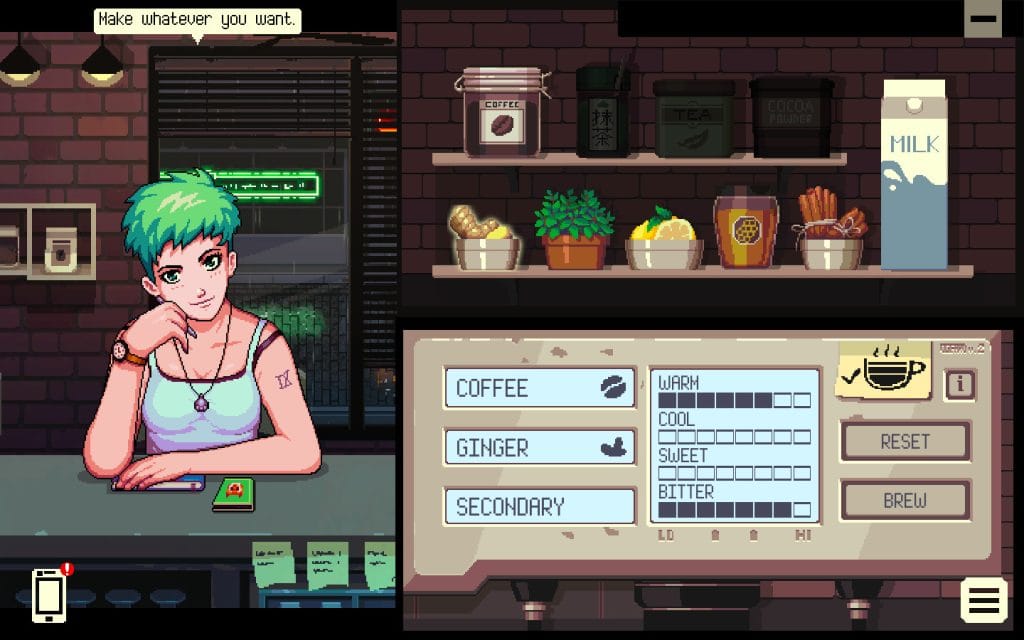
When I was feeling lonely in the pandemic, there was nothing I loved better than slinging pies in Good Pizza, Great Pizza and serving cocktails in VA-11 HALL-A: Cyberpunk Bartender Action. But in those games, no customer ever yelled at me, wrote a mean review, or spilled drinks all over my clothes. Snail mail-inspired games like Lake and Mail Time combine both friendship and working without the physical pain of walking up and down streets for hours.
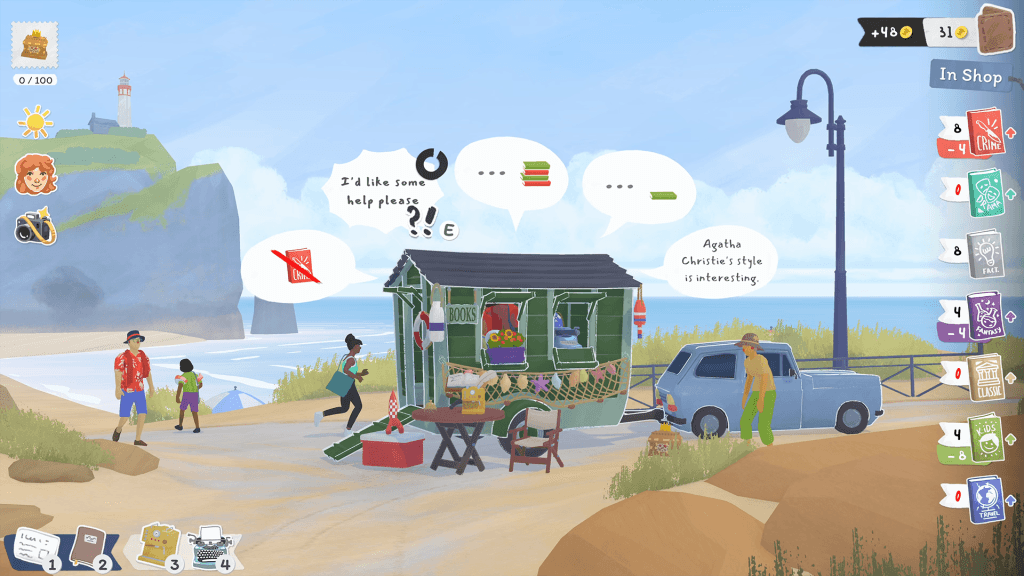
Beyond better shift work, there’s also optimism around opening a brick-and-mortar. I don’t worry about the mortgage for my independent coffee shop in Coffee Talk, despite its prime real estate location in Seattle. My titular Tiny Bookshop or record store in Wax Heads will never go out of business. Farm-simulator games such as Stardew allow me the fantasy of escaping to farm life without worrying about crop overhead or stepping in cow dung or getting into sheep industry drama (which does exist).
Stardew helped set a base standard for the modern era of retro-style graphics, non-animated character portraits, and homemade music; as a result, the technical barrier of entry for cozy games is lower than it might be for other genres. (One need only look at the excellence of Hollow Knight to want to give up on creating your own metroidvania entirely.) I wonder if, in some ways, this also represents developers’ own dreams for a space without failure in a famously risky industry.
In many cozy games, there’s the feeling that success is not only achievable, but quietly guaranteed.
Cozy Work is Good Work
Because video games as a medium require interactivity, cozy games still empower players to feel active but in a safe space. When I play them, I am mentally stimulated enough to have fun without being so stimulated that I’m now stressed out. Many people, myself included, find a sense of soothing purpose in quiet productivity.
A few months ago at Mothership, Zoë Hannah wrote, “So what if I lift my to-do list from a video game?” She reflected on how cozy interior decorating games like Hozy distill household and daily chores into manageable checklists, inspiring her to progress on projects in her real-life home.
“Lately, organizational tasks feel a little less daunting to me, and they also feel less like a moral imperative and more like an expression of the pride I feel for my space. … Today, I’m just going to keep my desk tidy, clean the kitchen after dinner, and enjoy that nice, satisfying chime I hear in my head each time I finish a chore.”
When I’ve gone through depressive episodes, I’ve done the same thing — I pretend I am just a little video game character, and what would I do to fulfill my self-care tasks? Drink water. Check. Go for a walk. Check. Take a deep breath. Check. Quest complete! (This one-pager helps quite a bit.)
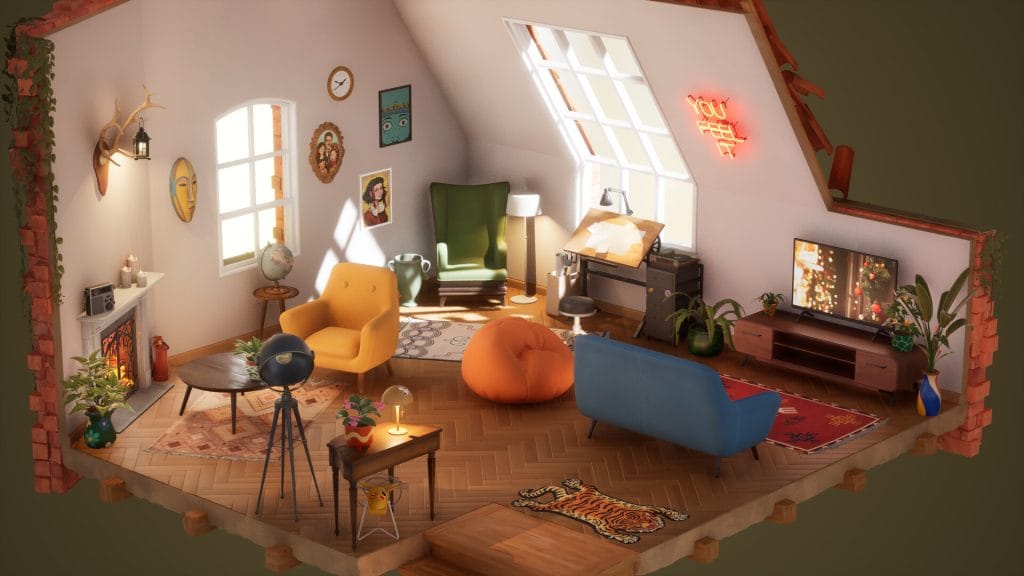
Everyday life feels more colorful in a game like The Sims or Paralives, allowing players to explore a dream version of a living room or career. Similarly, games like Unpacking and A Little to the Left make mundane household chores feel not only possible, but joyful. Who among us wouldn’t want doing the laundry or the dishes to feel fun? To hear a bright chime or get a gold star? At Unwinnable, Emma Kostopolus wrote in a lovely piece on the intersection between cozy and horror:
“Fundamentally, we all want the same thing: to be able to log on and drop ourselves into an experience that we understand, and therefore maybe control, better than we can the circumstances we find ourselves in during our time in realspace. This also explains, I think, why so many people get so deeply invested in these genres – my mother was diagnosed about a year ago with progressive dementia, and as she loses her ability to communicate and participate in what happens around her, she’s fallen further into the screen of her Switch, where her Animal Crossing village is still something she understands. The comfort of the familiar, the known, and the predictable has a strong pull on us all. Variety may be the spice of life, but these spaces of known-ness are valuable, too, as places for us to ground and stabilize in a world where we can control our circumstances with less and less frequency.”
The magic is in the familiarity. The more we know a game, the more we feel held by it. Recently during a podcast conversation, fellow writer Kei Isobe said to me, “Coziness is familiarity, so if a game is familiar, e.g. Elden Ring for me, then it’s cozy.”
Perhaps, then, cozy is a mindset.
I argue that a game is “cozy” if it allows players to experience the digital world without threat.
In a Cozy State of Mind
Cozy games are frequently pigeonholed (often with derision) as “girl games,” which is too bad for a variety of reasons. I think it’s safe to say that players of all gender identities could do with more comfort, love, and gentleness in their lives. Luckily, there are a few male writers here who are confident bucking those gender-based societal expectations.
One of my favorite odes to a cozy game comes from fellow writer Sam Martinelli. Even though I had never before played a game in the series, I absolutely loved (and still think about) his write-up of why Animal Crossing: New Horizons was his Game of the Year in 2020:
“Animal Crossing: New Horizons is a fake, virtual world where nothing bad happens and everyone’s just happy to be there. While it may seem thematically simplistic and childish, its emphasis on how to look out for your community and yourself really struck a chord with me, and continues to do so even nine months after release. There’s no princess to save or apocalypse to avert; sometimes, the best thing you can do to show you care is just give your neighbor a t-shirt or donate to a local museum. New Horizons isn’t just the game I enjoyed most in 2020; it’s the game that frequently reminded me to care about myself and the people around me.”
Cozy video games are for people who want to play a cozy video game. Yes, cozy games can be for women, including my mom and/or girls who have never played games before. But cozy games can also be for anyone, especially if we are expansive in how we might define them.
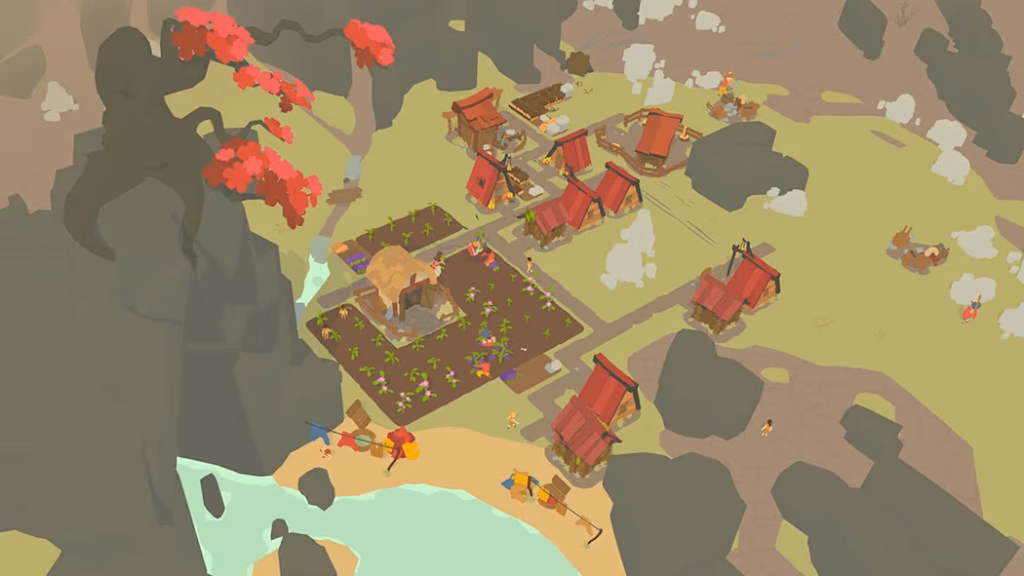
Gary Wilson shared a beautiful articulation of how games can be “emotional safety tools.” In our episode of the podcast on Replays, we discussed how knowing what’s coming — even in a big violent game — makes a game relaxing. I keep playing civilization management games on my phone like Outlanders and Kingdom Two Crowns that allow me to feel a semblance of control in my otherwise hectic life; one of my best guy friends plays Crusader Kings III for the same reason. Donovan Harrell recently wrote about how “broslop” brought him comfort and joy as he shot giant fish into the air with his brothers.
Every cozy game is different, just like every metroidvania or RPG is different. Finding what speaks to you is part of the magic of finding your very own cozy.
A Whole New Cozy World
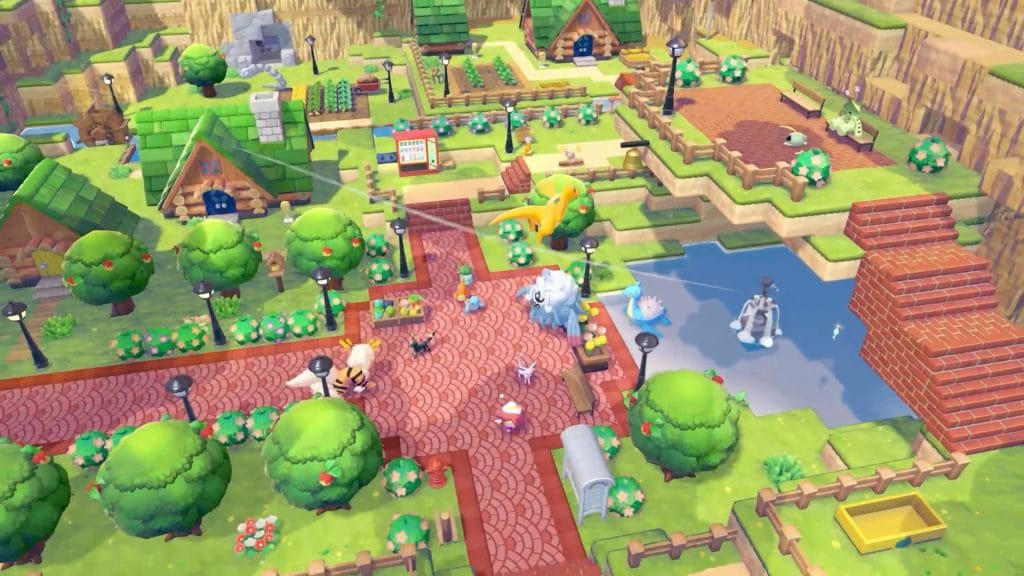
While there might be some AI-slop and crappy Stardew-look-alikes, we’re also getting better cozy games than ever before. Developers are honoring what’s come before in the genre and elevating it. Last year, I said that Tiny Bookshop had perfected the cozy genre. Pokémon Pokopia took the world by storm this year. Just a few weeks ago, Tukoni: Forest Keepers brought a Ukrainian children’s book to life following a tea-making forest guardian. But the future of cozy games aren’t just store simulators and farms.
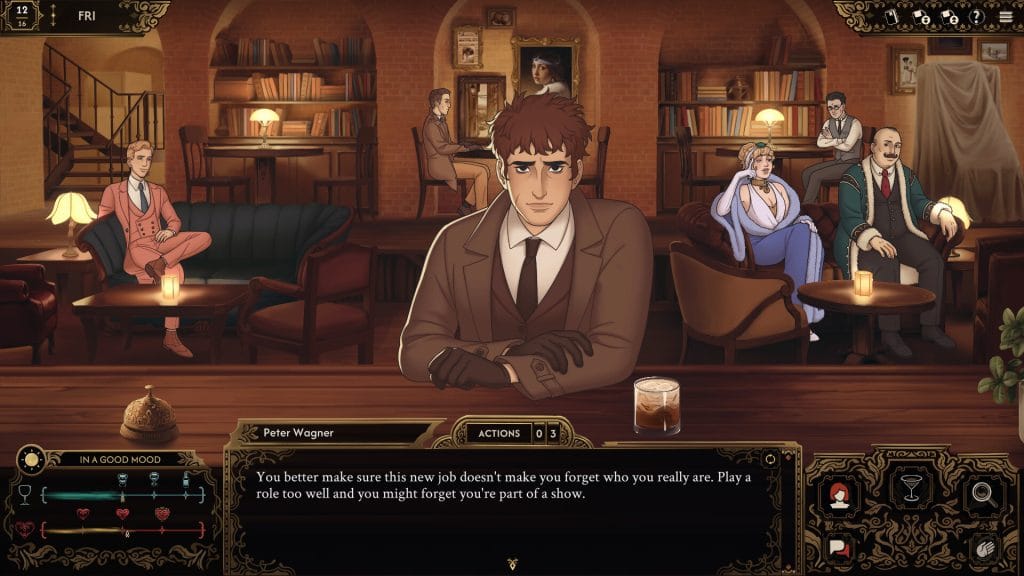
Some developers are adding a bit of edge, like the loss-oriented Spiritfarer and existential Wanderstop or the witchy, M-rated The Cosmic Wheel Sisterhood and spooky Strange Antiquities. One of my favorite games of last year, Best Served Cold, was a 1920s inspired murder mystery that was decidedly cozy even though I was making cocktails for a killer! This year, Big Walk has been lauded as one of the most exciting multiplayer games, and while it may check some of the classic “cozy” expectations, it challenges players to think outside of the box with its strange and beautiful cooperative puzzles.
Cozy has gone from niche to mainstream. When I originally wrote a much shorter version of this essay in 2023, I pointed out how NPR did a segment on cozy gaming, cementing awareness of the genre in the public sphere. That same year, a husband-and-wife duo launched a lovely site dedicated entirely to cozy gaming. As more cozy gamers join the hobby and buy games, more developers take on cozy games. We’re also seeing more cozy sections and side quests in otherwise big, violent games.
One of the recent benefits to the space is a flood of research conducted during and post-pandemic with thousands of new gamers. These studies back up what we as gamers instinctively know to be true. One study found “spending just one extra hour each day playing video games was associated with an increase in mental health and life satisfaction.”
Another found that cozy games in particular increased “moral self-reflection (i.e., seeing cozy gameplay as a morally sensible activity), agency (i.e., having the freedom and control to make decisions and pursue actions according to players’ own desires or goals)… experiencing eudaimonic emotions (i.e., feeling moved, awe, and having elevating or heartwarming or feelings).”
While we all have different ideas of relaxing, there’s one thing that’s for sure: We all need a bit more cozy in our lives.
Stay tuned: We are recording a podcast episode on Games as Comfort Food as well as heavily updating our Best Cozy Games List to help you find your happy place.
Editor’s Note: We previously published a much shorter (i.e. 300 words lol) as the intro to a Best Cozy Games List in November 29, 2023. That piece also had a section of the Best Cozy Sections of Big Video Games. That’s a very chonky piece! So, as of October 2026, we are separating out these three pieces to make them easier to find, read, and enjoy.
Further Reading

Amanda Tien (she/her or they) loves video games where she can pet dogs, solve mysteries, punch bad guys, play as a cool female character, and/or have a good cry. She began writing with The Punished Backlog in 2020 and became an Editor in Fall 2021. Amanda also does a lot of the site's graphic designs and podcast editing. Amanda's work has been published in Mothership, Unwinnable Monthly, Poets.org, Salt Hill Journal, and elsewhere. She holds an MFA in Fiction from the University of Pittsburgh and a BA in Creative Writing from Columbia University. Learn more about her writing, visual art, teaching, graphic design, and marketing consulting at www.amandatien.com.





Yessss!!! Love this and love cozy gaming! I am so glad you love Minami Lane as much as I do. (and sorry i missed ur tweet lolz) Might I make a couple cozy game suggestions? For those who love A Short Hike, Haven Park is really similar in where you work to upgrade the island you’re on, not just do fetch quests. Also, Little Gator Game is a great one with new-ish DLC!
GIRL YOU ALWAYS KNOW I LOVE YOUR SUGGESTIONS! Thanks so much for reading and for sharing these. I’ll def check these out. I know Zack loved Lil Gator Game too!
Yayyyyyyyy
Cried reading this amazing write up also shoutout crusader kings 3
emo!!!!! thanks so much for reading evan and for sharing. also lololol crusader kings 3 4eva
Wow I love this discussion about cozy gaming! You might be interested in this paper by Lostgarden think tank from 2018 that talks about defining cozy gaming too!