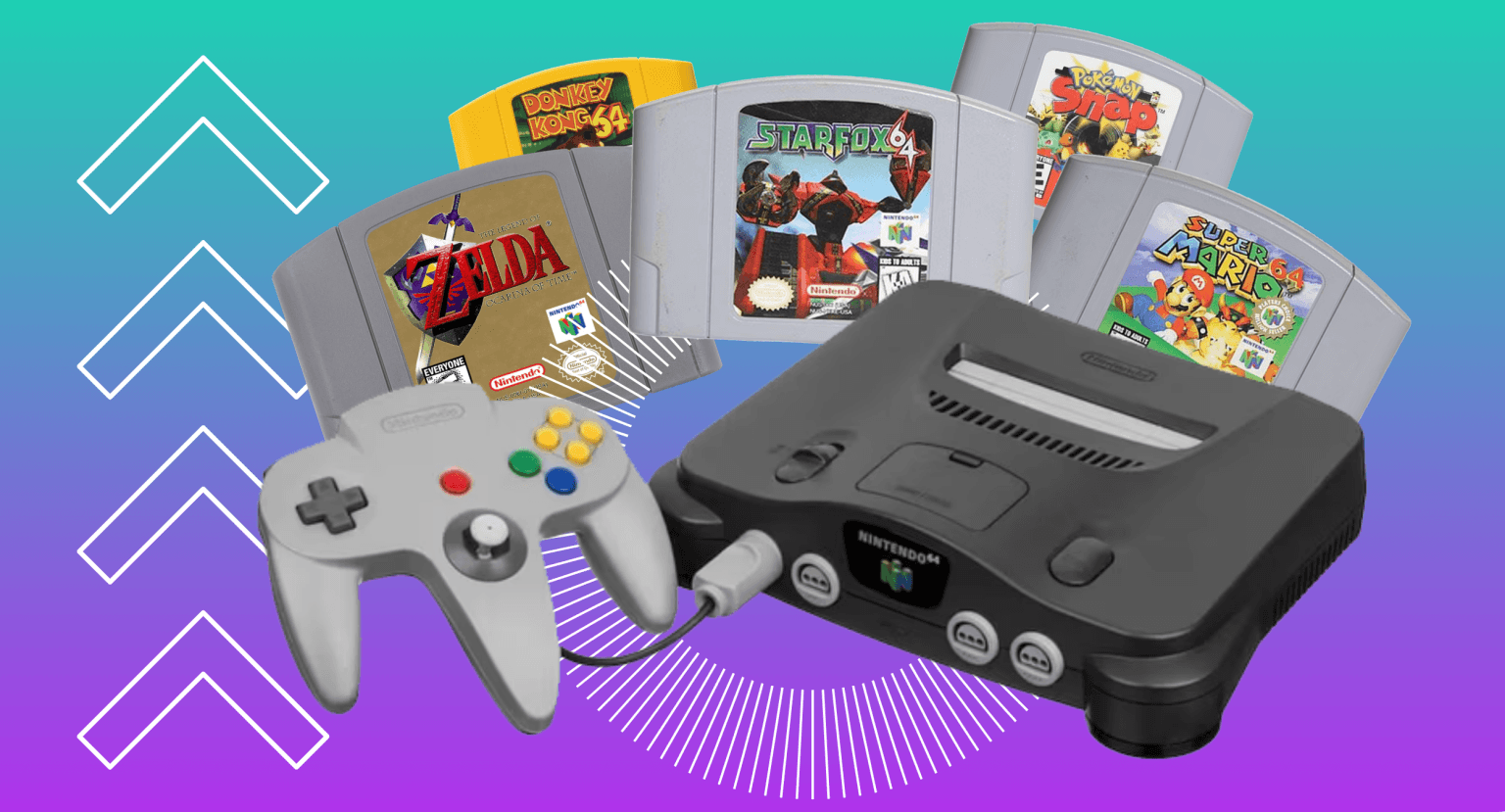

On this very day 30 years ago, Nintendo released its first-ever fully-3D console in Japan: the Nintendo 64. While not the first home gaming console to experiment with three-dimensional graphics and level design, the N64 absolutely raised the bar, hosting some of the most influential 3D titles ever made, many of which are still hailed now among the best games ever made.
As much as I adored the N64, I cannot deny that it was weird. The three-pronged controller with the joystick in the middle and the mostly-unused directional pad on the left remains one of the most baffling controller designs ever. Despite presenting better graphical capabilities than the rival PlayStation, the N64 still used cartridges, which greatly limited game sizes, leading to all-time classics from the 90s such as Final Fantasy VII and Metal Gear Solid never gracing the platform. The PS1 didn’t just boat-race its Nintendo counterpart in sales; it also had considerably more available games, as those pesky 64-bit cartridges were more expensive to produce than CD-ROMs.
Still, the Nintendo 64 remains absolutely iconic. Its most notable games are still beloved across generations. If you’re in a room with three other people and an N64 with four controllers, you’ll all have a blast playing something. It’s one of Nintendo’s stranger consoles and stranger generations, but it deserves to be celebrated all these years later. And you KNOW we at The Punished Backlog love to celebrate.
– Written by Sam Martinelli
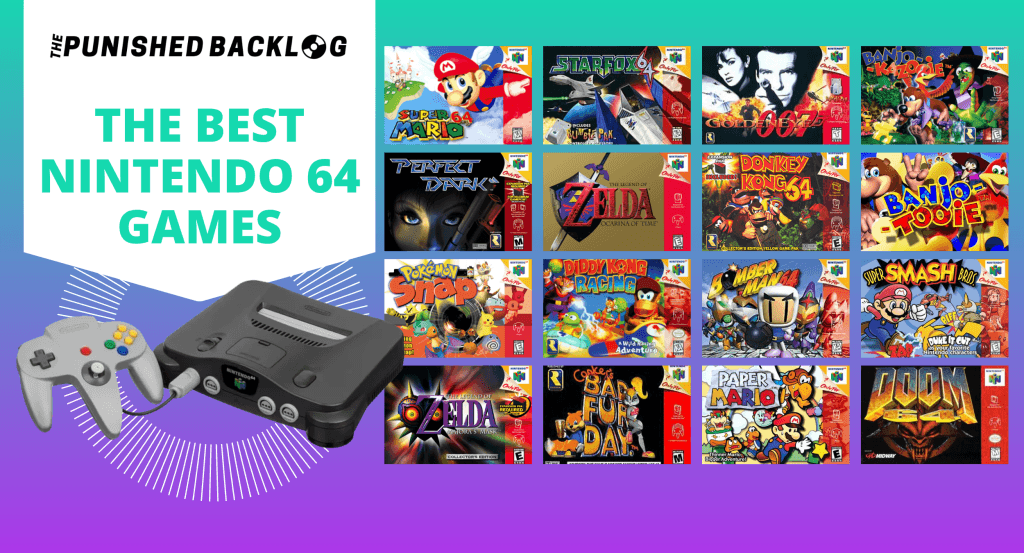
The 16 Best N64 Games Ever Made
Here are The Punished Backlog’s 16 favorite Nintendo 64 games ever made, presented in alphabetical order.
Want to jump to a specific entry? Use our table of contents:
- Banjo-Kazooie and Banjo-Tooie
- Bomberman 64
- Conker’s Bad Fur Day
- Diddy Kong Racing
- Donkey Kong 64
- DOOM 64
- GoldenEye 007
- The Legend of Zelda: Majora’s Mask
- The Legend of Zelda: Ocarina of Time
- Paper Mario
- Perfect Dark
- Pokémon Snap
- Star Fox 64
- Super Mario 64
- Super Smash Bros.
Banjo-Kazooie and Banjo-Tooie
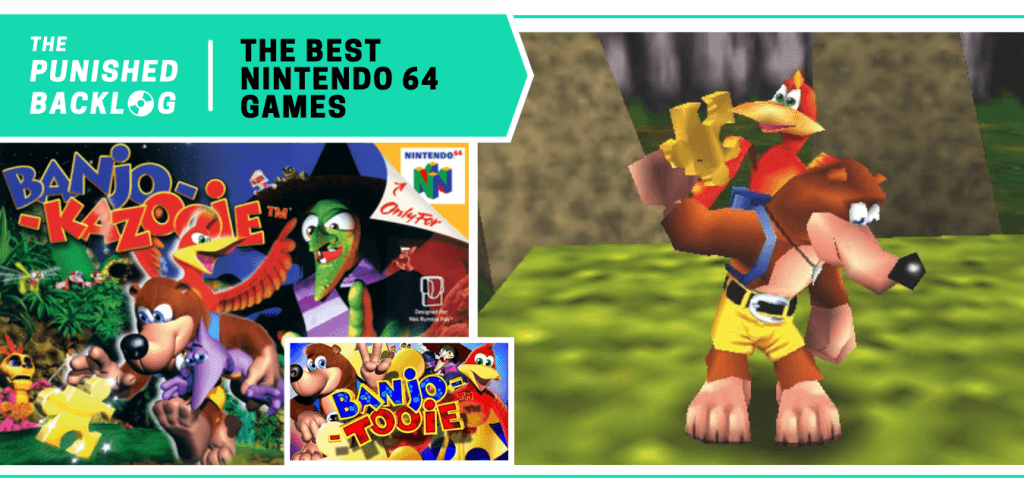
Ghaw!! When I think of games they simply do not make them like anymore, Banjo-Kazooie and Banjo-Tooie are at the top of the list. These masterpieces were products of a simpler time, back when just running around and finding silly little trinkets was considered groundbreaking.
What made the Banjo games extra special, though, was the titular dynamic duo. Sometimes in life, not everything needs to make sense, and this is one of those times. Should a bear wearing a bird in a backpack be as nimble, powerful, and entertaining as Banjo and Kazooie are? Probably not. But the combination worked so well, they even got a sequel!
The original game is a quintessential collectathon where the evil witch Gruntilda’s castle serves as a hub world for all the levels to branch off of. Much like Super Mario 64 with its painting portals, Banjo offers a variety of locations to jump into where you can complete themed objectives and meet dozens of quirky characters. Unlike Mario though, Banjo has a larger emphasis on both puzzle solving and combat. Banjo and Kazooie will transform into new beings like a sentient snowman, learn how to fly, and even compete in a trivia gameshow. The game combines platforming and exploration with outstanding writing, humor and of course legendary music! I’m no expert on the who’s who of video game composers, but even I’m aware that Grant Kirkhope is royalty and these titles are some of his best work. The whole team at Rare was very highly regarded back in the day, and I think the Banjo games are their crowning achievements.
Now, take everything I said for the first game and double it and you’ve got Banjo-Tooie! Actually though, this game was huge for its time and really did feel at least twice the size of the original. It’s bigger, more imaginative, and pretty much just better in every single way. Instead of one hub world with portals to use, Tooie opened up the map into a sprawling, interconnected, almost metroidvania-style universe. The levels became massive, with countless items to find, new moves to learn, and amazing secrets to uncover. Now, instead of just playing each level independently, you were backtracking, relying on fresh strategies to help unlock previously unreachable areas. I have so many distinct memories from the game, from flying around as a bee and playing soccer as a stone statue, to permanently transforming Kazooie into a scaly green dragon. It’s truly a masterclass in creativity.
Banjo-Tooie also sneakily had one of the best multiplayer experiences on the Nintendo 64, with a GoldenEye-inspired first-person shooter mode along with a handful of other mini-games for up to four players. You could run through the gauntlet of competitions in a full-fledged party mode, tallying points based on your finish in each game. I spent almost as much time playing the solo mode as I did messing around with friends in multiplayer, that’s how good it was.
Both of these games made something as simple as hunting for golden puzzle pieces feel like a grand adventure. I still remember getting Tooie for Christmas, buying the official guide and poring over every detail. As a gamer entering his dad phase and wanting to share the experience with my children, these are perfect examples of approachable, kid-friendly entertainment that’s fun for the whole family. I only wish we could get back to basics and make more games like them!
– Written by Zack Gulinello
Bomberman 64
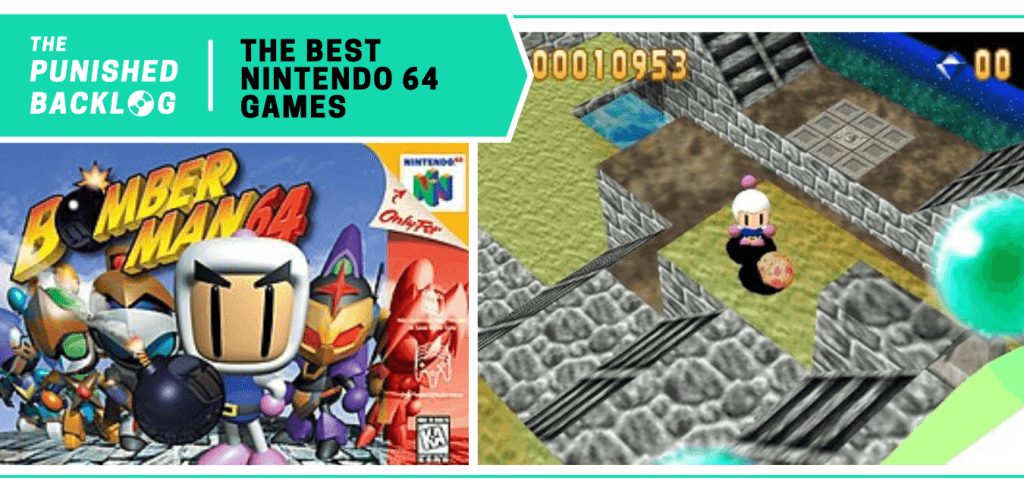
Bomberman 64 is a gem, and it holds a special place in my heart. It was one of the earliest Bomberman games I ever played, and the one that cemented my love for the little guy and everything that came after.
It did something Bomberman games rarely do, and have rarely replicated since: It took the titular Bomberman out of the gladiatorial battle arenas and dropped him into an actual world. Hudson Soft’s 1997 release, the franchise’s first real leap into 3D, had him running, exploring, and solving puzzles, Super Mario 64– and Zelda-style, but only the way a Bomberman game could: with bombs. Bombs everywhere, blowing up every adorable enemy across green gardens, icy glaciers, watery resorts, and one very fiery mountain.
The unique bomb-handling was the defining feature of the game. No grids, no cross-shaped blasts, just spherical explosions and wild physics. You could kick bombs, scoop them up and toss them, and pump a single one into a screen-clearing Power Bomb. Most of all, Bomberman couldn’t jump. To climb anywhere, you had to hop along strategically placed bombs or “bomb-jump,” dropping a bomb and riding the blast upward. Some of those puzzles were clever as hell (and, fine, occasionally required a walkthrough).
I first fell for it as a seven-year-old playing it on my older cousin’s N64, but I didn’t actually finish the thing until I found emulators in middle school. That’s when it really clicked: the incredible soundtrack, the intricacies of the bomb physics, the four bosses who throw your own tricks right back at you.
It’s not the Bomberman game I’ve played the most (that’d be Bomberman Live on the Xbox 360 and Bomberman Online on the Dreamcast), but it’s the only one that ever made me feel like I was inside a world instead of just a battle grid. And it managed that while still serving up the chaotic multiplayer the series is built on. In an era when every classic franchise was scrambling to figure out 3D, Bomberman 64 took the boldest bomb kick of the bunch. That’s what makes it matter.
– Written by Donovan Harrell
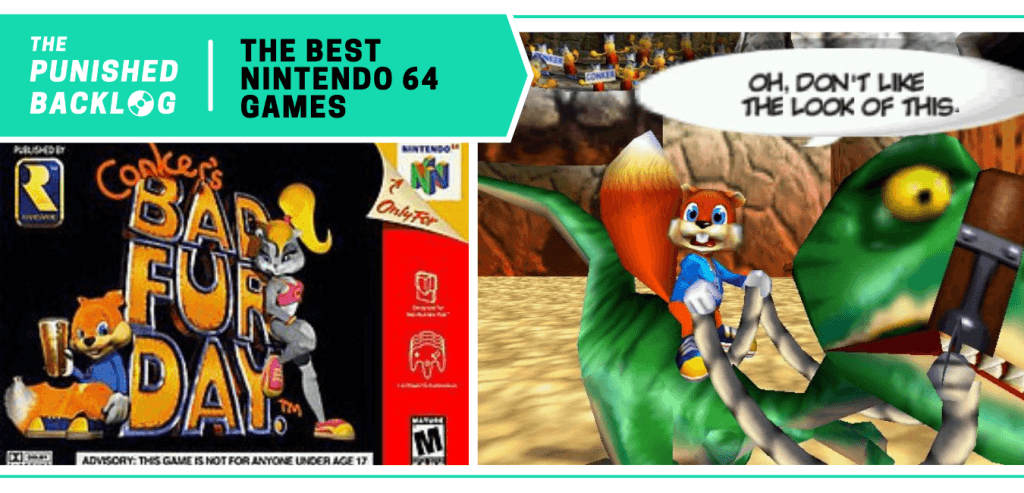
Conker’s Bad Fur Day
A quick note: I went back and restarted this game after not playing it for nearly a decade. I found it to be both more absurd and more tame than I remembered.
Rare made Donkey Kong 64 four times. Conker’s Bad Fur Day is not only the fourth release, but by far the best. Anyone expecting the wholesomeness of Banjo-Kazooie, its sequel, or Donkey Kong Country will find themselves deeply disappointed; Conker is a foul-mouthed squirrel with several vices (replaying this game while sober was a trip). The story is not only NSFW but really not for the faint of heart.
Crude humor aside, Conker’s Bad Fur Day continues to provide excellent platforming to this day. The game benefits from being far more linear than Rare’s other 3D platforming collectathons. The genre shift in the last few hours of the game is immensely satisfying, as Conker trades slapping enemies with a frying pan for weapons with a little more kick. It never becomes GoldenEye, but it does help alleviate Conker’s otherwise pretty miserable day.
Looking back at the cartoon graphics, I am shocked that this was a Nintendo 64 exclusive rather than an early GameCube title. The character models and animations still hold up remarkably well in 2026. While its writing (and antics) made me queasy, Conker’s Bad Fur Day is otherwise Rare at its best.
– Written by Clint Morrison
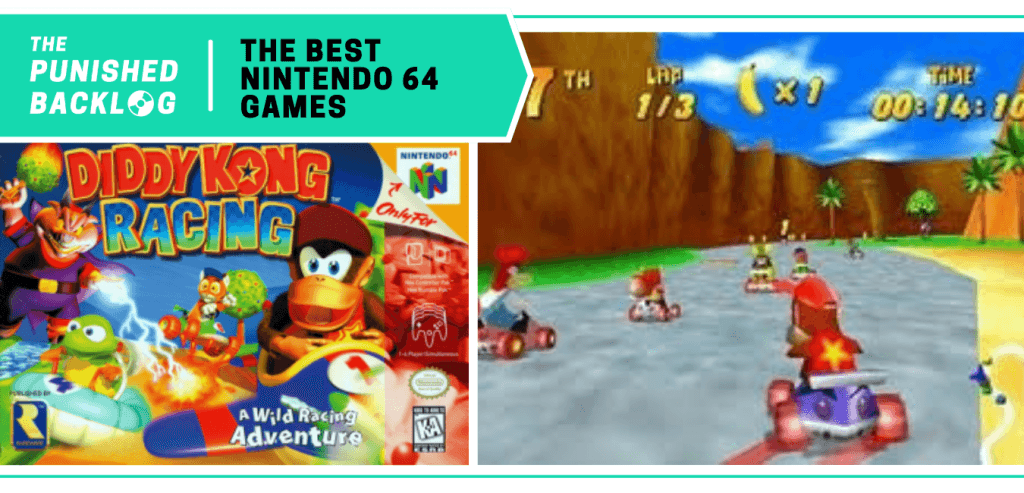
Diddy Kong Racing
Name another game where you can fly a plane, glide on a hovercraft, and drift with a car? You won’t, because Diddy Kong Racing is the only one. Developed by Rare after Killer Instinct 2, it got released prior to Banjo-Kazooie in the company’s search for a strong IP due to delays on the aforementioned title.
With a plot that centered around winning races to save an island from a giant pig called Wizpig, Diddy Kong Racing featured a hub world where you would travel around finding new race locations and collecting balloons in each race to unlock the next one. Playable characters include our titular hero, Diddy, and Rare household names like Banjo, Kazooie, and Conker (before his bad fur day). Not to mention the lovable Elephant, Taj, who offered racing challenges and allowed you to change your craft as you cruise around the map.
Eventually you got to race Wizpig, who is probably the size of Godzilla, and once you beat him, you get to do the whole thing all over again with the maps reversed.
The levels of Diddy Kong Racing were a series of fun twists and turns with environmental conditions like ice and lava to challenge how you drove. Much like Mario Kart 64, nailing drifting and quick turns is essential to beating your fellow racers. Along the way, you can run into power-ups, which in this case were balloons that offered a variety of effects like launchable rockets, poison clouds of gas, and speed boosts. Learning the maps and becoming strategic with your choice of craft affected how fast you could get through each level.
Thanks to an awesome soundtrack and fun shortcuts, I always preferred this title over the fireball-throwing plumber’s racer. To many, Banjo-Kazooie was the center of their gaming childhood, but this game was that to me thanks to all the memories of last-second finish line rockets and replays with my brother.
– Written by Vaughn Hunt
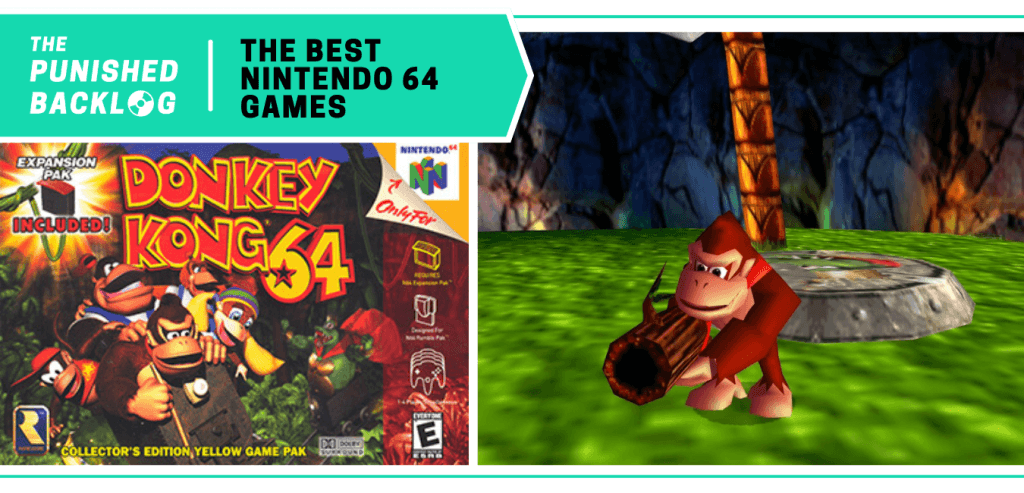
Donkey Kong 64
A common theme of many beloved Nintendo 64 titles is that most of them don’t hold up that well, at least not mechanically. 1999’s Donkey Kong 64 is no exception.
Frankly, there’s a lot about Rare’s first and only attempt at bringing Donkey Kong into the third dimension that’s puzzling at best and grating at worst. There are five playable Kongs in the game, each of whom has their OWN different-colored versions of the same collectibles that only they can pick up, which artificially makes collecting everything a pain point for completionists. The camera controls, which are finicky enough even in the best N64 platformers, are particularly wonky in DK64, and its overworld feels less intricate and exciting than Super Mario 64’s castle or Gruntilda’s Lair from Banjo-Kazooie. The multiple-character structure also makes for truly awkward pacing and forces the player to frequently backtrack if they want any chance of unlocking new worlds.
So why do so many people — myself included — still love Donkey Kong 64 despite its many obvious, undeniable faults? The answer is simple: DK64, above all else, has character. It has vibes. It is absolutely iconic in its presentation and level design in ways few other games of its era were.
You can feel such incredible vibes right away, as the opening movie before the start screen involves the “DK Rap,” one of the goofiest video game themes of all time and quite possibly the greatest achievement of legendary composer Grant Kirkhope’s career. The fantastic soundtrack doesn’t stop there: The main theme of DK Island is an all-time classic as well, as are each Kong’s music-based attacks, which cemented Donkey Kong’s role as a legend at the bongos.
Donkey Kong 64 exudes style and grace at every turn. Each colorful world has unforgettable challenges and locales, and every Kong has unique gameplay mechanics and items in their arsenal. They each have their own unique projectile weapon — peanut popguns for Diddy Kong, a grape shooter for Lanky Kong — as well as their own instruments that say something about their personality, from the gentle giant Chunky Kong’s tiny triangle to Diddy’s star-shaped electric guitar. Even the helpful NPCs from Donkey Kong Country’s past (Cranky Kong, Candy Kong, and Funky Kong) have their own little barrel-shaped houses in every region with plenty of quirky dialogue to share (including even more classic burns from Cranky).
If you’ve never played Donkey Kong 64 before, you probably won’t enjoy it much at all. But the game is firmly at the top of my list of games that deserve the “do-over” treatment. A remake of DK64 that maintains the essence of the original but improves the mechanics and pacing could be truly special, and I hope someday it gets that opportunity.
– Written by Sam Martinelli
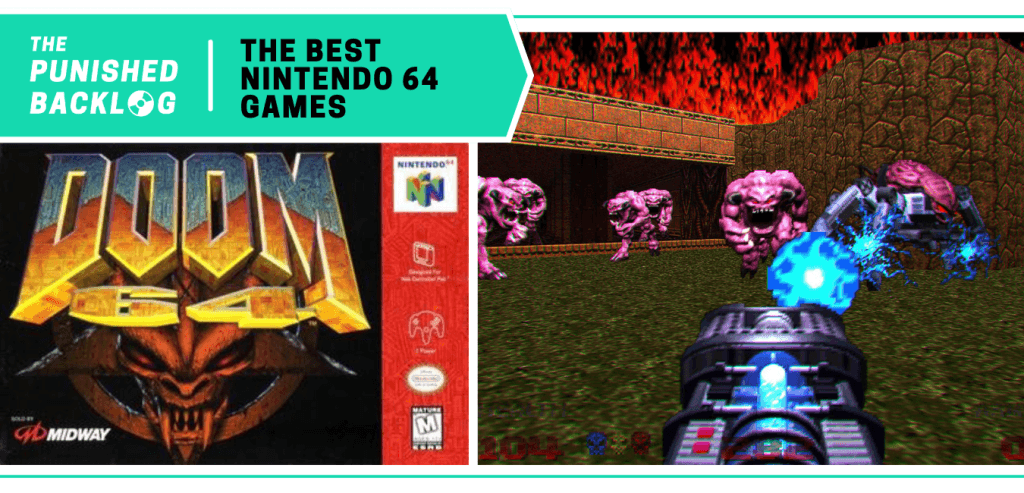
DOOM 64
Forget DOOM 3: The true follow-up to DOOM II (and the overlooked Final DOOM) came in the form of DOOM 64 in 1997. The game takes the formula and structure of the previous two games and turns up the pressure. The shotgun is available very early, and the title does a nice job immediately dropping you into an adrenaline-filled demon-slaying experience.
My late uncle loved the DOOM games. For him, the series was peak horror. He didn’t really like horror films or video games, and I think that the DOOM games made him feel like he could fight back, virtually and metaphysically. DOOM 64 was exciting for him because it was the best-looking franchise title to date; we weren’t obsessed with HD graphics or hyperrealism yet.
DOOM 64 never lacks for style. It is a time capsule to now be able to revisit it on modern hardware, much like playing Bungie’s original Marathon trilogy. It is a fast-paced, beautiful mess of metal doors, gunfights, and demons.
– Written by Clint Morrison
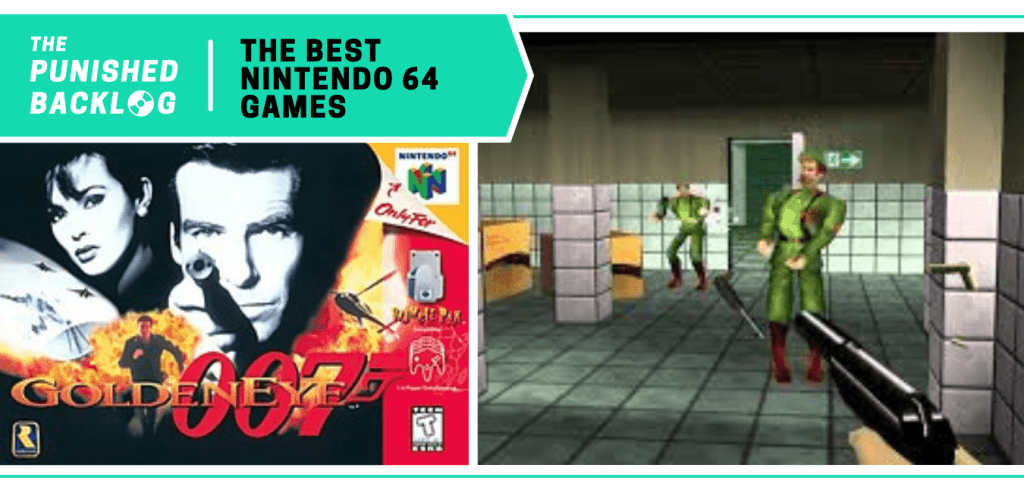
GoldenEye 007
I never actually owned an N64, so all my experience with the console came from hanging out with friends and family. Anytime I’d see people, whole evenings would be lost to Mario Kart 64 battle modes and Diddy Kong Racing‘s actual racing. But one time waster stood above all the rest. A true test of skill, wit, and the ability to memorize corners of maps that others couldn’t see. A game so legendary that the term Golden Gun has made its way into popular lexicon, and even those who have never touched it know that Oddjob is cheating.
GoldenEye 007 isn’t just a good video game. Even by the standards of the time, its mechanics felt clunky and unwieldy on the N64 controller. The character models were more hilarious facsimile than accurate representation. The maps were convoluted, with vents that went nowhere for no reason other than to exist. And yet we spent hours, slapping for a rocket launcher and falling in love with an RC-P90. Competitions were held and lost. Characters chosen and discarded. GoldenEye was childhood, for all its good and bad. Everyone knew it, everyone tried it, everyone had a thought. It was one of the first true viral games, something you had to see.
A few years ago, someone made a mod of GoldenEye in the Source engine, and put it out for free. It was essentially Counter Strike’s Gun Game, with GoldenEye layered on top. My friends and I once again convened, this time separated by a pandemic, and spent hours plugging away. It was different, sure, but it made us realize something: There is nothing better in games than slapping someone down in a hallway.
GoldenEye rules. Slappers Only.
– Written by Gary Wilson
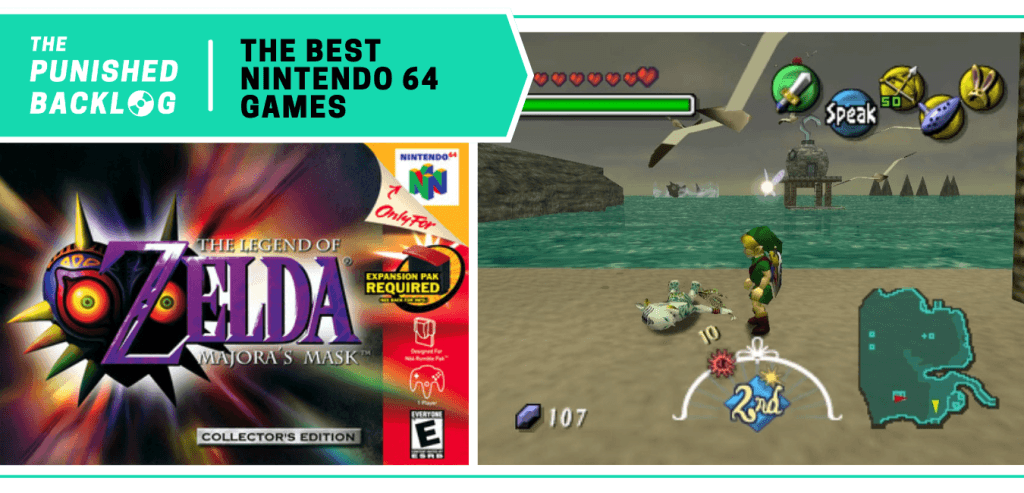
The Legend of Zelda: Majora’s Mask
It truly is hard to put into words just how great of a video game The Legend of Zelda: Majora’s Mask is. Many people would tell you its predecessor, Ocarina of Time, is the best ever made, but as a direct sequel I think Majora’s Mask managed to iterate upon the set formula while staying true to what makes the Zelda franchise special.
There’s a certain tone to Majora’s Mask that just isn’t present in many of the other titles. Ocarina of Time especially has a feeling of triumph and adventure that makes it a constant thrill to play through. On the other hand, Majora’s Mask is filled with moments of sadness, loss, and grief. It is often described as dark and more mature than other games in the series, but I like to think of it as more realistic and true to life. Wait, you mean the moon doesn’t have a giant face that’s going to come crashing down in the next 72 hours? Ok, maybe true to life isn’t the right way to put it. But ultimately, real life isn’t always sunshine and fairies. Just as Link experiences in Majora’s Mask, living in reality means we have to say goodbye to loved ones, cherish the time we have, and pay tribute to their memories whenever we can.
Beyond the heavy themes, Majora’s Mask truly is a joy to explore. The main gimmick introduced is, of course, collecting masks, each one with a unique trait and even more unique method to acquiring it. Even the most knowledgeable Zelda fans I know need to look up tips on how to get the trickiest masks when they go back through this adventure. The primary reason is the timeloop mechanic that serves as a major inflection point among fans. While the constant worry about the time on the clock can be a bit distracting, the way it dictates exactly where certain characters will be during critical moments in your journey is fascinating.
And that right there is the key to what makes Majora’s Mask so special: The world is absolutely brimming with life. There are games being released every day that claim to be “open world” that don’t have half the amount of impactful NPCs that Majora’s Mask does. There are so many characters you meet who have a significant story to tell that directly intertwines with Link’s in a beautiful way. There is no wasted space in this game; every shop or home or back alley has something important to reveal. That’s why to this day I use Majora’s Mask as the perfect example of how to create a video game world that rewards interaction, exploration, and curiosity. I still have never played anything like it.
As with many games from this time period, I have a significant number of memories gained from spending time with my pal, Link. There’s a special sentimentality to Majora’s Mask though, not only from the days shared, but also the real-life lessons learned along the way.
– Written by Zack Gulinello
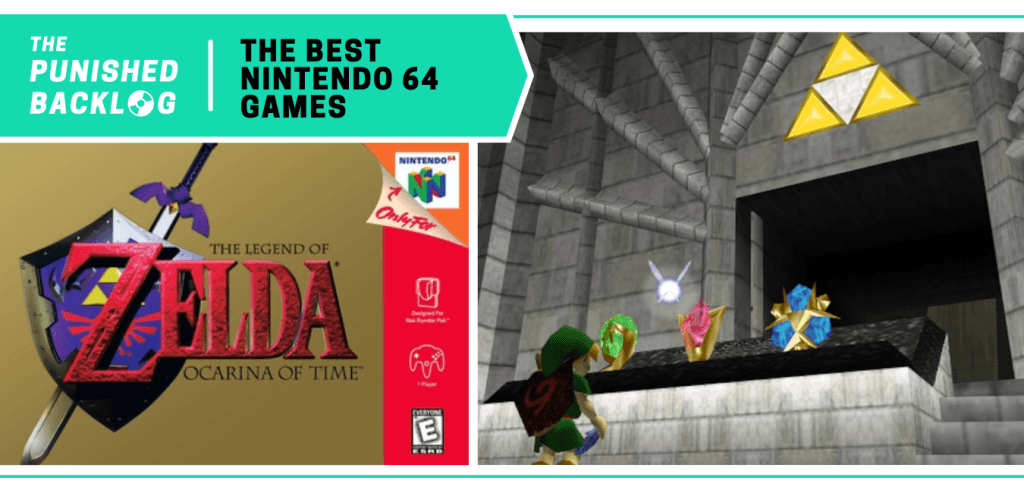
The Legend of Zelda: Ocarina of Time
The first 3D game in the Zelda series arrived five years after A Link to the Past to great hype and superb reception. Few games have defined a series like this entry, but practically every Zelda after this one will emulate its characteristics and build on what made it great.
For the first time, Link could dodge and move in multiple directions, which felt amazing (I especially loved his roll and backwards flip). A lock-on feature for enemies with the Z button was groundbreaking, as honing in on enemies never felt better. Iconically, this is the first entry with Link’s horse Epona, providing the ability to ride a mount, and her storyline ends with one of the greatest moments in gaming.
Likewise, sword combat took a huge step forward. The basic sword attacks were more complex with the ability to slash vertically and horizontally, the magic-based charge spin attack returned from Link to the Past, and jump attacks like a plunging stab were added.
Link received a number of iconic gadgets like the hookshot (don’t ask how many hours I spent zooming around levels), the Bombchu, and the blue and red tunics. Mini-games expanded significantly, functioning as fun breaks between combat, allowing players to improve their skills with Link’s repertoire of items while rewarding them with upgrades to skills and item limits.
Visually, the game brought to life the open world format and presented distinct biomes for each area. Being able to look into the distance and see Mount Goron’s volcanic activity or even experience the sandstorms in the Gerudo Desert felt ahead of its time. Unique characters like Saria and Darunia provided Link’s story with personal connections that transcended time. Meanwhile, the Gerudo, Gorons, and Kokiri made their first appearance in any Zelda game, becoming staples in the series’ lore.
From the opening moments until the credits roll, Ocarina is a musical experience driven by the titular instrument. It connects the world through memory, dance, and even the ability to fast travel as you disappear into tiny motes of light. Some songs calm down characters, while others bring storms that enrage them. Even the shop music and menu tunes stood out, becoming motifs in later games. Of course, the most notable sound everyone remembers is the fairy Navi saying “Link” one million times. Through and through, the game is a sonic experience that ties the whole experience together.
There’s a reason this game is listed as the greatest of all time. It established a standard of quality that nearly every game thereafter has tried to emulate.
– Written by Vaughn Hunt
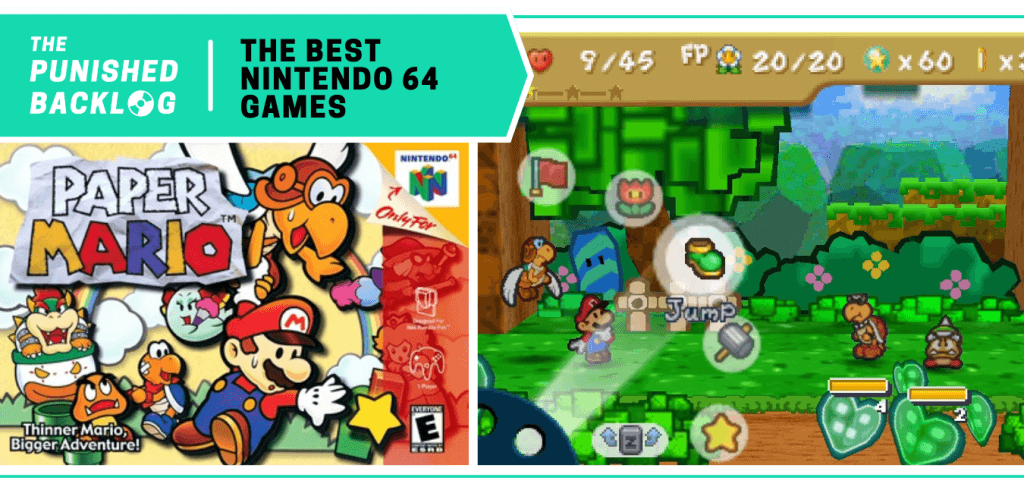
Paper Mario
I never had a Nintendo 64 growing up, so my first introduction to Paper Mario came years later by way of the Wii Virtual Console. At the time, I had already played the excellent, if polarizing, Super Paper Mario. It was my first foray into the series (yes, I know that’s a bizarre entry point), and I was raring to see whether the 2001 original could measure up to what, at the time, I’d considered an all-time great Mario RPG.
To say Paper Mario exceeded my expectations would be an understatement. Immediately, I saw why long-time fans had lamented the pivot from the series’ turn-based roots. The charm of Paper Mario — steeped in storybook landscapes, hammy dialogue, and desert-dry humor — came to being through an impeccable sense of authenticity. Where Super Paper Mario hastily ushered players from one set piece to the next, Paper Mario relished time and place. From the relaxing Toad Town to the peppy Shiver City, each stop on Mario and co.’s journey felt warm and welcoming, as if inviting the player to stay a while.
Nowhere was this confidence more evident than in battle. A natural evolution of Super Mario RPG’s twitch-heavy battles, combat encounters in Paper Mario were a perfect mix of tactics and fun. Every attack had its benefits, and every Badge had its utility. I still remember Saturday mornings on the couch, bopping enemy Goombas with glee — not out of sadism, but out of genuine love for this world that Nintendo had crafted. An average playthrough will take players 25 hours — the perfect length for an RPG — but I still wish it were even longer.
Since Super Paper Mario, the series has lost most of its edge. Much like the decline of a beloved TV show, it seems like Nintendo values mass appeal over the substance that made the series what it is. But you’ll never hear me complain. I’m just glad I was able to experience this masterpiece at all.
– Written by David Silbert
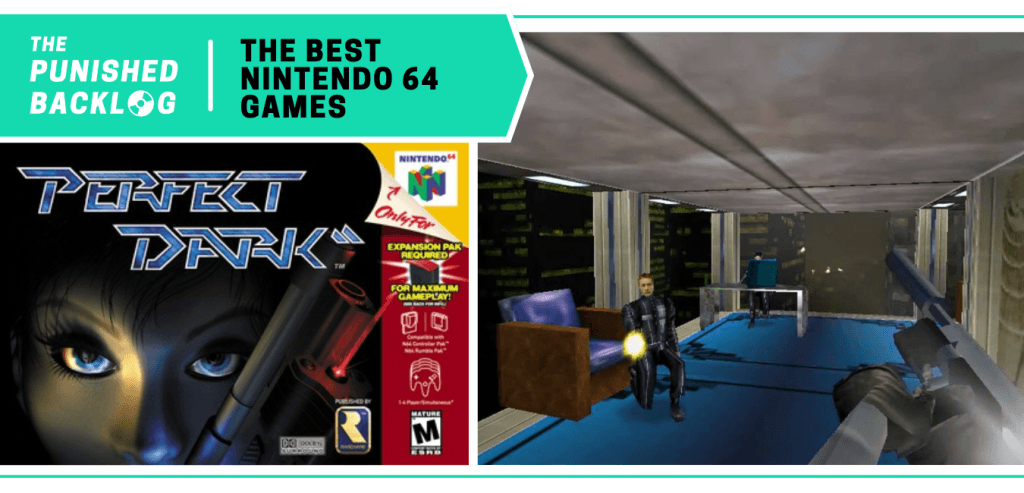
Perfect Dark
Okay, this is another one of those “you had to be there” games for the Nintendo 64. Single-joystick aiming for first-person shooters has gone the way of the dodo, and for good reason: Most of these N64 shooters are painfully slow and imprecise even by standards established just years after their release. Still, if you had asked nine-year-old me in the year 2000 if shooters could get much better than Perfect Dark, I would have likely responded, “No way!”
For those who don’t know: Perfect Dark was developed at Rare (who made MANY games on this list) as somewhat of a spiritual successor to GoldenEye 007. The game took many of the core mechanics and philosophies of the legendary James Bond adaptation and added a badass new hero in Joanna Dark, a science-fiction setting involving a war between alien factions, and some of the most memorable weapon designs ever to exist in a console FPS.
The campaign itself was thrilling for its time, with plenty of first-person espionage challenges and absolutely killer shooter gameplay. What really defined the experience, however, was the endlessly replayable multiplayer mode, which I played for hours on end with my older brother and never got bored. What defined such multiplayer gameplay — which structurally was very similar to that of GoldenEye — was its vast array of creative weapons, all of which had secondary uses. For example, the Laptop Gun is a thoroughly average machine gun, but its secondary use allows you to attach it to a wall as an automatic sentry. The Dragon can become a grenade, the RC-P120 contains a cloaking device, and even the unarmed option allows you to choose between punching for damage or punching to disarm an opponent. Every multiplayer match was an absolute blast, and the level of variety on display remains unmatched.
Again, I know Perfect Dark looks and plays like a mess in 2026. Still, it felt transcendent at the time, and I will always make sure it gets its flowers.
– Written by Sam Martinelli
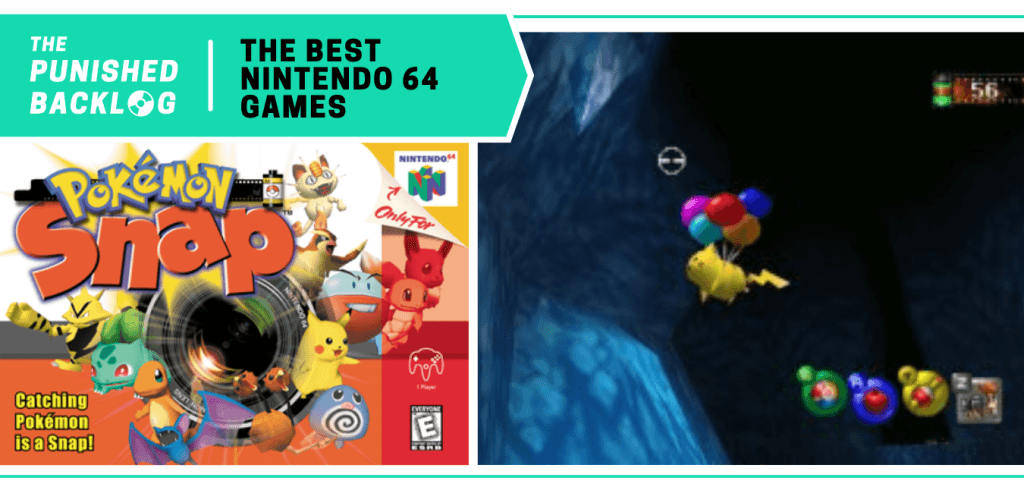
Pokémon Snap
I never had a Nintendo 64 (my parents were pretty anti-video games for the first eight years of my life) but I did have friends with one, and there was no game I loved playing on the N64 more than Pokémon Snap. My friends and I took turns going on expeditions, trying to snap photos of elusive Dragonites and cheerful Pikachus. It was exciting to compare photos between runs, admiring each other’s creative skills. Pastel colors and soothing music made the experience a surprisingly meditative one.
Interestingly enough, the game didn’t start off as a Pokémon title. Studio HAL Laboratory was making a game inspired by the Jack and the Beanstalk fairytale that included plants and animals, but it didn’t really have a plot. Seeing what a mega-hit the Pokémon franchise was, the famous Satoru Iwata, who was then working at HAL, suggested they partner with Nintendo and GameFreak to make it into a Pokémon title. As a result, Pokémon Snap was the first game to imagine life for Pokémon outside of battling and instead invited players to see Pokémon in their “natural habitat.”
People loved it; Pokémon Snap was the best-selling N64 game of 1999. Instead of simply forcing Eevees to fight, players could watch them playing, exploring, and eating. They were all so freaking cute! I loved seeing Pikachu actually living its life, like surfing or hanging out with a Diglett or FLYING WITH BALLOONS, UP-STYLE for some reason.
Fellow writer Matt Plaus described how the game lands between “cozy and creepy,” offering a surprising amount of “challenge and mystery” for a spin-off game. The 2021 reboot brings everything about the classic up-to-date for the modern era. Still, the 1999 original Pokémon Snap was clearly ahead of its time in terms of world-building of every Pokémon’s lives outside of Pokéballs.
– Written by Amanda Tien
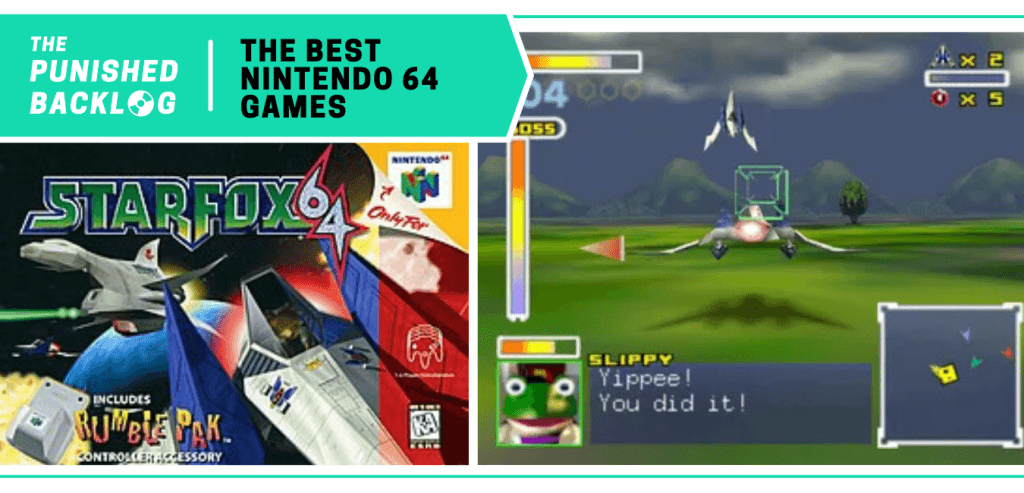
Star Fox 64
At its core, Star Fox 64 is basically a perfect on-rails shooter, one that’s received the reboot/remaster/remake treatment several times but whose essence always remains the same. It involves flying around the coolest-looking futuristic fighter jets imaginable, shooting waves of blocky robot enemies, shrugging off trash talk from various anthropomorphic animal foes, and performing barrel rolls and somersaults to avoid a variety of hazards.
The actual single-player campaign is fairly brief — your first playthrough will likely be under an hour — but the opportunities presented by multiple attempts, including finding new levels/pathways/story bits and going for a higher score, make it endlessly engaging. Every time I finish Star Fox 64’s campaign, I’m immediately tempted to start a new run, and I never regret doing so. The combat mechanics are so smooth, and the in-game action is so consistently enthralling that the game always feels like a gift that keeps on giving.
Also, unlike most of the other games on this list, Star Fox 64 mostly holds up mechanically. If you need proof, consider that the Switch 2 remake updates the story, the number of extra game modes, the graphics, the sound… but NOT the core gameplay. Hell, the newest remake even allows players to use an N64 controller, further cementing the original’s legacy as one of the most tightly-designed and replayable arcade-style action games of all time.
– Written by Sam Martinelli
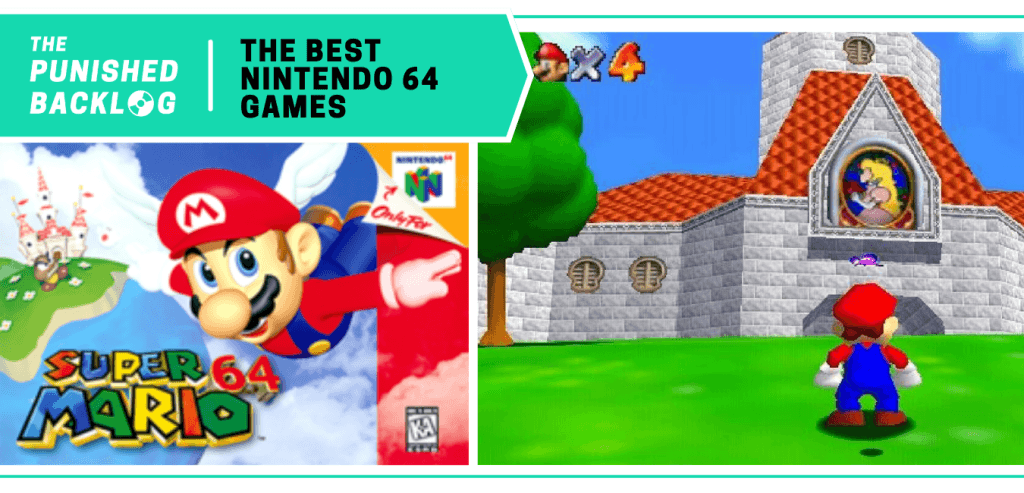
Super Mario 64
I’m not sure there is a lot more I can say about Super Mario 64 that hasn’t been said a billion times by a billion different people. That said, a particular thing I find fascinating about the 3D platformer — a launch title for the Nintendo 64 and possibly the best launch game of all time — is that despite considering it one of my favorite games ever and something that has helped shape my very understanding of game design, I didn’t actually own Super Mario 64, at least not the physical N64 cartridge.
Unlike many evangelists of Nintendo’s foray into 3D gaming, I didn’t get an N64 at launch. My brother and I received it as a Hanukkah gift two years later, with our first games being GoldenEye 007 and Star Wars Rogue Squadron (our parents clearly just assumed we’d want games based on movies we liked, and they weren’t wrong). For whatever reason, I never asked for Super Mario 64, despite playing it at friends’ houses and the waiting room at my dentist’s office.
Years later, I played the DS remake, which was terrific in its own right, but even long after that my true love of the game grew from playing the N64 version on the Wii U’s Virtual Console. Since then, I’ve found myself replaying basically the entire game every year or two on whatever console I could. I’ve basically memorized the layout of Princess Peach’s castle and can get up to 25 stars in just an hour or so of play. I (mostly) remember which Toads in the castle give you a free star just for talking to them. At this point, playing Super Mario 64 feels second nature to me.
Ultimately, that’s a major part of the game’s legacy: More than just the progenitor of 3D platforming that pioneered collectathon gameplay, Mario 64 is a game one can enjoy and admire outside of a strong nostalgic connection. It’s simultaneously an incredible step forward for gaming and a mystery box for first-time players decades after release. It was the very first N64 game most people ever played and remains the most iconic.
– Written by Sam Martinelli
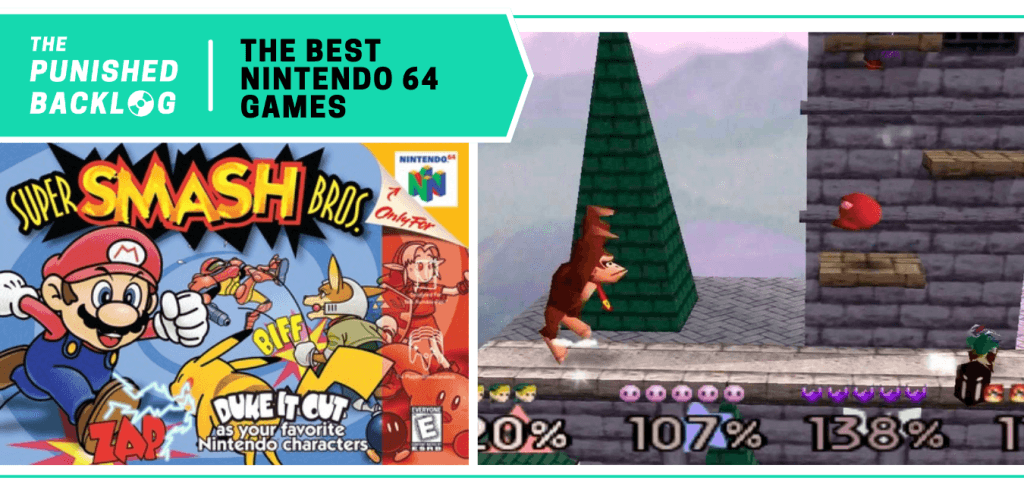
Super Smash Bros.
There’s so much to say about this one, but I’ll start with what matters most: Super Smash Bros. is the embodiment of what I love about games, namely their power to bring families together.
I grew up playing it with my cousins and little brothers every summer and every holiday. It became tradition. Every Christmas, every Thanksgiving, every extended visit, we’d cycle through a stack of multiplayer games (Twisted Metal and Frogger on the PS1, Sonic Shuffle on my Dreamcast) but we always spent the most time, and the most energy, on Smash. It was the highlight, and my first informal taste of competitive gaming.
I’ve got endless memories of the fights we’d get into over this game (and occasionally, outside it). The Hammer item alone was responsible for more salt than I can measure. There were no stakes beyond bragging rights, and even those were up for debate, but it was a family affair every single time.
It also happened to be the first game of its kind: a fighter that tossed the protagonists of Nintendo’s biggest franchises into one ring. HAL Laboratory’s 1999 brawler turned every character pick into a personality reveal. My cousins and brothers each gravitated to extensions of their favorite worlds. I rode with Fox and Donkey Kong. Fox for the speed, the blaster, and that Reflector to swat away the chaos (his stage, Sector Z, with the giant Great Fox ship, was my favorite to scrap on), and DK because he hit like a truck. The trolling never stopped. I can still hear all of us screaming and laughing, chasing each other with fully charged punches, threatening to send somebody flying with a single hit.
Whether I was grinding the single-player mode to topple Master Hand and unlock the full roster or just running it back with family on the couch, it bottled that Nintendo magic. That little N64 game went on to spawn a blockbuster franchise and a staple on every Nintendo console since. Smash Ultimate is the whole reason I finally caved and bought a Switch. People call Smash a celebration of Nintendo’s icons, and it is. But for me, it was always a celebration of family.
– Written by Donovan Harrell
What’s Your Favorite Nintendo 64 Game of All Time?
Do you agree with our list? What did we miss? Share in the comments! You can also check out other Punished Favorites lists like the best PlayStation 2 games, the best Nintendo Switch games, the best Nintendo DS games, the best Game Boy Advance games, and the best SNES games.

A video game outlet that blends quality words with inclusive voices. For business inquiries and review requests, reach us at press [at] punishedbacklog [dot] com.





Sam has been playing video games since his earliest years and has been writing about them since 2016. He joined The Punished Backlog in 2017 and became an Editor in Fall 2021. He’s a big fan of Nintendo games and complaining about The Last of Us Part II. You either agree wholeheartedly with his opinions or despise them. There is no in between.
A lifelong New Yorker, Sam views gaming as far more than a silly little pastime, and hopes through critical analysis and in-depth reviews to better understand the medium's artistic merit.
Bluesky: @sam-martinelli.bsky.social

Donovan is a lifelong gamer with a love for fast-paced, single-player action games—especially Devil May Cry, Metroidvanias, indies, and action RPGs. He’s also an “advanced scrub” at fighting games and will play just about anything fun. Donovan is passionate about seeing more diverse characters and creators in the industry—or at least better hair options for Black people. With over a decade in journalism, he joined The Punished Backlog in 2023 to write more about what he loves. Follow him on Twitter and Instagram @dono_harrell.


Gary is a jack-of-all-trades video game enthusiast based in Boston, MA. A semi-professional fighting game player, even less professional Apex Legends player, and even less professional adult, he spends most of his time poking at strange indie gems and reading about the need for more diverse voices in gaming criticism. He invites anyone to recommend anything he's missed in the gaming world via Twitter or BlueSky, where he can found under the username @grtnpwrfl. When he isn't spending his time playing games, Gary is an avid New England Patriots fan and frequent hiker.

Zack has been hooked on games ever since his older brother taught him where to find the secret warp whistles in Mario Bros. 3. He has never felt more joy than when Yoshi congratulated him on getting 120 stars in Mario 64 or more sadness than when he played Kingdom Hearts 3 after waiting 14 years for it. Zack mails a letter to Nintendo every day asking them to bring back Chibi Robo and will gladly tell you all about why it’s one of the greatest games of all time. He was hoping that writing for the site would help him get through his backlog, but it actually just made it worse now that he’s hearing about so many more great hidden gems. Oops…



Vaughn Hunt is writer who has loved video games since he picked up a controller. His parents wouldn't let him buy swords as a child (he wanted the real ones) so he started writing, reading, and playing video games about them. A historian at heart, you'll often find him deep into a rabbit hole of culture, comics, or music.


Clint is a writer and educator based out of Wisconsin. You can often find him writing about Middle English poetry, medieval games, or video games. He received his PhD in English from the Ohio State University. You can find his academic and public work at clintmorrisonjr.com.

Amanda Tien (she/her or they) loves video games where she can pet dogs, solve mysteries, punch bad guys, play as a cool female character, and/or have a good cry. She began writing with The Punished Backlog in 2020 and became an Editor in Fall 2021. Amanda also does a lot of the site's graphic designs and podcast editing. Amanda's work has been published in Mothership, Unwinnable Monthly, Poets.org, Salt Hill Journal, and elsewhere. She holds an MFA in Fiction from the University of Pittsburgh and a BA in Creative Writing from Columbia University. Learn more about her writing, visual art, teaching, graphic design, and marketing consulting at www.amandatien.com.


David is the founder of The Punished Backlog. He has a problem finishing games he starts.
Just beat: Splatoon Raiders.
Working on: GTA V.
Can't wait for: Ocarina of Time (2026), GTA VI.
Follow David on Twitter at @David_Silbert to keep up to date with all things The Punished Backlog.