
For as long as video games have existed, so too has video games media. In today’s discussion, we cover the past, present, and future of games media from the print magazine to online blogs to video streaming. The conversation runs the gamut from reflecting on Gamergate to highlighting the rise of worker-owned media like Aftermath and Mothership.
Note: This episode contains swearing and occasional discussion of mature topics.
MP3 Download | Spotify | Apple Podcasts
Timestamps
- 0:00 – Intros: Best Star Wars Games
- 3:20 – Games Media: Past & Present
- 13:13 – “Simpler Times”
- 34:46 – From Gamergate to Modern Journalism
- 55:36 – Making a Fake Game Magazine
- 1:09:40 – Outro: What We’re Reading/Playing/Watching
Excerpts
The History of Games Media
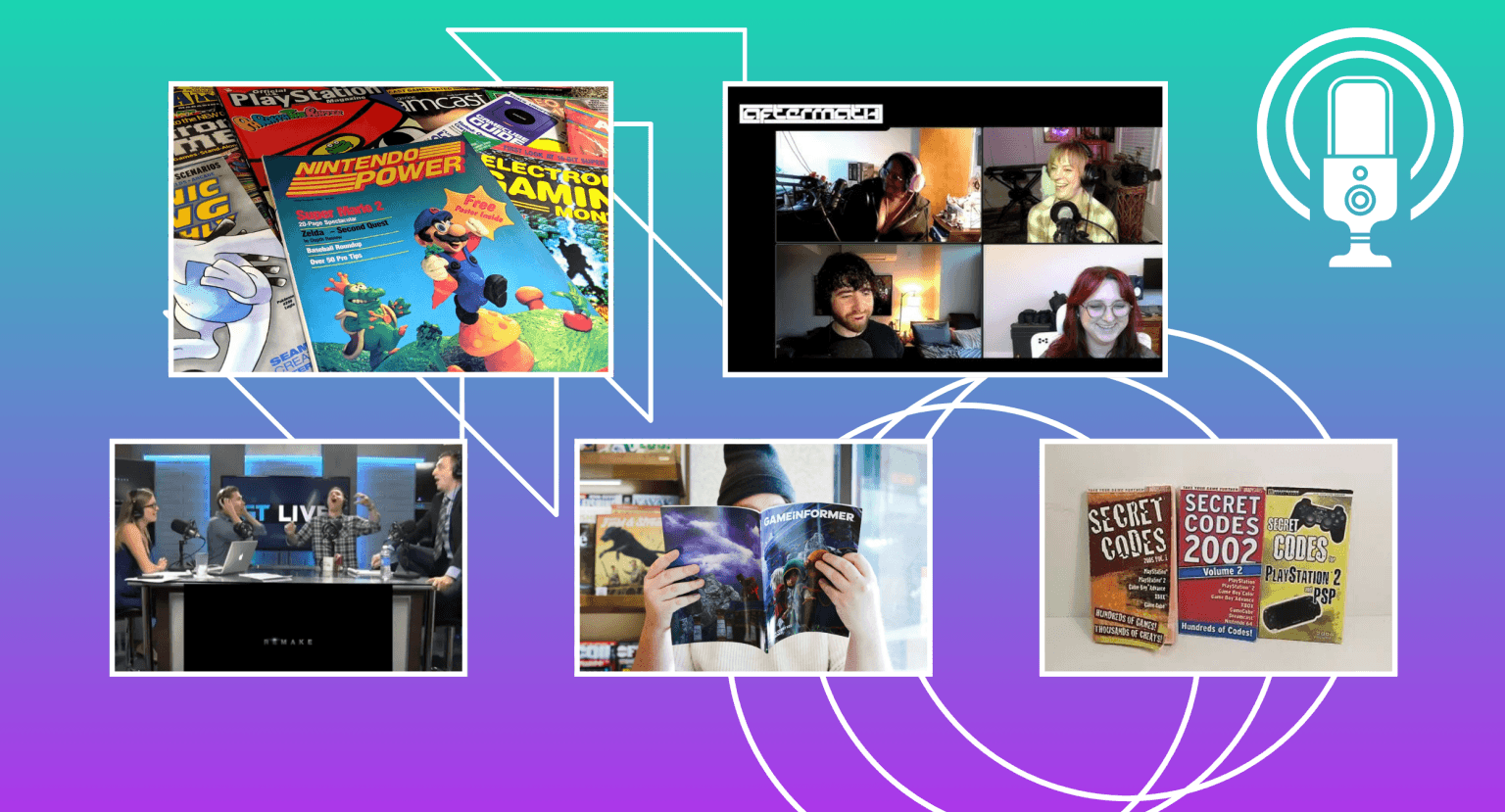
Sam: “For as long as video games have existed, so too has video games media. While the medium itself traces back to the 1970s, the very first dedicated video game magazine didn’t arrive until the early 1980s with mags like Computer and Video Games in the U.K. followed by Electronic Games (not monthly) soon after. Once games truly started flourishing following the launch of consoles like the NES and Sega Master System, the world of games coverage exploded, with tons of magazines dedicated to coverage of the medium, as well as platform specific ones like Nintendo Power.
Broad adoption of the internet in the late ’90s/early ’00s meant players and fans weren’t just getting their news and reviews from paper anymore. Sites like IGN, GameSpot, and GameTrailers (RIP) began to dominate conversations, ultimately becoming the biggest part of games media for some time. Later on, the advent of YouTube and social media completely altered how news was disseminated (as well as how people engaged with critics and reporters), sadly leading to Gamergate in 2014 and exposing some of the ugliest parts of gaming culture to the broader internet world.
Nowadays, games media appears to be in an especially volatile place. Major sites are shutting down left and right and layoffs have become way too normal. Meanwhile, the world of influencers, streamers, and YouTubers appears to be playing an enormous role in games media nowadays, albeit in an unofficial manner.
Still, there’s some hope out there with worker run publications like Aftermath and Mothership (shout-out to our very own Amanda Tien who has been published there a few times) which run on subscriptions and focus more on particular aspects of gaming culture rather than just news and reviews.
Tying this up: Games media has changed immensely over the years, but it still matters to us here, and we think it’s worth talking about it all, both the good and the bad.”
Nostalgia
Donovan: “I suggested this topic for the podcast purely from nostalgia, honestly. I was reminiscing on the days where I would, when my parents took me to the grocery store, I’d go straight to the magazine section. I’d look for Game Informer and thumb through it or look for those thin cheat code books or those thick game guides. At Blockbuster, I’d do the same thing. When I got older, I went on the computer more, and I figured out how to use bookmarks, and I’d have a ritual of checking certain sites in order: Kotaku, IGN, GameStop, and then GameTrailers, and in the background I’d have G4 or Attack of the Show playing. I was always looking for the news every single day… I have so many fond memories. Things have changed so much.”
Diversity in Games Journalism
Kei: “Growing up, reading certain sites, there were a select number of writers and journalists who really framed my understanding of games media. I valued their specific takes and perspectives. [For a long time,] I read Kotaku specifically for writers like Gita Jackson [now a co-founder of Aftermath], Patricia Hernandez, and Cecilia D’Anastasio… Even though every written piece goes through many levels and has various corporate influence, there is a space for sort of gaming journalist auteurs to emerge.”
Donovan: “I wish that the gaming industry at-large [tolerated and encouraged] more serious gaming journalists. Like Jason Schreier has been doing great investigative work [first at Kotaku, then at Bloomberg] for a long time, including on labor conditions. I want to see more like that.”
Sam: “I agree, writers like Schreier and Rebekah Valentine [who was at IGN for years] are so important for the present moment of games journalism… People talk a lot about nostalgia in games, and we have too, these simpler times of games media. But a lot of what happened with Gamergate, I’d argue, has roots in the publications and magazines — advertisements, letter to the editor sections, and more — were very male-focused and especially very white-male focused… I don’t want people to talk about Gamergate like it was this isolated thing. It was always there, it was just unlocked.”
David: “One of the silver linings of Gamergate [was] — and continues to be — more diverse [games] media and more representation in games media. A lot of the flagship outlets that I follow feature voices that just wouldn’t have had the same opportunities 10, 20 years ago for how toxic the gaming community has been and sometimes still is. […] One of the reasons I love doing The Punished Backlog is that we have this opportunity to amplify voices from people with different backgrounds, living in different locations, different racial backgrounds, with different gender identities. We’re able to bring more people to the table in a way that wouldn’t have been possible 20 years ago.”
Listen to the episode for the rest of the conversation!
Credits and Notes
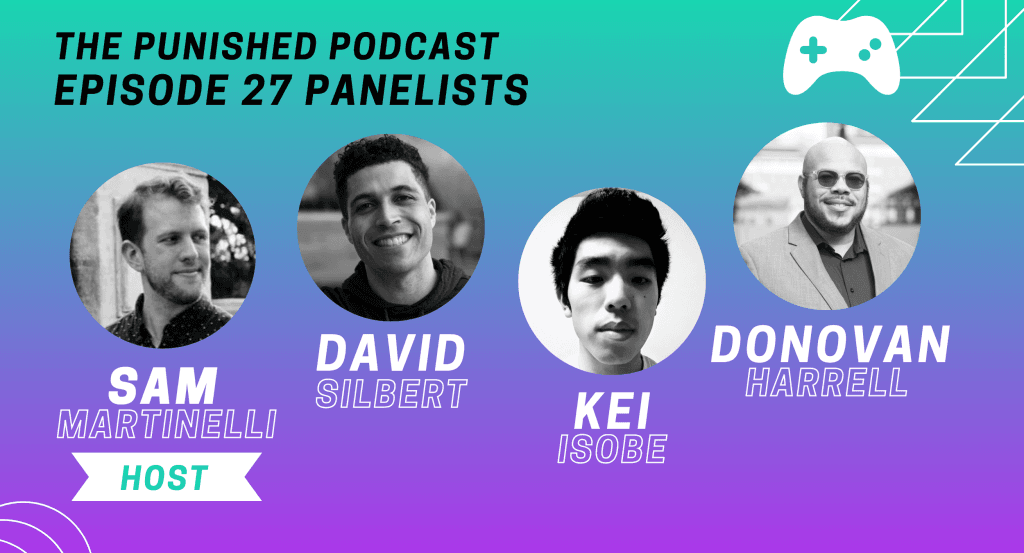
- Podcast Co-Hosts: David Silbert, Sam Martinelli, Amanda Tien
- Podcast Audio & Graphics Editor: Amanda Tien
- Podcast Distributor: David Silbert
- Theme Song Composer: Jason Hulse
Further Reading

A video game outlet that blends quality words with inclusive voices. For business inquiries and review requests, reach us at press [at] punishedbacklog [dot] com.





Sam has been playing video games since his earliest years and has been writing about them since 2016. He joined The Punished Backlog in 2017 and became an Editor in Fall 2021. He’s a big fan of Nintendo games and complaining about The Last of Us Part II. You either agree wholeheartedly with his opinions or despise them. There is no in between.
A lifelong New Yorker, Sam views gaming as far more than a silly little pastime, and hopes through critical analysis and in-depth reviews to better understand the medium's artistic merit.
Bluesky: @sam-martinelli.bsky.social




David is the founder of The Punished Backlog. He has a problem finishing games he starts.
Just beat: Splatoon Raiders.
Working on: GTA V.
Can't wait for: Ocarina of Time (2026), GTA VI.
Follow David on Twitter at @David_Silbert to keep up to date with all things The Punished Backlog.


Donovan is a lifelong gamer with a love for fast-paced, single-player action games—especially Devil May Cry, Metroidvanias, indies, and action RPGs. He’s also an “advanced scrub” at fighting games and will play just about anything fun. Donovan is passionate about seeing more diverse characters and creators in the industry—or at least better hair options for Black people. With over a decade in journalism, he joined The Punished Backlog in 2023 to write more about what he loves. Follow him on Twitter and Instagram @dono_harrell.





Huge video game, comic book, and anime fan. Spends way too much time watching things he doesn’t like. Hates Zack Snyder. Mains Falco.