

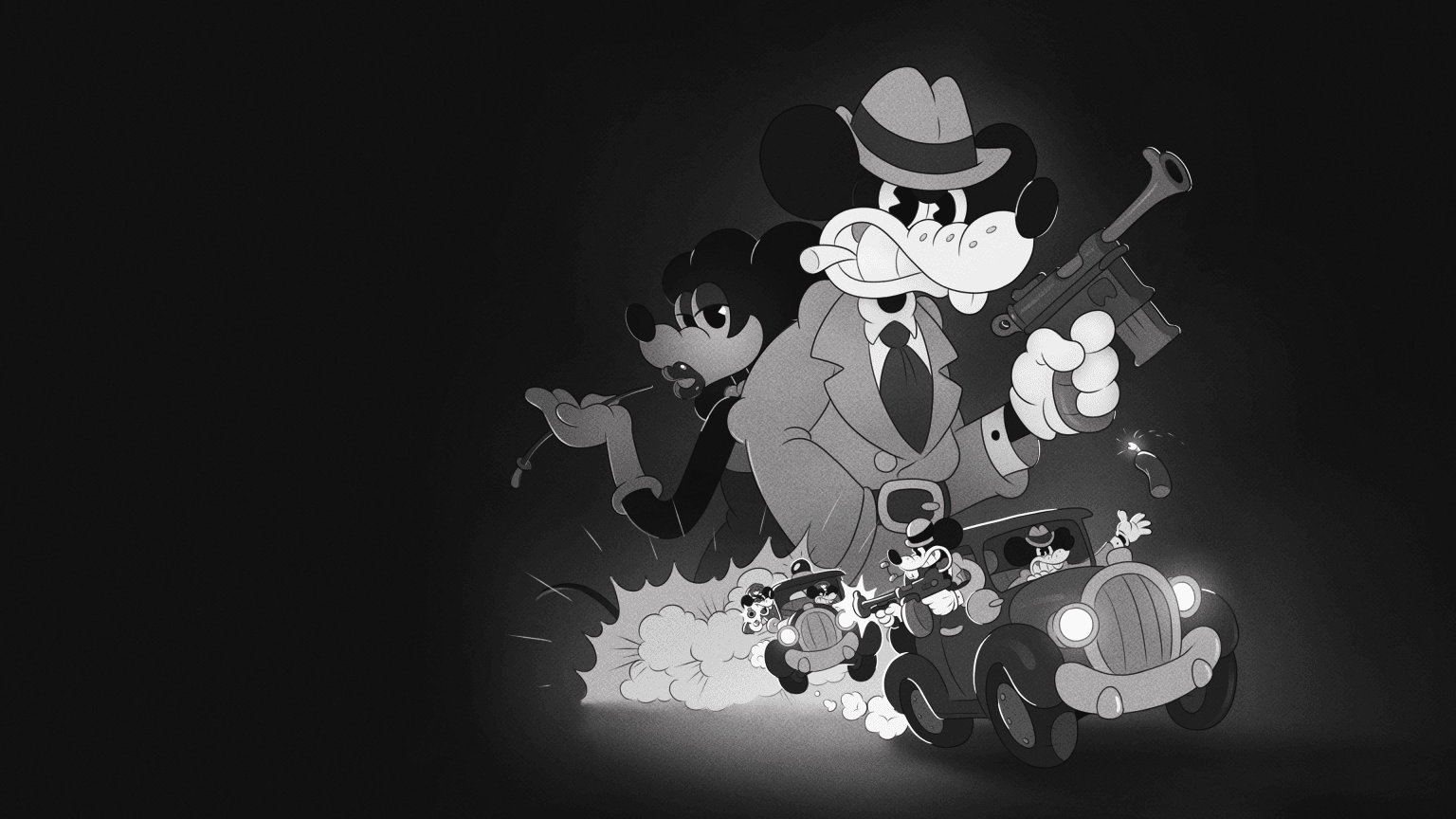

Jack Pepper didn’t know what he was getting into when he stepped off the elevator. And he certainly didn’t expect to end up falling from a building. But that’s Mouseburg for you: a place where a simple missing mouse case snowballs into corruption, murder, and a web of intrigue you can’t see the edges of from the rooftops.
Fumi Games and PlaySide Studios have crafted something genuinely special with MOUSE: P.I. For Hire — a game so fully committed to its aesthetic, its world, and its characters that it’s almost impossible not to fall in love with it.

I haven’t seen a cartoon aesthetic that I’ve loved this much since Cuphead. But where Cuphead was a love letter to the punishing side of old-school gaming, MOUSE is something different. It sits at the intersection of Steamboat Willie, Who Framed Roger Rabbit, and Doom — if you handed Mickey a Tommy Gun and dropped him into a 1930s crime thriller. It’s a simple but powerful premise utilizing public domain, and one that has made the internet curious for a long time.
I’ve been hyped about this game for years, and I’ll tell you right now: It does not disappoint. MOUSE: P.I. For Hire is out this Thursday, and you won’t want to miss it.
Rotten at the Core
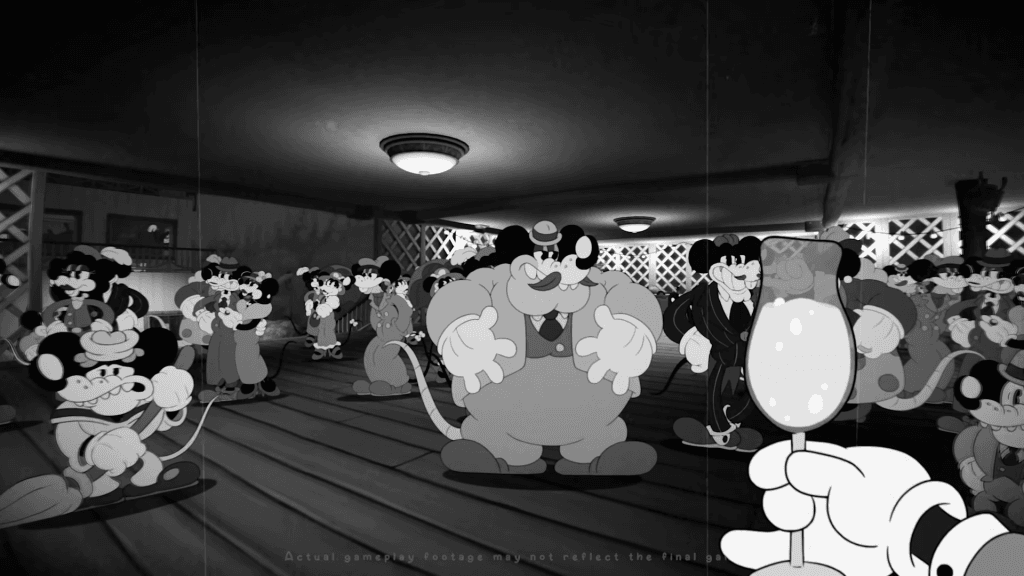
Mouseburg is a city rotting from the inside. On the surface, it’s a beautifully rendered black-and-white cartoon metropolis: dapper mice lined up for the subway, rodents carrying the energy of “ayyy, I’m walkin’ here!”
But Mouseburg doesn’t smell like fine-aged Gouda. It smells like something left out in the sun too long: pungent, sharp, and impossible to ignore.
Labor strikes are sweeping the country. Workers are fed up with conditions in munitions factories. The BMP (Big Mouse Party) is a rising fascistic movement making life increasingly dangerous for Mouseburg’s shrew community: a population of smaller rodents facing violent discrimination from crooked cops and opportunistic politicians. Posters urge workers to “sweat now, nap later.” The poor are getting poorer. That’s just life in Mouseburg.
The historical parallels run deeper than set dressing. Jack’s war flashbacks reference gas and trenches. The BMP’s iconography is unambiguous: lightning bolt armbands, an eagle-like emblem, rants about shrew inferiority. The systematic persecution of the shrews — kidnapping, trafficking, and bigotry — is handled with real weight. It’s not background noise; it’s the spine of the story.
The game doesn’t dress this up or keep it at arm’s length. One side mission has you stepping outside your own office to punch a BMP member at your doorstep as they hurl insults at shrews. It’s not subtle, but it’s not trying to be. MOUSE: P.I. For Hire is anti-fascist to its core, and it puts that conviction in your white-gloved mitts.
It made me think of Art Spiegelman’s seminal graphic novel Maus — not just because of the rodents, but because of that same impulse to use an unexpected fictional form to tell an uncomfortable truth about what human beings do to each other.
What’s most impressive about MOUSE’s storytelling is that when you solve a case (of which there are several), it never really feels solved. The systems that created the conditions for that case still exist regardless, and every baddie you take down leaves a vacuum to be filled. Good mice are working inside and outside these systems to make a difference, but the game doesn’t sugarcoat how much that costs them.
A Hard-Boiled Mouse in a Rotten City
At the center of it all is Jack Pepper: a former war hero and ex-cop who left the force because of its corruption, now scraping by on cases as a private investigator he can barely afford to say no to because of a gambling habit that’s left him buried in debt.
But how could he be sure which side he’s on when the web of corruption runs so deep that he often ends up feeling like a pawn? The game makes that viscerally clear through angry PTSD rants by its protagonist that surface at unexpected moments. Jack is troubled in ways that go beyond the usual noir brooding, and he coats his pain in fondue puns and sarcasm. That complexity gives the story real dramatic weight.
Troy Baker delivers Jack’s voice with the gruff charm of a seasoned, world-weary detective: grit, whimsy, and a New York drawl that never wavers. Jack is the core of MOUSE P.I. For Hire, but the rest of the cast of characters brings humor, joy, and heart as well.
Jack frequently partners up with Wanda Fuller, a cynical yet trepidatious journalist hardened by a world run by mouse men. The P.I. also spends time with Tammy Tumbler, a sharp young mechanic with a complicated personal history. Cornelius Stilton is jovial and well-connected, a war buddy turned politician always acting with a plan you can’t quite read. You can’t miss Viviane McCarthy, the femme fatale former movie star, who is as dangerous as she is magnetic. But my personal favorite character is a mystical old shrew woman who surfaces occasionally to drop Bayou wisdom and foreshadowing that hits differently the further you get into the game. Every voice actor, every character design, absolutely sells it.

Each character also has side quests for Jack that peel back surprising emotional dynamics between them. Cornelius and Tammy in particular carry a moral weight to their relationship that I wasn’t expecting from what looks, on the surface, like a cartoon game about a mouse with a gun.
Fumi Games and PlaySide Studios have crafted something genuinely special with MOUSE: P.I. For Hire — a game so fully committed to its aesthetic, its world, and its characters that it’s almost impossible not to fall in love with it.

The Case: It’s Complicated
The storytelling structure sits in an interesting middle ground. It’s not fully linear, and it’s not an open world. You’ll occasionally juggle multiple main missions and side quests at once, and the suggested order isn’t always obvious.
That ambiguity creates somewhat jarring moments: I stumbled into a level with ammo for a gun I hadn’t acquired yet, and “solved” a case with full fanfare while crucial clues still sat waiting in another level.
The intertwining cases involving mobsters, cultists, robots, ghosts, cheese-leggers, and the fascist BMP are impressively complex, but the freedom occasionally creates small cracks in the storytelling logic. While it never broke the experience for me, it’s a rough edge worth knowing about going in.
MOUSE: P.I. For Hire’s overarching story nails the landing. The game successfully ties together cases, multiple factions, and a rich cast of characters into a conclusion that earns everything it’s built toward. The pop culture references, including more than a few nods to Doom, never feel like empty fan service. They feel like love, deployed in service of the world and its characters.

Guns Blazing, Jazz Playing, Secrets Everywhere
MOUSE: P.I. For Hire wears its boomer shooter influences proudly, but calling it just a boomer shooter undersells what Fumi Games has built. This isn’t a game that throws you into the same arena over and over.
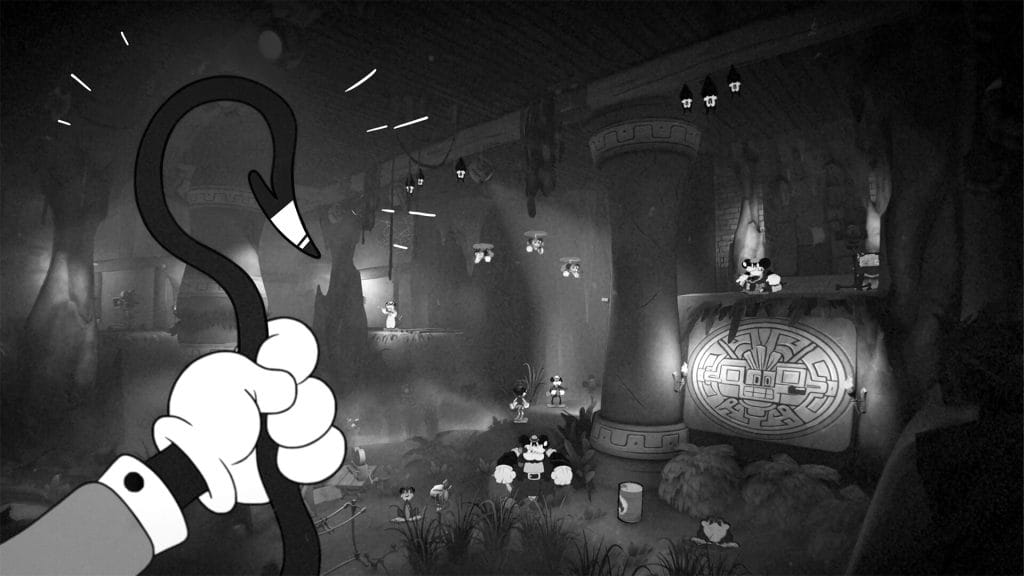
The level design mixes things up constantly: gunfights on train platforms with actual trains speeding through the middle, science labs with laser grids cutting off your exits, stages where set pieces drop down mid-fight, movie studios with different themes in every room. The sheer variety, and the surprises tucked inside even familiar environments, is something I genuinely wasn’t expecting.
Movement is so smooth and intuitive, it felt like I grew a tail myself. Speaking of tails, Jack’s tail doubles as a traversal tool for hovering and swinging, with wall running and double jumping rounding out a system that isn’t quite Titanfall 2, but pretty damn close.
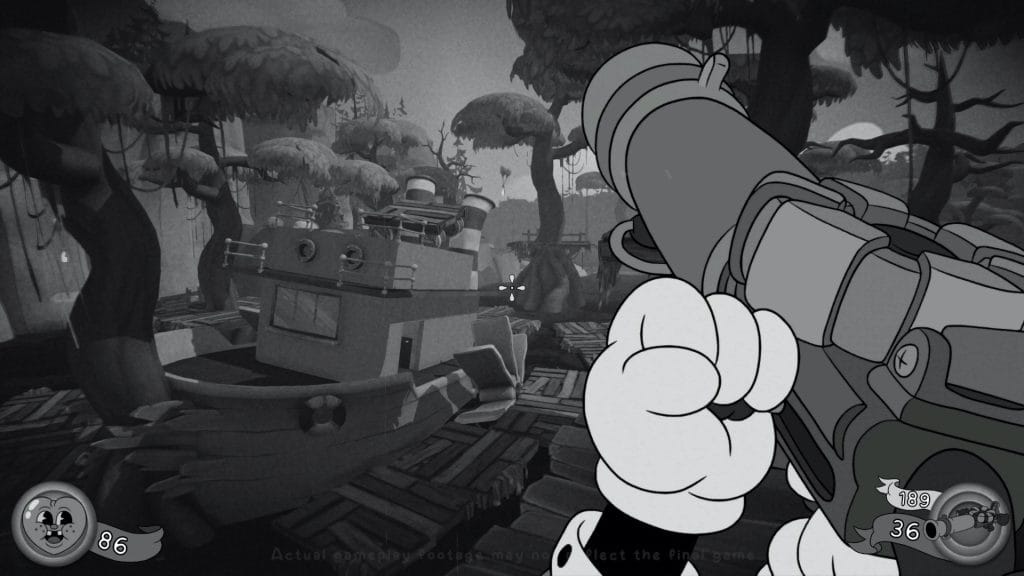
Hunting for clues is also a core part of the experience. Sharp eyes and genuine curiosity are required, because some of these things are easy to miss. The game rewards players who slow down and look.
MOUSE: P.I. For Hire consistently rewards exploration — every single time. A narrow gap between a crate and a wall? Money. A cracked-open locker? Could be a newspaper, a baseball card, a schematic, a comic strip, or a secret area. The rewards never dried up in my first playthrough, and that had me already looking forward to future runs before I’d even finished the game.
Between missions, you operate out of a hub area near Jack’s office where the supporting cast doles out side quests. There’s also a surprisingly addictive baseball card battler mini-game waiting for you. And all those cards you’ve been collecting? Yeah, they go there.

Myeah, See, Here Come the Goons, See
At first glance, you might think the enemies are repetitive: The factions change, but the troop types stay the same across mobsters, cultists, robots, and BMP goons — most of them bursting through the doors scattered through each level. However, there’s enough variety of menacing mice in how they’re mixed and deployed to keep you engaged. And besides, the commitment to style is never not compelling.
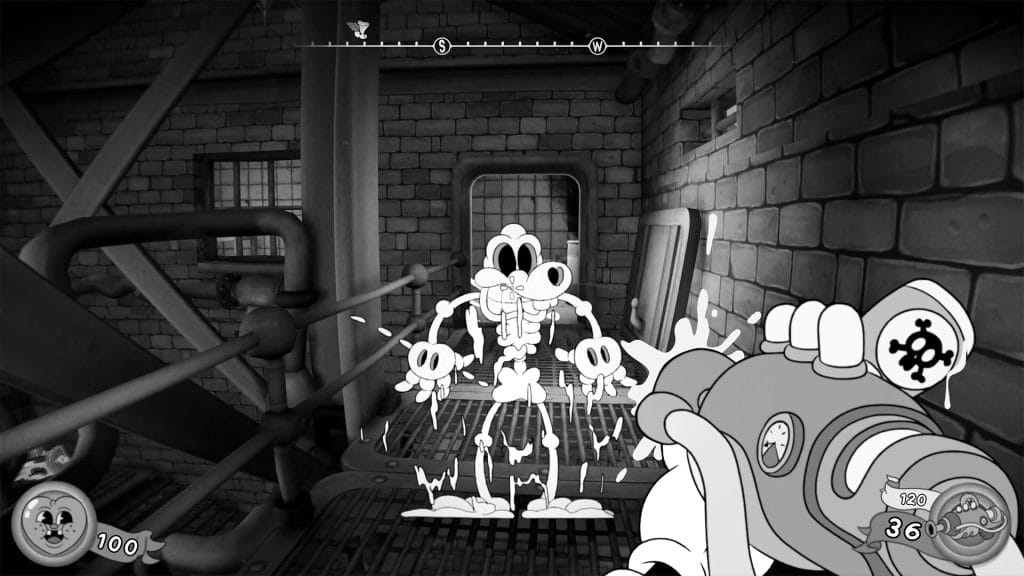
Quick melee mice chase you around with nightsticks and lead pipes. Big bruisers soak up punishment and charge straight at you. Snipers vanish the moment you close the distance. Shotgun-wielders are tough enough to take a hit and close enough to make you flinch. And then there are the shrews in tiny helicopter propeller suits, buzzing after you from above while you’re already dealing with everything else on the ground.
MOUSE: P.I. For Hire is a triumph — as close to perfect as it gets.
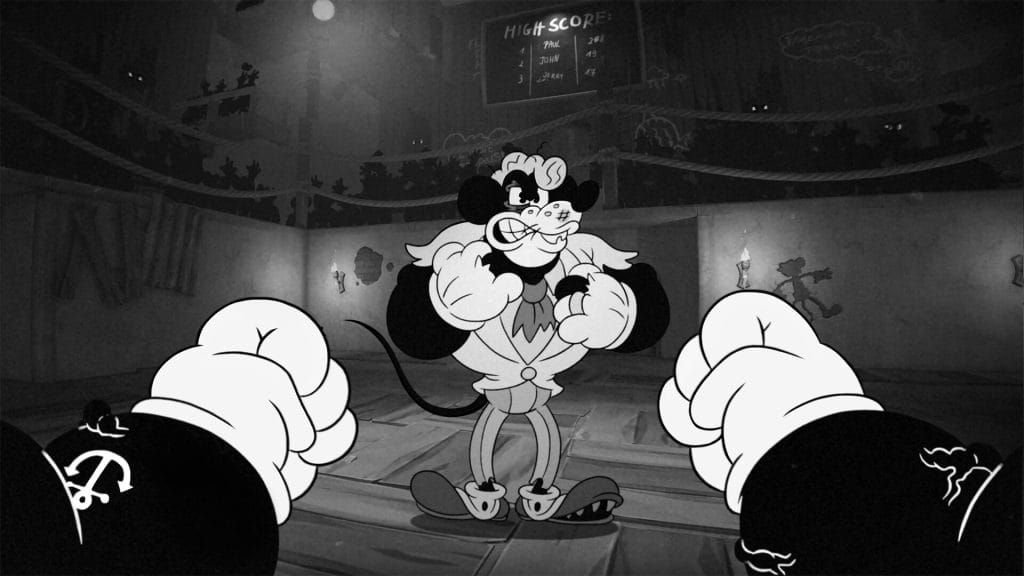
Enemies burst out of smashed crates and crash through breakable walls. Most waves are announced by the ding of a boxing bell. Another ding signals when it’s over, and the doors the mobster mice were spawning through stay open. It’s a small touch that plugs directly into the cartoon aesthetic and boxing culture of yore while letting you know when things are about to get ugly.
Each level typically ends with a boss fight, and there are plenty of them. Early on, they’re straightforward: Learn the pattern, find the opening, put in the work. As the game goes on, fights get more elaborate, with unique gimmicks that make bosses vulnerable only under specific conditions. Some you can blast from a distance. Others get in your face and demand you adapt. I was impressed with the variety, more than I expected from a game that I thought could be a one-trick pony.

Armed and Dangerous
Beyond being stylish and interesting in level design, MOUSE: P.I. For Hire also demonstrates a clear understanding of what makes RPG combat fun by letting you have choices with how your weapon shakes out. The arsenal is stacked: 12 weapons in total, ranging from a pistol, a literal cannon, and a double-barreled fire shotgun, all the way down to Jack’s own two white-gloved fists — lovingly named “Mitts.”
My personal favorites were the skeleton chainsaw sword and the Tommy James Gun, an automatic machine gun that shreds through crowds with extremely satisfying results. The B.A.N.G. upgrade system lets you trade schematics for improved precision, power, and penetration, plus alternate fire modes, a welcome addition that becomes increasingly necessary as enemies grow tougher.
Every weapon has three upgrades, each costing more schematics. Because I ran around exploring every bit of each level, I always had enough to upgrade the weapons I enjoyed the most. I preferred to save them up in anticipation of the loony gun they’d give me.

The game also occasionally blesses you with some truly unhinged consumable power-ups. Pop a can of spinach for a full Popeye-style transformation. Sip some tea and — through the power of caffeine apparently — your own hand becomes a finger gun with unlimited ammo. Bite a spicy chili pepper and every attack gets fire properties for a limited time.
These aren’t things you can buy or stock up on, and honestly, that’s the right call. They’re so powerful they’d break the game. As it stands, they feel like the universe is briefly deciding to cut Jack a break.
I played on Normal (“Detective” mode) and found the difficulty fair throughout, if occasionally a little easy. The screen can get chaotic, but there are Heal-D bottles and slices of cheese that you can save for healing in a pinch that are scattered generously through each level.
Black, White, and Beautiful All Over
Every element of this game is in service of the aesthetic. Your health bar? An adorable little heart helper. Your bullet counter? A ruff-and-tuff bullet buddy. When you get lost, a little paintbrush shows footprints to your next objective, charming without being condescending.
The roaring ’20s vibe is immaculate: vintage movie posters, worker propaganda plastered across the walls, jazz pouring out of every alley. And one of the very first things the game asks you is how authentic you want that experience to be. Grainy film filter? Vinyl phonograph? I went medium grain with a touch of vinyl crackle, and it was the right call.
The UI never sits still, idling with the rubber hose animation, bouncy energy of a Merry Melodies cartoon. Every enemy is a 2D character in a 3D world, and downed enemies track your movement Doom-style, rotating to face you as you zip past. Death animations are tiny pieces of slapstick comedy: dramatic beheadings, bodies crumbling to ash, nothing left behind but blinking eyeballs.
And then there’s the music. The big band jazz soundtrack is superb from start to finish: the kind of music that makes you want to be cool, even as you’re desperately dashing out of the way of cartoon bullets. Composer Patryk Scelina’s score, backed by live sessions in Georgia and Poland and featuring a collaboration with Caravan Palace, brings the soul of Mouseburg to life.
The fact that the game lets you choose how it sounds — grainy phonograph, clean vinyl, or modern clarity— shows just how thoughtfully Fumi Games approached immersion. The sound design does real mechanical work throughout: the creak of a locker hinting at something worth checking, the idle bounce of every UI element reinforcing the world you’re in.
Performance on my Steam Deck was buttery smooth, with only minor slowdowns in larger cityscape segments that lasted a few seconds at most.
Final Thoughts: The Cheese Stands Alone
Just when I thought the first-person shooter genre had gone stale on me, MOUSE: P.I. For Hire walked in, tipped its hat, and changed my mind. This game won me over with its endless charm, its witty and genuinely cheesy dialogue — the cheese puns never stop, and I didn’t want them to — and a level of aesthetic commitment that extends to every corner of Mouseburg.
A few structural quirks in the case sequencing keep it from a perfect score, but MOUSE: P.I. For Hire is a triumph — as close to perfect as it gets. Fumi Games has built a world that deserves to be explored, a story that earns its weight, and a combat system that keeps you coming back for one more run. At $29.99, this game is worth every cent.
People have been curious and hyped about MOUSE P.I. For Hire for years. I myself wasn’t sure how it would turn out. The ambition here is staggering, but the game sticks the landing every time.
MOUSE: P.I. For Hire, without a doubt, is the big cheese. Case closed.
Score: 9.8/10
MOUSE: P.I. For Hire, developed by Fumi Games and published by PlaySide Studios, releases April 16, 2026, for PC, PlayStation 5, Xbox Series X/S, and Nintendo Switch 2. MSRP: $29.99. Version reviewed: PC (via Steam Deck).
Disclaimer: A review code was provided by the publisher.

Donovan is a lifelong gamer with a love for fast-paced, single-player action games—especially Devil May Cry, Metroidvanias, indies, and action RPGs. He’s also an “advanced scrub” at fighting games and will play just about anything fun. Donovan is passionate about seeing more diverse characters and creators in the industry—or at least better hair options for Black people. With over a decade in journalism, he joined The Punished Backlog in 2023 to write more about what he loves. Follow him on Twitter and Instagram @dono_harrell.








The title is interesting—how does the gameplay compare to other mystery games? It must be fun to piece everything together.