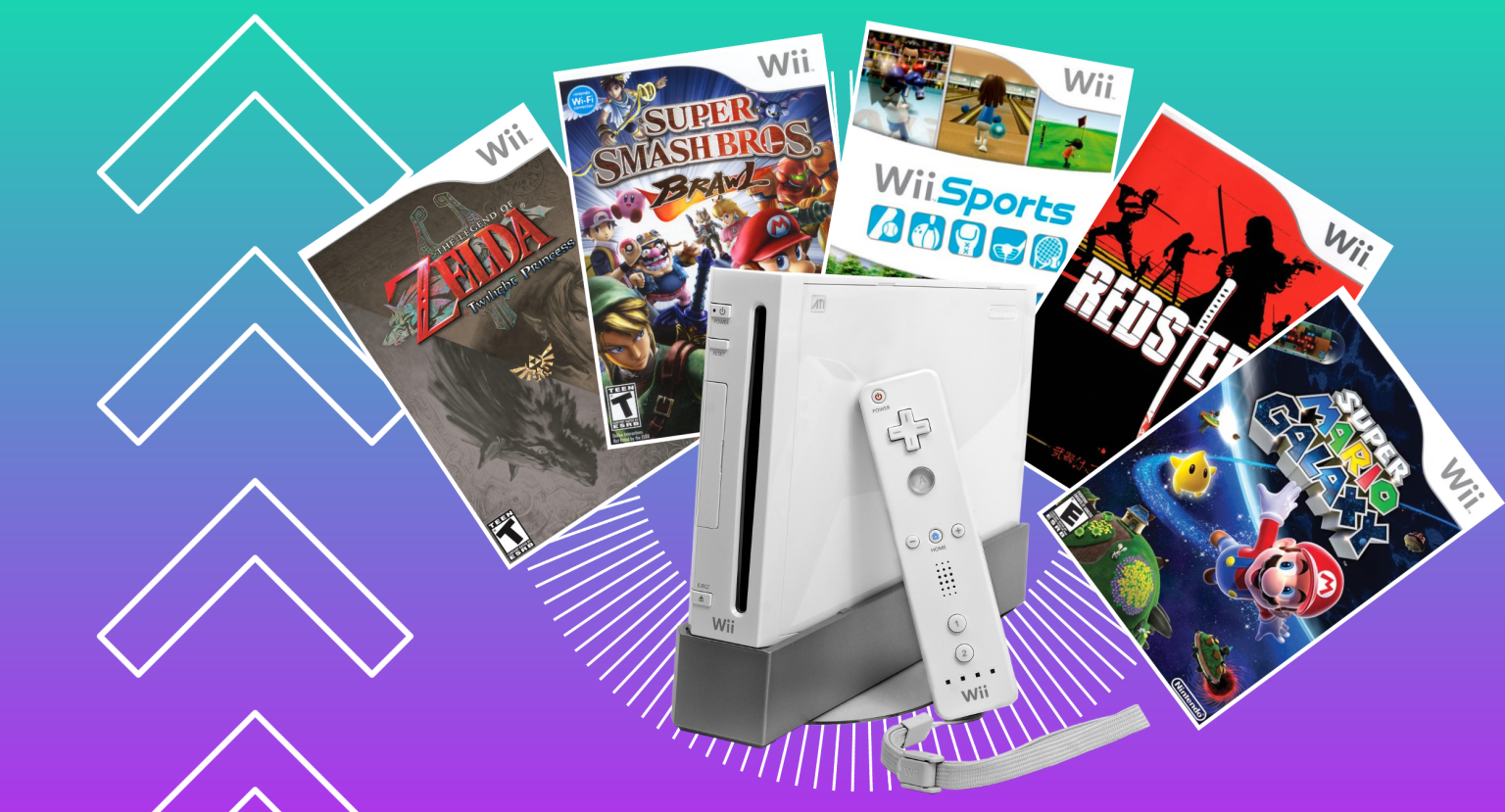

Twenty years ago, Nintendo took an incredible risk with its latest hardware that (mostly) paid off.
When the Big N showcased the Wii during its E3 presentation in 2006 — during which it confirmed the silly name of the console and demonstrated how it would work in real time — the gaming community was largely split. On the one hand, here was a bold idea that could simultaneously overhaul the way players interact with their games and offer an enticing gameplay experience to more casual players. On the other hand, the small, white box was significantly less powerful than its competitors in the PlayStation 3 and Xbox 360, and there was a real chance the gimmicky nature of the controls would push away hardcore audiences (or just people who physically couldn’t perform the motion commands).
Wherever you land on the success or failure of the Wii, two things are undeniable. For one, it sold outrageously well. Second, it had an iconic library of games that brought in first-time gamers and provided unforgettable experiences for veteran audiences. While most of the best games on the platform were first-party Nintendo titles, there were still plenty of fantastic third-party games that made the goofy little Wii as big as it was.
Personally, I loved the Nintendo Wii, warts and all. Sure, I eventually tired of every single new Nintendo console game being a waggle-fest, but there was something truly special about those first few years. Even if motion controls never became normalized across all platforms, the Wii still felt like a step forward for the medium, as it broadened the audience for video games as a whole and forced players to reimagine what a “game” truly was in some cases. So, for the console’s 20th anniversary, we at The Punished Backlog felt it was time to celebrate the Wii’s best and most cherished games.
-Written by Sam Martinelli
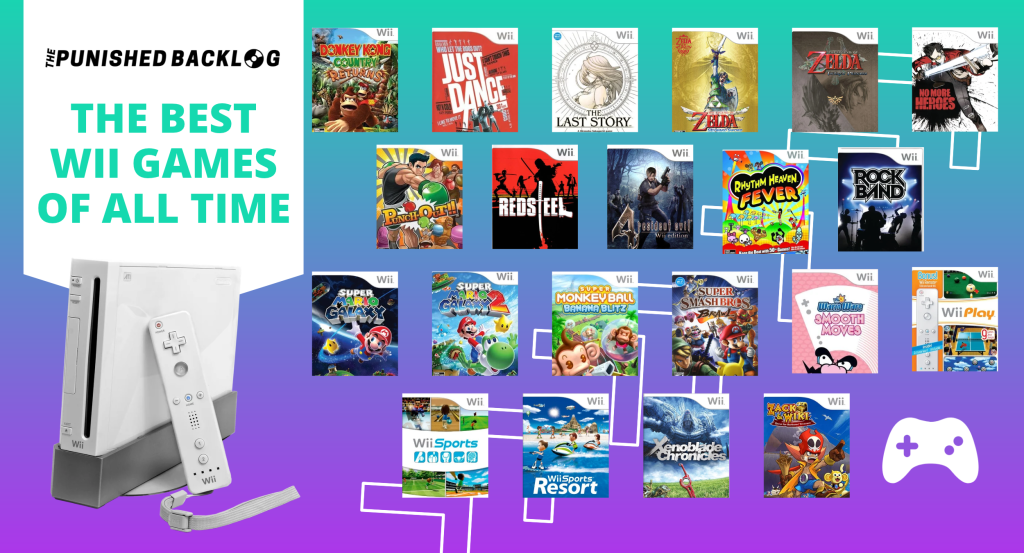
The 21 Best Wii Games
Want to skip to a favorite entry? Check out our table of contents with the games in alphabetical order, or keep reading on:
- Donkey Kong Country Returns
- Just Dance
- The Last Story
- The Legend of Zelda: Skyward Sword
- The Legend of Zelda: Twilight Princess
- No More Heroes
- Punch-Out!!
- Red Steel
- Resident Evil 4 Wii Edition
- Rhythm Heaven Fever
- Rock Band
- Super Mario Galaxy
- Super Mario Galaxy 2
- Super Monkey Ball: Banana Blitz
- Super Smash Bros. Brawl
- WarioWare: Smooth Moves
- Wii Play
- Wii Sports
- Wii Sports Resort
- Xenoblade Chronicles
- Zack & Wiki: Quest for Barbaros’ Treasure
Donkey Kong Country Returns
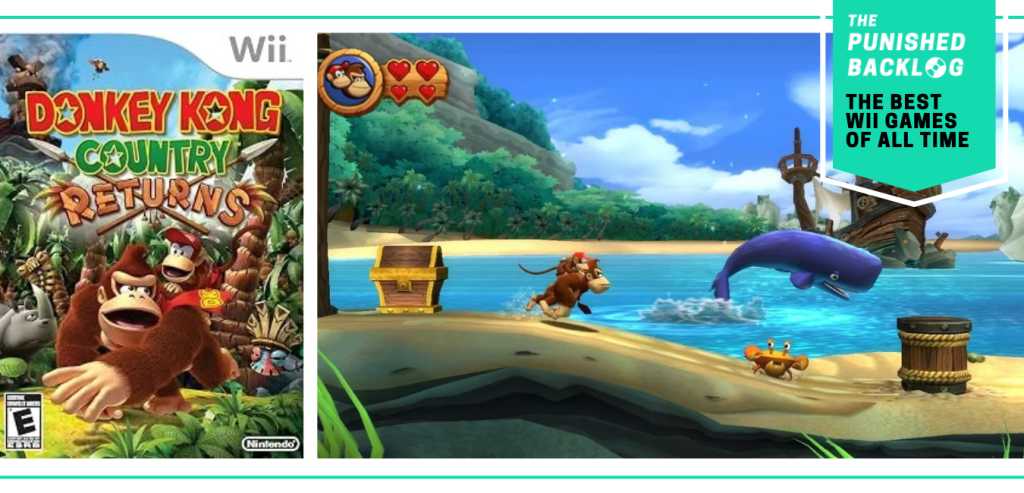
I have kind of a funny relationship with Donkey Kong Country Returns. When Nintendo first unveiled the game at E3 2010, I was ecstatic, especially given that the Big N hadn’t released a brand new Donkey Kong Country game since 1996. Plus, after I learned that Retro Studios, which had previously developed all the mainline Metroid Prime games, was working on this brand-new 2.5D platformer, I knew the Wii had a banger on its hands.
Strangely, though, I didn’t start playing it until after I got my wisdom teeth removed and was hopped up on Vicodin for several days. I’m sure my hazy playthrough of the first dozen or so levels were ones defined by joy and suspense, as Returns certainly brought a similar level of challenge to its platforming that its forebears did. But for a long time, a lot of my memories of the game amounted to little more than a blur. Despite clearly being good, Returns ultimately took a back seat in my mind, even more so once the clearly superior Donkey Kong Country: Tropical Freeze launched for Wii U just a few years later.
Still, every time I go back to Returns — and I’ve gone back several times on multiple platforms — I’m reminded of its gorgeous art direction, sharp and weighty controls, bevy of secrets in every level, and tremendous ingenuity in its level design. So many of the ideas presented in Returns felt like a true evolution of the franchise, from being able to launch back-and-forth between different 2D planes to levels where Donkey Kong and all his enemies appear as nothing more than silhouettes on-screen. Even some of the sillier ideas, such as the blowing mechanic (you read that right), make the whole experience fairly endearing all these years later, since these little things make the title even more unique.
I’d still rank DKC Returns firmly below the first two games in the series and Tropical Freeze, but that’s more a testament to the excellence of these games overall. On its own, Returns is one of the best 2D platformers of its era, and clearly one of the best original Wii titles.
– Written by Sam Martinelli
Just Dance
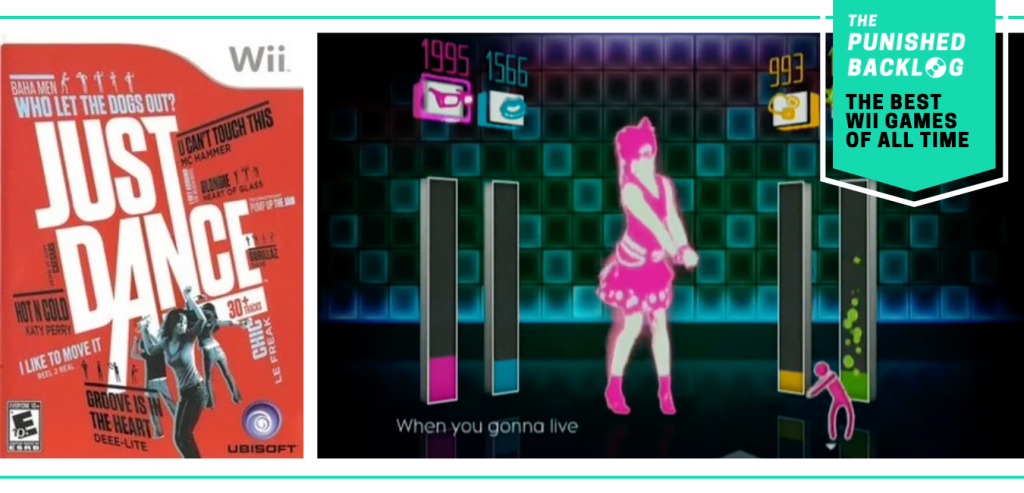
If Rock Band made me feel like a cool rockstar, Just Dance made me feel like a silly happy back-up dancer trying not to get kicked off the tour. Ubisoft recognized the worldwide arcade phenomenon of Dance Dance Revolution and managed to mimic it well enough for home audiences in Just Dance in 2009.
Just Dance featured popular licensed music and had players perform as color cut-outs of human beings (reminiscent of the original iPod commercials) by holding Wiimotes. It was a clever play on Guitar Hero’s successful formula of engaging players with songs they already knew and loved, but required way less expensive hardware. Just Dance was exclusive to the Wii and perfectly fit in with the console’s family-friendly, movement-oriented fun. The soundtrack was impressively diverse, ranging from The Beach Boys to Katy Perry to MC Hammer.
Over the years, Ubisoft has released well over a dozen Just Dance games. They’ve done different genre packages and kept up with the times. Incredibly, they’re still going (including this delightful behind-the-scenes video of people dressed in giant croissant costumes doing Chappell Roan’s “Hot To Go”). Growing up, we owned a few Just Dance games, but I can’t remember which ones. What I do remember were after-school sessions hanging out with my sister as we tried to perfect our sick moves to neon animations. And, of course, who could forget Ubisoft’s choice to suddenly immerse all of E3 into a rave party in the middle of the day?
Life is hard, but these joyful games are a good reminder that, when the music is playing, we should all Just Dance.
– Written by Amanda Tien
The Last Story
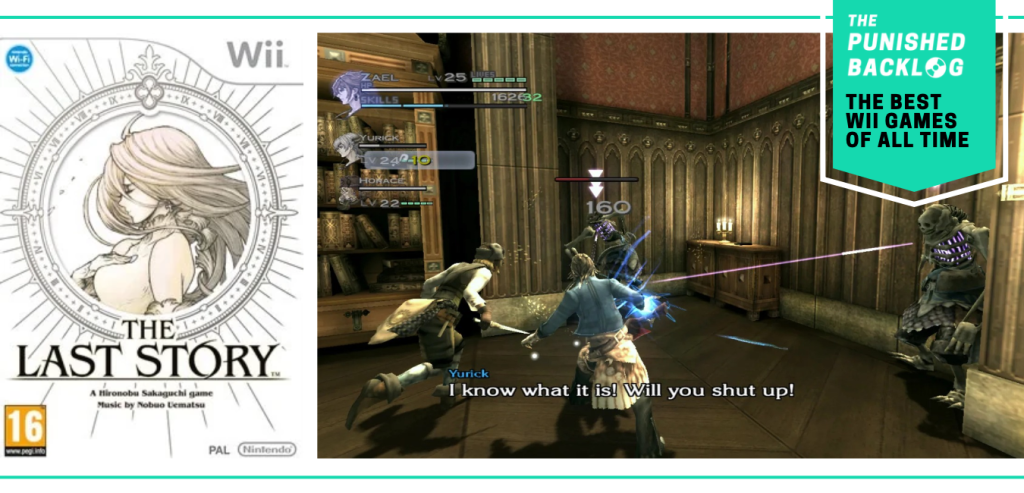
The only game from “Operation Rainfall” I managed to finish, The Last Story is one of the Wii’s last memorable titles. Even though the game was originally relegated only to Japan, enough people put up a petition online and demanded its release along with its fellow late Japan only releases in Xenoblade Chronicles and Pandora’s Tower. Release drama aside, the game was developed by Mistwalker Studios, a company founded by Final Fantasy creator Hironobu Sakaguchi. At the same time, Sakaguchi got his friend and fellow Final Fantasy legend Nobuo Uematsu to compose the score.
By the time the game made it to the U.S., there was a lot of anticipation, along with the other “Operational Rainfall” titles. For The Last Story, its publisher, Xseed Games, reported it was the most successful title they had ever released in the United States. The premise seems simple on the surface — a boy named Zael has an unknown destiny, befriends Calista, a princess, and together they work to face an enemy of humanity — but then you start to learn more about the world and the cast of characters that make it more interesting.
Nevertheless, gameplay was where the game stood out the most, with an action battle system featuring environmental hazards which could be optimized to deal massive damage. There was likewise a stealth system where players could silently take out enemies and a command system which allows players to organize Zael’s party to optimize their approach to battle.
The world in the game was probably one of the best hub areas with the majority of the game set on an island where one can explore. It was extremely satisfying to find new enemies and items as I explored or revisited old areas with new access. The island was filled with sidequests that could be taken at your current level or stacked up to revisit later. Without giving anything away, the game finishes with a new game plus that allows you to take advantage of unexplored areas with higher level enemies and loot.
The Last Story will always be one of the Wii titles I recommend to people as it has all the great elements from a classic RPG with an action based system. If it was released today, it would be lauded for its combat and replayability. Most importantly, the game had some of the best physical packaging of any release I’ve purchased, opening like a book constructed out of heavy paper or cardboard. Whether a vet or a newcomer to the genre, The Last Story had something for all.
– Written by Vaughn Hunt
The Legend of Zelda: Skyward Sword
Nintendo released The Legend of Zelda: Skyward Sword in 2011, almost exactly 15 years ago. At the time, I wasn’t at all cognizant of gaming news or the game’s general reception, so all I had to go on was my experience of the game and comparison to my first The Legend of Zelda game, which was Twilight Princess.
Skyward Sword opens abruptly into a cinematic that begins with a scary eldritch-looking beast rearing its ugly head, and ends with Link being woken by a cute feathery alarm clock and a cute letter from Zelda. I immediately loved the juxtaposition of light and dark that the game presented.
The music of Skyward Sword stood out to me too, especially Groose’s theme, which became somewhat of a meme between my younger brother and I because of how silly it sounded. The full orchestral arrangements made the game feel so alive, and the soundtrack continues to be one of my favorite video game soundtracks to this day.
Of course, the aesthetic was also a shocking departure from the gritty stylings of its predecessor. That was no problem, though, since this might have actually been my first horror game. I will never forget the anxiety that coursed through me during my Silent Realm runs. In the Silent Realm, the whimsical, colorful world that I’d been learning to navigate suddenly turned into a gray, echo-y ghost world. Even worse, I had to sneak around to avoid getting violently bludgeoned by giant lumbering sentinels. Man, what a time. I still kind of get sweaty just thinking back on it.
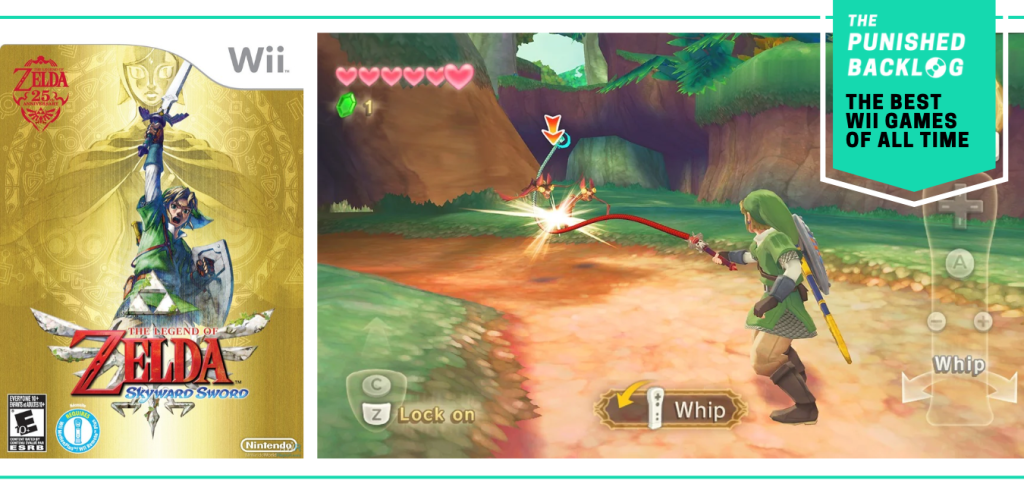
The sweatiness could have also had something to do with the full body experience of the Wii. While Twilight Princess also used motion controls, Skyward Sword was built specifically for the Wii MotionPlus technology. You really had to hold your hand up to the sky to charge your Master Sword, and the sword fighting felt so smooth that standing up to use my whole body to sword fight just felt natural (and more fun). Jumping around and stabbing the air with the Wiimote made me feel like I was really the hero!
As an adult, I can understand some of the many criticisms toward Skyward Sword, but as a kid, the immersion and general artistic direction pretty much made it the best thing since sliced bread.
– Written by Alexia Dahlin
The Legend of Zelda: Twilight Princess
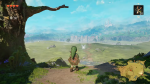
I’ve never been more hyped up about a new game release in my whole life than I was for The Legend of Zelda: Twilight Princess in 2006. It looked like the Zelda game I had always wanted: dark, a little gritty, and chock-full of incredible new dungeons. The fact that it was going to be a launch title for Nintendo’s ambitious new motion-based console only ratcheted up the hype even further.
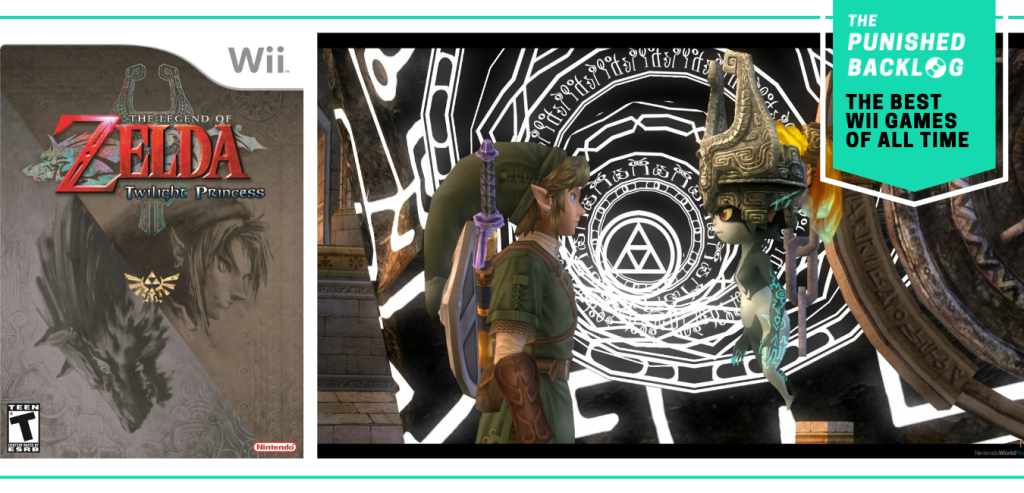
While today I wouldn’t call Twilight Princess a top five game in the franchise, at the time of release I could not have been happier with it. Hyrule Field had never looked bigger and more enticing. The soundtrack was equal parts booming and calming. The dungeons were remarkably captivating (especially some of the newer concepts, such as the Snowpeak Ruins and Palace of Twilight). The boss fights felt as epic as any I had played in any video game up to that point.
Moreover, while I wouldn’t say the motion controls hold up all that well — 2011’s Skyward Sword would offer much more precision and creativity — when I first picked up the Wiimote and Nunchuk for Twilight Princess, I was absolutely entranced. I could swing my controller just like a sword! I could aim the bow and clawshot with amazing precision! The fishing mini-game felt like actual fishing! You could argue now that other versions of TP for GameCube and Wii U are easier to control and fundamentally better. In 2006, though? The motion controls of the Wii were king, and you could never have convinced me otherwise.
Those early months with the Wii were truly an all-time “you had to be there” era for gaming. Everyone I knew — from friends at school to my aunt and uncle visiting from Florida — wanted to see how this new technology worked. Sure, Wii Sports was always the easiest thing to showcase. But for people truly interested in what was possible for the medium, I showed them Twilight Princess’ Goron Mines, Castle Town, Twilight Realms, and everything in between. Many of my friends would just sit and watch how my hands affected what was happening on screen, often in awe at what they saw.
It’s debatable whether the Wii truly lived up to its potential. Still, playing Twilight Princess for the first time with those motion controls, I felt like anything was possible on Nintendo’s revolutionary new platform. They nailed Zelda on it, after all.
– Written by Sam Martinelli
No More Heroes
The Wii continued Nintendo’s trend of being a family-friendly console, but with the reduced graphical power compared to its competitors, many of its adult-focused games were exclusives.
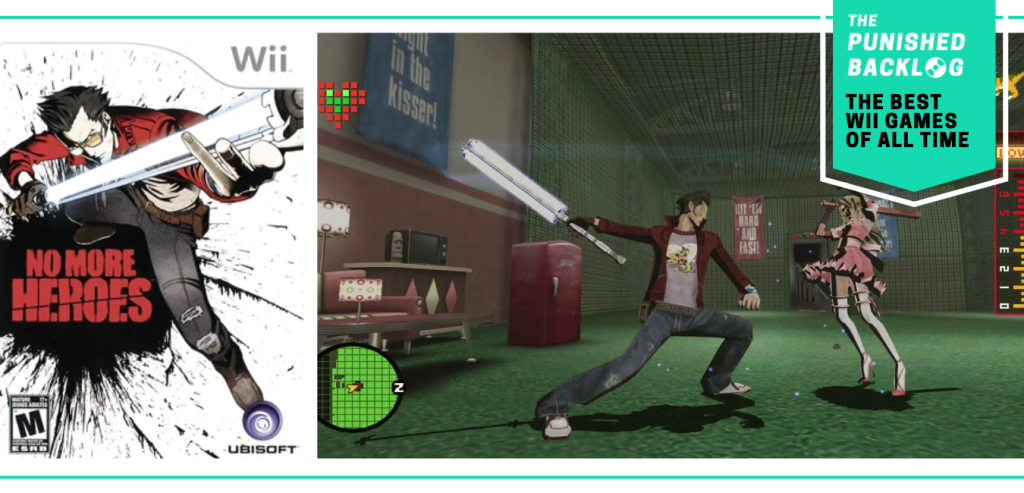
Enter No More Heroes. Developed by Grasshopper Manufacturing and led by Suda51, the game would go on to cement the reputation of both the studio and its leader, resulting in three more games in the series and numerous other projects.
The game follows the story of Travis Touchdown as he makes his way up a ranking board of assassins in order to make a living. It’s a sardonic take on a dark (and illegal) industry, with heavy references to pop culture and dripping with self-aware characterizations of wealth and masculinity that collide with irony and melancholy. The backstories of half the assassins are rooted in misfortune, while the others delight in the opportunity to kill people for money.
No More Heroes embodied the cel-shaded art style, which rose to prominence in the mid-2000s, while making it pop with comic-like effects. The absurdity of the game is hilarious, between references to pro wrestling, the realism of low-wage part-time jobs, and the allusions to Travis being an otaku all unfold in the open world of Santa Destroy.
Even through all the hilarity, No More Heroes had a ridiculously fun combat system centered around a beam sword, wrestling, and a slot machine which randomly assigned power-ups during combat which could one shot enemies or turn the combat area into an arcade shooter. The best way to get around the city was roaming in Travis’ motorbike which was essential for jobs and mini-games, and was highly enjoyable as a joyride to boot.
Overall, the first No More Heroes plays as the most complete game of the series. The characters are ridiculous, the stakes are uncertain, and the concept of a beam sword has never felt more ludicrous, especially with the motion controls.
– Written by Vaughn Hunt
Punch-Out!!
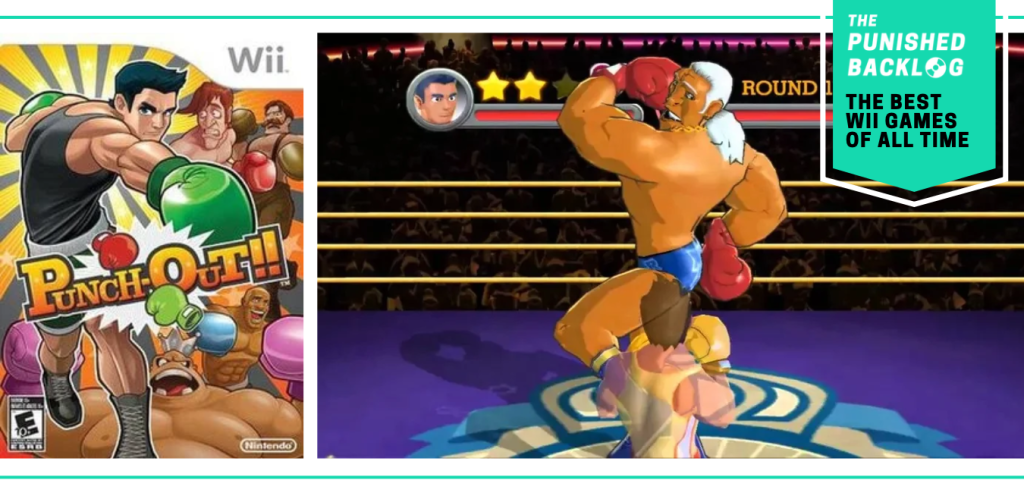
As a Punch-Out!! enthusiast who’d been enamored with Super Punch-Out!! on the Super Nintendo since I was in the single digits, I was extremely excited for the series’ revival. Nintendo handed it to Next Level Games, a Canadian studio known at the time for the Mario Strikers series, and asked them to model it on the original NES game rather than the SNES one. It launched in May 2009, around when I was heading into the summer between middle school and high school.
I found it strange at first. Little Mac’s hits didn’t feel as heavy or devastating, and the life bar reflected that. The game also lacked the series mainstays I was used to; gone was the super punch, now replaced by the star punch from the NES Punch-Out!! The star system lets you power up your punches by interrupting your opponent’s attacks at certain moments, or attacking during certain cues, up to three stars — each one strengthening a devastating uppercut. It was also the only way to deal any decent damage, and you could lose your stars whenever you got hit.
It took me a long time to adjust, but once I did, I could enjoy Punch-Out!! for the throwback and homage it was. Once you managed to accumulate three stars and land a punch, you were pretty much guaranteed a knockdown. That forced you to learn the enemies’ patterns — some of whom have instant KO opportunities to exploit, star power or not — and once you did, pretty much every fight became ridiculously easy.
That is… until you had to defend your title and the enemies came back with new tricks and attempts to cover their weaknesses. That was such a welcome change, and it kept the formula fresh while introducing an unexpected element of growth from your opponents. It forced you to adapt and find new moments to gather stars, which stopped hitting as hard (but still pretty damn hard).
With a cast that mixed veterans from throughout the series and one secret gorilla, there was no shortage of patterns to master and faces to punch in. This is yet another series bafflingly relegated to the Wii and Wii U. I hope someday Nintendo gets their shit together and lets me beat down Bear Hugger again.
– Written by Donovan Harrell
Red Steel
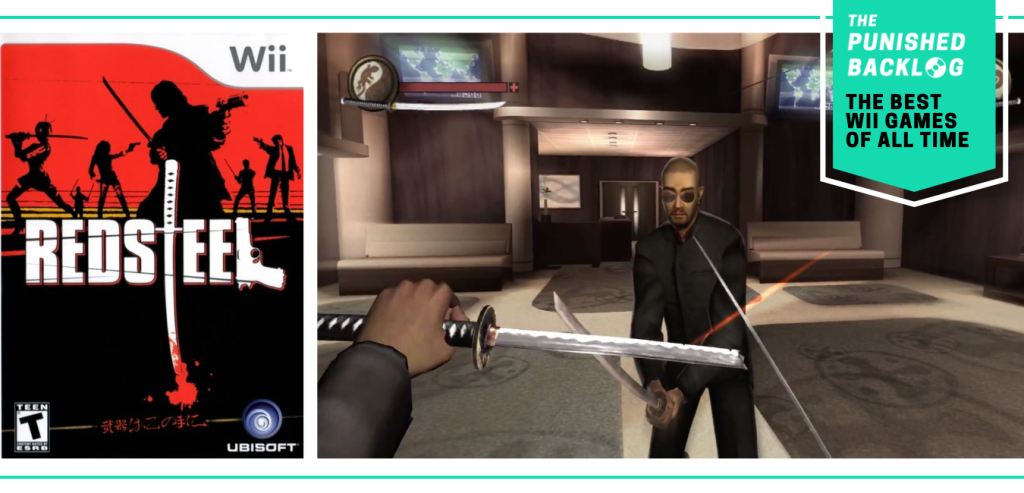
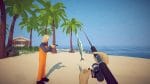
Red Steel is an absolutely absurd video game and responsible for many of my favorite memories on the Wii. It has to be one of the few titles on the console with an age/maturity rating above “E for Everybody.” Players take on the role of Scott Monroe, a white American bodyguard engaged to a Japanese mafia daughter that he’s protecting (conflict of interest?). Of course, she and her father get kidnapped, so it’s up to Scott to save the day. Players held a motion-controlled weapon in each hand — one part of the controls was a katana, and the other was a gun.
Throughout its eight hour runtime, Red Steel was absolutely ridiculous. There’s a lot of murder. There’s a confusingly scary horror geisha house. There’s brutal interrogations. I learned what the word “gaijin” meant because NPCs shouted it at Scott constantly. It was clunky and glitchy. The story, as you would expect, is frequently problematic.
But Red Steel was also just really fun. Slicing through bad guys felt really cool with the Wii remotes. Ubisoft Paris also got creative in other ways; the Wii remote would sometimes ring like a telephone, and players could hold it up to their ears. The game felt absurdly aggressive for the otherwise gentle console.
It’s a surreal concept to even exist: a first-person shooter that debuted alongside the Wii in 2006. (I found it used at a GameStop years later for $5; apparently it had a big promotional campaign where a samurai master yelled “You suck!” at the player, but I didn’t know any of that.) Red Steel was a far cry from the other titles on the Wii. While playing Red Steel, my sister and I were also playing another katana-wielding game, Mini Ninjas, but after killing enemies in that game, they turned into soft forest animals… much more what you would expect for the family-friendly Wii.
Red Steel shouldn’t have worked, and let’s be honest, it didn’t really. Still, I had a great time.
– Written by Amanda Tien
Resident Evil 4 Wii Edition
I’ve played many great remakes and remasters. From massive, franchise-altering projects like the Final Fantasy VII Remake trilogy to smaller, faithful 1:1 recreations like the excellent Ocarina of Time Switch 2 remake, there’s power in making old games feel new again.
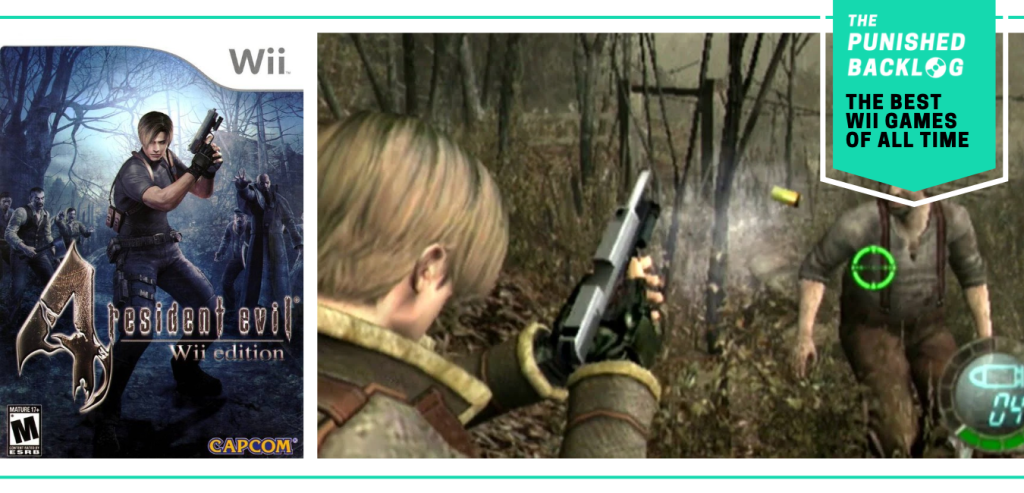
Never, however, have I played a port of a game as great as Resident Evil 4 Wii Edition. While Resident Evil 4 has since been remastered and remade with glitzier visuals and smoother framerates, Wii Edition remains my favorite way to play for a simple reason: The motion aiming freaking rocks. Leveraging the console’s infrared camera and sensor bar, Wii Edition turns your Wii remote into a bona fide light gun. The port captures all the classic RE4 beats — running from zombies, scrounging for ammo, placing well-timed headshots — only with a greater sense of control and accuracy.
Gone are the typical Resident Evil tank controls. While you still cannot move and shoot (something only the 2023 remake would alleviate), Wii Edition turned Leon’s propensity to idle into a strength. Whereas on GameCube I struggled to shoot, here I was John Wick, making every single shot count. Some may argue the point-and-shoot aiming makes the game too easy, but I had too much fun to take notice.
Are the motion controls (e.g., shaking the remote to swing Leon’s knife) equally transformative? Nah, those are terrible. But when the shooting is this sharp, I’ll let it slide. Even if you’ve played Resident Evil 4 countless times on countless platforms, you’re missing out if you don’t give the Wii iteration a go.
– Written by David Silbert
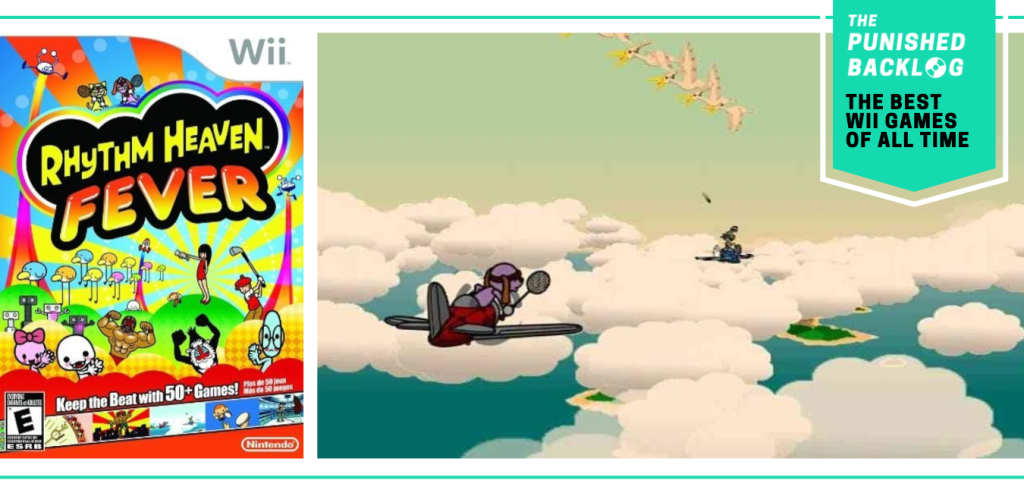
Rhythm Heaven Fever
Upon its North America release in February 2012, Rhythm Heaven Fever swept through the dorm rooms of Northeastern University like a virus, and I was Patient Zero. Entire weekends were lost to the beats and grooves as I tried to optimize each Remix Stage. While I had enjoyed the earlier handheld Rhythm Heaven games, Fever was the perfect rhythm game for me. Simplifying controls down to two buttons used in odd combinations was an ingenious decision, allowing anyone to pick up and try each stage at their own leisure.
The music was electric. The visuals are simple but effective. But what drew me hour after hour to Fever was the joy in each stage. The little flourishes tiny robots make as you successfully screw their heads into place. The nonsense sentences delivered by a reporter to a luchador. The cheering section of loving meerkats as you kick soccer balls while trying to woo your crush. Fever is silly and fun and loving in a way that doesn’t make you feel so punished if you fail a rhythm section. Just a drive to try again, and spend more time with happiness.
Add in the immediate pass-ability of a Wiimote, and Rhythm Heaven Fever was perfect for hangout shenanigans. Challenges were built around different levels, with punishments dolled out based on the whims of a rarely fully aware judge. Thanks to my hours of pre-practice, the Judge position passed to me often. It was only fair.
– Written by Gary Wilson
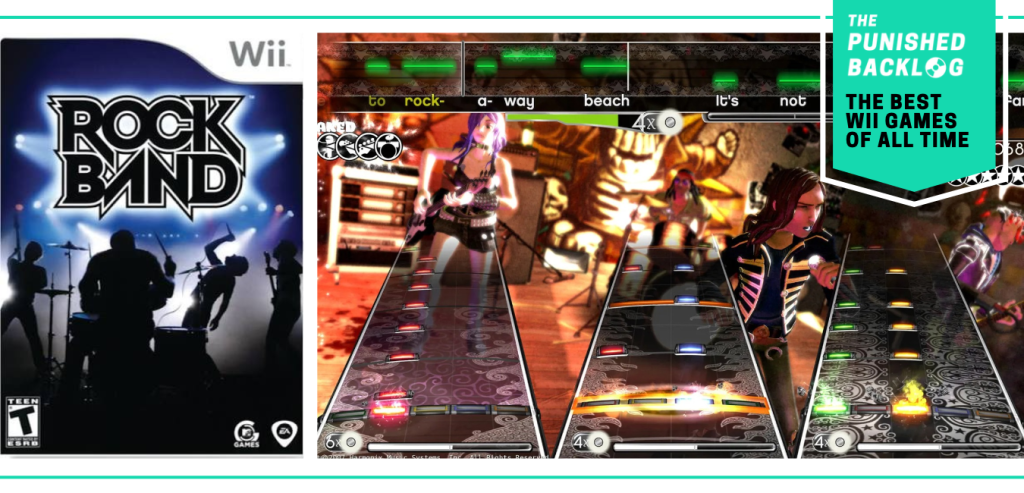
Rock Band
If you were a teenager in the 2000s like I was, every house party you went to had a guy in the corner playing Guitar Hero. Depending on the vibe of the party as well as how good the guy was, everyone would either be ignoring him or standing around watching. I liked Guitar Hero well enough, but I didn’t own the wildly expensive devices and didn’t have the patience to wait for a turn at parties. But when Rock Band released… I was so there.
In 2007, Rock Band brought more people in on the fun by allowing players to use a drum set, a microphone, a guitar, and another guitar but as a bass. I grew up in a family of four, and I was shocked that my parents were willing to shell out the money for electronic toy instruments. But they did, and it became a regular Friday night hangout session for us. At family dinner, we were a respectable group of people trying their best. When we went downstairs to the basement, we became a bad ass rock band…also trying their best.
Because of Rock Band, my house became “the cool house.” My friend who was in the drumline in high school loved playing the electronic drums, and would sometimes go off-track to just add his own beats. Harmonix Music Systems did an amazing job building on their success with Guitar Hero while still making something new. Rock Band did two things that I loved: 1) players could create a band together and design customized, fashionable avatars (perhaps an influence of new publisher MTV Games), and 2) bands could go on a campaign of a “world tour,” so it wasn’t just one-off songs. Whether I was playing with friends or my family, Rock Band made me really feel like we were going on a journey together.
And of course, it’s also really just about the music. Rock Band, like Guitar Hero before it, featured a wide array of tunes, and expansion packs continued to buff out the discography. I was able to connect to my mom about her faves from the 80’s and I explained to her my love of Fall Out Boy. We also discovered new tracks together, like the Australian early 2000’s band Jet and their song “Are You Gonna Be My Girl.”
The Wii as a system was about bringing people together, and no game did that better in my mind than Rock Band.
– Written by Amanda Tien
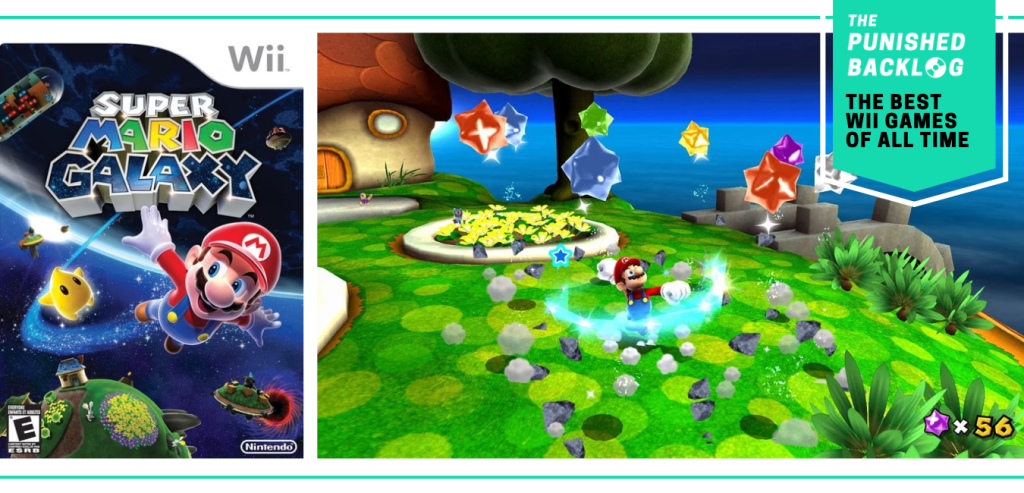
Super Mario Galaxy
Before Nintendo released Super Mario Galaxy in 2007, I had never played a Mario game. Actually, the Wii was my first console ever; I hadn’t even reached double digits yet so it played a huge role in forming my foundation in gaming. Super Mario Galaxy is, to this day, one of the few games that I felt motivated to finish completely (I’m a chronic procrastinator, especially when it comes to actually finishing games). Sure, I dilly dallied, but not nearly the same way that I do in story-driven games now.
The premise of Super Mario Galaxy is pretty dramatic for a little kid. Bowser uproots Princess Peach’s entire castle during a party! You, Mario, have to rescue her, and you need the help of Rosalina, guardian of the cosmos and mama to the star children-like Lumas. She just happens to need your help too, because some of her beloved children have also been kidnapped! I was quickly obsessed. I loved all of the creative, colorful planets in Super Mario Galaxy. My favorite map by far, though, was actually the “hub” map, Rosalina’s Comet Observatory. I spent way too much time running around this colorful hub world, listening to “Rosalina’s Lullaby” playing on repeat.
In Super Mario Galaxy, you also have the option to play with a friend in “Co-Star Mode,” which lets you add a friend in the shape of a little star cursor. As a middle child, I played as both the co-star and Mario. The multiplayer isn’t the most exciting player two experience, but it’s enough to feel like you have some impact on the game. Player two can interact with enemies by freezing them or shooting them, find and collect resources, and help Mario jump (which, yes, is as perfectly designed for trolling your siblings as it sounds).
I mostly remember bits and pieces of my first play through of Super Mario Galaxy because I was so young when I first played it, but I think that is what actually solidifies it as a core pillar of my love for the magic of gaming. I’m so glad this game got re-released for the Switch 2, because it’s an experience that evokes childhood wonder at any age.
– Written by Alexia Dahlin
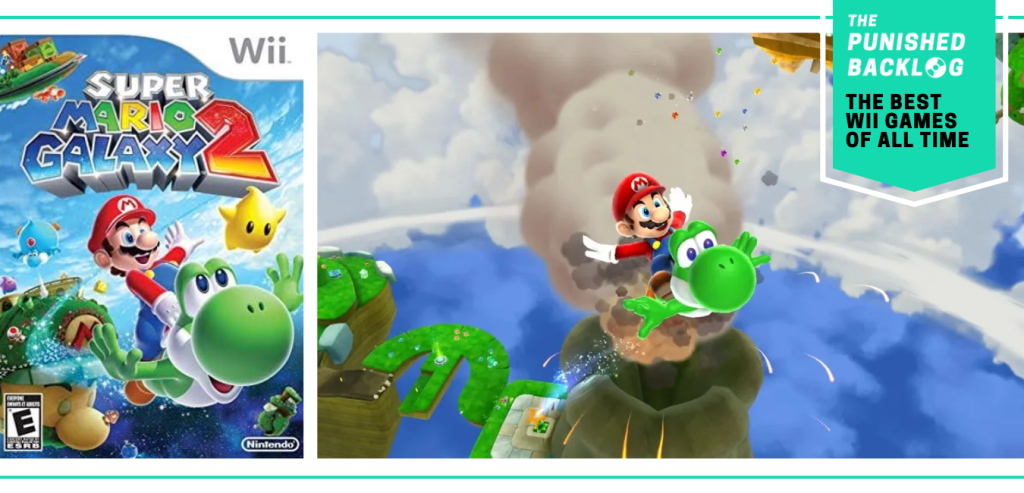
Super Mario Galaxy 2
No list of the best Nintendo Wii games is complete without Super Mario Galaxy 2. The 2010 follow-up to 2007’s seminal Super Mario Galaxy, the Big N’s sequel ups the ante in typical Nintendo ways. The levels are more varied, the mechanics are more creative, and the wow factor is off the charts. Plus, we’ve got Yoshi now!
Initially intended as DLC for the original Super Mario Galaxy, Galaxy 2 took all the zany ideas the folks at Nintendo EAD (now EPD) had and threw them at the wall. From creating platforms as Cloud Mario to bowling down enemies as Rock Mario, new abilities abound in this second outing to the stars. Throw in improved checkpoints (I always found SMG 1 a bit frustrating by comparison) and a streamlined World Select screen, and SMG 2 is all gas, zero fluff (well, save for the clouds).
It’s been quite a while since I’ve revisited the worlds of Super Mario Galaxy 2. Between snubbing it from 2020’s Super Mario 3D All-Stars and charging $40 for a digital download, Nintendo hasn’t made it easy to play it on modern hardware. Still, this game is absolutely worth digging out of the closet and dusting off. It doesn’t look like a new 3D Mario is coming anytime soon for Switch 2, but luckily, this all-time gem exists, and it isn’t going anywhere.
– Written by David Silbert
Super Monkey Ball: Banana Blitz
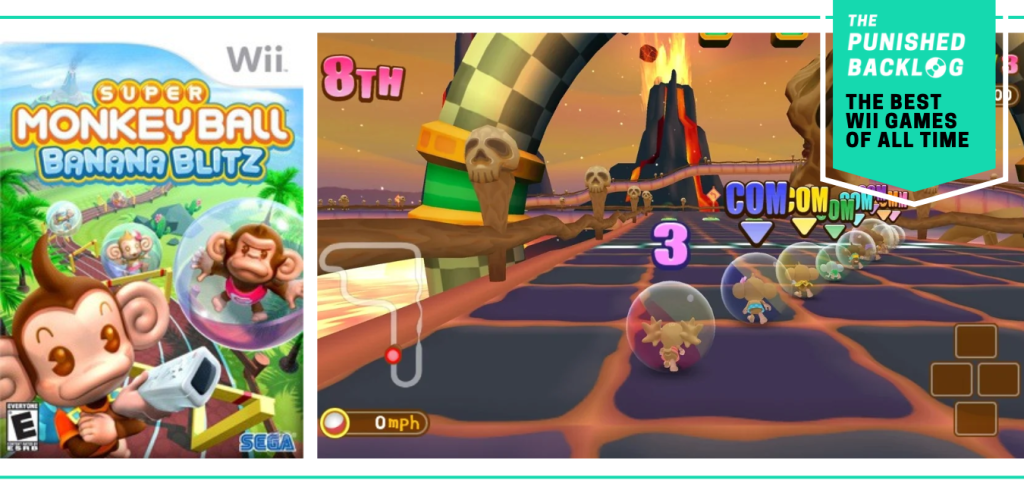
Madness is trying the same thing over and over again and expecting a different result. The 2006 Sega title Super Monkey Ball: Banana Blitz was the perfect example of that. Its single player story mode was a marble maze where you tilted the puzzle-laden map to move your monkey, who was running around in a ball (hence, the name), to reach the goal. At the end of each world was a boss battle that rewarded you with a golden banana upon completion.
The player controlled the tilting mechanic with the Wii remote. However, because the sensor bar could be a bit finicky, it could really be a challenge to move the way you wanted. As an adult, I think this would absolutely drive me bonkers, but as a kid it was the perfect chaotic challenge to entertain me for hours.
Of course, Banana Blitz was the pinnacle of social gaming for me (I mean, I was literally seven when I first played it, so there weren’t many other options). I can see why this could have been a popular game for parents too; most of the levels and mini-games ended pretty quickly, so it would be easy to let your kids have “one more round” without feeling like you’re giving them too much time on the screen. My siblings and I also learned through this game to work together and compete (increasingly peacefully) in the party games mode, which had 50 mini-games! There was always a minigame we could agree on, and when there wasn’t, it was a great way for us to work on our interpersonal problem solving skills.
I look back on Banana Blitz fondly because it was a wonderful game to bond with my siblings over, even if it was just a party game. I also recently found out that Banana Blitz was re-released for the Nintendo Switch, so now it’s gone back into my backlog for a replay!
– Written by Alexia Dahlin
Super Smash Bros. Brawl
My Super Smash Bros. journey has been far from straightforward. I didn’t grow up with a Nintendo 64, meaning my only opportunity to play the original Super Smash Bros. was at a friend’s house. Needless to say, I was at a gross disadvantage every time we squared up.
Super Smash Bros. Melee shifted the landscape. Practically every friend I grew up with owned a GameCube, and we routinely got together to duke it out at Hyrule Temple. Still, I sucked. I mained Link in Melee, and despite having home turf, I was outmatched by my friend and fellow Punished Backlog writer Kei Isobe, who is an absolute Melee sicko. He studies the literature; he watches the films. The man can tell you how many frames Fox’s “nair” has and how large Jigglypuff’s hurtbox is. I never stood a chance.
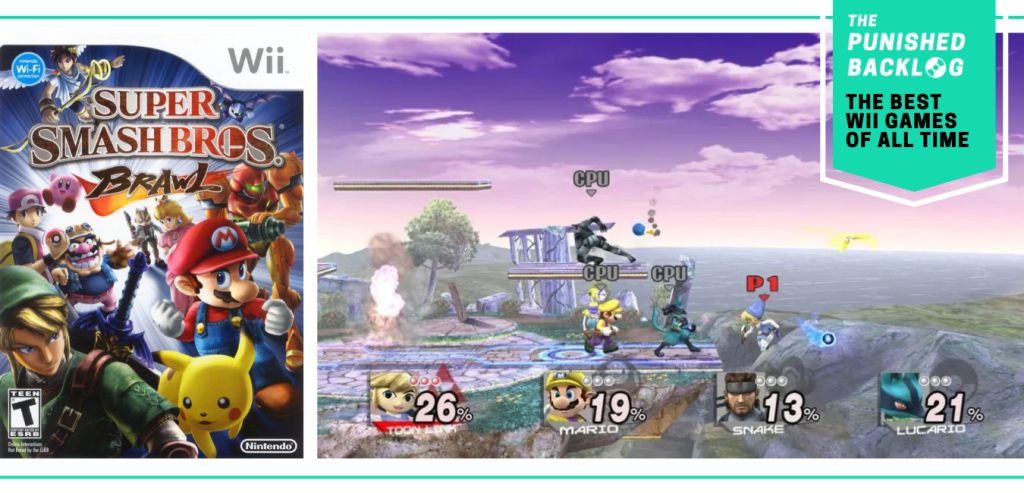
Then came Super Smash Bros. Brawl — the ultimate equalizer. Between fighting for Smash Balls and slipping on bananas (or slipping on nothing, seemingly at random), Brawl gave me hope that I could cheese my way to victory. I ditched Link for Solid Snake — the most degenerate character I could find — and started spamming mortars, missiles, and mines with abandon. The world was simpler back then, me and my buddies chuckling while trading stocks until the sun went down.
I never won a game 1v1 in Brawl. Heck, I rarely won even when four of us were playing. Still, it made for some of the happiest memories of my childhood. What I wouldn’t give to get those moments back.
– Written by David Silbert
WarioWare: Smooth Moves
For most people, the fondest memories of playing Wii games with friends revolve around Wii Sports. This makes perfect sense, considering A) it was a pack-in game, so everyone with a Wii had it, and B) every single sport included was extremely easy to understand how to play.
In my experience, though? No party game on that console compared to WarioWare: Smooth Moves, which was released just outside of the Wii’s launch window.
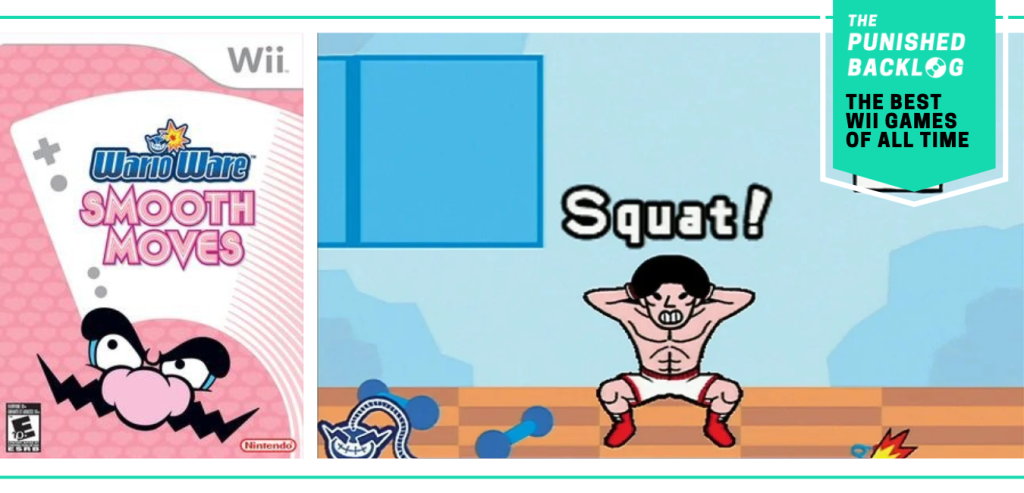
Much like in prior WarioWare titles, the player must complete a set of so-called “microgames” — a quick challenge to perform a simple, specific task in just a matter of seconds, such as picking an apple or pulling a sword out of a stone — that get increasingly tougher and faster the further they progress. In Smooth Moves, developer Intelligent Systems utilized nearly every possible angle of the Wii’s motion controls for these games, even instructing the player on how to hold the remote before each microgame.
Gameplay-wise, Smooth Moves never ceases to offer good old-fashioned goofball fun, and the added motion controls make everything even more hilarious and chaotic. One microgame asks you to hold the Wiimote like a flight stick hit the bottom of the controller on your palm to straighten out a set of papers. Another asks you to hold it like a dart and guide a paper airplane safely through an obstacle course. One of my favorites, truth be told, asks the player to hold the controller upright and carefully drink a glass of water without spilling. Playing each of these is a blast, but just as entertaining is watching your friends try and fail many of these ostensibly simple tasks, wildly flailing their bodies in all kinds of directions in an attempt to shake a hula hoop or pick someone’s nose.
The game comes with a number of interesting motion-based multiplayer modes, including just a standard game of darts. But the one I played the most with friends was Survival, which could include up to 12 players. This mode involves players taking turns playing randomized microgames, where failing a single one eliminates you from the competition. We would spend hours on a Friday afternoon seeing how long we could go with this silliness, and it never got old (though we did eventually get physically tired from it all).
The Wii was perfect for party games, but nothing brought the party quite like Smooth Moves.
– Written by Sam Martinelli
Wii Play
While it’s been about 20 years since I’ve touched Wii Play, I remember having great fondness for this party game. I also forgot this game existed for years, and thought I was having a fever dream when I tried to remember what I had played.
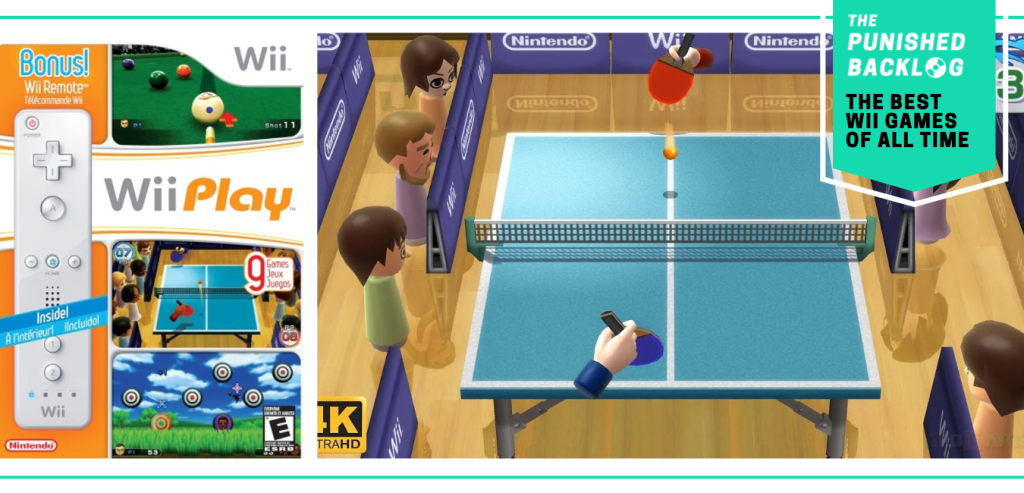
Debuting in North America in 2007, 12-year-old me could sit for hours editing Miis and playing through each of the nine mini games. Even as a party game, I never felt like I needed a player two. Could it be a testament to the quality of the game? Or was I encapsulated by the charm and uniqueness of motion controls because it was 2007? Either way, Wii Play, Wii Sports, and Wii Sports Resort were elite games for the time.
Each of the mini-games in Wii Play are pretty simple, yet addictive, and playfully use the Wii’s intuitive motion controls. There’s a Duck Hunt-inspired shooting game where you shoot random objects (and sometimes ducks) in the sky. A fan favorite is Find Mii, a game where Miis go about their day walking streets or riding an escalator, and you have to find them Where’s Waldo-style. It begins simply, but increases in difficulty and quickly becomes frustrating. Some of the other mini games are more reminiscent of something like Wii Sports, but one of the GOATs of Wii Play is Pose Mii, where you match up a Mii to different poses floating around in bubbles.
Again, these games were simple, but Nintendo sure knows how to crank up the charm, making this collection of mini games a ton of fun. Maybe most of us had Wii Play because it came with a Wii remote, or maybe we were genuinely interested in a game that showed off Nintendo’s original mechanics. Ultimately, I’m alright without a Switch version of Wii Play, but looking back, I really miss Miis and that era of Nintendo.
– Written by Allison McDaniel
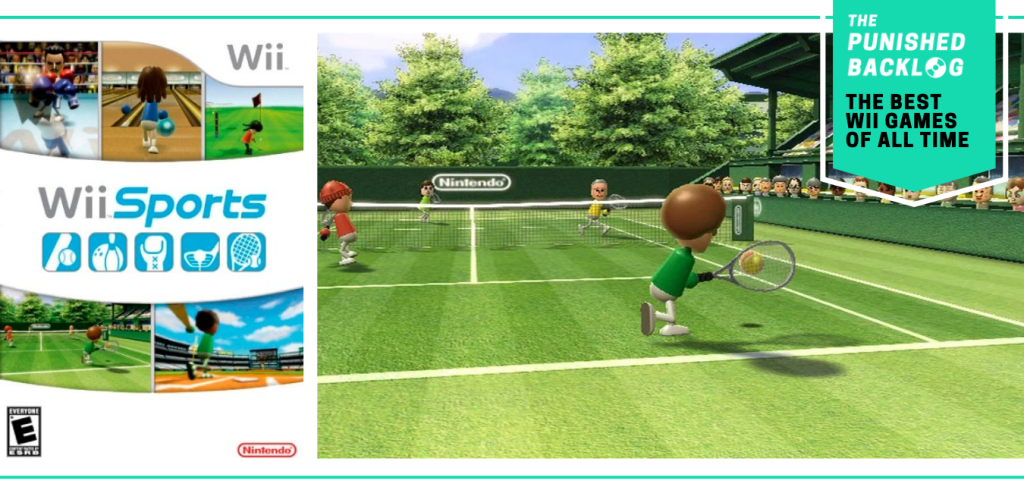
Wii Sports
Games are complex. They serve such a wide audience that it is impossible to satisfy everyone. It is even harder to make a game that showcases a console so well, even years into the lifecycle of one. And yet, in 2006, Nintendo did the impossible and introduced the world to an entirely new style of gaming with Wii Sports.
The formula was simple: five sports (golf, baseball, bowling, tennis, and boxing) powered by motion controls. Prepackaged with every Wii, the game may have been intended as nothing more than a tech demo. Somehow, though, it became so much more. The games themselves are simple — there are no gimmicks, simply swing the Wii Remote. There is no aiming with sticks or arrows here; it is the player who is actually controlling the swing of a golf club or the angle of the bowling ball. You could play alone or with friends, but for the first time, it made me feel involved in what was on the screen. It was truly something new.
On top of the games, Wii Sports allowed players to make Miis and play with them in game. Making a goofy avatar of myself, friends, celebrities, or fictional characters never got old, as I could put anyone from Barack Obama to Dwight Schrute on the baseball diamond. A simple game had limitless customization, and the best part was that it came with the console, a slam dunk move from Nintendo to launch the Wii into the mainstream.
To this day, I still hum the main theme as if it were that of the startup music of the Wii itself, transporting myself into a fun escape of sports. A few years later, Wii Sports Resort built on what Wii Sports had started, but it was never quite as captivating as that initial release. Many games followed on the Wii that tried to capture its novelty of motion controls. Most failed. It is perhaps an indictment on the gaming industry at large that we never truly reached those day one heights again.
More than anything, though, it is a testament to the perfection of Wii Sports that what could have been a simple tech demo is now the gold standard for a launch day release, with few games, if any, ever making such a fun, accessible, and intuitive sports game that captured the attention of everyone.
– Written by Mark Bowers
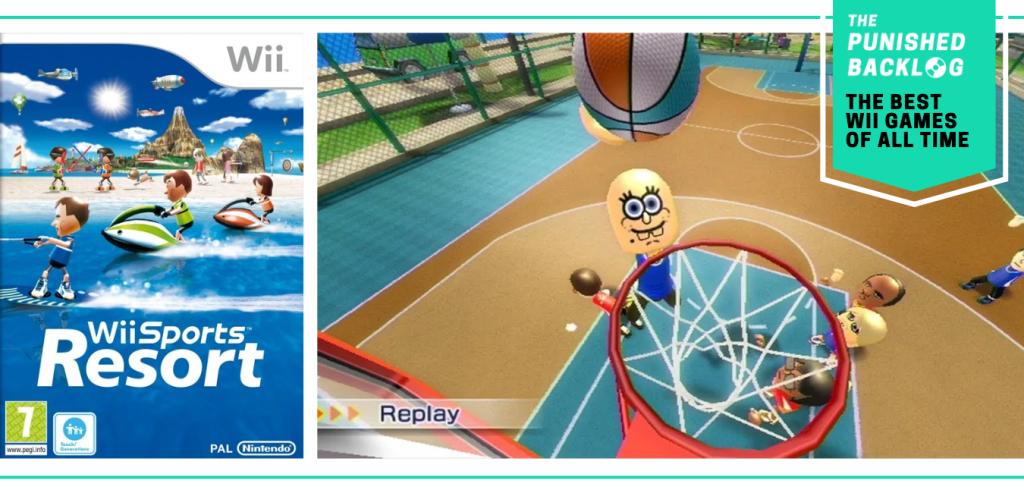
Wii Sports Resort
Mark may feel the original can never be surpassed, but I beg to differ. Wii Sports is a delightful pack-in, a wonderful introduction to the Wiimote’s use (and need for a wrist strap). But Wii Sports has the classic problems of a pack-in game: a little shallow, a little feature-bare, and with room for improvement.
Wii Sports Resort is that improvement. The game itself is a fantastic expansion of the simple sports concepts of Wii Sports, with new additions that really shine. Expanding the field from five sports to twelve could be seen as bloat, but many of those new sports are just better expansions of the previous attempt. While boxing in Wii Sports could feel gimmicky, swordfighting in Resort felt sharp and fresh. Table tennis removes the running around aspect of regular tennis that some players found frustrating, and centered the action on a one versus one that felt more epic. The addition of 100-Pin Bowling was a revelation, and really good! Archery was goofy, and wakeboarding was a bit of a whiff, but Nintendo tried some things, and you can’t fault them for that. Golf was still Golf, and excellent. No changes needed.
But what really shined about Wii Sports Resort was the Wiimote enhancement brought by the MotionPlus add-on. Even at the time, I thought it was a gimmick or a joke; an extended add-on to a controller to “improve readability” seemed like a classic scam.
Boy was I wrong. Using the MotionPlus removed so many tracking issues in swinging my racket, or setting up my swing. Gone was the fuzziness around hitting a baseball: swings and misses felt like they were on me instead of the game. Improved responsiveness took Resort to the next level, and made those new games shine. You can’t go wrong with either package, but if someone today asked what I would want to do, I would happily answer Kendo.
Or golf. You can’t go wrong with golf.
– Written by Gary Wilson
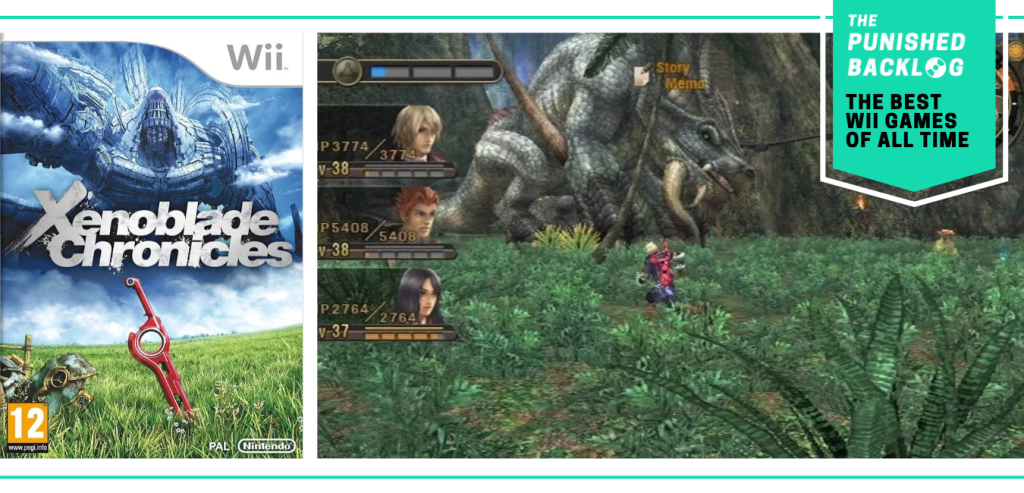
Xenoblade Chronicles
It’s hard to believe the Xenoblade Chronicles franchise almost never took off. When the first game in the now long-running series released in Japan in 2010, its future in the West wasn’t a sure thing. Europe got the game in 2011, and only after a very vocal movement by RPG lovers did North America finally get its chance.
Xenoblade Chronicles hit the U.S. in 2012. The release came with a welcome idiosyncrasy: All the major voice actors were from the U.K., since Nintendo of Europe had initially handled the English localization. Aside from being a nice reminder of the game’s journey to the West, these performances packed a punch. Lines like “It’s Reyn time!” became the stuff of legend, and players quickly came to adore Shulk, Fiora, Dunban, and the rest of the crew.
Then, there’s the gameplay. Combat in Xenoblade had players unleashing flashy attacks on various cooldowns — think an MMO-inspired single-player adventure, much like Final Fantasy XII. Action took place across a massive open world with generous draw distances and near-instantaneous fast travel: truly a marvel given the limitations of the Nintendo Wii hardware.
Developer Monolith Soft clearly earned Nintendo’s trust with this game. Not only has Monolith developed two sequels and a prequel since (with yet another game on the way), but they’ve been tapped to help co-develop some of Nintendo’s most important first-party titles, including both The Legend of Zelda: Breath of the Wild and Tears of the Kingdom. Heck, Shulk even made it into Smash Bros. That’s quite the legacy for a game that we nearly missed out on altogether.
– Written by David Silbert
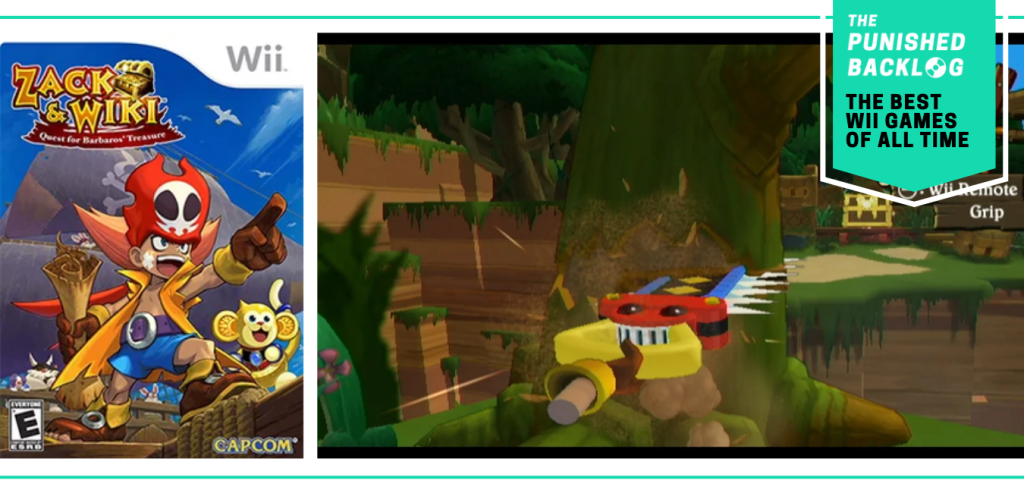
Zack & Wiki: Quest for Barbaros’ Treasure
Zack & Wiki was such an unexpected delight for me. Capcom’s adorable 2007 point-and-click adventure was full of color, spunk, and lovable characters, following a boy who wanted to be the greatest pirate alive (Luffy might have had some competition) and his floating monkey companion. It’s also criminally underrated — yet another Capcom IP that’s been functionally abandoned to the Wii and Wii U despite its critical acclaim.
I’ve often talked about how action games are my bread and butter, but I’m also a fan of puzzle games, particularly the old school PopCap titles. And while I’ve never cared much for point-and-click adventures, this one was a big exception for me. It’s an excellent blend of exploration through forests, ancient temples, and ice caves, and it made full use of the Wii Remote’s motion controls to turn cranks, play songs, and use the various equipment you find along the way. While it’s a little lighter on the action, the nonstop puzzles kept me engaged, desperate to get the highest score I could whenever I solved a challenge. And every time you solved one, no matter how small, there was a celebration with fanfare, dancing, and music. I never got tired of that, especially when the puzzles got harder.
But Zack & Wiki was particularly special to me because it was one my little brothers, who were a bit too young to fully engage with some of our other multiplayer games, could play together, tag-teaming it like the titular Zack and Wiki. We’d solve the puzzles, help each other when we got stuck, and sometimes trade off the Wii Remote for the motion control bits. Capcom actually built the whole game around this — its Guide Cursor feature lets up to three other players point at the screen to help you work through a puzzle. It was such a fun game to play with my brothers, and it brought some delightful memories.
Maybe one day, we can play it again for old time’s sake. I think the Switch 2 could really use it.
– Written by Donovan Harrell
What Are Your Top Wii Games?
Agree or disagree with our picks? Let us know your favorite Wii games in the comments!

A video game outlet that blends quality words with inclusive voices. For business inquiries and review requests, reach us at press [at] punishedbacklog [dot] com.





Sam has been playing video games since his earliest years and has been writing about them since 2016. He joined The Punished Backlog in 2017 and became an Editor in Fall 2021. He’s a big fan of Nintendo games and complaining about The Last of Us Part II. You either agree wholeheartedly with his opinions or despise them. There is no in between.
A lifelong New Yorker, Sam views gaming as far more than a silly little pastime, and hopes through critical analysis and in-depth reviews to better understand the medium's artistic merit.
Bluesky: @sam-martinelli.bsky.social

Alexia grew up on video games like Zoombinis and Freddi Fish. After she played The Legend of Zelda: Twilight Princess, she decided that games were her favorite hobby. She recently moved back to her home in Central California after graduating with a Bachelor in Social Sciences and Communications in Belgium. Her interests include gaming subcultures, fantasy world-building, and writing about cozy games!


Allison has been playing all sorts of games since the late ‘90s. She particularly enjoys life sims, casual games, tactical RPGs, and anything Mario. Her dream jobs are to be a Stardew Valley speed runner and a Mary Tyler Moore historian. As a recent MBA graduate, Allison hopes to use her extra time tackling her backlog and the never-ending list of 2023 releases.


Amanda Tien (she/her or they) loves video games where she can pet dogs, solve mysteries, punch bad guys, play as a cool female character, and/or have a good cry. She began writing with The Punished Backlog in 2020 and became an Editor in Fall 2021. Amanda also does a lot of the site's graphic designs and podcast editing. Amanda's work has been published in Mothership, Unwinnable Monthly, Poets.org, Salt Hill Journal, and elsewhere. She holds an MFA in Fiction from the University of Pittsburgh and a BA in Creative Writing from Columbia University. Learn more about her writing, visual art, teaching, graphic design, and marketing consulting at www.amandatien.com.



David is the founder of The Punished Backlog. He has a problem finishing games he starts.
Just beat: Ocarina of Time (2026).
Working on: Fire Emblem: Fortune's Weave.
Can't wait for: GTA VI.
Follow David on Twitter at @David_Silbert to keep up to date with all things The Punished Backlog.

Donovan is a lifelong gamer with a love for fast-paced, single-player action games—especially Devil May Cry, Metroidvanias, indies, and action RPGs. He’s also an “advanced scrub” at fighting games and will play just about anything fun. Donovan is passionate about seeing more diverse characters and creators in the industry—or at least better hair options for Black people. With over a decade in journalism, he joined The Punished Backlog in 2023 to write more about what he loves. Follow him on Twitter and Instagram @dono_harrell.




Gary is a jack-of-all-trades video game enthusiast based in Boston, MA. A semi-professional fighting game player, even less professional Apex Legends player, and even less professional adult, he spends most of his time poking at strange indie gems and reading about the need for more diverse voices in gaming criticism. He invites anyone to recommend anything he's missed in the gaming world via Twitter or BlueSky, where he can found under the username @grtnpwrfl. When he isn't spending his time playing games, Gary is an avid New England Patriots fan and frequent hiker.



Mark is a contributor to The Punished Backlog, often promising articles and occasionally delivering when he actually commits to it. Mark games mainly on his PS5 and his Switch, and some of his favorite games include God of War, Ghost of Tsushima, The Witcher 3: Wild Hunt, and his all time favorite, Red Dead Redemption 2. When not gaming, Mark is an avid fan of all Boston sports teams and his Villanova Wildcats. He also loves hiking, skiing, and traveling across the U.S.


Vaughn Hunt is writer who has loved video games since he picked up a controller. His parents wouldn't let him buy swords as a child (he wanted the real ones) so he started writing, reading, and playing video games about them. A historian at heart, you'll often find him deep into a rabbit hole of culture, comics, or music.